
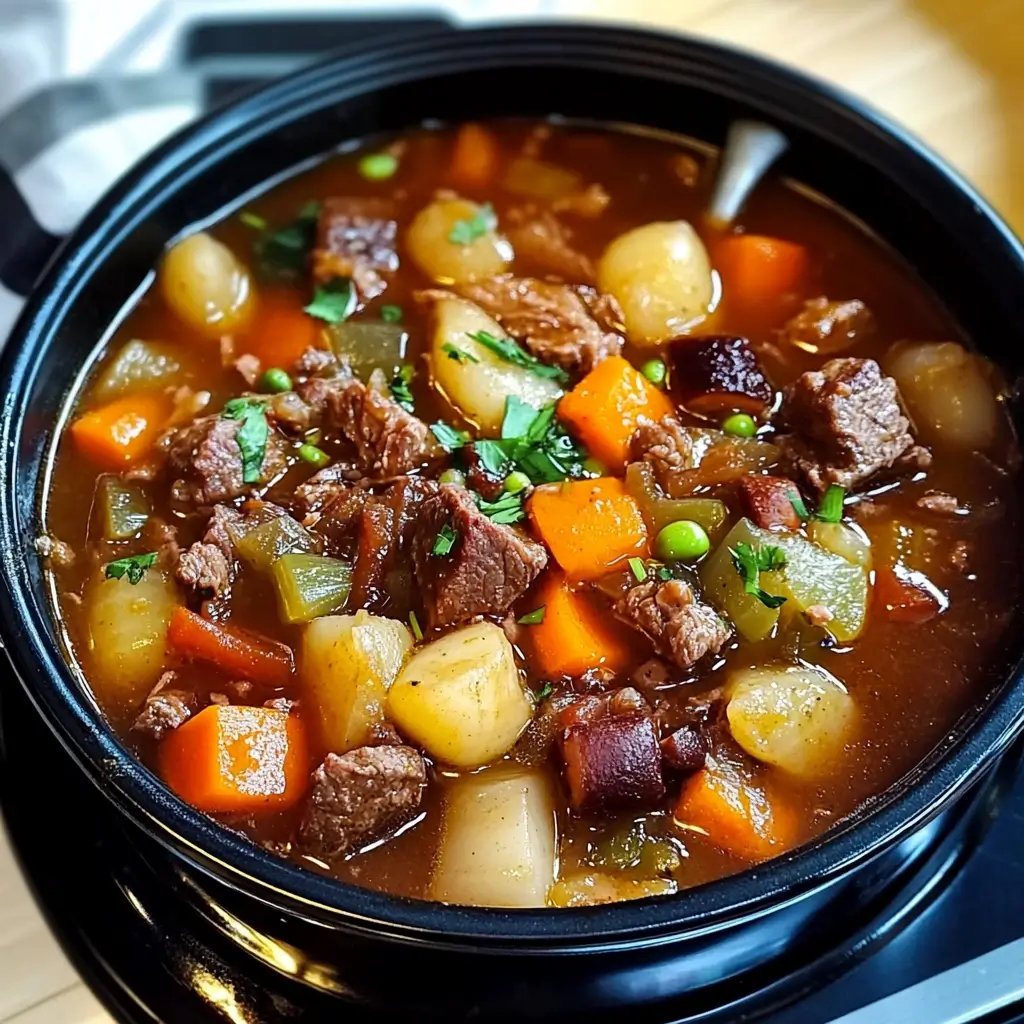

There’s a particular magic that happens when a pot of All-American Beef Stew simmers on the stovetop, especially on a crisp autumn evening or a blustery winter day. The aroma alone is enough to draw my family into the kitchen, their faces alight with anticipation. I remember the first time I truly nailed this recipe; it wasn’t just a meal, it was an event. The beef was melt-in-your-mouth tender, the vegetables perfectly cooked yet holding their shape, and the gravy – oh, the gravy! – was rich, savory, and just begging to be soaked up by a thick slice of crusty bread. My kids, usually picky eaters, devoured their bowls and even asked for seconds. My partner, a connoisseur of comfort food, declared it “the best beef stew you’ve ever made.” Since then, this All-American Beef Stew has become a cherished staple in our home, a symbol of warmth, comfort, and shared family moments. It’s more than just a recipe; it’s a hug in a bowl, a taste of home that never fails to satisfy.
The Quintessential All-American Beef Stew: A Recipe for Comfort
This All-American Beef Stew is the epitome of hearty, soul-satisfying cuisine. It’s a classic dish that has warmed hearts and filled bellies for generations. With tender chunks of beef, an array of colorful vegetables, and a deeply flavorful gravy, this stew is perfect for a family dinner, a cozy gathering, or simply when you need a comforting meal. The secret lies in slowly braising the beef until it’s incredibly tender and allowing the flavors of the aromatics and vegetables to meld into a harmonious symphony.
Ingredients: Your Shopping List for a Hearty Stew
Gathering high-quality ingredients is the first step towards a truly exceptional beef stew. Here’s what you’ll need:
- For the Beef:
- 2.5 lbs (approx. 1.1 kg) boneless beef chuck roast, trimmed of excess fat and cut into 1.5 to 2-inch cubes
- 1/4 cup all-purpose flour
- 1 teaspoon kosher salt (plus more to taste)
- 1/2 teaspoon freshly ground black pepper (plus more to taste)
- 2-3 tablespoons olive oil or vegetable oil
- For the Aromatics & Flavor Base:
- 1 large yellow onion, chopped (about 1.5 cups)
- 3-4 cloves garlic, minced
- 2 tablespoons tomato paste
- 1 cup dry red wine (optional, like Merlot or Cabernet Sauvignon; can substitute with more beef broth)
- 4 cups (32 oz) low-sodium beef broth or stock
- 2 tablespoons Worcestershire sauce
- 1 teaspoon dried thyme (or 2 sprigs fresh thyme)
- 2 bay leaves
- For the Vegetables:
- 4 medium carrots (about 1 lb), peeled and cut into 1-inch chunks
- 3 celery stalks, cut into 1-inch pieces
- 1.5 lbs Yukon Gold or Russet potatoes (about 3-4 medium), peeled and cut into 1-inch cubes
- 1 cup frozen peas (optional, add at the end)
- 1 cup chopped fresh mushrooms (cremini or button, optional)
- For Garnish (Optional):
- Fresh parsley, chopped
Step-by-Step Instructions: Crafting Your Culinary Masterpiece
Follow these detailed steps to create a pot of All-American Beef Stew that will have everyone asking for the recipe.
1. Prepare Your Ingredients (Mise en Place)
This French term simply means “everything in its place.” Before you even think about turning on the stove, prepare all your ingredients.
- Beef: Pat the beef cubes thoroughly dry with paper towels. This is crucial for achieving a good sear. In a medium bowl, toss the beef cubes with the flour, 1 teaspoon of kosher salt, and 1/2 teaspoon of black pepper until evenly coated. The flour not only helps with browning but also acts as a natural thickener for the stew.
- Vegetables: Chop your onion. Mince the garlic. Peel and chop the carrots, celery, and potatoes into uniform 1-inch pieces. This ensures they cook evenly. If using mushrooms, slice or quarter them.
- Liquids: Measure out your red wine (if using), beef broth, and Worcestershire sauce. Have your tomato paste, thyme, and bay leaves ready.
2. Sear the Beef to Perfection
Searing the beef is arguably the most important step for developing deep, rich flavor. This process creates the Maillard reaction, resulting in a beautiful brown crust.
- Heat 1-2 tablespoons of olive oil in a large Dutch oven or heavy-bottomed pot over medium-high heat until the oil shimmers.
- Working in batches to avoid overcrowding the pan (which would steam the beef rather than sear it), add the flour-dusted beef cubes in a single layer.
- Sear the beef on all sides until deeply browned, about 2-3 minutes per side. Don’t rush this step. The browned bits (fond) left in the pot are pure flavor.
- Once browned, remove the beef from the pot with a slotted spoon and set it aside on a plate. Add more oil if needed for subsequent batches.
3. Build the Flavor Base
Now, it’s time to build the aromatic foundation of your stew.
- To the same pot (there should be some rendered beef fat and browned bits), add the chopped onion. If the pot seems too dry, add another tablespoon of oil.
- Sauté the onion over medium heat until softened and translucent, about 5-7 minutes, stirring occasionally and scraping up any browned bits from the bottom of the pot with a wooden spoon.
- Add the minced garlic and sauté for another minute until fragrant. Be careful not to burn the garlic.
- Stir in the tomato paste and cook for 1-2 minutes, stirring constantly. Cooking the tomato paste deepens its flavor and removes any raw taste.
4. Deglaze and Deepen (Optional but Recommended)
If you’re using red wine, this step adds an incredible depth of flavor.
- Pour the red wine into the pot. Bring it to a simmer, scraping the bottom of the pot vigorously with a wooden spoon to dislodge all those flavorful browned bits (fond). This is called deglazing.
- Let the wine simmer and reduce by about half, which should take 3-5 minutes. This cooks off the alcohol and concentrates the wine’s flavor.
- If you’re not using wine, you can deglaze with about 1/2 cup of the beef broth.
5. Simmer to Tender Bliss
This is where the magic of slow cooking transforms the beef into fork-tender morsels.
- Return the seared beef (and any accumulated juices from the plate) to the pot.
- Pour in the beef broth and Worcestershire sauce. Add the dried thyme (or fresh thyme sprigs) and bay leaves.
- Stir everything together. The liquid should mostly cover the beef; add a bit more broth or water if necessary.
- Bring the stew to a gentle simmer. Once simmering, reduce the heat to low, cover the pot tightly, and let it cook for at least 1.5 to 2 hours, or until the beef is very tender. The exact time will depend on the cut and size of your beef cubes. Stir occasionally to prevent sticking.
6. Add the Vegetables
Timing the addition of vegetables is key to ensuring they are perfectly cooked and not mushy.
- After the initial 1.5-2 hour simmer, when the beef is almost fork-tender, add the chopped carrots, celery, potatoes, and mushrooms (if using) to the pot.
- Stir gently to combine. Ensure the vegetables are mostly submerged in the liquid. If needed, add a little more beef broth or water.
- Bring the stew back to a simmer, then cover and continue to cook on low heat for another 45-60 minutes, or until the vegetables are tender and the potatoes can be easily pierced with a fork.
7. Thicken and Finish
The stew should have thickened nicely from the flour on the beef and the starch from the potatoes.
- If you prefer a thicker gravy, you can make a slurry. In a small bowl, whisk together 1-2 tablespoons of cornstarch or flour with 2-3 tablespoons of cold water until smooth. Slowly stir the slurry into the simmering stew and cook for a few more minutes until the gravy has thickened to your desired consistency.
- If using frozen peas, stir them in during the last 5-10 minutes of cooking. They don’t need much time to cook through.
- Remove the bay leaves and any fresh thyme sprigs.
- Taste the stew and adjust seasoning as needed. You might want to add more salt, pepper, or even a splash more Worcestershire sauce for an extra umami kick.
8. Rest and Serve
Like many slow-cooked dishes, beef stew benefits from a short resting period.
- Turn off the heat, cover the pot, and let the stew rest for 10-15 minutes before serving. This allows the flavors to meld further and the gravy to settle.
- Ladle the hot stew into bowls. Garnish with fresh chopped parsley, if desired, for a touch of color and freshness.
Nutrition Facts (Estimated)
- Servings: This recipe yields approximately 6-8 generous servings.
- Calories per serving: Approximately 550-700 calories, depending on the exact cut of beef, amount of oil used, and serving size. This is a hearty meal designed for nourishment.
(Note: This is an estimate. Actual nutritional values can vary based on specific ingredients and preparation methods.)
Time Commitment: From Prep to Pot
Understanding the time involved will help you plan your cooking day.
- Preparation Time: 30-40 minutes (for chopping vegetables, cubing beef, and searing)
- Cook Time: 2.5 – 3.5 hours (for simmering the beef and then the vegetables)
- Total Time: Approximately 3 – 4 hours (plus 10-15 minutes resting time)
While it requires a few hours, most of this is hands-off simmering time, allowing the flavors to develop beautifully.
How to Serve Your All-American Beef Stew
Beef stew is wonderfully versatile. Here are some classic and creative ways to serve it:
- Classic Bowl:
- Simply ladle into deep bowls and serve hot.
- With Bread:
- Crusty Bread: A thick slice of crusty artisan bread, sourdough, or a French baguette is essential for mopping up every last bit of that delicious gravy.
- Dinner Rolls: Soft dinner rolls or cornbread are also excellent companions.
- Over Starches:
- Mashed Potatoes: Serving beef stew over a creamy bed of mashed potatoes is pure comfort food heaven.
- Egg Noodles: Wide egg noodles provide a wonderful texture and soak up the gravy beautifully.
- Rice: Fluffy white or brown rice can also be a great base.
- Polenta: Creamy polenta offers a delightful alternative.
- Garnishes:
- Fresh Parsley: A sprinkle of chopped fresh parsley adds a pop of color and freshness.
- Chives: Finely snipped chives can also provide a mild oniony note.
- Sour Cream or Greek Yogurt: A dollop on top can add a creamy tang.
- Side Dishes:
- Simple Green Salad: A light green salad with a vinaigrette dressing can offer a refreshing contrast to the richness of the stew.
- Steamed Green Beans: A side of simple steamed or roasted green beans complements the meal well.
Additional Tips for the Perfect Pot of Stew
Elevate your beef stew from good to unforgettable with these expert tips:
- Don’t Overcrowd the Pan When Searing: This is crucial. Searing in batches ensures each piece of beef gets direct contact with the hot pan, creating a beautiful brown crust (Maillard reaction) which translates to deeper flavor. Overcrowding lowers the pan temperature, causing the beef to steam rather than sear.
- Low and Slow is the Way to Go: Resist the urge to rush the simmering process by cranking up the heat. Beef chuck needs long, slow, gentle cooking in moist heat (braising) to break down its tough connective tissues (collagen) into luscious, tender gelatin. This results in melt-in-your-mouth beef.
- Taste and Adjust Seasoning Throughout: Seasoning isn’t just a final step. Taste the stew at different stages, especially before adding vegetables and again before serving. Salt, pepper, and even a splash of acidity (like a touch of vinegar or lemon juice at the end, though not traditional for this recipe) can brighten and balance the flavors.
- Let it Rest (and It’s Even Better the Next Day!): Allowing the stew to rest for at least 10-15 minutes after cooking allows the flavors to meld and deepen. Even better, beef stew often tastes more flavorful the day after it’s made, as the ingredients have more time to marry. Reheat gently on the stovetop.
- Brown Your Tomato Paste: Don’t just plop the tomato paste into the liquid. Sauté it with the aromatics for a minute or two. This caramelizes the sugars in the paste, intensifying its flavor, adding umami depth, and removing any metallic taste.
Frequently Asked Questions (FAQ)
Q1: What is the best cut of beef for All-American Beef Stew?
A: The undisputed champion for beef stew is boneless beef chuck roast. Chuck comes from the shoulder of the cow and is rich in connective tissue (collagen). While tough if cooked quickly, this collagen breaks down into tender gelatin during long, slow, moist cooking (braising), resulting in incredibly flavorful and succulent meat. Other good options include bottom round or rump roast, but chuck remains the top choice for its marbling and tenderness after slow cooking. Avoid lean cuts like sirloin, as they can become dry and tough.
Q2: Can I make this beef stew in a slow cooker or Crock-Pot?
A: Absolutely! To adapt this recipe for a slow cooker:
* Sear the beef and sauté the aromatics (onions, garlic, tomato paste) on the stovetop as directed. Deglaze the pan.
* Transfer the seared beef, sautéed aromatics, and deglazing liquid to the slow cooker.
* Add the broth, Worcestershire sauce, thyme, and bay leaves.
* Cook on LOW for 6-8 hours or on HIGH for 3-4 hours, until the beef is tender.
* Add the carrots, celery, and potatoes during the last 1.5-2 hours of cooking on LOW (or last 1 hour on HIGH) to prevent them from becoming mushy.
* If using peas, add them in the last 15-20 minutes. Thicken with a slurry if needed at the end.
Q3: My stew isn’t thick enough. How can I thicken it?
A: There are several ways to thicken your stew:
* Flour Dredge (Proactive): Coating the beef in flour before searing (as done in this recipe) helps thicken the stew naturally as it cooks.
* Cornstarch Slurry: This is a quick and effective method. Mix 1-2 tablespoons of cornstarch with an equal amount of cold water until smooth. Slowly whisk this slurry into the simmering stew and cook for a few minutes until it thickens.
* Flour Slurry: Similar to a cornstarch slurry, but use all-purpose flour. It may need to cook a bit longer to remove any raw flour taste.
* Roux (More Advanced): For a richer flavor, you can make a separate roux by melting 1-2 tablespoons of butter in a small saucepan, whisking in an equal amount of flour, and cooking for a minute or two before whisking it into the stew.
* Mashed Potatoes: You can mash some of the cooked potatoes from the stew against the side of the pot to release their starch, or even stir in a small amount of leftover mashed potatoes.
* Simmer Uncovered: If the stew is just slightly too thin, removing the lid and letting it simmer gently for an additional 15-20 minutes can help reduce the liquid and concentrate the flavors.
Q4: Can I freeze leftover beef stew? How should I store and reheat it?
A: Yes, beef stew freezes very well!
* Cooling: Allow the stew to cool completely to room temperature before freezing. This prevents ice crystals and helps maintain quality.
* Portioning: Divide the stew into freezer-safe containers or heavy-duty freezer bags. Portioning into individual or family-sized servings makes reheating easier.
* Freezing: Leave about an inch of headspace in containers to allow for expansion. If using bags, press out as much air as possible before sealing. Label with the date. Stew can be frozen for up to 3-4 months for best quality.
* Thawing: Thaw overnight in the refrigerator for best results.
* Reheating: Reheat gently on the stovetop over medium-low heat, stirring occasionally, until heated through. You may need to add a splash of beef broth or water if it has thickened too much. Alternatively, reheat in the microwave. Potatoes can sometimes become slightly grainier after freezing and reheating, but the overall stew will still be delicious.
Q5: What if my stew tastes bland? How can I boost the flavor?
A: If your stew is tasting a bit flat, here are several ways to amp up the flavor:
* Salt and Pepper: Often, the simplest solution is more seasoning. Taste and add kosher salt and freshly ground black pepper incrementally.
* Umami Boosters: A dash more Worcestershire sauce, a teaspoon of soy sauce (use sparingly), or even a little more tomato paste can add depth. A tiny bit of anchovy paste (it will dissolve and not taste fishy) is a secret weapon for umami.
* Acidity: A very small splash of red wine vinegar, apple cider vinegar, or even lemon juice at the very end of cooking can brighten all the flavors. Use with caution, as too much can overpower.
* Fresh Herbs: Stirring in fresh chopped parsley, thyme, or chives just before serving adds a burst of freshness.
* Richer Broth: Using a high-quality beef stock instead of a lighter broth can make a big difference. You can also fortify your broth by simmering it with a beef bouillon cube or beef base paste.
* Ensure Proper Browning: If the beef wasn’t well-browned or the tomato paste wasn’t cooked down, the flavor base might be lacking. Make a note for next time!
All-American Beef Stew Recipe
Ingredients
- For the Beef:
- 2.5 lbs (approx. 1.1 kg) boneless beef chuck roast, trimmed of excess fat and cut into 1.5 to 2-inch cubes
- 1/4 cup all-purpose flour
- 1 teaspoon kosher salt (plus more to taste)
- 1/2 teaspoon freshly ground black pepper (plus more to taste)
- 2–3 tablespoons olive oil or vegetable oil
- For the Aromatics & Flavor Base:
- 1 large yellow onion, chopped (about 1.5 cups)
- 3–4 cloves garlic, minced
- 2 tablespoons tomato paste
- 1 cup dry red wine (optional, like Merlot or Cabernet Sauvignon; can substitute with more beef broth)
- 4 cups (32 oz) low-sodium beef broth or stock
- 2 tablespoons Worcestershire sauce
- 1 teaspoon dried thyme (or 2 sprigs fresh thyme)
- 2 bay leaves
- For the Vegetables:
- 4 medium carrots (about 1 lb), peeled and cut into 1-inch chunks
- 3 celery stalks, cut into 1-inch pieces
- 1.5 lbs Yukon Gold or Russet potatoes (about 3–4 medium), peeled and cut into 1-inch cubes
- 1 cup frozen peas (optional, add at the end)
- 1 cup chopped fresh mushrooms (cremini or button, optional)
- For Garnish (Optional):
- Fresh parsley, chopped
Instructions
1. Prepare Your Ingredients (Mise en Place)
This French term simply means “everything in its place.” Before you even think about turning on the stove, prepare all your ingredients.
- Beef: Pat the beef cubes thoroughly dry with paper towels. This is crucial for achieving a good sear. In a medium bowl, toss the beef cubes with the flour, 1 teaspoon of kosher salt, and 1/2 teaspoon of black pepper until evenly coated. The flour not only helps with browning but also acts as a natural thickener for the stew.
- Vegetables: Chop your onion. Mince the garlic. Peel and chop the carrots, celery, and potatoes into uniform 1-inch pieces. This ensures they cook evenly. If using mushrooms, slice or quarter them.
- Liquids: Measure out your red wine (if using), beef broth, and Worcestershire sauce. Have your tomato paste, thyme, and bay leaves ready.
2. Sear the Beef to Perfection
Searing the beef is arguably the most important step for developing deep, rich flavor. This process creates the Maillard reaction, resulting in a beautiful brown crust.
- Heat 1-2 tablespoons of olive oil in a large Dutch oven or heavy-bottomed pot over medium-high heat until the oil shimmers.
- Working in batches to avoid overcrowding the pan (which would steam the beef rather than sear it), add the flour-dusted beef cubes in a single layer.
- Sear the beef on all sides until deeply browned, about 2-3 minutes per side. Don’t rush this step. The browned bits (fond) left in the pot are pure flavor.
- Once browned, remove the beef from the pot with a slotted spoon and set it aside on a plate. Add more oil if needed for subsequent batches.
3. Build the Flavor Base
Now, it’s time to build the aromatic foundation of your stew.
- To the same pot (there should be some rendered beef fat and browned bits), add the chopped onion. If the pot seems too dry, add another tablespoon of oil.
- Sauté the onion over medium heat until softened and translucent, about 5-7 minutes, stirring occasionally and scraping up any browned bits from the bottom of the pot with a wooden spoon.
- Add the minced garlic and sauté for another minute until fragrant. Be careful not to burn the garlic.
- Stir in the tomato paste and cook for 1-2 minutes, stirring constantly. Cooking the tomato paste deepens its flavor and removes any raw taste.
4. Deglaze and Deepen (Optional but Recommended)
If you’re using red wine, this step adds an incredible depth of flavor.
- Pour the red wine into the pot. Bring it to a simmer, scraping the bottom of the pot vigorously with a wooden spoon to dislodge all those flavorful browned bits (fond). This is called deglazing.
- Let the wine simmer and reduce by about half, which should take 3-5 minutes. This cooks off the alcohol and concentrates the wine’s flavor.
- If you’re not using wine, you can deglaze with about 1/2 cup of the beef broth.
5. Simmer to Tender Bliss
This is where the magic of slow cooking transforms the beef into fork-tender morsels.
- Return the seared beef (and any accumulated juices from the plate) to the pot.
- Pour in the beef broth and Worcestershire sauce. Add the dried thyme (or fresh thyme sprigs) and bay leaves.
- Stir everything together. The liquid should mostly cover the beef; add a bit more broth or water if necessary.
- Bring the stew to a gentle simmer. Once simmering, reduce the heat to low, cover the pot tightly, and let it cook for at least 1.5 to 2 hours, or until the beef is very tender. The exact time will depend on the cut and size of your beef cubes. Stir occasionally to prevent sticking.
6. Add the Vegetables
Timing the addition of vegetables is key to ensuring they are perfectly cooked and not mushy.
- After the initial 1.5-2 hour simmer, when the beef is almost fork-tender, add the chopped carrots, celery, potatoes, and mushrooms (if using) to the pot.
- Stir gently to combine. Ensure the vegetables are mostly submerged in the liquid. If needed, add a little more beef broth or water.
- Bring the stew back to a simmer, then cover and continue to cook on low heat for another 45-60 minutes, or until the vegetables are tender and the potatoes can be easily pierced with a fork.
7. Thicken and Finish
The stew should have thickened nicely from the flour on the beef and the starch from the potatoes.
- If you prefer a thicker gravy, you can make a slurry. In a small bowl, whisk together 1-2 tablespoons of cornstarch or flour with 2-3 tablespoons of cold water until smooth. Slowly stir the slurry into the simmering stew and cook for a few more minutes until the gravy has thickened to your desired consistency.
- If using frozen peas, stir them in during the last 5-10 minutes of cooking. They don’t need much time to cook through.
- Remove the bay leaves and any fresh thyme sprigs.
- Taste the stew and adjust seasoning as needed. You might want to add more salt, pepper, or even a splash more Worcestershire sauce for an extra umami kick.
8. Rest and Serve
Like many slow-cooked dishes, beef stew benefits from a short resting period.
- Turn off the heat, cover the pot, and let the stew rest for 10-15 minutes before serving. This allows the flavors to meld further and the gravy to settle.
- Ladle the hot stew into bowls. Garnish with fresh chopped parsley, if desired, for a touch of color and freshness.
Nutrition
- Serving Size: One Normal Portion
- Calories: 550-700