
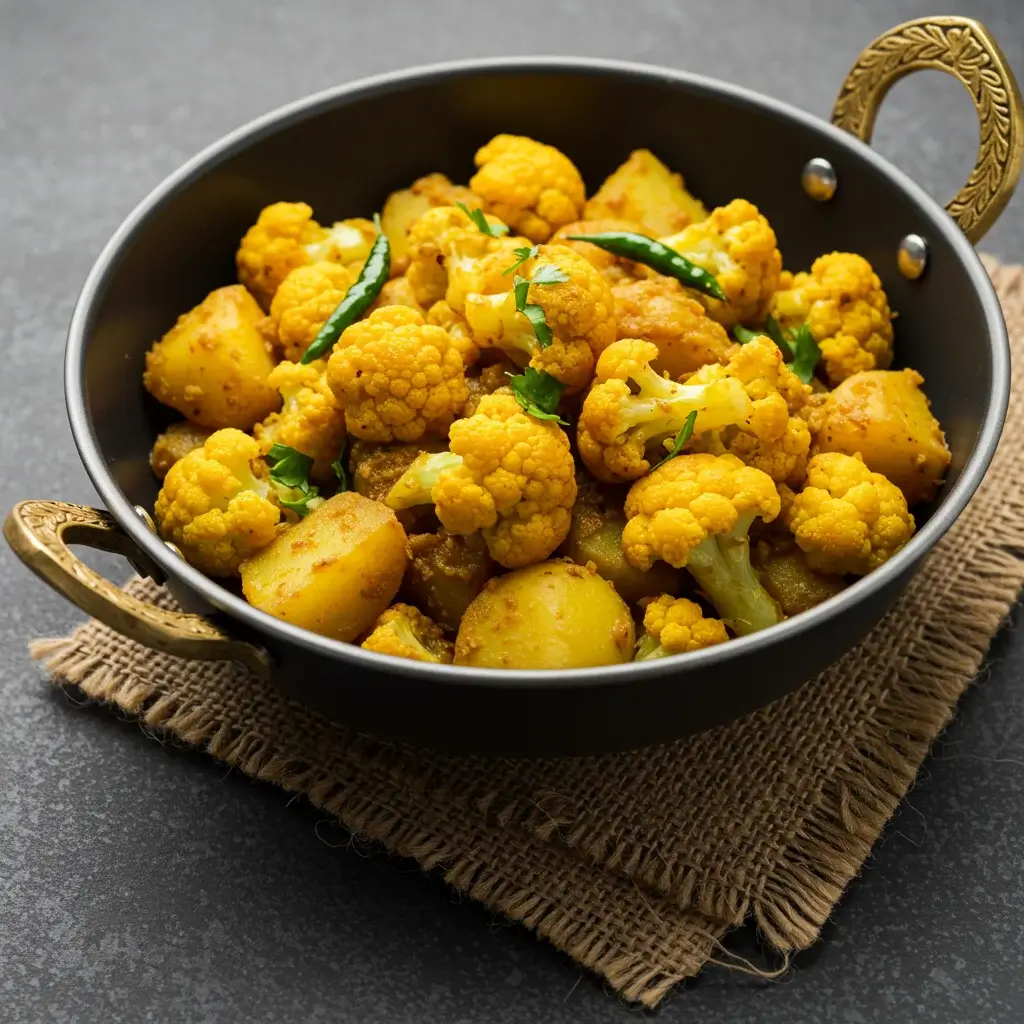

Aloo Gobi is a classic vegetarian dish that hails from the Indian subcontinent, celebrated for its perfect blend of spices and comforting flavors. This simple yet delicious dish combines the humble potato (aloo) and cauliflower (gobi) with aromatic spices to create a meal that is both hearty and satisfying. Whether you’re a seasoned home cook or a beginner in the kitchen, Aloo Gobi is an excellent addition to your culinary repertoire. In this article, we’ll explore the ingredients, step-by-step instructions, nutritional benefits, serving suggestions, and more to help you master this delicious dish.
Ingredients
Creating an authentic Aloo Gobi requires a handful of readily available ingredients. Here’s what you’ll need:
- 2 potatoes, peeled and diced
- 1 small head of cauliflower, cut into florets
- 1 onion, chopped
- 2 tomatoes, chopped
- 2 tablespoons oil
- 1 teaspoon cumin seeds
- 1 teaspoon turmeric powder
- 1 teaspoon coriander powder
- 1 teaspoon garam masala
- Salt to taste
- Fresh cilantro for garnish
Instructions
Making Aloo Gobi is a straightforward process that involves a few simple steps. Follow these instructions to create a flavorful dish:
- Heat the Oil: Begin by heating the oil in a pan over medium heat. Once hot, add the cumin seeds and sauté until they begin to splutter, releasing their aromatic essence.
- Cook the Onions: Add the chopped onions to the pan and cook until they turn golden brown. This step is crucial for building a rich base flavor for the dish.
- Add Tomatoes: Stir in the chopped tomatoes and cook until they soften, forming a luscious tomato-onion mixture.
- Spice It Up: Incorporate the turmeric powder, coriander powder, and salt into the mixture. Stir well to ensure the spices are evenly distributed.
- Prepare the Vegetables: Add the diced potatoes and cauliflower florets to the pan. Stir the vegetables thoroughly to coat them with the spice mixture.
- Simmer: Pour in a little water to help the vegetables cook evenly. Cover the pan and let it simmer for about 20 minutes or until the potatoes and cauliflower are tender.
- Final Touch: Sprinkle garam masala over the cooked vegetables and mix well. Garnish with fresh cilantro leaves before serving to add a burst of freshness.
Nutrition Facts
Aloo Gobi is not only delicious but also packed with nutritional benefits. Here’s a breakdown of the nutrition facts per serving:
- Calories: 180
- Protein: 4g
- Carbohydrates: 35g
- Dietary Fiber: 5g
- Fat: 4g
- Sugar: 3g
This nutritious dish is a great source of dietary fiber and carbohydrates, making it a filling and wholesome option for vegetarians and non-vegetarians alike.
How to Serve Aloo Gobi
Aloo Gobi, a beloved vegetarian dish from Indian cuisine, is renowned for its harmonious blend of flavors and textures. Its versatility allows it to complement a wide array of dishes and dining styles. Here are several serving suggestions to enhance your dining experience and make the most out of this delightful dish:
With Rice
Steamed Basmati Rice: One of the most traditional ways to enjoy Aloo Gobi is with a fluffy portion of steamed basmati rice. The aromatic qualities of basmati rice, with its long grains and nutty flavor, pair beautifully with the spiced potatoes and cauliflower in Aloo Gobi. The rice acts as a neutral base, allowing the vibrant flavors of the curry to shine.
Jeera Rice: For an added layer of flavor, consider serving Aloo Gobi with jeera rice, which is basmati rice cooked with cumin seeds. The warm, earthy undertones of cumin complement the spices in Aloo Gobi, creating a well-rounded meal. A touch of ghee or butter can also be added to the rice for a richer taste.
With Bread
Indian Breads: Aloo Gobi can be enjoyed alongside various types of Indian bread, enhancing both the texture and flavor profile of the meal.
- Roti: This whole wheat flatbread is soft and pliable, making it perfect for scooping up the Aloo Gobi. The slight chewiness of roti pairs well with the tender vegetables in the dish.
- Naan: For a richer option, serve Aloo Gobi with garlic naan or butter naan. The crispy exterior and soft, fluffy interior of naan provide a delightful contrast to the spiced curry.
- Paratha: A flaky, layered paratha can elevate your dining experience further. The buttery, crispy texture of paratha complements the soft potatoes and cauliflower, creating a satisfying bite.
As a Side Dish
Alongside Other Dishes: Aloo Gobi shines as a side dish in a larger Indian meal. It pairs wonderfully with other curries such as Paneer Butter Masala or Chana Masala, allowing guests to enjoy a variety of flavors and textures.
For those who enjoy grilled meats, Aloo Gobi can serve as a delightful accompaniment to tandoori chicken or seekh kebabs. The spices in the dish can help balance the smoky flavors of grilled meats, creating a well-rounded plate.
Topped with Yogurt
With a Yogurt Garnish: To enhance the dish further, consider adding a dollop of plain yogurt or raita on top of your serving of Aloo Gobi. The coolness of yogurt contrasts beautifully with the spiced nature of the curry, providing a refreshing balance.
You can also prepare a simple raita by mixing yogurt with diced cucumber, mint, and a pinch of salt. This adds a crunchy texture and an additional layer of flavor, making each bite more complex and enjoyable.
Accompanied by Pickles and Chutneys
Condiments: Enhance your Aloo Gobi experience with a selection of Indian condiments. A tangy mango pickle or a spicy red chili chutney can add an extra kick to the meal, while a sweet tamarind chutney can provide a delightful contrast.
Serving these condiments on the side allows guests to customize their plates according to their taste preferences, making the meal interactive and engaging.
Final Touches
Garnishing: Don’t forget to garnish your Aloo Gobi with freshly chopped cilantro or a sprinkle of garam masala just before serving. This not only adds a pop of color but also enhances the aroma of the dish, making it even more appetizing.
By combining these serving suggestions, you can create a memorable dining experience centered around Aloo Gobi, allowing its rich flavors to take center stage while complementing it with a variety of textures and tastes. Whether you’re hosting a special occasion or simply enjoying a family meal, Aloo Gobi can be the star of the show.
Additional Tips for Elevating Your Aloo Gobi
To truly enhance your Aloo Gobi and tailor it to your taste, consider incorporating these comprehensive tips that address spice levels, consistency, freshness, and experimentation with ingredients.
Spice Level
One of the most significant aspects of Aloo Gobi is its spice profile, which can be easily adjusted to suit your taste.
- Heat Adjustment: If you enjoy a spicy kick, consider adding finely chopped green chilies or a dash of red chili powder. For those who prefer a milder dish, start with half the recommended amount of spices and gradually increase until you reach your desired heat level.
- Balancing Flavors: Be mindful of balancing the heat with other flavors in the dish. If you add more spices, a touch of sugar or a squeeze of lemon can help balance the heat. Experimenting with spice blends such as garam masala or curry powder can also provide a nuanced flavor profile without overwhelming heat.
Consistency
The consistency of your Aloo Gobi can significantly affect the overall eating experience.
- Drier Texture: For a drier version, cook the dish uncovered for most of the cooking time. This allows excess moisture to evaporate, resulting in a more robust, concentrated flavor. Stir occasionally to prevent sticking and ensure even cooking. You can also use a higher heat setting towards the end of cooking to encourage evaporation.
- Saucier Version: If you prefer a saucier Aloo Gobi, consider adding extra tomatoes, either fresh or canned, which will create a rich, flavorful base. You can also add a splash of water or vegetable broth if needed. For an even creamier texture, a spoonful of yogurt or coconut milk can be stirred in towards the end of cooking for added richness.
Freshness
Using fresh ingredients is paramount for achieving the best flavor and texture in your Aloo Gobi.
- Vegetable Quality: Select firm, vibrant potatoes and cauliflower. Fresh vegetables not only enhance the dish’s flavor but also contribute to a more appealing texture. If possible, buy locally grown produce to ensure maximum freshness.
- Herbs and Aromatics: Fresh cilantro adds a burst of flavor and a pop of color to your dish. Toss it in just before serving to maintain its bright taste. Additionally, if you use fresh ginger and garlic instead of powdered, you’ll notice a significant enhancement in the flavor profile, bringing a more aromatic and zesty quality to the dish.
Experimentation
Don’t hesitate to get creative with your Aloo Gobi by incorporating different ingredients and spices.
- Additional Spices: Beyond the classic cumin and coriander, consider adding freshly grated ginger or minced garlic for depth. A pinch of asafoetida (hing) can lend a unique umami flavor, particularly if you are aiming for a more authentic Indian taste.
- Vegetable Variations: Experiment with adding other vegetables like peas, carrots, or bell peppers to the mix for added color and nutrition. This not only increases the dish’s visual appeal but also introduces new flavors and textures.
- Herbs and Seasoning: Try incorporating dried herbs such as fenugreek leaves (kasuri methi) or fresh mint for a refreshing twist. An infusion of lemon zest can also brighten the dish, making it more vibrant.
- Cooking Techniques: Consider different cooking methods, such as roasting the vegetables before adding them to the spice mixture. This can bring out a deeper flavor and add a delightful caramelization that enhances the overall dish.
By following these tips, you can elevate your Aloo Gobi from a simple side dish to a standout centerpiece, ensuring it remains a favorite for both you and your guests. Enjoy the process of making this classic dish your own!
FAQs
1. Can I use frozen cauliflower for Aloo Gobi?
Yes, you can use frozen cauliflower if fresh is not available. However, be sure to thaw and drain it well before adding to the pan to prevent excess moisture.
2. Is Aloo Gobi vegan?
Yes, the traditional Aloo Gobi recipe is vegan as it does not contain any animal products.
3. How do I store leftovers?
Store any leftovers in an airtight container in the refrigerator for up to 3 days. Reheat gently on the stove or in the microwave before serving.
4. Can I add other vegetables to Aloo Gobi?
Absolutely! Feel free to add other vegetables like peas, carrots, or bell peppers for added color and nutrition.
Conclusion
Aloo Gobi is a quintessential Indian dish that brings together the earthy flavors of potatoes and cauliflower with a medley of vibrant spices. Easy to prepare and packed with nutrients, it’s a fantastic option for both everyday meals and special occasions. Whether you’re serving it with rice, bread, or as part of a larger feast, Aloo Gobi is sure to delight your taste buds and those of your loved ones. With the tips and instructions provided in this article, you’re well on your way to creating a delicious and authentic Aloo Gobi that captures the essence of Indian cuisine. Enjoy your culinary adventure!
The dish’s core ingredients—potatoes and cauliflower—are cooked with aromatic spices like cumin, turmeric, coriander, and garam masala, which infuse the vegetables with deep, warm flavors. The combination of these spices, along with fresh ginger, garlic, and a squeeze of lemon juice at the end, creates a balanced dish that is both savory and slightly tangy. For added texture, you can also sprinkle in some fresh cilantro or a handful of peas, offering both color and sweetness.
Aloo Gobi is versatile and can be served as a side dish or a light main course. It pairs wonderfully with naan, roti, or basmati rice. You can also adjust the heat by adding chili peppers or keeping it mild, depending on your preference. The dish is naturally vegetarian and can easily be made vegan, making it a great option for different dietary needs. Whether it’s a comforting weeknight dinner or a highlight of your next gathering, Aloo Gobi is a dish that will surely become a favorite in your culinary repertoire!
Print
Aloo Gobi Recipe
Ingredients
-
- 2 potatoes, peeled and diced
-
- 1 small head of cauliflower, cut into florets
-
- 1 onion, chopped
-
- 2 tomatoes, chopped
-
- 2 tablespoons oil
-
- 1 teaspoon cumin seeds
-
- 1 teaspoon turmeric powder
-
- 1 teaspoon coriander powder
-
- 1 teaspoon garam masala
-
- Salt to taste
-
- Fresh cilantro for garnish
Instructions
-
- Heat the Oil: Begin by heating the oil in a pan over medium heat. Once hot, add the cumin seeds and sauté until they begin to splutter, releasing their aromatic essence.
-
- Cook the Onions: Add the chopped onions to the pan and cook until they turn golden brown. This step is crucial for building a rich base flavor for the dish.
-
- Add Tomatoes: Stir in the chopped tomatoes and cook until they soften, forming a luscious tomato-onion mixture.
-
- Spice It Up: Incorporate the turmeric powder, coriander powder, and salt into the mixture. Stir well to ensure the spices are evenly distributed.
-
- Prepare the Vegetables: Add the diced potatoes and cauliflower florets to the pan. Stir the vegetables thoroughly to coat them with the spice mixture.
-
- Simmer: Pour in a little water to help the vegetables cook evenly. Cover the pan and let it simmer for about 20 minutes or until the potatoes and cauliflower are tender.
-
- Final Touch: Sprinkle garam masala over the cooked vegetables and mix well. Garnish with fresh cilantro leaves before serving to add a burst of freshness.
Nutrition
- Serving Size: one normal portion
- Calories: 180
- Sugar: 3g
- Fat: 4g
- Carbohydrates: 35g
- Fiber: 5g
- Protein: 4g