Of all the dishes that transport you straight to a sun-drenched Greek taverna, with the scent of the Aegean Sea in the air, none does it quite like Moussaka. The first time I attempted this culinary masterpiece, I was intimidated. The multiple components—the seasoned meat, the tender eggplant, the creamy, decadent béchamel—seemed like a mountain to climb. But the moment I pulled that bubbling, golden-brown casserole from the oven and the aroma of cinnamon, oregano, and baked cheese filled my kitchen, I knew it was worth every second. That evening, my family fell silent as they took their first bites, a silence that was soon replaced by murmurs of “this is the best thing you’ve ever made.” That’s the power of a truly great Moussaka. It’s not just a meal; it’s an event, a celebration of flavor, and the ultimate comfort food. This recipe is the culmination of years of tweaking and perfecting, designed to demystify the process and guarantee you a show-stopping dish that will have your loved ones asking for the recipe. It’s a labor of love, but one that rewards you tenfold with every single, glorious bite.
The Ultimate Authentic Greek Moussaka Recipe
This recipe breaks down the iconic Greek dish into manageable steps. While it involves several components, none are overly complex. The key is to prepare each element with care, as they all come together to create the final, harmonious flavor profile. We will be building three distinct layers: perfectly prepared eggplant, a rich and aromatic meat sauce, and a luxuriously creamy béchamel topping.
Ingredients
Here are the ingredients you’ll need, broken down by component for clarity.
For the Eggplant Layer:
- Eggplants: 3 large (about 3 lbs / 1.4 kg), firm and glossy
- Olive Oil: ½ cup (120 ml), for brushing
- Salt: Coarse sea salt, for drawing out moisture
For the Rich Meat Sauce:
- Olive Oil: 2 tablespoons (30 ml)
- Ground Lamb or Beef: 2 lbs (900g) – lamb is more traditional, but beef or a 50/50 mix works wonderfully.
- Onions: 2 large, finely chopped
- Garlic: 5-6 cloves, minced
- Red Wine: 1 cup (240 ml) of a dry red, like Merlot or Cabernet Sauvignon
- Crushed Tomatoes: 1 can (28 oz / 800g)
- Tomato Paste: 2 tablespoons (30g)
- Cinnamon Stick: 1
- Ground Cinnamon: ½ teaspoon
- Dried Oregano: 1 tablespoon
- Bay Leaf: 1
- Sugar: 1 teaspoon (to balance the acidity of the tomatoes)
- Salt: 1 ½ teaspoons (or to taste)
- Black Pepper: 1 teaspoon, freshly ground
- Fresh Parsley: ¼ cup, finely chopped
For the Creamy Béchamel Sauce (The Topping):
- Unsalted Butter: ½ cup (113g)
- All-Purpose Flour: ½ cup (65g)
- Whole Milk: 4 cups (1 liter), warmed
- Large Eggs: 2, lightly beaten
- Parmesan or Kefalotyri Cheese: 1 cup (100g), finely grated, plus more for topping
- Ground Nutmeg: ½ teaspoon, freshly grated
- Salt: ½ teaspoon
- White Pepper: ¼ teaspoon
Step-by-Step Instructions for Making Moussaka
Follow these detailed instructions carefully. The process is broken down into preparing the components, assembling the dish, and baking it to perfection.
Part 1: Preparing the Eggplant
This is a crucial step to prevent a watery moussaka. We are going to salt the eggplant to draw out excess moisture and bitterness, then roast it instead of frying to reduce the overall oiliness of the dish.
- Slice and Salt: Wash and dry the eggplants. Trim the ends and slice them lengthwise into ½-inch (about 1.5 cm) thick planks.
- Sweat the Eggplant: Arrange the eggplant slices in a single layer on baking sheets lined with paper towels. Sprinkle them generously on both sides with coarse sea salt. Let them sit for 30-60 minutes. You will see beads of water form on the surface – this is exactly what you want!
- Rinse and Dry: Thoroughly rinse the salt off each eggplant slice under cold water. Pat them completely dry with paper towels or a clean kitchen towel. Don’t skip this drying step, or they will steam instead of roast.
- Roast the Slices: Preheat your oven to 400°F (200°C). Line two large baking sheets with parchment paper. Arrange the dried eggplant slices in a single layer. Brush both sides of each slice lightly with olive oil.
- Bake: Roast for 15-20 minutes, flipping halfway through, until they are tender and lightly golden. Set them aside.
Part 2: Crafting the Rich Meat Sauce
While the eggplant is sweating or roasting, you can begin the meat sauce. A slow, gentle simmer is key to developing its deep, complex flavor.
- Sauté Aromatics: In a large, heavy-bottomed pot or Dutch oven, heat 2 tablespoons of olive oil over medium-high heat. Add the chopped onions and sauté for 5-7 minutes until they are soft and translucent. Add the minced garlic and cook for another minute until fragrant.
- Brown the Meat: Add the ground lamb or beef to the pot. Break it up with a wooden spoon and cook until it’s browned all over. Drain off any excess fat.
- Deglaze and Simmer: Pour in the red wine to deglaze the pan, scraping up any browned bits from the bottom of the pot. Let the wine bubble and reduce by about half, which should take 3-4 minutes.
- Add Flavorings: Stir in the crushed tomatoes, tomato paste, cinnamon stick, ground cinnamon, dried oregano, bay leaf, sugar, salt, and pepper.
- Slow Simmer: Bring the sauce to a gentle simmer. Reduce the heat to low, cover the pot, and let it cook for at least 1 hour (or up to 1.5 hours). The longer it simmers, the richer the flavor will be. The sauce should be thick and not watery.
- Finish the Sauce: Remove the sauce from the heat. Discard the cinnamon stick and bay leaf. Stir in the fresh chopped parsley. Taste and adjust seasoning if necessary.
Part 3: Whisking the Perfect Béchamel Sauce
This creamy topping is the crowning glory of the Moussaka. Take your time to ensure it’s smooth and lump-free.
- Warm the Milk: Gently warm the milk in a saucepan or in the microwave. Do not let it boil. Warm milk incorporates more easily into the roux and helps prevent lumps.
- Make the Roux: In a medium saucepan, melt the butter over medium-low heat. Once melted, whisk in the flour. Cook the mixture, whisking constantly, for 1-2 minutes. This is called a roux, and cooking it briefly removes the raw flour taste.
- Incorporate the Milk: Gradually pour the warm milk into the roux, about a cup at a time, whisking vigorously and constantly. Make sure each addition of milk is fully incorporated and the sauce is smooth before adding the next.
- Thicken the Sauce: Continue cooking over medium heat, whisking frequently, until the sauce thickens enough to coat the back of a spoon (about 8-10 minutes).
- Temper the Eggs: This is a critical step to prevent scrambled eggs in your sauce. In a separate bowl, lightly beat the two eggs. Slowly ladle about one cup of the hot béchamel sauce into the eggs, whisking the eggs constantly as you pour. This gently raises the temperature of the eggs.
- Combine and Finish: Pour the warmed egg mixture back into the saucepan with the rest of the béchamel, whisking continuously. Remove the saucepan from the heat.
- Add Cheese and Seasoning: Stir in the grated Parmesan cheese, freshly grated nutmeg, salt, and white pepper until the cheese is melted and the sauce is silky smooth.
Part 4: Assembling and Baking the Moussaka
Now it’s time to bring all the delicious components together.
- Preheat Oven and Prepare Dish: Lower the oven temperature to 350°F (175°C). Lightly grease a large, deep 9×13 inch (or equivalent) baking dish.
- First Eggplant Layer: Arrange half of the roasted eggplant slices in a single, slightly overlapping layer on the bottom of the baking dish.
- Meat Sauce Layer: Spoon all of the meat sauce over the eggplant and spread it into an even layer.
- Second Eggplant Layer: Arrange the remaining eggplant slices over the meat sauce.
- Béchamel Topping: Carefully pour the prepared béchamel sauce over the top layer of eggplant. Use a spatula to spread it evenly, ensuring it covers the entire surface.
- Final Touches: Sprinkle a little extra grated Parmesan cheese and a pinch of nutmeg or cinnamon over the top of the béchamel.
- Bake: Place the dish on a baking sheet to catch any potential drips. Bake in the preheated oven for 45-60 minutes, or until the top is beautifully golden brown and the sauce is bubbling around the edges.
- THE MOST IMPORTANT STEP: REST! Remove the Moussaka from the oven and let it rest for at least 30-45 minutes before cutting and serving. This is non-negotiable! It allows the layers to set, so you can cut clean, beautiful squares that hold their shape. Cutting into it too early will result in a soupy, delicious mess.
Nutrition Facts
- Servings: 10-12 servings
- Calories per serving (approximate): 550-650 kcal
Disclaimer: The nutritional information is an estimate and can vary depending on the specific ingredients used (e.g., fat content of the meat, type of cheese).
Preparation Time
- Active Prep Time: 1 hour 15 minutes
- Cook Time: 2 hours (includes simmering the sauce and baking)
- Resting Time: 45 minutes
- Total Time: Approximately 4 hours
How to Serve Moussaka
Moussaka is a rich and hearty main course, so it doesn’t need much accompaniment. The goal is to serve it with sides that complement its flavors without overwhelming them.
- Let it Shine: Serve the moussaka as the star of the show. Cut it into generous squares and use a good, wide spatula to lift it cleanly from the dish.
- Simple Salads: The perfect pairing is a crisp, refreshing Greek salad (Horiatiki) with tomatoes, cucumbers, red onion, Kalamata olives, and a block of feta cheese, dressed simply with olive oil and oregano. The acidity and freshness cut through the richness of the moussaka beautifully.
- Crusty Bread: A side of crusty bread or warm pita is essential for sopping up every last bit of the delicious meat and béchamel sauce from the plate.
- Light Vegetable Sides: If you want another side, consider simple steamed or roasted green beans with lemon and olive oil, or a side of braised greens (Horta).
- Wine Pairing:
- Red Wine: A medium-bodied Greek red like Agiorgitiko is a classic choice. A Merlot or a Pinot Noir would also work well.
- White Wine: If you prefer white, a crisp Assyrtiko from Santorini provides a wonderful acidic balance to the dish’s richness.
Additional Tips for Moussaka Mastery
- Don’t Underestimate the Eggplant Prep: Salting and roasting the eggplant is the secret to a perfect texture and a moussaka that isn’t watery or greasy. Frying is traditional but adds a lot of oil; roasting is a healthier, more foolproof method.
- The Spice is Right: Don’t be shy with the “warm” spices. The cinnamon and nutmeg are not overpowering but provide a subtle, authentic warmth that is the signature of a great Greek moussaka. Using a whole cinnamon stick in the sauce infuses a deeper, more complex flavor than just ground cinnamon alone.
- Patience with the Meat Sauce: The magic of the meat sauce happens during the long, slow simmer. Rushing this step will result in a sauce that lacks depth. Let it reduce until it’s thick and the flavors have had time to meld together completely.
- Potato Layer Variation: For an even heartier version (or if you have eggplant skeptics), you can add a layer of potatoes. Peel and slice 2-3 large potatoes into thin rounds, parboil them for 5-7 minutes until slightly tender, drain well, and use them as the very bottom layer in your baking dish.
- Make it Ahead: Moussaka is a fantastic make-ahead dish. You can assemble the entire casserole a day in advance (without baking), cover it tightly with plastic wrap, and refrigerate. Just remember to take it out of the fridge for 30-40 minutes to come to room temperature before baking. You may need to add 10-15 minutes to the baking time.
Frequently Asked Questions (FAQ)
1. Why did my moussaka turn out watery?
This is the most common issue and almost always comes down to the eggplant. If you don’t properly salt the eggplant to draw out its high water content, that water will release into the dish during baking, creating a soupy meat sauce and a loose structure. Ensure you salt, rest, rinse, and thoroughly pat dry the slices before roasting. Also, make sure your meat sauce is simmered down until it’s nice and thick.
2. Can I make vegetarian moussaka?
Absolutely! To make a delicious vegetarian version, simply replace the ground meat with an equal amount of cooked brown or green lentils, or a mixture of finely chopped mushrooms and walnuts. Sauté the mushrooms until they release their liquid and it evaporates before proceeding with the recipe as written. The rich tomato and spice base works wonderfully with these vegetarian substitutes.
3. What’s the difference between Greek Moussaka and other versions (like Turkish)?
The most significant difference lies in the topping. Greek Moussaka is famous for its thick, creamy, baked béchamel sauce top layer. In contrast, Turkish musakka is often not layered in the same way. It’s more of a stew of eggplant and meat, often served with a tomato-based sauce without the creamy topping, and sometimes served at room temperature. Both are delicious, but the Greek version is the rich, layered casserole most people picture.
4. Do I have to use lamb? Can I use beef?
While ground lamb lends a distinct, slightly gamey, and very traditional flavor, high-quality ground beef is a fantastic and widely used substitute. For the best of both worlds, many people (myself included) love to use a 50/50 mixture of ground lamb and ground beef. This gives you the rich depth of lamb with the familiar flavor of beef.
5. How do I freeze moussaka for later?
Moussaka freezes exceptionally well. You have two options:
- Freeze Unbaked: Assemble the entire moussaka in a freezer-safe dish, but do not bake it. Cover it tightly with a layer of plastic wrap and then a layer of aluminum foil. It can be frozen for up to 3 months. To cook, thaw it in the refrigerator overnight, then let it sit on the counter for 30 minutes before baking as directed (it may need an extra 15-20 minutes).
- Freeze Baked: Bake the moussaka as directed and let it cool completely. You can freeze the entire casserole or individual portions. Wrap well and freeze for up to 3 months. Reheat from frozen in a 350°F (175°C) oven until hot all the way through (about 45-60 minutes for portions, longer for a whole one), or thaw in the fridge first to speed up reheating time.
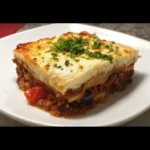
Authentic Greek Moussaka Recipe
Ingredients
For the Eggplant Layer:
- Eggplants: 3 large (about 3 lbs / 1.4 kg), firm and glossy
- Olive Oil: ½ cup (120 ml), for brushing
- Salt: Coarse sea salt, for drawing out moisture
For the Rich Meat Sauce:
- Olive Oil: 2 tablespoons (30 ml)
- Ground Lamb or Beef: 2 lbs (900g) – lamb is more traditional, but beef or a 50/50 mix works wonderfully.
- Onions: 2 large, finely chopped
- Garlic: 5-6 cloves, minced
- Red Wine: 1 cup (240 ml) of a dry red, like Merlot or Cabernet Sauvignon
- Crushed Tomatoes: 1 can (28 oz / 800g)
- Tomato Paste: 2 tablespoons (30g)
- Cinnamon Stick: 1
- Ground Cinnamon: ½ teaspoon
- Dried Oregano: 1 tablespoon
- Bay Leaf: 1
- Sugar: 1 teaspoon (to balance the acidity of the tomatoes)
- Salt: 1 ½ teaspoons (or to taste)
- Black Pepper: 1 teaspoon, freshly ground
- Fresh Parsley: ¼ cup, finely chopped
For the Creamy Béchamel Sauce (The Topping):
- Unsalted Butter: ½ cup (113g)
- All-Purpose Flour: ½ cup (65g)
- Whole Milk: 4 cups (1 liter), warmed
- Large Eggs: 2, lightly beaten
- Parmesan or Kefalotyri Cheese: 1 cup (100g), finely grated, plus more for topping
- Ground Nutmeg: ½ teaspoon, freshly grated
- Salt: ½ teaspoon
- White Pepper: ¼ teaspoon
Instructions
Part 1: Preparing the Eggplant
This is a crucial step to prevent a watery moussaka. We are going to salt the eggplant to draw out excess moisture and bitterness, then roast it instead of frying to reduce the overall oiliness of the dish.
- Slice and Salt: Wash and dry the eggplants. Trim the ends and slice them lengthwise into ½-inch (about 1.5 cm) thick planks.
- Sweat the Eggplant: Arrange the eggplant slices in a single layer on baking sheets lined with paper towels. Sprinkle them generously on both sides with coarse sea salt. Let them sit for 30-60 minutes. You will see beads of water form on the surface – this is exactly what you want!
- Rinse and Dry: Thoroughly rinse the salt off each eggplant slice under cold water. Pat them completely dry with paper towels or a clean kitchen towel. Don’t skip this drying step, or they will steam instead of roast.
- Roast the Slices: Preheat your oven to 400°F (200°C). Line two large baking sheets with parchment paper. Arrange the dried eggplant slices in a single layer. Brush both sides of each slice lightly with olive oil.
- Bake: Roast for 15-20 minutes, flipping halfway through, until they are tender and lightly golden. Set them aside.
Part 2: Crafting the Rich Meat Sauce
While the eggplant is sweating or roasting, you can begin the meat sauce. A slow, gentle simmer is key to developing its deep, complex flavor.
- Sauté Aromatics: In a large, heavy-bottomed pot or Dutch oven, heat 2 tablespoons of olive oil over medium-high heat. Add the chopped onions and sauté for 5-7 minutes until they are soft and translucent. Add the minced garlic and cook for another minute until fragrant.
- Brown the Meat: Add the ground lamb or beef to the pot. Break it up with a wooden spoon and cook until it’s browned all over. Drain off any excess fat.
- Deglaze and Simmer: Pour in the red wine to deglaze the pan, scraping up any browned bits from the bottom of the pot. Let the wine bubble and reduce by about half, which should take 3-4 minutes.
- Add Flavorings: Stir in the crushed tomatoes, tomato paste, cinnamon stick, ground cinnamon, dried oregano, bay leaf, sugar, salt, and pepper.
- Slow Simmer: Bring the sauce to a gentle simmer. Reduce the heat to low, cover the pot, and let it cook for at least 1 hour (or up to 1.5 hours). The longer it simmers, the richer the flavor will be. The sauce should be thick and not watery.
- Finish the Sauce: Remove the sauce from the heat. Discard the cinnamon stick and bay leaf. Stir in the fresh chopped parsley. Taste and adjust seasoning if necessary.
Part 3: Whisking the Perfect Béchamel Sauce
This creamy topping is the crowning glory of the Moussaka. Take your time to ensure it’s smooth and lump-free.
- Warm the Milk: Gently warm the milk in a saucepan or in the microwave. Do not let it boil. Warm milk incorporates more easily into the roux and helps prevent lumps.
- Make the Roux: In a medium saucepan, melt the butter over medium-low heat. Once melted, whisk in the flour. Cook the mixture, whisking constantly, for 1-2 minutes. This is called a roux, and cooking it briefly removes the raw flour taste.
- Incorporate the Milk: Gradually pour the warm milk into the roux, about a cup at a time, whisking vigorously and constantly. Make sure each addition of milk is fully incorporated and the sauce is smooth before adding the next.
- Thicken the Sauce: Continue cooking over medium heat, whisking frequently, until the sauce thickens enough to coat the back of a spoon (about 8-10 minutes).
- Temper the Eggs: This is a critical step to prevent scrambled eggs in your sauce. In a separate bowl, lightly beat the two eggs. Slowly ladle about one cup of the hot béchamel sauce into the eggs, whisking the eggs constantly as you pour. This gently raises the temperature of the eggs.
- Combine and Finish: Pour the warmed egg mixture back into the saucepan with the rest of the béchamel, whisking continuously. Remove the saucepan from the heat.
- Add Cheese and Seasoning: Stir in the grated Parmesan cheese, freshly grated nutmeg, salt, and white pepper until the cheese is melted and the sauce is silky smooth.
Part 4: Assembling and Baking the Moussaka
Now it’s time to bring all the delicious components together.
- Preheat Oven and Prepare Dish: Lower the oven temperature to 350°F (175°C). Lightly grease a large, deep 9×13 inch (or equivalent) baking dish.
- First Eggplant Layer: Arrange half of the roasted eggplant slices in a single, slightly overlapping layer on the bottom of the baking dish.
- Meat Sauce Layer: Spoon all of the meat sauce over the eggplant and spread it into an even layer.
- Second Eggplant Layer: Arrange the remaining eggplant slices over the meat sauce.
- Béchamel Topping: Carefully pour the prepared béchamel sauce over the top layer of eggplant. Use a spatula to spread it evenly, ensuring it covers the entire surface.
- Final Touches: Sprinkle a little extra grated Parmesan cheese and a pinch of nutmeg or cinnamon over the top of the béchamel.
- Bake: Place the dish on a baking sheet to catch any potential drips. Bake in the preheated oven for 45-60 minutes, or until the top is beautifully golden brown and the sauce is bubbling around the edges.
- THE MOST IMPORTANT STEP: REST! Remove the Moussaka from the oven and let it rest for at least 30-45 minutes before cutting and serving. This is non-negotiable! It allows the layers to set, so you can cut clean, beautiful squares that hold their shape. Cutting into it too early will result in a soupy, delicious mess.
Nutrition
- Serving Size: One Normal Portion
- Calories: 550-650