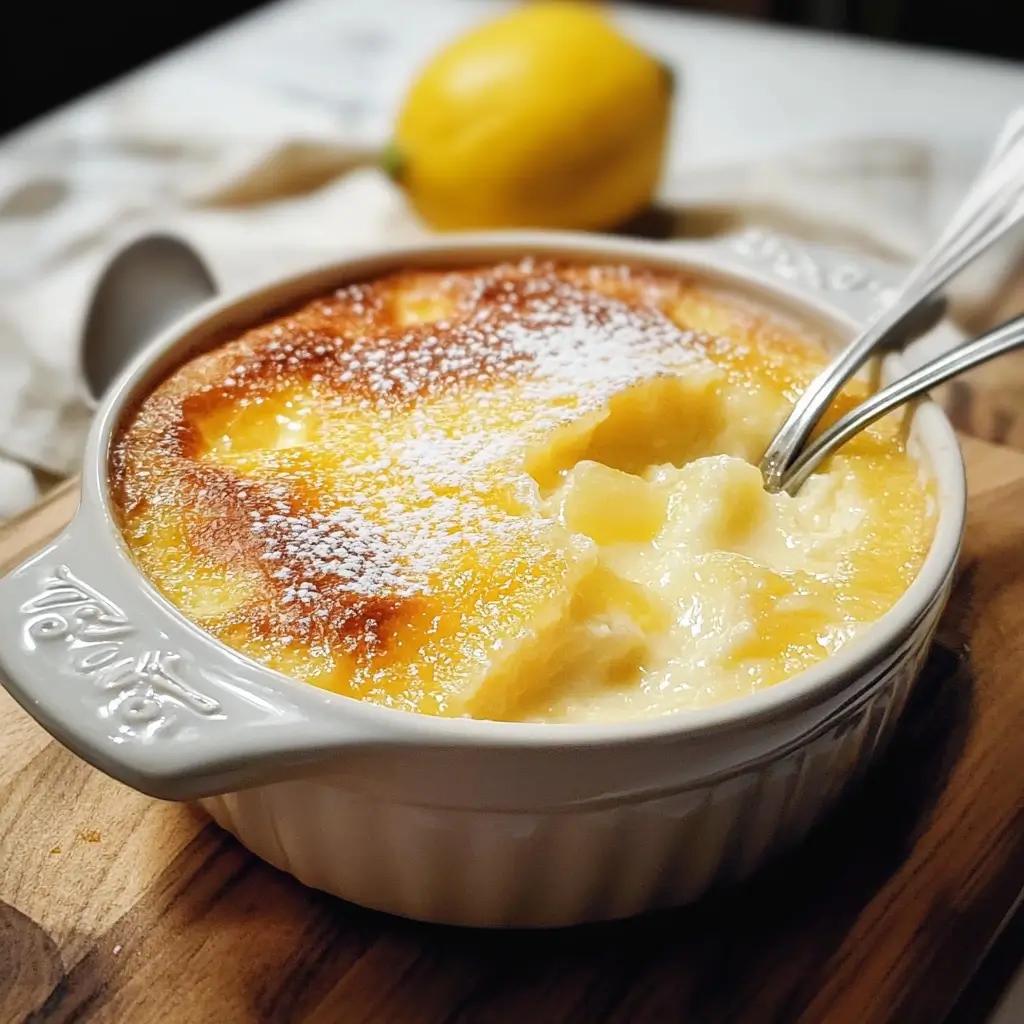

Ah, the Baked Lemon Pudding. If there’s one dessert that feels like a warm, sunny hug on a cool day, this is it. The first time I made this, I was skeptical. How could such simple ingredients transform into something so… magical? My family gathered around the table, spoons poised, a little unsure of what to expect from the humble-looking dish. But with the first bite, a collective “Mmmm” echoed through the dining room. The light, almost soufflé-like cake topping gave way to a luscious, tangy lemon sauce pooling at the bottom of the ramekin. It was an instant hit. The kids loved the sweet-tart surprise, my partner adored the sophisticated yet comforting flavour, and I, well, I was just thrilled to have discovered a dessert that was both incredibly easy to make and impressively delicious. It’s since become a staple for everything from casual weeknight treats to special occasion dinners. It’s the kind of recipe that makes you feel like a culinary wizard, with minimal effort. The bright zestiness of the lemon is perfectly balanced by the sweetness, creating a dessert that’s refreshing rather than heavy, a perfect end to any meal.
Complete Recipe: The Ultimate Baked Lemon Pudding
This Baked Lemon Pudding is a delightful paradox – a single batter that miraculously separates during baking into a light, tender cake layer on top and a rich, creamy lemon sauce beneath. It’s a classic comfort dessert that’s surprisingly easy to whip up. Get ready for a burst of sunshine in every spoonful!
Ingredients You’ll Need:
- Unsalted Butter: 4 tablespoons (1/2 stick or 57g), softened, plus extra for greasing the baking dish
- Granulated Sugar: 1 cup (200g), plus extra for dusting the dish (optional)
- Large Eggs: 3, separated (yolks and whites in different bowls)
- Lemon Zest: From 2 large lemons (about 2 tablespoons, finely grated)
- Fresh Lemon Juice: 1/3 cup (from those 2 large lemons, approximately 80ml)
- All-Purpose Flour: 1/2 cup (60g), sifted
- Salt: 1/4 teaspoon
- Whole Milk: 1 cup (240ml), at room temperature
- Boiling Water: For the water bath (bain-marie)
Equipment:
- An 8×8 inch square baking dish or a 1.5-quart casserole dish (or 6-8 individual ramekins)
- A larger baking pan (e.g., a 9×13 inch pan) to create a water bath
- Electric mixer (handheld or stand mixer)
- Mixing bowls
- Whisk
- Spatula
Step-by-Step Instructions: Crafting Your Luscious Lemon Pudding
Follow these instructions carefully, and you’ll be rewarded with a dessert that’s pure magic. The key is in the gentle handling of the egg whites and the transformative power of the water bath.
- Preheat and Prepare:
- Preheat your oven to 350°F (175°C).
- Generously grease your chosen baking dish (or individual ramekins) with butter. For an extra touch and to prevent sticking, you can lightly dust the greased dish with granulated sugar.
- Place the greased baking dish inside the larger baking pan. This will be used for the water bath later.
- Cream Butter and Sugar:
- In a large mixing bowl, using an electric mixer on medium speed, cream together the 4 tablespoons of softened butter and 1 cup of granulated sugar until the mixture is light, pale, and fluffy. This usually takes about 2-3 minutes. Scrape down the sides of the bowl occasionally to ensure even mixing. This step incorporates air, which contributes to the pudding’s light texture.
- Add Egg Yolks and Lemon:
- Add the egg yolks one at a time, beating well after each addition until fully incorporated. The mixture should become richer in color and even creamier.
- Beat in the finely grated lemon zest and fresh lemon juice until well combined. The aroma at this stage is already incredibly inviting!
- Combine Dry Ingredients:
- In a separate medium bowl, whisk together the sifted all-purpose flour and the salt. Sifting the flour helps to prevent lumps and makes for a lighter cake topping.
- Alternate Flour and Milk:
- Gradually add the flour mixture to the wet ingredients in three additions, alternating with the room temperature milk in two additions. Begin and end with the flour mixture.
- Mix on low speed only until just combined after each addition. Be careful not to overmix at this stage; overmixing can develop the gluten in the flour too much, resulting in a tougher cake layer. The batter might look a little thin or even slightly curdled at this point – this is perfectly normal.
- Whip Egg Whites:
- In a separate, scrupulously clean, and dry mixing bowl (preferably glass or metal), use clean beaters to whip the egg whites. Start on medium-low speed until they become foamy.
- Increase the speed to medium-high and continue to beat until stiff peaks form. Stiff peaks mean that when you lift the beaters, the peaks hold their shape and may curl over slightly at the very tip, like a bird’s beak. The egg whites should look glossy. Be careful not to overbeat them until they become dry or chunky.
- Fold in Egg Whites:
- Gently fold about one-third of the whipped egg whites into the lemon batter using a spatula. This lightens the batter and makes it easier to incorporate the rest of the egg whites.
- Add the remaining egg whites and continue to fold them in gently but thoroughly until no white streaks remain. Use an up-and-over motion, rotating the bowl, to avoid deflating the air you’ve just whipped in. The final batter will be light and airy.
- Assemble and Bake:
- Pour the prepared batter into your greased baking dish (or divide evenly among ramekins) that’s already sitting in the larger baking pan.
- Carefully pour boiling water into the larger baking pan, around the baking dish, until the water reaches about halfway up the sides of the dish containing the batter. This is the water bath (bain-marie). The steam created by the water bath helps the pudding cook gently and evenly, preventing it from drying out and encouraging the magical separation of sauce and cake.
- Carefully transfer the entire setup (larger pan with the dish and water) into the preheated oven.
- Baking Time:
- Bake for 40-50 minutes if using a single baking dish, or 30-35 minutes for individual ramekins.
- The pudding is done when the top is golden brown, slightly puffed, and springs back when lightly touched. A skewer inserted into the cakey top layer should come out mostly clean (a little moisture is fine, but it shouldn’t be wet batter). The sauce will be bubbling underneath.
- Cool Slightly and Serve:
- Carefully remove the larger pan from the oven. Then, very carefully, lift the baking dish (or ramekins) out of the hot water bath and place it on a wire rack to cool for at least 10-15 minutes.
- The pudding will continue to set as it cools, and the sauce will thicken slightly. It’s best served warm.
Nutritional Information (Approximate)
Please note that these are estimates and can vary based on specific ingredient brands, exact quantities, and serving sizes.
- Servings: This recipe typically yields 6 to 8 servings.
- Calories per serving (if 6 servings): Approximately 300-350 calories.
- Calories per serving (if 8 servings): Approximately 225-265 calories.
This dessert is a delightful treat, primarily offering carbohydrates from sugar and flour, fats from butter and egg yolks, and protein from eggs and milk. The lemon provides a good dose of Vitamin C. While it’s a dessert to be enjoyed in moderation, its fresh, bright flavors make it feel lighter than many other rich puddings.
Time Commitment: From Prep to Perfection
Understanding the time involved can help you plan when to make this delightful dessert.
- Preparation Time: Approximately 20-25 minutes. This includes gathering ingredients, zesting and juicing lemons, mixing the batter, and preparing the water bath. If you’re meticulous or new to separating eggs, it might take a few extra minutes.
- Baking Time: 40-50 minutes for a large dish, or 30-35 minutes for individual ramekins.
- Cooling Time (Recommended): At least 10-15 minutes before serving. This allows the sauce to thicken slightly and the pudding to set, making it easier to serve and preventing burnt tongues!
- Total Time: Approximately 1 hour 10 minutes to 1 hour 30 minutes.
While it’s not an instant dessert, the active preparation is relatively short, and the oven does most of the work. The enchanting result is well worth the wait!
How to Serve Your Baked Lemon Pudding: Presentation Matters
This Baked Lemon Pudding is delicious on its own, but a few simple touches can elevate its presentation and enjoyment. Here are some ideas:
- Simply Warm:
- Serve the pudding warm, spooned directly from the baking dish (if using a large one) or in its individual ramekin. Make sure to scoop deep to get both the cakey top and the luscious lemon sauce.
- Dusting of Sweetness:
- A light dusting of confectioners’ (powdered) sugar over the golden top just before serving adds a touch of elegance and a slight extra sweetness.
- Creamy Accompaniments:
- Whipped Cream: A generous dollop of lightly sweetened whipped cream provides a cool, creamy contrast to the warm, tangy pudding.
- Crème Fraîche: For a more sophisticated tang, serve with a spoonful of crème fraîche. Its slight sourness beautifully complements the lemon.
- Vanilla Ice Cream: A scoop of good quality vanilla ice cream melting into the warm pudding and sauce is an irresistible classic pairing.
- Fresh Fruit Garnish:
- Berries: Fresh raspberries, blueberries, or sliced strawberries add a vibrant color contrast and a burst of juicy freshness.
- Lemon Twist or Slice: A thin slice of lemon or a delicate lemon twist on top or on the side of the dish reinforces the star ingredient.
- Mint Sprig: A small sprig of fresh mint adds a pop of green and a hint of cool aroma.
- Serving Vessels:
- Individual Ramekins: Baking and serving in individual ramekins makes for an elegant presentation and easy portion control.
- Pretty Casserole Dish: If baking in a larger dish, choose one that’s oven-to-table friendly. Scoop servings into bowls or onto dessert plates.
Remember to let your guests know about the surprise sauce at the bottom – it’s the best part!
Additional Tips for Pudding Perfection
To ensure your Baked Lemon Pudding turns out perfectly every time, keep these five tips in mind:
- Room Temperature Ingredients are Key:
- Ensure your butter, eggs, and milk are at room temperature. Softened butter creams more easily with sugar, incorporating more air for a lighter texture. Room temperature eggs and milk emulsify better into the batter, resulting in a smoother, more uniform pudding and preventing the batter from curdling or separating prematurely.
- Don’t Overmix After Adding Flour:
- Once you start adding the flour and milk, mix only until the ingredients are just combined. Overmixing develops the gluten in the flour, which can lead to a tougher, chewier cake layer instead of the desired light and tender crumb. A few small lumps are perfectly fine.
- The Magic of the Gentle Fold:
- When incorporating the whipped egg whites, be gentle! Use a large spatula and a light touch with a “folding” motion (cutting down through the middle, scraping along the bottom, and bringing batter up and over). The air you’ve painstakingly whipped into the whites is crucial for the light, soufflé-like texture of the cake topping. Deflating them will result in a denser pudding.
- Water Bath Wisdom (Bain-Marie):
- Don’t skip the water bath! It’s essential for this type of pudding. The hot water insulates the baking dish, ensuring gentle, even heat. This prevents the edges from overbaking or cracking before the center is cooked and, most importantly, it helps create the steamy environment that allows the batter to separate into its distinct cake and sauce layers. Use boiling or very hot water for the bath to maintain the oven temperature.
- Fresh Lemon is Best (Zest and Juice):
- For the most vibrant and authentic lemon flavor, always use freshly squeezed lemon juice and freshly grated lemon zest. Bottled lemon juice often has a muted or slightly artificial taste. The zest, which contains the lemon’s essential oils, provides an intense lemony aroma and flavor that juice alone cannot replicate. Zest only the yellow part of the peel, avoiding the bitter white pith underneath.
Frequently Asked Questions (FAQ)
Here are answers to some common questions about making Baked Lemon Pudding:
- Q: Why didn’t my pudding separate into a cake and sauce layer?
- A: This is the most common issue. Several factors could be at play:
- Overmixing egg whites or batter: If the egg whites were deflated during folding, or if the batter was overmixed after adding flour, the structure might be compromised.
- Incorrect oven temperature: Too high or too low an oven temperature can affect the separation.
- Skipping the water bath: The water bath is crucial for the gentle cooking process that allows the layers to form. Without it, the pudding might cook too quickly or unevenly.
- Ingredient temperatures: Using cold ingredients can sometimes hinder proper emulsification and separation.
- A: This is the most common issue. Several factors could be at play:
- Q: Can I make Baked Lemon Pudding ahead of time?
- A: Baked Lemon Pudding is definitely best enjoyed warm, shortly after it’s made, as this is when the texture and temperature contrast between the cake and sauce are most delightful. However, you can make it a few hours ahead and keep it at room temperature, then gently rewarm individual portions in the microwave (briefly!) or in a low oven before serving. The texture might change slightly upon reheating.
- Q: How do I store leftovers?
- A: Allow any leftover pudding to cool completely to room temperature. Then, cover the dish tightly with plastic wrap or transfer the pudding to an airtight container. Store it in the refrigerator for up to 2-3 days. The sauce will thicken considerably when cold. You can eat it cold (it’s quite nice!) or rewarm it gently.
- Q: Can I use Meyer lemons for this recipe?
- A: Yes, you can use Meyer lemons! Meyer lemons are a cross between a regular lemon and a mandarin orange, so they are less tart and have a slightly sweeter, more floral flavor. If using Meyer lemons, you might want to slightly reduce the amount of sugar in the recipe if you prefer a tangier dessert, or simply enjoy the subtly different flavor profile they bring. The pudding will still be delicious.
- Q: My batter looked curdled after adding the lemon juice or milk. Is that okay?
- A: Yes, it’s quite common for the batter to look slightly curdled or separated, especially after adding the acidic lemon juice or if your milk was a bit too cold. Don’t worry too much about this. As long as you’ve followed the steps correctly, especially the gentle folding of the egg whites, the pudding should still bake up beautifully and separate as intended. The baking process often magically resolves these minor cosmetic issues in the batter.

Baked Lemon Pudding Recipe
Ingredients
- Unsalted Butter: 4 tablespoons (1/2 stick or 57g), softened, plus extra for greasing the baking dish
- Granulated Sugar: 1 cup (200g), plus extra for dusting the dish (optional)
- Large Eggs: 3, separated (yolks and whites in different bowls)
- Lemon Zest: From 2 large lemons (about 2 tablespoons, finely grated)
- Fresh Lemon Juice: 1/3 cup (from those 2 large lemons, approximately 80ml)
- All-Purpose Flour: 1/2 cup (60g), sifted
- Salt: 1/4 teaspoon
- Whole Milk: 1 cup (240ml), at room temperature
- Boiling Water: For the water bath (bain-marie)
Instructions
- Preheat and Prepare:
- Preheat your oven to 350°F (175°C).
- Generously grease your chosen baking dish (or individual ramekins) with butter. For an extra touch and to prevent sticking, you can lightly dust the greased dish with granulated sugar.
- Place the greased baking dish inside the larger baking pan. This will be used for the water bath later.
- Cream Butter and Sugar:
- In a large mixing bowl, using an electric mixer on medium speed, cream together the 4 tablespoons of softened butter and 1 cup of granulated sugar until the mixture is light, pale, and fluffy. This usually takes about 2-3 minutes. Scrape down the sides of the bowl occasionally to ensure even mixing. This step incorporates air, which contributes to the pudding’s light texture.
- Add Egg Yolks and Lemon:
- Add the egg yolks one at a time, beating well after each addition until fully incorporated. The mixture should become richer in color and even creamier.
- Beat in the finely grated lemon zest and fresh lemon juice until well combined. The aroma at this stage is already incredibly inviting!
- Combine Dry Ingredients:
- In a separate medium bowl, whisk together the sifted all-purpose flour and the salt. Sifting the flour helps to prevent lumps and makes for a lighter cake topping.
- Alternate Flour and Milk:
- Gradually add the flour mixture to the wet ingredients in three additions, alternating with the room temperature milk in two additions. Begin and end with the flour mixture.
- Mix on low speed only until just combined after each addition. Be careful not to overmix at this stage; overmixing can develop the gluten in the flour too much, resulting in a tougher cake layer. The batter might look a little thin or even slightly curdled at this point – this is perfectly normal.
- Whip Egg Whites:
- In a separate, scrupulously clean, and dry mixing bowl (preferably glass or metal), use clean beaters to whip the egg whites. Start on medium-low speed until they become foamy.
- Increase the speed to medium-high and continue to beat until stiff peaks form. Stiff peaks mean that when you lift the beaters, the peaks hold their shape and may curl over slightly at the very tip, like a bird’s beak. The egg whites should look glossy. Be careful not to overbeat them until they become dry or chunky.
- Fold in Egg Whites:
- Gently fold about one-third of the whipped egg whites into the lemon batter using a spatula. This lightens the batter and makes it easier to incorporate the rest of the egg whites.
- Add the remaining egg whites and continue to fold them in gently but thoroughly until no white streaks remain. Use an up-and-over motion, rotating the bowl, to avoid deflating the air you’ve just whipped in. The final batter will be light and airy.
- Assemble and Bake:
- Pour the prepared batter into your greased baking dish (or divide evenly among ramekins) that’s already sitting in the larger baking pan.
- Carefully pour boiling water into the larger baking pan, around the baking dish, until the water reaches about halfway up the sides of the dish containing the batter. This is the water bath (bain-marie). The steam created by the water bath helps the pudding cook gently and evenly, preventing it from drying out and encouraging the magical separation of sauce and cake.
- Carefully transfer the entire setup (larger pan with the dish and water) into the preheated oven.
- Baking Time:
- Bake for 40-50 minutes if using a single baking dish, or 30-35 minutes for individual ramekins.
- The pudding is done when the top is golden brown, slightly puffed, and springs back when lightly touched. A skewer inserted into the cakey top layer should come out mostly clean (a little moisture is fine, but it shouldn’t be wet batter). The sauce will be bubbling underneath.
- Cool Slightly and Serve:
- Carefully remove the larger pan from the oven. Then, very carefully, lift the baking dish (or ramekins) out of the hot water bath and place it on a wire rack to cool for at least 10-15 minutes.
- The pudding will continue to set as it cools, and the sauce will thicken slightly. It’s best served warm.
Nutrition
- Serving Size: One Normal Portion
- Calories: 300-350