
Introduction
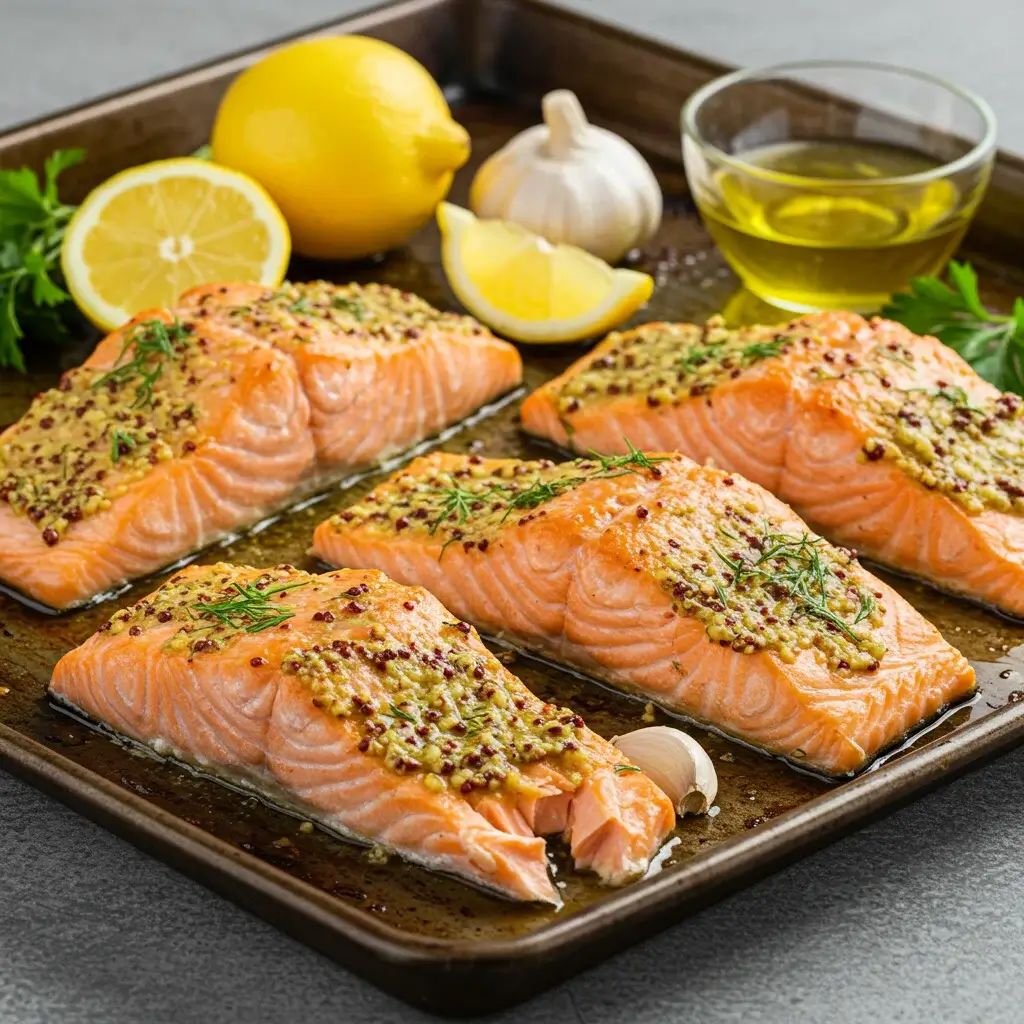
When it comes to combining health and flavor in one dish, baked salmon with garlic and Dijon mustard stands out as a perfect choice. Not only is this dish incredibly easy to prepare, but it also packs a punch of nutrients and flavors that will leave your taste buds tingling. Whether you’re a seasoned chef or a cooking novice, this recipe is designed to be quick, simple, and rewarding. With just a few ingredients and minimal preparation time, you can create a gourmet meal in the comfort of your home. Let’s dive into this delectable recipe that promises to become a staple in your culinary repertoire.
Ingredients
To create this mouthwatering baked salmon, you’ll need the following ingredients:
- 4 salmon fillets
- 3 tbsp Dijon mustard
- 2 tbsp olive oil
- 3 cloves garlic, minced
- Salt and pepper to taste
- Lemon wedges (for serving)
- Fresh herbs (like parsley or dill) for garnish
These ingredients not only contribute to the dish’s rich flavor but also provide essential nutrients, making this meal both delicious and healthy.
Instructions
Preparing this flavorful baked salmon is a breeze. Follow these simple steps to achieve the perfect dish:
- Preheat the Oven
Start by preheating your oven to 400°F (200°C). This ensures that the salmon cooks evenly and acquires a delightful, flaky texture. - Prepare the Mustard Mixture
In a small bowl, combine the Dijon mustard, olive oil, minced garlic, salt, and pepper. Mix well until all the ingredients are fully integrated, creating a smooth and aromatic sauce. - Arrange the Salmon Fillets
Place the salmon fillets on a baking sheet lined with parchment paper. This prevents sticking and makes cleanup easier. - Spread the Mustard Mixture
Generously spread the mustard mixture over the top of each salmon fillet. Ensure that the sauce covers the fillets evenly to maximize flavor. - Bake the Salmon
Put the baking sheet in the preheated oven and bake for 12-15 minutes. You’ll know the salmon is ready when it flakes easily with a fork. - Serve and Garnish
Once baked, serve the salmon with lemon wedges and garnish with fresh herbs like parsley or dill. The citrus and herbs add a refreshing note to the dish.
Nutrition Facts
Understanding the nutritional benefits of your meals is crucial for maintaining a balanced diet. Here’s the nutritional breakdown per serving of this baked salmon dish:
- Calories: 280
- Protein: 25g
- Fat: 18g
- Carbohydrates: 2g
- Fiber: 0g
This dish is an excellent source of protein and healthy fats, making it ideal for those looking to maintain a healthy lifestyle without sacrificing flavor.
How to Serve
Baked salmon with garlic and Dijon is not only a flavorful dish, but it also serves as a versatile centerpiece for a variety of meals. The rich, savory flavors of the salmon pair beautifully with numerous sides that can elevate your dining experience. Here are some comprehensive serving suggestions that will complement your meal and enhance the overall dining experience:
1. Steamed Vegetables
Adding a medley of steamed vegetables to your plate not only boosts the nutritional profile of your meal but also adds a vibrant splash of color. Consider options like:
- Broccoli: This cruciferous vegetable is rich in vitamins C and K and adds a satisfying crunch when steamed. Its slightly bitter flavor contrasts nicely with the richness of the salmon.
- Asparagus: Known for its tender texture and earthy flavor, asparagus can be lightly steamed or blanched to retain its bright green color and nutrients. A squeeze of lemon juice or a sprinkle of parmesan can enhance its flavor even further.
- Green Beans: These provide a crisp texture and a subtle sweetness. Toss them in a bit of olive oil, salt, and pepper before steaming to enhance their flavor. For an added touch, consider garnishing with toasted almonds for a delightful crunch.
2. Rice or Quinoa
Serving your baked salmon over a bed of grains can turn your meal into a hearty feast. Here are some options:
- Rice: White or brown rice serves as a classic side. Brown rice is particularly nutritious, providing fiber and a nutty flavor that complements the salmon. For a twist, try flavored rice, such as lemon herb or wild rice mixed with nuts and dried fruits for added texture and taste.
- Quinoa: This ancient grain is a protein powerhouse and has a unique, fluffy texture. Cook it in vegetable or chicken broth for extra flavor, and consider mixing in herbs like parsley or cilantro, or add diced vegetables for a colorful presentation.
3. Salad
A fresh green salad adds a light and refreshing element to your meal, balancing the richness of the salmon. Here are some salad ideas:
- Mixed Greens: A simple salad of mixed greens such as arugula, spinach, and romaine can be dressed with a light vinaigrette made from olive oil, balsamic vinegar, and a touch of honey. Add sliced cucumbers, cherry tomatoes, and radishes for extra crunch.
- Caesar Salad: For a heartier option, a Caesar salad with crisp romaine lettuce, croutons, and a tangy Caesar dressing can be a delightful accompaniment. The savory flavors of Parmesan and anchovy in the dressing complement the salmon beautifully.
- Beet and Goat Cheese Salad: The earthiness of roasted beets paired with creamy goat cheese creates a sophisticated side that’s not only delicious but also visually appealing.
4. Mashed Potatoes
Creamy mashed potatoes are a comforting classic that pairs wonderfully with baked salmon. You can elevate this traditional dish in several ways:
- Classic Mashed Potatoes: Made with butter, cream, and seasoning, these are always a hit. Use Yukon Gold potatoes for a buttery flavor and smooth texture.
- Garlic Mashed Potatoes: Infuse your mash with roasted garlic for an extra layer of flavor that complements the garlic in the salmon dish.
- Herbed Mashed Potatoes: Incorporate fresh herbs like chives, parsley, or rosemary into your mashed potatoes to add freshness and color.
- Sweet Potato Mash: For a healthier twist, consider sweet potatoes. Their natural sweetness pairs beautifully with savory salmon and adds a pop of color to your plate.
Final Thoughts
No matter how you choose to serve your baked salmon with garlic and Dijon, each of these side dishes will enhance the meal and provide a delightful balance of flavors and textures. Whether you’re hosting a dinner party or enjoying a quiet meal at home, these serving suggestions are sure to impress your guests and elevate your dining experience. Enjoy the delightful combination of flavors and the satisfaction of a well-rounded meal!!
Additional Tips
To ensure your baked salmon is a success every time, consider these additional tips:
Choose Fresh Salmon
When it comes to cooking salmon, the quality of your fish plays a critical role in the final outcome. Fresh salmon not only tastes better but also has a firmer texture that holds up well during cooking. Look for vibrant, deep-colored fillets with a moist appearance, as these indicators suggest freshness. If you’re purchasing salmon from a market, don’t hesitate to ask the fishmonger about the catch date or source—sustainable, wild-caught salmon often offers superior flavor compared to farmed varieties. Additionally, if fresh salmon isn’t available, opt for high-quality frozen salmon; just ensure it is properly thawed before cooking to maintain its texture.
Adjust Cooking Time
Salmon fillets can vary significantly in thickness, and this factor is vital in determining the appropriate cooking time. A general rule of thumb is to bake salmon for about 4 to 6 minutes per half-inch of thickness at 375°F (190°C). For thicker fillets, you may need to extend the baking time by an additional 2 to 4 minutes. Conversely, thinner fillets will require less time—watch them closely to avoid overcooking. An overcooked salmon can become dry and flaky, while undercooked salmon may have an undesirable texture. To achieve the perfect balance, consider cutting a small slit in the thickest part of the fillet to check for doneness; the flesh should be opaque and flake easily with a fork.
Experiment with Herbs
While traditional herb choices like parsley and dill pair beautifully with salmon, don’t shy away from experimenting with other herbs to elevate your dish. Fresh basil can impart a sweet and slightly peppery flavor, while cilantro can add a fresh, citrusy note that complements the richness of the fish. You might also consider using tarragon for its anise-like flavor or chives for a mild onion taste. For a more robust profile, try marinating your salmon with a blend of herbs and spices, creating a unique flavor experience with each meal. Additionally, incorporating citrus zests—such as lemon, lime, or orange—can add brightness and enhance the overall flavor of the dish.
Use a Meat Thermometer
For the best results and to avoid the pitfalls of overcooking, using a meat thermometer is highly recommended. This tool allows you to accurately gauge the internal temperature of the salmon, ensuring it reaches the FDA-recommended safe temperature of 145°F (63°C). To use a meat thermometer effectively, insert it into the thickest part of the fillet, making sure not to touch the baking dish, as this can give a false reading. Once the salmon reaches the desired temperature, remove it from the oven and let it rest for a few minutes; this resting period allows the juices to redistribute, resulting in a moister, more flavorful dish. Remember that the salmon will continue to cook slightly from residual heat after being removed from the oven, so it’s okay to take it out just before it reaches the target temperature.
By following these detailed tips, you can elevate your baked salmon dishes, ensuring they are not only delicious but also consistently successful. With attention to quality ingredients, precise cooking times, creative seasoning, and careful monitoring of doneness, you’ll be well on your way to mastering the art of baking salmon.
FAQs
Q: Can I use another type of mustard instead of Dijon?
A: Yes, you can substitute Dijon mustard with whole-grain or spicy brown mustard for a different flavor profile. Each type of mustard brings its own unique taste and texture to a dish. Whole-grain mustard, with its coarser texture and robust flavor, adds a delightful crunch and a slightly tangy taste, making it a great choice for salads, marinades, or as a condiment. On the other hand, spicy brown mustard has a sharper kick and a more intense flavor, which can elevate the dish significantly, especially in recipes where a bolder taste is desired. If you are looking to mimic the mildness of Dijon, consider mixing yellow mustard with a touch of honey or vinegar to balance out the flavors and achieve a similar tangy sweetness.
Q: What can I do if I don’t have fresh garlic?
A: If fresh garlic isn’t available, you can use 1 teaspoon of garlic powder as a substitute. Garlic powder is a convenient alternative as it carries a concentrated flavor that can enhance a variety of dishes. However, it’s important to note that garlic powder is more potent than fresh garlic, so you might want to start with a smaller amount and adjust according to your taste preferences. Additionally, if you have garlic salt on hand, you can use that as a substitute as well, but be mindful of reducing any additional salt in the recipe. For a more nuanced flavor, you can also use garlic-infused oil or sautéed shallots as alternatives, which can offer a similar aromatic quality to your dish.
Q: Is this recipe suitable for meal prep?
A: Absolutely! This dish can be prepared in advance and stored in the refrigerator for up to 3 days, making it a convenient option for meal prep. When meal prepping, consider portioning the dish into individual containers to make it easy to grab and go throughout the week. This not only saves time but also helps maintain portion control. To ensure freshness and flavor, store the components separately, if possible; for instance, keeping sauces or dressings in separate containers until you are ready to eat can prevent sogginess. Additionally, when reheating, it’s best to use a microwave or oven to retain the dish’s original texture and flavor, rather than cooking it too long, which can dry out the salmon or other ingredients.
Q: Can I cook the salmon on a grill instead of baking it?
A: Yes, grilling the salmon is an excellent alternative that adds a smoky flavor. Grilling not only enhances the taste but also provides a beautiful char that can elevate the dish visually. When grilling, it’s important to preheat your grill to medium-high heat and oil the grates to prevent sticking. Depending on the thickness of your salmon fillets, adjust the cooking time accordingly; generally, salmon should be cooked for about 4 to 6 minutes per side. For added flavor, consider marinating the salmon beforehand or brushing it with olive oil and seasoning it with herbs and spices. To check for doneness, use a meat thermometer—salmon is perfectly cooked when it reaches an internal temperature of 145°F (63°C). If you prefer a more pronounced flavor and texture contrast, consider using cedar planks or adding wood chips to the grill for a delightful infusion of smokiness.
Q: How can I tell if the salmon is cooked properly?
A: The salmon is done when it flakes easily with a fork and has a slightly opaque appearance. A good visual cue is to look for the color change; raw salmon is a vibrant pink, while properly cooked salmon should appear lighter and somewhat opaque. If you’re unsure, use a fork to gently press on the thickest part of the fillet; if it flakes apart easily without any resistance, it’s ready to eat. Additionally, a meat thermometer can provide the most accurate reading; the FDA recommends cooking fish to an internal temperature of 145°F (63°C). For those who prefer a more tender and moist texture, you might opt to remove the salmon from heat just before it reaches this temperature, allowing it to continue cooking slightly from residual heat. Remember, salmon can dry out if overcooked, so err on the side of caution to maintain its rich, buttery flavor.
Conclusion
Baked salmon with garlic and Dijon is more than just a dish; it’s a celebration of flavors and healthful eating. With its simple preparation and delectable taste, this recipe is perfect for any occasion, whether it’s a quick weeknight dinner or a special gathering with friends and family. By following the steps outlined above, you’ll create a meal that’s both satisfying and nourishing. Enjoy the delightful balance of tangy mustard, aromatic garlic, and succulent salmon, and relish the compliments from your delighted diners. Enhance your culinary skills and savor the joy of cooking this exquisite salmon dish today!
Print
Baked Salmon with Garlic and Dijon Recipe
Ingredients
- 4 salmon fillets
- 3 tbsp Dijon mustard
- 2 tbsp olive oil
- 3 cloves garlic, minced
- Salt and pepper to taste
- Lemon wedges (for serving)
- Fresh herbs (like parsley or dill) for garnish
Instructions
- Preheat the Oven
Start by preheating your oven to 400°F (200°C). This ensures that the salmon cooks evenly and acquires a delightful, flaky texture. - Prepare the Mustard Mixture
In a small bowl, combine the Dijon mustard, olive oil, minced garlic, salt, and pepper. Mix well until all the ingredients are fully integrated, creating a smooth and aromatic sauce. - Arrange the Salmon Fillets
Place the salmon fillets on a baking sheet lined with parchment paper. This prevents sticking and makes cleanup easier. - Spread the Mustard Mixture
Generously spread the mustard mixture over the top of each salmon fillet. Ensure that the sauce covers the fillets evenly to maximize flavor. - Bake the Salmon
Put the baking sheet in the preheated oven and bake for 12-15 minutes. You’ll know the salmon is ready when it flakes easily with a fork. - Serve and Garnish
Once baked, serve the salmon with lemon wedges and garnish with fresh herbs like parsley or dill. The citrus and herbs add a refreshing note to the dish.
Nutrition
- Serving Size: one normal portion
- Calories: 280
- Fat: 18g
- Carbohydrates: 2g
- Fiber: 0g
- Protein: 25g