
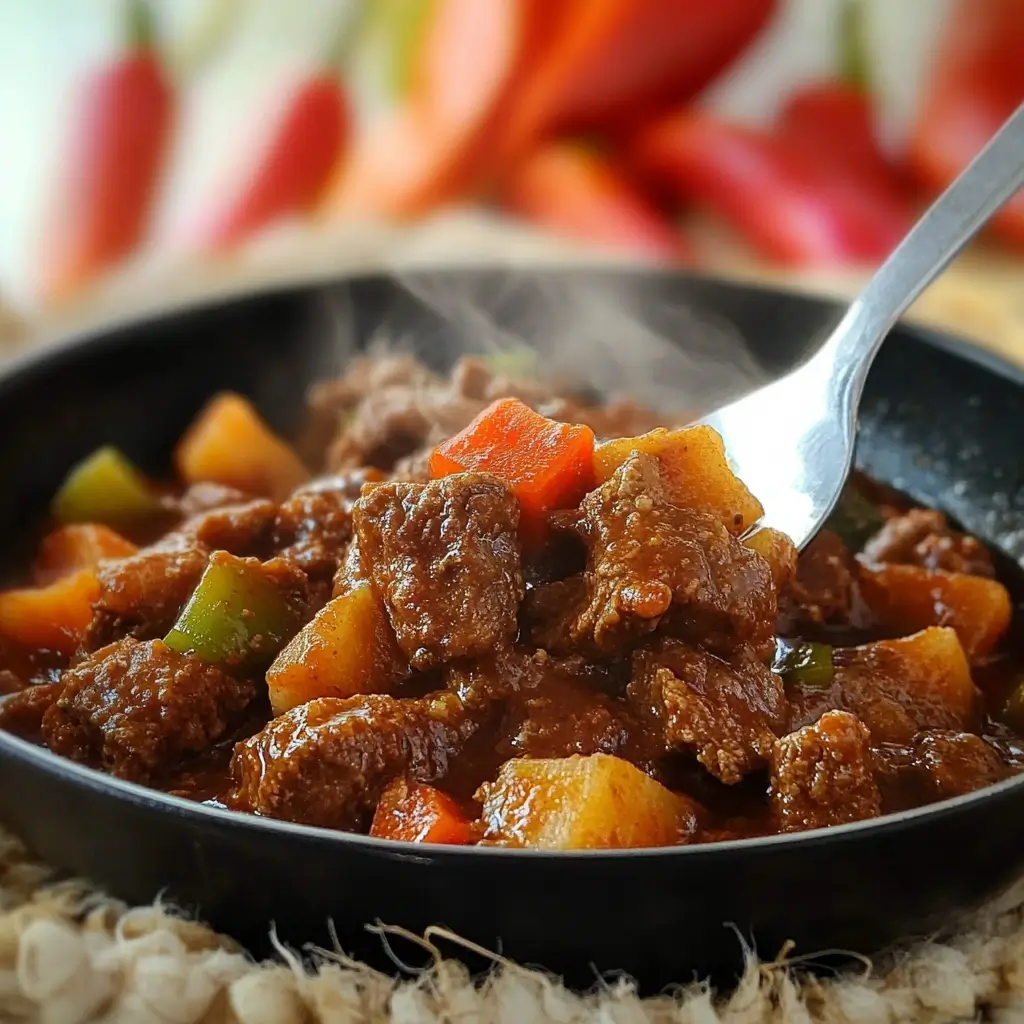
There’s something truly special about the aroma that fills the kitchen when a pot of Kaldereta is simmering away. It’s a scent that speaks of home, of comfort, and of gatherings around a table laden with delicious food. For my family, Beef Kaldereta has become a cherished staple, a dish that reliably brings smiles and satisfied sighs. The rich, tomato-based sauce, infused with the savory depth of liver spread and the vibrant tang of olives and pickles, clings lovingly to tender chunks of beef. Every spoonful is an explosion of flavors – sweet, savory, tangy, and just a hint of spice – a testament to the beautiful complexity of Filipino cuisine. Whether it’s a chilly evening or a festive occasion, Kaldereta never fails to impress and nourish. It’s a dish that’s both comforting in its familiarity and exciting in its depth of taste, a culinary journey in every bite. And while it may seem intimidating at first glance, trust me, with a little patience and love, you too can create this Filipino classic in your own kitchen and experience the joy it brings.
Ingredients
To embark on your Kaldereta journey, gather these essential ingredients. Quality ingredients are key to unlocking the full potential of this dish, so choose the freshest produce and the best beef you can find.
For the Beef:
- 2 lbs Beef Chuck, cut into 1.5-inch cubes – Beef chuck is ideal for Kaldereta because it’s rich in connective tissue which breaks down during long cooking, resulting in incredibly tender and flavorful meat. Look for pieces with good marbling for even more flavor.
- 1 tablespoon Vegetable Oil – Any neutral cooking oil will work, such as canola oil or grapeseed oil. This is for searing the beef and sautéing the aromatics.
- 1 teaspoon Salt – Essential for seasoning the beef and enhancing the overall flavors of the dish.
- ½ teaspoon Black Pepper – Freshly ground black pepper adds a touch of spice and depth.
For the Sauté and Flavor Base:
- 1 large Onion, chopped – Yellow or white onion works well. Onion forms the aromatic base of the Kaldereta, adding sweetness and depth.
- 4 cloves Garlic, minced – Garlic is another crucial aromatic, adding pungent flavor that complements the richness of the stew.
- 1 inch Ginger, peeled and minced – Ginger provides a warm, subtle spice and a hint of freshness, balancing the richness of the other flavors.
- 1 large Red Bell Pepper, seeded and chopped – Red bell pepper adds sweetness, color, and a slight crunch to the stew. You can also use green or yellow bell pepper, or a combination.
- 1 large Green Bell Pepper, seeded and chopped – Green bell pepper adds a slightly different flavor profile than red, contributing a bit of bitterness that balances the sweetness.
For the Sauce and Stew:
- 1 (15 ounce) can Tomato Sauce – Tomato sauce forms the base of the Kaldereta’s signature rich and tangy sauce. Choose a good quality tomato sauce for the best flavor.
- 1 (12 ounce) can Tomato Paste – Tomato paste intensifies the tomato flavor and adds richness and depth to the sauce. It also helps to thicken the stew.
- 1 cup Beef Broth – Beef broth adds another layer of beefy flavor to the stew. Low sodium broth is recommended to control the salt level.
- ½ cup Liver Spread – This is a key ingredient that gives Kaldereta its unique and characteristic flavor. Liver spread adds a savory, slightly earthy, and umami-rich depth to the sauce. You can find this in Filipino or Asian grocery stores.
- ¼ cup Soy Sauce – Soy sauce adds saltiness and umami depth, enhancing the overall flavor profile of the stew.
- ¼ cup Vinegar (white or apple cider vinegar) – Vinegar provides a crucial tanginess that balances the richness and sweetness of the other ingredients. It also tenderizes the beef slightly.
- 2 tablespoons Brown Sugar – Brown sugar adds a touch of sweetness that complements the savory and tangy flavors, and helps to balance the acidity of the tomatoes and vinegar.
- 1 teaspoon Fish Sauce (optional, but recommended) – Fish sauce, even in small amounts, adds a significant umami boost to the dish, intensifying the savory flavors.
- 1 teaspoon Dried Oregano – Oregano adds a warm, slightly peppery, and earthy note that complements the tomato-based sauce beautifully.
- 1 Bay Leaf – Bay leaf adds a subtle, aromatic depth to the stew. Remember to remove it before serving.
- Water, as needed – Water will be added as needed to maintain the desired consistency of the stew during simmering.
For the Vegetables and Garnishes:
- 2 medium Potatoes, peeled and cubed – Potatoes add heartiness and absorb the flavorful sauce, becoming wonderfully tender and delicious.
- 2 medium Carrots, peeled and sliced into rounds – Carrots add sweetness, color, and nutritional value to the stew. They also become tender and slightly sweet as they cook.
- ½ cup Green Olives, pitted – Green olives add a salty, briny, and slightly tangy flavor that is characteristic of Kaldereta.
- ¼ cup Sweet Pickle Relish – Sweet pickle relish provides a unique sweet and tangy element that balances the savory richness of the stew. It’s a key ingredient that contributes to the signature Kaldereta flavor.
- Optional Garnishes: Chopped Cilantro, Grated Cheese (like cheddar or Monterey Jack) – Garnishes add freshness, visual appeal, and additional flavor layers. Cilantro provides a fresh, herbaceous note, while cheese adds richness and a creamy texture.
Instructions
Now, let’s bring all these wonderful ingredients together to create a pot of flavorful Beef Kaldereta. Follow these step-by-step instructions for a delicious and authentic result.
Step 1: Sear the Beef
- Pat the beef cubes dry with paper towels. Drying the beef is crucial for achieving a good sear. Excess moisture will steam the beef instead of browning it.
- Season the beef generously with salt and black pepper. Seasoning at this stage helps to draw out moisture and enhance the flavor of the beef.
- Heat vegetable oil in a large, heavy-bottomed pot or Dutch oven over medium-high heat. A heavy-bottomed pot ensures even heat distribution and prevents scorching.
- Once the oil is hot and shimmering, add the beef cubes in batches, ensuring not to overcrowd the pot. Overcrowding will lower the temperature of the pot and prevent proper searing. Work in batches for best results.
- Sear the beef on all sides until nicely browned. This should take about 2-3 minutes per side. Searing creates a flavorful crust on the beef through the Maillard reaction, which significantly enhances the depth of flavor in the stew.
- Remove the seared beef from the pot and set aside. Set aside the beef to prevent it from overcooking while you prepare the sauce.
Step 2: Sauté the Aromatics
- In the same pot, reduce the heat to medium. Lowering the heat prevents the aromatics from burning.
- Add the chopped onion and sauté until softened and translucent, about 5-7 minutes. Sautéing the onion releases its sweetness and creates a flavorful base.
- Add the minced garlic and ginger and sauté for another minute until fragrant. Garlic and ginger are delicate and can burn easily, so sauté them briefly until their aroma is released.
- Add the chopped red and green bell peppers and sauté for 3-5 minutes until slightly softened. Sautéing the bell peppers softens them slightly and enhances their sweetness.
Step 3: Build the Sauce
- Stir in the tomato sauce and tomato paste. Cook for 2-3 minutes, stirring constantly, until the tomato paste is fragrant and slightly caramelized. Cooking the tomato paste deepens its flavor and removes some of its raw acidity.
- Pour in the beef broth, soy sauce, vinegar, and brown sugar. These ingredients form the liquid and flavor base of the Kaldereta sauce.
- Add the liver spread, fish sauce (if using), dried oregano, and bay leaf. These ingredients are the flavor powerhouses of Kaldereta, contributing its unique and complex taste.
- Stir well to combine all ingredients and ensure the liver spread is dissolved into the sauce. Thoroughly mixing ensures even distribution of flavors.
Step 4: Simmer the Beef
- Return the seared beef to the pot. Submerge the beef in the flavorful sauce.
- Bring the mixture to a simmer, then reduce the heat to low, cover the pot, and simmer gently for 2-2.5 hours, or until the beef is fork-tender. Low and slow simmering is key to tenderizing the beef and allowing the flavors to meld together beautifully. Check for tenderness after 2 hours; cooking time may vary depending on the size of the beef cubes and the pot.
- Check the pot occasionally and add water as needed to maintain the sauce consistency and prevent it from drying out. The sauce should be thick but not dry. Add water in small increments to adjust the consistency.
Step 5: Add Vegetables and Finish
- After the beef is tender, add the cubed potatoes and carrot rounds to the pot. Add the potatoes and carrots later in the cooking process as they cook faster than the beef and you want them to retain some texture.
- Continue to simmer, covered, for another 20-25 minutes, or until the potatoes and carrots are tender. Cook until the vegetables are tender but not mushy.
- Stir in the green olives and sweet pickle relish. Add these ingredients towards the end to retain their distinct flavors and textures.
- Simmer for another 5 minutes to heat through and allow the flavors to meld. A final simmer allows the olives and pickle relish to infuse their flavors into the stew.
- Taste and adjust seasoning if necessary. Add more salt, pepper, vinegar, or sugar to your liking. Seasoning to taste is crucial for achieving the perfect flavor balance. Adjust according to your preferences.
- Remove the bay leaf before serving. Bay leaf has served its purpose and should be removed before serving.
Step 6: Serve and Garnish
- Ladle the Beef Kaldereta into bowls.
- Garnish with chopped cilantro and grated cheese (optional).
- Serve hot with steamed white rice. Steamed white rice is the classic accompaniment to Kaldereta, perfect for soaking up the rich and flavorful sauce.
Nutrition Facts
(Estimated values, may vary based on specific ingredients and portion sizes)
Serving Size: Approximately 1.5 cups
Servings per recipe: 8
Approximate Calories per serving: 450-550 calories
Per Serving (Approximate Values):
- Calories: 450-550
- Protein: 35-40g
- Fat: 25-35g
- Saturated Fat: 10-15g
- Cholesterol: 120-150mg
- Sodium: 800-1000mg
- Carbohydrates: 20-25g
- Fiber: 3-4g
- Sugar: 8-10g
Note: These are estimated nutritional values and can vary depending on the specific ingredients used, cooking methods, and portion sizes. For more accurate nutritional information, use a nutrition calculator with the specific brands and quantities of ingredients you use. This recipe is relatively high in protein and fat due to the beef and liver spread, and moderate in carbohydrates. It also contains a significant amount of sodium due to soy sauce, fish sauce (if used), and olives.
Preparation Time
- Prep time: 30 minutes (chopping vegetables, cubing beef, gathering ingredients)
- Cook time: 2 hours 45 minutes – 3 hours (including simmering time for beef and vegetables)
- Total time: 3 hours 15 minutes – 3 hours 30 minutes
While the total time may seem lengthy, most of it is hands-off simmering time, allowing you to focus on other tasks while the Kaldereta develops its rich flavors. The active cooking time is relatively short.
How to Serve
Beef Kaldereta is a versatile and comforting dish that is traditionally served hot and enjoyed with a variety of accompaniments. Here are some popular and delicious ways to serve it:
- With Steamed White Rice: This is the classic and most essential pairing. The fluffy white rice serves as the perfect canvas to soak up the rich and flavorful Kaldereta sauce.
- Over Noodles: For a change of pace, try serving Kaldereta over cooked egg noodles or pancit canton (Filipino egg noodles). The noodles provide a different texture and complement the stew beautifully.
- With Crusty Bread: Serve with slices of crusty bread, such as baguette or pan de sal (Filipino bread rolls), for dipping into the delicious sauce.
- As a Main Course with Side Dishes: Make it a complete Filipino feast by serving Kaldereta alongside other classic dishes such as:
- Garlic Fried Rice (Sinangag): A flavorful fried rice that complements the richness of Kaldereta.
- Pancit Bihon (Filipino Rice Noodles): A light and savory noodle dish.
- Lumpiang Shanghai (Filipino Spring Rolls): Crispy and savory spring rolls for a delightful appetizer.
- Ensaladang Mangga (Mango Salad): A refreshing and tangy mango salad to balance the richness of the stew.
- As a Party Dish: Kaldereta is a great dish to serve at parties and gatherings. It can be made ahead of time and reheated, and it’s always a crowd-pleaser.
Additional Tips for Perfect Kaldereta
To elevate your Beef Kaldereta from good to exceptional, consider these helpful tips:
- Marinate the Beef (Optional but Recommended): For even more tender and flavorful beef, marinate the beef cubes for at least 30 minutes, or up to overnight, in a mixture of soy sauce, vinegar, and a little bit of sugar. Marinating helps to tenderize the meat and infuse it with flavor from the inside out.
- Don’t Skip the Liver Spread: Liver spread is the secret ingredient that gives Kaldereta its unique and characteristic flavor. While you might be tempted to omit it, it truly makes a difference. If you’re hesitant about the flavor, start with a smaller amount and adjust to your taste in future batches.
- Sauté the Tomato Paste Properly: Cooking the tomato paste with the aromatics is crucial. Sautéing it for a few minutes until it darkens slightly and becomes fragrant intensifies its flavor and removes some of its raw acidity, leading to a richer and more complex sauce.
- Low and Slow Simmering is Key: Patience is your friend when making Kaldereta. Simmering the beef low and slow for a sufficient amount of time is essential for achieving tender, melt-in-your-mouth meat. Resist the urge to rush the cooking process.
- Adjust Sweetness and Tanginess to Your Taste: Kaldereta is all about balance – the interplay of savory, sweet, and tangy flavors. Taste and adjust the seasoning as needed, adding more brown sugar for sweetness or vinegar for tanginess to achieve your preferred flavor profile. Some people prefer a sweeter Kaldereta, while others prefer it more tangy.
FAQ Section
Q1: Can I make Kaldereta without liver spread?
A: While liver spread is a key ingredient for authentic Kaldereta flavor, you can make a version without it. The flavor will be different, less complex and less rich. If you omit liver spread, you can try adding a bit more tomato paste or a tablespoon of peanut butter to add some depth and richness to the sauce, though it won’t fully replicate the unique taste of liver spread.
Q2: Can I use a different cut of beef besides beef chuck?
A: Beef chuck is highly recommended for Kaldereta because it has good marbling and connective tissue that breaks down during long cooking, resulting in tender and flavorful meat. However, you can use other cuts suitable for braising, such as beef brisket or beef short ribs. These cuts will also become tender with long simmering. Avoid leaner cuts like sirloin or steak as they can become tough when braised for extended periods.
Q3: Can I make Kaldereta ahead of time?
A: Yes, Kaldereta is an excellent make-ahead dish! In fact, it often tastes even better the next day as the flavors have had more time to meld and develop. You can prepare the Kaldereta completely and store it in an airtight container in the refrigerator for up to 3-4 days. Reheat gently on the stovetop over medium-low heat until heated through. You may need to add a little water or broth if the sauce has thickened too much.
Q4: Can I freeze Kaldereta?
A: Yes, Kaldereta freezes well. Allow it to cool completely before transferring it to freezer-safe containers or freezer bags. Freeze for up to 2-3 months. Thaw overnight in the refrigerator before reheating on the stovetop. The texture of the potatoes and carrots might change slightly after freezing, but the overall flavor should remain delicious.
Q5: Can I add other vegetables to Kaldereta?
A: Yes, you can customize Kaldereta with other vegetables to your liking. Some popular additions include:
- Chickpeas (Garbanzos): Add a can of drained and rinsed chickpeas along with the potatoes and carrots for added protein and texture.
- Green Beans: Add green beans towards the end of cooking, along with the olives and pickle relish, for a touch of freshness and color.
- Mushrooms: Sauté sliced mushrooms with the onions for added earthiness.
- Peas: Stir in frozen peas a few minutes before serving for a pop of sweetness and color.
Feel free to experiment and adjust the recipe to your preferences and enjoy the delightful flavors of homemade Beef Kaldereta!
Print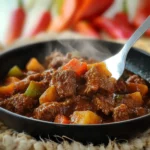
Beef Kaldereta Recipe
Ingredients
For the Beef:
- 2 lbs Beef Chuck, cut into 1.5-inch cubes – Beef chuck is ideal for Kaldereta because it’s rich in connective tissue which breaks down during long cooking, resulting in incredibly tender and flavorful meat. Look for pieces with good marbling for even more flavor.
- 1 tablespoon Vegetable Oil – Any neutral cooking oil will work, such as canola oil or grapeseed oil. This is for searing the beef and sautéing the aromatics.
- 1 teaspoon Salt – Essential for seasoning the beef and enhancing the overall flavors of the dish.
- ½ teaspoon Black Pepper – Freshly ground black pepper adds a touch of spice and depth.
For the Sauté and Flavor Base:
- 1 large Onion, chopped – Yellow or white onion works well. Onion forms the aromatic base of the Kaldereta, adding sweetness and depth.
- 4 cloves Garlic, minced – Garlic is another crucial aromatic, adding pungent flavor that complements the richness of the stew.
- 1 inch Ginger, peeled and minced – Ginger provides a warm, subtle spice and a hint of freshness, balancing the richness of the other flavors.
- 1 large Red Bell Pepper, seeded and chopped – Red bell pepper adds sweetness, color, and a slight crunch to the stew. You can also use green or yellow bell pepper, or a combination.
- 1 large Green Bell Pepper, seeded and chopped – Green bell pepper adds a slightly different flavor profile than red, contributing a bit of bitterness that balances the sweetness.
For the Sauce and Stew:
- 1 (15 ounce) can Tomato Sauce – Tomato sauce forms the base of the Kaldereta’s signature rich and tangy sauce. Choose a good quality tomato sauce for the best flavor.
- 1 (12 ounce) can Tomato Paste – Tomato paste intensifies the tomato flavor and adds richness and depth to the sauce. It also helps to thicken the stew.
- 1 cup Beef Broth – Beef broth adds another layer of beefy flavor to the stew. Low sodium broth is recommended to control the salt level.
- ½ cup Liver Spread – This is a key ingredient that gives Kaldereta its unique and characteristic flavor. Liver spread adds a savory, slightly earthy, and umami-rich depth to the sauce. You can find this in Filipino or Asian grocery stores.
- ¼ cup Soy Sauce – Soy sauce adds saltiness and umami depth, enhancing the overall flavor profile of the stew.
- ¼ cup Vinegar (white or apple cider vinegar) – Vinegar provides a crucial tanginess that balances the richness and sweetness of the other ingredients. It also tenderizes the beef slightly.
- 2 tablespoons Brown Sugar – Brown sugar adds a touch of sweetness that complements the savory and tangy flavors, and helps to balance the acidity of the tomatoes and vinegar.
- 1 teaspoon Fish Sauce (optional, but recommended) – Fish sauce, even in small amounts, adds a significant umami boost to the dish, intensifying the savory flavors.
- 1 teaspoon Dried Oregano – Oregano adds a warm, slightly peppery, and earthy note that complements the tomato-based sauce beautifully.
- 1 Bay Leaf – Bay leaf adds a subtle, aromatic depth to the stew. Remember to remove it before serving.
- Water, as needed – Water will be added as needed to maintain the desired consistency of the stew during simmering.
For the Vegetables and Garnishes:
- 2 medium Potatoes, peeled and cubed – Potatoes add heartiness and absorb the flavorful sauce, becoming wonderfully tender and delicious.
- 2 medium Carrots, peeled and sliced into rounds – Carrots add sweetness, color, and nutritional value to the stew. They also become tender and slightly sweet as they cook.
- ½ cup Green Olives, pitted – Green olives add a salty, briny, and slightly tangy flavor that is characteristic of Kaldereta.
- ¼ cup Sweet Pickle Relish – Sweet pickle relish provides a unique sweet and tangy element that balances the savory richness of the stew. It’s a key ingredient that contributes to the signature Kaldereta flavor.
- Optional Garnishes: Chopped Cilantro, Grated Cheese (like cheddar or Monterey Jack) – Garnishes add freshness, visual appeal, and additional flavor layers. Cilantro provides a fresh, herbaceous note, while cheese adds richness and a creamy texture.
Instructions
Step 1: Sear the Beef
- Pat the beef cubes dry with paper towels. Drying the beef is crucial for achieving a good sear. Excess moisture will steam the beef instead of browning it.
- Season the beef generously with salt and black pepper. Seasoning at this stage helps to draw out moisture and enhance the flavor of the beef.
- Heat vegetable oil in a large, heavy-bottomed pot or Dutch oven over medium-high heat. A heavy-bottomed pot ensures even heat distribution and prevents scorching.
- Once the oil is hot and shimmering, add the beef cubes in batches, ensuring not to overcrowd the pot. Overcrowding will lower the temperature of the pot and prevent proper searing. Work in batches for best results.
- Sear the beef on all sides until nicely browned. This should take about 2-3 minutes per side. Searing creates a flavorful crust on the beef through the Maillard reaction, which significantly enhances the depth of flavor in the stew.
- Remove the seared beef from the pot and set aside. Set aside the beef to prevent it from overcooking while you prepare the sauce.
Step 2: Sauté the Aromatics
- In the same pot, reduce the heat to medium. Lowering the heat prevents the aromatics from burning.
- Add the chopped onion and sauté until softened and translucent, about 5-7 minutes. Sautéing the onion releases its sweetness and creates a flavorful base.
- Add the minced garlic and ginger and sauté for another minute until fragrant. Garlic and ginger are delicate and can burn easily, so sauté them briefly until their aroma is released.
- Add the chopped red and green bell peppers and sauté for 3-5 minutes until slightly softened. Sautéing the bell peppers softens them slightly and enhances their sweetness.
Step 3: Build the Sauce
- Stir in the tomato sauce and tomato paste. Cook for 2-3 minutes, stirring constantly, until the tomato paste is fragrant and slightly caramelized. Cooking the tomato paste deepens its flavor and removes some of its raw acidity.
- Pour in the beef broth, soy sauce, vinegar, and brown sugar. These ingredients form the liquid and flavor base of the Kaldereta sauce.
- Add the liver spread, fish sauce (if using), dried oregano, and bay leaf. These ingredients are the flavor powerhouses of Kaldereta, contributing its unique and complex taste.
- Stir well to combine all ingredients and ensure the liver spread is dissolved into the sauce. Thoroughly mixing ensures even distribution of flavors.
Step 4: Simmer the Beef
- Return the seared beef to the pot. Submerge the beef in the flavorful sauce.
- Bring the mixture to a simmer, then reduce the heat to low, cover the pot, and simmer gently for 2-2.5 hours, or until the beef is fork-tender. Low and slow simmering is key to tenderizing the beef and allowing the flavors to meld together beautifully. Check for tenderness after 2 hours; cooking time may vary depending on the size of the beef cubes and the pot.
- Check the pot occasionally and add water as needed to maintain the sauce consistency and prevent it from drying out. The sauce should be thick but not dry. Add water in small increments to adjust the consistency.
Step 5: Add Vegetables and Finish
- After the beef is tender, add the cubed potatoes and carrot rounds to the pot. Add the potatoes and carrots later in the cooking process as they cook faster than the beef and you want them to retain some texture.
- Continue to simmer, covered, for another 20-25 minutes, or until the potatoes and carrots are tender. Cook until the vegetables are tender but not mushy.
- Stir in the green olives and sweet pickle relish. Add these ingredients towards the end to retain their distinct flavors and textures.
- Simmer for another 5 minutes to heat through and allow the flavors to meld. A final simmer allows the olives and pickle relish to infuse their flavors into the stew.
- Taste and adjust seasoning if necessary. Add more salt, pepper, vinegar, or sugar to your liking. Seasoning to taste is crucial for achieving the perfect flavor balance. Adjust according to your preferences.
- Remove the bay leaf before serving. Bay leaf has served its purpose and should be removed before serving.
Step 6: Serve and Garnish
- Ladle the Beef Kaldereta into bowls.
- Garnish with chopped cilantro and grated cheese (optional).
- Serve hot with steamed white rice. Steamed white rice is the classic accompaniment to Kaldereta, perfect for soaking up the rich and flavorful sauce.
Nutrition
- Serving Size: one normal portion
- Calories: 450-550
- Sugar: 8-10g
- Sodium: 800-1000mg
- Fat: 25-35g
- Saturated Fat: 10-15g
- Carbohydrates: 20-25g
- Fiber: 3-4g
- Protein: 35-40g
- Cholesterol: 120-150mg