
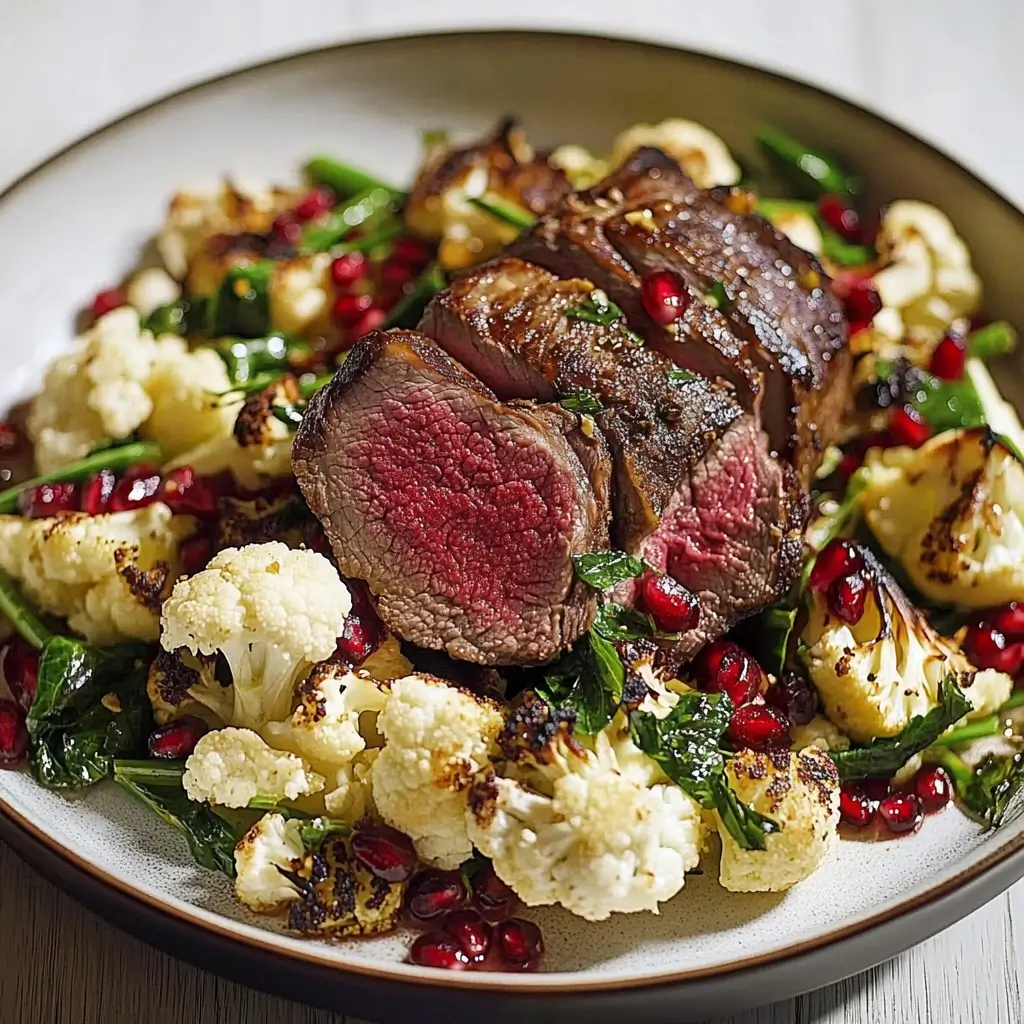
This recipe for Beef Tenderloin with Roasted Cauliflower Pomegranate Salad has become a cherished staple in our home. From the moment the aroma of roasting cauliflower and garlic fills the kitchen to the first delectable bite of tender beef paired with the vibrant salad, this dish is a true culinary delight. My family, even my notoriously picky eaters, wholeheartedly embrace this meal. The combination of succulent beef, the slightly sweet and nutty roasted cauliflower, and the burst of freshness from the pomegranate and herbs creates a symphony of flavors and textures that is both satisfying and surprisingly light. It’s perfect for a special occasion dinner yet simple enough to prepare for a weeknight indulgence. Honestly, this recipe has elevated our weeknight dinners and impressed guests alike – it’s a guaranteed crowd-pleaser and a personal favorite I’m thrilled to share.
Ingredients
For the Beef Tenderloin:
- 1.5 – 2 lbs Beef Tenderloin Roast, center-cut, trimmed of silver skin
- 2 tablespoons Olive Oil
- 2 cloves Garlic, minced
- 1 teaspoon Dried Thyme
- 1 teaspoon Dried Rosemary
- 1/2 teaspoon Salt
- 1/4 teaspoon Black Pepper
For the Roasted Cauliflower:
- 1 large head Cauliflower, cut into florets
- 2 tablespoons Olive Oil
- 2 cloves Garlic, minced
- 1/2 teaspoon Salt
- 1/4 teaspoon Black Pepper
- 1/4 teaspoon Red Pepper Flakes (optional, for a touch of heat)
For the Pomegranate Salad:
- 1 cup Pomegranate Seeds (arils)
- 1/2 cup Fresh Parsley, chopped
- 1/4 cup Fresh Mint, chopped
- 1/4 cup Toasted Pine Nuts (or slivered almonds, walnuts)
- 1/4 cup crumbled Feta Cheese (optional, for a salty creamy element)
- 2 tablespoons Olive Oil
- 1 tablespoon Lemon Juice
- 1 teaspoon Honey or Maple Syrup (optional, for a touch of sweetness)
- Salt and Black Pepper to taste
Instructions
Preparing the Beef Tenderloin:
- Preheat the Oven and Prepare the Beef: Preheat your oven to 400°F (200°C). While the oven is preheating, prepare the beef tenderloin. Pat the beef tenderloin dry with paper towels. This is crucial for achieving a good sear and ensuring the spices adhere properly. Drying the surface removes excess moisture which can hinder browning and create steam instead of a desirable crust.
- Season the Beef: In a small bowl, combine the olive oil, minced garlic, dried thyme, dried rosemary, salt, and black pepper. Mix well to create a flavorful marinade. The olive oil acts as a carrier for the flavors and helps to keep the beef moist during roasting. Garlic, thyme, and rosemary are classic pairings with beef, offering an earthy and aromatic profile.
- Rub the Beef with Marinade: Rub the marinade evenly all over the beef tenderloin, ensuring all sides are coated. Massage the marinade into the meat for a minute or two to help it penetrate and maximize flavor infusion.
- Sear the Beef (Optional but Recommended): For an extra layer of flavor and a beautifully browned crust, searing the beef before roasting is highly recommended. Heat a tablespoon of olive oil in a large oven-safe skillet (cast iron is ideal) over medium-high heat. Once the skillet is hot and the oil is shimmering, carefully place the beef tenderloin in the skillet. Sear for 2-3 minutes per side, until nicely browned. Searing caramelizes the surface of the meat, creating complex flavors through the Maillard reaction. This step significantly enhances the overall taste and texture of the beef.
- Roast the Beef: Transfer the skillet with the seared beef (or place the unseared beef on a roasting pan if skipping the searing step) to the preheated oven. Roast for approximately 20-30 minutes, or until the internal temperature reaches your desired level of doneness. Use a meat thermometer inserted into the thickest part of the tenderloin to accurately gauge the temperature.
- For Rare: 125-130°F (52-54°C)
- For Medium-Rare: 130-135°F (54-57°C)
- For Medium: 135-140°F (57-60°C)
- For Medium-Well: 140-145°F (60-63°C)
- For Well-Done: 145°F+ (63°C+)
- Rest the Beef: Once the beef reaches your desired internal temperature, remove it from the oven and transfer it to a cutting board. Tent it loosely with aluminum foil and let it rest for 10-15 minutes before slicing. Resting is crucial for allowing the juices to redistribute throughout the meat, resulting in a more tender and flavorful final product. Slicing immediately after roasting will cause the juices to run out, leading to drier beef.
Preparing the Roasted Cauliflower:
- Prepare the Cauliflower: While the beef is roasting (or while it’s resting), prepare the roasted cauliflower. Preheat the oven to 400°F (200°C) if you haven’t already. Wash and cut the cauliflower into florets of roughly similar size to ensure even cooking.
- Season the Cauliflower: In a large bowl, toss the cauliflower florets with olive oil, minced garlic, salt, black pepper, and red pepper flakes (if using). Ensure the cauliflower is evenly coated with the oil and seasonings. Tossing in a bowl allows for even distribution of the seasonings compared to just drizzling oil and spices on a baking sheet.
- Roast the Cauliflower: Spread the seasoned cauliflower florets in a single layer on a baking sheet. Avoid overcrowding the baking sheet, as this can cause the cauliflower to steam instead of roast and become soggy. If necessary, use two baking sheets. Roast for 20-25 minutes, or until the cauliflower is tender and lightly browned, flipping halfway through to ensure even roasting. Roasting brings out the natural sweetness of the cauliflower and creates slightly crispy edges, enhancing its flavor and texture.
Assembling the Pomegranate Salad:
- Combine Salad Ingredients: In a large bowl, combine the roasted cauliflower (once slightly cooled), pomegranate seeds, chopped parsley, chopped mint, toasted pine nuts (or chosen nuts), and crumbled feta cheese (if using).
- Make the Dressing: In a small bowl or jar, whisk together the olive oil, lemon juice, honey or maple syrup (if using), salt, and black pepper. Taste and adjust seasonings as needed. The dressing provides a bright and tangy counterpoint to the richness of the beef and cauliflower.
- Dress the Salad: Pour the dressing over the salad ingredients and gently toss to combine. Ensure the dressing is evenly distributed, coating all the components of the salad.
- Serve: Slice the rested beef tenderloin against the grain into medallions or thicker slices. Serve the sliced beef tenderloin immediately alongside a generous portion of the Roasted Cauliflower Pomegranate Salad. The warmth of the beef and cauliflower combined with the cool, fresh salad creates a delightful contrast.
Nutrition Facts
(Per Serving, estimated, assuming 4 servings and using feta cheese)
- Servings: 4
- Calories Per Serving: Approximately 650-750 calories (This is an estimate and can vary based on portion sizes, specific ingredients used, and cooking methods. Using leaner cuts of beef and less oil can reduce calorie count.)
- Protein: 50-60g
- Fat: 35-45g
- Carbohydrates: 20-25g
Disclaimer: Nutritional information is an estimate and should be considered a guideline only. For precise nutritional information, use a nutrition calculator with the exact brands and quantities of ingredients used.
Preparation Time
- Prep Time: 30 minutes (includes prepping beef, cauliflower, and salad ingredients)
- Cook Time: 30-40 minutes (beef and cauliflower roasting time)
- Total Time: 1 hour – 1 hour 10 minutes
How to Serve
This Beef Tenderloin with Roasted Cauliflower Pomegranate Salad is a versatile dish that can be served in various ways to enhance the dining experience. Here are some serving suggestions:
- As a Complete Meal: Serve generous portions of sliced beef tenderloin alongside the roasted cauliflower pomegranate salad. This combination provides a balanced and satisfying meal with protein, vegetables, and healthy fats.
- Elegant Plating: For a more sophisticated presentation, arrange the sliced beef tenderloin on a platter or individual plates. Spoon the roasted cauliflower pomegranate salad alongside or on top of the beef. Garnish with extra pomegranate seeds, fresh herbs, or a drizzle of balsamic glaze for visual appeal.
- Family Style: Place the sliced beef tenderloin on a large serving platter and the roasted cauliflower pomegranate salad in a separate serving bowl. Allow guests to serve themselves, creating a relaxed and communal dining experience.
- Side Dish Pairings: While the salad is quite substantial, you can offer additional side dishes to complement the meal. Consider:
- Mashed Potatoes or Sweet Potato Mash: Creamy mashed potatoes provide a comforting and classic pairing with beef tenderloin. Sweet potato mash offers a slightly sweeter and more nutritious alternative.
- Roasted Asparagus or Green Beans: Simple roasted green vegetables add another layer of freshness and color to the plate.
- Quinoa or Couscous: For a grain-based side, quinoa or couscous can be lightly dressed with herbs and lemon juice to complement the flavors of the main dish.
- Wine Pairing: This dish pairs beautifully with a variety of wines.
- Red Wines: A medium-bodied red wine like Pinot Noir, Merlot, or Cabernet Franc would complement the beef tenderloin without overpowering the delicate flavors of the salad.
- Rosé Wine: A dry rosé, especially one with fruity notes, can also be a lovely pairing, particularly in warmer weather.
- White Wine (Full-bodied): A full-bodied white wine like Chardonnay (especially oaked) can also work, offering a richer counterpoint to the beef and salad.
Additional Tips
To ensure your Beef Tenderloin with Roasted Cauliflower Pomegranate Salad is a resounding success, consider these helpful tips:
- Don’t Overcook the Beef: Beef tenderloin is best enjoyed when cooked to medium-rare or medium. Overcooking will make it dry and tough. Use a meat thermometer and err on the side of undercooking, as you can always return it to the oven for a few more minutes if needed. Remember, the internal temperature will continue to rise slightly as it rests (carryover cooking).
- Roast Cauliflower for Best Flavor: Roasting cauliflower brings out its natural sweetness and nuttiness. Ensure you spread the florets in a single layer on the baking sheet and don’t overcrowd them. Flipping them halfway through roasting helps them brown evenly and develop a slightly crispy texture.
- Toast the Nuts for Enhanced Taste: Toasting pine nuts, almonds, or walnuts intensifies their flavor and adds a delightful crunch to the salad. You can toast them in a dry skillet over medium heat, stirring frequently, until they are fragrant and lightly golden brown. Be careful not to burn them, as they can go from toasted to burnt quickly.
- Make-Ahead Components: To save time on the day of serving, you can prepare certain components of the recipe in advance. The cauliflower can be roasted a day ahead and stored in the refrigerator. The pomegranate salad dressing can also be made ahead of time and stored separately. Assemble the salad just before serving to maintain freshness. The beef tenderloin, however, is best cooked and served fresh for optimal tenderness.
- Customize the Salad: Feel free to adjust the salad ingredients to your preferences and what you have on hand. Substitute feta cheese with goat cheese or parmesan. Use different nuts like pecans or walnuts. Add other fresh herbs like dill or chives. A squeeze of orange juice in the dressing can also add a bright citrus note. Consider adding a handful of dried cranberries or raisins for extra sweetness.
FAQ Section
Q1: Can I use frozen cauliflower for this recipe?
A: While fresh cauliflower is recommended for the best texture and flavor in roasting, you can use frozen cauliflower in a pinch. However, be sure to thaw it completely and pat it very dry with paper towels before roasting. Frozen cauliflower tends to retain more water, so drying it thoroughly is crucial to prevent it from becoming soggy when roasted. You might also need to roast it for a slightly longer time to achieve browning.
Q2: What if I don’t have fresh herbs like parsley and mint? Can I use dried herbs instead?
A: Fresh herbs are ideal for the vibrant flavor and freshness they bring to the pomegranate salad. However, if you don’t have fresh herbs, you can use dried herbs as a substitute. Use about 1 teaspoon of dried parsley and 1 teaspoon of dried mint for this recipe. Remember that dried herbs have a more concentrated flavor, so use them sparingly compared to fresh herbs. If using dried herbs, you might consider rehydrating them slightly by adding them to the dressing a little ahead of time to soften them and release their flavor.
Q3: Can I make this recipe vegetarian or vegan?
A: To make this recipe vegetarian, simply omit the beef tenderloin. The Roasted Cauliflower Pomegranate Salad is delicious and substantial enough to be a vegetarian main course on its own. To make it vegan, omit the feta cheese and substitute honey with maple syrup or agave if you are using a sweetener in the dressing. You could also consider adding toasted chickpeas or lentils to the salad for added protein and substance to make it a more complete vegan meal.
Q4: How long will leftovers of the beef tenderloin and salad last?
A: Leftover beef tenderloin is best stored in an airtight container in the refrigerator and will last for 3-4 days. It’s best enjoyed reheated gently to avoid drying it out. Slicing it thinly before reheating can help. The roasted cauliflower pomegranate salad is also best stored in an airtight container in the refrigerator and will last for 2-3 days. However, the salad is best enjoyed fresh as the herbs may wilt slightly over time. The pomegranate seeds might also release some moisture after a day or two.
Q5: Can I grill the beef tenderloin instead of roasting it in the oven?
A: Yes, grilling beef tenderloin is an excellent alternative to roasting and imparts a wonderful smoky flavor. Preheat your grill to medium-high heat. Season and sear the beef tenderloin as described in the roasting instructions. Then, reduce the heat to medium and grill for approximately 15-20 minutes, or until the internal temperature reaches your desired level of doneness, turning occasionally to ensure even cooking. Let the grilled beef tenderloin rest for 10-15 minutes before slicing and serving. Grilling can be a faster cooking method, so monitor the internal temperature closely to avoid overcooking.
Print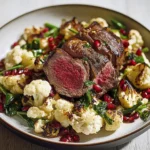
Beef Tenderloin with Roasted Cauliflower Pomegranate Salad Recipe
Ingredients
For the Beef Tenderloin:
- 1.5 – 2 lbs Beef Tenderloin Roast, center-cut, trimmed of silver skin
- 2 tablespoons Olive Oil
- 2 cloves Garlic, minced
- 1 teaspoon Dried Thyme
- 1 teaspoon Dried Rosemary
- 1/2 teaspoon Salt
- 1/4 teaspoon Black Pepper
For the Roasted Cauliflower:
- 1 large head Cauliflower, cut into florets
- 2 tablespoons Olive Oil
- 2 cloves Garlic, minced
- 1/2 teaspoon Salt
- 1/4 teaspoon Black Pepper
- 1/4 teaspoon Red Pepper Flakes (optional, for a touch of heat)
For the Pomegranate Salad:
- 1 cup Pomegranate Seeds (arils)
- 1/2 cup Fresh Parsley, chopped
- 1/4 cup Fresh Mint, chopped
- 1/4 cup Toasted Pine Nuts (or slivered almonds, walnuts)
- 1/4 cup crumbled Feta Cheese (optional, for a salty creamy element)
- 2 tablespoons Olive Oil
- 1 tablespoon Lemon Juice
- 1 teaspoon Honey or Maple Syrup (optional, for a touch of sweetness)
- Salt and Black Pepper to taste
Instructions
-
Preparing the Beef Tenderloin:
- Preheat the Oven and Prepare the Beef: Preheat your oven to 400°F (200°C). While the oven is preheating, prepare the beef tenderloin. Pat the beef tenderloin dry with paper towels. This is crucial for achieving a good sear and ensuring the spices adhere properly. Drying the surface removes excess moisture which can hinder browning and create steam instead of a desirable crust.
- Season the Beef: In a small bowl, combine the olive oil, minced garlic, dried thyme, dried rosemary, salt, and black pepper. Mix well to create a flavorful marinade. The olive oil acts as a carrier for the flavors and helps to keep the beef moist during roasting. Garlic, thyme, and rosemary are classic pairings with beef, offering an earthy and aromatic profile.
- Rub the Beef with Marinade: Rub the marinade evenly all over the beef tenderloin, ensuring all sides are coated. Massage the marinade into the meat for a minute or two to help it penetrate and maximize flavor infusion.
- Sear the Beef (Optional but Recommended): For an extra layer of flavor and a beautifully browned crust, searing the beef before roasting is highly recommended. Heat a tablespoon of olive oil in a large oven-safe skillet (cast iron is ideal) over medium-high heat. Once the skillet is hot and the oil is shimmering, carefully place the beef tenderloin in the skillet. Sear for 2-3 minutes per side, until nicely browned. Searing caramelizes the surface of the meat, creating complex flavors through the Maillard reaction. This step significantly enhances the overall taste and texture of the beef.
- Roast the Beef: Transfer the skillet with the seared beef (or place the unseared beef on a roasting pan if skipping the searing step) to the preheated oven. Roast for approximately 20-30 minutes, or until the internal temperature reaches your desired level of doneness. Use a meat thermometer inserted into the thickest part of the tenderloin to accurately gauge the temperature.
- For Rare: 125-130°F (52-54°C)
- For Medium-Rare: 130-135°F (54-57°C)
- For Medium: 135-140°F (57-60°C)
- For Medium-Well: 140-145°F (60-63°C)
- For Well-Done: 145°F+ (63°C+)
Note: Beef tenderloin is best served medium-rare to medium for optimal tenderness and flavor. Overcooking can result in dry and less flavorful meat.
- Rest the Beef: Once the beef reaches your desired internal temperature, remove it from the oven and transfer it to a cutting board. Tent it loosely with aluminum foil and let it rest for 10-15 minutes before slicing. Resting is crucial for allowing the juices to redistribute throughout the meat, resulting in a more tender and flavorful final product. Slicing immediately after roasting will cause the juices to run out, leading to drier beef.
Preparing the Roasted Cauliflower:
- Prepare the Cauliflower: While the beef is roasting (or while it’s resting), prepare the roasted cauliflower. Preheat the oven to 400°F (200°C) if you haven’t already. Wash and cut the cauliflower into florets of roughly similar size to ensure even cooking.
- Season the Cauliflower: In a large bowl, toss the cauliflower florets with olive oil, minced garlic, salt, black pepper, and red pepper flakes (if using). Ensure the cauliflower is evenly coated with the oil and seasonings. Tossing in a bowl allows for even distribution of the seasonings compared to just drizzling oil and spices on a baking sheet.
- Roast the Cauliflower: Spread the seasoned cauliflower florets in a single layer on a baking sheet. Avoid overcrowding the baking sheet, as this can cause the cauliflower to steam instead of roast and become soggy. If necessary, use two baking sheets. Roast for 20-25 minutes, or until the cauliflower is tender and lightly browned, flipping halfway through to ensure even roasting. Roasting brings out the natural sweetness of the cauliflower and creates slightly crispy edges, enhancing its flavor and texture.
Assembling the Pomegranate Salad:
- Combine Salad Ingredients: In a large bowl, combine the roasted cauliflower (once slightly cooled), pomegranate seeds, chopped parsley, chopped mint, toasted pine nuts (or chosen nuts), and crumbled feta cheese (if using).
- Make the Dressing: In a small bowl or jar, whisk together the olive oil, lemon juice, honey or maple syrup (if using), salt, and black pepper. Taste and adjust seasonings as needed. The dressing provides a bright and tangy counterpoint to the richness of the beef and cauliflower.
- Dress the Salad: Pour the dressing over the salad ingredients and gently toss to combine. Ensure the dressing is evenly distributed, coating all the components of the salad.
- Serve: Slice the rested beef tenderloin against the grain into medallions or thicker slices. Serve the sliced beef tenderloin immediately alongside a generous portion of the Roasted Cauliflower Pomegranate Salad. The warmth of the beef and cauliflower combined with the cool, fresh salad creates a delightful contrast.
Nutrition
- Serving Size: one normal portion
- Calories: 650-750
- Fat: 35-45g
- Carbohydrates: 20-25g
- Protein: 50-60g