
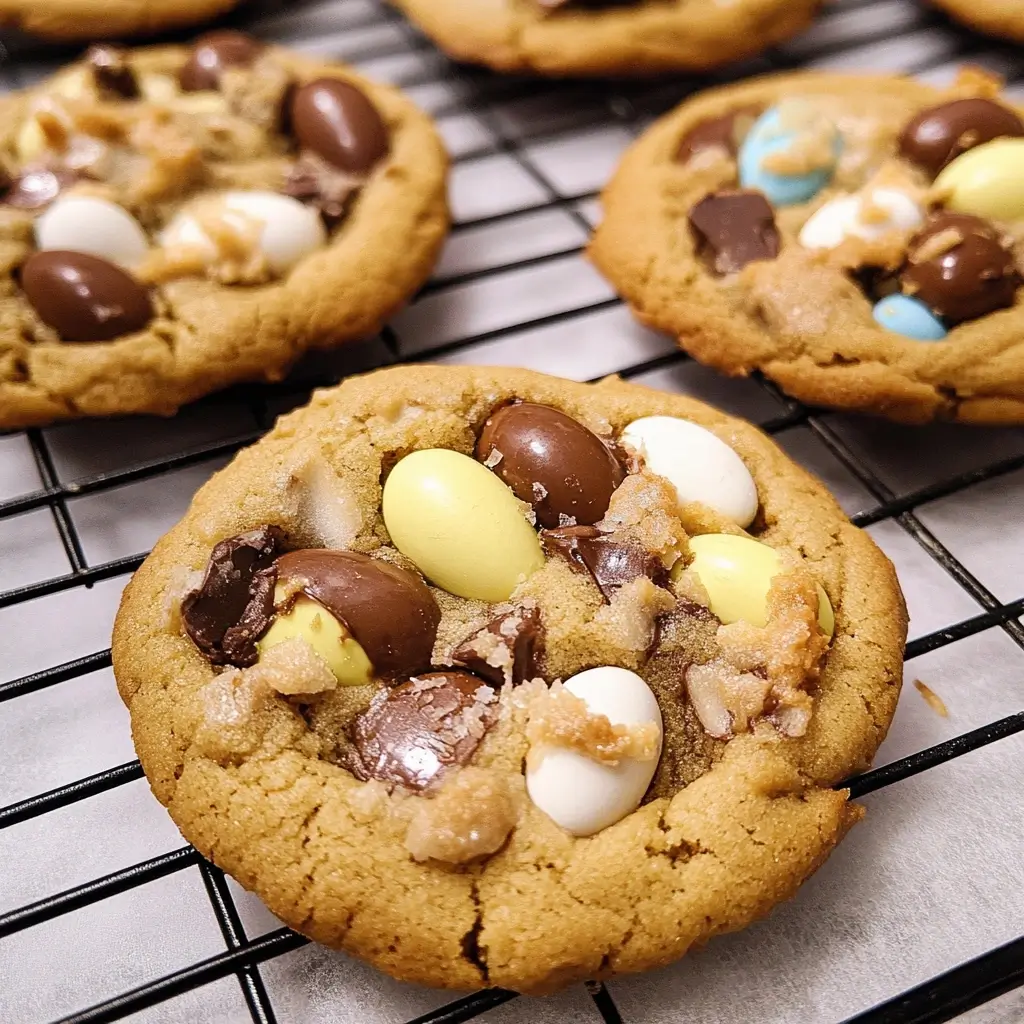

The aroma of warm vanilla and melting chocolate always signals the start of spring in our home, and nothing quite captures the essence of Easter baking like Cadbury Egg Cookies. This recipe has become an annual tradition, eagerly anticipated by everyone from the little ones hunting for eggs in the garden to the grown-ups reminiscing about their own childhood Easter joys. The combination of a soft, chewy cookie base bursting with chocolate chips, and the surprise of a gooey, melting Cadbury Creme Egg center is simply irresistible. Each bite is a delightful explosion of textures and flavors – the satisfying crunch of the cookie edges, the soft interior, the rich chocolate chips, and then, that iconic creamy sweetness of the Cadbury egg. They disappear faster than I can bake them, and the smiles they bring are worth every minute spent in the kitchen. If you’re looking for a show-stopping Easter treat that’s both fun to make and utterly delicious, look no further. These Cadbury Egg Cookies are guaranteed to become a new favorite in your household, just as they have in ours.
Ingredients
To create these delectable Cadbury Egg Cookies, you’ll need a selection of high-quality ingredients. Each component plays a vital role in achieving the perfect texture and flavor, so let’s delve into what you’ll need and why each ingredient is important:
- 1 cup (2 sticks) Unsalted Butter, softened: Butter is the foundation of our cookie, providing richness, flavor, and tenderness. Using unsalted butter allows you to control the saltiness of the final cookie. Ensure it’s properly softened – not melted, but easily pliable. Softened butter creams beautifully with sugar, creating air pockets that lead to a light and airy cookie texture. If you use salted butter, you may want to reduce the amount of added salt in the recipe.
- ¾ cup Granulated Sugar: Granulated sugar not only sweetens the cookies but also contributes to their crisp edges and chewy interior. It caramelizes during baking, adding depth of flavor and that classic cookie sweetness. The ratio of granulated to brown sugar is important for texture; granulated sugar promotes crispness.
- ¾ cup Packed Light Brown Sugar: Brown sugar, with its molasses content, is crucial for the chewiness and moisture of these cookies. It also adds a warm, caramel-like flavor that complements the chocolate beautifully. Make sure to pack your brown sugar when measuring to ensure you use the correct amount. Light brown sugar is preferred as it offers a milder molasses flavor, allowing the Cadbury egg and chocolate to shine.
- 2 Large Eggs: Eggs act as a binder, holding the cookie dough together, and also add richness and moisture. Use large eggs at room temperature for better emulsification and incorporation into the dough. Room temperature eggs also contribute to a smoother batter.
- 1 teaspoon Vanilla Extract: Vanilla extract enhances the overall flavor profile of the cookies, adding warmth and complexity. Use pure vanilla extract for the best flavor; imitation vanilla can have a slightly artificial taste. A good quality vanilla extract will make a noticeable difference in your baked goods.
- 2 ¼ cups All-Purpose Flour: All-purpose flour provides structure to the cookies. Measure your flour correctly – spoon it into your measuring cup and level it off with a knife. Avoid scooping directly from the bag, as this can compact the flour and result in too much flour in your recipe, leading to dry cookies.
- 1 teaspoon Baking Soda: Baking soda is a leavening agent that helps the cookies rise and become light and airy. Ensure your baking soda is fresh for optimal leavening power. Old baking soda may lose its effectiveness.
- 1 teaspoon Salt: Salt balances the sweetness and enhances the flavors of all the other ingredients. It’s crucial for a well-rounded cookie flavor. Even in sweet recipes, salt is essential.
- 2 cups Chocolate Chips: Chocolate chips are a classic cookie addition, providing rich chocolate flavor and melty pockets throughout the cookie. You can use semi-sweet, milk chocolate, or dark chocolate chips depending on your preference. Consider using a mix of different types of chocolate chips for a more complex chocolate flavor. High-quality chocolate chips will melt beautifully and contribute to a richer taste.
- 1 package (approximately 10-12) Cadbury Creme Eggs, chilled: The star of the show! Cadbury Creme Eggs are the surprise center of these cookies. Chilling them beforehand is crucial as it helps them hold their shape better during baking and prevents them from completely melting and spreading too much. You can use the standard size Cadbury Creme Eggs, or mini eggs for smaller cookies, adjusting baking time accordingly. Make sure to unwrap them carefully to keep them intact.
Instructions
Creating these Cadbury Egg Cookies is a straightforward process, even for beginner bakers. Follow these step-by-step instructions for cookie perfection:
- Preheat Oven and Prepare Baking Sheets: Preheat your oven to 375°F (190°C). This temperature is ideal for baking cookies, ensuring they bake through without burning on the edges. Line baking sheets with parchment paper or silicone baking mats. Parchment paper prevents sticking and makes cleanup a breeze. Silicone mats provide even heat distribution and are reusable.
- Cream Butter and Sugars: In a large mixing bowl, or the bowl of a stand mixer fitted with the paddle attachment, cream together the softened butter, granulated sugar, and brown sugar until light and fluffy. This process incorporates air into the mixture, which is essential for a tender cookie. Creaming should take about 2-3 minutes, until the mixture is pale and noticeably lighter in texture.
- Beat in Eggs and Vanilla: Beat in the eggs one at a time, mixing well after each addition. Make sure each egg is fully incorporated before adding the next. Then, stir in the vanilla extract. Mixing well after each egg ensures proper emulsification and a smooth batter. Vanilla extract should be added now to maximize its flavor infusion.
- Whisk Dry Ingredients: In a separate medium bowl, whisk together the all-purpose flour, baking soda, and salt. Whisking ensures that the baking soda and salt are evenly distributed throughout the flour, preventing clumps and ensuring consistent leavening and flavor.
- Gradually Add Dry Ingredients to Wet Ingredients: Gradually add the dry ingredients to the wet ingredients, mixing on low speed until just combined. Be careful not to overmix. Overmixing develops gluten in the flour, which can result in tough cookies. Mix until you no longer see streaks of flour.
- Stir in Chocolate Chips: Stir in the chocolate chips until evenly distributed throughout the dough. You can use a spatula or a wooden spoon for this step to avoid overmixing. Ensure the chocolate chips are dispersed throughout the dough for chocolatey goodness in every bite.
- Scoop Cookie Dough: Using a large cookie scoop or a spoon, scoop out portions of cookie dough (about 2-3 tablespoons each) onto the prepared baking sheets, leaving about 2 inches of space between each cookie to allow for spreading. Consistent cookie size ensures even baking.
- Prepare Cadbury Eggs: Unwrap the chilled Cadbury Creme Eggs. Gently flatten each scoop of cookie dough slightly with your hand. Place a chilled Cadbury Creme Egg in the center of each flattened dough portion.
- Enclose Cadbury Eggs with Dough: Gently bring the edges of the cookie dough up and around the Cadbury Creme Egg, fully enclosing it within the dough. Pinch the seams to seal securely. This step ensures the Cadbury egg is encased and doesn’t leak out too much during baking.
- Bake: Bake for 9-12 minutes, or until the edges are golden brown and the centers are still slightly soft. Baking time may vary slightly depending on your oven. Keep an eye on the cookies; they should be golden brown at the edges but still a little soft in the center for optimal chewiness.
- Cool: Let the cookies cool on the baking sheets for a few minutes before transferring them to a wire rack to cool completely. This allows the cookies to set slightly and prevents them from breaking apart when moved. Cooling on a wire rack allows air to circulate and prevents the bottoms from becoming soggy.
- Enjoy!: Serve warm or at room temperature and enjoy the gooey, chocolatey goodness! These cookies are best enjoyed fresh when the Cadbury egg center is still warm and melty.
Nutrition Facts
(Please note: Nutritional information is an estimate and can vary based on specific ingredients and portion sizes. These values are approximate and for informational purposes only.)
Serving Size: 1 Cookie
Approximate Calories per Serving: 350-400 calories
- Total Fat: 18-22g
- Saturated Fat: 10-12g
- Trans Fat: 0g
- Cholesterol: 50-60mg
- Sodium: 150-200mg
- Total Carbohydrates: 45-55g
- Dietary Fiber: 1-2g
- Sugars: 35-40g
- Protein: 3-4g
Servings per Recipe: Approximately 10-12 cookies (depending on cookie size)
These cookies are a decadent treat and are best enjoyed in moderation. The calorie count is influenced by the rich ingredients, particularly the butter, sugars, chocolate chips, and Cadbury Creme Egg.
Preparation Time
- Prep Time: 25-30 minutes (includes chilling Cadbury eggs and dough preparation)
- Bake Time: 9-12 minutes per batch
- Cooling Time: 15-20 minutes
- Total Time: Approximately 50-60 minutes
This recipe is relatively quick to prepare, especially considering the impressive results. The majority of the time is spent in preparation and baking, with cooling time being essential for the cookies to reach their optimal texture.
How to Serve
Cadbury Egg Cookies are delightful on their own, but here are some serving suggestions to elevate your enjoyment:
- Warm and Gooey: Serve them slightly warm, fresh from the oven (after cooling slightly!). This is when the Cadbury Creme Egg center is at its meltiest and most decadent.
- With a Glass of Milk: A classic pairing! Cold milk complements the richness of the cookies perfectly.
- Alongside Coffee or Tea: The sweetness of the cookies pairs wonderfully with a hot beverage.
- As an Easter Dessert: These cookies are the perfect show-stopping dessert for your Easter celebration. Arrange them beautifully on a platter.
- In an Easter Basket: Include a Cadbury Egg Cookie or two in Easter baskets for a homemade treat that’s sure to be loved.
- With Ice Cream: For an extra indulgent dessert, serve a warm cookie alongside a scoop of vanilla ice cream or your favorite flavor.
- Decorated for Easter: Get creative and decorate the cooled cookies with pastel-colored frosting or sprinkles for an extra festive touch.
- Gift Wrapped: Package them in cellophane bags tied with ribbon to give as thoughtful homemade gifts for friends and family.
Additional Tips for Perfect Cadbury Egg Cookies
- Chill Your Cadbury Eggs: This is crucial! Chilling the Cadbury Creme Eggs for at least 30 minutes (or even overnight) before baking will help them hold their shape better and prevent them from completely melting and leaking out of the cookies. Very cold eggs are easier to handle and enclose in the dough.
- Don’t Overmix the Dough: Overmixing develops gluten, leading to tougher cookies. Mix the dry ingredients into the wet ingredients just until combined, and then stir in the chocolate chips. A few streaks of flour are okay; they will disappear as you fold in the chocolate chips.
- Use Room Temperature Butter and Eggs: Room temperature ingredients emulsify better, resulting in a smoother batter and better cookie texture. Take butter and eggs out of the refrigerator about 30 minutes to an hour before you start baking.
- Scoop and Chill Dough (Optional): For thicker cookies that don’t spread as much, you can scoop the cookie dough onto a baking sheet, cover it, and chill it in the refrigerator for 30 minutes to an hour before baking. Chilling the dough firms up the butter and slows down spreading in the oven.
- Bake Until Just Golden: Don’t overbake these cookies. They are best when slightly soft in the center and golden brown around the edges. They will continue to set up as they cool. Overbaked cookies will be dry and crumbly.
FAQ Section
Q1: Can I use mini Cadbury Eggs instead of regular-sized ones?
A: Yes, you can definitely use mini Cadbury Eggs! You’ll likely need to reduce the baking time slightly, maybe by 1-2 minutes, as the cookies will be smaller. You can place one or two mini eggs in the center of each cookie, depending on their size preference.
Q2: Can I make the dough ahead of time and bake later?
A: Absolutely! You can make the cookie dough ahead of time, wrap it tightly in plastic wrap, and store it in the refrigerator for up to 2-3 days. When you’re ready to bake, let the dough sit at room temperature for about 15-20 minutes to soften slightly before scooping and baking. You can also freeze the dough for longer storage (up to 2 months).
Q3: My Cadbury Eggs melted and leaked out of the cookies. What did I do wrong?
A: This is likely due to the Cadbury Eggs not being chilled enough or the oven being too hot. Ensure your Cadbury Eggs are thoroughly chilled before enclosing them in the dough. Also, make sure your oven temperature is accurate and not running too hot. Enclosing the egg completely within the dough and sealing the seams well is also crucial.
Q4: Can I substitute anything for the chocolate chips?
A: Yes, you can! You could use chopped chocolate chunks instead of chocolate chips for a more gourmet feel. White chocolate chips or chunks would also be delicious and create a nice contrast with the milk chocolate Cadbury egg center. Consider using other Easter-themed candies like chopped mini chocolate eggs or pastel M&Ms in addition to or instead of chocolate chips for a festive twist.
Q5: How should I store leftover Cadbury Egg Cookies?
A: Store leftover Cadbury Egg Cookies in an airtight container at room temperature. They are best enjoyed within 3-4 days. To keep them soft, you can place a slice of bread in the container with the cookies; the bread will help absorb moisture and keep the cookies from drying out. Reheating them gently in the microwave for a few seconds can also revive their gooey center.
Print
Cadbury Egg Cookies Recipe
Ingredients
- 1 cup (2 sticks) Unsalted Butter, softened: Butter is the foundation of our cookie, providing richness, flavor, and tenderness. Using unsalted butter allows you to control the saltiness of the final cookie. Ensure it’s properly softened – not melted, but easily pliable. Softened butter creams beautifully with sugar, creating air pockets that lead to a light and airy cookie texture. If you use salted butter, you may want to reduce the amount of added salt in the recipe.
- ¾ cup Granulated Sugar: Granulated sugar not only sweetens the cookies but also contributes to their crisp edges and chewy interior. It caramelizes during baking, adding depth of flavor and that classic cookie sweetness. The ratio of granulated to brown sugar is important for texture; granulated sugar promotes crispness.
- ¾ cup Packed Light Brown Sugar: Brown sugar, with its molasses content, is crucial for the chewiness and moisture of these cookies. It also adds a warm, caramel-like flavor that complements the chocolate beautifully. Make sure to pack your brown sugar when measuring to ensure you use the correct amount. Light brown sugar is preferred as it offers a milder molasses flavor, allowing the Cadbury egg and chocolate to shine.
- 2 Large Eggs: Eggs act as a binder, holding the cookie dough together, and also add richness and moisture. Use large eggs at room temperature for better emulsification and incorporation into the dough. Room temperature eggs also contribute to a smoother batter.
- 1 teaspoon Vanilla Extract: Vanilla extract enhances the overall flavor profile of the cookies, adding warmth and complexity. Use pure vanilla extract for the best flavor; imitation vanilla can have a slightly artificial taste. A good quality vanilla extract will make a noticeable difference in your baked goods.
- 2 ¼ cups All-Purpose Flour: All-purpose flour provides structure to the cookies. Measure your flour correctly – spoon it into your measuring cup and level it off with a knife. Avoid scooping directly from the bag, as this can compact the flour and result in too much flour in your recipe, leading to dry cookies.
- 1 teaspoon Baking Soda: Baking soda is a leavening agent that helps the cookies rise and become light and airy. Ensure your baking soda is fresh for optimal leavening power. Old baking soda may lose its effectiveness.
- 1 teaspoon Salt: Salt balances the sweetness and enhances the flavors of all the other ingredients. It’s crucial for a well-rounded cookie flavor. Even in sweet recipes, salt is essential.
- 2 cups Chocolate Chips: Chocolate chips are a classic cookie addition, providing rich chocolate flavor and melty pockets throughout the cookie. You can use semi-sweet, milk chocolate, or dark chocolate chips depending on your preference. Consider using a mix of different types of chocolate chips for a more complex chocolate flavor. High-quality chocolate chips will melt beautifully and contribute to a richer taste.
- 1 package (approximately 10-12) Cadbury Creme Eggs, chilled: The star of the show! Cadbury Creme Eggs are the surprise center of these cookies. Chilling them beforehand is crucial as it helps them hold their shape better during baking and prevents them from completely melting and spreading too much. You can use the standard size Cadbury Creme Eggs, or mini eggs for smaller cookies, adjusting baking time accordingly. Make sure to unwrap them carefully to keep them intact.
Instructions
- Preheat Oven and Prepare Baking Sheets: Preheat your oven to 375°F (190°C). This temperature is ideal for baking cookies, ensuring they bake through without burning on the edges. Line baking sheets with parchment paper or silicone baking mats. Parchment paper prevents sticking and makes cleanup a breeze. Silicone mats provide even heat distribution and are reusable.
- Cream Butter and Sugars: In a large mixing bowl, or the bowl of a stand mixer fitted with the paddle attachment, cream together the softened butter, granulated sugar, and brown sugar until light and fluffy. This process incorporates air into the mixture, which is essential for a tender cookie. Creaming should take about 2-3 minutes, until the mixture is pale and noticeably lighter in texture.
- Beat in Eggs and Vanilla: Beat in the eggs one at a time, mixing well after each addition. Make sure each egg is fully incorporated before adding the next. Then, stir in the vanilla extract. Mixing well after each egg ensures proper emulsification and a smooth batter. Vanilla extract should be added now to maximize its flavor infusion.
- Whisk Dry Ingredients: In a separate medium bowl, whisk together the all-purpose flour, baking soda, and salt. Whisking ensures that the baking soda and salt are evenly distributed throughout the flour, preventing clumps and ensuring consistent leavening and flavor.
- Gradually Add Dry Ingredients to Wet Ingredients: Gradually add the dry ingredients to the wet ingredients, mixing on low speed until just combined. Be careful not to overmix. Overmixing develops gluten in the flour, which can result in tough cookies. Mix until you no longer see streaks of flour.
- Stir in Chocolate Chips: Stir in the chocolate chips until evenly distributed throughout the dough. You can use a spatula or a wooden spoon for this step to avoid overmixing. Ensure the chocolate chips are dispersed throughout the dough for chocolatey goodness in every bite.
- Scoop Cookie Dough: Using a large cookie scoop or a spoon, scoop out portions of cookie dough (about 2-3 tablespoons each) onto the prepared baking sheets, leaving about 2 inches of space between each cookie to allow for spreading. Consistent cookie size ensures even baking.
- Prepare Cadbury Eggs: Unwrap the chilled Cadbury Creme Eggs. Gently flatten each scoop of cookie dough slightly with your hand. Place a chilled Cadbury Creme Egg in the center of each flattened dough portion.
- Enclose Cadbury Eggs with Dough: Gently bring the edges of the cookie dough up and around the Cadbury Creme Egg, fully enclosing it within the dough. Pinch the seams to seal securely. This step ensures the Cadbury egg is encased and doesn’t leak out too much during baking.
- Bake: Bake for 9-12 minutes, or until the edges are golden brown and the centers are still slightly soft. Baking time may vary slightly depending on your oven. Keep an eye on the cookies; they should be golden brown at the edges but still a little soft in the center for optimal chewiness.
- Cool: Let the cookies cool on the baking sheets for a few minutes before transferring them to a wire rack to cool completely. This allows the cookies to set slightly and prevents them from breaking apart when moved. Cooling on a wire rack allows air to circulate and prevents the bottoms from becoming soggy.
- Enjoy!: Serve warm or at room temperature and enjoy the gooey, chocolatey goodness! These cookies are best enjoyed fresh when the Cadbury egg center is still warm and melty.
Nutrition
- Serving Size: One Normal Portion
- Calories: 350-400
- Sugar: 35-40g
- Fat: 18-22g
- Saturated Fat: 10-12g
- Trans Fat: 0g
- Carbohydrates: 45-55g
- Fiber: 1-2g
- Protein: 3-4g
- Cholesterol: 50-60mg