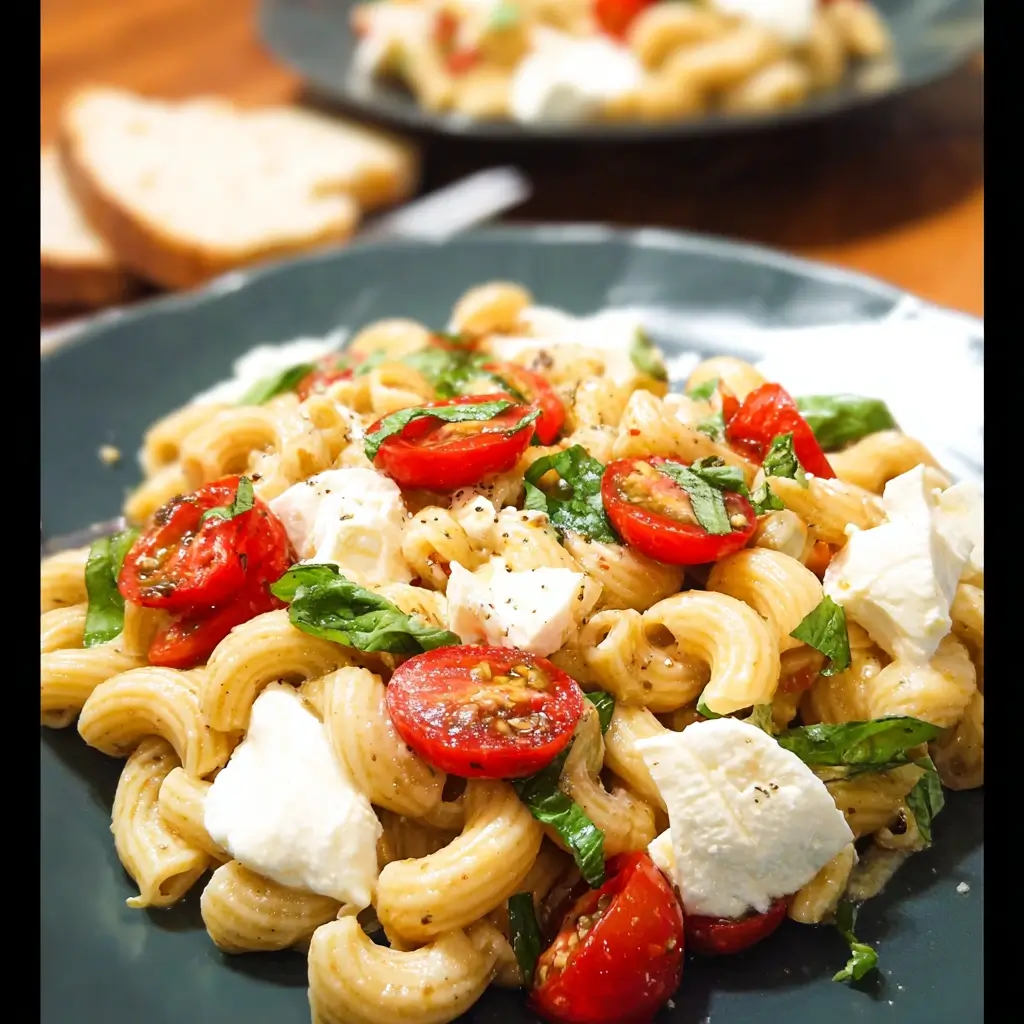

Of all the dishes that sing of summer, none has a more purely joyful, effortlessly elegant melody than Caprese Pasta. I remember the first time I made it, not from a recipe book, but from a feeling. It was a sweltering July evening, the kind where the thought of turning on the oven for more than 20 minutes felt like a culinary crime. My little basil plant on the windowsill was thriving, and we’d just come from the farmer’s market with a pint of the most beautiful, sun-ripened cherry tomatoes I’d ever seen. The idea just clicked. Why not take all the perfect, simple components of a Caprese salad—the sweet tomatoes, the creamy mozzarella, the fragrant basil, the rich olive oil—and toss them with warm pasta?
The result was nothing short of a revelation for my family. My husband, usually a fan of heavy, slow-simmered meat sauces, was stunned by the vibrant, fresh flavors. My kids, who often turn their noses up at “salads,” devoured their bowls because, well, it’s pasta! It has since become our official “the-weather-is-too-nice-to-cook” meal, our go-to for potlucks, and my personal favorite for a quick and satisfying lunch. This recipe isn’t just about combining ingredients; it’s about capturing a moment of seasonal perfection in a bowl. It’s a celebration of simplicity, proving that with the right, high-quality ingredients, you can create something truly spectacular with minimal effort. This is more than just a recipe; it’s an invitation to embrace the beauty of fresh, uncomplicated Italian cooking.
The Heart of Simplicity: Caprese Pasta Ingredients
The magic of this dish lies in its simplicity, which means the quality of each ingredient is paramount. There’s nowhere for a subpar tomato or a bland olive oil to hide. Here’s the breakdown of what you’ll need to create this masterpiece.
- Pasta: 1 pound (450g) of short-cut pasta. I recommend Fusilli, Rotini, Penne, or Farfalle (bow-tie). The ridges and twists are perfect for catching the light sauce and small ingredients.
- Cherry or Grape Tomatoes: 2 pints (about 4 cups or 600g), halved. Use the ripest, sweetest tomatoes you can find. A mix of red and yellow varieties adds a beautiful visual appeal.
- Fresh Mozzarella: 8 ounces (225g) of fresh mozzarella pearls (ciliegine) or a large ball of fresh mozzarella torn or cut into bite-sized (½-inch) pieces. It’s crucial to use fresh mozzarella packed in water, not the low-moisture block style.
- Fresh Basil: 1 large bunch, yielding about 1 packed cup of fresh basil leaves, roughly chopped or chiffonaded. Do not substitute with dried basil; the fresh aroma is non-negotiable for authentic Caprese flavor.
- Garlic: 3-4 cloves, minced very finely or grated on a microplane. Adjust to your personal taste; use less for a milder flavor and more if you’re a true garlic lover.
- Extra Virgin Olive Oil: ½ cup (120ml) of high-quality, cold-pressed extra virgin olive oil. Since this is a primary flavor component, use the good stuff!
- Balsamic Glaze: 3-4 tablespoons for drizzling over the finished dish. A store-bought glaze is convenient, or you can easily make your own (see tips section).
- Fine Sea Salt: 1 teaspoon, plus more for the pasta water.
- Freshly Ground Black Pepper: ½ teaspoon, or to taste.
- Optional Red Pepper Flakes: ¼ teaspoon for a gentle touch of heat.
Step-by-Step Instructions for Perfect Caprese Pasta
Follow these simple steps to bring this vibrant dish to life. The key is in the timing and the gentle handling of the fresh ingredients.
Step 1: Prepare the “No-Cook” Sauce
This is the most important step for developing flavor. In a large serving bowl (the one you’ll serve the pasta in), combine the halved cherry tomatoes, the finely minced garlic, the ½ cup of extra virgin olive oil, 1 teaspoon of fine sea salt, the freshly ground black pepper, and the optional red pepper flakes. Stir everything together gently. The goal is to let these ingredients marinate and get to know each other while you cook the pasta. The salt will begin to draw out the delicious juices from the tomatoes, creating the base of your light, fresh sauce. Set this bowl aside at room temperature.
Step 2: Cook the Pasta
Bring a large pot of water to a rolling boil. Be generous with the salt! You want the water to taste like a seasoned soup (a general rule is about 1 to 2 tablespoons of salt per gallon of water). Salting the water seasons the pasta from the inside out and is a critical step for a flavorful final dish. Add your chosen pasta to the boiling water and cook according to the package directions for al dente. An al dente texture (firm to the bite) is crucial here, as the pasta will continue to soften slightly when tossed with the warm sauce.
Step 3: Reserve Pasta Water
Just before you drain the pasta, use a mug or a heatproof measuring cup to reserve about 1 cup of the starchy pasta water. This cloudy, starchy liquid is liquid gold in Italian cooking. It helps to emulsify the olive oil and tomato juices, creating a smoother, silkier sauce that clings perfectly to the pasta.
Step 4: Combine and Emulsify
Drain the pasta well in a colander. Immediately add the hot, drained pasta directly to the large serving bowl with the marinating tomato and garlic mixture. Do not rinse the pasta! The starches on its surface are essential for helping the sauce adhere. Toss everything together vigorously for about a minute. The heat from the pasta will slightly warm the tomatoes, release the pungent aroma of the garlic, and begin to meld all the flavors.
Step 5: Finish the Dish
Now, add the fresh mozzarella pieces and most of the chopped fresh basil (save a little for garnish) to the bowl. Gently toss to combine. You don’t want to toss too aggressively at this stage, as the goal is to just warm the mozzarella through so it becomes slightly soft and melty, not completely melted into strings. If the pasta seems a bit dry, add a splash (a few tablespoons at a time) of the reserved pasta water and toss until it reaches your desired consistency.
Step 6: Serve Immediately
Divide the pasta among serving bowls. Garnish with the remaining fresh basil, and finish with a generous drizzle of the balsamic glaze over each portion. Serve immediately while the pasta is warm and the cheese is perfectly soft.
Nutrition Facts
- Servings: 6 main-course servings or 8-10 side-dish servings
- Calories per Serving: Approximately 520-580 kcal (for a 6-serving portion)
Disclaimer: The nutritional information provided is an estimate and can vary based on the specific ingredients, brands, and portion sizes used. This calculation assumes the use of standard pasta, whole milk fresh mozzarella, and the specified amount of olive oil.
Preparation Time
One of the best features of this recipe is how quickly it comes together, making it perfect for a busy weeknight.
- Prep Time: 10 minutes (for halving tomatoes, mincing garlic, and chopping basil)
- Cook Time: 10-12 minutes (for boiling water and cooking pasta)
- Total Time: Approximately 20-25 minutes
How to Serve Your Caprese Pasta
This dish is wonderfully versatile. You can dress it up or down depending on the occasion. Here are some of our favorite ways to serve it:
- As a Light and Satisfying Main Course:
- Serve it warm in large pasta bowls.
- Offer extra grated Parmesan or Pecorino Romano cheese on the side for those who want an extra salty, cheesy kick.
- Pair it with a simple side of crusty garlic bread for soaking up any leftover tomato-oil sauce at the bottom of the bowl.
- A crisp, dry white wine like a Pinot Grigio, Sauvignon Blanc, or a light Rosé complements the fresh flavors beautifully.
- As a Vibrant Side Dish:
- Serve smaller portions alongside grilled proteins. It’s an incredible companion to:
- Grilled Chicken Breast seasoned with lemon and herbs.
- Grilled Shrimp Skewers.
- A simple pan-seared Salmon Fillet.
- A hearty Italian sausage.
- Serve smaller portions alongside grilled proteins. It’s an incredible companion to:
- As a Potluck or Picnic Favorite (Caprese Pasta Salad):
- This recipe transitions perfectly into a cold pasta salad.
- To make it as a pasta salad, follow the recipe as directed, but after draining the pasta, rinse it briefly under cold water to stop the cooking process and cool it down.
- Toss the cooled pasta with the tomato mixture, mozzarella, and basil.
- For a pasta salad, you might want to increase the olive oil slightly or add a splash of white wine vinegar to the dressing to keep it from drying out as it sits.
- It travels well and is always a crowd-pleaser. Just be sure to pack the balsamic glaze separately and let people drizzle it on their own portions just before eating.
Additional Tips for a Five-Star Dish
These five tips will elevate your Caprese Pasta from simply good to absolutely unforgettable.
1. Temperature is Key for Tomatoes: For the best flavor, allow your tomatoes and olive oil mixture to marinate at room temperature. Cold tomatoes straight from the fridge have a muted flavor. Letting them sit on the counter while the pasta cooks allows their natural sweetness and complexity to shine through.
2. Make Your Own Balsamic Glaze: While store-bought glaze is easy, a homemade version is incredibly simple and often tastes better. Simply pour about 1 cup of good-quality balsamic vinegar into a small saucepan. Bring it to a simmer over medium heat, then reduce the heat to low and let it gently simmer for 10-15 minutes, or until it has reduced by about half and is thick enough to coat the back of a spoon. It will continue to thicken as it cools.
3. The Power of Reserved Pasta Water: Don’t underestimate this step. The starchy water is an emulsifier. It helps the oil and tomato juices bind together into a cohesive sauce rather than a separated, oily puddle at the bottom of your bowl. It turns a simple dressing into a silky sauce that clings to every nook and cranny of the pasta. Start with a few tablespoons and add more only if needed.
4. Chiffonade Your Basil Like a Pro: For elegant, thin ribbons of basil that distribute evenly throughout the pasta, use the chiffonade technique. Stack several basil leaves on top of one another, roll them up tightly like a small cigar, and then use a sharp knife to slice across the roll, creating fine ribbons. This also helps prevent the basil from bruising and turning black too quickly.
5. Salt at Every Stage: Professional chefs know that seasoning throughout the cooking process builds layers of flavor. Don’t just rely on salt at the end.
* Salt the Pasta Water: As mentioned, this is non-negotiable.
* Salt the Tomatoes: Salting the tomatoes in the initial marinating step helps draw out their moisture and concentrates their flavor.
* Salt at the End: Taste the final dish before serving. It may need one final, small pinch of finishing salt to make all the flavors pop.
Frequently Asked Questions (FAQ)
Here are answers to some common questions about making this Caprese Pasta recipe.
1. Can I use other types of tomatoes?
Absolutely! While cherry or grape tomatoes are ideal because of their sweetness and low water content, you can certainly use larger tomatoes. If using Roma tomatoes, dice them and remove some of the watery seeds. If using large heirloom or beefsteak tomatoes, dice them and you may want to salt them in a colander for about 15 minutes to drain off excess water before adding them to the olive oil marinade. This prevents the final dish from being watery.
2. Can I make this dish ahead of time?
Yes, with a few modifications. You can make the tomato, garlic, and oil marinade a few hours ahead and let it sit at room temperature. You can also cook the pasta ahead of time. If serving it as a cold pasta salad, you can combine everything except the basil and mozzarella. Store it in the fridge, and then toss in the fresh mozzarella and basil just before serving. Adding them at the last minute ensures the cheese stays creamy and the basil remains bright green and fragrant.
3. What’s the best way to store and reheat leftovers?
Store any leftover Caprese Pasta in an airtight container in the refrigerator for up to 3 days. The olive oil will solidify in the cold, and the pasta will absorb much of the moisture. It’s delicious eaten cold, straight from the fridge, like a pasta salad. If you wish to reheat it, do so gently in a skillet over low heat with a splash of olive oil or water to loosen it up. Avoid the microwave, as it can make the pasta gummy and the mozzarella rubbery.
4. Can I add protein to this dish?
Of course! This recipe is a fantastic base for added protein. Shredded rotisserie chicken is a quick and easy addition. Grilled chicken or shrimp, as mentioned in the serving suggestions, are also excellent. For a vegetarian protein boost, consider adding a can of drained and rinsed chickpeas or white cannellini beans to the tomato marinade.
5. I don’t have fresh mozzarella. Can I use another cheese?
While fresh mozzarella is the classic choice for its creamy texture and milky flavor, you can make substitutions in a pinch. Low-moisture block mozzarella can be cubed and used, but it won’t have the same soft, luscious quality. Crumbled feta cheese would be a delicious, tangy alternative that would give the dish a more Mediterranean feel. A high-quality, fresh ricotta, dolloped on top before serving, would also be a wonderfully creamy and delicious variation.
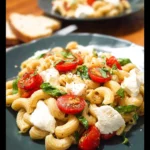
Caprese Pasta Recipe
Ingredients
- Pasta: 1 pound (450g) of short-cut pasta. I recommend Fusilli, Rotini, Penne, or Farfalle (bow-tie). The ridges and twists are perfect for catching the light sauce and small ingredients.
- Cherry or Grape Tomatoes: 2 pints (about 4 cups or 600g), halved. Use the ripest, sweetest tomatoes you can find. A mix of red and yellow varieties adds a beautiful visual appeal.
- Fresh Mozzarella: 8 ounces (225g) of fresh mozzarella pearls (ciliegine) or a large ball of fresh mozzarella torn or cut into bite-sized (½-inch) pieces. It’s crucial to use fresh mozzarella packed in water, not the low-moisture block style.
- Fresh Basil: 1 large bunch, yielding about 1 packed cup of fresh basil leaves, roughly chopped or chiffonaded. Do not substitute with dried basil; the fresh aroma is non-negotiable for authentic Caprese flavor.
- Garlic: 3-4 cloves, minced very finely or grated on a microplane. Adjust to your personal taste; use less for a milder flavor and more if you’re a true garlic lover.
- Extra Virgin Olive Oil: ½ cup (120ml) of high-quality, cold-pressed extra virgin olive oil. Since this is a primary flavor component, use the good stuff!
- Balsamic Glaze: 3-4 tablespoons for drizzling over the finished dish. A store-bought glaze is convenient, or you can easily make your own (see tips section).
- Fine Sea Salt: 1 teaspoon, plus more for the pasta water.
- Freshly Ground Black Pepper: ½ teaspoon, or to taste.
- Optional Red Pepper Flakes: ¼ teaspoon for a gentle touch of heat.
Instructions
Step 1: Prepare the “No-Cook” Sauce
This is the most important step for developing flavor. In a large serving bowl (the one you’ll serve the pasta in), combine the halved cherry tomatoes, the finely minced garlic, the ½ cup of extra virgin olive oil, 1 teaspoon of fine sea salt, the freshly ground black pepper, and the optional red pepper flakes. Stir everything together gently. The goal is to let these ingredients marinate and get to know each other while you cook the pasta. The salt will begin to draw out the delicious juices from the tomatoes, creating the base of your light, fresh sauce. Set this bowl aside at room temperature.
Step 2: Cook the Pasta
Bring a large pot of water to a rolling boil. Be generous with the salt! You want the water to taste like a seasoned soup (a general rule is about 1 to 2 tablespoons of salt per gallon of water). Salting the water seasons the pasta from the inside out and is a critical step for a flavorful final dish. Add your chosen pasta to the boiling water and cook according to the package directions for al dente. An al dente texture (firm to the bite) is crucial here, as the pasta will continue to soften slightly when tossed with the warm sauce.
Step 3: Reserve Pasta Water
Just before you drain the pasta, use a mug or a heatproof measuring cup to reserve about 1 cup of the starchy pasta water. This cloudy, starchy liquid is liquid gold in Italian cooking. It helps to emulsify the olive oil and tomato juices, creating a smoother, silkier sauce that clings perfectly to the pasta.
Step 4: Combine and Emulsify
Drain the pasta well in a colander. Immediately add the hot, drained pasta directly to the large serving bowl with the marinating tomato and garlic mixture. Do not rinse the pasta! The starches on its surface are essential for helping the sauce adhere. Toss everything together vigorously for about a minute. The heat from the pasta will slightly warm the tomatoes, release the pungent aroma of the garlic, and begin to meld all the flavors.
Step 5: Finish the Dish
Now, add the fresh mozzarella pieces and most of the chopped fresh basil (save a little for garnish) to the bowl. Gently toss to combine. You don’t want to toss too aggressively at this stage, as the goal is to just warm the mozzarella through so it becomes slightly soft and melty, not completely melted into strings. If the pasta seems a bit dry, add a splash (a few tablespoons at a time) of the reserved pasta water and toss until it reaches your desired consistency.
Step 6: Serve Immediately
Divide the pasta among serving bowls. Garnish with the remaining fresh basil, and finish with a generous drizzle of the balsamic glaze over each portion. Serve immediately while the pasta is warm and the cheese is perfectly soft.
Nutrition
- Serving Size: One Normal Portion
- Calories: 520-580 kcal