
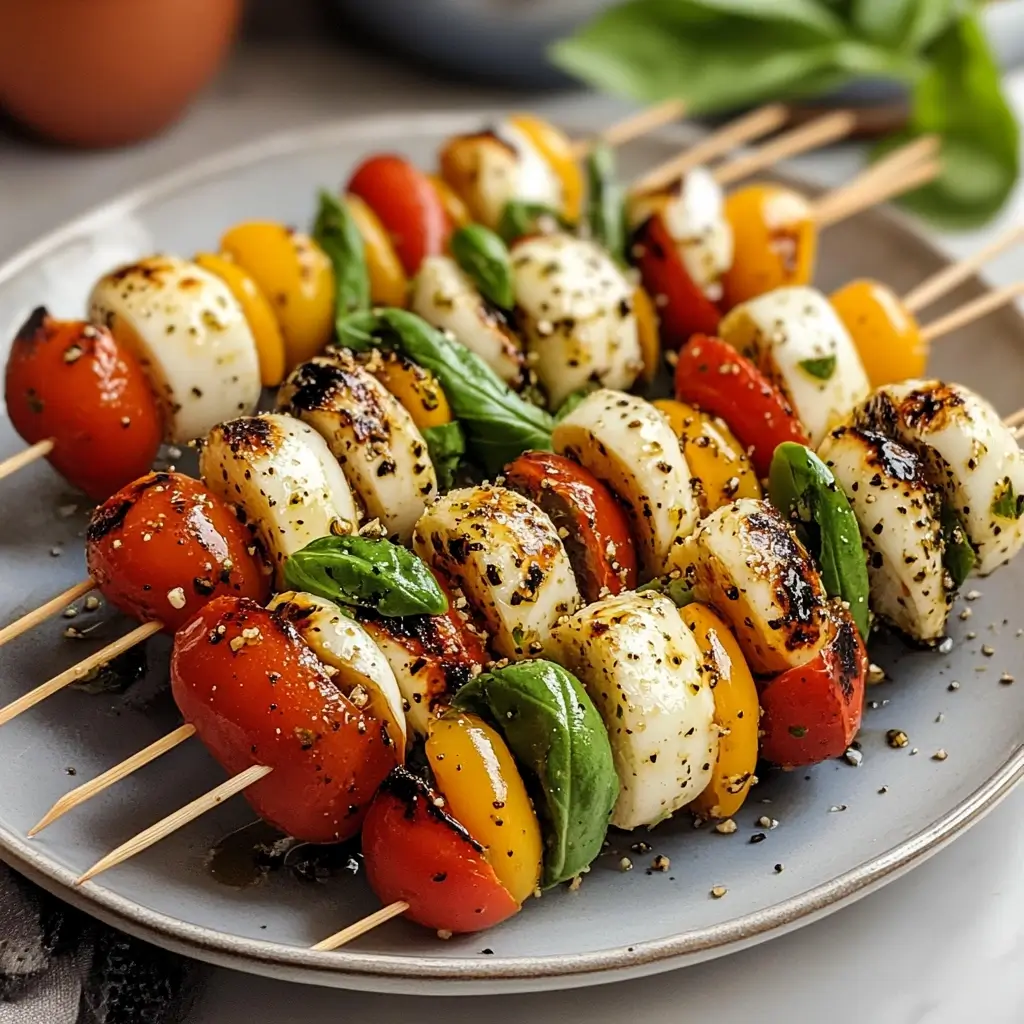

Caprese Salad Skewers have become an absolute staple in our home, especially during the warmer months. There’s something undeniably delightful about the simplicity and freshness of this classic Italian combination, but transformed into a fun, portable, and utterly addictive skewer. From casual backyard barbecues to more elegant garden parties, these little bites are always the first to disappear. Even my kids, who can be notoriously picky eaters, can’t resist the vibrant colors and sweet-tangy flavors. Honestly, these skewers are more than just an appetizer; they’re a little burst of sunshine on a stick. If you’re looking for a crowd-pleasing, easy-to-make, and undeniably delicious appetizer, look no further. Caprese Salad Skewers are your answer.
Ingredients
Crafting the perfect Caprese Salad Skewer hinges on the quality and freshness of just a handful of key ingredients. Each component plays a vital role in creating that harmonious blend of flavors and textures that we all crave. Let’s delve into each ingredient, ensuring you select the best for your skewers.
- Fresh Mozzarella Balls (Bocconcini or Ciliegine): Mozzarella is the heart of the Caprese experience, and for skewers, you’ll want to opt for fresh mozzarella balls. Bocconcini are larger, egg-sized balls, while Ciliegine are cherry-sized. Ciliegine are often preferred for skewers as they are perfectly bite-sized, but Bocconcini can be used if you prefer a larger mozzarella portion – simply halve or quarter them depending on their size and the size of your other ingredients. Look for mozzarella that is packed in water or whey. Avoid pre-shredded or low-moisture mozzarella, as these lack the creamy texture and fresh flavor essential for Caprese. The best mozzarella will be milky white, soft, and slightly springy to the touch. If possible, seek out buffalo mozzarella (Mozzarella di Bufala Campana) for an even richer and more flavorful experience, though cow’s milk mozzarella (fior di latte) is also excellent and more readily available.
- Cherry or Grape Tomatoes: Tomatoes bring the sweetness and acidity that beautifully complements the creamy mozzarella. Cherry tomatoes and grape tomatoes are ideal for skewers because of their size and firmness. Cherry tomatoes are rounder and often sweeter, while grape tomatoes are more elongated and slightly less acidic. Both work wonderfully. Choose tomatoes that are firm, plump, and vibrantly colored. The aroma should be fresh and tomatoey. Avoid tomatoes that are bruised, soft, or dull in color. For an extra layer of flavor and visual appeal, consider using a mix of different colored cherry or grape tomatoes – red, yellow, and even orange varieties can create a stunning skewer. Heirloom cherry tomatoes are also a fantastic option when in season, offering a wider range of flavors and colors.
- Fresh Basil Leaves: Basil is the aromatic cornerstone of Caprese, providing that characteristic peppery, slightly sweet, and refreshing herbal note. Fresh basil leaves are absolutely essential – dried basil will not suffice. Look for basil leaves that are bright green, vibrant, and fragrant. Avoid leaves that are wilted, bruised, or have brown spots. Italian basil, with its larger, broader leaves, is the classic choice for Caprese. However, other varieties like Thai basil or lemon basil can offer interesting flavor twists if you’re feeling adventurous, though they might deviate from the traditional Caprese profile. Smaller basil leaves are ideal for threading onto skewers without needing to fold or tear them. If your basil leaves are larger, you can fold them in half or thirds before skewering.
- Extra Virgin Olive Oil: A drizzle of high-quality extra virgin olive oil ties all the flavors together and adds a luscious richness. Extra virgin olive oil is crucial for its superior flavor and health benefits. Choose a good quality extra virgin olive oil that is fruity and peppery. The flavor of the olive oil will significantly impact the final taste of the skewers, so don’t skimp on quality here. Look for olive oils that are cold-pressed and from a reputable source. Consider the flavor profile of the olive oil – a robust, peppery oil will add a bolder flavor, while a milder, fruitier oil will be more subtle.
- Balsamic Glaze (Optional but Recommended): Balsamic glaze, also known as balsamic reduction, adds a touch of sweetness and tangy complexity that elevates the Caprese skewers to another level. It provides a beautiful visual contrast and a concentrated balsamic flavor that complements the tomatoes and mozzarella perfectly. You can purchase pre-made balsamic glaze, which is convenient, or make your own by simmering balsamic vinegar until it thickens and reduces to a syrupy consistency. Homemade balsamic glaze allows you to control the sweetness and thickness. If buying pre-made, choose one that is made with real balsamic vinegar and doesn’t contain excessive added sugars.
- Salt and Freshly Ground Black Pepper: Simple seasoning is all you need to enhance the natural flavors of the ingredients. Use sea salt or kosher salt for a cleaner taste. Freshly ground black pepper is essential for its aromatic and slightly spicy bite. Pre-ground pepper loses its flavor quickly, so grinding it fresh right before serving is highly recommended.
- Wooden or Metal Skewers: You’ll need skewers to assemble your Caprese creations. Wooden skewers are readily available and inexpensive, but they should be soaked in water for at least 30 minutes before assembling to prevent them from burning if you plan to grill or broil the skewers (though this recipe is typically not grilled or broiled, soaking is a good practice for general skewer use). Metal skewers are reusable and more durable, making them a sustainable option. Choose skewers that are the appropriate length for your serving platters or desired portion size. 6-inch to 8-inch skewers are generally a good size for appetizers.
Instructions
Assembling Caprese Salad Skewers is a breeze, making them the perfect appetizer when you need something impressive yet quick and easy. Follow these step-by-step instructions to create beautiful and delicious skewers every time.
- Prepare the Ingredients: Begin by gathering all your ingredients and preparing them for assembly. If using wooden skewers, soak them in water for at least 30 minutes. This step is crucial if you were to grill or broil other types of skewers, but for Caprese skewers, it’s more about ensuring they are clean and slightly dampened. Wash the cherry or grape tomatoes and gently pat them dry. Drain the fresh mozzarella balls from their water or whey and pat them dry with paper towels. This helps the olive oil and balsamic glaze adhere better. Wash and dry the fresh basil leaves. If using larger basil leaves, you may want to fold them in half or thirds.
- Assemble the Skewers: Now comes the fun part – assembling the skewers! There’s no single “right” way to arrange the ingredients, but a visually appealing and balanced sequence is generally preferred. A classic and aesthetically pleasing order is: mozzarella ball, basil leaf, cherry tomato. Repeat this pattern until the skewer is nicely filled, leaving a little space at each end for handling. For a standard 6-inch skewer, you can typically fit 3-4 mozzarella balls, 3-4 basil leaves, and 3-4 cherry tomatoes, depending on their size and how tightly you pack them. Be mindful not to overcrowd the skewer; you want each ingredient to be distinct and easily enjoyed in each bite. Consider alternating colors if using different types of tomatoes for a more vibrant presentation.
- Season and Dress: Once all the skewers are assembled, arrange them on a serving platter. Now it’s time to season and dress them to perfection. Lightly drizzle the skewers with high-quality extra virgin olive oil. Don’t overdo it; you want a subtle sheen and flavor enhancement, not for the skewers to be swimming in oil. Next, season generously with sea salt or kosher salt and freshly ground black pepper. Sprinkle the salt and pepper evenly over all the skewers. If using balsamic glaze, now is the time to drizzle it artfully over the skewers. You can create thin, decorative lines or a more generous drizzle, depending on your preference. A little balsamic glaze goes a long way, so start with a small amount and add more if desired.
- Chill (Optional but Recommended): While Caprese Salad Skewers can be served immediately, chilling them in the refrigerator for about 15-20 minutes can enhance their flavors and make them even more refreshing, especially on a warm day. Chilling allows the flavors to meld together slightly and the mozzarella to firm up a bit. If you do chill them, be sure to cover the platter loosely with plastic wrap to prevent the skewers from drying out. Don’t chill them for too long, however, as the tomatoes can lose some of their texture and flavor if refrigerated for extended periods.
- Serve and Enjoy: Your Caprese Salad Skewers are now ready to be served and enjoyed! Arrange them attractively on a serving platter. Garnish with a few extra fresh basil leaves or a sprinkle of freshly cracked black pepper for visual appeal, if desired. Serve them immediately for the best flavor and freshness. These skewers are perfect as appetizers, party snacks, or even as a light lunch alongside a salad or soup. They are best enjoyed within a few hours of assembly to maintain their freshness and prevent the tomatoes from becoming too soft.
Nutrition Facts
Caprese Salad Skewers are not only delicious and visually appealing but also relatively healthy, making them a guilt-free appetizer option. Here’s a general overview of the nutrition facts per serving.
- Servings: This recipe is typically designed to make approximately 20-24 skewers, depending on the length of the skewers and how many ingredients you place on each. A standard serving size is generally considered to be 2-3 skewers per person as an appetizer. Therefore, this recipe can serve approximately 8-12 people as an appetizer.
- Calories per Serving (2 skewers): The estimated calorie count per serving (2 skewers) is approximately 150-200 calories. This can vary depending on the specific ingredients used, particularly the type of mozzarella and the amount of olive oil and balsamic glaze.
- Fat: Approximately 10-15 grams per serving. The majority of the fat comes from the mozzarella and olive oil, which are primarily healthy fats. Mozzarella contains saturated fat, but also beneficial fats. Olive oil is rich in monounsaturated fats, which are heart-healthy.
- Saturated Fat: Approximately 4-6 grams per serving.
- Cholesterol: Approximately 20-30 mg per serving.
- Sodium: Approximately 150-250 mg per serving. Sodium content can vary depending on the type of mozzarella and the amount of salt added.
- Carbohydrates: Approximately 5-7 grams per serving. Carbohydrates mainly come from the tomatoes and a small amount from the balsamic glaze (if used).
- Fiber: Approximately 1-2 grams per serving.
- Sugar: Approximately 2-4 grams per serving. Sugar content comes from the natural sugars in tomatoes and from the balsamic glaze (if used).
- Protein: Approximately 7-9 grams per serving. Protein primarily comes from the mozzarella cheese.
- Vitamin C: Tomatoes are a good source of Vitamin C, contributing to the Vitamin C content per serving.
- Calcium: Mozzarella is a good source of calcium, contributing to the calcium content per serving.
Important Note: These nutritional values are estimates and can vary based on specific ingredient brands, portion sizes, and preparation methods. For more precise nutritional information, you can use a nutrition calculator app or website and input the exact ingredients and quantities you use. Overall, Caprese Salad Skewers are a relatively low-calorie, moderate-fat, and moderate-protein appetizer option that provides some essential nutrients.
Preparation Time
One of the greatest advantages of Caprese Salad Skewers is their incredibly quick preparation time. This makes them ideal for last-minute gatherings or when you need a delicious appetizer without spending hours in the kitchen.
- Prep Time: The active preparation time for Caprese Salad Skewers is approximately 15-20 minutes. This includes:
- Washing and drying the tomatoes and basil.
- Draining and drying the mozzarella balls.
- Assembling the skewers.
- Drizzling with olive oil and balsamic glaze (if using), and seasoning.
- Soaking Time (for Wooden Skewers): If using wooden skewers, factor in an additional 30 minutes for soaking them in water. However, this is passive time, and you can perform other tasks while the skewers are soaking.
- Chilling Time (Optional): If you choose to chill the skewers before serving, add another 15-20 minutes of chilling time in the refrigerator. Again, this is passive time.
- Total Time (Without Chilling): Approximately 15-20 minutes.
- Total Time (With Chilling): Approximately 30-40 minutes (including chilling time).
Therefore, from start to finish, you can have a platter of beautiful and delicious Caprese Salad Skewers ready in under 30 minutes without chilling, or under 40 minutes with chilling. This speedy preparation makes them a go-to appetizer for busy hosts and anyone who appreciates delicious food without lengthy cooking times.
How to Serve
Caprese Salad Skewers are incredibly versatile and can be served in a variety of ways, making them perfect for numerous occasions. Here are some ideas on how to serve them to impress your guests:
- Classic Appetizer Platter:
- Arrange the skewers artfully on a large platter.
- Garnish the platter with extra fresh basil leaves, sprigs of rosemary, or edible flowers for a visually appealing presentation.
- Serve alongside small bowls of extra virgin olive oil and balsamic glaze for guests to add more to their liking.
- Include toothpicks or small tongs for easy serving and handling.
- Buffet Table Star:
- Caprese skewers are perfect for buffet tables at parties, barbecues, or potlucks.
- Stand the skewers upright in a decorative jar, vase, or even a halved melon or cabbage head for a striking display.
- Alternatively, lay them out on a long, narrow platter or tray to fit within buffet setups.
- Label them clearly as “Caprese Salad Skewers” for guests to easily identify.
- Individual Appetizer Portions:
- For a more elegant presentation, serve 2-3 skewers per person as individual appetizer portions.
- Place a small bundle of skewers on individual appetizer plates or shallow bowls.
- Drizzle each portion with a touch of balsamic glaze just before serving for maximum freshness.
- This is ideal for dinner parties or more formal gatherings.
- Paired with Dips and Sauces:
- While delicious on their own, Caprese skewers can be enhanced with various dips and sauces.
- Offer a side of pesto for dipping – classic basil pesto or sun-dried tomato pesto would be excellent.
- A creamy balsamic dip made with balsamic glaze and a touch of mayonnaise or Greek yogurt can add another dimension of flavor.
- Consider a roasted red pepper dip or a white bean dip for a more substantial pairing.
- Part of a Larger Italian Antipasto Spread:
- Incorporate Caprese skewers into a larger Italian antipasto platter.
- Combine them with other Italian appetizers like marinated olives, artichoke hearts, roasted red peppers, prosciutto-wrapped melon, and crusty bread.
- This creates a beautiful and bountiful spread that offers a variety of flavors and textures.
- Summer BBQ Side Dish:
- While typically served as an appetizer, Caprese skewers can also function as a light and refreshing side dish at summer barbecues.
- Pair them with grilled meats, fish, or vegetables.
- Their coolness and freshness provide a welcome contrast to heavier BBQ fare.
- Skewer Variations for Serving:
- Caprese Salad Bites: For even smaller bites, create mini skewers with just one mozzarella ball, one tomato, and a small basil leaf each. These are perfect for cocktail parties.
- Grilled Caprese Skewers: For a warm and smoky twist, lightly grill the skewers for a minute or two per side, just until the mozzarella softens slightly and the tomatoes are warmed through. Serve immediately.
- Caprese Bruschetta Skewers: Thread a small cube of toasted baguette onto each skewer along with the classic Caprese ingredients for a more substantial appetizer.
No matter how you choose to serve them, Caprese Salad Skewers are guaranteed to be a hit. Their vibrant colors, fresh flavors, and easy portability make them a crowd-pleasing appetizer for any occasion.
Additional Tips
To ensure your Caprese Salad Skewers are absolutely perfect every time, here are five additional tips to keep in mind:
- Quality Ingredients Matter Most: Since this recipe is so simple, the quality of your ingredients truly shines through. Invest in the best fresh mozzarella, ripest tomatoes, freshest basil, and high-quality extra virgin olive oil you can find. The difference in flavor will be significant. Don’t compromise on quality for these key components.
- Don’t Over-Season Initially: Start with a light hand when seasoning with salt and pepper. You can always add more seasoning just before serving if needed. Over-seasoning can overpower the delicate flavors of the fresh ingredients. Taste one skewer after initial seasoning and adjust accordingly.
- Prepare Ahead, But Assemble Fresh: You can prepare the individual components – wash and dry tomatoes and basil, drain mozzarella – ahead of time. However, it’s best to assemble the skewers relatively close to serving time, ideally within a few hours. This ensures the tomatoes and basil remain fresh and vibrant, and the mozzarella stays at its best texture. If making ahead, store the prepared components separately in airtight containers in the refrigerator.
- Vary the Mozzarella Size for Texture: For added textural interest, you can use a combination of different sizes of mozzarella balls. Mix ciliegine and bocconcini (halved or quartered) on the same skewer for varied bite sizes and a more visually appealing skewer. This also allows for different ratios of mozzarella to tomato in each bite.
- Infuse Your Olive Oil (Optional): For an extra layer of flavor, consider infusing your extra virgin olive oil. A simple garlic-infused olive oil can add a subtle savory note. To infuse, gently heat olive oil with a clove or two of crushed garlic over low heat for about 10-15 minutes, being careful not to burn the garlic. Let it cool completely and strain before drizzling over the skewers. Other flavor infusions could include herbs like rosemary or thyme, or a pinch of red pepper flakes for a touch of heat.
FAQ Section
Here are five frequently asked questions about Caprese Salad Skewers to help you master this delightful appetizer:
Q1: Can I make Caprese Salad Skewers ahead of time?
A: Yes, you can prepare the individual components ahead of time, such as washing and drying the tomatoes and basil, and draining the mozzarella. However, it’s best to assemble the skewers no more than a few hours before serving. If assembled too far in advance, the tomatoes can become slightly soft, and the basil may wilt slightly. If you need to assemble them a bit earlier, store them in a single layer in an airtight container lined with paper towels in the refrigerator. Drizzle with olive oil and balsamic glaze just before serving to maintain freshness.
Q2: Can I use dried basil instead of fresh basil?
A: No, fresh basil is absolutely essential for Caprese Salad Skewers. Dried basil lacks the fresh, aromatic, and slightly peppery flavor that is characteristic of Caprese. The flavor of fresh basil is integral to the overall taste profile of this dish. If you don’t have fresh basil, it’s best to postpone making Caprese skewers until you can get some.
Q3: What if I can’t find fresh mozzarella balls? Can I use a block of mozzarella?
A: While fresh mozzarella balls (bocconcini or ciliegine) are ideal for skewers due to their size and texture, you can use a block of fresh mozzarella as a substitute. Simply cut the block of fresh mozzarella into bite-sized cubes, approximately the same size as cherry tomatoes. Ensure you are using fresh mozzarella packed in water, not low-moisture mozzarella used for pizza, as the texture and flavor are different.
Q4: Can I grill or bake Caprese Salad Skewers?
A: While traditionally served cold or at room temperature, you can lightly grill or broil Caprese Salad Skewers for a warm variation. If grilling, grill over medium heat for just a minute or two per side, until the mozzarella softens slightly and the tomatoes are warmed through. Be careful not to overheat them, as the mozzarella can melt excessively and become messy. Broiling can be done similarly under a broiler for a very short time. Serve grilled or broiled skewers immediately.
Q5: What are some variations I can make to Caprese Salad Skewers?
A: Caprese Salad Skewers are quite versatile, and you can easily customize them. Some popular variations include:
* Adding Prosciutto or Salami: Wrap small pieces of prosciutto or salami around the mozzarella or tomato for a savory element.
* Using Pesto: Drizzle pesto over the skewers instead of or in addition to balsamic glaze.
* Adding Roasted Red Peppers or Artichoke Hearts: Thread small pieces of marinated roasted red peppers or artichoke hearts onto the skewers for added flavor and texture.
* Using Different Types of Tomatoes: Experiment with different varieties of cherry or grape tomatoes, such as yellow, orange, or heirloom tomatoes, for varied flavors and colors.
* Adding Olives: Thread small pitted black or Kalamata olives onto the skewers for a salty and briny flavor contrast.
Caprese Salad Skewers Recipe
Ingredients
- Fresh Mozzarella Balls (Bocconcini or Ciliegine): Mozzarella is the heart of the Caprese experience, and for skewers, you’ll want to opt for fresh mozzarella balls. Bocconcini are larger, egg-sized balls, while Ciliegine are cherry-sized. Ciliegine are often preferred for skewers as they are perfectly bite-sized, but Bocconcini can be used if you prefer a larger mozzarella portion – simply halve or quarter them depending on their size and the size of your other ingredients. Look for mozzarella that is packed in water or whey. Avoid pre-shredded or low-moisture mozzarella, as these lack the creamy texture and fresh flavor essential for Caprese. The best mozzarella will be milky white, soft, and slightly springy to the touch. If possible, seek out buffalo mozzarella (Mozzarella di Bufala Campana) for an even richer and more flavorful experience, though cow’s milk mozzarella (fior di latte) is also excellent and more readily available.
- Cherry or Grape Tomatoes: Tomatoes bring the sweetness and acidity that beautifully complements the creamy mozzarella. Cherry tomatoes and grape tomatoes are ideal for skewers because of their size and firmness. Cherry tomatoes are rounder and often sweeter, while grape tomatoes are more elongated and slightly less acidic. Both work wonderfully. Choose tomatoes that are firm, plump, and vibrantly colored. The aroma should be fresh and tomatoey. Avoid tomatoes that are bruised, soft, or dull in color. For an extra layer of flavor and visual appeal, consider using a mix of different colored cherry or grape tomatoes – red, yellow, and even orange varieties can create a stunning skewer. Heirloom cherry tomatoes are also a fantastic option when in season, offering a wider range of flavors and colors.
- Fresh Basil Leaves: Basil is the aromatic cornerstone of Caprese, providing that characteristic peppery, slightly sweet, and refreshing herbal note. Fresh basil leaves are absolutely essential – dried basil will not suffice. Look for basil leaves that are bright green, vibrant, and fragrant. Avoid leaves that are wilted, bruised, or have brown spots. Italian basil, with its larger, broader leaves, is the classic choice for Caprese. However, other varieties like Thai basil or lemon basil can offer interesting flavor twists if you’re feeling adventurous, though they might deviate from the traditional Caprese profile. Smaller basil leaves are ideal for threading onto skewers without needing to fold or tear them. If your basil leaves are larger, you can fold them in half or thirds before skewering.
- Extra Virgin Olive Oil: A drizzle of high-quality extra virgin olive oil ties all the flavors together and adds a luscious richness. Extra virgin olive oil is crucial for its superior flavor and health benefits. Choose a good quality extra virgin olive oil that is fruity and peppery. The flavor of the olive oil will significantly impact the final taste of the skewers, so don’t skimp on quality here. Look for olive oils that are cold-pressed and from a reputable source. Consider the flavor profile of the olive oil – a robust, peppery oil will add a bolder flavor, while a milder, fruitier oil will be more subtle.
- Balsamic Glaze (Optional but Recommended): Balsamic glaze, also known as balsamic reduction, adds a touch of sweetness and tangy complexity that elevates the Caprese skewers to another level. It provides a beautiful visual contrast and a concentrated balsamic flavor that complements the tomatoes and mozzarella perfectly. You can purchase pre-made balsamic glaze, which is convenient, or make your own by simmering balsamic vinegar until it thickens and reduces to a syrupy consistency. Homemade balsamic glaze allows you to control the sweetness and thickness. If buying pre-made, choose one that is made with real balsamic vinegar and doesn’t contain excessive added sugars.
- Salt and Freshly Ground Black Pepper: Simple seasoning is all you need to enhance the natural flavors of the ingredients. Use sea salt or kosher salt for a cleaner taste. Freshly ground black pepper is essential for its aromatic and slightly spicy bite. Pre-ground pepper loses its flavor quickly, so grinding it fresh right before serving is highly recommended.
- Wooden or Metal Skewers: You’ll need skewers to assemble your Caprese creations. Wooden skewers are readily available and inexpensive, but they should be soaked in water for at least 30 minutes before assembling to prevent them from burning if you plan to grill or broil the skewers (though this recipe is typically not grilled or broiled, soaking is a good practice for general skewer use). Metal skewers are reusable and more durable, making them a sustainable option. Choose skewers that are the appropriate length for your serving platters or desired portion size. 6-inch to 8-inch skewers are generally a good size for appetizers.
Instructions
- Prepare the Ingredients: Begin by gathering all your ingredients and preparing them for assembly. If using wooden skewers, soak them in water for at least 30 minutes. This step is crucial if you were to grill or broil other types of skewers, but for Caprese skewers, it’s more about ensuring they are clean and slightly dampened. Wash the cherry or grape tomatoes and gently pat them dry. Drain the fresh mozzarella balls from their water or whey and pat them dry with paper towels. This helps the olive oil and balsamic glaze adhere better. Wash and dry the fresh basil leaves. If using larger basil leaves, you may want to fold them in half or thirds.
- Assemble the Skewers: Now comes the fun part – assembling the skewers! There’s no single “right” way to arrange the ingredients, but a visually appealing and balanced sequence is generally preferred. A classic and aesthetically pleasing order is: mozzarella ball, basil leaf, cherry tomato. Repeat this pattern until the skewer is nicely filled, leaving a little space at each end for handling. For a standard 6-inch skewer, you can typically fit 3-4 mozzarella balls, 3-4 basil leaves, and 3-4 cherry tomatoes, depending on their size and how tightly you pack them. Be mindful not to overcrowd the skewer; you want each ingredient to be distinct and easily enjoyed in each bite. Consider alternating colors if using different types of tomatoes for a more vibrant presentation.
- Season and Dress: Once all the skewers are assembled, arrange them on a serving platter. Now it’s time to season and dress them to perfection. Lightly drizzle the skewers with high-quality extra virgin olive oil. Don’t overdo it; you want a subtle sheen and flavor enhancement, not for the skewers to be swimming in oil. Next, season generously with sea salt or kosher salt and freshly ground black pepper. Sprinkle the salt and pepper evenly over all the skewers. If using balsamic glaze, now is the time to drizzle it artfully over the skewers. You can create thin, decorative lines or a more generous drizzle, depending on your preference. A little balsamic glaze goes a long way, so start with a small amount and add more if desired.
- Chill (Optional but Recommended): While Caprese Salad Skewers can be served immediately, chilling them in the refrigerator for about 15-20 minutes can enhance their flavors and make them even more refreshing, especially on a warm day. Chilling allows the flavors to meld together slightly and the mozzarella to firm up a bit. If you do chill them, be sure to cover the platter loosely with plastic wrap to prevent the skewers from drying out. Don’t chill them for too long, however, as the tomatoes can lose some of their texture and flavor if refrigerated for extended periods.
- Serve and Enjoy: Your Caprese Salad Skewers are now ready to be served and enjoyed! Arrange them attractively on a serving platter. Garnish with a few extra fresh basil leaves or a sprinkle of freshly cracked black pepper for visual appeal, if desired. Serve them immediately for the best flavor and freshness. These skewers are perfect as appetizers, party snacks, or even as a light lunch alongside a salad or soup. They are best enjoyed within a few hours of assembly to maintain their freshness and prevent the tomatoes from becoming too soft.
Nutrition
- Serving Size: one normal portion
- Calories: 150-200
- Sugar: 2-4 grams
- Sodium: 150-250 mg
- Fat: 10-15 grams
- Saturated Fat: 4-6 grams
- Carbohydrates: 5-7 grams
- Fiber: 1-2 grams
- Protein: 7-9 grams
- Cholesterol: 20-30 mg