



It was a chilly Sunday afternoon when the aroma first wafted from the kitchen, a rich, savory scent that promised comfort and warmth. I had decided to tackle Carne Guisada, a dish I’d heard whispers of from friends who grew up in Texas, a Tex-Mex staple that always seemed to evoke deep nostalgia. Following this recipe, the process was surprisingly straightforward, and soon, the kitchen was filled with the bubbling sounds of tender beef stewing in a flavorful gravy. The first bite was a revelation – deeply savory, with layers of spices and the melt-in-your-mouth tenderness of the beef. My family, usually quick to offer critiques, fell silent, each spoonful disappearing quickly. Even my pickiest eater went back for seconds, declaring it “the best stew ever.” This Carne Guisada recipe isn’t just a meal; it’s an experience, a taste of authentic Tex-Mex comfort food that’s now a cherished part of our family repertoire. If you’re looking for a dish that’s both deeply satisfying and surprisingly easy to make, look no further. This recipe will guide you to creating a Carne Guisada that will become a family favorite, just like it has in ours.
Ingredients
To create an authentic and deeply flavorful Carne Guisada, you’ll need a selection of key ingredients. Each component plays a vital role in building the rich, savory profile of this classic Tex-Mex stew. Using quality ingredients will significantly enhance the final dish, so it’s worth selecting fresh produce and good quality beef. Here’s a comprehensive list of what you’ll need:
- Beef Chuck Roast: 3 pounds, cut into 1-inch cubes. Beef chuck roast is the star of Carne Guisada. Its marbling and connective tissue render beautifully during the long braise, resulting in incredibly tender and flavorful beef. Look for a well-marbled chuck roast for the best results. Cutting it into 1-inch cubes ensures even cooking and bite-sized pieces perfect for stew.
- Vegetable Oil: 2 tablespoons. Vegetable oil is used for searing the beef and sautéing the vegetables. Choose a neutral oil with a high smoke point like canola, vegetable, or avocado oil. This will prevent burning and allow the beef to brown properly.
- Onion: 1 large, chopped. Yellow or white onions work best for Carne Guisada. They provide a foundational aromatic base, adding sweetness and depth of flavor as they sauté and caramelize. Finely chopping the onion ensures it cooks down evenly and blends into the gravy.
- Bell Peppers: 2 medium, chopped (a mix of colors like green, red, and yellow adds visual appeal and varied flavor). Bell peppers contribute a subtle sweetness and a slightly vegetal note to the stew. A mix of colors not only looks beautiful but also offers a more complex flavor profile. Remove the seeds and membranes before chopping.
- Diced Tomatoes: 1 (14.5 ounce) can, undrained. Canned diced tomatoes provide acidity and moisture to the stew. Undrained tomatoes add extra liquid and tomato flavor, contributing to the rich gravy. You can also use fire-roasted diced tomatoes for a smoky depth of flavor.
- Beef Broth: 4 cups. Beef broth is the primary liquid component and enhances the beefy flavor of the Carne Guisada. Use low-sodium beef broth to control the salt level. Homemade beef broth will elevate the flavor even further, but a good quality store-bought broth is perfectly acceptable.
- All-Purpose Flour: 1/4 cup. Flour is used to create a roux, which thickens the gravy. All-purpose flour works well, but you can also use gluten-free all-purpose flour blends for a gluten-free version.
- Chili Powder: 2 tablespoons. Chili powder is a crucial spice blend that provides the signature Tex-Mex flavor. Use a good quality chili powder for the best taste. Adjust the amount to your spice preference; for a milder flavor, start with 1.5 tablespoons.
- Ground Cumin: 1 tablespoon. Cumin adds warmth and earthiness to the Carne Guisada, complementing the chili powder and other spices. Freshly ground cumin will have a more potent aroma and flavor compared to pre-ground.
- Dried Oregano: 1 teaspoon. Dried oregano provides a slightly peppery and earthy note, adding complexity to the spice blend. Mexican oregano is often preferred for its more robust flavor, but regular dried oregano works well too.
- Garlic Powder: 1 teaspoon. Garlic powder adds a savory garlic flavor that enhances the overall taste of the stew. You can also use fresh minced garlic (about 2-3 cloves) sautéed with the onions and peppers for a more pronounced garlic flavor.
- Salt: 1.5 teaspoons, or to taste. Salt is essential for seasoning and bringing out the flavors of all the ingredients. Start with 1.5 teaspoons and adjust to your preference at the end of cooking. Kosher salt or sea salt is recommended.
- Black Pepper: 1 teaspoon, or to taste. Black pepper adds a subtle spice and depth of flavor. Freshly ground black pepper is always preferred for its brighter and more aromatic quality.
- Bay Leaf: 1. A bay leaf adds a subtle, tea-like aroma to the stew. It infuses flavor during the long cooking process and should be removed before serving. A single bay leaf is sufficient to impart its flavor without being overpowering.
Optional Ingredients (for variations and added depth):
- Potatoes: 1-2 medium, peeled and cubed. Potatoes add heartiness and absorb the flavorful gravy beautifully. Yukon Gold or red potatoes are good choices as they hold their shape well during cooking. Add them about 30-45 minutes before the stew is finished.
- Carrots: 2-3 medium, peeled and sliced. Carrots add sweetness and color to the Carne Guisada. They also provide a slight textural contrast. Add them along with the potatoes, or slightly earlier if you prefer them softer.
- Jalapeño: 1, seeded and minced (optional, for heat). If you like a touch of heat, adding a minced jalapeño pepper will provide a pleasant kick. Remove the seeds and membranes for less heat, or leave some seeds for extra spice. Add it with the onions and bell peppers.
- Tomato Sauce: 1 (8 ounce) can (optional, for richer tomato flavor and thicker gravy). Adding tomato sauce along with the diced tomatoes will intensify the tomato flavor and create a richer, thicker gravy. This is a good option if you prefer a more pronounced tomato base.
- Beef Bouillon Cube or Paste: 1 cube or 1 teaspoon paste (optional, for extra beefy flavor). Beef bouillon can be added to boost the beef flavor, especially if using a less flavorful store-bought broth. Use low-sodium bouillon to control the salt level.
- Worcestershire Sauce: 1 tablespoon (optional, for umami depth). A splash of Worcestershire sauce adds a subtle umami depth to the stew, enhancing the savory flavors. It complements the beef and spices beautifully.
By gathering these ingredients, you’re well on your way to creating a truly delicious and authentic Carne Guisada. Remember to adjust seasonings to your personal taste, and don’t be afraid to experiment with the optional ingredients to customize the recipe to your liking.
Instructions
Creating a flavorful and tender Carne Guisada is a process that involves layering flavors and allowing time for the beef to become incredibly tender. Follow these detailed step-by-step instructions to make a truly exceptional dish.
Step 1: Prepare the Beef
- Season the Beef: In a large bowl, toss the cubed beef chuck roast with 1 teaspoon of salt and 1/2 teaspoon of black pepper. Ensure the beef is evenly coated with the seasoning. This initial seasoning is crucial for drawing out moisture and enhancing the beef’s natural flavor.
- Dredge in Flour (Optional but Recommended for Thicker Gravy): Place the flour in a shallow dish. Dredge the seasoned beef cubes in the flour, shaking off any excess. This step is optional but highly recommended as the flour will help to brown the beef and create a richer, thicker gravy as it cooks. If you prefer a thinner gravy or are gluten-free, you can skip this step.
Step 2: Sear the Beef
- Heat the Oil: In a large Dutch oven or heavy-bottomed pot, heat the vegetable oil over medium-high heat. The pot should be large enough to accommodate all the beef without overcrowding. If necessary, sear the beef in batches to ensure proper browning.
- Sear the Beef in Batches: Once the oil is hot and shimmering (a drop of water should sizzle immediately), add the beef cubes in a single layer, ensuring not to overcrowd the pot. Overcrowding will steam the beef instead of searing it. Sear the beef on all sides until nicely browned, about 2-3 minutes per side. Browning the beef is essential for developing deep, savory flavors.
- Remove Beef and Set Aside: Using tongs or a slotted spoon, remove the seared beef from the pot and set aside. Leave any rendered fat and browned bits (fond) in the pot – these will add flavor to the stew.
Step 3: Sauté the Vegetables
- Sauté Onions and Bell Peppers: In the same pot with the rendered fat, add the chopped onion and bell peppers. Sauté over medium heat, stirring occasionally, until the onions become softened and translucent and the bell peppers are slightly tender, about 5-7 minutes. Scrape up any browned bits from the bottom of the pot as you sauté – these bits are packed with flavor.
- Add Garlic (If Using Fresh): If you are using fresh minced garlic instead of garlic powder, add it to the pot during the last minute of sautéing the onions and peppers. Sauté until fragrant, being careful not to burn the garlic.
Step 4: Build the Flavor Base
- Stir in Spices: Add the chili powder, cumin, oregano, and garlic powder (if using garlic powder). Stir the spices into the vegetables and cook for about 1 minute, until fragrant. This process, called “blooming” the spices, releases their aromas and enhances their flavor.
- Add Diced Tomatoes: Pour in the canned diced tomatoes (undrained) and stir to combine. Bring the mixture to a simmer, scraping up any remaining browned bits from the bottom of the pot. The acidity of the tomatoes will help to deglaze the pot and release even more flavor.
Step 5: Braise the Beef
- Return Beef to Pot: Return the seared beef to the pot with the vegetable and tomato mixture.
- Add Beef Broth and Bay Leaf: Pour in the beef broth, ensuring the beef is mostly submerged. Add the bay leaf. The broth provides the liquid for braising and further enhances the beefy flavor.
- Bring to a Simmer, Then Reduce Heat: Bring the mixture to a simmer over medium heat, then reduce the heat to low. Cover the pot tightly with a lid.
- Simmer Low and Slow: Simmer the Carne Guisada for 2.5 to 3 hours, or until the beef is fork-tender and easily shreds apart. The low and slow simmering process is crucial for breaking down the tough connective tissue in the chuck roast, resulting in incredibly tender beef. Stir occasionally during the simmering process to ensure even cooking and prevent sticking.
- Check for Tenderness: After 2.5 hours, check the beef for tenderness. It should be easily pierced with a fork and shred apart with minimal effort. If the beef is still tough, continue to simmer for another 30 minutes to an hour, checking periodically.
Step 6: Thicken the Gravy (If Needed)
- Check Gravy Consistency: After the beef is tender, check the consistency of the gravy. If it is too thin for your liking, you can thicken it using one of the following methods. Often, the flour used to dredge the beef will be sufficient to thicken the gravy to a perfect consistency.
- Option 1: Roux (If You Dredged the Beef): If you dredged the beef in flour, the gravy should thicken naturally as it simmers. If it’s still too thin, you can increase the heat to medium-low and simmer uncovered for about 10-15 minutes, allowing the gravy to reduce and thicken. Stir frequently to prevent sticking.
- Option 2: Cornstarch Slurry (For Gluten-Free or if You Skipped Dredging): In a small bowl, whisk together 1 tablespoon of cornstarch with 2 tablespoons of cold water until smooth. Slowly pour the cornstarch slurry into the simmering Carne Guisada, stirring constantly. Simmer for another 2-3 minutes, or until the gravy has thickened to your desired consistency. Be careful not to add too much cornstarch slurry at once, as it can make the gravy too thick or pasty.
Step 7: Final Seasoning and Resting
- Remove Bay Leaf: Remove and discard the bay leaf from the Carne Guisada.
- Taste and Adjust Seasoning: Taste the Carne Guisada and adjust seasoning as needed. Add more salt, pepper, chili powder, or cumin to taste. This is the final opportunity to perfect the flavor profile.
- Simmer for Another 10 Minutes (Optional): After adjusting seasoning, simmer for another 10 minutes to allow the flavors to meld and deepen.
- Rest Before Serving (Recommended): Allow the Carne Guisada to rest for about 10-15 minutes before serving. Resting allows the flavors to further develop and the gravy to thicken slightly more.
Step 8: Serve and Enjoy!
Serve your delicious Carne Guisada hot, garnished with your favorite toppings and accompaniments. Refer to the “How to Serve” section for serving suggestions. Enjoy the rich, savory flavors of this classic Tex-Mex stew!
By following these detailed instructions, you’ll create a Carne Guisada that is not only tender and flavorful but also authentically Tex-Mex in taste and texture. The key is to be patient with the braising process and to layer flavors at each step. Enjoy!
Nutrition Facts
The nutritional content of Carne Guisada can vary depending on the specific ingredients used and portion sizes. However, here’s an estimated nutritional breakdown per serving, assuming the recipe is divided into 6 servings and using the ingredients listed above. These are approximate values and can vary.
Servings: 6
Estimated Nutrition Facts Per Serving:
- Calories: Approximately 450-550 kcal
- Protein: 40-45 grams
- Fat: 25-35 grams
- Saturated Fat: 10-15 grams (depending on beef marbling)
- Unsaturated Fat: 15-20 grams
- Cholesterol: 150-180 mg
- Sodium: 500-700 mg (depending on broth and added salt)
- Carbohydrates: 15-20 grams
- Fiber: 3-4 grams
- Sugar: 5-7 grams (from tomatoes and vegetables)
Important Notes:
- Beef Cut: Using leaner cuts of beef, like trimmed chuck roast, will reduce the fat content. However, some fat is necessary for flavor and tenderness in Carne Guisada.
- Sodium Content: Using low-sodium beef broth and controlling added salt can significantly reduce the sodium content.
- Vegetable Variations: Adding more vegetables like potatoes and carrots will increase the carbohydrate and fiber content, while slightly reducing the percentage of calories from protein and fat.
- Serving Size: These nutrition facts are based on an estimated serving size. Adjust portion sizes to manage calorie intake.
- Accuracy: These are estimates. For precise nutritional information, use a nutrition calculator app or website, inputting the exact ingredients and quantities you use.
Health Benefits (Potential):
- High in Protein: Carne Guisada is a good source of protein, essential for muscle building, repair, and overall bodily functions.
- Source of Iron: Beef is a good source of heme iron, which is easily absorbed by the body and important for preventing iron deficiency anemia.
- Vitamins and Minerals: The vegetables (onions, bell peppers, tomatoes) provide vitamins (like Vitamin C and Vitamin A) and minerals.
- Fiber: The vegetables contribute to dietary fiber, which aids in digestion and promotes gut health.
Considerations:
- Fat Content: Carne Guisada is relatively high in fat, particularly saturated fat, due to the beef chuck roast. Consume in moderation as part of a balanced diet.
- Sodium Content: Be mindful of sodium levels, especially if you are watching your sodium intake. Use low-sodium broth and control added salt.
While Carne Guisada is a flavorful and satisfying dish, it’s important to be aware of its nutritional profile. Enjoy it as a hearty meal, considering portion sizes and balancing it with other nutrient-rich foods in your diet.
Preparation Time
The preparation time for Carne Guisada involves both active cooking time and passive simmering time. Here’s a breakdown to give you a clear picture of the time commitment:
Prep Time (Active):
- Chopping Vegetables: 15-20 minutes (chopping onion, bell peppers, optional jalapeño, potatoes, carrots)
- Cutting Beef and Seasoning: 10-15 minutes (cutting beef into cubes and seasoning)
- Searing Beef: 15-20 minutes (searing beef in batches)
- Sautéing Vegetables and Spices: 10 minutes (sautéing onions, peppers, spices)
- Adding Ingredients and Bringing to Simmer: 5-10 minutes (adding tomatoes, broth, bay leaf, bringing to simmer)
Total Active Prep Time: Approximately 55-75 minutes
Cook Time (Passive Simmering):
- Simmering Time: 2.5 to 3 hours (for beef to become fork-tender)
Total Time (Prep + Cook): Approximately 3 hours 25 minutes to 4 hours 15 minutes
Breakdown Summary:
- Active Preparation: 55-75 minutes
- Passive Cooking: 2.5 – 3 hours
- Total Time: 3 hours 25 minutes – 4 hours 15 minutes
Factors Affecting Time:
- Beef Cut Size: Larger beef cubes may take slightly longer to become tender.
- Stovetop Temperature: The simmer temperature can vary slightly depending on your stovetop and pot. Ensure a gentle simmer for optimal tenderness.
- Vegetable Prep: If you choose to add more vegetables like potatoes and carrots, the chopping time will increase slightly.
- Thickening Gravy: If you choose to reduce the gravy to thicken it, it will add a bit more time at the end.
Tips for Time Management:
- Prep Ahead: Chop the vegetables and cube the beef in advance. You can do this the day before and store them separately in the refrigerator.
- Efficient Searing: Use a large enough pot to sear the beef in fewer batches, or use two pots simultaneously to speed up the searing process.
- Passive Cooking: Most of the cooking time is passive simmering. Use this time to do other tasks while the Carne Guisada simmers on the stovetop.
While Carne Guisada requires a significant amount of cooking time, most of it is hands-off simmering. The active preparation is manageable, and the reward is a deeply flavorful and tender stew well worth the time investment. It’s a perfect dish for a weekend meal or a day when you have time to let it simmer and develop its rich flavors.
How to Serve Carne Guisada
Carne Guisada is incredibly versatile and can be served in numerous delicious ways. Its rich, savory gravy and tender beef make it a perfect centerpiece for a Tex-Mex feast or a comforting weeknight meal. Here are some popular and delicious ways to serve Carne Guisada:
- Classic Tacos:
- Tortillas: Warm flour or corn tortillas are essential. Flour tortillas are traditional in Tex-Mex cuisine, but corn tortillas offer a gluten-free option. Warm them on a comal, skillet, or directly over a gas flame for the best flavor and texture.
- Fillings: Spoon generous amounts of Carne Guisada into warm tortillas.
- Toppings: Offer a variety of toppings to customize your tacos:
- Chopped Cilantro: Adds freshness and a bright flavor.
- Diced White Onion: Provides a sharp, pungent contrast.
- Shredded Cheese: Monterey Jack, cheddar, or queso fresco are excellent choices.
- Sour Cream or Mexican Crema: Adds creaminess and coolness.
- Salsa: Choose your favorite salsa, from mild pico de gallo to spicy salsa roja.
- Lime Wedges: A squeeze of fresh lime juice brightens the flavors.
- Pickled Jalapeños: For those who like extra heat.
- Avocado or Guacamole: Adds richness and healthy fats.
- Over Rice:
- Rice Options: Serve Carne Guisada over a bed of fluffy rice.
- Mexican Rice (Spanish Rice): A classic pairing, the tomato-based rice complements the flavors of the stew.
- White Rice: Simple white rice allows the Carne Guisada to shine.
- Cilantro Lime Rice: Adds a fresh, citrusy twist.
- Garnish: Sprinkle with chopped cilantro and a dollop of sour cream or crema on top of the rice and Carne Guisada.
- Rice Options: Serve Carne Guisada over a bed of fluffy rice.
- Burritos or Bowls:
- Burrito Filling: Use Carne Guisada as a hearty filling for burritos. Combine it with rice, beans (refried or black beans), cheese, and your favorite salsa in a large flour tortilla.
- Burrito Bowls: Create a deconstructed burrito bowl by layering rice, Carne Guisada, beans, corn, salsa, guacamole, cheese, and other desired toppings in a bowl. This is a great option for a lighter, fork-friendly meal.
- With Sides:
- Refried Beans: A classic Tex-Mex side dish that pairs perfectly with Carne Guisada.
- Black Beans: Another excellent bean option, offering a different flavor profile.
- Salad: A simple green salad or a Mexican-style salad with a vinaigrette dressing provides a refreshing contrast to the richness of the stew.
- Guacamole and Tortilla Chips: Serve guacamole and tortilla chips as an appetizer or side to complement the meal.
- Elote (Mexican Street Corn): Grilled or roasted corn on the cob, seasoned with mayonnaise, cotija cheese, chili powder, and lime, is a delicious side dish.
- As a Stew/Soup:
- Served in Bowls: Enjoy Carne Guisada simply as a hearty stew or soup in bowls.
- Garnish: Top with a dollop of sour cream or crema, chopped cilantro, and a sprinkle of shredded cheese.
- Crusty Bread or Tortillas: Serve with warm crusty bread for dipping into the gravy or warm tortillas for scooping.
Serving Suggestions for a Gathering:
- Buffet Style: Set up a buffet with Carne Guisada in a slow cooker or chafing dish to keep it warm. Offer tortillas, rice, beans, and a variety of toppings in separate bowls so guests can customize their plates.
- Taco Bar: Create a taco bar specifically with Carne Guisada as the star filling. Provide all the taco toppings mentioned earlier, allowing guests to build their perfect Carne Guisada tacos.
No matter how you choose to serve it, Carne Guisada is a crowd-pleasing dish that’s sure to be a hit. Its rich flavors and tender beef make it a comforting and satisfying meal for any occasion.
Additional Tips for Perfect Carne Guisada
To elevate your Carne Guisada from good to exceptional, consider these five additional tips. These insights, gleaned from experienced cooks and Tex-Mex enthusiasts, will help you achieve the most flavorful and tender results.
- Don’t Skimp on the Searing: Searing the beef properly is crucial for developing deep, complex flavors. The Maillard reaction, which occurs when meat browns at high heat, creates hundreds of flavor compounds that significantly enhance the final dish. Ensure your pot is hot before adding the beef, and don’t overcrowd it. Sear in batches if necessary to achieve a rich, brown crust on all sides of the beef cubes. This step is not just about color; it’s about building the foundational flavor of your Carne Guisada. Rushing this step will result in less flavorful beef and a less robust stew.
- Layer Your Spices and Bloom Them: Don’t just dump all the spices in at once. Layering spices and “blooming” them in the hot oil and vegetable mixture intensifies their flavor. Sautéing the chili powder, cumin, oregano, and garlic powder for about a minute after the vegetables are softened releases their aromatic oils and creates a more fragrant and flavorful spice base. This step is essential for achieving the authentic Tex-Mex spice profile of Carne Guisada. Blooming the spices ensures they fully infuse the dish with their warm, earthy notes.
- Low and Slow is the Way to Go: Patience is key when making Carne Guisada. The low and slow braising process is what transforms tough chuck roast into incredibly tender, melt-in-your-mouth beef. Resist the urge to rush the cooking process by increasing the heat. Simmering gently over low heat for 2.5 to 3 hours allows the connective tissue in the chuck roast to break down, resulting in tender beef and a rich, flavorful gravy. This slow cooking also allows all the flavors to meld and deepen, creating a more harmonious and complex dish.
- Taste and Adjust Seasoning Throughout: Seasoning is not a one-time event. Taste your Carne Guisada at various stages of cooking and adjust seasoning as needed. Season the beef initially, then taste after adding the broth and simmering for a while, and finally, taste again before serving. Salt and pepper are the most common adjustments, but you may also want to add more chili powder, cumin, or oregano to fine-tune the flavor profile to your liking. Personal taste varies, so adjusting seasoning throughout the cooking process ensures the final dish is perfectly balanced and flavorful to your palate.
- Make it Ahead of Time (It Gets Better with Time!): Carne Guisada is one of those dishes that tastes even better the next day. Making it a day ahead of time allows the flavors to meld and deepen even further as it sits in the refrigerator. The flavors become richer and more complex, and the gravy often thickens slightly. This makes Carne Guisada an excellent dish for meal prepping or for entertaining, as you can prepare it in advance and simply reheat it before serving. The flavors will be even more developed and delicious, making your meal even more enjoyable.
By incorporating these tips into your Carne Guisada recipe, you’ll enhance the flavor, texture, and overall quality of your dish. These small but significant adjustments will make a noticeable difference and help you create a truly memorable and authentic Tex-Mex Carne Guisada.
FAQ Section
Here are five frequently asked questions about Carne Guisada, along with detailed answers to help you understand and master this delicious Tex-Mex dish.
Q1: What is the best cut of beef to use for Carne Guisada?
A: The best cut of beef for Carne Guisada is beef chuck roast. Chuck roast is a relatively inexpensive cut that comes from the shoulder of the cow. It’s well-marbled with fat and contains a good amount of connective tissue. This marbling and connective tissue are key to making tender and flavorful Carne Guisada. During the long, slow braising process, the connective tissue breaks down, rendering the beef incredibly tender and moist, while the fat melts and enriches the gravy. While you could technically use other cuts like brisket or round roast, chuck roast provides the ideal balance of flavor, tenderness, and affordability for Carne Guisada. Look for a chuck roast that is well-marbled for the best results.
Q2: Can I make Carne Guisada in a slow cooker or pressure cooker?
A: Yes, Carne Guisada can be easily adapted for both slow cookers and pressure cookers.
- Slow Cooker: Follow steps 1-4 of the stovetop instructions (searing beef and sautéing vegetables and spices) in a skillet on the stovetop. Then, transfer the seared beef and vegetable mixture to your slow cooker. Add the beef broth and bay leaf. Cook on low for 6-8 hours or on high for 3-4 hours, or until the beef is fork-tender. Thicken the gravy (if needed) by mixing cornstarch slurry and stirring it in during the last 30 minutes of cooking or by simmering on the stovetop after slow cooking.
- Pressure Cooker (Instant Pot): Use the sauté function to sear the beef and sauté the vegetables and spices in the Instant Pot insert. Add the diced tomatoes, beef broth, and bay leaf. Secure the lid and cook on high pressure for 30-40 minutes, followed by a natural pressure release of 15-20 minutes, then a quick release for any remaining pressure. Once the pressure is released, carefully remove the lid. If the gravy is too thin, use the sauté function to simmer and reduce or thicken with a cornstarch slurry.
Both methods offer convenient alternatives to stovetop cooking, especially if you want a hands-off approach or need to cook Carne Guisada while you’re away.
Q3: How do I thicken Carne Guisada gravy if it’s too thin?
A: There are several ways to thicken Carne Guisada gravy if it’s not as thick as you prefer:
- Reduction: The simplest method is to simmer the Carne Guisada uncovered over medium-low heat for 10-20 minutes, or until the gravy reduces and thickens to your desired consistency. Stir occasionally to prevent sticking. This method intensifies the flavors as well.
- Cornstarch Slurry: In a small bowl, whisk together 1-2 tablespoons of cornstarch with 2-4 tablespoons of cold water until smooth. Slowly pour the slurry into the simmering Carne Guisada, stirring constantly. Simmer for another 2-3 minutes, or until the gravy thickens. Be careful not to add too much slurry at once, as it can make the gravy too thick or pasty.
- Flour Roux (if you didn’t dredge the beef): In a separate small skillet, melt 2 tablespoons of butter over medium heat. Whisk in 2 tablespoons of all-purpose flour and cook, stirring constantly, for 1-2 minutes to create a light roux. Gradually whisk in about 1/2 cup of hot gravy from the Carne Guisada into the roux to temper it. Then, pour the roux mixture back into the pot of Carne Guisada, stirring constantly. Simmer for 5-10 minutes, or until the gravy thickens.
Choose the thickening method that best suits your preferences and dietary needs. Cornstarch is gluten-free, while a flour roux adds a slightly richer flavor.
Q4: Can I freeze Carne Guisada?
A: Yes, Carne Guisada freezes very well, making it a great make-ahead meal.
- Cool Completely: Allow the Carne Guisada to cool completely to room temperature before freezing. This prevents condensation and ice crystals from forming.
- Portion and Package: Portion the cooled Carne Guisada into freezer-safe containers or zip-top freezer bags. Leave a little headspace in containers as liquids expand when frozen. For freezer bags, lay them flat to freeze, which saves space and allows for quicker thawing.
- Freeze: Freeze for up to 2-3 months for best quality. Label and date the containers or bags for easy identification.
- Thaw: Thaw frozen Carne Guisada overnight in the refrigerator.
- Reheat: Reheat thawed Carne Guisada in a pot on the stovetop over medium heat, stirring occasionally, until heated through. You can also reheat it in the microwave. If the gravy has thickened too much during freezing and thawing, add a little beef broth or water to reach your desired consistency.
Freezing Carne Guisada is an excellent way to have a delicious and convenient meal ready whenever you need it.
Q5: What are some variations or additions I can make to Carne Guisada?
A: Carne Guisada is a versatile dish that can be customized to your liking. Here are some popular variations and additions:
- Vegetables: Add potatoes, carrots, or even chayote squash for extra heartiness and vegetables. Add potatoes and carrots about 45-60 minutes before the end of cooking, and chayote squash about 30 minutes before.
- Spice Level: Adjust the amount of chili powder or add a minced jalapeño or serrano pepper for more heat. For a smoky heat, use chipotle chili powder or add a smoked paprika.
- Tomato Flavor: Enhance the tomato flavor by adding tomato sauce or tomato paste along with the diced tomatoes. Fire-roasted diced tomatoes add a smoky depth.
- Beer or Wine: For a richer flavor, deglaze the pot with a splash of beer (like a dark Mexican beer) or red wine after searing the beef and before sautéing the vegetables.
- Masa Harina: For a more authentic Tex-Mex gravy, thicken with a masa harina slurry instead of flour or cornstarch. Mix 2 tablespoons of masa harina with 1/4 cup of cold water until smooth and stir it into the stew during the last 30 minutes of cooking. This will add a subtle corn flavor and thicken the gravy.
- Toppings: Get creative with toppings! Beyond the basics (cilantro, onion, cheese, sour cream), try pickled onions, pickled radishes, cotija cheese, or a drizzle of hot sauce.
Experiment with these variations to create your own signature version of Carne Guisada. Don’t be afraid to adjust ingredients and flavors to suit your personal taste and preferences.
Print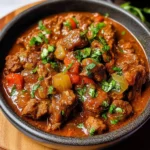
Carne Guisada Recipe
Ingredients
- Beef Chuck Roast: 3 pounds, cut into 1-inch cubes. Beef chuck roast is the star of Carne Guisada. Its marbling and connective tissue render beautifully during the long braise, resulting in incredibly tender and flavorful beef. Look for a well-marbled chuck roast for the best results. Cutting it into 1-inch cubes ensures even cooking and bite-sized pieces perfect for stew.
- Vegetable Oil: 2 tablespoons. Vegetable oil is used for searing the beef and sautéing the vegetables. Choose a neutral oil with a high smoke point like canola, vegetable, or avocado oil. This will prevent burning and allow the beef to brown properly.
- Onion: 1 large, chopped. Yellow or white onions work best for Carne Guisada. They provide a foundational aromatic base, adding sweetness and depth of flavor as they sauté and caramelize. Finely chopping the onion ensures it cooks down evenly and blends into the gravy.
- Bell Peppers: 2 medium, chopped (a mix of colors like green, red, and yellow adds visual appeal and varied flavor). Bell peppers contribute a subtle sweetness and a slightly vegetal note to the stew. A mix of colors not only looks beautiful but also offers a more complex flavor profile. Remove the seeds and membranes before chopping.
- Diced Tomatoes: 1 (14.5 ounce) can, undrained. Canned diced tomatoes provide acidity and moisture to the stew. Undrained tomatoes add extra liquid and tomato flavor, contributing to the rich gravy. You can also use fire-roasted diced tomatoes for a smoky depth of flavor.
- Beef Broth: 4 cups. Beef broth is the primary liquid component and enhances the beefy flavor of the Carne Guisada. Use low-sodium beef broth to control the salt level. Homemade beef broth will elevate the flavor even further, but a good quality store-bought broth is perfectly acceptable.
- All-Purpose Flour: 1/4 cup. Flour is used to create a roux, which thickens the gravy. All-purpose flour works well, but you can also use gluten-free all-purpose flour blends for a gluten-free version.
- Chili Powder: 2 tablespoons. Chili powder is a crucial spice blend that provides the signature Tex-Mex flavor. Use a good quality chili powder for the best taste. Adjust the amount to your spice preference; for a milder flavor, start with 1.5 tablespoons.
- Ground Cumin: 1 tablespoon. Cumin adds warmth and earthiness to the Carne Guisada, complementing the chili powder and other spices. Freshly ground cumin will have a more potent aroma and flavor compared to pre-ground.
- Dried Oregano: 1 teaspoon. Dried oregano provides a slightly peppery and earthy note, adding complexity to the spice blend. Mexican oregano is often preferred for its more robust flavor, but regular dried oregano works well too.
- Garlic Powder: 1 teaspoon. Garlic powder adds a savory garlic flavor that enhances the overall taste of the stew. You can also use fresh minced garlic (about 2-3 cloves) sautéed with the onions and peppers for a more pronounced garlic flavor.
- Salt: 1.5 teaspoons, or to taste. Salt is essential for seasoning and bringing out the flavors of all the ingredients. Start with 1.5 teaspoons and adjust to your preference at the end of cooking. Kosher salt or sea salt is recommended.
- Black Pepper: 1 teaspoon, or to taste. Black pepper adds a subtle spice and depth of flavor. Freshly ground black pepper is always preferred for its brighter and more aromatic quality.
- Bay Leaf: 1. A bay leaf adds a subtle, tea-like aroma to the stew. It infuses flavor during the long cooking process and should be removed before serving. A single bay leaf is sufficient to impart its flavor without being overpowering.
Instructions
Step 1: Prepare the Beef
- Season the Beef: In a large bowl, toss the cubed beef chuck roast with 1 teaspoon of salt and 1/2 teaspoon of black pepper. Ensure the beef is evenly coated with the seasoning. This initial seasoning is crucial for drawing out moisture and enhancing the beef’s natural flavor.
- Dredge in Flour (Optional but Recommended for Thicker Gravy): Place the flour in a shallow dish. Dredge the seasoned beef cubes in the flour, shaking off any excess. This step is optional but highly recommended as the flour will help to brown the beef and create a richer, thicker gravy as it cooks. If you prefer a thinner gravy or are gluten-free, you can skip this step.
Step 2: Sear the Beef
- Heat the Oil: In a large Dutch oven or heavy-bottomed pot, heat the vegetable oil over medium-high heat. The pot should be large enough to accommodate all the beef without overcrowding. If necessary, sear the beef in batches to ensure proper browning.
- Sear the Beef in Batches: Once the oil is hot and shimmering (a drop of water should sizzle immediately), add the beef cubes in a single layer, ensuring not to overcrowd the pot. Overcrowding will steam the beef instead of searing it. Sear the beef on all sides until nicely browned, about 2-3 minutes per side. Browning the beef is essential for developing deep, savory flavors.
- Remove Beef and Set Aside: Using tongs or a slotted spoon, remove the seared beef from the pot and set aside. Leave any rendered fat and browned bits (fond) in the pot – these will add flavor to the stew.
Step 3: Sauté the Vegetables
- Sauté Onions and Bell Peppers: In the same pot with the rendered fat, add the chopped onion and bell peppers. Sauté over medium heat, stirring occasionally, until the onions become softened and translucent and the bell peppers are slightly tender, about 5-7 minutes. Scrape up any browned bits from the bottom of the pot as you sauté – these bits are packed with flavor.
- Add Garlic (If Using Fresh): If you are using fresh minced garlic instead of garlic powder, add it to the pot during the last minute of sautéing the onions and peppers. Sauté until fragrant, being careful not to burn the garlic.
Step 4: Build the Flavor Base
- Stir in Spices: Add the chili powder, cumin, oregano, and garlic powder (if using garlic powder). Stir the spices into the vegetables and cook for about 1 minute, until fragrant. This process, called “blooming” the spices, releases their aromas and enhances their flavor.
- Add Diced Tomatoes: Pour in the canned diced tomatoes (undrained) and stir to combine. Bring the mixture to a simmer, scraping up any remaining browned bits from the bottom of the pot. The acidity of the tomatoes will help to deglaze the pot and release even more flavor.
Step 5: Braise the Beef
- Return Beef to Pot: Return the seared beef to the pot with the vegetable and tomato mixture.
- Add Beef Broth and Bay Leaf: Pour in the beef broth, ensuring the beef is mostly submerged. Add the bay leaf. The broth provides the liquid for braising and further enhances the beefy flavor.
- Bring to a Simmer, Then Reduce Heat: Bring the mixture to a simmer over medium heat, then reduce the heat to low. Cover the pot tightly with a lid.
- Simmer Low and Slow: Simmer the Carne Guisada for 2.5 to 3 hours, or until the beef is fork-tender and easily shreds apart. The low and slow simmering process is crucial for breaking down the tough connective tissue in the chuck roast, resulting in incredibly tender beef. Stir occasionally during the simmering process to ensure even cooking and prevent sticking.
- Check for Tenderness: After 2.5 hours, check the beef for tenderness. It should be easily pierced with a fork and shred apart with minimal effort. If the beef is still tough, continue to simmer for another 30 minutes to an hour, checking periodically.
Step 6: Thicken the Gravy (If Needed)
- Check Gravy Consistency: After the beef is tender, check the consistency of the gravy. If it is too thin for your liking, you can thicken it using one of the following methods. Often, the flour used to dredge the beef will be sufficient to thicken the gravy to a perfect consistency.
- Option 1: Roux (If You Dredged the Beef): If you dredged the beef in flour, the gravy should thicken naturally as it simmers. If it’s still too thin, you can increase the heat to medium-low and simmer uncovered for about 10-15 minutes, allowing the gravy to reduce and thicken. Stir frequently to prevent sticking.
- Option 2: Cornstarch Slurry (For Gluten-Free or if You Skipped Dredging): In a small bowl, whisk together 1 tablespoon of cornstarch with 2 tablespoons of cold water until smooth. Slowly pour the cornstarch slurry into the simmering Carne Guisada, stirring constantly. Simmer for another 2-3 minutes, or until the gravy has thickened to your desired consistency. Be careful not to add too much cornstarch slurry at once, as it can make the gravy too thick or pasty.
Step 7: Final Seasoning and Resting
- Remove Bay Leaf: Remove and discard the bay leaf from the Carne Guisada.
- Taste and Adjust Seasoning: Taste the Carne Guisada and adjust seasoning as needed. Add more salt, pepper, chili powder, or cumin to taste. This is the final opportunity to perfect the flavor profile.
- Simmer for Another 10 Minutes (Optional): After adjusting seasoning, simmer for another 10 minutes to allow the flavors to meld and deepen.
- Rest Before Serving (Recommended): Allow the Carne Guisada to rest for about 10-15 minutes before serving. Resting allows the flavors to further develop and the gravy to thicken slightly more.
Step 8: Serve and Enjoy!
Serve your delicious Carne Guisada hot, garnished with your favorite toppings and accompaniments. Refer to the “How to Serve” section for serving suggestions. Enjoy the rich, savory flavors of this classic Tex-Mex stew!
Nutrition
- Serving Size: one normal portion
- Calories: 450-550
- Sugar: 5-7 grams
- Sodium: 500-700 mg
- Fat: 25-35 grams
- Saturated Fat: 10-15 grams
- Unsaturated Fat: 15-20 grams
- Carbohydrates: 15-20 grams
- Fiber: 3-4 grams
- Protein: 40-45 grams
- Cholesterol: 150-180 mg