
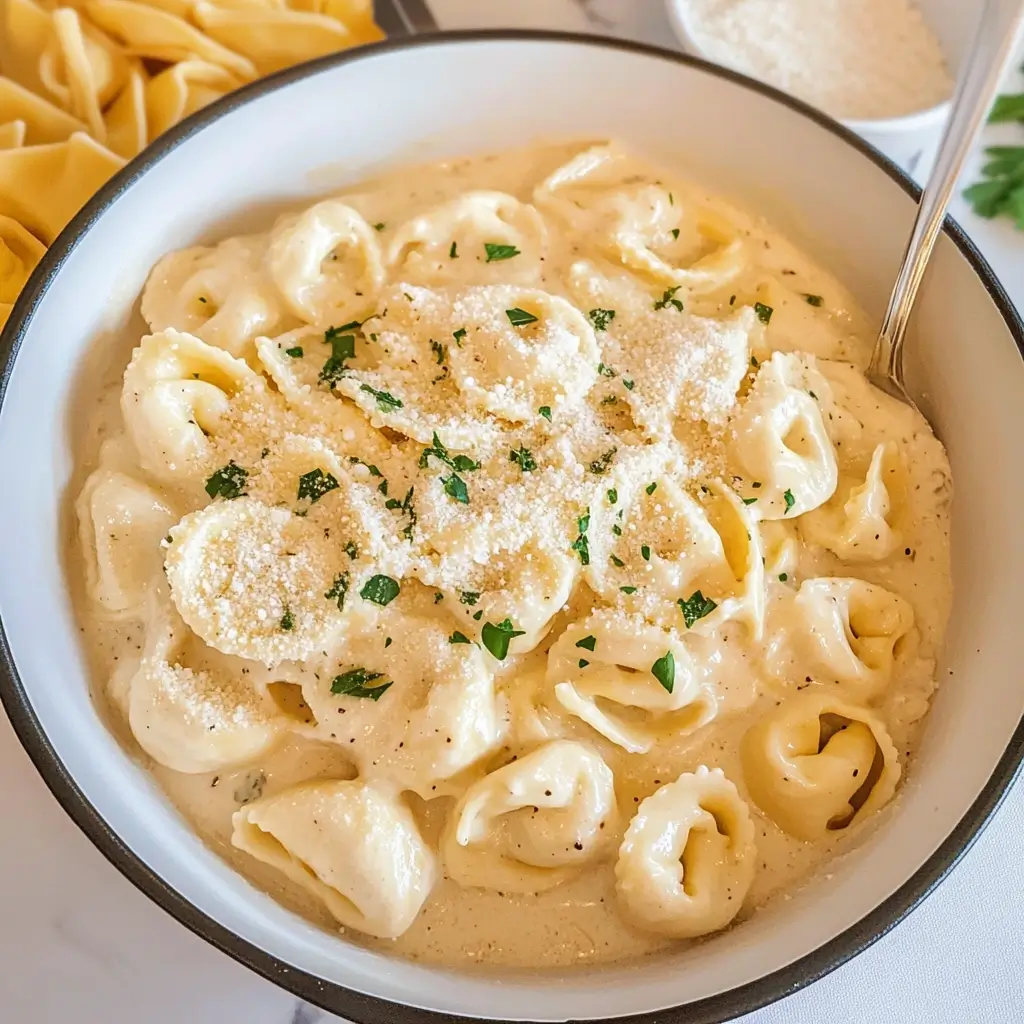

Cheese Tortellini Alfredo is a dish that has become a staple in our home for its sheer simplicity and undeniable deliciousness. There are nights when cooking feels like a chore, and then there are nights when you crave something comforting and satisfying without spending hours in the kitchen. This recipe is perfect for those latter evenings. I remember the first time I made this – my family, usually a tough crowd to please when it comes to pasta (especially my youngest!), devoured it. The creamy Alfredo sauce clinging to the tender cheese tortellini was an instant hit. Even my picky eater, who usually dissects every meal, asked for seconds! It’s become our go-to meal when we need a quick, crowd-pleasing dinner that feels indulgent but is surprisingly easy to put together. The beauty of this dish lies in its versatility; you can easily customize it with vegetables or proteins to make it a complete meal, but honestly, it’s just as satisfying on its own. It’s a recipe that consistently delivers smiles around our dinner table, and I’m excited to share it with you so it can bring the same joy to yours.
Ingredients
To create this luscious Cheese Tortellini Alfredo, you’ll need a handful of readily available ingredients that, when combined, create magic in a bowl. The quality of your ingredients will significantly impact the final taste, especially for a sauce as simple yet elegant as Alfredo. Let’s break down each component and discuss why they are important:
- 20 oz Package of Cheese Tortellini: The star of our dish! Opt for refrigerated cheese tortellini for the best texture and flavor. Frozen tortellini can work in a pinch, but be sure to cook them according to package directions, possibly slightly reducing the cooking time in the sauce to prevent them from becoming mushy. Fresh tortellini is also an excellent choice if you have access to it, as it often has a more delicate and flavorful filling. When choosing tortellini, consider the cheese blend. Ricotta and Parmesan are classic, but some brands include mozzarella or other Italian cheeses for a richer flavor profile. Avoid overly processed or pre-cooked tortellini if possible for the best results.
- 1 cup (2 Sticks) Unsalted Butter: Butter is the foundation of a truly authentic and rich Alfredo sauce. Unsalted butter is crucial as it allows you to control the saltiness of the final dish. Using salted butter can lead to an overly salty sauce, especially when combined with Parmesan cheese, which is naturally salty. High-quality butter, such as European-style butter, with a higher fat content, will result in an even creamier and more flavorful sauce. If you absolutely must substitute, you could use a plant-based butter alternative, but be mindful that it might slightly alter the taste and texture of the sauce.
- 2 cups Heavy Cream: Heavy cream is what gives Alfredo sauce its signature velvety texture and richness. It’s essential for achieving that luxurious coating on the tortellini. Do not substitute with milk or half-and-half, as these will not thicken properly and will result in a thinner, less flavorful sauce. Heavy cream has a higher fat content, which is necessary for emulsifying with the butter and cheese to create a stable and decadent sauce. For the best results, use full-fat heavy cream. Whipping cream can be used as a substitute, but it might not be as stable and could separate slightly if overheated.
- 4 cloves Garlic, minced: Fresh garlic is a must for a flavorful Alfredo sauce. Minced garlic infuses the butter and cream with its aromatic and slightly pungent flavor. Avoid using garlic powder as a substitute, as fresh garlic provides a much brighter and more complex flavor. If you are particularly sensitive to the strong flavor of garlic, you can use 3 cloves or even roast the garlic beforehand to mellow its intensity and add a sweeter note. For easier mincing, you can use a garlic press or finely chop the cloves with a sharp knife.
- 2 cups Freshly Grated Parmesan Cheese: Parmesan cheese is the heart and soul of Alfredo sauce. Freshly grated Parmesan is absolutely essential. Pre-shredded Parmesan cheese often contains cellulose and anti-caking agents, which prevent it from melting smoothly and can result in a grainy texture in the sauce. Invest in a block of Parmigiano-Reggiano or Grana Padano and grate it yourself just before adding it to the sauce. The flavor difference is truly remarkable. Parmigiano-Reggiano is generally considered the highest quality, with a nutty and complex flavor. Grana Padano is a slightly milder and more affordable alternative, but still provides excellent flavor. Use a fine grater or a microplane for finely grated Parmesan, which will melt more easily into the sauce.
- 1/2 teaspoon Salt, or to taste: Salt is crucial for enhancing the flavors of all the ingredients and balancing the richness of the sauce. Start with ½ teaspoon and adjust to your taste at the end. Remember that Parmesan cheese is already salty, so be cautious not to oversalt. Taste the sauce as you go and add salt gradually. Kosher salt or sea salt are generally preferred for cooking.
- 1/4 teaspoon Black Pepper, freshly ground, or to taste: Freshly ground black pepper adds a touch of spice and complexity to the Alfredo sauce. The aroma and flavor of freshly ground pepper are far superior to pre-ground pepper. Use a pepper grinder to grind black peppercorns just before adding them to the sauce. Adjust the amount to your preference; you can add more or less depending on how peppery you like your Alfredo sauce. White pepper can be used as a substitute for a less visually noticeable pepper flavor.
- Optional: Fresh Parsley, chopped, for garnish: Fresh parsley adds a pop of color and freshness to the finished dish. It’s a simple garnish that brightens up the creamy sauce and provides a subtle herbal note. Italian flat-leaf parsley is preferred for its stronger flavor and less curly leaves, but curly parsley can also be used. Chop the parsley finely just before serving and sprinkle it over the plated tortellini Alfredo. Other herbs like chives or basil could also be used as garnishes for a slightly different flavor profile.
Instructions
Creating this delectable Cheese Tortellini Alfredo is surprisingly straightforward. Follow these step-by-step instructions to ensure a perfect, creamy, and flavorful result every time. Pay attention to the details, especially when making the Alfredo sauce, as proper technique is key to achieving the right consistency and taste.
- Cook the Tortellini: Begin by bringing a large pot of salted water to a rolling boil. Salting the water is crucial as it seasons the tortellini from the inside out, enhancing their flavor. Once the water is boiling vigorously, gently add the cheese tortellini. Follow the package directions for cooking time, but generally, fresh or refrigerated tortellini cook very quickly, usually within 3-5 minutes. They are done when they float to the surface and are tender but still slightly firm to the bite (al dente). Avoid overcooking, as this can make them mushy.
- Melt the Butter and Sauté Garlic: While the tortellini are cooking, prepare the Alfredo sauce. In a large, deep skillet or a wide saucepan over medium-low heat, melt the unsalted butter. Use a pan large enough to eventually accommodate all the tortellini and sauce. Once the butter is completely melted and slightly shimmering, add the minced garlic. Sauté the garlic for about 1-2 minutes, or until it becomes fragrant and slightly softened. Be careful not to burn the garlic, as burnt garlic will taste bitter and ruin the flavor of the sauce. Keep the heat low to medium-low to gently cook the garlic without browning it. Stir the garlic frequently to ensure even cooking. The aroma of sautéing garlic should fill your kitchen – this is a good indicator that it’s ready.
- Add Heavy Cream and Simmer: Pour the heavy cream into the skillet with the melted butter and sautéed garlic. Gently stir to combine the cream with the butter and garlic. Increase the heat slightly to medium and bring the cream mixture to a gentle simmer. Simmering is important to thicken the cream slightly and allow the flavors to meld together. Do not bring the cream to a full boil, as this can cause it to scorch or separate. Let the cream simmer for about 3-5 minutes, stirring occasionally, until it slightly reduces and thickens. You will notice the cream becoming slightly richer and more viscous.
- Reduce Heat and Gradually Add Parmesan Cheese: Reduce the heat to low. This is crucial for preventing the Parmesan cheese from clumping and ensuring a smooth sauce. Gradually add the freshly grated Parmesan cheese to the simmering cream mixture, about ½ cup at a time. Stir continuously and vigorously with a whisk or a wooden spoon as you add the cheese. This constant stirring helps the cheese melt smoothly into the cream and creates a homogenous sauce. Ensure each addition of cheese is fully melted and incorporated before adding more. Continue adding Parmesan cheese until all 2 cups are incorporated and the sauce is smooth, creamy, and thickened to your desired consistency. The sauce should be rich and able to coat the back of a spoon.
- Season with Salt and Pepper: Season the Alfredo sauce with salt and freshly ground black pepper. Start with ½ teaspoon of salt and ¼ teaspoon of pepper, as indicated in the ingredient list. Taste the sauce and adjust the seasoning to your preference. You may need to add more salt or pepper depending on your taste and the saltiness of your Parmesan cheese. Remember to season gradually and taste after each addition to avoid oversaltiness.
- Drain Tortellini and Add to Sauce: Once the tortellini are cooked al dente, carefully drain them in a colander. Do not rinse the tortellini with water, as this can wash away the starch on the surface, which helps the sauce cling to them. Immediately add the drained tortellini directly to the skillet with the Alfredo sauce.
- Toss to Coat and Serve: Gently toss the tortellini with the Alfredo sauce to ensure they are evenly coated. Use tongs or a large spoon to carefully combine the tortellini and sauce without breaking the pasta. Continue tossing until all the tortellini are glistening with the creamy Alfredo sauce. Heat through for another minute or two to ensure the tortellini are warmed by the sauce. Do not overcook at this stage, as you just want to heat the tortellini through, not cook them further.
- Garnish and Serve Immediately: Serve the Cheese Tortellini Alfredo immediately while it is hot and creamy. Garnish with freshly chopped parsley, if desired, for a pop of color and freshness. Serve in bowls or plates and enjoy the rich and comforting flavors of your homemade Alfredo tortellini. The sauce will thicken slightly as it cools, so it’s best served and enjoyed right away for the optimal creamy texture.
Nutrition Facts
(Note: Nutritional information is an estimate and can vary based on specific ingredients and brands used. Serving sizes are also approximate.)
Servings: Approximately 6 servings
Estimated Calories per Serving: Around 650-750 calories
Approximate Nutritional Breakdown per Serving:
- Calories: 650-750 kcal
- Fat: 45-55g
- Saturated Fat: 30-35g
- Cholesterol: 150-180mg
- Sodium: 700-900mg (depending on cheese and salt added)
- Carbohydrates: 50-60g
- Fiber: 2-3g
- Sugar: 5-7g
- Protein: 20-25g
Important Considerations:
- This dish is relatively high in calories and fat due to the rich Alfredo sauce made with butter, heavy cream, and Parmesan cheese.
- It is a good source of protein, primarily from the cheese tortellini and Parmesan cheese.
- The carbohydrate content comes mainly from the pasta.
- Sodium content can vary depending on the type of Parmesan cheese and the amount of salt added.
- For a slightly lighter version, consider using a lower-fat cream cheese blended into a base of milk or half-and-half for a part of the heavy cream, but this will significantly alter the texture and richness of a traditional Alfredo.
- Portion control is key if you are watching your calorie or fat intake.
- Adding vegetables like broccoli, peas, or mushrooms can increase the nutritional value by adding fiber and vitamins, while slightly reducing the caloric density per serving if you adjust portion sizes accordingly.
Preparation Time
The beauty of Cheese Tortellini Alfredo is its speed and simplicity. It’s perfect for a weeknight meal when you want something delicious without spending hours in the kitchen.
Prep Time: Approximately 10-15 minutes
- This includes gathering your ingredients, mincing the garlic, and grating the Parmesan cheese. Pre-grating the Parmesan cheese and having all ingredients measured out beforehand will streamline the process. If you are using pre-minced garlic, this can save a few minutes, but fresh is always recommended for flavor. Chopping parsley for garnish, if using, is also included in this prep time.
Cook Time: Approximately 15-20 minutes
- This includes the time it takes to bring the water to a boil, cook the tortellini (which is very quick, usually 3-5 minutes), and prepare the Alfredo sauce. The sauce itself cooks relatively quickly, especially since we are just simmering the cream and melting the cheese. The total cook time is quite short, making this a truly fast meal.
Total Time: Approximately 25-35 minutes
- From start to finish, you can have a steaming bowl of Cheese Tortellini Alfredo on the table in under 35 minutes. This makes it an ideal choice for busy weeknights or when you need a quick and satisfying meal. The short preparation and cooking times are a major advantage of this recipe.
How to Serve
Cheese Tortellini Alfredo is delicious on its own, but you can elevate the dining experience by considering various serving suggestions. Here are some ideas to make your meal even more enjoyable:
- Side Dishes:
- Garlic Bread: Classic pairing! Crusty garlic bread or breadsticks are perfect for soaking up the creamy Alfredo sauce.
- Simple Salad: A light and refreshing green salad with a vinaigrette dressing provides a nice contrast to the richness of the pasta. Consider a Caesar salad for a more complementary flavor profile or a mixed green salad with tomatoes, cucumbers, and a lemon vinaigrette for lightness.
- Roasted Vegetables: Roasted asparagus, broccoli, or Brussels sprouts add a healthy and flavorful side. The slight char from roasting complements the creamy sauce beautifully. Toss vegetables with olive oil, salt, and pepper before roasting for best results.
- Protein Additions (to make it a complete meal):
- Grilled Chicken or Shrimp: Sliced grilled chicken breast or sautéed shrimp are excellent protein additions. Season them simply with salt, pepper, and maybe a touch of Italian seasoning to complement the Alfredo.
- Sautéed Mushrooms: Sliced and sautéed mushrooms add an earthy flavor and heartiness to the dish. Cremini or button mushrooms work well. Sauté them in butter or olive oil with a little garlic and thyme for extra flavor.
- Crispy Bacon or Pancetta: Crumbled crispy bacon or pancetta adds a salty and smoky element that enhances the richness of the Alfredo. Cook bacon until crispy and crumble it over the finished dish as a garnish.
- Garnishes:
- Fresh Parsley: As mentioned before, chopped fresh parsley adds color and freshness.
- Red Pepper Flakes: For a touch of heat, sprinkle a pinch of red pepper flakes over the top.
- Extra Parmesan Cheese: Offer extra grated Parmesan cheese at the table for those who want an even cheesier experience.
- Fresh Basil: Fresh basil leaves, either chopped or whole, can add a fragrant and slightly sweet herbal note.
- Wine Pairings:
- White Wine: A crisp, dry white wine like Pinot Grigio, Sauvignon Blanc, or Chardonnay pairs well with creamy Alfredo. The acidity of the wine cuts through the richness of the sauce.
- Light-bodied Red Wine: For red wine lovers, a light-bodied red like Pinot Noir or a light Italian Chianti can also complement the dish without overpowering it.
- Serving Style:
- Individual Bowls: Serve in warm bowls for a cozy and comforting presentation.
- Family-Style Platter: For a more casual gathering, serve the tortellini Alfredo on a large platter and let everyone help themselves.
Additional Tips
To ensure your Cheese Tortellini Alfredo is absolutely perfect every time, here are five helpful tips to keep in mind:
- Use High-Quality Ingredients: As with any simple recipe, the quality of your ingredients truly shines through in Alfredo sauce. Invest in good quality butter, heavy cream, and, most importantly, freshly grated Parmesan cheese. Using pre-shredded Parmesan can result in a grainy sauce and a less authentic flavor. Fresh garlic is also crucial for a bright and aromatic sauce. The better the ingredients, the better the final dish will taste.
- Don’t Overcook the Tortellini: Tortellini, especially fresh or refrigerated varieties, cook very quickly. Overcooking them will result in mushy pasta that loses its pleasant texture. Follow the package directions closely and test for doneness by tasting one tortellini. They should be tender but still slightly firm to the bite (al dente). Remember, they will continue to soften slightly in the hot Alfredo sauce.
- Maintain Low Heat When Adding Cheese: The key to a smooth and creamy Alfredo sauce is to add the Parmesan cheese gradually and over low heat. High heat can cause the cheese to clump and separate, resulting in a grainy or oily sauce. Reduce the heat to low before adding the cheese and stir continuously as you incorporate it. Patience is key here; take your time and ensure each addition of cheese is fully melted and incorporated before adding more.
- Adjust Sauce Consistency as Needed: If your Alfredo sauce becomes too thick, you can thin it out by adding a little bit of pasta water (water you cooked the tortellini in) or a splash more heavy cream. Pasta water is ideal as it contains starch, which will help emulsify the sauce and maintain its creamy texture. Add liquid gradually, a tablespoon at a time, until you reach your desired consistency. Conversely, if the sauce is too thin, you can simmer it gently for a few more minutes to allow it to reduce and thicken slightly, or add a bit more Parmesan cheese.
- Season to Taste and Don’t Be Afraid of Salt: Salt is crucial for bringing out the flavors in Alfredo sauce. Parmesan cheese is already salty, but you will likely still need to add additional salt to balance the richness of the butter and cream and enhance the overall flavor. Start with the recommended amount of salt in the recipe and then taste and adjust as needed. Season gradually and taste after each addition. Freshly ground black pepper is also essential for adding a touch of spice and complexity. Don’t be shy with the seasoning; properly seasoned Alfredo sauce is much more flavorful and satisfying.
FAQ
Q1: Can I use milk or half-and-half instead of heavy cream?
A: While you can technically use milk or half-and-half, it is strongly discouraged for authentic Alfredo sauce. Heavy cream is essential for the rich, velvety texture and flavor that defines Alfredo. Milk or half-and-half will result in a much thinner and less flavorful sauce that may not thicken properly. If you are looking for a lighter option, you could try using a combination of half-and-half and a small amount of cream cheese to help with thickness, but it will still not replicate the true richness of heavy cream-based Alfredo. For the best results and classic Alfredo taste, stick with heavy cream.
Q2: Can I make Alfredo sauce ahead of time?
A: Alfredo sauce is best made and served fresh. However, you can prepare it up to a few hours in advance if necessary. Keep in mind that the sauce may thicken as it cools. To reheat, gently warm it over low heat, adding a splash of heavy cream or milk to thin it out and restore its creamy consistency. Avoid overheating or boiling the reheated sauce, as it can separate. For optimal texture and flavor, it’s always recommended to make the Alfredo sauce just before you are ready to serve it.
Q3: Can I add vegetables to this dish?
A: Absolutely! Adding vegetables is a great way to boost the nutritional value and flavor of Cheese Tortellini Alfredo. Some excellent vegetable additions include: steamed or roasted broccoli florets, peas (fresh or frozen), sautéed spinach or kale, roasted asparagus, sautéed mushrooms, or sun-dried tomatoes. You can add the vegetables directly to the skillet with the Alfredo sauce along with the tortellini, or serve them as a side. Consider blanching or cooking heartier vegetables like broccoli beforehand to ensure they are tender when added to the dish.
Q4: Can I freeze leftover Cheese Tortellini Alfredo?
A: Freezing pasta dishes with cream-based sauces is generally not recommended. Creamy sauces like Alfredo tend to separate and become grainy when thawed and reheated, altering the texture and quality significantly. The tortellini themselves can also become mushy after freezing and thawing. While technically safe to freeze, the quality of the dish will likely be compromised. It is best to enjoy Cheese Tortellini Alfredo fresh. If you do have leftovers, store them in an airtight container in the refrigerator and consume them within 2-3 days. Reheat gently over low heat, adding a little milk or cream to restore moisture.
Q5: What other cheeses can I use besides Parmesan?
A: While Parmesan cheese is the traditional and essential cheese for classic Alfredo sauce, you can experiment with other hard Italian cheeses to add depth of flavor. Grana Padano is a good substitute for Parmesan, offering a slightly milder and nuttier flavor. Pecorino Romano, a sheep’s milk cheese, is saltier and sharper than Parmesan and can be used in combination with Parmesan for a more complex flavor. Avoid using softer cheeses like mozzarella or ricotta directly in the sauce, as they will not melt properly and create the desired smooth Alfredo texture. If you want to add a different cheesy element, consider using a small amount of cream cheese for extra creaminess or a touch of Asiago for a sharper note, always in conjunction with Parmesan as the primary cheese.
Print
Cheese Tortellini Alfredo Recipe
Ingredients
- 20 oz Package of Cheese Tortellini: The star of our dish! Opt for refrigerated cheese tortellini for the best texture and flavor. Frozen tortellini can work in a pinch, but be sure to cook them according to package directions, possibly slightly reducing the cooking time in the sauce to prevent them from becoming mushy. Fresh tortellini is also an excellent choice if you have access to it, as it often has a more delicate and flavorful filling. When choosing tortellini, consider the cheese blend. Ricotta and Parmesan are classic, but some brands include mozzarella or other Italian cheeses for a richer flavor profile. Avoid overly processed or pre-cooked tortellini if possible for the best results.
- 1 cup (2 Sticks) Unsalted Butter: Butter is the foundation of a truly authentic and rich Alfredo sauce. Unsalted butter is crucial as it allows you to control the saltiness of the final dish. Using salted butter can lead to an overly salty sauce, especially when combined with Parmesan cheese, which is naturally salty. High-quality butter, such as European-style butter, with a higher fat content, will result in an even creamier and more flavorful sauce. If you absolutely must substitute, you could use a plant-based butter alternative, but be mindful that it might slightly alter the taste and texture of the sauce.
- 2 cups Heavy Cream: Heavy cream is what gives Alfredo sauce its signature velvety texture and richness. It’s essential for achieving that luxurious coating on the tortellini. Do not substitute with milk or half-and-half, as these will not thicken properly and will result in a thinner, less flavorful sauce. Heavy cream has a higher fat content, which is necessary for emulsifying with the butter and cheese to create a stable and decadent sauce. For the best results, use full-fat heavy cream. Whipping cream can be used as a substitute, but it might not be as stable and could separate slightly if overheated.
- 4 cloves Garlic, minced: Fresh garlic is a must for a flavorful Alfredo sauce. Minced garlic infuses the butter and cream with its aromatic and slightly pungent flavor. Avoid using garlic powder as a substitute, as fresh garlic provides a much brighter and more complex flavor. If you are particularly sensitive to the strong flavor of garlic, you can use 3 cloves or even roast the garlic beforehand to mellow its intensity and add a sweeter note. For easier mincing, you can use a garlic press or finely chop the cloves with a sharp knife.
- 2 cups Freshly Grated Parmesan Cheese: Parmesan cheese is the heart and soul of Alfredo sauce. Freshly grated Parmesan is absolutely essential. Pre-shredded Parmesan cheese often contains cellulose and anti-caking agents, which prevent it from melting smoothly and can result in a grainy texture in the sauce. Invest in a block of Parmigiano-Reggiano or Grana Padano and grate it yourself just before adding it to the sauce. The flavor difference is truly remarkable. Parmigiano-Reggiano is generally considered the highest quality, with a nutty and complex flavor. Grana Padano is a slightly milder and more affordable alternative, but still provides excellent flavor. Use a fine grater or a microplane for finely grated Parmesan, which will melt more easily into the sauce.
- 1/2 teaspoon Salt, or to taste: Salt is crucial for enhancing the flavors of all the ingredients and balancing the richness of the sauce. Start with ½ teaspoon and adjust to your taste at the end. Remember that Parmesan cheese is already salty, so be cautious not to oversalt. Taste the sauce as you go and add salt gradually. Kosher salt or sea salt are generally preferred for cooking.
- 1/4 teaspoon Black Pepper, freshly ground, or to taste: Freshly ground black pepper adds a touch of spice and complexity to the Alfredo sauce. The aroma and flavor of freshly ground pepper are far superior to pre-ground pepper. Use a pepper grinder to grind black peppercorns just before adding them to the sauce. Adjust the amount to your preference; you can add more or less depending on how peppery you like your Alfredo sauce. White pepper can be used as a substitute for a less visually noticeable pepper flavor.
- Optional: Fresh Parsley, chopped, for garnish: Fresh parsley adds a pop of color and freshness to the finished dish. It’s a simple garnish that brightens up the creamy sauce and provides a subtle herbal note. Italian flat-leaf parsley is preferred for its stronger flavor and less curly leaves, but curly parsley can also be used. Chop the parsley finely just before serving and sprinkle it over the plated tortellini Alfredo. Other herbs like chives or basil could also be used as garnishes for a slightly different flavor profile.
Instructions
- Cook the Tortellini: Begin by bringing a large pot of salted water to a rolling boil. Salting the water is crucial as it seasons the tortellini from the inside out, enhancing their flavor. Once the water is boiling vigorously, gently add the cheese tortellini. Follow the package directions for cooking time, but generally, fresh or refrigerated tortellini cook very quickly, usually within 3-5 minutes. They are done when they float to the surface and are tender but still slightly firm to the bite (al dente). Avoid overcooking, as this can make them mushy.
- Melt the Butter and Sauté Garlic: While the tortellini are cooking, prepare the Alfredo sauce. In a large, deep skillet or a wide saucepan over medium-low heat, melt the unsalted butter. Use a pan large enough to eventually accommodate all the tortellini and sauce. Once the butter is completely melted and slightly shimmering, add the minced garlic. Sauté the garlic for about 1-2 minutes, or until it becomes fragrant and slightly softened. Be careful not to burn the garlic, as burnt garlic will taste bitter and ruin the flavor of the sauce. Keep the heat low to medium-low to gently cook the garlic without browning it. Stir the garlic frequently to ensure even cooking. The aroma of sautéing garlic should fill your kitchen – this is a good indicator that it’s ready.
- Add Heavy Cream and Simmer: Pour the heavy cream into the skillet with the melted butter and sautéed garlic. Gently stir to combine the cream with the butter and garlic. Increase the heat slightly to medium and bring the cream mixture to a gentle simmer. Simmering is important to thicken the cream slightly and allow the flavors to meld together. Do not bring the cream to a full boil, as this can cause it to scorch or separate. Let the cream simmer for about 3-5 minutes, stirring occasionally, until it slightly reduces and thickens. You will notice the cream becoming slightly richer and more viscous.
- Reduce Heat and Gradually Add Parmesan Cheese: Reduce the heat to low. This is crucial for preventing the Parmesan cheese from clumping and ensuring a smooth sauce. Gradually add the freshly grated Parmesan cheese to the simmering cream mixture, about ½ cup at a time. Stir continuously and vigorously with a whisk or a wooden spoon as you add the cheese. This constant stirring helps the cheese melt smoothly into the cream and creates a homogenous sauce. Ensure each addition of cheese is fully melted and incorporated before adding more. Continue adding Parmesan cheese until all 2 cups are incorporated and the sauce is smooth, creamy, and thickened to your desired consistency. The sauce should be rich and able to coat the back of a spoon.
- Season with Salt and Pepper: Season the Alfredo sauce with salt and freshly ground black pepper. Start with ½ teaspoon of salt and ¼ teaspoon of pepper, as indicated in the ingredient list. Taste the sauce and adjust the seasoning to your preference. You may need to add more salt or pepper depending on your taste and the saltiness of your Parmesan cheese. Remember to season gradually and taste after each addition to avoid oversaltiness.
- Drain Tortellini and Add to Sauce: Once the tortellini are cooked al dente, carefully drain them in a colander. Do not rinse the tortellini with water, as this can wash away the starch on the surface, which helps the sauce cling to them. Immediately add the drained tortellini directly to the skillet with the Alfredo sauce.
- Toss to Coat and Serve: Gently toss the tortellini with the Alfredo sauce to ensure they are evenly coated. Use tongs or a large spoon to carefully combine the tortellini and sauce without breaking the pasta. Continue tossing until all the tortellini are glistening with the creamy Alfredo sauce. Heat through for another minute or two to ensure the tortellini are warmed by the sauce. Do not overcook at this stage, as you just want to heat the tortellini through, not cook them further.
- Garnish and Serve Immediately: Serve the Cheese Tortellini Alfredo immediately while it is hot and creamy. Garnish with freshly chopped parsley, if desired, for a pop of color and freshness. Serve in bowls or plates and enjoy the rich and comforting flavors of your homemade Alfredo tortellini. The sauce will thicken slightly as it cools, so it’s best served and enjoyed right away for the optimal creamy texture.
Nutrition
- Serving Size: one normal portion
- Calories: 650-750
- Sugar: 5-7g
- Sodium: 700-900mg
- Fat: 45-55g
- Saturated Fat: 30-35g
- Carbohydrates: 50-60g
- Fiber: 2-3g
- Protein: 20-25g
- Cholesterol: 150-180mg