
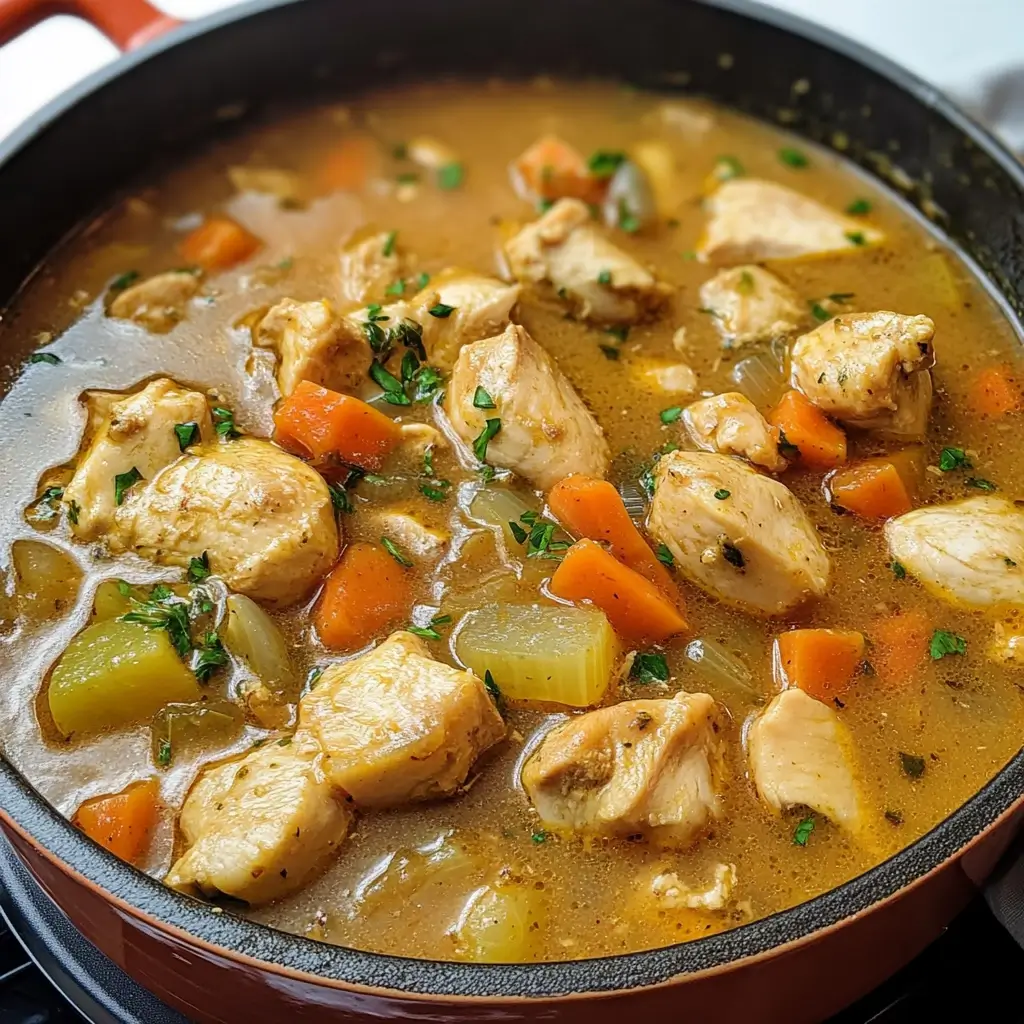

There are certain dishes that just feel like a warm hug in a bowl, and for my family, this Hearty Homemade Chicken Stew is precisely that. I still remember the first time I perfected this recipe on a blustery autumn evening. The aroma filled the house – that comforting blend of savory chicken, earthy vegetables, and fragrant herbs simmering away on the stovetop. When I finally ladled it into bowls, the silence that fell over the dinner table, punctuated only by the clinking of spoons, was the highest compliment. My kids, usually picky eaters, asked for seconds, and my partner declared it the “best chicken stew ever.” Since then, it’s become a staple in our home, requested frequently during colder months or whenever we need a dose of pure comfort. It’s forgiving, adaptable, and delivers consistently delicious results. This isn’t just a recipe; it’s a vessel for creating warmth, nourishment, and cherished family memories. The tender chicken, the perfectly cooked vegetables, and the rich, flavorful broth combine to create something truly special, a dish that satisfies the soul as much as the appetite. It’s the kind of meal that makes you want to slow down, savor each spoonful, and appreciate the simple goodness of home cooking. Over the years, I’ve tweaked it slightly, finding the perfect balance of herbs and the ideal cooking time to ensure the chicken stays succulent and the vegetables retain a pleasant bite without becoming mushy. This version represents that journey – a culmination of trials, tastes, and treasured moments around our kitchen table.
Hearty Homemade Chicken Stew: Ingredients
This recipe yields approximately 6 generous servings. Here’s what you’ll need to gather:
- Chicken: 1.5 lbs (about 680g) boneless, skinless chicken thighs, cut into 1-inch cubes (Chicken thighs are recommended for their flavor and tenderness, but chicken breasts can be substituted)
- Fat for Searing: 2 tablespoons olive oil or unsalted butter (or a mix)
- Aromatics:
- 1 large yellow onion, chopped (about 1.5 cups)
- 3 medium carrots, peeled and sliced into 1/2-inch rounds (about 1.5 cups)
- 3 celery stalks, sliced into 1/2-inch pieces (about 1.5 cups)
- 4-5 cloves garlic, minced (about 1.5 tablespoons)
- Flour (for thickening): 1/4 cup (about 30g) all-purpose flour (Use a gluten-free blend for a GF version)
- Liquid:
- 6 cups (about 1.4 liters) low-sodium chicken broth or stock
- Optional: 1/2 cup dry white wine (like Sauvignon Blanc or Pinot Grigio) for deglazing
- Vegetables:
- 1.5 lbs (about 680g) Yukon Gold or Russet potatoes, peeled and cut into 1-inch cubes (about 3-4 medium potatoes)
- 1 cup (about 150g) frozen green peas
- Herbs and Seasonings:
- 1 teaspoon dried thyme
- 1/2 teaspoon dried rosemary (or 1 sprig fresh rosemary)
- 1 bay leaf
- Salt, to taste (start with 1 teaspoon, adjust later)
- Freshly ground black pepper, to taste (start with 1/2 teaspoon, adjust later)
- Optional Flavor Enhancers: 1 tablespoon tomato paste, 1 teaspoon Worcestershire sauce
- Garnish (Optional): Fresh parsley, chopped
Step-by-Step Cooking Instructions
Follow these instructions carefully for a perfectly cooked, flavorful chicken stew:
- Prepare the Chicken: Pat the cubed chicken thighs dry with paper towels. This is crucial for getting a good sear. Season the chicken generously with about 1/2 teaspoon salt and 1/4 teaspoon black pepper.
- Sear the Chicken: Heat the olive oil and/or butter in a large Dutch oven or heavy-bottomed pot over medium-high heat. Once the oil is shimmering or the butter is melted and foamy, add the chicken pieces in a single layer (work in batches if necessary to avoid overcrowding the pot). Sear the chicken for about 3-4 minutes per side, until nicely browned. The chicken doesn’t need to be cooked through at this stage. Remove the browned chicken from the pot using a slotted spoon and set it aside on a plate. Searing builds a flavorful crust (fond) on the bottom of the pot, which is essential for a rich stew.
- Sauté the Aromatics: Reduce the heat to medium. Add the chopped onion, carrots, and celery to the pot (add a little more oil if the pot seems dry). Cook, stirring occasionally, for about 5-7 minutes, until the onions become translucent and the vegetables begin to soften slightly. Scrape up any browned bits (fond) from the bottom of the pot as the vegetables release their moisture – this is pure flavor!
- Add Garlic and Flour: Add the minced garlic (and tomato paste, if using) to the pot and cook for about 1 minute more, until fragrant. Be careful not to burn the garlic. Sprinkle the all-purpose flour over the vegetables. Stir continuously and cook for about 1-2 minutes. This step cooks out the raw flour taste and creates a roux, which will help thicken the stew later.
- Deglaze (Optional but Recommended): If using white wine, pour it into the pot. Bring it to a simmer, scraping the bottom of the pot vigorously with a wooden spoon to loosen any remaining browned bits. Let the wine bubble and reduce by about half, which should take 1-2 minutes. This adds a wonderful depth of flavor. If skipping the wine, proceed directly to the next step.
- Add Liquids and Potatoes: Gradually pour in the chicken broth, stirring constantly to ensure the flour mixture dissolves smoothly without lumps. Add the reserved seared chicken (along with any accumulated juices from the plate), the cubed potatoes, dried thyme, dried rosemary (or fresh sprig), and the bay leaf. If using Worcestershire sauce, add it now.
- Bring to a Simmer: Increase the heat to bring the stew just to a boil. Once it reaches a boil, immediately reduce the heat to low.
- Simmer Gently: Cover the pot tightly and let the stew simmer gently for about 25-35 minutes, or until the potatoes are tender when pierced with a fork and the chicken is cooked through and tender. Stir occasionally to prevent sticking, especially on the bottom. Avoid boiling vigorously, as this can make the chicken tough. Gentle simmering allows the flavors to meld beautifully.
- Add Peas: Stir in the frozen peas during the last 5 minutes of cooking. They just need to heat through; overcooking will make them mushy and dull their vibrant color.
- Final Seasoning and Adjustments: Remove the bay leaf (and rosemary sprig, if using fresh). Taste the stew carefully. Add more salt and freshly ground black pepper as needed to reach your desired flavor. If the stew is too thin for your liking, you can create a slurry by whisking 1 tablespoon of cornstarch with 2 tablespoons of cold water, then slowly stirring it into the simmering stew until it thickens (let it simmer for another minute or two). If it’s too thick, stir in a little more warm chicken broth or water until you reach the desired consistency.
- Rest and Serve: Turn off the heat and let the stew rest for 5-10 minutes before serving. This allows the flavors to meld even further. Ladle generously into warm bowls. Garnish with fresh chopped parsley, if desired.
Nutrition Facts (Approximate)
- Servings: 6
- Calories per Serving: Approximately 480-550 kcal (This is an estimate and can vary based on specific ingredients used, particularly the type and amount of fat, the cut of chicken, and serving size.)
Note: This nutritional information is an estimate calculated using standard ingredient databases. Factors like specific brands, exact vegetable sizes, trimming of fat, and optional additions can alter the final values. This stew provides a good balance of protein from the chicken, carbohydrates from the potatoes and vegetables, and essential vitamins and minerals from the diverse ingredients. For a lower-calorie version, consider using chicken breast, reducing the amount of oil/butter used for searing, and bulking up with more non-starchy vegetables.
Preparation and Cooking Time
- Preparation Time: 25-30 minutes (Includes chopping vegetables, cubing chicken)
- Cooking Time: 45-60 minutes (Includes searing, sautéing, and simmering)
- Total Time: Approximately 1 hour 10 minutes to 1 hour 30 minutes
Time Breakdown:
- Chopping & Prep (Mise en Place): Getting all your ingredients ready before you start cooking (chopping onions, carrots, celery, potatoes; mincing garlic; cubing chicken) is the most time-consuming part of the prep, typically taking around 25 minutes. Doing this first makes the cooking process much smoother.
- Searing Chicken: 5-8 minutes (potentially longer if done in batches).
- Sautéing Aromatics: 5-7 minutes.
- Adding Flour/Deglazing: 3-4 minutes.
- Simmering Time: 25-35 minutes (this is when the magic happens, and requires minimal active attention).
- Adding Peas & Final Adjustments: 5-10 minutes.
- Resting Time: 5-10 minutes.
Investing time in proper preparation and allowing the stew to simmer gently are key to achieving the best flavor and texture.
How to Serve Chicken Stew
Chicken stew is wonderfully versatile and can be served in various ways to suit different tastes and occasions. Here are some popular and delicious serving suggestions:
- Classic Bowl:
- Serve piping hot in deep, warmed bowls. This is the most traditional and comforting way to enjoy it.
- Ensure each serving gets a good mix of chicken, vegetables, and plenty of broth.
- With Bread for Dipping (Highly Recommended!):
- Crusty Bread: Offer thick slices of crusty baguette, sourdough, or a rustic country loaf alongside the stew. The bread is perfect for soaking up every last drop of the delicious broth.
- Dinner Rolls: Soft dinner rolls, warm from the oven, are also excellent companions.
- Biscuits: Fluffy buttermilk biscuits are a Southern-inspired favorite that pair beautifully with the hearty stew.
- Cornbread: A slice of slightly sweet or savory cornbread offers a delightful textural and flavor contrast.
- Over a Base:
- Mashed Potatoes: Ladle the stew over a generous scoop of creamy mashed potatoes for an incredibly comforting and substantial meal.
- Cooked Rice: Serve over fluffy white or brown rice. The rice absorbs the broth nicely.
- Egg Noodles: Wide egg noodles provide a classic pairing, similar to chicken noodle soup but much heartier.
- Polenta: Creamy polenta makes a wonderful, slightly different base for the rich stew.
- With Dumplings:
- Drop Dumplings: Prepare a simple biscuit-like dough and drop spoonfuls onto the simmering stew during the last 10-15 minutes of cooking (cover the pot tightly). They steam right on top and soak up the flavors.
- Garnishes for Extra Flair:
- Fresh Herbs: A sprinkle of fresh chopped parsley, chives, or thyme leaves adds freshness and visual appeal.
- Dairy: A dollop of sour cream or plain Greek yogurt can add a cool, tangy counterpoint.
- Crunch: Homemade croutons or crumbled crispy bacon can add a welcome textural element.
- Heat: A dash of hot sauce or a pinch of red pepper flakes for those who like a little kick.
- Side Salad:
- A simple green salad with a light vinaigrette can provide a fresh contrast to the richness of the stew.
No matter how you choose to serve it, ensure the stew is hot and the accompaniments are ready to go for the best experience.
Additional Tips for the Perfect Chicken Stew
Elevate your chicken stew from great to absolutely unforgettable with these five tips:
- Don’t Skip the Sear: Properly browning the chicken before adding it to the stew is arguably the most crucial step for developing deep, savory flavor. The Maillard reaction creates complex flavor compounds that you simply can’t achieve by just simmering the chicken in broth. Pat the chicken dry before seasoning and don’t overcrowd the pan – work in batches if needed. The browned bits (fond) left in the pot after searing are flavor gold; make sure to scrape them up when sautéing the vegetables or deglazing.
- Embrace Ingredient Swaps & Additions: This recipe is a fantastic base, but feel free to customize it!
- Vegetables: Swap potatoes for sweet potatoes or parsnips (add them earlier as they take longer to cook), or add mushrooms (sauté with aromatics), green beans (add near the end), butternut squash, or kale (stir in during the last few minutes).
- Chicken: Bone-in, skin-on chicken thighs will add even more flavor (sear skin-side down first until crispy, remove skin before adding back to stew, or leave it on if you like). Chicken breast works but can dry out more easily; consider adding it later in the simmering process or using larger chunks.
- Herbs: Experiment with fresh herbs like sage or marjoram, or add a bouquet garni (parsley stems, thyme sprigs, bay leaf tied together) for easy removal.
- Flavor Boosters: A teaspoon of Dijon mustard stirred in at the end can add tang, while a splash of heavy cream or coconut milk can create a richer, creamier stew. Smoked paprika adds a lovely smoky depth.
- Mastering Thickness: Stew consistency is subjective. If your stew isn’t as thick as you’d like after simmering:
- Cornstarch Slurry: Mix 1 tablespoon cornstarch with 2 tablespoons cold water until smooth. Slowly drizzle into the simmering stew while stirring constantly until thickened. Let it simmer for 1-2 minutes more to cook out the starch taste. (Gluten-free option)
- Flour Slurry: Similar to cornstarch, but use all-purpose flour. It may need to simmer slightly longer.
- Beurre Manié: Knead equal parts softened butter and flour together into a paste. Whisk small bits into the simmering stew until desired thickness is reached. Adds richness.
- Potato Mash: Mash some of the cooked potatoes against the side of the pot with a spoon or remove a few potato chunks, mash them in a separate bowl with a little broth, and stir the mixture back into the stew.
- Patience: Sometimes, simply letting the stew simmer uncovered for a few extra minutes will allow excess liquid to evaporate and thicken it naturally. Conversely, if it’s too thick, stir in warm broth or water.
- Make-Ahead Magic & Freezing: Chicken stew is an excellent make-ahead meal, as the flavors deepen beautifully overnight.
- Refrigerating: Cool the stew completely before transferring it to airtight containers. Store in the refrigerator for up to 3-4 days. Reheat gently on the stovetop over medium-low heat, stirring occasionally, or in the microwave. You might need to add a splash of broth or water to loosen it up.
- Freezing: Cool completely. Portion into freezer-safe airtight containers or heavy-duty freezer bags, leaving about an inch of headspace for expansion. Potatoes can sometimes become slightly grainy upon thawing, though Yukon Golds tend to hold up better than Russets. For best results, freeze for up to 3 months. Thaw overnight in the refrigerator before reheating gently. Alternatively, you can freeze the stew without the potatoes, and add freshly boiled potatoes when reheating.
- Low and Slow Simmering: Resist the urge to boil the stew rapidly. A gentle, low simmer (where bubbles just occasionally break the surface) is key. This allows the chicken to become melt-in-your-mouth tender rather than tough and rubbery. It also gives the flavors time to meld together harmoniously without the vegetables turning to complete mush. Keep the lid mostly on to prevent too much evaporation, but you can leave it slightly ajar if you need the stew to reduce and thicken a bit. Patience during the simmering stage pays off immensely in the final texture and taste.
Frequently Asked Questions (FAQ)
Here are answers to some common questions about making chicken stew:
- Q: Can I use chicken breasts instead of chicken thighs?
- A: Yes, you absolutely can use boneless, skinless chicken breasts. However, chicken thighs generally have more flavor and fat, making them more forgiving and less prone to drying out during the simmering process. If using chicken breasts, consider cutting them into slightly larger chunks (1.5 inches) and be careful not to overcook them. You might want to shorten the simmering time slightly or add the seared chicken breast pieces back into the pot during the last 15-20 minutes of cooking, rather than simmering them for the full duration with the potatoes. Searing them well initially is still recommended for flavor.
- Q: How can I make this chicken stew gluten-free?
- A: Making this stew gluten-free is straightforward. Instead of using all-purpose wheat flour to dredge the chicken (optional step) and thicken the stew (in the roux step), use a good quality gluten-free all-purpose flour blend (one containing xanthan gum usually works well). Alternatively, you can skip the flour/roux step entirely and thicken the stew near the end of cooking using a cornstarch slurry (mix 1-2 tablespoons of cornstarch with an equal amount of cold water, then stir into the simmering stew until thickened). Ensure your chicken broth is certified gluten-free, as some brands contain gluten additives. Also, double-check any optional additions like Worcestershire sauce (some brands contain gluten).
- Q: How long will leftover chicken stew last in the refrigerator?
- A: Properly stored, leftover chicken stew will last for 3 to 4 days in the refrigerator. Allow the stew to cool down partially (but don’t leave it at room temperature for more than 2 hours) before transferring it to airtight containers. Reheat gently on the stovetop over medium-low heat until heated through, or reheat individual portions in the microwave. If the stew has thickened considerably upon chilling, you may need to add a splash of chicken broth or water when reheating to achieve the desired consistency.
- Q: Can I add different vegetables or customize the recipe?
- A: Absolutely! This recipe is very adaptable. Feel free to add other vegetables based on preference or what you have on hand. Good additions include:
- Mushrooms: Add sliced cremini or button mushrooms along with the onions, carrots, and celery.
- Parsnips or Turnips: Cube and add along with the potatoes, as they have a similar cooking time.
- Sweet Potatoes: Use instead of or in addition to regular potatoes for a slightly sweeter flavor.
- Green Beans: Add trimmed green beans during the last 10-15 minutes of cooking.
- Butternut Squash: Add cubed squash along with the potatoes.
- Leafy Greens: Stir in kale or spinach during the final few minutes until wilted.
- Remember to adjust cooking times based on the hardiness of the vegetable. You can also adjust herbs, add spices like smoked paprika, or finish with cream for richness.
- A: Absolutely! This recipe is very adaptable. Feel free to add other vegetables based on preference or what you have on hand. Good additions include:
- Q: My stew came out too thin (or too thick). How can I fix it?
- A: This is a common issue with easy fixes!
- Too Thin:
- Cornstarch Slurry: (Recommended for smooth results) Whisk 1 tablespoon cornstarch with 2 tablespoons cold water. Slowly stir into the simmering stew until it thickens (takes 1-2 mins). Repeat if needed.
- Flour Slurry: Whisk 1 tablespoon flour with 2-3 tablespoons cold water or broth. Stir into the stew and simmer for 5 minutes to cook out the raw flour taste.
- Potato Mash: Remove a few cooked potato chunks, mash them well with some broth, and stir the paste back into the stew.
- Simmer Uncovered: Remove the lid and let the stew simmer gently for an additional 10-15 minutes to allow excess liquid to evaporate.
- Too Thick:
- Simply stir in additional warm chicken broth or hot water, a little at a time, until the stew reaches your desired consistency. Taste and adjust seasonings (salt, pepper) again after adding more liquid.
- Too Thin:
- A: This is a common issue with easy fixes!

Chicken Stew Recipe
Ingredients
- Chicken: 1.5 lbs (about 680g) boneless, skinless chicken thighs, cut into 1-inch cubes (Chicken thighs are recommended for their flavor and tenderness, but chicken breasts can be substituted)
- Fat for Searing: 2 tablespoons olive oil or unsalted butter (or a mix)
- Aromatics:
- 1 large yellow onion, chopped (about 1.5 cups)
- 3 medium carrots, peeled and sliced into 1/2-inch rounds (about 1.5 cups)
- 3 celery stalks, sliced into 1/2-inch pieces (about 1.5 cups)
- 4–5 cloves garlic, minced (about 1.5 tablespoons)
- Flour (for thickening): 1/4 cup (about 30g) all-purpose flour (Use a gluten-free blend for a GF version)
- Liquid:
- 6 cups (about 1.4 liters) low-sodium chicken broth or stock
- Optional: 1/2 cup dry white wine (like Sauvignon Blanc or Pinot Grigio) for deglazing
- Vegetables:
- 1.5 lbs (about 680g) Yukon Gold or Russet potatoes, peeled and cut into 1-inch cubes (about 3–4 medium potatoes)
- 1 cup (about 150g) frozen green peas
- Herbs and Seasonings:
- 1 teaspoon dried thyme
- 1/2 teaspoon dried rosemary (or 1 sprig fresh rosemary)
- 1 bay leaf
- Salt, to taste (start with 1 teaspoon, adjust later)
- Freshly ground black pepper, to taste (start with 1/2 teaspoon, adjust later)
- Optional Flavor Enhancers: 1 tablespoon tomato paste, 1 teaspoon Worcestershire sauce
- Garnish (Optional): Fresh parsley, chopped
Instructions
- Prepare the Chicken: Pat the cubed chicken thighs dry with paper towels. This is crucial for getting a good sear. Season the chicken generously with about 1/2 teaspoon salt and 1/4 teaspoon black pepper.
- Sear the Chicken: Heat the olive oil and/or butter in a large Dutch oven or heavy-bottomed pot over medium-high heat. Once the oil is shimmering or the butter is melted and foamy, add the chicken pieces in a single layer (work in batches if necessary to avoid overcrowding the pot). Sear the chicken for about 3-4 minutes per side, until nicely browned. The chicken doesn’t need to be cooked through at this stage. Remove the browned chicken from the pot using a slotted spoon and set it aside on a plate. Searing builds a flavorful crust (fond) on the bottom of the pot, which is essential for a rich stew.
- Sauté the Aromatics: Reduce the heat to medium. Add the chopped onion, carrots, and celery to the pot (add a little more oil if the pot seems dry). Cook, stirring occasionally, for about 5-7 minutes, until the onions become translucent and the vegetables begin to soften slightly. Scrape up any browned bits (fond) from the bottom of the pot as the vegetables release their moisture – this is pure flavor!
- Add Garlic and Flour: Add the minced garlic (and tomato paste, if using) to the pot and cook for about 1 minute more, until fragrant. Be careful not to burn the garlic. Sprinkle the all-purpose flour over the vegetables. Stir continuously and cook for about 1-2 minutes. This step cooks out the raw flour taste and creates a roux, which will help thicken the stew later.
- Deglaze (Optional but Recommended): If using white wine, pour it into the pot. Bring it to a simmer, scraping the bottom of the pot vigorously with a wooden spoon to loosen any remaining browned bits. Let the wine bubble and reduce by about half, which should take 1-2 minutes. This adds a wonderful depth of flavor. If skipping the wine, proceed directly to the next step.
- Add Liquids and Potatoes: Gradually pour in the chicken broth, stirring constantly to ensure the flour mixture dissolves smoothly without lumps. Add the reserved seared chicken (along with any accumulated juices from the plate), the cubed potatoes, dried thyme, dried rosemary (or fresh sprig), and the bay leaf. If using Worcestershire sauce, add it now.
- Bring to a Simmer: Increase the heat to bring the stew just to a boil. Once it reaches a boil, immediately reduce the heat to low.
- Simmer Gently: Cover the pot tightly and let the stew simmer gently for about 25-35 minutes, or until the potatoes are tender when pierced with a fork and the chicken is cooked through and tender. Stir occasionally to prevent sticking, especially on the bottom. Avoid boiling vigorously, as this can make the chicken tough. Gentle simmering allows the flavors to meld beautifully.
- Add Peas: Stir in the frozen peas during the last 5 minutes of cooking. They just need to heat through; overcooking will make them mushy and dull their vibrant color.
- Final Seasoning and Adjustments: Remove the bay leaf (and rosemary sprig, if using fresh). Taste the stew carefully. Add more salt and freshly ground black pepper as needed to reach your desired flavor. If the stew is too thin for your liking, you can create a slurry by whisking 1 tablespoon of cornstarch with 2 tablespoons of cold water, then slowly stirring it into the simmering stew until it thickens (let it simmer for another minute or two). If it’s too thick, stir in a little more warm chicken broth or water until you reach the desired consistency.
- Rest and Serve: Turn off the heat and let the stew rest for 5-10 minutes before serving. This allows the flavors to meld even further. Ladle generously into warm bowls. Garnish with fresh chopped parsley, if desired.
Nutrition
- Serving Size: One Normal Portion
- Calories: 480-550