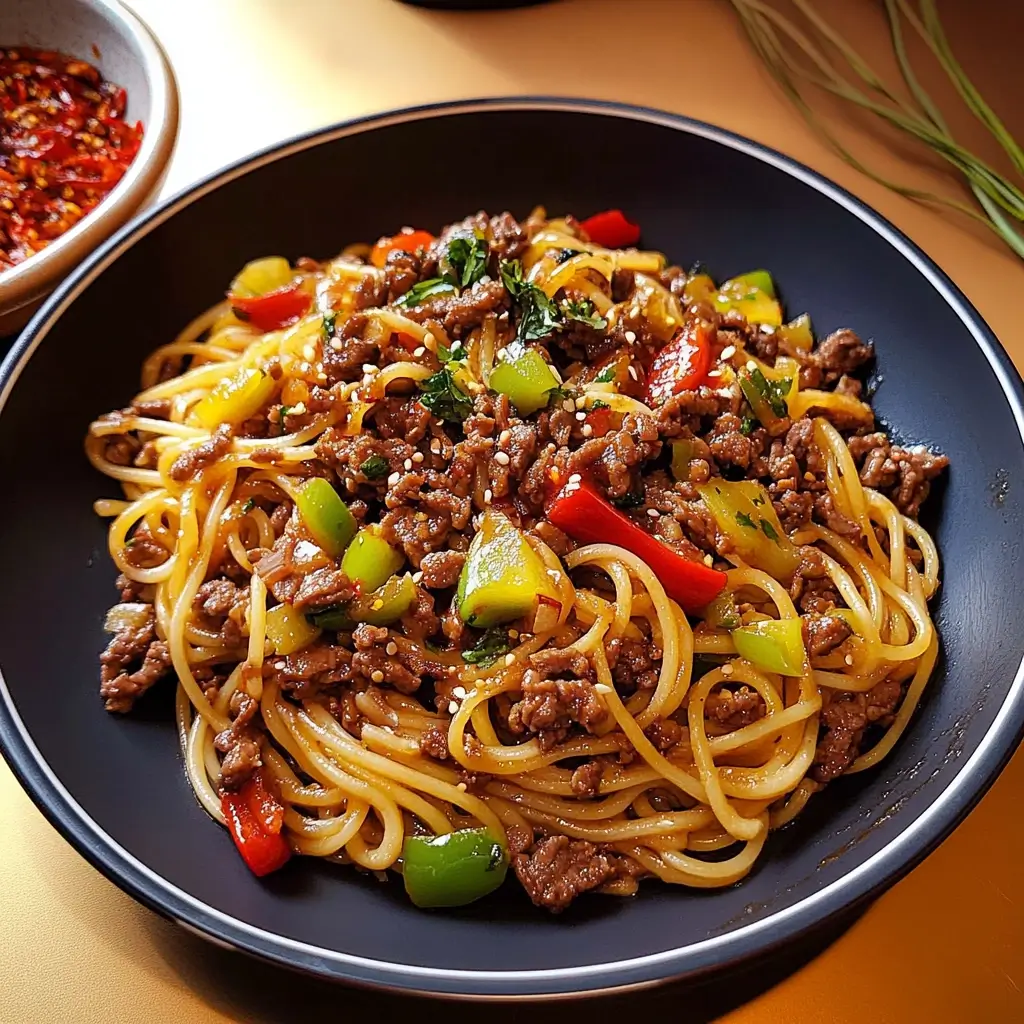
The first time I whipped up this Chinese Pasta with Beef and Pepper, my kitchen instantly transformed into a haven of a thousand tantalizing aromas. The sizzle of the beef, the vibrant crunch of the peppers, and the rich, savory sauce clinging to every strand of pasta – it was a symphony for the senses. My family, usually a tough crowd with varied palates, gathered around the table with an eagerness I hadn’t seen in a while. Spoons (and chopsticks!) clanked, happy murmurs filled the air, and plates were wiped clean in record time. It wasn’t just a meal; it was an experience. This dish has since become a beloved staple in our home, a go-to for busy weeknights when we crave something deeply satisfying, incredibly flavorful, and surprisingly quick to prepare. It’s the kind of recipe that makes you feel like a culinary hero without spending hours in the kitchen, and I’m thrilled to share my version with you today. Prepare for a flavor explosion that will have your loved ones asking for seconds (and maybe even thirds!).
Ingredients You’ll Need
This recipe is designed for robust flavor and satisfying textures. Here’s what you’ll gather:
For the Beef & Marinade:
- 1 lb (450g) flank steak or sirloin, thinly sliced against the grain
- 2 tablespoons light soy sauce
- 1 tablespoon Shaoxing rice wine (or dry sherry)
- 1 teaspoon cornstarch
- 1/2 teaspoon sesame oil
- 1/4 teaspoon black pepper
For the Pasta & Vegetables:
- 12 oz (340g) dried pasta (lo mein noodles, spaghetti, linguine, or fettuccine work well)
- 2 tablespoons vegetable oil or peanut oil, divided
- 1 large red bell pepper, cored, seeded, and thinly sliced
- 1 large green bell pepper, cored, seeded, and thinly sliced
- 1 medium yellow onion, thinly sliced
- 4 cloves garlic, minced
- 1-inch piece of ginger, peeled and minced
- 4-5 scallions (green onions), sliced, whites and greens separated
For the Stir-Fry Sauce:
- 1/4 cup (60ml) low-sodium chicken or beef broth
- 3 tablespoons light soy sauce
- 2 tablespoons oyster sauce (or hoisin sauce for a slightly sweeter, different profile)
- 1 tablespoon dark soy sauce (for color and depth)
- 1 tablespoon brown sugar (or honey)
- 1 teaspoon cornstarch
- 1/2 teaspoon sesame oil
- Optional: 1/2 – 1 teaspoon chili garlic sauce or Sriracha, for a touch of heat
For Garnish (Optional):
- Toasted sesame seeds
- Extra sliced scallion greens
Step-by-Step Instructions to Culinary Bliss
Follow these instructions carefully for a perfect Chinese Pasta with Beef and Pepper every time. The key is preparation and quick, high-heat cooking.
- Marinate the Beef: In a medium bowl, combine the thinly sliced beef with light soy sauce, Shaoxing rice wine, 1 teaspoon of cornstarch, sesame oil, and black pepper. Mix well to ensure every piece is coated. Let it marinate for at least 20-30 minutes at room temperature, or up to an hour in the refrigerator. This step is crucial for tender, flavorful beef.
- Prepare the Sauce: In a small bowl, whisk together all the stir-fry sauce ingredients: chicken/beef broth, light soy sauce, oyster sauce, dark soy sauce, brown sugar, 1 teaspoon cornstarch, sesame oil, and chili garlic sauce (if using). Set aside. This ensures the sauce is ready to go when you need it, as stir-frying happens quickly.
- Cook the Pasta: Bring a large pot of salted water to a rolling boil. Add your chosen pasta and cook according to package directions until al dente (slightly firm to the bite). Drain the pasta well and toss with about 1 teaspoon of vegetable oil to prevent sticking. Set aside.
- Prepare Vegetables: While the pasta cooks and beef marinates, ensure all your vegetables are prepped: bell peppers sliced, onion sliced, garlic minced, ginger minced, and scallions sliced (whites and greens separated). This “mise en place” is essential for a smooth stir-fry process.
- Sear the Beef: Heat 1 tablespoon of vegetable oil in a large skillet or wok over high heat until it’s shimmering. Add the marinated beef in a single layer (cook in batches if necessary to avoid overcrowding the pan, which would steam the beef instead of searing it). Stir-fry for 2-3 minutes per side, or until nicely browned and cooked through. Remove the beef from the wok and set aside on a plate.
- Sauté Aromatics & Vegetables: Add the remaining 1 tablespoon of vegetable oil to the same wok over medium-high heat. Add the sliced onions and the white parts of the scallions. Stir-fry for 2-3 minutes until the onions start to soften and become translucent.
- Add the minced garlic and ginger to the wok. Stir-fry for about 30 seconds to a minute until fragrant, being careful not to burn them.
- Add the sliced red and green bell peppers to the wok. Stir-fry for 3-5 minutes, until they are tender-crisp. You want them to retain some of their vibrant color and a slight crunch.
- Combine and Sauce: Return the cooked beef to the wok with the vegetables. Give the prepared stir-fry sauce a quick whisk (as the cornstarch may have settled) and pour it over the beef and vegetables. Stir everything together to coat evenly.
- Add Pasta: Add the cooked pasta to the wok. Toss gently but thoroughly to combine all the ingredients and ensure the pasta is well coated with the sauce. Cook for another 1-2 minutes, allowing the sauce to thicken slightly and the flavors to meld. If the sauce becomes too thick, you can add a tablespoon or two of hot pasta water or broth to loosen it.
- Finish and Serve: Stir in most of the green parts of the scallions, reserving some for garnish. Taste and adjust seasoning if necessary (you might want a dash more soy sauce or a pinch of sugar).
- Serve immediately, garnished with the remaining scallion greens and toasted sesame seeds, if desired.
Nutrition Facts
- Servings: This recipe generously serves 4 people.
- Calories per serving: Approximately 580-680 calories, depending on the specific type of pasta used and the leanness of the beef. This estimate includes the beef, pasta, vegetables, and sauce components. For a more precise count, consider using a nutritional calculator with your exact brand ingredients.
Preparation Time
Understanding the time commitment helps plan your meal efficiently:
- Prep Time (Marinating & Chopping): 25-35 minutes (includes 20-30 minutes for beef marination, during which you can chop vegetables and prepare the sauce)
- Cook Time (Pasta & Stir-fry): 20-25 minutes
- Total Time: Approximately 45-60 minutes
This makes it an excellent option for a weeknight dinner that feels special without requiring hours of labor.
How to Serve This Delicious Chinese Pasta
Presentation and accompaniments can elevate your Chinese Pasta with Beef and Pepper from a simple meal to a memorable feast. Here are some ideas:
- Classic Bowl Presentation:
- Serve piping hot in individual deep bowls. This helps keep the pasta warm and allows the sauce to pool invitingly at the bottom.
- Use chopsticks for an authentic experience, or forks for ease.
- Garnish Generously:
- Fresh Scallions: A sprinkle of freshly sliced green scallion tops adds a burst of color and a mild, crisp oniony flavor.
- Toasted Sesame Seeds: These add a nutty aroma and a delightful textural contrast. Toast them lightly in a dry pan for a few minutes until fragrant.
- Fresh Cilantro: For those who enjoy it, a few sprigs of fresh cilantro can add a bright, herbaceous note.
- Chili Flakes or Sliced Fresh Chilies: For spice lovers, offer a small dish of red pepper flakes or thinly sliced bird’s eye chilies on the side.
- Pair with Complementary Sides:
- Steamed Greens: A side of simple steamed broccoli, bok choy, or gai lan (Chinese broccoli) drizzled with a touch of oyster sauce or sesame oil balances the richness of the pasta.
- Crispy Spring Rolls or Egg Rolls: These add a delightful crunch and make the meal feel more like a restaurant experience.
- Simple Cucumber Salad: A refreshing, lightly dressed cucumber salad with a hint of vinegar and sesame oil can provide a cool contrast.
- Beverage Pairings:
- Jasmine Tea: A classic Chinese tea that cleanses the palate.
- Light Lager or Pilsner: A crisp beer cuts through the richness of the dish.
- Off-Dry Riesling or Gewürztraminer: These white wines have a touch of sweetness and aromatics that complement Asian flavors.
- Family-Style Serving:
- For a more casual gathering, serve the entire dish on a large platter in the center of the table, allowing everyone to help themselves. Provide serving spoons or tongs.
Additional Tips for Perfection
Unlock the full potential of your Chinese Pasta with Beef and Pepper with these pro tips:
- Velveting the Beef (Advanced Tip): For incredibly tender beef, try velveting. After slicing, toss the beef with 1 egg white, 1 tablespoon cornstarch, and 1 tablespoon Shaoxing wine. Let it sit for 30 minutes. Then, briefly blanch the beef in simmering water or hot oil until it just changes color (about 30-60 seconds). Drain and proceed with the stir-fry. This creates a protective coating that keeps the beef exceptionally moist and tender.
- Don’t Overcrowd the Wok/Pan: This is paramount for a successful stir-fry. If you add too much beef or too many vegetables at once, the temperature of the wok will drop significantly. Instead of searing and stir-frying, your ingredients will steam, resulting in a soggy texture and muted flavors. Cook in batches if necessary, removing each batch before adding the next, and combine everything at the end.
- High Heat is Your Friend: Authentic stir-frying relies on high heat to achieve that characteristic “wok hei” – the smoky, slightly charred flavor. Ensure your wok or skillet is very hot before adding ingredients. You should hear a distinct sizzle. This quick cooking at high heat also helps vegetables stay crisp-tender.
- Mise en Place is Non-Negotiable: French for “everything in its place,” this means having all your ingredients (beef marinated, vegetables chopped, sauce mixed, pasta cooked) ready to go before you start stir-frying. The cooking process is very fast, and you won’t have time to chop an onion or mix a sauce once things get going.
- Customize Your Vegetables and Spice: Don’t be afraid to experiment!
- Vegetables: Swap or add other quick-cooking vegetables like broccoli florets, snap peas, snow peas, carrots (julienned or thinly sliced), mushrooms (shiitake, cremini), or baby corn. Adjust cooking times accordingly.
- Spice Level: Easily adjust the heat by increasing or decreasing the amount of chili garlic sauce or sriracha. You can also add a pinch of red pepper flakes with the garlic and ginger, or even a few fresh thinly sliced chilies for a more potent kick. If you prefer no heat, omit the chili sauce entirely.
Frequently Asked Questions (FAQ)
Here are answers to some common questions about making Chinese Pasta with Beef and Pepper:
Q1: What kind of pasta works best for this recipe?
A1: You have several great options!
* Traditional Chinese Noodles: Lo Mein noodles are a classic choice. Fresh Shanghai-style noodles or other wheat-based Chinese egg noodles also work wonderfully.
* Italian Pasta: If Chinese noodles aren’t readily available, don’t worry! Spaghetti, linguine, or fettuccine are excellent substitutes. Their long strands capture the sauce beautifully. Even bucatini can be fun. The key is to choose a pasta that can hold up to stir-frying and will coat well with the sauce. Avoid very delicate or small pasta shapes.
Q2: Can I use a different protein instead of beef?
A2: Absolutely! This recipe is very versatile.
* Chicken: Use boneless, skinless chicken breast or thighs, thinly sliced. Marinate and cook just like the beef, ensuring it’s cooked through.
* Pork: Thinly sliced pork tenderloin or loin works well.
* Shrimp: Add peeled and deveined shrimp towards the end of the vegetable cooking time, as they cook very quickly (2-3 minutes, or until pink and opaque). You can give them a quick marinade in a bit of soy sauce, rice wine, and cornstarch too.
* Tofu/Vegetarian: For a vegetarian version, use firm or extra-firm tofu, pressed and cubed or sliced. Pan-fry or bake the tofu until golden and slightly crispy before adding it to the stir-fry. You can also bulk it up with more mushrooms (like shiitake or king oyster) and other vegetables. Use vegetable broth and a vegetarian oyster sauce alternative (often mushroom-based).
Q3: How can I make this dish gluten-free?
A3: It’s quite easy to adapt this recipe for a gluten-free diet:
* Pasta: Use gluten-free pasta, such as those made from rice, corn, or quinoa. Rice noodles (like wide pad thai noodles or thinner vermicelli) are a natural fit.
* Soy Sauce: Use tamari or a certified gluten-free soy sauce.
* Oyster/Hoisin Sauce: Check labels carefully, as many brands contain wheat. Look for gluten-free versions of oyster sauce or hoisin sauce.
* Shaoxing Wine: While traditional Shaoxing wine contains wheat, you can substitute with dry sherry (check labels) or simply omit it.
* Cornstarch: Cornstarch is naturally gluten-free, but always double-check labels to ensure no cross-contamination if you are highly sensitive.
Q4: How do I store and reheat leftovers?
A4: Leftovers can be just as delicious the next day!
* Storage: Allow the pasta to cool completely, then transfer it to an airtight container. Store in the refrigerator for up to 3-4 days.
* Reheating:
* Microwave: Place a serving in a microwave-safe bowl. You might want to add a tablespoon of water or broth to help create steam and prevent the noodles from drying out. Cover and microwave on medium-high power for 1-2 minutes, stir, and continue heating in 30-second intervals until warmed through.
* Stovetop: Heat a tablespoon of oil or a little broth in a skillet or wok over medium heat. Add the leftover pasta and stir-fry gently until heated through. This method can help revive the texture better than microwaving. Avoid overheating, which can make the noodles mushy and the beef tough.
Q5: My sauce didn’t thicken properly. What went wrong?
A5: There are a few common reasons why your sauce might not thicken as expected:
* Cornstarch Ratio: You might not have used enough cornstarch, or the ratio of cornstarch to liquid was off. Ensure you’re using the specified amount.
* Not Boiled: For cornstarch to activate and thicken a sauce, it needs to come to a gentle boil or simmer for a minute or two. If you added the sauce and didn’t let it heat through sufficiently, it wouldn’t thicken.
* Cornstarch Settled: If you mixed the sauce ingredients ahead of time, the cornstarch might have settled at the bottom of the bowl. Always give the sauce a good whisk right before adding it to the wok.
* Too Much Liquid: If you added extra liquid (like too much pasta water) without adjusting the cornstarch, the sauce will be thinner.
* Fixing it: If your sauce is too thin after combining everything, you can make a small slurry by mixing 1 teaspoon of cornstarch with 1-2 teaspoons of cold water. Push the noodles and other ingredients to one side of the wok, pour the slurry into the liquid part of the sauce, and stir constantly as it comes to a simmer. It should thicken up quickly. Then, mix everything together.
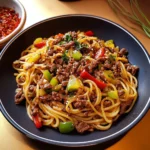
Chinese Pasta with Beef and Pepper Recipe
Ingredients
For the Beef & Marinade:
-
- 1 lb (450g) flank steak or sirloin, thinly sliced against the grain
-
- 2 tablespoons light soy sauce
-
- 1 tablespoon Shaoxing rice wine (or dry sherry)
-
- 1 teaspoon cornstarch
-
- 1/2 teaspoon sesame oil
-
- 1/4 teaspoon black pepper
For the Pasta & Vegetables:
-
- 12 oz (340g) dried pasta (lo mein noodles, spaghetti, linguine, or fettuccine work well)
-
- 2 tablespoons vegetable oil or peanut oil, divided
-
- 1 large red bell pepper, cored, seeded, and thinly sliced
-
- 1 large green bell pepper, cored, seeded, and thinly sliced
-
- 1 medium yellow onion, thinly sliced
-
- 4 cloves garlic, minced
-
- 1-inch piece of ginger, peeled and minced
-
- 4–5 scallions (green onions), sliced, whites and greens separated
For the Stir-Fry Sauce:
-
- 1/4 cup (60ml) low-sodium chicken or beef broth
-
- 3 tablespoons light soy sauce
-
- 2 tablespoons oyster sauce (or hoisin sauce for a slightly sweeter, different profile)
-
- 1 tablespoon dark soy sauce (for color and depth)
-
- 1 tablespoon brown sugar (or honey)
-
- 1 teaspoon cornstarch
-
- 1/2 teaspoon sesame oil
-
- Optional: 1/2 – 1 teaspoon chili garlic sauce or Sriracha, for a touch of heat
Instructions
-
- Marinate the Beef: In a medium bowl, combine the thinly sliced beef with light soy sauce, Shaoxing rice wine, 1 teaspoon of cornstarch, sesame oil, and black pepper. Mix well to ensure every piece is coated. Let it marinate for at least 20-30 minutes at room temperature, or up to an hour in the refrigerator. This step is crucial for tender, flavorful beef.
-
- Prepare the Sauce: In a small bowl, whisk together all the stir-fry sauce ingredients: chicken/beef broth, light soy sauce, oyster sauce, dark soy sauce, brown sugar, 1 teaspoon cornstarch, sesame oil, and chili garlic sauce (if using). Set aside. This ensures the sauce is ready to go when you need it, as stir-frying happens quickly.
-
- Cook the Pasta: Bring a large pot of salted water to a rolling boil. Add your chosen pasta and cook according to package directions until al dente (slightly firm to the bite). Drain the pasta well and toss with about 1 teaspoon of vegetable oil to prevent sticking. Set aside.
-
- Prepare Vegetables: While the pasta cooks and beef marinates, ensure all your vegetables are prepped: bell peppers sliced, onion sliced, garlic minced, ginger minced, and scallions sliced (whites and greens separated). This “mise en place” is essential for a smooth stir-fry process.
-
- Sear the Beef: Heat 1 tablespoon of vegetable oil in a large skillet or wok over high heat until it’s shimmering. Add the marinated beef in a single layer (cook in batches if necessary to avoid overcrowding the pan, which would steam the beef instead of searing it). Stir-fry for 2-3 minutes per side, or until nicely browned and cooked through. Remove the beef from the wok and set aside on a plate.
-
- Sauté Aromatics & Vegetables: Add the remaining 1 tablespoon of vegetable oil to the same wok over medium-high heat. Add the sliced onions and the white parts of the scallions. Stir-fry for 2-3 minutes until the onions start to soften and become translucent.
-
- Add the minced garlic and ginger to the wok. Stir-fry for about 30 seconds to a minute until fragrant, being careful not to burn them.
-
- Add the sliced red and green bell peppers to the wok. Stir-fry for 3-5 minutes, until they are tender-crisp. You want them to retain some of their vibrant color and a slight crunch.
-
- Combine and Sauce: Return the cooked beef to the wok with the vegetables. Give the prepared stir-fry sauce a quick whisk (as the cornstarch may have settled) and pour it over the beef and vegetables. Stir everything together to coat evenly.
-
- Add Pasta: Add the cooked pasta to the wok. Toss gently but thoroughly to combine all the ingredients and ensure the pasta is well coated with the sauce. Cook for another 1-2 minutes, allowing the sauce to thicken slightly and the flavors to meld. If the sauce becomes too thick, you can add a tablespoon or two of hot pasta water or broth to loosen it.
-
- Finish and Serve: Stir in most of the green parts of the scallions, reserving some for garnish. Taste and adjust seasoning if necessary (you might want a dash more soy sauce or a pinch of sugar).
-
- Serve immediately, garnished with the remaining scallion greens and toasted sesame seeds, if desired.
Nutrition
- Serving Size: One Normal Portion
- Calories: 580-680