
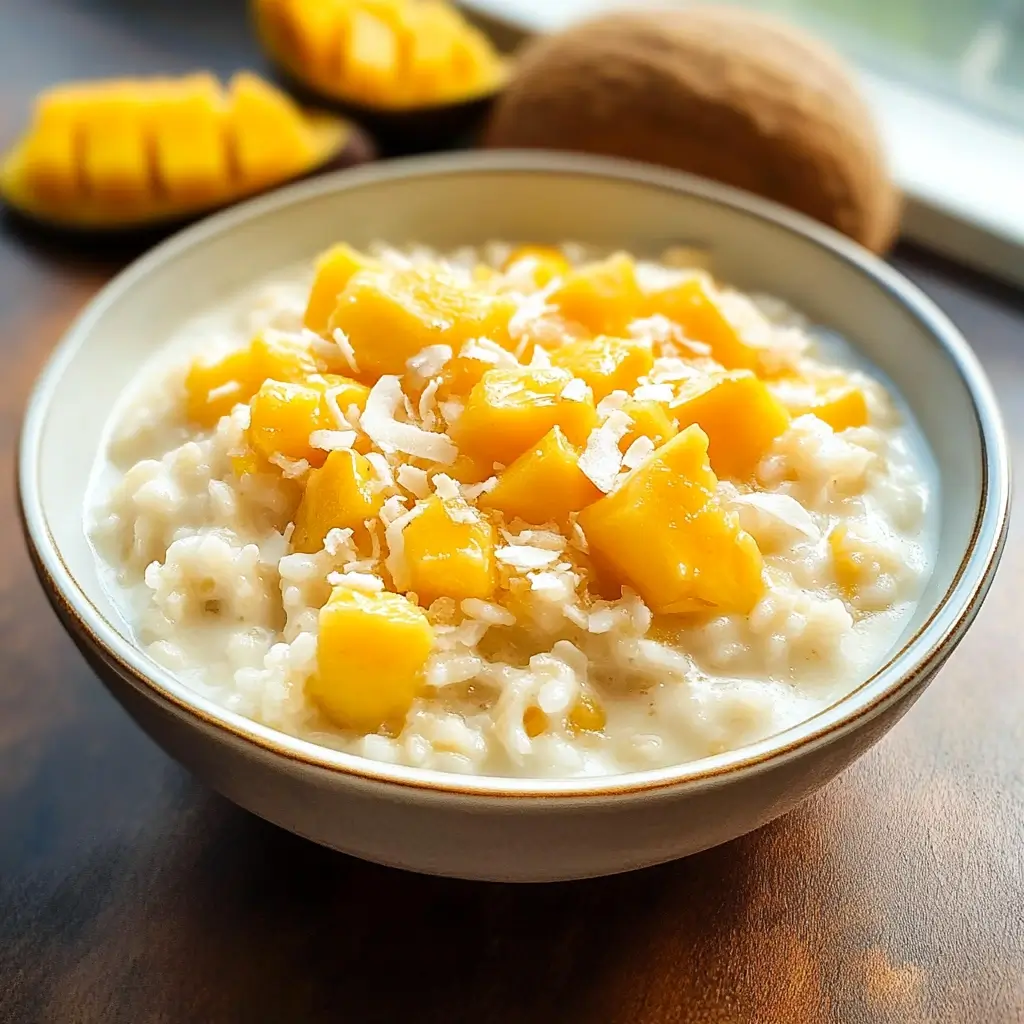
There are some desserts that just instantly transport you, and for my family, this Coconut Mango Rice Pudding is exactly that – a one-way ticket to a tropical paradise, right from our kitchen table. I remember the first time I perfected this recipe. The house filled with the sweet, comforting aroma of simmering rice mingled with exotic coconut and fragrant mango. My kids, usually picky eaters when it comes to anything remotely unfamiliar, were drawn in by the scent alone. When I finally served it, chilled and topped with vibrant, juicy mango cubes and a sprinkle of toasted coconut, their eyes lit up. The first spoonful was met with silence, followed by unanimous “Mmmms!” It was the perfect balance – incredibly creamy thanks to the coconut milk and Arborio rice, subtly sweet, bursting with fresh mango flavour, and possessing that comforting quality only rice pudding can offer. It’s since become a staple for warm summer evenings, special occasions, or just when we need a little taste of sunshine. It’s surprisingly simple to make, yet tastes incredibly luxurious. This recipe isn’t just about dessert; it’s about creating a moment, a sweet escape, and sharing something truly delicious with the people you love. It’s become our go-to comfort food with a tropical twist, consistently delivering smiles and requests for seconds (or thirds!).
Coconut Mango Rice Pudding: Ingredients
Crafting the perfect Coconut Mango Rice Pudding relies on quality ingredients that work together harmoniously. Below is the complete list with specific amounts designed for optimal flavour and texture. Using the right type of rice and full-fat coconut milk is key to achieving that signature creaminess.
- Rice: 1 cup Arborio rice (or sushi rice; avoid long-grain rice like Basmati or Jasmine for this recipe) – Arborio’s high starch content is crucial for a creamy pudding.
- Coconut Milk: 1 can (13.5 oz / approx. 400ml) full-fat unsweetened coconut milk – Provides richness, creaminess, and the signature coconut flavour. Don’t use light coconut milk.
- Additional Liquid: 2 ½ cups water or a mix of water and other milk (like almond milk, oat milk, or dairy milk) – Ensures the rice cooks properly and achieves the right consistency. Using only coconut milk can be too rich and may not allow the rice to cook evenly.
- Sweetener: ½ cup granulated sugar (adjust to taste; you can also use coconut sugar, maple syrup, or agave nectar) – Provides the necessary sweetness to balance the flavours. Start with slightly less if your mangoes are very sweet.
- Mangoes: 2 large ripe mangoes, peeled and diced – Choose fragrant, sweet mangoes like Ataulfo (honey) or Kent. One mango will be partly incorporated, the other reserved for topping.
- Vanilla Extract: 1 teaspoon pure vanilla extract – Enhances the sweet and tropical notes.
- Salt: ¼ teaspoon salt – Balances the sweetness and brings out the other flavours.
- Optional Garnish:
- ¼ cup toasted shredded coconut or coconut flakes – Adds texture and reinforces the coconut flavour.
- Fresh mint sprigs – Adds a touch of colour and freshness.
- Lime zest – Provides a bright, zesty counterpoint to the sweetness.
Instructions: Crafting Creamy Coconut Mango Rice Pudding
Follow these steps carefully to create a luscious and flavourful Coconut Mango Rice Pudding. Patience, especially during the simmering and stirring stage, is key to achieving the perfect creamy texture.
- Prepare the Rice: Place the Arborio rice in a fine-mesh sieve. Rinse it thoroughly under cold running water for about a minute, gently swishing it with your fingers. This removes excess surface starch, which helps prevent gumminess while still allowing the inner starch to release for creaminess. Drain well.
- Combine Liquids and Rice: In a medium-sized heavy-bottomed saucepan (at least 2-quart capacity), combine the rinsed Arborio rice, the full-fat coconut milk, and the additional 2 ½ cups of water (or your chosen liquid mix). Add the ¼ teaspoon of salt.
- Bring to a Simmer: Place the saucepan over medium-high heat. Bring the mixture just to a gentle simmer, stirring occasionally to prevent the rice from sticking to the bottom. Watch closely, as coconut milk can boil over easily.
- Simmer and Stir (The Crucial Step): Once simmering, immediately reduce the heat to low. You want a bare simmer, with just a few gentle bubbles breaking the surface. Cover the pot loosely (leaving the lid slightly ajar to allow steam to escape) or cook uncovered, depending on your preference and how quickly it thickens. Now comes the important part: stir frequently. Aim to stir every 3-5 minutes, scraping the bottom of the pan to prevent sticking and burning. This regular agitation encourages the rice grains to rub against each other, releasing their starch and creating that coveted creamy texture.
- Cook Until Tender: Continue simmering and stirring for approximately 25-35 minutes. The exact time will depend on your rice, stove, and pan. The pudding is ready when the rice is tender (test a grain – it should be soft but not mushy) and the mixture has thickened considerably. It should look like a thick, creamy porridge. Remember, it will thicken further as it cools.
- Add Sweetness and Flavour: Once the rice is tender and the pudding is creamy, remove the saucepan from the heat. Stir in the ½ cup of sugar (or your chosen sweetener) and the 1 teaspoon of vanilla extract. Stir well until the sugar is completely dissolved. Taste and add more sweetener if desired.
- Incorporate Some Mango: Gently fold in about half of your diced mango (from one mango). The residual heat will slightly soften the mango pieces, infusing their flavour into the pudding. Reserve the other half of the diced mango for topping.
- Cooling and Chilling: Let the rice pudding cool slightly at room temperature for about 20-30 minutes, stirring occasionally to prevent a skin from forming. Then, transfer the pudding to a bowl or individual serving dishes.
- Chill Thoroughly: Cover the pudding surface directly with plastic wrap (press it gently onto the surface) to prevent a skin from forming. Alternatively, use an airtight container. Refrigerate for at least 2-3 hours, or preferably overnight, until completely chilled and firm. The chilling process allows the flavours to meld and the pudding to set to its final, luscious consistency.
- Serve: Once chilled, remove the plastic wrap. Give the pudding a gentle stir if needed. Spoon into serving bowls or glasses. Top generously with the reserved fresh diced mango and a sprinkle of toasted coconut flakes, lime zest, or mint sprigs, if using.
Nutrition Facts
- Servings: This recipe makes approximately 6 servings.
- Calories per Serving (Estimate): Approximately 380-450 kcal per serving.
Disclaimer: The nutritional information provided is an estimate only, calculated using standard ingredient databases. Actual values may vary based on specific ingredients used (e.g., type of sweetener, exact fat content of coconut milk), portion sizes, and any modifications made to the recipe. This estimate primarily accounts for carbohydrates from the rice and sugar, fat from the coconut milk, and natural sugars/vitamins from the mango.
Preparation Time
Understanding the time commitment helps plan your dessert making. This pudding requires some patience during cooking but is largely hands-off during chilling.
- Preparation Time: 15 minutes (Rinsing rice, peeling and dicing mangoes, measuring ingredients)
- Cooking Time: 30-40 minutes (Simmering and stirring)
- Cooling & Chilling Time: Minimum 2-3 hours, preferably 4+ hours or overnight for best results.
- Total Time (excluding chilling): Approximately 45-55 minutes
- Total Time (including minimum chilling): Approximately 3 hours to 3 hours 55 minutes
How to Serve Coconut Mango Rice Pudding
This versatile dessert can be presented in various ways to suit any occasion. Here are some serving suggestions:
- Classic Chill:
- Serve thoroughly chilled in individual bowls or glasses.
- Top generously with fresh, ripe diced mango.
- Sprinkle with toasted shredded coconut or larger coconut flakes for crunch and visual appeal.
- Tropical Parfait:
- Layer the chilled rice pudding with diced mango and crushed digestive biscuits or granola in parfait glasses.
- Repeat layers for a beautiful presentation.
- Finish with a dollop of coconut whipped cream (vegan option) or regular whipped cream.
- Elegant Presentation:
- Spoon into small, elegant dessert glasses or ramekins.
- Garnish with a carefully arranged fan of thin mango slices.
- Add a single mint sprig or a sprinkle of lime zest for colour and brightness.
- A drizzle of passion fruit coulis or pulp adds an extra layer of tropical tang.
- Warm Comfort (Optional):
- While traditionally served chilled, some enjoy rice pudding slightly warm. If serving warm, do so shortly after cooking (steps 1-7).
- Note that the texture will be looser when warm compared to chilled.
- Top with mango just before serving so it doesn’t get too warm.
- Serving Companions:
- Offer alongside a platter of other tropical fruits like pineapple, kiwi, or passion fruit.
- A small, crisp cookie (like a coconut thin or shortbread) provides textural contrast.
- For brunch, serve smaller portions alongside other breakfast items.
Additional Tips for Perfect Coconut Mango Rice Pudding
Elevate your rice pudding game with these expert tips:
- Master the Stir: Don’t underestimate the power of frequent stirring! This isn’t just about preventing sticking; it’s the key to creaminess. As you stir, the rice grains rub against each other, releasing starch into the liquid. This starch thickens the pudding naturally, creating that luxurious, creamy texture without needing eggs or cornstarch. Use a heatproof spatula or wooden spoon to scrape the entire bottom and corners of the pan during each stir. Aim for every 3-5 minutes during the simmering phase. It requires patience, but the reward is worth it.
- Rice Selection is Crucial: The type of rice you choose significantly impacts the final texture. Arborio rice, famous for risotto, is ideal due to its high amylopectin starch content, which readily releases during cooking to create creaminess. Sushi rice (like Calrose) is a good alternative. Avoid long-grain rice varieties like Basmati or Jasmine. Their starch structure is different (higher in amylose), leading to separate, fluffy grains rather than a creamy, cohesive pudding. Stick to short or medium-grain high-starch rice.
- Full-Fat Coconut Milk for Flavour & Richness: For the best flavour and richest texture, always use full-fat, unsweetened coconut milk from a can. Shake the can well before opening as the cream and water can separate. Light coconut milk lacks the necessary fat content and will result in a less creamy and less flavourful pudding. Ensure the ingredients list primarily contains coconut and water, avoiding unnecessary thickeners or sweeteners if possible.
- Mango Magic: Ripe & Ready: Use ripe, sweet, and fragrant mangoes. Ataulfo (honey) mangoes are fantastic for their smooth flesh and sweetness. Kent or Keitt are also good choices. The ripeness is key – slightly soft to the touch with a sweet aroma. Avoid hard, unripe mangoes or overly stringy varieties. Dice the mango uniformly. Adding some mango towards the end of cooking infuses flavour, while fresh mango topping provides brightness and texture. For an intense mango flavour, consider pureeing half a mango and swirling it in after cooking, in addition to the diced pieces.
- Sweetness & Spice Variations: Adjust the sweetness to your liking and the natural sweetness of your mangoes. Start with the recommended amount and add more after cooking if needed. Consider alternative sweeteners like maple syrup (adds a lovely depth), agave nectar, or coconut sugar (gives a caramel note). Don’t forget the salt – it enhances all the other flavours. For variations, add a pinch of ground cardamom or cinnamon along with the liquids, or infuse a stick of cinnamon or a few cardamom pods during simmering (remove before serving). A grating of fresh lime or lemon zest stirred in at the end or used as garnish adds a wonderful bright counterpoint to the rich coconut and sweet mango.
FAQ: Coconut Mango Rice Pudding Q&A
Here are answers to some frequently asked questions about making this delicious dessert:
- Q: Can I make this Coconut Mango Rice Pudding vegan?
- A: Absolutely! This recipe is easily made vegan. The core ingredients (rice, coconut milk, mango, sugar, vanilla, salt) are plant-based. The key is to ensure your chosen additional liquid is also vegan. Instead of dairy milk, use water (as listed in the main recipe), unsweetened almond milk, soy milk, oat milk, or even more light coconut milk (though water provides a cleaner base). Also, double-check your sugar; some white sugars are processed using bone char. Opt for organic sugar, beet sugar, or explicitly vegan-certified sugar, or use maple syrup or agave nectar to be certain.
- Q: Can I use a different type of fruit instead of mango?
- A: Yes, you definitely can! While mango pairs beautifully with coconut, other fruits work well too. Consider these options:
- Pineapple: Use fresh, diced pineapple. Its tanginess complements the coconut well. You might add it only as a topping, as cooking pineapple can sometimes alter its texture undesirably.
- Banana: Fold in sliced bananas at the very end or use as a topping. Coconut and banana are a classic combination.
- Passion Fruit: Drizzle passion fruit pulp or coulis over the finished pudding for an intense tropical tang.
- Berries: Fresh raspberries or strawberries can offer a nice contrast, though the flavour profile will shift away from purely tropical.
- Peaches or Nectarines: Diced ripe peaches or nectarines in the summer would also be delicious. Adjust sweetness based on the fruit used.
- A: Yes, you definitely can! While mango pairs beautifully with coconut, other fruits work well too. Consider these options:
- Q: How long will the Coconut Mango Rice Pudding last in the refrigerator?
- A: Stored properly, the rice pudding should last for 3 to 4 days in the refrigerator. Ensure it’s kept in an airtight container or covered tightly with plastic wrap pressed directly onto the surface to prevent a skin from forming and to keep it from absorbing other fridge odours. Note that the texture might become slightly firmer after a few days; you can gently stir it before serving. The fresh mango topping is best added just before serving for optimal freshness.
- Q: Can I make this recipe ahead of time?
- A: Yes, this dessert is ideal for making ahead! In fact, it needs time to chill completely to set properly and allow the flavours to meld. You can prepare the pudding (steps 1-9) a day or even two days in advance. Keep it chilled in an airtight container. When ready to serve, give it a gentle stir, portion it out, and add the fresh mango topping and any other garnishes just before serving to maintain their vibrancy and texture.
- Q: My rice pudding didn’t get creamy. What did I do wrong?
- A: Several factors could contribute to a less-than-creamy rice pudding:
- Wrong Rice: Using long-grain rice (like Basmati or Jasmine) is the most common culprit. These rice types don’t release enough starch. Stick to Arborio or sushi rice.
- Insufficient Stirring: Frequent stirring is essential to release the rice starches. If you didn’t stir often enough, the starch remained locked in the grains.
- Incorrect Liquid Ratio: Too much liquid might make it soupy, while too little might make it dry or cause the rice to cook unevenly. The ratio of about 1 cup rice to 4-4.5 cups total liquid is generally good for creamy pudding.
- Cooking Temperature Too High/Low: Simmering too rapidly can cook the liquid off before the rice is tender and starchy. Cooking too low might excessively prolong the cooking time without enough agitation. Aim for a gentle, consistent simmer.
- Not Using Full-Fat Coconut Milk: Light coconut milk lacks the fat content that contributes significantly to the richness and creamy mouthfeel.
- Rinsing Too Much (Less Common): While rinsing removes excess surface starch to prevent gumminess, over-rinsing could theoretically remove too much potential starch, though this is less likely than other factors. Stick to a brief rinse under cold water.
- A: Several factors could contribute to a less-than-creamy rice pudding:
Coconut Mango Rice Pudding Recipe
Ingredients
- Rice: 1 cup Arborio rice (or sushi rice; avoid long-grain rice like Basmati or Jasmine for this recipe) – Arborio’s high starch content is crucial for a creamy pudding.
- Coconut Milk: 1 can (13.5 oz / approx. 400ml) full-fat unsweetened coconut milk – Provides richness, creaminess, and the signature coconut flavour. Don’t use light coconut milk.
- Additional Liquid: 2 ½ cups water or a mix of water and other milk (like almond milk, oat milk, or dairy milk) – Ensures the rice cooks properly and achieves the right consistency. Using only coconut milk can be too rich and may not allow the rice to cook evenly.
- Sweetener: ½ cup granulated sugar (adjust to taste; you can also use coconut sugar, maple syrup, or agave nectar) – Provides the necessary sweetness to balance the flavours. Start with slightly less if your mangoes are very sweet.
- Mangoes: 2 large ripe mangoes, peeled and diced – Choose fragrant, sweet mangoes like Ataulfo (honey) or Kent. One mango will be partly incorporated, the other reserved for topping.
- Vanilla Extract: 1 teaspoon pure vanilla extract – Enhances the sweet and tropical notes.
- Salt: ¼ teaspoon salt – Balances the sweetness and brings out the other flavours.
- Optional Garnish:
- ¼ cup toasted shredded coconut or coconut flakes – Adds texture and reinforces the coconut flavour.
- Fresh mint sprigs – Adds a touch of colour and freshness.
- Lime zest – Provides a bright, zesty counterpoint to the sweetness.
Instructions
- Prepare the Rice: Place the Arborio rice in a fine-mesh sieve. Rinse it thoroughly under cold running water for about a minute, gently swishing it with your fingers. This removes excess surface starch, which helps prevent gumminess while still allowing the inner starch to release for creaminess. Drain well.
- Combine Liquids and Rice: In a medium-sized heavy-bottomed saucepan (at least 2-quart capacity), combine the rinsed Arborio rice, the full-fat coconut milk, and the additional 2 ½ cups of water (or your chosen liquid mix). Add the ¼ teaspoon of salt.
- Bring to a Simmer: Place the saucepan over medium-high heat. Bring the mixture just to a gentle simmer, stirring occasionally to prevent the rice from sticking to the bottom. Watch closely, as coconut milk can boil over easily.
- Simmer and Stir (The Crucial Step): Once simmering, immediately reduce the heat to low. You want a bare simmer, with just a few gentle bubbles breaking the surface. Cover the pot loosely (leaving the lid slightly ajar to allow steam to escape) or cook uncovered, depending on your preference and how quickly it thickens. Now comes the important part: stir frequently. Aim to stir every 3-5 minutes, scraping the bottom of the pan to prevent sticking and burning. This regular agitation encourages the rice grains to rub against each other, releasing their starch and creating that coveted creamy texture.
- Cook Until Tender: Continue simmering and stirring for approximately 25-35 minutes. The exact time will depend on your rice, stove, and pan. The pudding is ready when the rice is tender (test a grain – it should be soft but not mushy) and the mixture has thickened considerably. It should look like a thick, creamy porridge. Remember, it will thicken further as it cools.
- Add Sweetness and Flavour: Once the rice is tender and the pudding is creamy, remove the saucepan from the heat. Stir in the ½ cup of sugar (or your chosen sweetener) and the 1 teaspoon of vanilla extract. Stir well until the sugar is completely dissolved. Taste and add more sweetener if desired.
- Incorporate Some Mango: Gently fold in about half of your diced mango (from one mango). The residual heat will slightly soften the mango pieces, infusing their flavour into the pudding. Reserve the other half of the diced mango for topping.
- Cooling and Chilling: Let the rice pudding cool slightly at room temperature for about 20-30 minutes, stirring occasionally to prevent a skin from forming. Then, transfer the pudding to a bowl or individual serving dishes.
- Chill Thoroughly: Cover the pudding surface directly with plastic wrap (press it gently onto the surface) to prevent a skin from forming. Alternatively, use an airtight container. Refrigerate for at least 2-3 hours, or preferably overnight, until completely chilled and firm. The chilling process allows the flavours to meld and the pudding to set to its final, luscious consistency.
- Serve: Once chilled, remove the plastic wrap. Give the pudding a gentle stir if needed. Spoon into serving bowls or glasses. Top generously with the reserved fresh diced mango and a sprinkle of toasted coconut flakes, lime zest, or mint sprigs, if using.
Nutrition
- Serving Size: One Normal Portion
- Calories: 380-450