

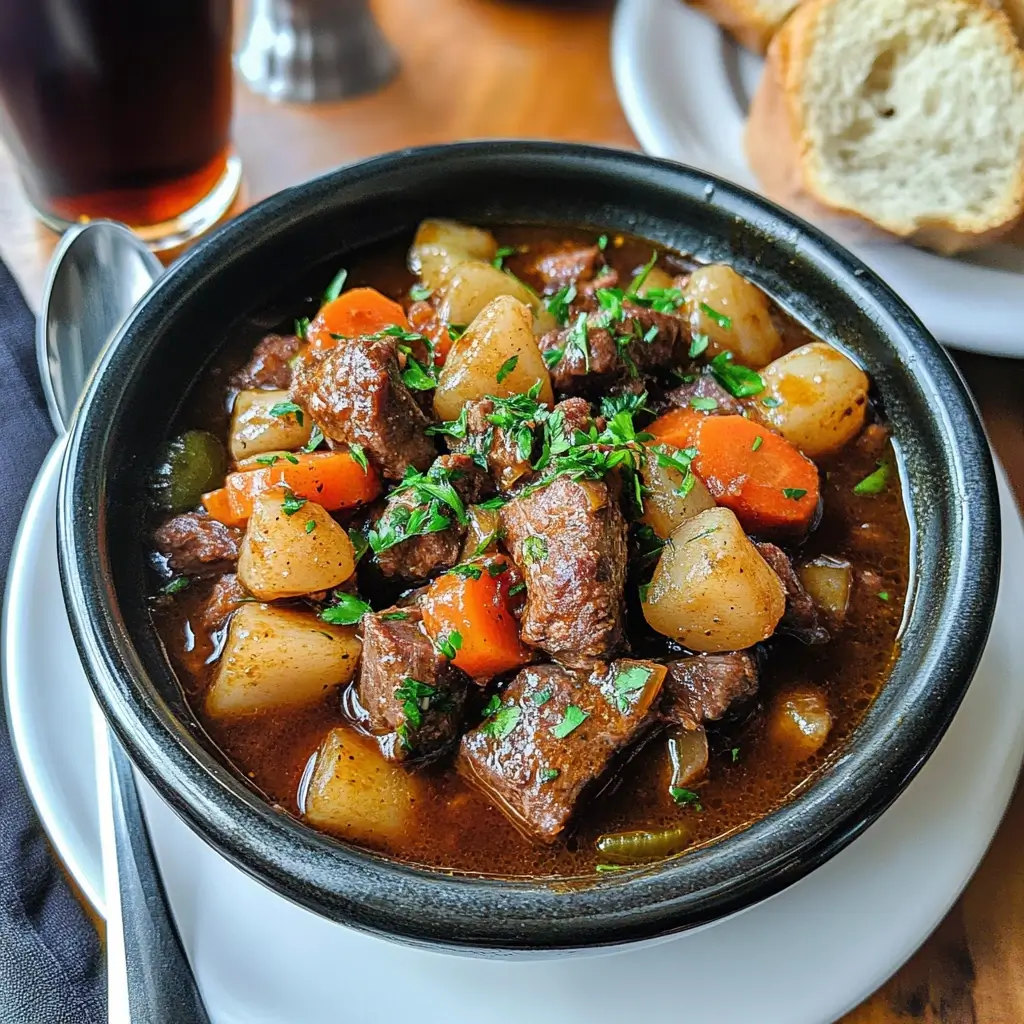

There’s nothing quite like the aroma of a rich, savory stew simmering on the stove, especially as the days grow shorter and the air turns crisp. Recently, my family and I were craving comfort food, and what better way to satisfy that craving than with a hearty Irish Stout Beef Stew? This recipe, inspired by the classic flavors of Ireland, truly hit the spot. From the moment the beef began to brown in the Dutch oven, filling the kitchen with a tantalizing scent, I knew we were in for a treat. The deep, malty notes of the Irish stout melded beautifully with the tender beef and sweet root vegetables, creating a symphony of flavors that warmed us from the inside out. Even my picky eaters devoured their bowls, declaring it the “best stew ever!” Served with a side of crusty Irish soda bread for dipping, this stew wasn’t just a meal; it was an experience, a cozy hug in a bowl that transported us straight to a warm Irish pub. If you’re looking for a recipe that’s both comforting and deeply flavorful, perfect for a St. Patrick’s Day celebration or a comforting weeknight dinner, look no further. This Irish Stout Beef Stew is a guaranteed crowd-pleaser that will become a cherished favorite in your home.
Ingredients: The Heart of Irish Stout Beef Stew
The magic of this Irish Stout Beef Stew lies in the quality and combination of its simple yet impactful ingredients. Each component plays a crucial role in building the depth of flavor and the comforting texture that makes this stew so irresistible. Let’s delve into each ingredient and understand why they are essential for creating the perfect Irish culinary experience.
- 3 tablespoons avocado oil, or extra light olive oil: The foundation of any good stew begins with searing the meat, and the right oil is crucial for achieving that perfect golden-brown crust. Avocado oil and extra light olive oil are excellent choices because of their high smoke points. This means they can withstand the high heat needed for searing without burning, ensuring your beef gets that delicious caramelized exterior without any acrid flavors. While other oils like vegetable oil or canola oil can be used, avocado and extra light olive oil impart a cleaner taste, allowing the rich flavors of the beef and stout to shine through. If you’re looking for a slightly richer flavor profile, you could even use rendered beef fat if you happen to have some on hand, adding an extra layer of beefy depth.
- 3 pounds beef chuck roast, or bottom round roast, cut into 1½ inch cubes: The star of our stew is undoubtedly the beef, and the cut you choose makes a significant difference. Beef chuck roast and bottom round roast are ideal choices for stewing because they are tougher cuts of meat with a good amount of marbling and connective tissue. This might sound less appealing at first, but during the long, slow cooking process, these tougher fibers break down, rendering into incredibly tender and flavorful meat that practically melts in your mouth. Chuck roast, in particular, is prized for its rich flavor and generous marbling, which contributes to a more succulent and juicy stew. Bottom round is leaner but still becomes wonderfully tender when stewed, offering a slightly different but equally delicious result. Avoid using leaner cuts like sirloin or tenderloin as they can become dry and tough during long cooking times. Cutting the beef into 1½ inch cubes ensures even cooking and a satisfyingly chunky texture in the final stew.
- 1½ teaspoons kosher salt, plus more to taste: Salt is not just a seasoning; it’s a flavor enhancer that draws out the natural flavors of the beef and vegetables. Kosher salt is preferred by many chefs because of its larger crystals, which are easier to pinch and distribute evenly. Salting the beef generously before searing is crucial for drawing out moisture, which helps in achieving a better sear and deeper flavor. Remember to season in layers throughout the cooking process. Taste the stew at different stages and adjust the salt as needed. Undersalted stew will taste bland, while properly salted stew will have a depth of flavor that is truly satisfying.
- 1/4 cup unbleached all-purpose flour: Flour plays a dual role in this stew. First, coating the beef in flour before searing helps to create a beautiful crust and enhances browning through the Maillard reaction. Secondly, the flour acts as a thickening agent for the stew. As the stew simmers, the flour releases starch, which gradually thickens the broth to a luscious, velvety consistency. Unbleached all-purpose flour is a readily available and effective choice. If you are gluten-free, you can substitute with a gluten-free all-purpose flour blend or cornstarch. If using cornstarch, create a slurry with cold water before adding it to the stew towards the end of the cooking process to avoid lumps.
- 2 medium yellow onions, chopped (about 4 cups): Onions are the aromatic backbone of countless savory dishes, and this stew is no exception. Yellow onions provide a balanced flavor profile, becoming sweet and mellow as they sauté and simmer. They add depth and complexity to the stew’s base flavor. Chopping the onions into roughly even pieces ensures they cook evenly and soften nicely without disappearing entirely into the stew. You can also use white onions or even a combination of yellow and red onions for slightly different flavor nuances, but yellow onions are the classic and reliable choice for this recipe.
- 1½ tablespoons tomato paste: Tomato paste is a powerhouse of concentrated tomato flavor. Even a small amount adds a significant depth of umami and richness to the stew. It also contributes a subtle acidity that balances the sweetness of the stout and vegetables. Sautéing the tomato paste with the onions and caraway seeds “blooms” its flavor, intensifying its richness and preventing it from tasting raw in the final dish. Don’t skip this step, as it makes a noticeable difference in the overall flavor complexity.
- 3/4 teaspoon caraway seeds: Caraway seeds might seem like an unexpected ingredient in beef stew, but they are a traditional spice in Irish cuisine and add a distinctive, warm, and slightly peppery note that complements the beef and stout beautifully. They provide a subtle anise-like flavor that elevates the stew beyond the ordinary. If you’re not a fan of caraway seeds, you can reduce the amount or omit them altogether, but for an authentic Irish flavor profile, they are highly recommended. You can also lightly toast the caraway seeds in a dry pan before adding them to the stew to further enhance their aroma and flavor.
- 11 ounces Irish stout beer, like Killian’s or Guinness: The Irish stout is the defining ingredient of this stew, lending its characteristic dark color, roasty, slightly bitter, and malty flavors. Guinness is the classic and most widely recognized Irish stout, and it works wonderfully in this recipe, imparting a deep, complex flavor. Killian’s Irish Red is another excellent option, offering a slightly lighter and less intensely bitter profile, which can be a good choice if you prefer a milder stout flavor. Avoid using overly hoppy or bitter IPAs, as their bitterness can become overpowering in the stew. The alcohol in the beer cooks off during the simmering process, leaving behind only its rich, savory flavors.
- 2 tablespoons golden raisins: Golden raisins might seem like an unusual addition to beef stew, but they are a traditional ingredient in many stew recipes, including some Irish variations. They add a touch of sweetness and a pleasant chewiness that contrasts beautifully with the savory beef and vegetables. The raisins plump up as they simmer in the stew, releasing their sweetness and adding a subtle fruity note that balances the richness of the stout and beef. If you prefer, you can use regular raisins or dried cranberries for a slightly different flavor profile. If you are truly averse to raisins, you can omit them, but they do add a unique dimension to the stew.
- 4 cups beef broth: Beef broth forms the liquid base of the stew, adding another layer of beefy flavor. Using high-quality beef broth will significantly enhance the overall taste of the stew. Look for low-sodium or no-salt-added broth to control the salt level in your dish. You can also use homemade beef broth for the most authentic and flavorful results. If you don’t have beef broth, you can substitute with chicken broth or even vegetable broth, but beef broth will provide the richest and most complementary flavor.
- 3 carrots, peeled and chopped: Carrots are a classic root vegetable in stews, adding sweetness, color, and a slightly earthy flavor. Peeling the carrots removes any potential bitterness from the skin. Chopping them into roughly equal pieces, similar in size to the beef cubes, ensures they cook evenly and maintain a pleasant texture in the stew.
- 2 parsnips, peeled and chopped: Parsnips are often overlooked but are a fantastic addition to stews. They are similar in appearance to carrots but have a sweeter, slightly nutty, and more complex flavor profile. Parsnips add a wonderful depth of flavor to the stew and complement the carrots and turnips beautifully. Peel them and chop them into pieces similar in size to the carrots and turnips.
- 2 medium turnips, peeled and chopped: Turnips are another traditional root vegetable that adds a slightly peppery and earthy flavor to stews. They are less sweet than carrots and parsnips, providing a nice balance to the overall flavor profile. Peeling the turnips is important as the skin can be slightly bitter. Chop them into pieces similar in size to the other root vegetables for even cooking. You can also substitute rutabaga for turnips if you prefer, which has a similar flavor profile.
- 1/2 teaspoon freshly ground black pepper: Freshly ground black pepper adds a touch of warmth and spice to the stew, enhancing all the other flavors. Freshly ground pepper has a much more vibrant and aromatic flavor than pre-ground pepper. Season the stew with pepper towards the end of the cooking process to preserve its fresh flavor.
- 2 tablespoons minced parsley, for garnish: Fresh parsley is a bright and herbaceous garnish that adds a pop of color and freshness to the rich stew. Minced parsley is best added right before serving to maintain its vibrant green color and fresh flavor. It provides a lovely counterpoint to the savory stew and elevates the presentation of the dish.
Instructions: Crafting Your Irish Stout Beef Stew
Now that we’ve explored the importance of each ingredient, let’s walk through the step-by-step instructions to create this comforting Irish Stout Beef Stew. Following these instructions carefully will ensure a delicious and satisfying result every time.
- Prepare the Beef: Begin by setting the stage for flavorful beef. In a large bowl, gently toss the cubed beef chuck roast with the kosher salt. Ensure the salt is evenly distributed to season the beef thoroughly. Next, add the all-purpose flour to the bowl. Toss the beef again until it’s lightly coated in flour. This flour coating is crucial for achieving a beautiful sear and for thickening the stew later on.
- Sear the Beef in Batches: Heat 1 tablespoon of avocado oil (or extra light olive oil) in a large Dutch oven over medium-high heat. It’s essential to use a heavy-bottomed pot like a Dutch oven for even heat distribution and optimal searing. Working in batches is key to achieving a proper sear. Overcrowding the pot will steam the beef instead of searing it. Add about one-third of the beef cubes to the hot oil, ensuring they are in a single layer. Sear the beef until a deep golden-brown crust forms on all sides. This searing process is where the magic happens, developing deep, rich flavors through the Maillard reaction. Remove the browned beef with a slotted spoon and transfer it to a clean bowl. Repeat this searing process two more times, adding another tablespoon of oil for each batch and searing the remaining beef in two more batches of one-third each. Set the browned beef aside.
- Sauté the Onions: Once all the beef is browned and removed, reduce the heat to medium. Add the chopped onions to the Dutch oven. Cook the onions for 5-8 minutes, stirring occasionally, until they become just soft and translucent. Don’t rush this step; allowing the onions to soften and become translucent brings out their natural sweetness and lays the foundation for the stew’s flavor base.
- Bloom the Tomato Paste and Caraway Seeds: Stir in the tomato paste and caraway seeds into the sautéed onions. Cook for 1 minute, stirring constantly. This brief sautéing step “blooms” the tomato paste and caraway seeds, intensifying their flavors and releasing their aromatic oils. This is a small step that makes a big difference in the depth of flavor.
- Deglaze with Irish Stout: Pour in the Irish stout beer into the Dutch oven. Use a wooden spatula or spoon to scrape up all the flavorful browned bits that have stuck to the bottom of the pot. These browned bits, known as fond, are packed with flavor and deglazing with the stout incorporates them back into the stew, adding a layer of richness and complexity.
- Combine and Simmer: Return the browned beef back into the Dutch oven with the onions, tomato paste, and stout mixture. Add the golden raisins and pour in the beef broth. Stir everything together to combine all the ingredients. Bring the stew to a boil over medium-high heat. Once it reaches a boil, reduce the heat to low, cover the Dutch oven tightly with a lid, and simmer gently for 50 minutes. Simmering allows the flavors to meld and the beef to begin tenderizing.
- Continue Simmering with Lid Askew: After the initial 50 minutes of simmering, stir the stew. Leave the lid slightly askew, allowing some steam to escape. Continue simmering for an additional 45 minutes. Simmering with the lid askew helps to reduce the liquid slightly and further concentrate the flavors of the stew.
- Add Root Vegetables and Finish Simmering: Next, add the chopped carrots, parsnips, and turnips to the stew. Stir to incorporate the vegetables evenly. Cook with the lid askew for another 30 to 40 minutes, or until the vegetables are fork-tender and the beef is fall-apart tender. The cooking time may vary slightly depending on the size of your vegetable pieces and the heat of your simmer. Check for tenderness by piercing a carrot or turnip with a fork; it should slide in easily.
- Season and Serve: Taste the stew and season with more kosher salt if needed and ½ teaspoon of freshly ground black pepper. Adjust seasoning to your preference. Ladle the Irish Stout Beef Stew into bowls while it’s hot. Garnish each serving with a sprinkle of minced fresh parsley for a pop of color and fresh flavor. Serve immediately and enjoy the comforting warmth and rich flavors of your homemade Irish Stout Beef Stew!
Nutrition Facts: A Hearty and Wholesome Meal
(Please note: Nutritional information is an estimate and can vary based on specific ingredients and portion sizes.)
Servings: Approximately 6-8 servings
Estimated Calories per Serving: 450-550 calories (This is an estimate and can vary based on fat content of beef, amount of vegetables, and serving size.)
This Irish Stout Beef Stew is not only delicious but also packed with nutrients. Beef provides protein and iron, while root vegetables like carrots, parsnips, and turnips are excellent sources of vitamins, minerals, and fiber. The stout beer, while adding flavor, has minimal impact on the overall calorie count as the alcohol cooks off. While this is a hearty and satisfying meal, it’s important to be mindful of portion sizes, especially if you are watching your calorie intake. Enjoy in moderation as part of a balanced diet.
Preparation Time: Planning for Flavor
Understanding the preparation time helps you plan your cooking schedule and appreciate the effort that goes into creating this flavorful stew.
- Prep Time: 50 minutes (This includes chopping vegetables, cubing beef, and measuring ingredients)
- Cook Time: 2 hours 15 minutes (This includes searing, simmering, and slow cooking time)
- Total Time: 3 hours 5 minutes
While the total time might seem lengthy, much of it is hands-off simmering time, allowing you to attend to other tasks while the stew develops its rich flavors. The reward is a deeply flavorful and incredibly tender stew that is well worth the time investment.
How to Serve Your Irish Stout Beef Stew: Complementary Pairings
Irish Stout Beef Stew is a complete meal in itself, but the right accompaniments can elevate the dining experience even further. Here are some delicious ways to serve and enhance your stew:
- Irish Soda Bread: A classic pairing! The slightly dense and crumbly texture of Irish soda bread is perfect for soaking up the rich stew broth. Serve warm slices of soda bread alongside each bowl for dipping and enjoying every last drop of flavor.
- Crusty Bread: If you don’t have soda bread, any crusty bread like sourdough, baguette, or even a hearty whole wheat loaf will work beautifully. The crusty exterior and soft interior are ideal for dipping and scooping up the stew.
- Mashed Potatoes or Colcannon: For an even more substantial and comforting meal, serve your stew over a bed of creamy mashed potatoes or traditional Irish colcannon (mashed potatoes with cabbage or kale). The smooth and buttery potatoes provide a delightful contrast to the chunky stew.
- Green Salad: A simple green salad with a light vinaigrette dressing can provide a refreshing counterpoint to the richness of the stew. The crispness of the salad and the acidity of the dressing will cut through the richness and cleanse the palate.
- Steamed Green Vegetables: For a lighter side dish, consider serving steamed green vegetables like broccoli, green beans, or asparagus. They add a touch of freshness and color to the plate and provide additional nutrients.
- A Pint of Irish Stout: To complete the authentic Irish experience, enjoy your stew with a pint of Irish stout beer, such as Guinness or Killian’s. The malty notes of the stout will complement the flavors of the stew perfectly.
Additional Tips for Perfect Irish Stout Beef Stew
Elevate your Irish Stout Beef Stew from good to exceptional with these helpful tips and tricks:
- Don’t Rush the Searing: Searing the beef properly is crucial for developing deep, rich flavor. Ensure your pan is hot and don’t overcrowd it. Sear the beef in batches to achieve a beautiful golden-brown crust on all sides. This step is fundamental for building the flavor base of your stew.
- Deglaze Thoroughly: Don’t skip the deglazing step! Scraping up those browned bits (fond) from the bottom of the Dutch oven after searing and sautéing is essential. These bits are concentrated flavor bombs, and deglazing with the stout beer incorporates them back into the stew, adding layers of complexity.
- Low and Slow Simmering is Key: Patience is your best friend when making stew. Simmering the stew low and slow allows the beef to become incredibly tender and the flavors to meld and deepen. Resist the temptation to rush the cooking process. Let the stew simmer gently for the recommended time to achieve the best results.
- Adjust Vegetables to Your Preference: Feel free to customize the root vegetables to your liking. If you’re not a fan of turnips, you can use more carrots or parsnips, or try adding other root vegetables like rutabaga or sweet potatoes. You can also add other vegetables like potatoes or celery, but be mindful of adjusting cooking times accordingly.
- Make it Ahead for Even Better Flavor: Like many stews and braises, Irish Stout Beef Stew actually tastes even better the next day. Making it a day ahead allows the flavors to meld and deepen even further in the refrigerator. Simply reheat gently on the stovetop or in the oven before serving. This makes it a perfect dish for entertaining or busy weeknights.
FAQ: Mastering Your Irish Stout Beef Stew
Here are some frequently asked questions about making Irish Stout Beef Stew, focusing on ingredient choices and substitutions:
Q1: Can I use a different cut of beef if I can’t find chuck roast or bottom round?
A: While chuck roast and bottom round are ideal for stewing due to their marbling and connective tissue that breaks down beautifully during long cooking, you can use other cuts in a pinch. Beef brisket, short ribs (boneless or bone-in), or even stew beef (which is often a mix of tougher cuts) can work. However, be aware that leaner cuts like sirloin or round steak are not recommended as they can become dry and tough during stewing. Adjust cooking times accordingly depending on the cut you choose.
Q2: What if I don’t have Irish stout beer? Can I substitute another type of beer or alcohol?
A: Irish stout beer is essential for the authentic flavor profile of this stew, but if you absolutely cannot find it, you can try a dark, robust porter or another type of stout. Avoid lighter beers like lagers or IPAs as they won’t provide the same depth of flavor. If you prefer to avoid alcohol altogether, you can substitute with beef broth or a combination of beef broth and a tablespoon of balsamic vinegar or Worcestershire sauce to mimic some of the dark, rich flavors of stout.
Q3: Can I use dried herbs instead of fresh ingredients like parsley?
A: Fresh parsley is primarily used as a garnish in this recipe, adding brightness and freshness at the end. While dried parsley can be used in a pinch, it’s best to use fresh parsley for garnish to achieve the best flavor and visual appeal. If you want to incorporate dried herbs into the stew itself, you could add a teaspoon of dried thyme or bay leaf during the simmering process for added depth of flavor, but remember to remove the bay leaf before serving.
Q4: Are golden raisins essential, or can I omit them if I don’t like raisins?
A: Golden raisins are a traditional, albeit sometimes surprising, ingredient in some Irish stew recipes. They add a touch of sweetness and chewiness that complements the savory flavors. However, if you are not a fan of raisins, you can certainly omit them without drastically altering the core flavor of the stew. If you’d like a subtle sweetness, you could consider adding a teaspoon of brown sugar or a few chopped dried cranberries instead.
Q5: Can I add other vegetables to this stew?
A: Absolutely! This recipe is a great base, and you can easily customize it with other root vegetables or hearty vegetables you enjoy. Potatoes (Yukon Gold or red potatoes work well), celery, sweet potatoes, or even mushrooms can be added. Be mindful of cooking times; denser vegetables like potatoes should be added earlier along with the carrots, parsnips, and turnips, while softer vegetables like mushrooms should be added closer to the end of cooking to prevent them from becoming mushy.
Print
Cozy Irish Stout Beef Stew Recipe
Ingredients
- 3 tablespoons avocado oil, or extra light olive oil: The foundation of any good stew begins with searing the meat, and the right oil is crucial for achieving that perfect golden-brown crust. Avocado oil and extra light olive oil are excellent choices because of their high smoke points. This means they can withstand the high heat needed for searing without burning, ensuring your beef gets that delicious caramelized exterior without any acrid flavors. While other oils like vegetable oil or canola oil can be used, avocado and extra light olive oil impart a cleaner taste, allowing the rich flavors of the beef and stout to shine through. If you’re looking for a slightly richer flavor profile, you could even use rendered beef fat if you happen to have some on hand, adding an extra layer of beefy depth.
- 3 pounds beef chuck roast, or bottom round roast, cut into 1½ inch cubes: The star of our stew is undoubtedly the beef, and the cut you choose makes a significant difference. Beef chuck roast and bottom round roast are ideal choices for stewing because they are tougher cuts of meat with a good amount of marbling and connective tissue. This might sound less appealing at first, but during the long, slow cooking process, these tougher fibers break down, rendering into incredibly tender and flavorful meat that practically melts in your mouth. Chuck roast, in particular, is prized for its rich flavor and generous marbling, which contributes to a more succulent and juicy stew. Bottom round is leaner but still becomes wonderfully tender when stewed, offering a slightly different but equally delicious result. Avoid using leaner cuts like sirloin or tenderloin as they can become dry and tough during long cooking times. Cutting the beef into 1½ inch cubes ensures even cooking and a satisfyingly chunky texture in the final stew.
- 1½ teaspoons kosher salt, plus more to taste: Salt is not just a seasoning; it’s a flavor enhancer that draws out the natural flavors of the beef and vegetables. Kosher salt is preferred by many chefs because of its larger crystals, which are easier to pinch and distribute evenly. Salting the beef generously before searing is crucial for drawing out moisture, which helps in achieving a better sear and deeper flavor. Remember to season in layers throughout the cooking process. Taste the stew at different stages and adjust the salt as needed. Undersalted stew will taste bland, while properly salted stew will have a depth of flavor that is truly satisfying.
- 1/4 cup unbleached all-purpose flour: Flour plays a dual role in this stew. First, coating the beef in flour before searing helps to create a beautiful crust and enhances browning through the Maillard reaction. Secondly, the flour acts as a thickening agent for the stew. As the stew simmers, the flour releases starch, which gradually thickens the broth to a luscious, velvety consistency. Unbleached all-purpose flour is a readily available and effective choice. If you are gluten-free, you can substitute with a gluten-free all-purpose flour blend or cornstarch. If using cornstarch, create a slurry with cold water before adding it to the stew towards the end of the cooking process to avoid lumps.
- 2 medium yellow onions, chopped (about 4 cups): Onions are the aromatic backbone of countless savory dishes, and this stew is no exception. Yellow onions provide a balanced flavor profile, becoming sweet and mellow as they sauté and simmer. They add depth and complexity to the stew’s base flavor. Chopping the onions into roughly even pieces ensures they cook evenly and soften nicely without disappearing entirely into the stew. You can also use white onions or even a combination of yellow and red onions for slightly different flavor nuances, but yellow onions are the classic and reliable choice for this recipe.
- 1½ tablespoons tomato paste: Tomato paste is a powerhouse of concentrated tomato flavor. Even a small amount adds a significant depth of umami and richness to the stew. It also contributes a subtle acidity that balances the sweetness of the stout and vegetables. Sautéing the tomato paste with the onions and caraway seeds “blooms” its flavor, intensifying its richness and preventing it from tasting raw in the final dish. Don’t skip this step, as it makes a noticeable difference in the overall flavor complexity.
- 3/4 teaspoon caraway seeds: Caraway seeds might seem like an unexpected ingredient in beef stew, but they are a traditional spice in Irish cuisine and add a distinctive, warm, and slightly peppery note that complements the beef and stout beautifully. They provide a subtle anise-like flavor that elevates the stew beyond the ordinary. If you’re not a fan of caraway seeds, you can reduce the amount or omit them altogether, but for an authentic Irish flavor profile, they are highly recommended. You can also lightly toast the caraway seeds in a dry pan before adding them to the stew to further enhance their aroma and flavor.
- 11 ounces Irish stout beer, like Killian’s or Guinness: The Irish stout is the defining ingredient of this stew, lending its characteristic dark color, roasty, slightly bitter, and malty flavors. Guinness is the classic and most widely recognized Irish stout, and it works wonderfully in this recipe, imparting a deep, complex flavor. Killian’s Irish Red is another excellent option, offering a slightly lighter and less intensely bitter profile, which can be a good choice if you prefer a milder stout flavor. Avoid using overly hoppy or bitter IPAs, as their bitterness can become overpowering in the stew. The alcohol in the beer cooks off during the simmering process, leaving behind only its rich, savory flavors.
- 2 tablespoons golden raisins: Golden raisins might seem like an unusual addition to beef stew, but they are a traditional ingredient in many stew recipes, including some Irish variations. They add a touch of sweetness and a pleasant chewiness that contrasts beautifully with the savory beef and vegetables. The raisins plump up as they simmer in the stew, releasing their sweetness and adding a subtle fruity note that balances the richness of the stout and beef. If you prefer, you can use regular raisins or dried cranberries for a slightly different flavor profile. If you are truly averse to raisins, you can omit them, but they do add a unique dimension to the stew.
- 4 cups beef broth: Beef broth forms the liquid base of the stew, adding another layer of beefy flavor. Using high-quality beef broth will significantly enhance the overall taste of the stew. Look for low-sodium or no-salt-added broth to control the salt level in your dish. You can also use homemade beef broth for the most authentic and flavorful results. If you don’t have beef broth, you can substitute with chicken broth or even vegetable broth, but beef broth will provide the richest and most complementary flavor.
- 3 carrots, peeled and chopped: Carrots are a classic root vegetable in stews, adding sweetness, color, and a slightly earthy flavor. Peeling the carrots removes any potential bitterness from the skin. Chopping them into roughly equal pieces, similar in size to the beef cubes, ensures they cook evenly and maintain a pleasant texture in the stew.
- 2 parsnips, peeled and chopped: Parsnips are often overlooked but are a fantastic addition to stews. They are similar in appearance to carrots but have a sweeter, slightly nutty, and more complex flavor profile. Parsnips add a wonderful depth of flavor to the stew and complement the carrots and turnips beautifully. Peel them and chop them into pieces similar in size to the carrots and turnips.
- 2 medium turnips, peeled and chopped: Turnips are another traditional root vegetable that adds a slightly peppery and earthy flavor to stews. They are less sweet than carrots and parsnips, providing a nice balance to the overall flavor profile. Peeling the turnips is important as the skin can be slightly bitter. Chop them into pieces similar in size to the other root vegetables for even cooking. You can also substitute rutabaga for turnips if you prefer, which has a similar flavor profile.
- 1/2 teaspoon freshly ground black pepper: Freshly ground black pepper adds a touch of warmth and spice to the stew, enhancing all the other flavors. Freshly ground pepper has a much more vibrant and aromatic flavor than pre-ground pepper. Season the stew with pepper towards the end of the cooking process to preserve its fresh flavor.
- 2 tablespoons minced parsley, for garnish: Fresh parsley is a bright and herbaceous garnish that adds a pop of color and freshness to the rich stew. Minced parsley is best added right before serving to maintain its vibrant green color and fresh flavor. It provides a lovely counterpoint to the savory stew and elevates the presentation of the dish.
Instructions
- Prepare the Beef: Begin by setting the stage for flavorful beef. In a large bowl, gently toss the cubed beef chuck roast with the kosher salt. Ensure the salt is evenly distributed to season the beef thoroughly. Next, add the all-purpose flour to the bowl. Toss the beef again until it’s lightly coated in flour. This flour coating is crucial for achieving a beautiful sear and for thickening the stew later on.
- Sear the Beef in Batches: Heat 1 tablespoon of avocado oil (or extra light olive oil) in a large Dutch oven over medium-high heat. It’s essential to use a heavy-bottomed pot like a Dutch oven for even heat distribution and optimal searing. Working in batches is key to achieving a proper sear. Overcrowding the pot will steam the beef instead of searing it. Add about one-third of the beef cubes to the hot oil, ensuring they are in a single layer. Sear the beef until a deep golden-brown crust forms on all sides. This searing process is where the magic happens, developing deep, rich flavors through the Maillard reaction. Remove the browned beef with a slotted spoon and transfer it to a clean bowl. Repeat this searing process two more times, adding another tablespoon of oil for each batch and searing the remaining beef in two more batches of one-third each. Set the browned beef aside.
- Sauté the Onions: Once all the beef is browned and removed, reduce the heat to medium. Add the chopped onions to the Dutch oven. Cook the onions for 5-8 minutes, stirring occasionally, until they become just soft and translucent. Don’t rush this step; allowing the onions to soften and become translucent brings out their natural sweetness and lays the foundation for the stew’s flavor base.
- Bloom the Tomato Paste and Caraway Seeds: Stir in the tomato paste and caraway seeds into the sautéed onions. Cook for 1 minute, stirring constantly. This brief sautéing step “blooms” the tomato paste and caraway seeds, intensifying their flavors and releasing their aromatic oils. This is a small step that makes a big difference in the depth of flavor.
- Deglaze with Irish Stout: Pour in the Irish stout beer into the Dutch oven. Use a wooden spatula or spoon to scrape up all the flavorful browned bits that have stuck to the bottom of the pot. These browned bits, known as fond, are packed with flavor and deglazing with the stout incorporates them back into the stew, adding a layer of richness and complexity.
- Combine and Simmer: Return the browned beef back into the Dutch oven with the onions, tomato paste, and stout mixture. Add the golden raisins and pour in the beef broth. Stir everything together to combine all the ingredients. Bring the stew to a boil over medium-high heat. Once it reaches a boil, reduce the heat to low, cover the Dutch oven tightly with a lid, and simmer gently for 50 minutes. Simmering allows the flavors to meld and the beef to begin tenderizing.
- Continue Simmering with Lid Askew: After the initial 50 minutes of simmering, stir the stew. Leave the lid slightly askew, allowing some steam to escape. Continue simmering for an additional 45 minutes. Simmering with the lid askew helps to reduce the liquid slightly and further concentrate the flavors of the stew.
- Add Root Vegetables and Finish Simmering: Next, add the chopped carrots, parsnips, and turnips to the stew. Stir to incorporate the vegetables evenly. Cook with the lid askew for another 30 to 40 minutes, or until the vegetables are fork-tender and the beef is fall-apart tender. The cooking time may vary slightly depending on the size of your vegetable pieces and the heat of your simmer. Check for tenderness by piercing a carrot or turnip with a fork; it should slide in easily.
- Season and Serve: Taste the stew and season with more kosher salt if needed and ½ teaspoon of freshly ground black pepper. Adjust seasoning to your preference. Ladle the Irish Stout Beef Stew into bowls while it’s hot. Garnish each serving with a sprinkle of minced fresh parsley for a pop of color and fresh flavor. Serve immediately and enjoy the comforting warmth and rich flavors of your homemade Irish Stout Beef Stew!
Nutrition
- Serving Size: One Normal Portion
- Calories: 450-550