
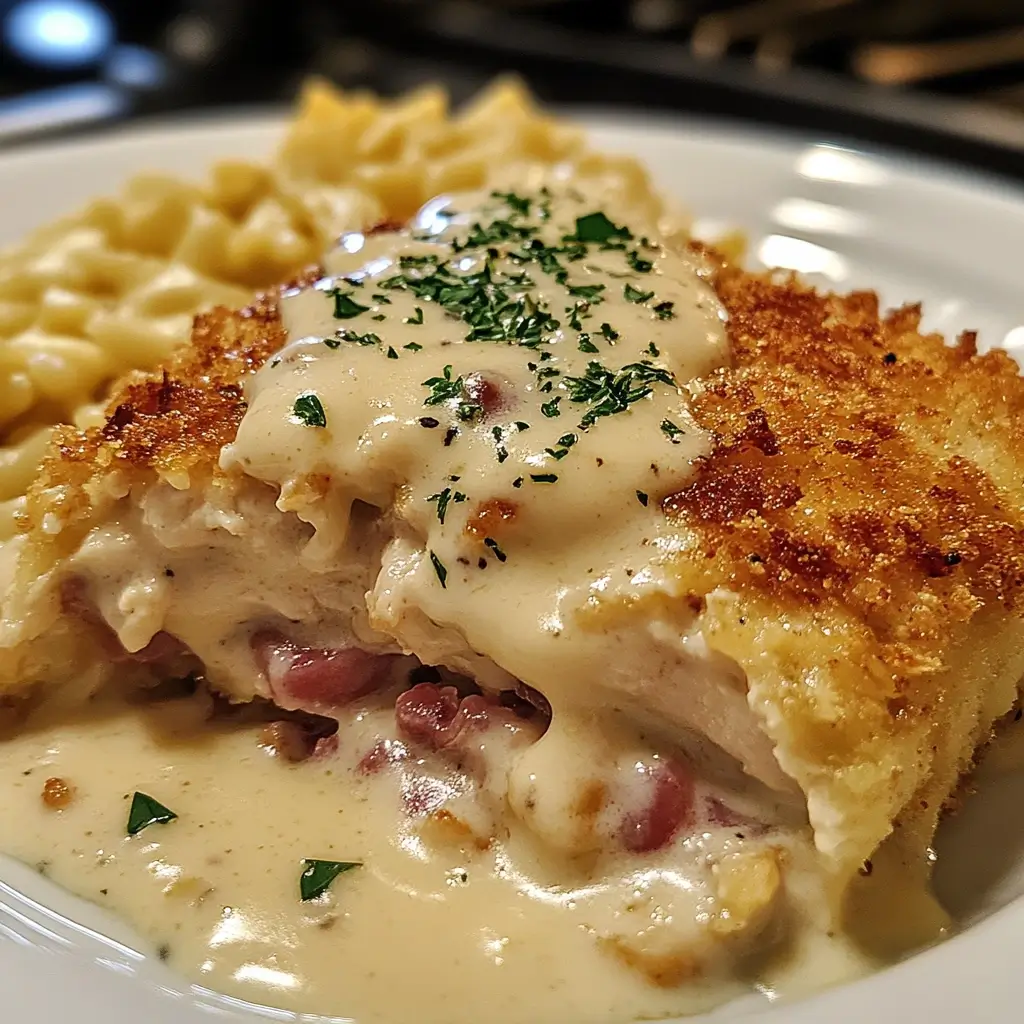
Oh, Chicken Cordon Bleu! Just the name conjures up images of elegant dinners and comforting flavors. For my family, it’s become a dish that signals a special occasion, or sometimes, just a much-needed weeknight treat. It all started a few years back when I decided to try and recreate a dish we had absolutely adored at a local bistro. My husband, usually a man of few words when it comes to food (unless it’s something he really loves), actually exclaimed, “Rosalyn, this is even better than the restaurant’s!” And the kids? Well, let’s just say there were no leftovers that night. The creamy sauce, the crispy chicken, the savory ham and melted cheese – it’s a symphony of flavors and textures that just works. Since then, this Creamy Chicken Cordon Bleu has become a staple in our recipe rotation. It’s surprisingly straightforward to make, yet it feels so incredibly gourmet. Whether you’re looking to impress guests or simply want to elevate your family dinner, this recipe is a guaranteed crowd-pleaser. Trust me, the smiles around your table will be as rewarding as the delicious aroma filling your kitchen!
Ingredients for Deliciously Creamy Chicken Cordon Bleu
The beauty of Chicken Cordon Bleu lies in the harmonious blend of simple, yet high-quality ingredients. Each component plays a crucial role in building the layers of flavor and texture that make this dish so irresistible. Let’s delve into each ingredient and understand why they are essential for creating the most deliciously creamy Chicken Cordon Bleu.
Chicken Breasts: The foundation of our dish is, of course, chicken. For this recipe, we opt for boneless, skinless chicken breasts. Why? Firstly, they are incredibly convenient and easy to work with. No bones to navigate around means quicker preparation and easier stuffing. Secondly, boneless, skinless breasts cook evenly, ensuring that the chicken is tender and juicy throughout, without any risk of undercooked areas near the bone. Finally, chicken breast is a fantastic source of lean protein. It’s a healthy and satisfying base that readily absorbs the surrounding flavors. When choosing your chicken, look for breasts that are plump and uniformly sized if possible, to ensure even cooking. If your breasts are particularly thick, you can butterfly them horizontally to make them thinner and easier to stuff and cook. Organic or free-range chicken can offer a richer flavor, but conventional chicken breasts will work perfectly well too. The key is to start with fresh, good quality chicken.
Ham: The smoky, savory counterpoint to the mild chicken is provided by ham. We’re not just talking about any ham here; we’re specifying thick-cut deli ham. The thickness is important because it provides a substantial bite and prevents the ham from becoming lost inside the chicken. Deli ham, as opposed to pre-packaged sandwich ham, usually has a richer, more pronounced flavor and a better texture. For the best results, choose a high-quality ham. Consider options like Black Forest ham, Virginia ham, or even a good smoked ham. Each variety will impart a slightly different flavor profile. Black Forest ham, for instance, has a robust, slightly smoky taste, while Virginia ham is known for its saltier and more intense flavor. Experimenting with different types of ham can be a fun way to customize your Chicken Cordon Bleu. Avoid thinly sliced sandwich ham as it tends to dry out and lacks the flavor punch we’re aiming for.
Swiss Cheese: Ah, Swiss cheese – the quintessential cheese for Chicken Cordon Bleu! Its mild, nutty flavor and exceptional melting properties make it the perfect choice. Swiss cheese melts beautifully into a creamy, gooey center, creating that delightful cheese pull we all adore. Its subtle flavor complements the ham and chicken without overpowering them. For an even richer and more complex flavor, consider using Gruyere cheese in combination with or instead of Swiss. Gruyere is a type of Swiss cheese, but it boasts a bolder, more pronounced nutty and slightly sweet flavor. It melts just as beautifully as Swiss cheese and adds an extra layer of sophistication to the dish. Provolone is another mild, melty cheese that could be used as a substitute if you don’t have Swiss or Gruyere on hand, though it will slightly alter the classic flavor profile. Whatever cheese you choose, make sure it’s sliced and ready to be easily stuffed into the chicken breasts.
Panko Breadcrumbs: Crispy, crunchy texture is an essential element of Chicken Cordon Bleu, and panko breadcrumbs are our secret weapon to achieve this. Panko breadcrumbs are Japanese-style breadcrumbs that are lighter, airier, and flakier than traditional breadcrumbs. This unique texture results in a far crispier and less greasy coating when fried or baked. They create a beautiful golden-brown crust that provides a satisfying contrast to the tender chicken and creamy interior. If you can’t find panko breadcrumbs, you can use regular breadcrumbs, but the texture will be slightly denser and less crispy. For an extra flavor boost, you can lightly toast the panko breadcrumbs in a dry skillet over medium heat until they are lightly golden before using them to coat the chicken. This step intensifies their nutty flavor and enhances their crispiness.
All-Purpose Flour: Flour might seem like a simple ingredient, but it plays a crucial role in this recipe. A light dusting of all-purpose flour on the chicken breasts before dipping them in egg serves several purposes. Firstly, it helps to dry the surface of the chicken, allowing the egg wash to adhere more effectively. Secondly, it creates a slight barrier that helps to seal in the juices of the chicken, resulting in a more tender and moist final product. Thirdly, it contributes to the overall texture of the crust, adding a subtle layer of crispness. Just a light dusting is all that’s needed; you don’t want a thick coating of flour.
Large Eggs: Eggs are the binding agent that holds the breadcrumb coating onto the chicken. Beaten eggs create a sticky surface that allows the panko breadcrumbs to adhere evenly and thoroughly. They also contribute to the golden-brown color and richness of the crust. Use large eggs for this recipe to ensure you have enough volume to properly coat all the chicken breasts. Make sure to beat the eggs well until the yolks and whites are fully combined and slightly frothy. This will ensure a smooth and even coating.
Butter: Butter is the foundation of our creamy sauce and also the cooking fat for browning the chicken. Butter provides a rich, decadent flavor that is simply irreplaceable. We use it to sauté the garlic and create the base for the creamy sauce. The butter’s fat content helps to emulsify the sauce, giving it a smooth and velvety texture. When browning the chicken, butter imparts a beautiful golden-brown color and adds to the overall richness of the dish. Unsalted butter is recommended so you can control the saltiness of the dish.
Heavy Cream: The star of the show in our “Deliciously Creamy” Chicken Cordon Bleu is, undoubtedly, the heavy cream. Heavy cream is what transforms a simple sauce into a luxurious, velvety, and utterly irresistible creamy concoction. It adds richness, body, and a decadent mouthfeel to the sauce. As the cream simmers, it thickens slightly, creating a perfect consistency to drizzle over the chicken. For the richest and creamiest sauce, use heavy cream with a fat content of at least 36%. Whipping cream, which has a lower fat content, can be used in a pinch, but the sauce will be less rich and may not thicken as much.
Garlic: Garlic is the aromatic powerhouse that elevates the creamy sauce to another level. Minced garlic sautéed in butter releases its pungent and savory aroma, infusing the sauce with a depth of flavor that is simply divine. Garlic adds a warm, savory note that complements the richness of the cream and butter and balances the flavors of the chicken, ham, and cheese. Fresh garlic cloves are always preferable for the best flavor. Use two cloves as indicated in the recipe, or adjust to your preference. Be careful not to burn the garlic when sautéing; it should be cooked until fragrant, about a minute.
Fresh Parsley: Fresh parsley is the finishing touch, adding a pop of color and a hint of freshness to the dish. Chopped parsley sprinkled over the finished Chicken Cordon Bleu brightens up the plate visually and adds a subtle herbaceous note that cuts through the richness of the dish. It’s a simple garnish that makes a big difference in both flavor and presentation. Flat-leaf parsley (Italian parsley) is preferred for its stronger flavor compared to curly parsley.
Salt and Pepper: Last but certainly not least, salt and pepper are the essential seasonings that bring all the flavors together and enhance the overall taste of the dish. Salt enhances the flavors of all the other ingredients, while pepper adds a subtle warmth and complexity. Season the chicken breasts, flour, eggs, breadcrumbs, and creamy sauce with salt and pepper to taste. Taste and adjust the seasoning as you go to ensure the dish is perfectly balanced. Freshly ground black pepper is always recommended for its superior flavor.
Instructions: Crafting Deliciously Creamy Chicken Cordon Bleu
Making Deliciously Creamy Chicken Cordon Bleu is a rewarding culinary journey, and with these step-by-step instructions, you’ll find it’s easier than you might think. Let’s walk through each stage to create this restaurant-worthy dish in your own kitchen.
Step 1: Preheat and Prep
Begin by preheating your oven to 350°F (175°C). This temperature is ideal for baking the chicken through without drying it out while ensuring the cheese is melted and the breadcrumbs are golden brown. While the oven is preheating, prepare a baking dish. A standard 9×13 inch baking dish works perfectly for this recipe. Lightly grease the dish to prevent the chicken from sticking and to make cleanup easier. You can use cooking spray, butter, or olive oil to grease the dish. Setting up your oven and baking dish first ensures that everything is ready to go when the chicken is prepared.
Step 2: Prepare the Chicken Pockets
This step is crucial for creating the signature stuffed Chicken Cordon Bleu. Take each chicken breast and place it on a cutting board. Using a sharp knife, carefully slice into the side of the chicken breast to create a pocket. The goal is to cut horizontally, going about three-quarters of the way through the breast, without cutting all the way through to the other side. You want to create a pouch or pocket where you can insert the ham and cheese. Be gentle and take your time to avoid tearing the chicken. If your chicken breasts are very thick, you might consider butterflying them first by slicing them horizontally in half and then creating the pocket in each thinner half. This will help ensure even cooking.
Step 3: Stuff the Chicken
Now comes the fun part – stuffing the chicken! Take a slice of ham and fold it to fit neatly inside the pocket you created in the chicken breast. Then, place a slice of Swiss cheese (or Gruyere) on top of the ham, also folding it if necessary to fit inside the pocket. Make sure not to overstuff the chicken, as this can make it difficult to close and may lead to the filling oozing out during cooking. Once stuffed, if you find that the pocket is not staying closed securely, you can use toothpicks to secure the opening. Insert toothpicks at an angle to close the pocket and hold the ham and cheese inside. Remember to remove the toothpicks before serving.
Step 4: Set up the Dredging Station
To achieve that perfect crispy crust, we need a dredging station. Prepare three shallow bowls or dishes. In the first bowl, place the all-purpose flour. Season the flour with a pinch of salt and pepper for extra flavor. In the second bowl, whisk the two large eggs until they are well beaten and the yolks and whites are fully combined. Season the beaten eggs with a pinch of salt and pepper as well. In the third bowl, place the panko breadcrumbs. Having these three bowls set up in an assembly line fashion will make the dredging process efficient and organized.
Step 5: Dredge the Chicken
Now it’s time to coat the stuffed chicken breasts. Take each stuffed chicken breast and first dredge it in the flour. Make sure to coat all sides of the chicken, including the edges and around the pocket opening. Shake off any excess flour. Next, dip the flour-coated chicken breast into the beaten eggs, ensuring it is fully submerged and coated in egg. Allow any excess egg to drip off. Finally, dredge the egg-coated chicken breast in the panko breadcrumbs. Press the breadcrumbs gently onto the chicken to ensure they adhere well and create an even coating. Repeat this dredging process for all the stuffed chicken breasts.
Step 6: Brown the Chicken
Browning the chicken in butter before baking is essential for developing flavor and creating a beautiful golden-brown crust. In a large skillet (large enough to accommodate the chicken breasts without overcrowding), melt the butter over medium heat. Allow the butter to melt completely and become bubbly. Once the butter is hot, carefully add the dredged chicken breasts to the skillet. Do not overcrowd the skillet; you may need to brown the chicken in batches to ensure even browning. Cook the chicken for about 4-5 minutes per side, or until it is golden brown on both sides. The chicken does not need to be cooked through at this stage, as it will finish cooking in the oven. Browning just sets the crust and adds flavor.
Step 7: Bake the Chicken
After browning, transfer the chicken breasts from the skillet to the prepared baking dish. Arrange them in a single layer in the dish. Place the baking dish in the preheated oven and bake for 20-25 minutes, or until the chicken is cooked through. The internal temperature of the chicken should reach 165°F (75°C) when measured with a meat thermometer inserted into the thickest part of the breast. Baking time may vary slightly depending on the thickness of your chicken breasts and the accuracy of your oven temperature. Check for doneness around 20 minutes and adjust baking time as needed.
Step 8: Prepare the Creamy Garlic Sauce
While the chicken is baking, it’s time to make the delicious creamy garlic sauce. Using the same skillet you used to brown the chicken (no need to clean it), melt any remaining butter in the skillet over medium heat. Add the minced garlic to the skillet and sauté for about a minute, or until fragrant. Be careful not to burn the garlic; it should be cooked until just softened and aromatic. Pour in the heavy cream into the skillet with the sautéed garlic. Stir to combine the garlic and cream. Bring the sauce to a gentle simmer and cook for about 5-7 minutes, stirring occasionally, until the sauce has thickened slightly. Season the sauce with salt and pepper to taste. Adjust seasoning as needed to your preference.
Step 9: Assemble and Serve
Once the chicken is baked through and the creamy sauce is ready, remove the chicken from the oven. If you used toothpicks to secure the chicken, remove them now. Pour the creamy garlic sauce generously over the baked Chicken Cordon Bleu, ensuring each piece is nicely coated with the sauce. Garnish with freshly chopped parsley for a pop of color and freshness. Serve the Deliciously Creamy Chicken Cordon Bleu warm, immediately after assembling for the best flavor and texture.
Nutrition Facts: A Delicious Indulgence
While Chicken Cordon Bleu is undeniably a rich and indulgent dish, understanding its nutritional profile can help you enjoy it as part of a balanced diet. Here’s a breakdown of the approximate nutrition facts per serving for this Deliciously Creamy Chicken Cordon Bleu recipe. Please note that these values are estimates and can vary based on specific ingredients and portion sizes.
Servings: This recipe is designed to serve 4 people.
Calories per Serving: Approximately 650-750 calories per serving.
Macronutrient Breakdown (Approximate per serving):
- Protein: 50-60 grams
- Fat: 40-50 grams
- Carbohydrates: 15-20 grams
Key Nutritional Highlights:
- High in Protein: Chicken breast is an excellent source of lean protein, essential for muscle building and repair, satiety, and overall health. Ham and Swiss cheese also contribute to the protein content.
- Source of Calcium: Swiss cheese provides a good amount of calcium, important for bone health, nerve function, and muscle function.
- Rich in Flavor and Satisfaction: While higher in calories and fat, this dish is incredibly satisfying and flavorful, making it a treat that can be enjoyed in moderation.
Health Considerations:
- Fat Content: Due to the use of butter, heavy cream, and cheese, this dish is relatively high in fat, particularly saturated fat. Individuals watching their fat intake should be mindful of portion sizes and frequency of consumption.
- Sodium Content: Ham and cheese can be high in sodium. If you are sodium-sensitive, consider using low-sodium ham and cheese options, and be mindful of added salt.
- Occasional Indulgence: Chicken Cordon Bleu is best enjoyed as an occasional treat rather than an everyday meal, especially if you are calorie-conscious or watching your fat intake.
To make this dish slightly lighter, you could consider using reduced-fat Swiss cheese and substituting half-and-half for some of the heavy cream, though this will slightly alter the richness of the sauce. Pairing Chicken Cordon Bleu with a large serving of vegetables or a fresh salad can also help balance out the richness of the meal and add valuable nutrients and fiber to your diet.
Preparation Time: Plan Your Cooking Schedule
Knowing the preparation time helps you plan your cooking schedule effectively. Here’s a breakdown of the time involved in making Deliciously Creamy Chicken Cordon Bleu:
Prep Time: 25-30 minutes
- This includes:
- Preheating the oven and greasing the baking dish (5 minutes)
- Preparing the chicken breasts and making pockets (10 minutes)
- Stuffing the chicken with ham and cheese (5 minutes)
- Setting up the dredging station (5 minutes)
- Dredging the chicken breasts (5-10 minutes)
- Chopping parsley and mincing garlic (part of this time can overlap with other steps)
Cook Time: 30-35 minutes
- This includes:
- Browning the chicken in the skillet (10-15 minutes – about 4-5 minutes per side for each batch)
- Baking the chicken in the oven (20-25 minutes)
- Making the creamy garlic sauce (5-7 minutes – can be done while chicken is baking)
Total Time: Approximately 55-65 minutes
This recipe is achievable within about an hour, making it suitable for a special weeknight dinner or a relaxed weekend meal. You can save a little time by prepping ingredients like mincing garlic and chopping parsley in advance. Reading through the entire recipe before you start and having all your ingredients measured and ready (mise en place) will also streamline the cooking process and make it even more efficient.
How to Serve Deliciously Creamy Chicken Cordon Bleu
Chicken Cordon Bleu is a versatile dish that pairs wonderfully with a variety of sides. Here are some serving suggestions to create a complete and satisfying meal:
- Classic Sides:
- Mashed Potatoes: Creamy mashed potatoes are a classic accompaniment that perfectly complements the richness of the Chicken Cordon Bleu and creamy sauce.
- Rice Pilaf: A light and fluffy rice pilaf, seasoned with herbs or saffron, provides a neutral base to balance the richness of the main dish.
- Roasted Asparagus or Green Beans: Roasted green vegetables add color, freshness, and a healthy element to the meal. Asparagus and green beans are particularly good choices.
- Buttered Noodles: Simple buttered egg noodles are another comforting and classic side that pairs well with Chicken Cordon Bleu.
- Fresh and Light Options:
- Side Salad: A crisp green salad with a light vinaigrette dressing provides a refreshing contrast to the richness of the Chicken Cordon Bleu.
- Steamed Broccoli or Spinach: Steamed green vegetables offer a healthy and simple side that balances the richness of the main dish.
- Fruit Salad: For a lighter meal, consider serving a fresh fruit salad as a side or as a refreshing dessert after the meal.
- Elevated Sides:
- Scalloped Potatoes: For a more indulgent side, scalloped potatoes or au gratin potatoes are a decadent and delicious choice that complements the richness of the Cordon Bleu.
- Creamy Polenta: Creamy polenta provides a smooth and comforting base that soaks up the creamy sauce beautifully.
- Wild Rice Pilaf: A more sophisticated version of rice pilaf, wild rice pilaf adds a nutty flavor and interesting texture.
- Serving Occasions:
- Family Dinner: Chicken Cordon Bleu is perfect for a special family dinner, whether it’s a weeknight treat or a weekend celebration.
- Dinner Parties: This dish is elegant enough to impress guests at a dinner party yet straightforward enough to prepare without stress.
- Holiday Meals: Consider Chicken Cordon Bleu as a delicious alternative to traditional holiday fare, especially for smaller gatherings.
When serving, arrange the Chicken Cordon Bleu on plates and generously spoon the creamy sauce over each piece. Garnish with a sprinkle of fresh parsley. Serve immediately while it’s hot and the crust is crispy.
Additional Tips for Perfect Chicken Cordon Bleu
To ensure your Chicken Cordon Bleu is a resounding success, here are five additional tips:
- Don’t Overcrowd the Skillet: When browning the chicken, work in batches if necessary to avoid overcrowding the skillet. Overcrowding will lower the temperature of the butter and cause the chicken to steam rather than brown properly, resulting in a less crispy crust.
- Use a Meat Thermometer: The best way to ensure your chicken is cooked through and safe to eat is to use a meat thermometer. Insert it into the thickest part of the chicken breast; it should read 165°F (75°C). Avoid overcooking, which can dry out the chicken.
- Make Ahead Prep: You can save time on the day of cooking by prepping some components in advance. Stuff the chicken breasts and dredge them in breadcrumbs earlier in the day, then store them covered in the refrigerator until you are ready to brown and bake. You can also make the creamy sauce ahead of time and gently reheat it before serving.
- Toothpick Trick: If you are having trouble keeping the chicken pockets closed, use toothpicks to secure them. Soak the toothpicks in water for about 30 minutes before using to prevent them from burning in the oven. Remember to remove them before serving.
- Customize Your Cheese and Ham: Feel free to experiment with different types of cheese and ham to customize the flavor profile. Provolone, mozzarella, or even a smoked Gouda can be delicious cheese alternatives. For ham, consider prosciutto or Serrano ham for a different flavor twist.
Frequently Asked Questions (FAQ) About Chicken Cordon Bleu
Here are some common questions people ask about Chicken Cordon Bleu:
Q1: Can I make Chicken Cordon Bleu ahead of time?
A: Yes, you can prepare Chicken Cordon Bleu ahead of time up to a certain point. You can stuff and dredge the chicken breasts, then store them in the refrigerator for up to 24 hours before browning and baking. You can also make the creamy sauce a day ahead and reheat it gently before serving. However, for the crispiest crust, it is best to brown and bake the chicken just before serving.
Q2: Can I freeze Chicken Cordon Bleu?
A: While you can freeze Chicken Cordon Bleu, the texture of the breadcrumb crust may become slightly softer after thawing and reheating. For best results, freeze cooked Chicken Cordon Bleu after it has cooled completely. Wrap each piece tightly in plastic wrap, then place them in a freezer-safe bag or container. To reheat, bake from frozen in a 350°F (175°C) oven until heated through, about 30-40 minutes. The creamy sauce can also be frozen separately and reheated gently.
Q3: Can I use different types of cheese or ham?
A: Absolutely! Chicken Cordon Bleu is quite versatile. You can experiment with different types of cheese such as Gruyere, provolone, mozzarella, or even a blend of cheeses. For ham, consider using prosciutto, Serrano ham, or Canadian bacon for variations in flavor.
Q4: How do I prevent the breadcrumb coating from falling off?
A: To ensure the breadcrumb coating adheres well, make sure to follow the dredging steps carefully. Dredging in flour first helps the egg wash stick, and the egg wash helps the breadcrumbs adhere. Press the breadcrumbs gently onto the chicken to ensure they are well attached. Also, avoid overcrowding the skillet when browning, as steaming can cause the coating to loosen.
Q5: What if I don’t have panko breadcrumbs? Can I use regular breadcrumbs?
A: Yes, you can use regular breadcrumbs if you don’t have panko. However, panko breadcrumbs provide a much crispier and lighter texture. If using regular breadcrumbs, consider toasting them lightly in a dry skillet before using to enhance their texture and flavor. You can also add a tablespoon of melted butter to regular breadcrumbs to help them crisp up more when baked.
Print
Creamy Chicken Cordon Bleu Recipe
Ingredients
Chicken Breasts: The foundation of our dish is, of course, chicken. For this recipe, we opt for boneless, skinless chicken breasts. Why? Firstly, they are incredibly convenient and easy to work with. No bones to navigate around means quicker preparation and easier stuffing. Secondly, boneless, skinless breasts cook evenly, ensuring that the chicken is tender and juicy throughout, without any risk of undercooked areas near the bone. Finally, chicken breast is a fantastic source of lean protein. It’s a healthy and satisfying base that readily absorbs the surrounding flavors. When choosing your chicken, look for breasts that are plump and uniformly sized if possible, to ensure even cooking. If your breasts are particularly thick, you can butterfly them horizontally to make them thinner and easier to stuff and cook. Organic or free-range chicken can offer a richer flavor, but conventional chicken breasts will work perfectly well too. The key is to start with fresh, good quality chicken.
Ham: The smoky, savory counterpoint to the mild chicken is provided by ham. We’re not just talking about any ham here; we’re specifying thick-cut deli ham. The thickness is important because it provides a substantial bite and prevents the ham from becoming lost inside the chicken. Deli ham, as opposed to pre-packaged sandwich ham, usually has a richer, more pronounced flavor and a better texture. For the best results, choose a high-quality ham. Consider options like Black Forest ham, Virginia ham, or even a good smoked ham. Each variety will impart a slightly different flavor profile. Black Forest ham, for instance, has a robust, slightly smoky taste, while Virginia ham is known for its saltier and more intense flavor. Experimenting with different types of ham can be a fun way to customize your Chicken Cordon Bleu. Avoid thinly sliced sandwich ham as it tends to dry out and lacks the flavor punch we’re aiming for.
Swiss Cheese: Ah, Swiss cheese – the quintessential cheese for Chicken Cordon Bleu! Its mild, nutty flavor and exceptional melting properties make it the perfect choice. Swiss cheese melts beautifully into a creamy, gooey center, creating that delightful cheese pull we all adore. Its subtle flavor complements the ham and chicken without overpowering them. For an even richer and more complex flavor, consider using Gruyere cheese in combination with or instead of Swiss. Gruyere is a type of Swiss cheese, but it boasts a bolder, more pronounced nutty and slightly sweet flavor. It melts just as beautifully as Swiss cheese and adds an extra layer of sophistication to the dish. Provolone is another mild, melty cheese that could be used as a substitute if you don’t have Swiss or Gruyere on hand, though it will slightly alter the classic flavor profile. Whatever cheese you choose, make sure it’s sliced and ready to be easily stuffed into the chicken breasts.
Panko Breadcrumbs: Crispy, crunchy texture is an essential element of Chicken Cordon Bleu, and panko breadcrumbs are our secret weapon to achieve this. Panko breadcrumbs are Japanese-style breadcrumbs that are lighter, airier, and flakier than traditional breadcrumbs. This unique texture results in a far crispier and less greasy coating when fried or baked. They create a beautiful golden-brown crust that provides a satisfying contrast to the tender chicken and creamy interior. If you can’t find panko breadcrumbs, you can use regular breadcrumbs, but the texture will be slightly denser and less crispy. For an extra flavor boost, you can lightly toast the panko breadcrumbs in a dry skillet over medium heat until they are lightly golden before using them to coat the chicken. This step intensifies their nutty flavor and enhances their crispiness.
All-Purpose Flour: Flour might seem like a simple ingredient, but it plays a crucial role in this recipe. A light dusting of all-purpose flour on the chicken breasts before dipping them in egg serves several purposes. Firstly, it helps to dry the surface of the chicken, allowing the egg wash to adhere more effectively. Secondly, it creates a slight barrier that helps to seal in the juices of the chicken, resulting in a more tender and moist final product. Thirdly, it contributes to the overall texture of the crust, adding a subtle layer of crispness. Just a light dusting is all that’s needed; you don’t want a thick coating of flour.
Large Eggs: Eggs are the binding agent that holds the breadcrumb coating onto the chicken. Beaten eggs create a sticky surface that allows the panko breadcrumbs to adhere evenly and thoroughly. They also contribute to the golden-brown color and richness of the crust. Use large eggs for this recipe to ensure you have enough volume to properly coat all the chicken breasts. Make sure to beat the eggs well until the yolks and whites are fully combined and slightly frothy. This will ensure a smooth and even coating.
Butter: Butter is the foundation of our creamy sauce and also the cooking fat for browning the chicken. Butter provides a rich, decadent flavor that is simply irreplaceable. We use it to sauté the garlic and create the base for the creamy sauce. The butter’s fat content helps to emulsify the sauce, giving it a smooth and velvety texture. When browning the chicken, butter imparts a beautiful golden-brown color and adds to the overall richness of the dish. Unsalted butter is recommended so you can control the saltiness of the dish.
Heavy Cream: The star of the show in our “Deliciously Creamy” Chicken Cordon Bleu is, undoubtedly, the heavy cream. Heavy cream is what transforms a simple sauce into a luxurious, velvety, and utterly irresistible creamy concoction. It adds richness, body, and a decadent mouthfeel to the sauce. As the cream simmers, it thickens slightly, creating a perfect consistency to drizzle over the chicken. For the richest and creamiest sauce, use heavy cream with a fat content of at least 36%. Whipping cream, which has a lower fat content, can be used in a pinch, but the sauce will be less rich and may not thicken as much.
Garlic: Garlic is the aromatic powerhouse that elevates the creamy sauce to another level. Minced garlic sautéed in butter releases its pungent and savory aroma, infusing the sauce with a depth of flavor that is simply divine. Garlic adds a warm, savory note that complements the richness of the cream and butter and balances the flavors of the chicken, ham, and cheese. Fresh garlic cloves are always preferable for the best flavor. Use two cloves as indicated in the recipe, or adjust to your preference. Be careful not to burn the garlic when sautéing; it should be cooked until fragrant, about a minute.
Fresh Parsley: Fresh parsley is the finishing touch, adding a pop of color and a hint of freshness to the dish. Chopped parsley sprinkled over the finished Chicken Cordon Bleu brightens up the plate visually and adds a subtle herbaceous note that cuts through the richness of the dish. It’s a simple garnish that makes a big difference in both flavor and presentation. Flat-leaf parsley (Italian parsley) is preferred for its stronger flavor compared to curly parsley.
Salt and Pepper: Last but certainly not least, salt and pepper are the essential seasonings that bring all the flavors together and enhance the overall taste of the dish. Salt enhances the flavors of all the other ingredients, while pepper adds a subtle warmth and complexity. Season the chicken breasts, flour, eggs, breadcrumbs, and creamy sauce with salt and pepper to taste. Taste and adjust the seasoning as you go to ensure the dish is perfectly balanced. Freshly ground black pepper is always recommended for its superior flavor.
Instructions
Step 1: Preheat and Prep
Begin by preheating your oven to 350°F (175°C). This temperature is ideal for baking the chicken through without drying it out while ensuring the cheese is melted and the breadcrumbs are golden brown. While the oven is preheating, prepare a baking dish. A standard 9×13 inch baking dish works perfectly for this recipe. Lightly grease the dish to prevent the chicken from sticking and to make cleanup easier. You can use cooking spray, butter, or olive oil to grease the dish. Setting up your oven and baking dish first ensures that everything is ready to go when the chicken is prepared.
Step 2: Prepare the Chicken Pockets
This step is crucial for creating the signature stuffed Chicken Cordon Bleu. Take each chicken breast and place it on a cutting board. Using a sharp knife, carefully slice into the side of the chicken breast to create a pocket. The goal is to cut horizontally, going about three-quarters of the way through the breast, without cutting all the way through to the other side. You want to create a pouch or pocket where you can insert the ham and cheese. Be gentle and take your time to avoid tearing the chicken. If your chicken breasts are very thick, you might consider butterflying them first by slicing them horizontally in half and then creating the pocket in each thinner half. This will help ensure even cooking.
Step 3: Stuff the Chicken
Now comes the fun part – stuffing the chicken! Take a slice of ham and fold it to fit neatly inside the pocket you created in the chicken breast. Then, place a slice of Swiss cheese (or Gruyere) on top of the ham, also folding it if necessary to fit inside the pocket. Make sure not to overstuff the chicken, as this can make it difficult to close and may lead to the filling oozing out during cooking. Once stuffed, if you find that the pocket is not staying closed securely, you can use toothpicks to secure the opening. Insert toothpicks at an angle to close the pocket and hold the ham and cheese inside. Remember to remove the toothpicks before serving.
Step 4: Set up the Dredging Station
To achieve that perfect crispy crust, we need a dredging station. Prepare three shallow bowls or dishes. In the first bowl, place the all-purpose flour. Season the flour with a pinch of salt and pepper for extra flavor. In the second bowl, whisk the two large eggs until they are well beaten and the yolks and whites are fully combined. Season the beaten eggs with a pinch of salt and pepper as well. In the third bowl, place the panko breadcrumbs. Having these three bowls set up in an assembly line fashion will make the dredging process efficient and organized.
Step 5: Dredge the Chicken
Now it’s time to coat the stuffed chicken breasts. Take each stuffed chicken breast and first dredge it in the flour. Make sure to coat all sides of the chicken, including the edges and around the pocket opening. Shake off any excess flour. Next, dip the flour-coated chicken breast into the beaten eggs, ensuring it is fully submerged and coated in egg. Allow any excess egg to drip off. Finally, dredge the egg-coated chicken breast in the panko breadcrumbs. Press the breadcrumbs gently onto the chicken to ensure they adhere well and create an even coating. Repeat this dredging process for all the stuffed chicken breasts.
Step 6: Brown the Chicken
Browning the chicken in butter before baking is essential for developing flavor and creating a beautiful golden-brown crust. In a large skillet (large enough to accommodate the chicken breasts without overcrowding), melt the butter over medium heat. Allow the butter to melt completely and become bubbly. Once the butter is hot, carefully add the dredged chicken breasts to the skillet. Do not overcrowd the skillet; you may need to brown the chicken in batches to ensure even browning. Cook the chicken for about 4-5 minutes per side, or until it is golden brown on both sides. The chicken does not need to be cooked through at this stage, as it will finish cooking in the oven. Browning just sets the crust and adds flavor.
Step 7: Bake the Chicken
After browning, transfer the chicken breasts from the skillet to the prepared baking dish. Arrange them in a single layer in the dish. Place the baking dish in the preheated oven and bake for 20-25 minutes, or until the chicken is cooked through. The internal temperature of the chicken should reach 165°F (75°C) when measured with a meat thermometer inserted into the thickest part of the breast. Baking time may vary slightly depending on the thickness of your chicken breasts and the accuracy of your oven temperature. Check for doneness around 20 minutes and adjust baking time as needed.
Step 8: Prepare the Creamy Garlic Sauce
While the chicken is baking, it’s time to make the delicious creamy garlic sauce. Using the same skillet you used to brown the chicken (no need to clean it), melt any remaining butter in the skillet over medium heat. Add the minced garlic to the skillet and sauté for about a minute, or until fragrant. Be careful not to burn the garlic; it should be cooked until just softened and aromatic. Pour in the heavy cream into the skillet with the sautéed garlic. Stir to combine the garlic and cream. Bring the sauce to a gentle simmer and cook for about 5-7 minutes, stirring occasionally, until the sauce has thickened slightly. Season the sauce with salt and pepper to taste. Adjust seasoning as needed to your preference.
Step 9: Assemble and Serve
Once the chicken is baked through and the creamy sauce is ready, remove the chicken from the oven. If you used toothpicks to secure the chicken, remove them now. Pour the creamy garlic sauce generously over the baked Chicken Cordon Bleu, ensuring each piece is nicely coated with the sauce. Garnish with freshly chopped parsley for a pop of color and freshness. Serve the Deliciously Creamy Chicken Cordon Bleu warm, immediately after assembling for the best flavor and texture.
Nutrition
- Serving Size: One Normal Portion
- Calories: 650-750
- Fat: 40-50 grams
- Carbohydrates: 15-20 grams
- Protein: 50-60 grams