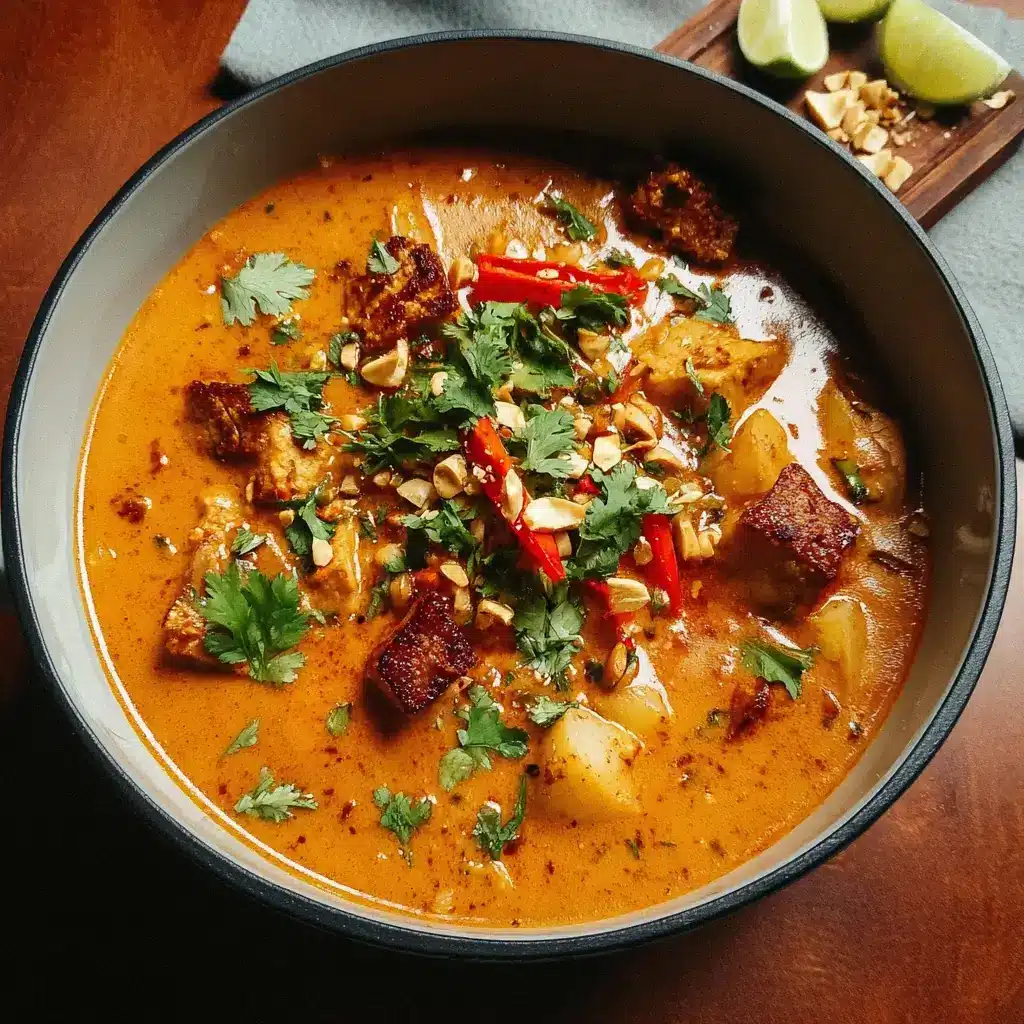
Of all the weeknight dinner dilemmas, the craving for rich, complex, and soul-soothing Thai food often feels the most out of reach. For years, I relegated Massaman curry to the “takeout only” category, intimidated by what I assumed was a long list of obscure ingredients and a complicated, hours-long process. That all changed the day I decided to tackle it myself, armed with a determination to create a version that was both authentic in flavor and ridiculously easy to make. The result is this very recipe, a one-pot wonder that has completely transformed our dinner rotation. The first time I made it, the aroma that filled the kitchen—a fragrant cloud of toasted spices, creamy coconut, and savory goodness—had my family migrating from every corner of the house, asking, “What is that amazing smell?” The verdict was unanimous: it was better than our favorite Thai restaurant. The chicken was fall-apart tender, the potatoes were creamy and had soaked up all the flavor, and the sauce was the perfect balance of sweet, savory, and tangy with just a whisper of heat. It’s the kind of meal that feels like a warm hug in a bowl, and the fact that it all comes together in a single pot with minimal cleanup feels like a culinary miracle. This isn’t just a recipe; it’s our family’s go-to for a special-feeling meal on an ordinary day.
What Exactly Is Massaman Curry? A Journey of Flavor
Before we dive into the pot, let’s take a moment to appreciate the unique dish we’re about to create. Massaman curry stands apart from its more fiery Thai cousins like red or green curry. Its origins are a fascinating culinary story, believed to have been introduced to the Thai court in the 17th century through Persian and Indian merchants. The name “Massaman” is thought to be an old Thai word for “Muslim,” hinting at its international roots.
This heritage is evident in its flavor profile. Unlike the fresh, herbaceous chili blast of other Thai curries, Massaman curry is rich with warm, dry spices typically found in Indian and Middle Eastern cuisine. Think cinnamon, nutmeg, cloves, cardamom, and cumin. These are blended with traditional Thai ingredients like lemongrass, galangal, and shrimp paste to create a paste that is incredibly complex and aromatic rather than searingly spicy.
The resulting sauce is luxuriously rich, creamy, slightly sweet, tangy, and deeply savory. It’s often cooked with heartier ingredients like beef or chicken, along with potatoes and peanuts, which absorb the magnificent sauce and add wonderful texture. It’s the ultimate comfort food curry, renowned for its depth of flavor and mild, approachable heat level, making it a favorite for curry newcomers and seasoned aficionados alike. This easy one-pot version captures that soul-satisfying essence without requiring a trip to a specialty store or hours of simmering.
The Ultimate Easy 1-Pot Massaman Curry Recipe
This recipe is designed for maximum flavor with minimum fuss. By layering the ingredients in a single pot, we build a deep, rich sauce that tastes like it has been simmering for hours.
A Symphony of Flavors: Your Ingredient List
Gathering your ingredients, or “mise en place,” is the first step to a smooth and enjoyable cooking experience. Here’s everything you’ll need:
- For the Curry:
- Coconut Oil or Vegetable Oil: 2 tablespoons
- Chicken Thighs: 1.5 lbs (about 680g), boneless, skinless, cut into 1-inch cubes. You can also use chicken breast, but thighs remain more tender.
- Yellow Onion: 1 large, cut into thick wedges.
- Massaman Curry Paste: 4-5 tablespoons. Mae Ploy and Maesri are excellent, widely available brands. Adjust to your spice preference.
- Full-Fat Coconut Milk: 2 cans (13.5 oz or 400ml each), unshaken.
- Chicken Broth or Water: 1 cup
- Potatoes: 1 lb (about 450g), peeled and cut into 1-inch cubes. Yukon Gold or other waxy potatoes work best as they hold their shape.
- Carrots: 2 medium, peeled and sliced into thick rounds.
- Fish Sauce: 2 tablespoons. This is the salty, umami backbone.
- Tamarind Paste/Concentrate: 1 tablespoon. This provides the signature tangy note.
- Brown Sugar or Palm Sugar: 1 tablespoon, packed. This balances the sour and salty flavors.
- Unsalted Roasted Peanuts: ½ cup, plus more for garnish.
- For Serving (Optional but Recommended):
- Freshly Cooked Jasmine Rice
- Fresh Cilantro: A handful, roughly chopped.
- Lime Wedges
- Red Chili Flakes or Sliced Thai Chilis
- Crispy Fried Shallots
Step-by-Step Instructions for Curry Perfection
Follow these detailed steps to create your masterpiece. The key is to build layers of flavor at each stage.
- Prepare the Coconut Cream: Open your cans of coconut milk without shaking them. The thick cream will have risen to the top. Carefully scoop out about ½ cup of this thick coconut cream and set it aside. The remaining thinner milk will be used later.
- Bloom the Curry Paste: In a large Dutch oven or heavy-bottomed pot, heat the coconut oil over medium-high heat. Add the reserved ½ cup of thick coconut cream. Bring it to a simmer and let it cook for 2-3 minutes, stirring occasionally, until the oil starts to separate from the cream. This is a crucial step! Now, add the Massaman curry paste. Stir constantly for 1-2 minutes until it’s deeply fragrant. This process, known as “blooming,” awakens the spices and is the secret to a professional-tasting curry.
- Sear the Chicken: Add the cubed chicken thighs to the pot. Stir to coat the chicken completely in the fragrant curry paste. Cook for 3-4 minutes, turning the pieces, until they are lightly browned on all sides. They don’t need to be cooked through at this point.
- Build the Curry Base: Pour in the remaining coconut milk from both cans, along with the chicken broth (or water). Add the fish sauce, tamarind paste, and brown sugar. Use a wooden spoon to stir everything together, scraping up any delicious browned bits from the bottom of the pot.
- Simmer the Vegetables: Add the onion wedges, potato cubes, and carrot slices to the pot. Stir to combine, then bring the mixture to a gentle boil. Once boiling, immediately reduce the heat to low, cover the pot, and let it simmer for 20-25 minutes. You want a gentle simmer, not a rolling boil, which can cause the coconut milk to separate.
- Check for Doneness: After 20 minutes, check the curry. The chicken should be cooked through and tender, and the potatoes and carrots should be easily pierced with a fork. If they are still too firm, continue to simmer for another 5-10 minutes.
- Final Touches: Once the vegetables are tender, stir in the ½ cup of roasted peanuts. Turn off the heat. Taste the sauce carefully. This is your moment to be the chef! Does it need more salt? Add a splash more fish sauce. More tang? A squeeze of lime juice or a touch more tamarind. Not sweet enough? A little more sugar. Adjust until the flavors are perfectly balanced for your palate.
- Rest and Serve: Let the curry rest in the pot for 5-10 minutes off the heat. This allows the flavors to meld together even more deeply.
Nutrition Facts
- Servings: 6
- Calories per serving: Approximately 580-650 kcal (This can vary based on the specific brands of coconut milk and curry paste used, and if chicken breast or thigh is chosen).
Disclaimer: The nutritional information provided is an estimate and should be used as a guideline only.
Preparation Time
- Prep Time: 15 minutes (chopping vegetables and chicken)
- Cook Time: 35-40 minutes
- Total Time: 50-55 minutes
How to Serve Your Homemade Massaman Curry
Serving Massaman curry is all about creating a harmonious balance of textures and flavors. Here’s how to present it for the ultimate dining experience.
- The Foundation:
- Jasmine Rice: The classic choice. Its fragrant, slightly sticky nature is perfect for soaking up every last drop of the rich curry sauce.
- Brown Rice: A healthier, nuttier alternative that pairs wonderfully with the curry’s flavors.
- Quinoa: For a protein-packed, gluten-free option.
- Cauliflower Rice: A great low-carb choice that lets the curry be the star.
- The Essential Garnishes (Set them out in small bowls for a “build-your-own” experience):
- More Roasted Peanuts: Adds a crucial crunch and reinforces the nutty flavor.
- Fresh Cilantro: Provides a burst of fresh, herbaceous brightness that cuts through the richness of the curry.
- Fresh Lime Wedges: A squeeze of fresh lime juice right before eating is non-negotiable! It brightens all the flavors and adds a final touch of acidity.
- Crispy Fried Shallots: These are a game-changer, adding an incredible savory crunch and oniony depth. You can buy them at most Asian markets.
- Sliced Chilis: For those who like a little extra heat, offer some sliced red Thai chilis or a small bowl of red pepper flakes.
- On the Side:
- Roti or Naan: While not traditionally Thai, a warm, flaky flatbread is fantastic for mopping up the sauce.
- Simple Cucumber Salad: A quick salad of sliced cucumber, red onion, rice vinegar, and a pinch of sugar can provide a cool, crisp contrast to the warm curry.
Additional Tips for the Best Massaman Curry
Take your curry from great to unforgettable with these five professional tips.
1. Don’t Skip Blooming the Paste
This is the single most important step for developing a deep, complex flavor. Frying the curry paste in the separated coconut oil/cream for a minute or two before adding liquids unlocks the fat-soluble compounds in the spices, making the final dish exponentially more aromatic and flavorful. Rushing this step will result in a curry that tastes flat and one-dimensional.
2. Choose Your Protein Wisely (And How to Adapt)
While this recipe uses chicken thighs for their flavor and tenderness, Massaman is incredibly versatile.
- Beef: Use 1.5 lbs of beef stew meat (like chuck roast), cut into 1-inch cubes. Sear it well after blooming the paste, then simmer for at least 1.5-2 hours (or until tender) before adding the potatoes and carrots for the final 30 minutes of cooking.
- Shrimp: Add large, peeled, and deveined shrimp in the last 3-4 minutes of cooking. They cook very quickly and will become tough if overcooked.
- Tofu (for Vegan/Vegetarian): Use firm or extra-firm tofu. Press it well to remove excess water, then cube it. For the best texture, pan-fry or bake the tofu cubes separately until golden brown and add them to the curry along with the peanuts at the very end. Use vegetable broth instead of chicken broth.
3. The Full-Fat Coconut Milk Mandate
For a truly rich and creamy Massaman curry, full-fat coconut milk is essential. Light or low-fat coconut milk will result in a thin, watery sauce that lacks the luxurious mouthfeel that makes this dish so special. Also, avoid boiling the curry vigorously once the coconut milk is added. A gentle, lazy simmer is all you need. Boiling can cause the milk to “split” or curdle, changing the texture.
4. The Holy Trinity of Thai Flavor: Taste and Adjust
Thai cooking is all about balancing the core flavors: salty, sweet, sour, and spicy. This recipe provides a great starting point, but different brands of fish sauce, tamarind, and curry paste have varying levels of intensity. The final “taste and adjust” step is where you make the dish your own. Don’t be shy! If it tastes a little flat, it almost always needs more fish sauce (salty/umami) or lime juice (sour).
5. Make-Ahead and Storage Magic
Massaman curry is a fantastic dish for meal prep, as the flavors actually deepen and improve overnight.
- Refrigeration: Store cooled curry in an airtight container in the refrigerator for up to 4 days.
- Freezing: This curry freezes beautifully. Let it cool completely, then transfer it to freezer-safe containers or bags. It will last for up to 3 months. Note that the texture of the potatoes can become slightly softer after thawing, but it’s still delicious.
- Reheating: Reheat gently on the stovetop over low heat, stirring occasionally, until warmed through. You may need to add a splash of water or broth to loosen the sauce. Avoid microwaving on high power, which can make the chicken tough.
Massaman Curry FAQ: Your Questions Answered
Here are answers to some of the most common questions about making homemade Massaman curry.
1. Is Massaman curry spicy?
Generally, no. Compared to Thai red, green, or Panang curries, Massaman is one of the mildest. Its flavor profile leans more towards aromatic, warm spices like cinnamon and cardamom rather than pure chili heat. Most store-bought pastes are quite mild. However, spice levels can vary by brand. If you are sensitive to heat, start with a smaller amount of curry paste and you can always add more. If you want it spicier, you can add red chili flakes or fresh chilis.
2. Can I make this recipe vegan or vegetarian?
Absolutely! It’s very easy to adapt.
- Protein: Swap the chicken for 1 lb of extra-firm tofu (pan-fried first for best results) or 1-2 cans of chickpeas (rinsed and drained), added in the last 10 minutes of cooking. You could also use a mix of heartier vegetables like butternut squash or sweet potato.
- Fish Sauce: Replace the fish sauce with an equal amount of soy sauce, tamari, or a vegan fish sauce alternative.
- Broth: Use vegetable broth instead of chicken broth.
- Curry Paste: Double-check your curry paste ingredients. Most are vegan, but some brands contain shrimp paste. The Maesri brand Massaman paste is typically vegan.
3. What’s the best Massaman curry paste to buy?
While making your own paste from scratch is a labor of love, a high-quality store-bought paste is a fantastic and convenient option. Two of the most popular and respected Thai brands are Mae Ploy and Maesri. Mae Ploy comes in a large tub and is a great value, while Maesri comes in small cans, perfect for a single recipe. Both deliver authentic, delicious flavor. You can usually find them in the international aisle of your supermarket or at any Asian grocery store.
4. My curry is too thin / too thick. How do I fix it?
This is an easy fix!
- If your curry is too thin: The easiest way to thicken it is to let it simmer, uncovered, for an extra 5-10 minutes. The liquid will reduce and the sauce will thicken naturally. Alternatively, you can make a slurry by mixing 1 tablespoon of cornstarch with 2 tablespoons of cold water, then stirring it into the simmering curry until it thickens.
- If your curry is too thick: Simply stir in a splash of chicken broth, vegetable broth, or water until it reaches your desired consistency.
5. What’s the difference between Massaman and other Thai curries (like green or red)?
The main difference lies in the ingredients of the curry paste and the resulting flavor profile.
- Red Curry (Gaeng Daeng): Gets its color and heat from a large quantity of dried red chilis. It’s spicy, savory, and robust.
- Green Curry (Gaeng Keow Wan): Gets its color and fresh, vibrant flavor from fresh green chilis, cilantro, makrut lime leaf, and Thai basil. It’s often the spiciest of the three and has a distinctly herbaceous and slightly sweet taste.
- Massaman Curry: As we’ve discussed, it uses dried red chilis but in smaller amounts. The dominant flavors come from dry, warm spices like cinnamon, nutmeg, cloves, and cardamom, which are roasted before being ground into the paste. This gives it a rich, aromatic, mildly spicy, and slightly sweet flavor that is unique among Thai curries.

Easy 1-Pot Massaman Curry Recipe
Ingredients
- For the Curry:
- Coconut Oil or Vegetable Oil: 2 tablespoons
- Chicken Thighs: 1.5 lbs (about 680g), boneless, skinless, cut into 1-inch cubes. You can also use chicken breast, but thighs remain more tender.
- Yellow Onion: 1 large, cut into thick wedges.
- Massaman Curry Paste: 4-5 tablespoons. Mae Ploy and Maesri are excellent, widely available brands. Adjust to your spice preference.
- Full-Fat Coconut Milk: 2 cans (13.5 oz or 400ml each), unshaken.
- Chicken Broth or Water: 1 cup
- Potatoes: 1 lb (about 450g), peeled and cut into 1-inch cubes. Yukon Gold or other waxy potatoes work best as they hold their shape.
- Carrots: 2 medium, peeled and sliced into thick rounds.
- Fish Sauce: 2 tablespoons. This is the salty, umami backbone.
- Tamarind Paste/Concentrate: 1 tablespoon. This provides the signature tangy note.
- Brown Sugar or Palm Sugar: 1 tablespoon, packed. This balances the sour and salty flavors.
- Unsalted Roasted Peanuts: ½ cup, plus more for garnish.
- For Serving (Optional but Recommended):
- Freshly Cooked Jasmine Rice
- Fresh Cilantro: A handful, roughly chopped.
- Lime Wedges
- Red Chili Flakes or Sliced Thai Chilis
- Crispy Fried Shallots
Instructions
- Prepare the Coconut Cream: Open your cans of coconut milk without shaking them. The thick cream will have risen to the top. Carefully scoop out about ½ cup of this thick coconut cream and set it aside. The remaining thinner milk will be used later.
- Bloom the Curry Paste: In a large Dutch oven or heavy-bottomed pot, heat the coconut oil over medium-high heat. Add the reserved ½ cup of thick coconut cream. Bring it to a simmer and let it cook for 2-3 minutes, stirring occasionally, until the oil starts to separate from the cream. This is a crucial step! Now, add the Massaman curry paste. Stir constantly for 1-2 minutes until it’s deeply fragrant. This process, known as “blooming,” awakens the spices and is the secret to a professional-tasting curry.
- Sear the Chicken: Add the cubed chicken thighs to the pot. Stir to coat the chicken completely in the fragrant curry paste. Cook for 3-4 minutes, turning the pieces, until they are lightly browned on all sides. They don’t need to be cooked through at this point.
- Build the Curry Base: Pour in the remaining coconut milk from both cans, along with the chicken broth (or water). Add the fish sauce, tamarind paste, and brown sugar. Use a wooden spoon to stir everything together, scraping up any delicious browned bits from the bottom of the pot.
- Simmer the Vegetables: Add the onion wedges, potato cubes, and carrot slices to the pot. Stir to combine, then bring the mixture to a gentle boil. Once boiling, immediately reduce the heat to low, cover the pot, and let it simmer for 20-25 minutes. You want a gentle simmer, not a rolling boil, which can cause the coconut milk to separate.
- Check for Doneness: After 20 minutes, check the curry. The chicken should be cooked through and tender, and the potatoes and carrots should be easily pierced with a fork. If they are still too firm, continue to simmer for another 5-10 minutes.
- Final Touches: Once the vegetables are tender, stir in the ½ cup of roasted peanuts. Turn off the heat. Taste the sauce carefully. This is your moment to be the chef! Does it need more salt? Add a splash more fish sauce. More tang? A squeeze of lime juice or a touch more tamarind. Not sweet enough? A little more sugar. Adjust until the flavors are perfectly balanced for your palate.
- Rest and Serve: Let the curry rest in the pot for 5-10 minutes off the heat. This allows the flavors to meld together even more deeply.
Nutrition
- Serving Size: One Normal Portion
- Calories: 580-650