
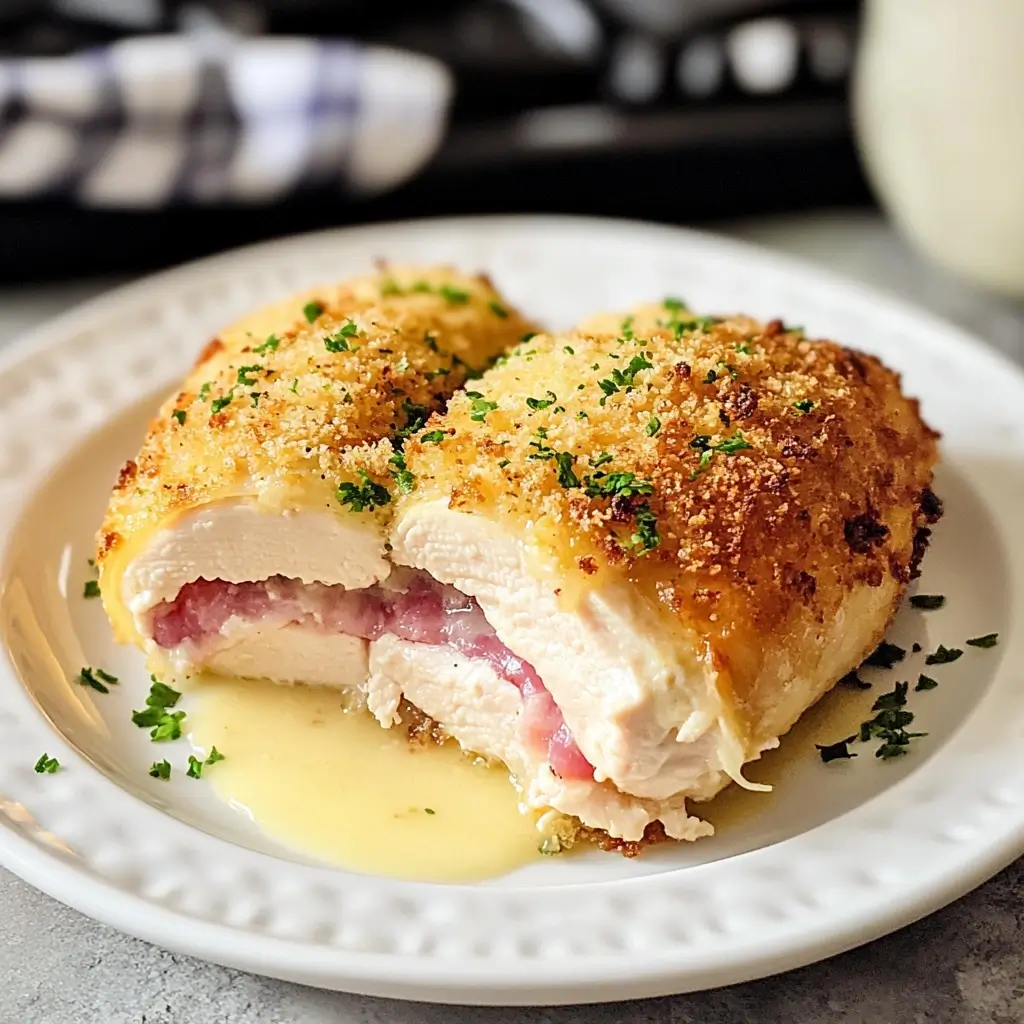
In our house, weeknight dinners are often a balancing act between delicious and doable. Like most families, we crave meals that are both satisfying and relatively straightforward to prepare after a long day. Chicken Cordon Bleu, with its reputation for elegance, might seem like a weekend indulgence, but I’ve discovered a secret: it doesn’t have to be complicated! This recipe for Easy Chicken Cordon Bleu has become a regular in our rotation, and it’s a guaranteed crowd-pleaser every single time. The crispy, golden-brown breading, the juicy chicken breast, and the melted cheese and savory ham nestled inside – it’s a symphony of flavors and textures that always brings smiles to the table. Even my pickiest eater devours this dish, and that, in my book, is the ultimate stamp of approval. What I love most about this version is how accessible it is; using simple ingredients and straightforward techniques, you can create a restaurant-quality meal in your own kitchen without spending hours slaving away. Forget the fancy restaurant reservations – with this recipe, you can bring the gourmet experience home, any night of the week.
Ingredients
To create this culinary classic, gather these readily available ingredients. We’ve focused on simplicity and maximum flavor, ensuring you can find everything you need at your local grocery store. Using quality ingredients will elevate the final dish, so opt for the best you can afford, especially when it comes to the chicken, ham, and cheese.
- Chicken Breasts: 4 boneless, skinless chicken breasts, about 6-8 ounces each. Choosing chicken breasts of uniform size will ensure even cooking. Look for breasts that are plump and have a healthy pink color. If your chicken breasts are particularly thick, you may want to butterfly them or pound them slightly thinner to ensure they cook through evenly and are easier to roll. Using high-quality, air-chilled chicken breasts can also enhance the flavor and texture of the dish.
- Swiss Cheese: 4 slices of Swiss cheese. The nutty and slightly sweet flavor of Swiss cheese is traditional in Chicken Cordon Bleu and complements the ham and chicken beautifully. You can use pre-sliced Swiss cheese for convenience, or purchase a block and slice it yourself for a potentially fresher flavor. Look for a good quality Swiss cheese that melts well. Brands like Jarlsberg or Gruyere (while technically a different cheese, it’s a close relative and works wonderfully) can add an even richer flavor profile if you’re feeling adventurous.
- Deli Ham: 4 slices of deli ham. Choose a good quality deli ham for the best flavor. Black Forest ham, honey ham, or even prosciutto can be used depending on your preference. Thick-cut ham can be a bit harder to roll, so opt for thinner slices. For a smokier flavor, consider using smoked ham. If you’re watching your sodium intake, look for lower-sodium deli ham options.
- All-Purpose Flour: ½ cup all-purpose flour. Flour is essential for creating the breading that will give the chicken its crispy exterior. It helps the egg wash adhere to the chicken and provides a base for the breadcrumbs to stick to. You can use regular all-purpose flour, or for a slightly different texture, you could experiment with bread flour or even a gluten-free blend if needed.
- Eggs: 2 large eggs. Eggs are the binding agent in the breading process. They create a wet coating that allows the breadcrumbs to adhere to the flour-dredged chicken. Use large eggs for this recipe to ensure you have enough egg wash to coat all the chicken breasts thoroughly. For richer flavor and color, consider using free-range or pasture-raised eggs.
- Breadcrumbs: 1 ½ cups breadcrumbs. Breadcrumbs are the key to the crispy, golden-brown crust. You can use plain breadcrumbs, Panko breadcrumbs for extra crispiness, or Italian seasoned breadcrumbs for added flavor. Panko breadcrumbs are larger and coarser than regular breadcrumbs, resulting in a lighter and crispier coating. If using Italian seasoned breadcrumbs, you may want to adjust the seasoning accordingly to avoid overpowering the other flavors.
- Milk: ¼ cup milk. Milk is often added to the egg wash to thin it out slightly and create a smoother consistency. It also helps to tenderize the chicken slightly and adds a touch of richness to the breading. You can use whole milk, 2% milk, or even non-dairy milk alternatives like almond milk or oat milk.
- Olive Oil: 2 tablespoons olive oil. Olive oil is used for pan-frying or baking the chicken cordon bleu. It adds flavor and helps the chicken brown beautifully. You can also use other cooking oils like canola oil, vegetable oil, or avocado oil, but olive oil provides a nice flavor and health benefits. For a richer flavor, consider using extra virgin olive oil.
- Butter: 2 tablespoons butter. Butter, when combined with olive oil, adds richness and flavor to the cooking process. It also helps to create a golden-brown and crispy crust. You can use salted or unsalted butter, depending on your preference and how much salt you plan to add to the dish. For a richer flavor, consider using European-style butter.
- Salt: 1 teaspoon salt, or to taste. Salt is essential for seasoning the chicken and bringing out the flavors of all the ingredients. Use kosher salt or sea salt for the best flavor. Season the chicken breasts, flour, egg wash, and breadcrumbs separately to ensure even seasoning throughout the dish.
- Black Pepper: ½ teaspoon black pepper, or to taste. Black pepper adds a touch of spice and complexity to the flavor profile. Freshly ground black pepper is always preferred for its superior flavor. Season the chicken breasts, flour, egg wash, and breadcrumbs separately to ensure even seasoning throughout the dish.
- Garlic Powder: ½ teaspoon garlic powder. Garlic powder adds a subtle garlic flavor that complements the chicken, ham, and cheese. You can also use fresh garlic cloves, minced, if you prefer a stronger garlic flavor. Add garlic powder to the flour or breadcrumb mixture for even distribution.
- Paprika: ½ teaspoon paprika. Paprika adds a touch of color and a slightly smoky and sweet flavor to the breading. You can use regular paprika or smoked paprika for a more pronounced smoky flavor. Paprika also contributes to the golden-brown color of the crust.
Instructions
Follow these step-by-step instructions to create delicious and easy Chicken Cordon Bleu. Each step is designed to be clear and easy to follow, even for beginner cooks. We’ve included tips and tricks along the way to ensure your success.
- Prepare the Chicken Breasts: Begin by gently pounding the chicken breasts to an even thickness of about ½ inch. This ensures they cook evenly and are easier to roll. Place each chicken breast between two sheets of plastic wrap or parchment paper. Use a meat mallet or rolling pin to gently pound the chicken, starting from the center and working outwards. Be careful not to pound too hard, as you don’t want to tear the chicken. Pounding also tenderizes the chicken, making it more succulent and enjoyable to eat. If your chicken breasts are already thin, you may skip this step.
- Season the Chicken: Season both sides of each chicken breast generously with salt and pepper. Proper seasoning at this stage is crucial for flavorful chicken cordon bleu. Don’t be shy with the salt and pepper – they enhance the natural flavors of the chicken and other ingredients. You can also add a pinch of garlic powder or onion powder directly to the chicken for extra flavor depth. Ensure you season both sides of the chicken breasts for even flavor distribution.
- Assemble the Cordon Bleu: Place a slice of Swiss cheese and a slice of ham on top of each seasoned chicken breast. Make sure the cheese and ham are centered on the chicken breast, leaving a small border around the edges to facilitate rolling. You can fold the ham and cheese to fit neatly onto the chicken breast if necessary. Avoid overfilling the chicken, as this can make it difficult to roll and may cause the filling to leak out during cooking.
- Roll the Chicken: Carefully roll up each chicken breast, starting from one of the shorter ends, and tuck in the sides as you roll to create a secure roll. Think of rolling a burrito or a jelly roll. The goal is to create a tight roll that will hold its shape during cooking. Use your fingers to gently tuck in the sides as you roll to prevent the cheese and ham from escaping. Secure each roll with a toothpick or two if needed, especially if the rolls seem loose. However, tight rolling usually eliminates the need for toothpicks.
- Prepare the Breading Stations: Set up three shallow dishes for the breading process. In the first dish, place the all-purpose flour, seasoned with a pinch of salt, pepper, and garlic powder. In the second dish, whisk together the eggs and milk to create the egg wash. In the third dish, combine the breadcrumbs with paprika and a pinch of salt and pepper. Setting up these stations in an assembly line fashion will streamline the breading process and make it more efficient. Ensure each dish is wide enough to easily dredge the chicken rolls.
- Bread the Chicken Cordon Bleu: Dredge each chicken roll in the flour, ensuring it is fully coated. Shake off any excess flour. Then, dip the floured chicken roll into the egg wash, making sure it is completely submerged. Allow any excess egg wash to drip off. Finally, roll the egg-washed chicken in the breadcrumbs, pressing gently to ensure the breadcrumbs adhere evenly to all sides. The flour helps the egg wash stick, and the egg wash helps the breadcrumbs stick, creating a cohesive and crispy breading. Repeat this breading process for all chicken rolls.
- Cook the Chicken Cordon Bleu: There are two main cooking methods: pan-frying and baking.
- Pan-Frying: Heat olive oil and butter in a large skillet over medium-high heat. Once the butter is melted and the skillet is hot, carefully place the breaded chicken cordon bleu rolls in the skillet, seam-side down first. Cook for about 4-5 minutes per side, or until golden brown and crispy on all sides. Reduce the heat to medium if the breading is browning too quickly. Pan-frying creates a beautifully crispy crust and adds rich flavor from the butter and oil. Avoid overcrowding the skillet; cook in batches if necessary to ensure even browning and cooking.
- Baking: Preheat your oven to 400°F (200°C). Lightly grease a baking dish with olive oil or cooking spray. Place the breaded chicken cordon bleu rolls in the prepared baking dish. Drizzle or brush the tops of the chicken rolls with a little olive oil or melted butter for extra flavor and browning. Bake for 25-30 minutes, or until the chicken is cooked through and the internal temperature reaches 165°F (74°C), and the breading is golden brown. Baking is a healthier option and requires less hands-on attention, but pan-frying typically results in a crispier crust.
- Check for Doneness: Ensure the chicken is cooked through by inserting a meat thermometer into the thickest part of the chicken roll. The internal temperature should reach 165°F (74°C). The juices should run clear when pierced with a fork or knife. Overcooking can result in dry chicken, so it’s important to monitor the cooking time and temperature closely.
- Rest and Serve: Once cooked, remove the chicken cordon bleu from the skillet or oven and let it rest for a few minutes before serving. Resting allows the juices to redistribute throughout the chicken, resulting in a more tender and flavorful dish. If you used toothpicks to secure the rolls, remove them before serving. Serve hot and enjoy!
Nutrition Facts
(Per Serving, approximate values)
- Servings: 4
- Calories per Serving: Approximately 550-650 calories (This can vary depending on the specific ingredients used, portion sizes, and cooking method.)
Approximate Nutritional Breakdown (per serving):
- Protein: 45-55g
- Fat: 30-40g (primarily from chicken, cheese, ham, and oil/butter)
- Saturated Fat: 15-20g
- Cholesterol: 200-250mg
- Sodium: 800-1200mg (depending on ham and cheese choices)
- Carbohydrates: 20-30g (primarily from breadcrumbs and flour)
- Fiber: 1-2g
- Sugar: 2-5g
Note: These are estimated values and can vary. For precise nutritional information, use a nutrition calculator with the specific brands and quantities of ingredients you use. Pan-frying will generally add slightly more calories and fat compared to baking due to the added oil and butter absorbed during cooking.
Preparation Time
- Prep Time: 20-25 minutes (includes pounding chicken, assembling, and breading)
- Cook Time: 25-30 minutes (baking) or 15-20 minutes (pan-frying, in batches)
- Total Time: 45-55 minutes
This Easy Chicken Cordon Bleu recipe is designed to be relatively quick and efficient, making it suitable for weeknight meals. The majority of the time is spent on preparation, particularly the breading process. Cooking time can vary slightly depending on oven temperatures and skillet heat, so always check for doneness using a meat thermometer.
How to Serve
Chicken Cordon Bleu is a versatile dish that pairs well with a variety of sides. Here are some serving suggestions to create a complete and satisfying meal:
- Classic Sides:
- Mashed Potatoes: Creamy mashed potatoes are a classic accompaniment that perfectly complements the richness of the Chicken Cordon Bleu.
- Roasted Vegetables: Roasted vegetables like broccoli, asparagus, carrots, or Brussels sprouts provide a healthy and flavorful side dish. Roasting brings out the natural sweetness of vegetables and adds a nice textural contrast.
- Green Salad: A fresh green salad with a light vinaigrette dressing offers a refreshing and palate-cleansing contrast to the richness of the main dish.
- Sauces and Gravies:
- Creamy Dijon Mustard Sauce: A Dijon mustard cream sauce adds a tangy and sophisticated touch. It’s easy to make by whisking together Dijon mustard, heavy cream, and a touch of white wine or chicken broth.
- Mushroom Gravy: A savory mushroom gravy complements the chicken and ham beautifully. You can use canned cream of mushroom soup for a quick version or make a homemade mushroom gravy from scratch.
- Hollandaise Sauce: For a truly decadent experience, serve Chicken Cordon Bleu with hollandaise sauce. This rich and buttery sauce elevates the dish to another level of indulgence.
- Other Delicious Pairings:
- Rice Pilaf: Fluffy rice pilaf seasoned with herbs and spices is a light and flavorful side dish.
- Pasta with Butter and Parmesan: Simple buttered pasta with Parmesan cheese is a kid-friendly side that everyone will enjoy.
- Au Gratin Potatoes: For a more indulgent side dish, au gratin potatoes with cheese sauce are a perfect match for Chicken Cordon Bleu.
- Garnishes:
- Fresh parsley or chives, chopped, can be sprinkled over the Chicken Cordon Bleu for a pop of color and fresh flavor.
- Lemon wedges can be served alongside for those who like a squeeze of lemon juice to brighten the dish.
Additional Tips for Perfect Chicken Cordon Bleu
Here are five essential tips to ensure your Chicken Cordon Bleu turns out perfectly every time:
- Don’t Overfill the Chicken: Resist the urge to stuff too much cheese and ham into each chicken breast. Overfilling makes rolling difficult and increases the chance of the filling leaking out during cooking. A single slice of each ingredient is usually sufficient for a balanced flavor and easy rolling. Less is often more when it comes to fillings, allowing the chicken flavor to shine through.
- Secure the Rolls Tightly: Rolling the chicken breasts tightly is key to preventing the cheese from melting out and ensuring a neat presentation. Tuck in the sides as you roll and aim for a compact, cylindrical shape. While toothpicks can be used, tight rolling often eliminates the need for them and results in a more seamless final product.
- Chill Before Breading (Optional but Recommended): For easier breading and to help the rolls hold their shape better, consider chilling the assembled chicken cordon bleu rolls in the refrigerator for about 15-20 minutes before breading. This firms up the chicken and filling slightly, making the breading process less messy and more efficient.
- Don’t Overcrowd the Pan (If Pan-Frying): When pan-frying, avoid overcrowding the skillet. Overcrowding lowers the temperature of the oil and can lead to steaming instead of browning, resulting in soggy breading. Cook in batches if necessary to ensure each chicken cordon bleu roll has enough space to brown evenly and become crispy.
- Use a Meat Thermometer: The most reliable way to ensure the chicken is cooked through and safe to eat is to use a meat thermometer. Insert it into the thickest part of the chicken roll and make sure it reaches an internal temperature of 165°F (74°C). This eliminates guesswork and ensures perfectly cooked, juicy chicken every time.
Frequently Asked Questions (FAQ)
Here are five frequently asked questions about making Chicken Cordon Bleu, along with their answers to help you troubleshoot and perfect your recipe:
Q1: Can I prepare Chicken Cordon Bleu ahead of time?
A1: Yes, you can prepare Chicken Cordon Bleu ahead of time up to the breading stage. Assemble and bread the chicken rolls, then store them in the refrigerator, covered, for up to 24 hours. Cook them just before serving. You can also fully cook the Chicken Cordon Bleu and reheat it, but the breading may lose some of its crispiness. For best results, prepare ahead to the breading stage and cook fresh.
Q2: Can I use different types of cheese or ham?
A2: Absolutely! While Swiss cheese and ham are traditional, you can experiment with other cheeses like Gruyere, provolone, or mozzarella. For ham, you can use prosciutto, Black Forest ham, honey ham, or even cooked bacon for a smoky twist. Consider the flavor profiles of different cheeses and hams and choose combinations that you enjoy. Just ensure the cheese melts well and the ham is thinly sliced for easy rolling.
Q3: My breading is falling off. What am I doing wrong?
A3: Breading falling off is a common issue, but easily avoidable. Ensure you are following the breading steps correctly: flour first, then egg wash, then breadcrumbs. Make sure to shake off excess flour and egg wash between each step. Press the breadcrumbs firmly onto the chicken to ensure they adhere well. Chilling the breaded chicken briefly before cooking can also help the breading set and stay in place. Using a three-step breading process and ensuring proper adhesion at each stage are key to preventing breading from falling off.
Q4: Can I bake Chicken Cordon Bleu instead of pan-frying?
A4: Yes, baking is a healthier and equally delicious option. Preheat your oven to 400°F (200°C) and bake the breaded chicken cordon bleu rolls for 25-30 minutes, or until cooked through and golden brown. Baking requires less oil and is less hands-on than pan-frying. While pan-frying typically yields a crispier crust, baking can still produce excellent results, especially if you drizzle a little melted butter or olive oil over the top before baking.
Q5: How do I store leftover Chicken Cordon Bleu?
A5: Store leftover Chicken Cordon Bleu in an airtight container in the refrigerator for up to 3-4 days. To reheat, you can bake it in the oven at 350°F (175°C) for about 15-20 minutes, or until heated through. You can also reheat it in a skillet over medium heat, but the breading may not be as crispy as when freshly cooked. Microwaving is also an option, but it will likely make the breading soggy. For best results, reheat in the oven or skillet to help retain some crispiness.
Print
Easy Chicken Cordon Bleu Recipe
Ingredients
- Chicken Breasts: 4 boneless, skinless chicken breasts, about 6-8 ounces each. Choosing chicken breasts of uniform size will ensure even cooking. Look for breasts that are plump and have a healthy pink color. If your chicken breasts are particularly thick, you may want to butterfly them or pound them slightly thinner to ensure they cook through evenly and are easier to roll. Using high-quality, air-chilled chicken breasts can also enhance the flavor and texture of the dish.
- Swiss Cheese: 4 slices of Swiss cheese. The nutty and slightly sweet flavor of Swiss cheese is traditional in Chicken Cordon Bleu and complements the ham and chicken beautifully. You can use pre-sliced Swiss cheese for convenience, or purchase a block and slice it yourself for a potentially fresher flavor. Look for a good quality Swiss cheese that melts well. Brands like Jarlsberg or Gruyere (while technically a different cheese, it’s a close relative and works wonderfully) can add an even richer flavor profile if you’re feeling adventurous.
- Deli Ham: 4 slices of deli ham. Choose a good quality deli ham for the best flavor. Black Forest ham, honey ham, or even prosciutto can be used depending on your preference. Thick-cut ham can be a bit harder to roll, so opt for thinner slices. For a smokier flavor, consider using smoked ham. If you’re watching your sodium intake, look for lower-sodium deli ham options.
- All-Purpose Flour: ½ cup all-purpose flour. Flour is essential for creating the breading that will give the chicken its crispy exterior. It helps the egg wash adhere to the chicken and provides a base for the breadcrumbs to stick to. You can use regular all-purpose flour, or for a slightly different texture, you could experiment with bread flour or even a gluten-free blend if needed.
- Eggs: 2 large eggs. Eggs are the binding agent in the breading process. They create a wet coating that allows the breadcrumbs to adhere to the flour-dredged chicken. Use large eggs for this recipe to ensure you have enough egg wash to coat all the chicken breasts thoroughly. For richer flavor and color, consider using free-range or pasture-raised eggs.
- Breadcrumbs: 1 ½ cups breadcrumbs. Breadcrumbs are the key to the crispy, golden-brown crust. You can use plain breadcrumbs, Panko breadcrumbs for extra crispiness, or Italian seasoned breadcrumbs for added flavor. Panko breadcrumbs are larger and coarser than regular breadcrumbs, resulting in a lighter and crispier coating. If using Italian seasoned breadcrumbs, you may want to adjust the seasoning accordingly to avoid overpowering the other flavors.
- Milk: ¼ cup milk. Milk is often added to the egg wash to thin it out slightly and create a smoother consistency. It also helps to tenderize the chicken slightly and adds a touch of richness to the breading. You can use whole milk, 2% milk, or even non-dairy milk alternatives like almond milk or oat milk.
- Olive Oil: 2 tablespoons olive oil. Olive oil is used for pan-frying or baking the chicken cordon bleu. It adds flavor and helps the chicken brown beautifully. You can also use other cooking oils like canola oil, vegetable oil, or avocado oil, but olive oil provides a nice flavor and health benefits. For a richer flavor, consider using extra virgin olive oil.
- Butter: 2 tablespoons butter. Butter, when combined with olive oil, adds richness and flavor to the cooking process. It also helps to create a golden-brown and crispy crust. You can use salted or unsalted butter, depending on your preference and how much salt you plan to add to the dish. For a richer flavor, consider using European-style butter.
- Salt: 1 teaspoon salt, or to taste. Salt is essential for seasoning the chicken and bringing out the flavors of all the ingredients. Use kosher salt or sea salt for the best flavor. Season the chicken breasts, flour, egg wash, and breadcrumbs separately to ensure even seasoning throughout the dish.
- Black Pepper: ½ teaspoon black pepper, or to taste. Black pepper adds a touch of spice and complexity to the flavor profile. Freshly ground black pepper is always preferred for its superior flavor. Season the chicken breasts, flour, egg wash, and breadcrumbs separately to ensure even seasoning throughout the dish.
- Garlic Powder: ½ teaspoon garlic powder. Garlic powder adds a subtle garlic flavor that complements the chicken, ham, and cheese. You can also use fresh garlic cloves, minced, if you prefer a stronger garlic flavor. Add garlic powder to the flour or breadcrumb mixture for even distribution.
- Paprika: ½ teaspoon paprika. Paprika adds a touch of color and a slightly smoky and sweet flavor to the breading. You can use regular paprika or smoked paprika for a more pronounced smoky flavor. Paprika also contributes to the golden-brown color of the crust.
Instructions
- Prepare the Chicken Breasts: Begin by gently pounding the chicken breasts to an even thickness of about ½ inch. This ensures they cook evenly and are easier to roll. Place each chicken breast between two sheets of plastic wrap or parchment paper. Use a meat mallet or rolling pin to gently pound the chicken, starting from the center and working outwards. Be careful not to pound too hard, as you don’t want to tear the chicken. Pounding also tenderizes the chicken, making it more succulent and enjoyable to eat. If your chicken breasts are already thin, you may skip this step.
- Season the Chicken: Season both sides of each chicken breast generously with salt and pepper. Proper seasoning at this stage is crucial for flavorful chicken cordon bleu. Don’t be shy with the salt and pepper – they enhance the natural flavors of the chicken and other ingredients. You can also add a pinch of garlic powder or onion powder directly to the chicken for extra flavor depth. Ensure you season both sides of the chicken breasts for even flavor distribution.
- Assemble the Cordon Bleu: Place a slice of Swiss cheese and a slice of ham on top of each seasoned chicken breast. Make sure the cheese and ham are centered on the chicken breast, leaving a small border around the edges to facilitate rolling. You can fold the ham and cheese to fit neatly onto the chicken breast if necessary. Avoid overfilling the chicken, as this can make it difficult to roll and may cause the filling to leak out during cooking.
- Roll the Chicken: Carefully roll up each chicken breast, starting from one of the shorter ends, and tuck in the sides as you roll to create a secure roll. Think of rolling a burrito or a jelly roll. The goal is to create a tight roll that will hold its shape during cooking. Use your fingers to gently tuck in the sides as you roll to prevent the cheese and ham from escaping. Secure each roll with a toothpick or two if needed, especially if the rolls seem loose. However, tight rolling usually eliminates the need for toothpicks.
- Prepare the Breading Stations: Set up three shallow dishes for the breading process. In the first dish, place the all-purpose flour, seasoned with a pinch of salt, pepper, and garlic powder. In the second dish, whisk together the eggs and milk to create the egg wash. In the third dish, combine the breadcrumbs with paprika and a pinch of salt and pepper. Setting up these stations in an assembly line fashion will streamline the breading process and make it more efficient. Ensure each dish is wide enough to easily dredge the chicken rolls.
- Bread the Chicken Cordon Bleu: Dredge each chicken roll in the flour, ensuring it is fully coated. Shake off any excess flour. Then, dip the floured chicken roll into the egg wash, making sure it is completely submerged. Allow any excess egg wash to drip off. Finally, roll the egg-washed chicken in the breadcrumbs, pressing gently to ensure the breadcrumbs adhere evenly to all sides. The flour helps the egg wash stick, and the egg wash helps the breadcrumbs stick, creating a cohesive and crispy breading. Repeat this breading process for all chicken rolls.
- Cook the Chicken Cordon Bleu: There are two main cooking methods: pan-frying and baking.
- Pan-Frying: Heat olive oil and butter in a large skillet over medium-high heat. Once the butter is melted and the skillet is hot, carefully place the breaded chicken cordon bleu rolls in the skillet, seam-side down first. Cook for about 4-5 minutes per side, or until golden brown and crispy on all sides. Reduce the heat to medium if the breading is browning too quickly. Pan-frying creates a beautifully crispy crust and adds rich flavor from the butter and oil. Avoid overcrowding the skillet; cook in batches if necessary to ensure even browning and cooking.
- Baking: Preheat your oven to 400°F (200°C). Lightly grease a baking dish with olive oil or cooking spray. Place the breaded chicken cordon bleu rolls in the prepared baking dish. Drizzle or brush the tops of the chicken rolls with a little olive oil or melted butter for extra flavor and browning. Bake for 25-30 minutes, or until the chicken is cooked through and the internal temperature reaches 165°F (74°C), and the breading is golden brown. Baking is a healthier option and requires less hands-on attention, but pan-frying typically results in a crispier crust.
- Check for Doneness: Ensure the chicken is cooked through by inserting a meat thermometer into the thickest part of the chicken roll. The internal temperature should reach 165°F (74°C). The juices should run clear when pierced with a fork or knife. Overcooking can result in dry chicken, so it’s important to monitor the cooking time and temperature closely.
- Rest and Serve: Once cooked, remove the chicken cordon bleu from the skillet or oven and let it rest for a few minutes before serving. Resting allows the juices to redistribute throughout the chicken, resulting in a more tender and flavorful dish. If you used toothpicks to secure the rolls, remove them before serving. Serve hot and enjoy!
Nutrition
- Serving Size: One Normal Portion
- Calories: 550-650
- Sugar: 2-5g
- Sodium: 800-1200mg
- Fat: 30-40g
- Saturated Fat: 15-20g
- Carbohydrates: 20-30g
- Fiber: 1-2g
- Protein: 45-55g
- Cholesterol: 200-250mg