There’s something utterly satisfying about tossing fresh vegetables and thick, chewy udon noodles in a hot pan until every bite bursts with flavor. My love affair with Japanese Vegetable Yaki Udon started on a whim when I craved a hearty, homemade meal that wasn’t weighed down by heavy sauces or endless prep. This dish hits the perfect balance: it’s quick enough for a weeknight but flavorful enough to impress anyone tired of the usual takeout. Imagine vibrant veggies mingling effortlessly with savory soy sauce, all wrapped in the comforting texture of those iconic udon noodles—each mouthful feels like a warm, delicious hug. Whether you’re a kitchen newbie or a seasoned chef, this recipe is flexible, fast, and delightfully fresh, making it a staple I keep returning to whenever I want a taste of Japan without leaving home.
Why choose Japanese Vegetable Yaki Udon?
Flavor-packed simplicity: This recipe brings bold, fresh veggies and thick udon noodles together for a quick, satisfying meal. Versatile and adaptable: Customize with your favorite vegetables or proteins to suit any craving. Time-saving delight: Ready in under 30 minutes, perfect for busy weeknights. All skill levels welcome: Easy enough for beginners but flavorful enough to impress food lovers. Comfort meets freshness: Every bite delivers a warm, savory hug that’s far from ordinary takeout.
Japanese Vegetable Yaki Udon Ingredients
For the Noodles & Sauce
- Udon noodles – Choose fresh or frozen for the best chewy texture and quick cooking.
- Soy sauce – Use a good-quality soy sauce to bring authentic umami to your Japanese Vegetable Yaki Udon.
- Sesame oil – Adds a nutty aroma and depth, enhancing the dish’s flavorful profile.
- Mirin – A touch of this sweet rice wine balances the savory notes perfectly.
For the Vegetables
- Shiitake mushrooms – Bring an earthy, meaty flavor that complements the noodles beautifully.
- Carrots – Julienne for crunch and a hint of natural sweetness.
- Bell peppers – Use a mix of colors to make the dish vibrant and crisp.
- Green onions – Add fresh, sharp brightness as a finishing touch.
- Cabbage – Thinly sliced, it soaks up flavors while adding delightful crunch.
Optional Add-ins
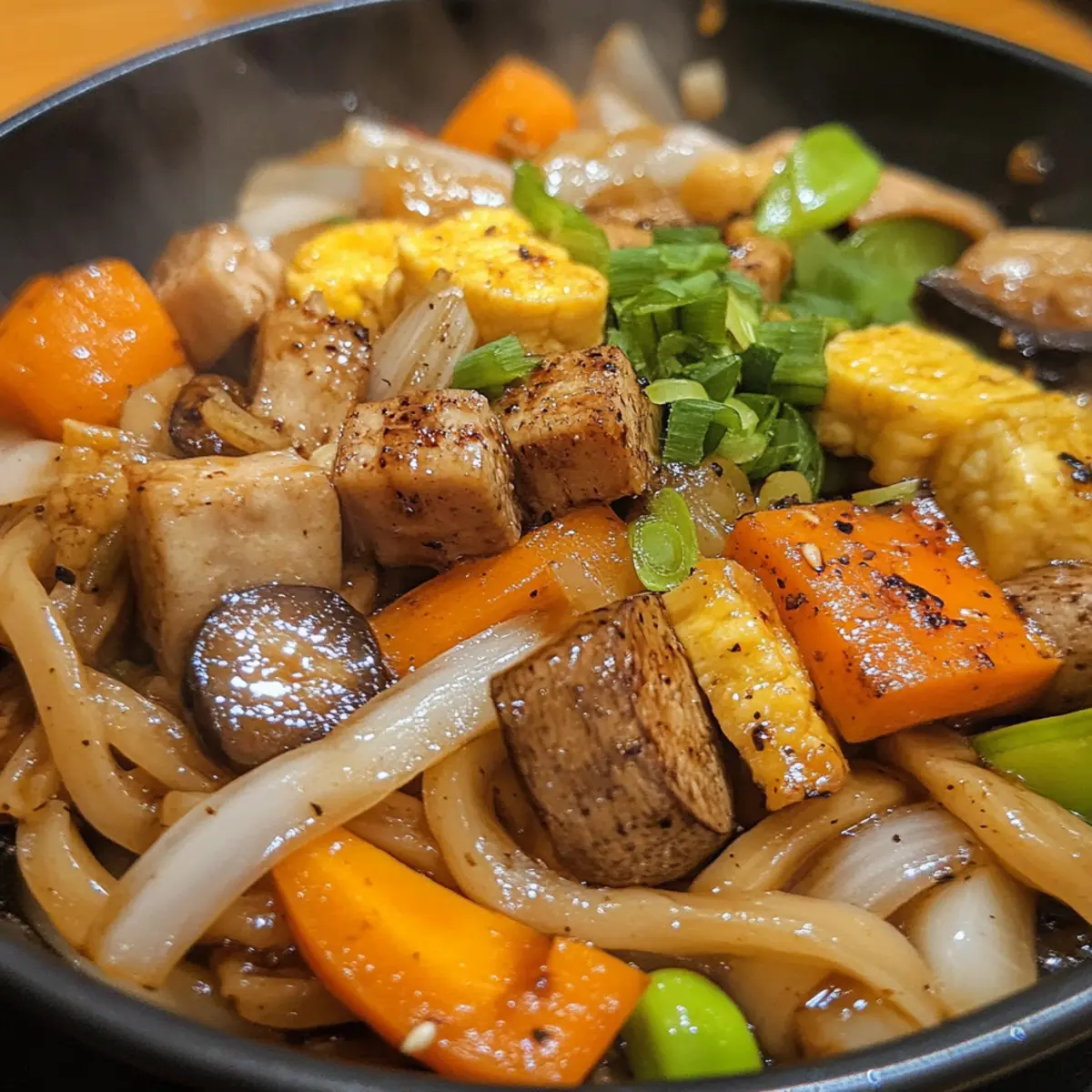
- Tofu – Firm tofu cubes create a protein boost and soak up the savory sauce.
- Chili flakes – Sprinkle sparingly to add a gentle heat without overpowering the dish.
- Garlic – Minced fresh garlic elevates the aroma and depth of flavor in your Japanese Vegetable Yaki Udon.
How to Make Japanese Vegetable Yaki Udon
- Mix Sauce: In a small bowl, whisk together soy sauce, sesame oil, and mirin until smooth and fragrant. Set aside for a few minutes to let flavors meld (2 min).
- Cook Noodles: Bring a large pot of salted water to a boil, then add udon noodles. Cook for 3–4 minutes until chewy and tender, drain well, and toss lightly with oil.
For the Vegetables: - Sauté Veggies: Heat sesame oil in a large skillet over medium-high heat. Add shiitake mushrooms first, cook 2 minutes until golden, then stir in carrots, bell peppers, and cabbage, sauté 3 more minutes until crisp.
- Toss Together: Reduce heat to medium, add cooked noodles and sauce to the skillet. Gently toss for 2 minutes, ensuring every strand of Japanese Vegetable Yaki Udon is coated and glossy.
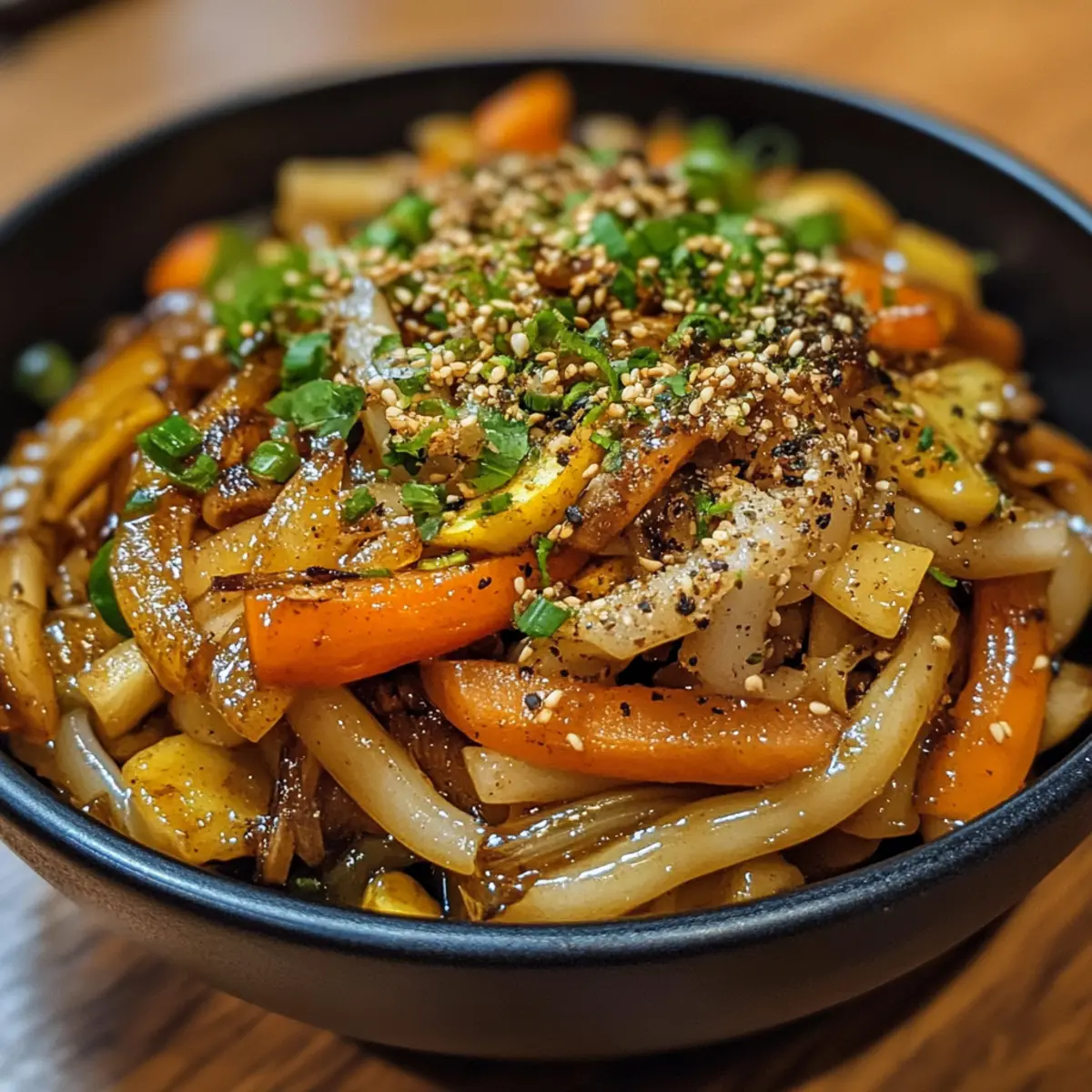
- Garnish & Serve: Transfer to serving bowls, top with sliced green onions and chili flakes. Enjoy immediately for a warm, flavorful hug in every bite!
Optional: Drizzle toasted sesame seeds for extra crunch.
Exact quantities are listed in the recipe card below.
Japanese Vegetable Yaki Udon Variations
Feel free to make this dish your own with these delightful twists that will not only elevate the flavors but personalize your experience.
- Gluten-Free: Substitute udon noodles with gluten-free rice noodles for a similar texture that suits your dietary needs.
- Extra Protein: Add grilled chicken, shrimp, or beef strips for a hearty protein boost that will surely satisfy any appetite.
- Veggie Powerhouse: Toss in extra greens like spinach or bok choy for an additional nutrient kick while making your dish even more vibrant.
- Spicy Kick: Add a splash of sriracha or a dash of chili oil to turn up the heat and give your Japanese Vegetable Yaki Udon exciting depth.
- Umami Boost: Try tossing in a handful of edamame or a sprinkle of nutritional yeast for an enriched, savory layer that every bite will love.
- Crunch Factor: Top with toasted cashews or peanuts to introduce a delightful crunch that contrasts beautifully with the chewy noodles.
- Crispy Tofu: Pan-fry your tofu until golden and crispy before adding it to your dish for a delightful textural contrast and added flavor.
- Herb Infusion: Fresh basil or cilantro can bring a refreshing twist, coupling nicely with the umami elements for an elevated taste experience.
These variations allow you to explore and enjoy this comforting dish in exciting new ways!
Make Ahead Options
Japanese Vegetable Yaki Udon is a fantastic choice for meal prep, allowing you to save time during busy weeknights! You can prep the vegetables—shiitake mushrooms, carrots, bell peppers, and cabbage—up to 3 days in advance. Simply wash, cut, and store them in an airtight container in the refrigerator to keep them fresh. Additionally, you can mix the soy sauce, sesame oil, and mirin sauce and refrigerate it for up to 1 week. When you’re ready to enjoy your Yaki Udon, just cook the udon noodles, sauté the prepped veggies in a hot skillet, and toss everything together with the sauce for a quick, flavorful meal that’s just as satisfying as if it were made from scratch!
Storage Tips for Japanese Vegetable Yaki Udon
Room Temperature: Best enjoyed immediately, but if left out, consume within 2 hours to avoid spoilage.
Fridge: Store any leftovers in an airtight container for up to 3 days. Reheat in a pan over medium heat, adding a splash of water if needed to revive texture.
Freezer: For longer storage, freeze in a freezer-safe container for up to 2 months. Thaw overnight in the fridge, then reheat gently in a pan with a little oil to restore flavor.
Reheating: When reheating, stir-fry over medium heat for a few minutes to ensure even warming. Adding soy sauce can enhance the flavor of your Japanese Vegetable Yaki Udon as it reheats.
Expert Tips for Japanese Vegetable Yaki Udon
- Perfect Noodle Texture: Cook udon noodles just until tender but still chewy; overcooking will make them mushy and lose their signature bite.
- High Heat Sauté: Use medium-high heat when cooking vegetables to keep them crisp and vibrant, avoiding sogginess in your Japanese Vegetable Yaki Udon.
- Even Sauce Coating: Toss noodles and veggies gently but thoroughly in the sauce to ensure every bite bursts with balanced flavor and glossiness.
- Prep Veggies Uniformly: Cut all vegetables to similar sizes for even cooking, preventing some pieces from being underdone or overly soft.
- Avoid Overcrowding: Cook veggies in batches if needed; overcrowding the pan steams veggies instead of stir-frying, reducing their texture and depth.
What to Serve with Japanese Vegetable Yaki Udon?
Elevate your dining experience by pairing these delightful dishes with this vibrant and flavorful meal.
-
Crispy Tempura Veggies: Light and airy, tempura vegetables add a delightful crunch that complements the soft udon noodles, providing a textural contrast that’s irresistible.
-
Miso Soup: A warm bowl of miso soup enhances the umami experience. Its light broth serves as a gentle introduction to the richer flavors of the yaki udon.
-
Japanese Pickles (Tsukemono): These tangy, pickled vegetables offer a refreshing bite that balances the savory depth of the noodles, cleansing the palate between flavors.
-
Steamed Edamame: Lightly salted edamame pods deliver a protein-rich option that’s fun to pop open and enjoy while the main dish steals the show.
-
Seaweed Salad: This refreshing salad brings a crispness and unique flavor profile that complements the heartiness of the udon, making each bite more exciting.
-
Sake or Green Tea: Pair your meal with a chilled glass of sake for a traditional touch, or opt for soothing green tea to cleanse your palate between bites.
-
Sesame-Crusted Salmon: For a protein-packed pairing, this dish offers a rich, nutty flavor that harmonizes beautifully with the soy sauce in the udon.
-
Chocolate Mochi for Dessert: Finish on a sweet note with these delightful rice cakes. The chewy texture and subtle sweetness make a perfect end to your Japanese-inspired meal.
Japanese Vegetable Yaki Udon Recipe FAQs
How do I select the best udon noodles for Japanese Vegetable Yaki Udon?
Fresh or frozen udon noodles work best for this dish because they have the perfect chewy texture. Avoid dried noodles here, as they take longer to cook and may not deliver the same satisfying bite.
What’s the best way to store leftover Japanese Vegetable Yaki Udon?
Store any leftovers in an airtight container in the refrigerator for up to 3 days. Before storing, let the dish cool to room temperature but no longer than 2 hours to keep it safe and fresh.
Can I freeze Japanese Vegetable Yaki Udon, and how should I do it?
Absolutely, freezing is a great option! Portion the cooled noodles and vegetables into a freezer-safe container or heavy-duty freezer bag. Remove as much air as possible, label with the date, and freeze for up to 2 months. To reheat, thaw overnight in the fridge, then stir-fry gently with a splash of oil to revive the texture and flavor.
What if my vegetables get soggy during cooking—how can I fix that?
This happens when vegetables release too much moisture or are overcrowded in the pan. To prevent sogginess, cook veggies on medium-high heat in batches if necessary, stirring frequently. If they do become soggy, try a quick flash-fry in a hot pan before tossing with the noodles to bring back some crispness.
Is this recipe safe for pets or people with common allergies?
This recipe contains soy sauce, which has gluten unless you use tamari or a gluten-free alternative. It’s not safe for pets due to soy and seasonings. For human allergies, substitute or omit ingredients like mushrooms or sesame oil depending on dietary needs to keep it inclusive and delicious.
Easy Japanese Vegetable Yaki Udon with Bold, Flavor-Packed Veggies
Ingredients
Equipment
Method
- In a small bowl, whisk together soy sauce, sesame oil, and mirin until smooth and fragrant. Set aside for a few minutes to let flavors meld.
- Bring a large pot of salted water to a boil, then add udon noodles. Cook for 3–4 minutes until chewy and tender, drain well, and toss lightly with oil.
- Heat sesame oil in a large skillet over medium-high heat. Add shiitake mushrooms first, cook 2 minutes until golden, then stir in carrots, bell peppers, and cabbage, sauté 3 more minutes until crisp.
- Reduce heat to medium, add cooked noodles and sauce to the skillet. Gently toss for 2 minutes, ensuring every strand of Japanese Vegetable Yaki Udon is coated and glossy.
- Transfer to serving bowls, top with sliced green onions and chili flakes. Enjoy immediately for a warm, flavorful hug in every bite!