

There’s something incredibly soothing about a bowl of Wakame Egg Soup that never fails to warm me up, especially after a long day. The delicate seaweed mingles effortlessly with silky ribbons of egg, creating a bowl that feels both nourishing and light. What I love most is how quickly it comes together—perfect for those evenings when I crave homemade comfort but don’t want to spend hours in the kitchen. This soup strikes the perfect balance: simple ingredients, bold umami flavors, and a texture that’s surprisingly satisfying. Whether you’re a longtime fan of Japanese cuisine or just looking to shake up your usual soup rotation, this Wakame Egg Soup is a game changer that’s bound to become your go-to.
Why Choose Wakame Egg Soup Today?
Quick Comfort: Ready in minutes, this soup is your go-to for cozy nourishment without fuss. Umami Richness: Wakame adds a deep, savory ocean flavor that elevates simple ingredients. Silky Texture: The delicate egg ribbons create a smooth, velvety mouthfeel. Light Yet Filling: Perfect for a soothing meal that won’t weigh you down. Versatile and Easy: Customize with your favorite seasonings or veggies for endless variety. Crowd-Pleasing: A delightful treat for both Japanese food lovers and curious home cooks alike!
Wakame Egg Soup Ingredients
For the Broth
- Dashi stock – The soul of the soup; use kombu or instant dashi for authentic umami.
- Soy sauce – Adds subtle saltiness and depth; adjust to taste.
- Mirin – A touch of sweetness that balances savory flavors perfectly.
For the Soup
- Dried wakame seaweed – Rehydrates quickly and infuses the broth with oceanic goodness; a star ingredient in Wakame Egg Soup.
- Eggs – Lightly beaten to create delicate, silky ribbons when poured into the hot broth.
- Scallions – Thinly sliced for a fresh, mild bite and vibrant color.
Optional Add-Ins
- Tofu cubes – For extra protein and a soft texture contrast.
- Shiitake mushrooms – Boosts earthiness and umami complexity.
- Sesame oil – A few drops at the end add a nutty aroma and richness.
How to Make Wakame Egg Soup
For the Broth:
- Heat Broth: Warm dashi stock along with soy sauce and mirin in a pot over medium heat until gently simmering and aromatic, about 5 minutes.
- Soak Wakame: Sprinkle dried wakame into the simmering broth; let it rehydrate, soften, and deepen in color for about 2–3 minutes.
For the Soup:
- Whisk Eggs: In a small bowl, lightly beat eggs until smooth; then gently pour into the simmering broth in a steady drizzle to form silky strands.
- Stir Gently: Use chopsticks or a fork to swirl the broth slowly, creating delicate egg ribbons, about 30 seconds.
- Add Scallions: Scatter sliced scallions into the pot; cook for another minute until tender, fragrant, and vibrantly green.
- Serve: Ladle the hot soup into bowls, drizzle sesame oil if desired, and savor immediately while steaming warm and comforting.
Optional: Sprinkle toasted sesame seeds for extra crunch.
Exact quantities are listed in the recipe card below.
Make Ahead Options
Wakame Egg Soup is ideal for meal prep, saving you time on busy weeknights! You can prepare the dashi broth up to 3 days in advance, storing it in the refrigerator to maintain its rich flavor. Additionally, you can soak the dried wakame ahead of time and keep it in the broth until ready to heat. When you’re ready to serve, simply warm the broth, whisk in the beaten eggs in a steady drizzle, and let the silky ribbons form. Finish with fresh scallions and a drizzle of sesame oil for that comforting touch. This way, you’ll enjoy the same delicious, nourishing soup with minimal effort!
Tips for the Best Wakame Egg Soup
- Use Quality Dashi: Choose kombu or instant dashi stock for the most authentic umami base; avoid water or weak broth to prevent blandness.
- Rehydrate Wakame Properly: Add dried wakame to simmering broth, not boiling, to keep its tender texture and vibrant color without becoming rubbery.
- Whisk Eggs Thoroughly: Beat eggs until smooth and pour slowly to create silky ribbons—rushing this step can cause uneven texture or clumps.
- Gentle Stirring Only: Stir the soup gently after adding eggs to form delicate strands; vigorous stirring breaks the ribbons and spoils the soup’s signature look.
- Adjust Seasonings Last: Taste before serving and tweak soy sauce or mirin to balance saltiness and sweetness perfectly for your palate.
- Add Finishing Touches: A few drops of sesame oil or a sprinkle of toasted sesame seeds boosts the flavor, enhancing your Wakame Egg Soup’s comforting appeal.
What to Serve with Wakame Egg Soup?
There’s nothing quite like pairing a soothing bowl of soup with contrasting flavors and textures that elevate the meal beyond expectations.
-
Steamed Jasmine Rice: A fluffy side that soaks up the savory broth; it adds a comforting bed for the soup.
-
Pickled Vegetables: The tangy crunch of pickles cuts through the richness, providing a bright, refreshing palate cleanser.
-
Crispy Tempura: Light and airy, tempura adds a delightful textural contrast. Try sweet potato and zucchini for a vegetarian option.
-
Miso Salad Dressing: Drizzle over mixed greens for a light, umami-rich salad that perfectly complements the soup’s flavors.
-
Sesame Noodles: Cold sesame noodles bring a nutty flavor and chewiness; they pair harmoniously with the warm soup.
-
Matcha Green Tea: Enjoy this subtly sweet and earthy beverage alongside your meal— perfect for enhancing your dining experience.
-
Chocolate Mochi: End the meal with these chewy, sweet desserts filled with chocolate or red bean; the perfect finish to a warm bowl of comfort.
Each of these pairings will harmonize with the soft textures and umami-rich flavors of your Wakame Egg Soup, turning a simple dish into a cherished dining experience.
How to Store and Freeze Wakame Egg Soup
Fridge: Store leftover Wakame Egg Soup in an airtight container for up to 3 days; the flavors deepen and meld beautifully overnight.
Freezer: For longer storage, freeze the unadulterated soup (without eggs) in an airtight container for up to 2 months. Reheat fully before adding freshly whisked eggs.
Reheating: Gently heat the soup on the stove over low heat, stirring occasionally; avoid boiling to preserve the delicate textures of the wakame and eggs.
Note: Re-add scallions fresh before serving to maintain their bright flavor and color.
Variations & Substitutions for Wakame Egg Soup
Feel free to get creative with this delightful soup and make it your own with these fun variations!
-
Vegetarian Delight: Replace dashi with vegetable broth for a lighter, plant-based version that still packs flavor.
This swap keeps the soup delicious while catering to all on a vegetarian or vegan journey. -
Spicy Kick: Add a splash of chili oil or red pepper flakes for extra heat; perfect for those who love a bit of spice.
It creates a warming sensation, enhancing the umami without overpowering it. -
Protein Boost: Toss in shrimp or chicken pieces for a heartier meal, ensuring to cook them through before adding the eggs.
This option makes your soup more filling, turning it into a satisfying dinner option. -
Noodle Addition: Feel free to add cooked udon or soba noodles for a comforting noodle soup twist.
This elevates the dish, offering an added chewiness that complements the silky eggs beautifully. -
Umami Explosion: Incorporate a spoonful of miso paste into the broth before adding wakame for an intense flavor boost.
This little addition transforms the soup, layering in richness that umami lovers will adore. -
Creamy Texture: Stir in a splash of coconut milk or heavy cream for a luscious, creamy version.
It intermingles effortlessly with the broth, giving a decadent touch that warms the soul. -
Herbal Infusion: Mix in fresh herbs like cilantro or basil just before serving for a bright, refreshing finish.
A burst of color and flavor enhances the overall experience, making every sip delightful. -
Mini Veggie Medley: Throw in a handful of baby spinach or mushrooms with the wakame for an added nutritional boost.
This not only adds color but also a lovely texture that pairs well with the silky broth.
Easy Wakame Egg Soup Recipe FAQs
How do I know if my dried wakame is good to use?
Look for dried wakame that is light green with a slightly fragrant ocean smell. Avoid packs showing dark spots all over or an off odor, which can indicate spoilage.
Can I store leftover Wakame Egg Soup in the fridge?
Absolutely! Store any leftover soup in an airtight container and keep it in the fridge for up to 3 to 4 days. The flavors actually deepen overnight, making it even tastier the next day.
Is it possible to freeze Wakame Egg Soup?
Yes, but with a key tip: freeze the soup broth without the eggs to preserve texture. Pour the cooled broth into a sealed container and freeze for up to 2 months. When ready to eat, thaw completely, gently reheat on the stove, then add freshly whisked eggs to create silky ribbons.
What if my egg ribbons don’t form properly?
No worries! It often happens if eggs are poured in too quickly or the broth is boiling vigorously. Try pouring the beaten eggs slowly in a thin stream while gently stirring with chopsticks or a fork. Keeping the broth at a gentle simmer—not a rolling boil—helps the eggs set into delicate strands.
Is Wakame Egg Soup safe for pets or people with allergies?
Wakame is generally safe in small amounts but can be too salty or iodine-rich for pets, so avoid sharing. For those with seaweed allergies or soy allergies (from soy sauce), it’s best to skip this soup or opt for allergy-friendly substitutes like coconut aminos. As always, consult your healthcare provider or veterinarian for personalized advice.
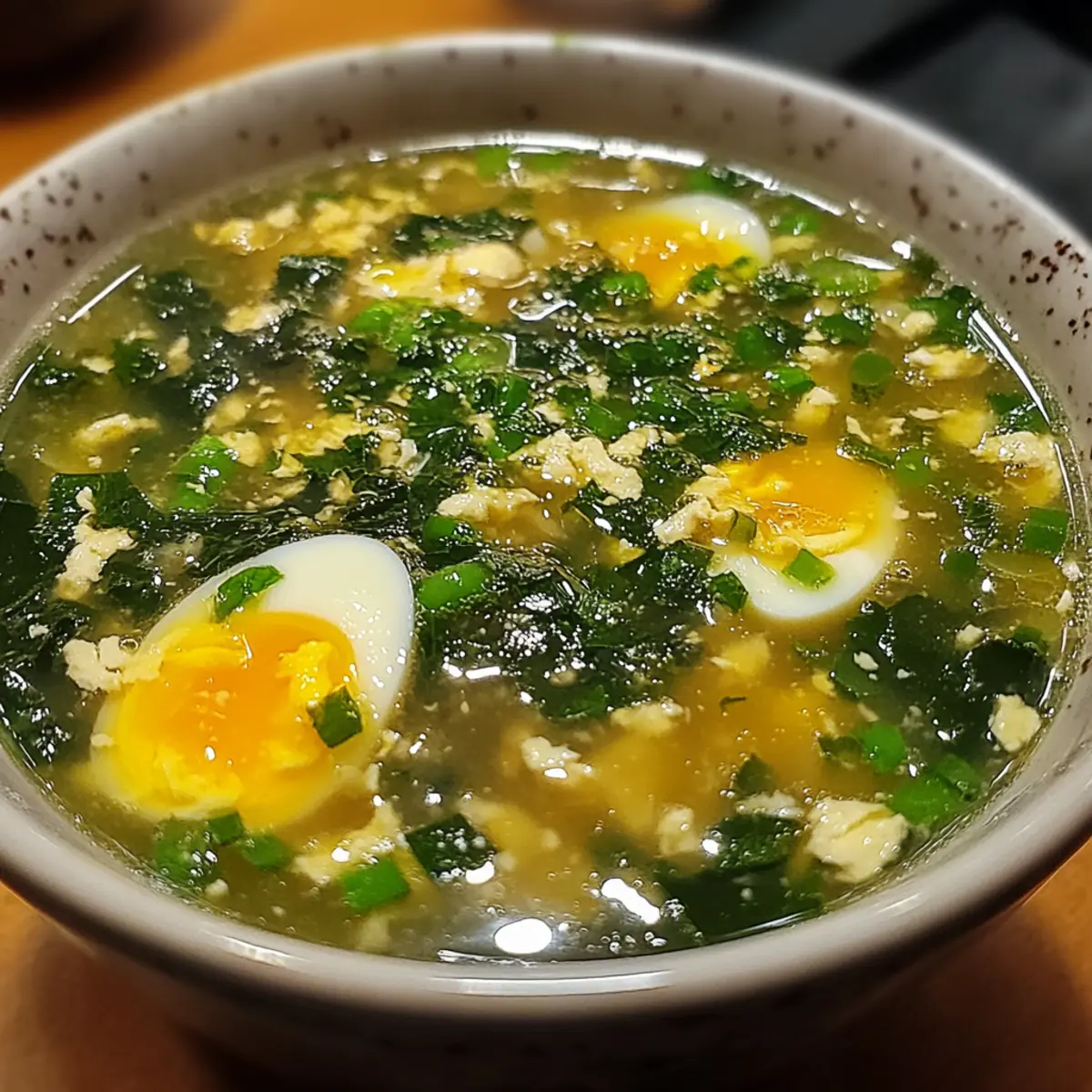
Easy Wakame Egg Soup Recipe for Cozy, Nourishing Comfort
Ingredients
Equipment
Method
- Warm dashi stock along with soy sauce and mirin in a pot over medium heat until gently simmering and aromatic, about 5 minutes.
- Sprinkle dried wakame into the simmering broth; let it rehydrate, soften, and deepen in color for about 2–3 minutes.
- In a small bowl, lightly beat eggs until smooth; then gently pour into the simmering broth in a steady drizzle to form silky strands.
- Use chopsticks or a fork to swirl the broth slowly, creating delicate egg ribbons, about 30 seconds.
- Scatter sliced scallions into the pot; cook for another minute until tender, fragrant, and vibrantly green.
- Ladle the hot soup into bowls, drizzle sesame oil if desired, and savor immediately while steaming warm.