
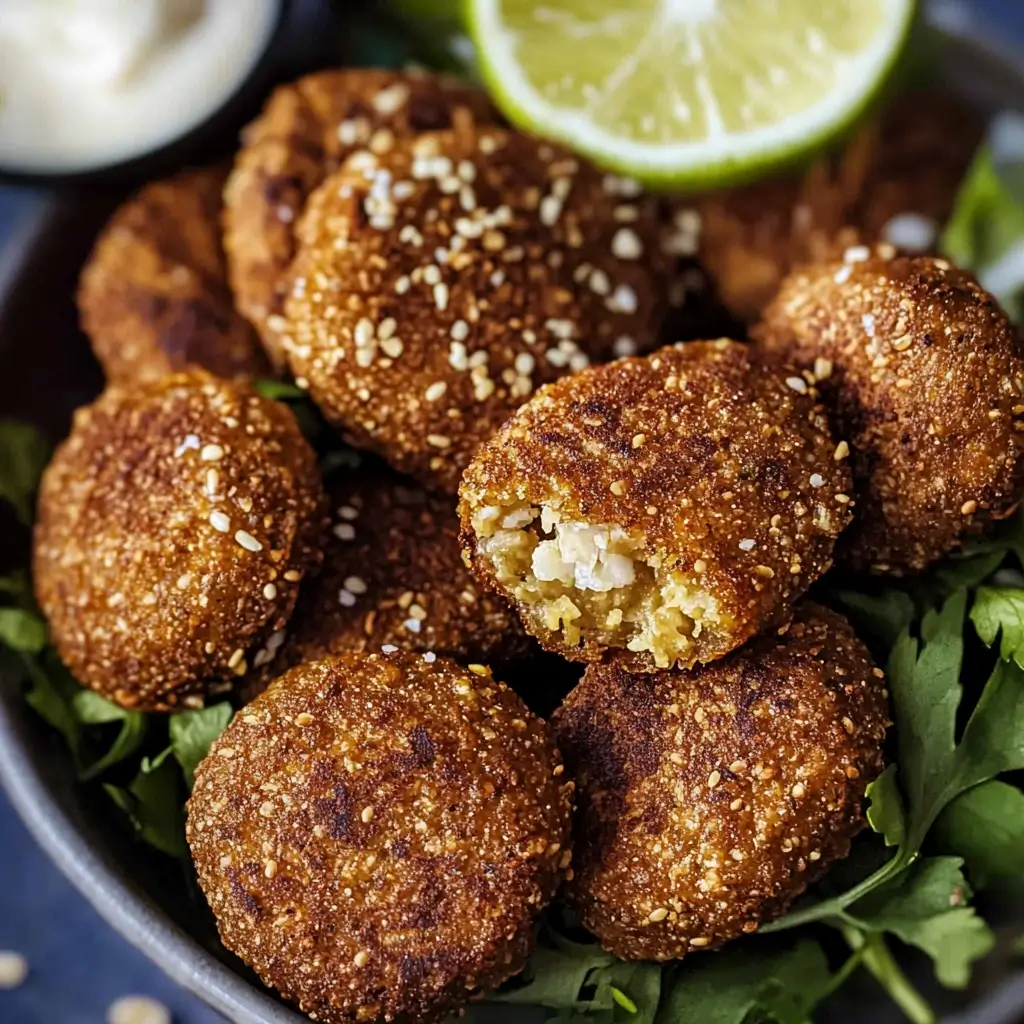
Growing up, the aroma of frying falafel was synonymous with weekend mornings in our home. My mom, with her Egyptian heritage, had perfected the art of making these crispy, flavorful fritters, and it’s a recipe that has been passed down and cherished through generations. This isn’t just any falafel recipe; it’s our falafel recipe, infused with the warmth of family tradition and the vibrant flavors of Egypt. We’ve tweaked it over the years, and recently discovered the magic of air frying – a game-changer for lightening things up without sacrificing that essential crispy exterior and fluffy interior. The first time I made these air-fried falafel for my own family, they vanished in minutes! My kids, usually picky eaters, devoured them, asking for seconds and thirds. Paired with warm pita bread, creamy hummus, and a refreshing salad, it’s a meal that brings everyone together. Trust me, once you try this recipe, you’ll understand why it’s a family favorite and why we’re so excited to share it with you. Get ready to experience falafel that’s truly special!
Ingredients
This recipe uses a blend of chickpeas and fava beans, a classic Egyptian approach that yields a wonderfully textured and flavorful falafel. Each ingredient plays a crucial role in creating the perfect falafel, so let’s delve into why each one is essential and how to choose the best quality for your dish.
- 1 cup Chickpeas (soaked overnight): The foundation of any good falafel, chickpeas provide that earthy, nutty base flavor and contribute to the falafel’s satisfying texture. It’s absolutely crucial to use dried chickpeas and soak them overnight. Canned chickpeas will result in a mushy, undesirable texture because they are already cooked and contain too much moisture. Soaking rehydrates the chickpeas, making them easier to process while maintaining their raw state, which is key to achieving the right consistency. Look for high-quality dried chickpeas – they should be uniform in color and size. You can find them in most grocery stores in the dried bean section. Soaking also helps to make the chickpeas more digestible and reduces phytic acid.
- 2 cups Fava Beans (soaked overnight): Fava beans, also known as broad beans, are a traditional ingredient in Egyptian falafel, adding a unique creaminess and slightly sweet, nutty flavor that complements the chickpeas beautifully. Similar to chickpeas, it’s vital to use dried fava beans and soak them overnight. Dried fava beans need to be rehydrated to be processed correctly and to ensure the right texture. They contribute to a lighter, less dense falafel compared to using only chickpeas. Seek out good quality dried fava beans, ensuring they are plump and free from any blemishes. Like chickpeas, soaking fava beans improves digestibility and reduces phytic acid. If you have trouble finding dried fava beans, you might check international grocery stores or online retailers specializing in Middle Eastern or Mediterranean ingredients.
- 6 whole Green Onions: Green onions bring a mild, fresh onion flavor that is less pungent than white or yellow onions, contributing a delicate sharpness to the falafel mixture. They add a subtle layer of complexity without overpowering the other flavors. Choose fresh, vibrant green onions with firm stalks and bright green tops. Avoid any that are wilted or slimy. The green parts and the white parts are both used in this recipe, maximizing the flavor and freshness.
- 1 medium Red Onion: Red onion adds a slightly sharper and more robust onion flavor compared to green onions, creating a flavorful depth in the falafel. It provides a contrasting element to the milder green onions and garlic. Select a firm, heavy red onion with a vibrant red-purple skin. Avoid onions that are soft, bruised, or have sprouts. The red onion provides a foundational savory note that is essential for authentic falafel flavor.
- 4 Garlic Cloves: Garlic is a flavor powerhouse, adding pungency and aromatic depth to the falafel. It enhances all the other flavors and provides that characteristic savory kick that makes falafel so addictive. Choose firm, plump garlic cloves that are free from soft spots or green sprouts. Fresh garlic is always preferred for its intense flavor. You can adjust the amount of garlic to your preference, but 4 cloves is a good starting point for a balanced flavor profile.
- 1 small bunch of Cilantro (stems removed): Cilantro, with its bright, citrusy, and slightly peppery flavor, is a crucial herb that brings freshness and vibrancy to the falafel. It cuts through the richness of the beans and spices, adding a refreshing element. Use fresh cilantro with vibrant green leaves and firm stems. Remove the stems as they can be a bit tough and fibrous, and we want the tender leaves for the best flavor and texture. If you are not a fan of cilantro, you can substitute with flat-leaf parsley, although it will slightly alter the flavor profile.
- 1 teaspoon Sea Salt (to taste): Sea salt enhances the flavors of all the ingredients and is essential for seasoning the falafel mixture. Salt is not just about making things “salty”; it balances and elevates all the other flavors. Start with 1 teaspoon and adjust to your taste. You can always add more salt later, but it’s harder to remove it. Using sea salt, or kosher salt, is often preferred by chefs for its pure flavor and larger crystals, which make it easier to control seasoning.
- 1/2 teaspoon Pepper (to taste): Black pepper adds a subtle warmth and a touch of spice to the falafel, complementing the other spices and enhancing the overall flavor profile. Freshly ground black pepper is always best for its more intense aroma and flavor. Start with 1/2 teaspoon and adjust to your preference. You can also experiment with white pepper for a slightly different flavor profile.
- 1 teaspoon Ground Coriander: Ground coriander seeds bring a warm, citrusy, and slightly nutty flavor that is a hallmark of authentic falafel. It adds a complex aromatic layer and complements the cumin beautifully. Use fresh ground coriander for the best flavor. If you have whole coriander seeds, you can toast them lightly in a dry pan and then grind them yourself for an even more intense aroma.
- 1 teaspoon Cumin: Cumin is a warm, earthy, and slightly bitter spice that is essential in Middle Eastern cuisine and a key component of falafel flavor. It adds depth and complexity, complementing the coriander and other spices. Use ground cumin that is fresh and fragrant. Like coriander, toasting whole cumin seeds before grinding them will enhance their flavor.
- 1 teaspoon Baking Soda: Baking soda is the secret ingredient that helps create light and fluffy falafel. It reacts with the moisture in the mixture during cooking, producing carbon dioxide bubbles that aerate the falafel, resulting in a less dense and more tender texture. Make sure your baking soda is fresh and active. It’s crucial to add the baking soda just before frying or air frying, as its leavening action starts immediately.
- Sesame Seeds (for topping): Sesame seeds add a delicate nutty flavor and a pleasant crunch to the exterior of the falafel. They also provide a beautiful visual appeal. Use hulled sesame seeds for a milder flavor and a whiter appearance. You can also use unhulled sesame seeds for a slightly stronger flavor and more nutrients. Toasting the sesame seeds lightly before pressing them onto the falafel balls will enhance their flavor and aroma even further.
Instructions
Follow these step-by-step instructions to create perfect homemade falafel, whether you choose to air fry or fry them. Each step is crucial for achieving the best texture and flavor.
- Soak the Chickpeas and Fava Beans: The very first and most important step is to soak your dried chickpeas and fava beans overnight, or for at least 12-18 hours. Place the chickpeas in a large bowl and cover them generously with water – they will expand as they soak, so ensure there’s plenty of water. Do the same for the fava beans in a separate bowl. The soaking process rehydrates the beans, making them easier to process and ensuring the correct texture for your falafel. Do not use canned chickpeas or fava beans, as they are already cooked and will result in a mushy falafel mixture. After soaking, drain and rinse both the chickpeas and fava beans thoroughly.
- Prepare the Vegetables and Herbs: While the beans are soaking, you can prep your vegetables and herbs. Wash the green onions, red onion, garlic cloves, and cilantro. Roughly chop the red onion and green onions. Peel the garlic cloves. Remove the cilantro stems, keeping only the leaves. Having these prepped and ready will streamline the falafel-making process once the beans are soaked.
- Combine Ingredients in Food Processor: Set up your food processor. This is your primary tool for creating the falafel mixture. Add the soaked and drained chickpeas, soaked and drained fava beans, chopped red onion, green onions, garlic cloves, and cilantro leaves to the bowl of the food processor.
- Process Until Roughly Chopped: Pulse the food processor in short bursts initially to roughly chop all the ingredients. Then, process continuously until the mixture is finely ground and resembles coarse breadcrumbs. You want a texture that is still slightly coarse and not completely smooth. Over-processing will result in a paste-like consistency, which can lead to dense falafel. Scrape down the sides of the food processor bowl as needed to ensure everything is evenly processed.
- Add Spices and Pulse Again: Next, add the sea salt, pepper, ground coriander, and cumin to the food processor bowl. Pulse the food processor again in short bursts to incorporate the spices evenly throughout the falafel mixture. Avoid over-processing at this stage, just pulse until the spices are well distributed.
- Remove Mixture to a Bowl: Remove the falafel dough mixture from the food processor and place it in a mixing bowl. At this stage, you can cover the bowl with plastic wrap and refrigerate the mixture for at least 30 minutes, or even up to a few hours. Chilling the mixture helps it to firm up slightly and makes it easier to shape into falafel balls. However, this step is optional if you are ready to cook immediately.
- Add Baking Soda Just Before Cooking: This is a crucial step for achieving light and airy falafel. Just before you are ready to start frying or air frying, add the baking soda to the bowl of falafel mixture.
- Mix Thoroughly: Mix the baking soda into the falafel mixture thoroughly using your hands or a spoon. Ensure it is evenly distributed throughout the mixture. Work quickly after adding the baking soda, as its leavening action begins immediately.
- Shape into Falafel Balls: Use an ice cream scooper or a spoon to scoop out portions of the falafel dough. An ice cream scooper helps to create uniformly sized falafel balls. Release the scooped dough into your hand and gently roll it into a ball. You can make them slightly flattened discs if you prefer, which can cook more evenly.
- Coat with Sesame Seeds (Optional but Recommended): If desired, place some sesame seeds in a shallow dish. Gently press each falafel ball into the sesame seeds to coat the outside. This adds flavor, texture, and visual appeal.
- Air Fry the Falafel: Arrange the sesame seed-coated falafel balls in a single layer in your air fryer basket. Avoid overcrowding the basket to ensure even cooking and crisping. Air fry at 350°F (175°C) for 15-18 minutes, flipping the falafel halfway through the cooking time, around 8-9 minutes, to ensure they are golden brown and crispy on both sides. Cooking time may vary slightly depending on your air fryer model, so keep an eye on them and adjust as needed.
- Alternatively, Fry the Falafel (Traditional Method): If you prefer the traditional fried falafel, heat about 2-3 inches of vegetable oil in a deep pot or fryer to 350°F (175°C). Carefully drop the falafel balls, in batches, into the hot oil, being careful not to overcrowd the pot. Fry for 3-5 minutes per batch, or until golden brown and crispy, flipping them occasionally to ensure even cooking. Remove the fried falafel with a slotted spoon and place them on a paper towel-lined plate to drain excess oil.
- Serve Hot: Serve the falafel immediately while they are hot and crispy. They are delicious served on their own as appetizers, or as part of a larger Middle Eastern spread with pita bread, hummus, tahini sauce, and salad.
Nutrition Facts (Estimated)
(Please note: Nutritional values are estimates and can vary based on specific ingredients and portion sizes.)
Servings: 8 servings
Calories per serving (estimated, air-fried): Approximately 250-300 calories
Approximate Nutritional Breakdown per Serving (Air-Fried):
- Calories: 250-300 kcal
- Protein: 10-12g
- Fat: 12-15g (primarily from healthy fats in chickpeas, fava beans, and olive oil if used for frying)
- Saturated Fat: 1-2g
- Cholesterol: 0mg
- Sodium: 200-300mg (depending on salt added)
- Carbohydrates: 30-35g
- Fiber: 8-10g
- Sugar: 2-3g
Falafel is a relatively healthy and nutritious food, especially when air-fried. It’s a good source of plant-based protein, fiber, and complex carbohydrates. It also provides essential vitamins and minerals from the beans, vegetables, and herbs.
Preparation Time
- Prep Time: 20 minutes (excluding soaking time)
- Cook Time: 15-18 minutes (air frying) or 10-15 minutes (frying, in batches)
- Total Time: 35-40 minutes (excluding soaking time)
- Soaking Time: Overnight (12-18 hours)
Remember to factor in the overnight soaking time for the chickpeas and fava beans when planning to make this recipe. While the active preparation and cooking time is relatively short, the soaking step is essential for the best results.
How to Serve
Falafel is incredibly versatile and can be served in numerous delicious ways. Here are some popular and delightful serving suggestions:
- In Pita Bread: This is the classic and most beloved way to enjoy falafel.
- Warm pita bread slightly to make it pliable.
- Spread hummus or tahini sauce inside the pita.
- Stuff with falafel balls, chopped tomatoes, cucumbers, lettuce, pickled vegetables, and a drizzle of tahini or yogurt sauce.
- Add a sprinkle of fresh parsley or cilantro for extra freshness.
- Falafel Platter: Create a vibrant and shareable platter featuring falafel alongside a variety of Mediterranean dips and sides.
- Arrange falafel balls on a platter.
- Serve with bowls of hummus, tahini sauce, baba ghanoush, and tzatziki.
- Include sides of chopped cucumber and tomato salad, pickled turnips, olives, and warm pita bread for dipping and scooping.
- Falafel Salad Bowl: Transform falafel into a healthy and satisfying salad bowl.
- Build a base of mixed greens or chopped romaine lettuce.
- Add falafel balls (whole or halved).
- Include chopped vegetables like cucumbers, tomatoes, bell peppers, red onion, and radishes.
- Incorporate Mediterranean elements like Kalamata olives, feta cheese (optional), and sun-dried tomatoes.
- Dress with a lemon-tahini dressing or a simple vinaigrette.
- Falafel Appetizers: Serve falafel as a delicious and crowd-pleasing appetizer.
- Serve falafel balls warm on their own, with toothpicks for easy grabbing.
- Offer dipping sauces like tahini sauce, yogurt-mint dip, or a spicy harissa mayo.
- Garnish with a sprinkle of sesame seeds and fresh parsley.
- Falafel with Rice and Sides: Make falafel the centerpiece of a complete meal served with rice and flavorful side dishes.
- Serve falafel alongside fluffy rice pilaf or couscous.
- Pair with roasted vegetables like eggplant, zucchini, and bell peppers.
- Include a side of tabbouleh or fattoush salad for freshness.
- Offer a yogurt-cucumber raita or a lemon-herb sauce to complement the meal.
Additional Tips for Perfect Falafel
Mastering falafel takes a little practice, but these tips will help you achieve consistently delicious results every time:
- Don’t Use Canned Beans: This is worth repeating – never use canned chickpeas or fava beans for falafel. They are already cooked and too moist, resulting in a mushy, paste-like mixture that won’t hold its shape and will steam rather than fry to a crisp. Dried, soaked beans are essential for the right texture and flavor.
- Coarse Texture is Key: Avoid over-processing the falafel mixture in the food processor. You want a slightly coarse, breadcrumb-like texture, not a smooth paste. Over-processing releases too much moisture and can make the falafel dense and gummy. Pulse the food processor in short bursts and stop when the mixture is finely chopped but still has some texture.
- Chill the Mixture (Optional but Helpful): Refrigerating the falafel mixture for 30 minutes to an hour before shaping can help it firm up and become easier to handle. This is particularly useful if your mixture seems a bit too moist. Chilling also allows the flavors to meld together more effectively.
- Test Fry a Small Piece: Before frying or air frying a whole batch, test fry a small piece of the falafel mixture. This allows you to check the seasoning and consistency. If it crumbles in the oil or air fryer, you might need to add a little chickpea flour or breadcrumbs to bind it together. If it tastes bland, adjust the salt and spices accordingly.
- Don’t Overcrowd the Fryer/Air Fryer: Whether you are frying or air frying, avoid overcrowding the pot or air fryer basket. Overcrowding lowers the temperature and can lead to uneven cooking and soggy falafel. Fry or air fry in batches, ensuring there is enough space around each falafel ball for proper heat circulation and crisping.
FAQ Section: Falafel Frequently Asked Questions
Got questions about making falafel? We’ve got answers to some of the most common queries to help you succeed:
Q1: Can I make falafel ahead of time?
A: Yes, you can prepare the falafel mixture ahead of time and store it in an airtight container in the refrigerator for up to 24 hours. However, it’s best to add the baking soda just before you are ready to cook them. Shaped falafel balls can also be refrigerated for a few hours before cooking. For the best results, cook them fresh and serve immediately.
Q2: Can I bake falafel instead of frying or air frying?
A: While baking falafel is possible, it won’t achieve the same crispy exterior as frying or air frying. Baked falafel tends to be drier and less flavorful. If you want to bake, preheat your oven to 375°F (190°C). Place the falafel balls on a baking sheet lined with parchment paper and bake for 20-25 minutes, flipping halfway through, or until golden brown. You may need to brush them with a little olive oil before baking to prevent them from drying out too much. Air frying is a much better option for a healthier yet crispy alternative to deep frying.
Q3: What can I use if I can’t find fava beans?
A: While fava beans are traditional in Egyptian falafel and contribute to its unique texture and flavor, you can make falafel using only chickpeas if you cannot find dried fava beans. Simply substitute the 2 cups of fava beans with 2 cups of dried chickpeas (soaking them overnight as usual). The flavor will be slightly different, but it will still be delicious.
Q4: My falafel mixture is too wet. How can I fix it?
A: If your falafel mixture is too wet, it’s likely due to over-processing or using canned beans. To fix it, you can add a tablespoon or two of chickpea flour (besan) or breadcrumbs to the mixture to absorb some of the excess moisture. Mix it in well and let it sit for a few minutes to allow the flour or breadcrumbs to absorb the moisture before shaping and cooking.
Q5: How do I store leftover falafel?
A: Leftover cooked falafel is best stored in an airtight container in the refrigerator for up to 3-4 days. To reheat, you can air fry them again for a few minutes at 350°F (175°C) to crisp them up, or bake them in the oven. Microwaving is not recommended as it can make them soggy. For longer storage, cooked falafel can be frozen. Freeze them in a single layer on a baking sheet until solid, then transfer them to a freezer bag or container. Reheat directly from frozen in the air fryer or oven.
Enjoy making this authentic and delicious Egyptian falafel recipe! We hope it becomes a family favorite in your home, just like it is in ours. Happy cooking!
Print
Egyptian Falafel Recipe
Ingredients
- 1 cup Chickpeas (soaked overnight): The foundation of any good falafel, chickpeas provide that earthy, nutty base flavor and contribute to the falafel’s satisfying texture. It’s absolutely crucial to use dried chickpeas and soak them overnight. Canned chickpeas will result in a mushy, undesirable texture because they are already cooked and contain too much moisture. Soaking rehydrates the chickpeas, making them easier to process while maintaining their raw state, which is key to achieving the right consistency. Look for high-quality dried chickpeas – they should be uniform in color and size. You can find them in most grocery stores in the dried bean section. Soaking also helps to make the chickpeas more digestible and reduces phytic acid.
- 2 cups Fava Beans (soaked overnight): Fava beans, also known as broad beans, are a traditional ingredient in Egyptian falafel, adding a unique creaminess and slightly sweet, nutty flavor that complements the chickpeas beautifully. Similar to chickpeas, it’s vital to use dried fava beans and soak them overnight. Dried fava beans need to be rehydrated to be processed correctly and to ensure the right texture. They contribute to a lighter, less dense falafel compared to using only chickpeas. Seek out good quality dried fava beans, ensuring they are plump and free from any blemishes. Like chickpeas, soaking fava beans improves digestibility and reduces phytic acid. If you have trouble finding dried fava beans, you might check international grocery stores or online retailers specializing in Middle Eastern or Mediterranean ingredients.
- 6 whole Green Onions: Green onions bring a mild, fresh onion flavor that is less pungent than white or yellow onions, contributing a delicate sharpness to the falafel mixture. They add a subtle layer of complexity without overpowering the other flavors. Choose fresh, vibrant green onions with firm stalks and bright green tops. Avoid any that are wilted or slimy. The green parts and the white parts are both used in this recipe, maximizing the flavor and freshness.
- 1 medium Red Onion: Red onion adds a slightly sharper and more robust onion flavor compared to green onions, creating a flavorful depth in the falafel. It provides a contrasting element to the milder green onions and garlic. Select a firm, heavy red onion with a vibrant red-purple skin. Avoid onions that are soft, bruised, or have sprouts. The red onion provides a foundational savory note that is essential for authentic falafel flavor.
- 4 Garlic Cloves: Garlic is a flavor powerhouse, adding pungency and aromatic depth to the falafel. It enhances all the other flavors and provides that characteristic savory kick that makes falafel so addictive. Choose firm, plump garlic cloves that are free from soft spots or green sprouts. Fresh garlic is always preferred for its intense flavor. You can adjust the amount of garlic to your preference, but 4 cloves is a good starting point for a balanced flavor profile.
- 1 small bunch of Cilantro (stems removed): Cilantro, with its bright, citrusy, and slightly peppery flavor, is a crucial herb that brings freshness and vibrancy to the falafel. It cuts through the richness of the beans and spices, adding a refreshing element. Use fresh cilantro with vibrant green leaves and firm stems. Remove the stems as they can be a bit tough and fibrous, and we want the tender leaves for the best flavor and texture. If you are not a fan of cilantro, you can substitute with flat-leaf parsley, although it will slightly alter the flavor profile.
- 1 teaspoon Sea Salt (to taste): Sea salt enhances the flavors of all the ingredients and is essential for seasoning the falafel mixture. Salt is not just about making things “salty”; it balances and elevates all the other flavors. Start with 1 teaspoon and adjust to your taste. You can always add more salt later, but it’s harder to remove it. Using sea salt, or kosher salt, is often preferred by chefs for its pure flavor and larger crystals, which make it easier to control seasoning.
- 1/2 teaspoon Pepper (to taste): Black pepper adds a subtle warmth and a touch of spice to the falafel, complementing the other spices and enhancing the overall flavor profile. Freshly ground black pepper is always best for its more intense aroma and flavor. Start with 1/2 teaspoon and adjust to your preference. You can also experiment with white pepper for a slightly different flavor profile.
- 1 teaspoon Ground Coriander: Ground coriander seeds bring a warm, citrusy, and slightly nutty flavor that is a hallmark of authentic falafel. It adds a complex aromatic layer and complements the cumin beautifully. Use fresh ground coriander for the best flavor. If you have whole coriander seeds, you can toast them lightly in a dry pan and then grind them yourself for an even more intense aroma.
- 1 teaspoon Cumin: Cumin is a warm, earthy, and slightly bitter spice that is essential in Middle Eastern cuisine and a key component of falafel flavor. It adds depth and complexity, complementing the coriander and other spices. Use ground cumin that is fresh and fragrant. Like coriander, toasting whole cumin seeds before grinding them will enhance their flavor.
- 1 teaspoon Baking Soda: Baking soda is the secret ingredient that helps create light and fluffy falafel. It reacts with the moisture in the mixture during cooking, producing carbon dioxide bubbles that aerate the falafel, resulting in a less dense and more tender texture. Make sure your baking soda is fresh and active. It’s crucial to add the baking soda just before frying or air frying, as its leavening action starts immediately.
- Sesame Seeds (for topping): Sesame seeds add a delicate nutty flavor and a pleasant crunch to the exterior of the falafel. They also provide a beautiful visual appeal. Use hulled sesame seeds for a milder flavor and a whiter appearance. You can also use unhulled sesame seeds for a slightly stronger flavor and more nutrients. Toasting the sesame seeds lightly before pressing them onto the falafel balls will enhance their flavor and aroma even further.
Instructions
- Soak the Chickpeas and Fava Beans: The very first and most important step is to soak your dried chickpeas and fava beans overnight, or for at least 12-18 hours. Place the chickpeas in a large bowl and cover them generously with water – they will expand as they soak, so ensure there’s plenty of water. Do the same for the fava beans in a separate bowl. The soaking process rehydrates the beans, making them easier to process and ensuring the correct texture for your falafel. Do not use canned chickpeas or fava beans, as they are already cooked and will result in a mushy falafel mixture. After soaking, drain and rinse both the chickpeas and fava beans thoroughly.
- Prepare the Vegetables and Herbs: While the beans are soaking, you can prep your vegetables and herbs. Wash the green onions, red onion, garlic cloves, and cilantro. Roughly chop the red onion and green onions. Peel the garlic cloves. Remove the cilantro stems, keeping only the leaves. Having these prepped and ready will streamline the falafel-making process once the beans are soaked.
- Combine Ingredients in Food Processor: Set up your food processor. This is your primary tool for creating the falafel mixture. Add the soaked and drained chickpeas, soaked and drained fava beans, chopped red onion, green onions, garlic cloves, and cilantro leaves to the bowl of the food processor.
- Process Until Roughly Chopped: Pulse the food processor in short bursts initially to roughly chop all the ingredients. Then, process continuously until the mixture is finely ground and resembles coarse breadcrumbs. You want a texture that is still slightly coarse and not completely smooth. Over-processing will result in a paste-like consistency, which can lead to dense falafel. Scrape down the sides of the food processor bowl as needed to ensure everything is evenly processed.
- Add Spices and Pulse Again: Next, add the sea salt, pepper, ground coriander, and cumin to the food processor bowl. Pulse the food processor again in short bursts to incorporate the spices evenly throughout the falafel mixture. Avoid over-processing at this stage, just pulse until the spices are well distributed.
- Remove Mixture to a Bowl: Remove the falafel dough mixture from the food processor and place it in a mixing bowl. At this stage, you can cover the bowl with plastic wrap and refrigerate the mixture for at least 30 minutes, or even up to a few hours. Chilling the mixture helps it to firm up slightly and makes it easier to shape into falafel balls. However, this step is optional if you are ready to cook immediately.
- Add Baking Soda Just Before Cooking: This is a crucial step for achieving light and airy falafel. Just before you are ready to start frying or air frying, add the baking soda to the bowl of falafel mixture.
- Mix Thoroughly: Mix the baking soda into the falafel mixture thoroughly using your hands or a spoon. Ensure it is evenly distributed throughout the mixture. Work quickly after adding the baking soda, as its leavening action begins immediately.
- Shape into Falafel Balls: Use an ice cream scooper or a spoon to scoop out portions of the falafel dough. An ice cream scooper helps to create uniformly sized falafel balls. Release the scooped dough into your hand and gently roll it into a ball. You can make them slightly flattened discs if you prefer, which can cook more evenly.
- Coat with Sesame Seeds (Optional but Recommended): If desired, place some sesame seeds in a shallow dish. Gently press each falafel ball into the sesame seeds to coat the outside. This adds flavor, texture, and visual appeal.
- Air Fry the Falafel: Arrange the sesame seed-coated falafel balls in a single layer in your air fryer basket. Avoid overcrowding the basket to ensure even cooking and crisping. Air fry at 350°F (175°C) for 15-18 minutes, flipping the falafel halfway through the cooking time, around 8-9 minutes, to ensure they are golden brown and crispy on both sides. Cooking time may vary slightly depending on your air fryer model, so keep an eye on them and adjust as needed.
- Alternatively, Fry the Falafel (Traditional Method): If you prefer the traditional fried falafel, heat about 2-3 inches of vegetable oil in a deep pot or fryer to 350°F (175°C). Carefully drop the falafel balls, in batches, into the hot oil, being careful not to overcrowd the pot. Fry for 3-5 minutes per batch, or until golden brown and crispy, flipping them occasionally to ensure even cooking. Remove the fried falafel with a slotted spoon and place them on a paper towel-lined plate to drain excess oil.
- Serve Hot: Serve the falafel immediately while they are hot and crispy. They are delicious served on their own as appetizers, or as part of a larger Middle Eastern spread with pita bread, hummus, tahini sauce, and salad.
Nutrition
- Serving Size: One Normal Portion
- Calories: 250-300 kcal
- Sugar: 2-3g
- Sodium: 200-300mg
- Fat: 12-15g
- Saturated Fat: 1-2g
- Carbohydrates: 30-35g
- Fiber: 8-10g
- Protein: 10-12g
- Cholesterol: 0mg