
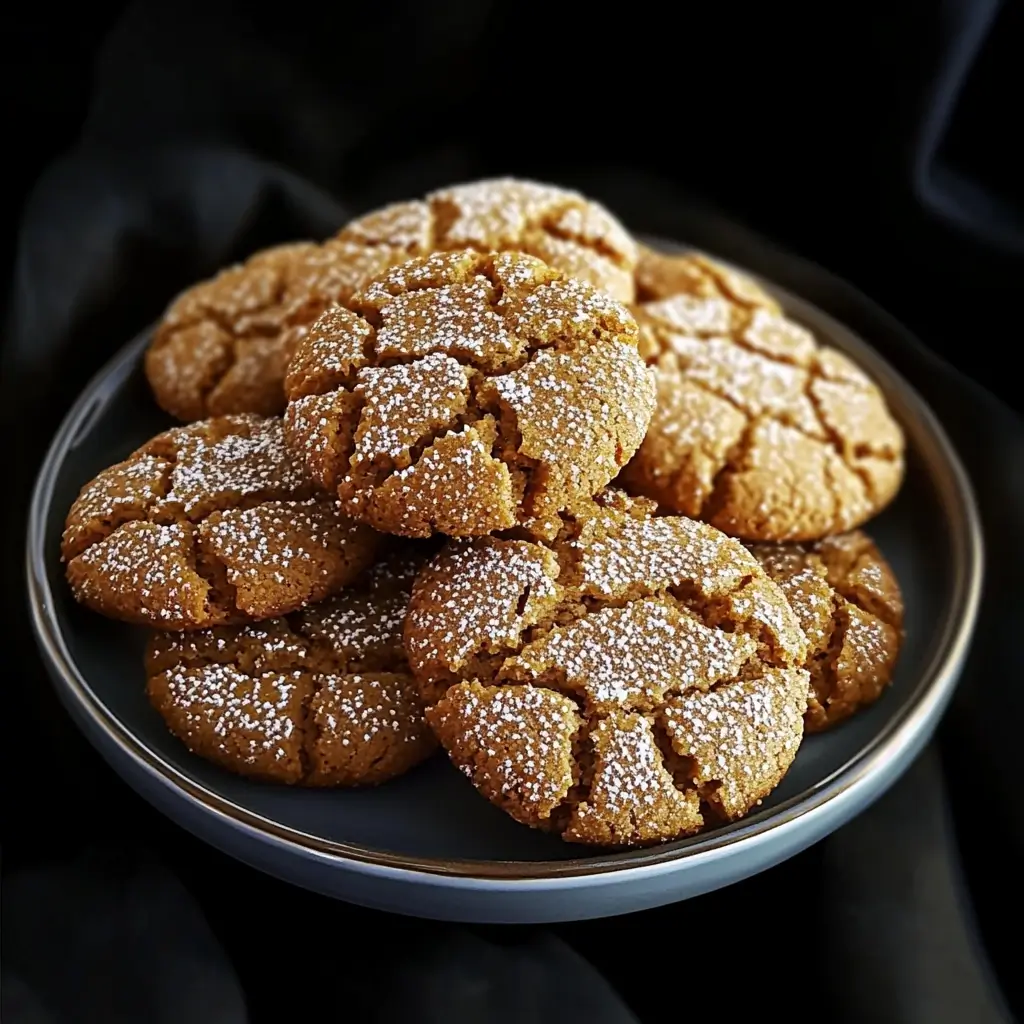

Gingerbread Crinkle Cookies have become an absolute staple in our household, especially as the festive season rolls around. There’s something undeniably magical about the warm, spicy aroma that fills the kitchen as these cookies bake, instantly transporting everyone to a cozy, holiday state of mind. From the moment the first batch emerged from the oven, their charmingly cracked surfaces dusted with powdered sugar, they were a hit. My kids adore the chewy texture and the perfect balance of sweet and spicy, and honestly, I find myself sneaking one (or maybe two!) with my afternoon coffee. They’re incredibly easy to make, which is a huge bonus during busy holiday preparations, and they always impress guests. If you’re looking for a cookie that embodies the spirit of the holidays and is guaranteed to disappear quickly, look no further than these Gingerbread Crinkle Cookies. Trust me, they will become a beloved tradition in your home too.
Ingredients
To embark on your Gingerbread Crinkle Cookie baking adventure, you’ll need to gather a collection of key ingredients that work together harmoniously to create that signature flavor and texture. Each component plays a vital role, from the molasses that lends its deep, caramel-like sweetness and color, to the blend of spices that evokes the warmth of the holiday season. Let’s delve into each ingredient, understanding its purpose and ensuring you have everything ready to create cookie perfection.
- All-Purpose Flour: 3 cups (360g). The foundation of our cookies, all-purpose flour provides the structure. It’s important to measure it correctly – spoon the flour into your measuring cup and level it off with a knife. Avoid scooping directly from the bag, as this can compact the flour and lead to drier cookies. For a slightly softer cookie, you can substitute a tablespoon or two of flour with cornstarch.
- Baking Soda: 2 teaspoons. This is our leavening agent, responsible for the cookies rising and achieving that delightful crinkle texture. Baking soda reacts with the molasses and brown sugar, creating air bubbles that expand in the oven. Ensure your baking soda is fresh for optimal results; old baking soda may lose its potency.
- Ground Ginger: 2 teaspoons. The star spice in gingerbread! Ground ginger provides that classic warm, slightly pungent flavor that is synonymous with gingerbread treats. Adjust the amount slightly to your preference – if you love a strong ginger kick, you can increase it to 2 ½ teaspoons.
- Ground Cinnamon: 1 ½ teaspoons. Cinnamon adds warmth and sweetness, complementing the ginger beautifully. It rounds out the spice profile and contributes to the overall festive aroma and taste of the cookies. Use good quality cinnamon for the best flavor.
- Ground Cloves: ¾ teaspoon. Cloves bring a deep, rich, and slightly peppery note to the spice blend. They are potent, so use them sparingly – just enough to add complexity without overpowering the other spices. Freshly ground cloves will have a more intense flavor than pre-ground.
- Salt: ½ teaspoon. Salt is a crucial ingredient in baking, even in sweet recipes. It enhances the flavors of all the other ingredients, balancing the sweetness and bringing out the nuances of the spices. Use regular table salt or fine sea salt.
- Unsalted Butter, softened: 1 cup (2 sticks, 227g). Butter provides richness, moisture, and tenderness to the cookies. It’s essential to use softened butter, not melted, as softened butter creams together with the sugars to create a light and airy batter. Let your butter sit at room temperature for about 30-60 minutes before starting, or until it’s easily pliable but still cool to the touch.
- Granulated Sugar: ½ cup (100g). Granulated sugar adds sweetness and contributes to the cookie’s structure. It also helps with browning and crisp edges.
- Packed Light Brown Sugar: ¾ cup (150g). Brown sugar is key for gingerbread cookies, lending moisture, chewiness, and a deeper molasses-like flavor. Light brown sugar is preferred for these cookies, but dark brown sugar can be used for a richer, more intense molasses flavor. Make sure to pack it firmly when measuring to ensure the correct amount.
- Molasses: ½ cup (120ml). Molasses is the heart and soul of gingerbread. It provides that distinctive dark color, deep caramel-like sweetness, and characteristic gingerbread flavor. Use unsulphured molasses for the best taste; avoid blackstrap molasses, which is more bitter and less sweet.
- Large Egg: 1. The egg binds the ingredients together, adds moisture, and contributes to the cookie’s structure and richness. Use a large egg at room temperature for better incorporation into the batter.
- Vanilla Extract: 1 teaspoon. Vanilla extract enhances the overall flavor profile, adding a touch of warmth and sweetness that complements the spices and molasses. Use pure vanilla extract for the best flavor; imitation vanilla extract can have a less nuanced taste.
- Powdered Sugar: For rolling. Powdered sugar is essential for creating the signature crinkle effect. Rolling the dough balls in powdered sugar before baking results in those beautiful white cracks as the cookies spread and bake. Use plenty of powdered sugar to ensure a thick coating.
Having all your ingredients measured and ready to go before you start mixing will streamline the baking process and ensure you don’t miss anything crucial. Fresh, high-quality ingredients will always yield the best results, so don’t skimp on your spices and butter!
Instructions
Now that you have all your ingredients prepped and ready, it’s time to dive into the step-by-step process of making these delightful Gingerbread Crinkle Cookies. Follow these instructions carefully to ensure cookie success, from mixing the dough to achieving that perfect crinkled finish.
- Preheat Oven and Prepare Baking Sheets: Preheat your oven to 350°F (175°C). Line baking sheets with parchment paper or silicone baking mats. Parchment paper prevents sticking and makes cleanup a breeze, while silicone mats provide even heat distribution and also prevent sticking. Set these aside.
- Whisk Dry Ingredients: In a medium bowl, whisk together the all-purpose flour, baking soda, ground ginger, ground cinnamon, ground cloves, and salt. Whisking ensures that the baking soda and spices are evenly distributed throughout the flour. Set this bowl aside.
- Cream Butter and Sugars: In a large bowl or the bowl of a stand mixer fitted with the paddle attachment, cream together the softened butter, granulated sugar, and light brown sugar until light and fluffy. This process incorporates air into the butter and sugar mixture, which is crucial for a tender cookie. Cream for 2-3 minutes until the mixture is pale and noticeably lighter in texture.
- Add Molasses, Egg, and Vanilla: Beat in the molasses, egg, and vanilla extract until well combined. Scrape down the sides of the bowl as needed to ensure everything is incorporated. The mixture may look slightly curdled at this stage, but don’t worry, it will come together when you add the dry ingredients.
- Gradually Add Dry Ingredients: Gradually add the dry ingredients to the wet ingredients, mixing on low speed until just combined. Be careful not to overmix. Overmixing can develop the gluten in the flour, resulting in tougher cookies. Mix until the flour is just incorporated and no streaks of flour remain. The dough will be soft and slightly sticky.
- Chill Dough: Cover the bowl with plastic wrap and refrigerate the dough for at least 2 hours, or preferably overnight. Chilling the dough is crucial for several reasons. It firms up the dough, making it easier to roll into balls. It also allows the flavors to meld and deepen, and it helps prevent the cookies from spreading too much during baking, resulting in thicker, chewier cookies.
- Prepare for Rolling: Once the dough is thoroughly chilled, place the powdered sugar in a shallow bowl.
- Shape Dough Balls and Coat in Powdered Sugar: Using a tablespoon or cookie scoop, scoop out portions of the chilled dough and roll them into 1-inch balls. Roll each dough ball generously in the powdered sugar, ensuring it is completely coated. The thick coating of powdered sugar is what creates the signature crinkles.
- Arrange on Baking Sheets: Place the powdered sugar-coated dough balls onto the prepared baking sheets, spacing them about 2 inches apart. They will spread as they bake.
- Bake: Bake in the preheated oven for 10-12 minutes, or until the edges are set and the centers are still slightly soft. Do not overbake them, as they will continue to set as they cool. The cookies will puff up and then crack as they bake, creating those beautiful crinkles.
- Cool: Remove the baking sheets from the oven and let the cookies cool on the baking sheets for 5-10 minutes before transferring them to a wire rack to cool completely. This allows them to firm up slightly before you move them, preventing them from breaking.
- Enjoy: Once cooled, these Gingerbread Crinkle Cookies are ready to be enjoyed! They are best enjoyed within a few days, stored in an airtight container at room temperature.
Following these detailed instructions will guide you through each step of the baking process, ensuring you create perfectly spiced, chewy, and beautifully crinkled Gingerbread Cookies that are sure to impress. Don’t be intimidated by the chilling time – it’s a crucial step that contributes significantly to the final texture and flavor of these delightful holiday treats.
Nutrition Facts
Understanding the nutritional content of your treats can be helpful, especially when enjoying them as part of a balanced diet. Please remember that these are estimates, and actual values may vary slightly based on ingredient brands and specific measuring techniques. This nutrition information is based on a serving size of one Gingerbread Crinkle Cookie, assuming the recipe yields approximately 36 cookies.
Serving Size: 1 Cookie
Servings Per Recipe: Approximately 36 cookies
Estimated Nutrition Facts Per Serving:
- Calories: 120-150 kcal
- Total Fat: 5-7g
- Saturated Fat: 3-4g
- Trans Fat: 0g
- Unsaturated Fat: 2-3g
- Cholesterol: 15-20mg
- Sodium: 50-70mg
- Total Carbohydrates: 18-22g
- Dietary Fiber: <1g
- Total Sugars: 10-14g
- Added Sugars: 9-13g
- Protein: 1-2g
Important Notes:
- These values are estimates and should be considered as guidelines.
- The calorie and sugar content is moderate, typical for a sweet cookie treat.
- These cookies do contain fat and carbohydrates, so moderation is key when incorporating them into your diet.
- The presence of spices like ginger and cinnamon may offer some antioxidant benefits, although in small quantities per serving.
For more precise nutritional information, you can use online nutrition calculators, inputting the specific brands and quantities of ingredients you use. However, this general overview provides a good understanding of what to expect nutritionally from one delicious Gingerbread Crinkle Cookie. Enjoy them as a special treat in moderation as part of a balanced eating plan.
Preparation Time
Planning your baking schedule is essential, especially during busy periods. Here’s a breakdown of the preparation time for making Gingerbread Crinkle Cookies, so you can manage your time effectively and ensure these treats are ready when you need them.
Total Preparation Time: Approximately 3 hours 30 minutes (including chilling time)
- Active Prep Time: 30 minutes (This includes measuring ingredients, mixing the dough, and rolling the dough balls)
- Measuring Ingredients: 10 minutes
- Mixing Dough: 15 minutes
- Rolling Dough Balls: 5 minutes
- Chilling Time: 2 hours minimum (Ideally overnight for best results)
- Refrigeration: 2 hours – Overnight
- Baking Time: 10-12 minutes per batch (Depending on oven and cookie size)
- Baking per Batch: 10-12 minutes
- Cooling on Baking Sheet: 5-10 minutes per batch
- Cooling Time (Completely): 30 minutes (After transferring to wire rack)
- Wire Rack Cooling: 30 minutes
Time Management Tips:
- Make Dough Ahead: The dough can be made up to 2-3 days in advance and stored in the refrigerator. This is a great way to break up the baking process. You can even freeze the dough for longer storage (up to 1 month). Thaw in the refrigerator overnight before rolling and baking.
- Chill Overnight: Planning to chill the dough overnight is highly recommended. It not only improves the flavor and texture but also allows you to bake the cookies at your convenience the next day.
- Bake in Batches: Baking in batches allows for more efficient oven use. While one batch is baking, you can prepare the next baking sheet with dough balls.
- Involve Others: Baking is more fun with company! Get your family or friends involved in rolling the dough balls and coating them in powdered sugar to speed up the process.
By understanding the time breakdown, you can effectively plan your baking session and enjoy fresh Gingerbread Crinkle Cookies without feeling rushed. The chilling time is the longest portion, but it’s mostly hands-off time, allowing you to do other tasks while the dough firms up.
How to Serve Gingerbread Crinkle Cookies
Gingerbread Crinkle Cookies are incredibly versatile and can be enjoyed in numerous ways. Their warm spice profile and festive appearance make them perfect for various occasions, from casual snacking to elegant holiday gatherings. Here are some delightful ways to serve and enjoy these cookies:
- Classic Pairing with Milk: The quintessential cookie companion! A cold glass of milk, whether dairy or plant-based, is always a winner with Gingerbread Crinkle Cookies. The creamy coolness of the milk perfectly complements the warm spices and sweetness of the cookie.
- Warm Beverages:
- Coffee: A cup of hot coffee, especially a latte or cappuccino, enhances the spiced notes of the gingerbread and makes for a comforting treat during colder months.
- Tea: Pair them with black tea, chai tea, or herbal teas like rooibos or spiced apple tea. The warmth and flavors of tea complement the cookie beautifully.
- Hot Chocolate: For an extra indulgent treat, serve them with a rich and creamy hot chocolate. The combination is perfect for cozy evenings.
- Dessert Platters & Cookie Trays: Gingerbread Crinkle Cookies are a fantastic addition to holiday dessert platters and cookie trays. Their unique crinkled appearance and festive dusting of powdered sugar make them visually appealing alongside other cookies and treats.
- Gift Giving: Package these cookies in decorative tins, cellophane bags tied with ribbons, or festive boxes to give as homemade gifts during the holidays. They are a thoughtful and delicious present that is always appreciated.
- Dessert Boards: Create a stunning dessert board featuring Gingerbread Crinkle Cookies along with other holiday treats like peppermint bark, fudge, chocolate-covered pretzels, and fresh fruit. This is a visually appealing and interactive way to serve dessert at parties.
- Ice Cream Sandwich: For a fun and unexpected twist, use Gingerbread Crinkle Cookies as the “bread” for ice cream sandwiches. Vanilla, cinnamon, or eggnog ice cream would pair particularly well.
- Crumbled Topping: Crumble Gingerbread Crinkle Cookies and use them as a topping for ice cream, yogurt parfaits, or even as a base for a no-bake cheesecake crust.
- With Fruit: Serve them alongside fresh fruit like sliced apples, pears, or oranges. The fruit provides a refreshing contrast to the richness of the cookies.
- Simple Snack: Enjoy them on their own as a simple and satisfying snack any time of day. They are perfect for an afternoon treat or a sweet ending to a meal.
No matter how you choose to serve them, Gingerbread Crinkle Cookies are sure to be a hit. Their delicious flavor and festive charm make them a welcome addition to any occasion.
Additional Tips for Perfect Gingerbread Crinkle Cookies
Baking perfection often comes down to a few key details and techniques. To ensure your Gingerbread Crinkle Cookies are consistently delicious and beautifully crinkled, here are five essential tips to keep in mind:
- Don’t Skimp on Chilling Time: Chilling the dough for the recommended 2 hours (or overnight) is not just a suggestion, it’s crucial. Chilling firms up the dough, making it easier to handle and roll. More importantly, it prevents the cookies from spreading too thin during baking, resulting in thicker, chewier cookies with pronounced crinkles. If you skip or shorten the chilling time, you may end up with flatter, less crinkled cookies.
- Generously Coat in Powdered Sugar: The signature crinkled appearance comes from a thick coating of powdered sugar. Don’t be shy when rolling the dough balls in powdered sugar. Ensure each ball is completely and generously coated. The powdered sugar creates a barrier that resists spreading, and as the cookie bakes and expands, the sugar cracks, creating those beautiful white fissures. If the coating is too thin, the crinkles may be less defined.
- Use Fresh Spices: Spices lose their potency over time. For the most flavorful Gingerbread Crinkle Cookies, use fresh spices. If your spices have been sitting in your pantry for a while, it’s worth replacing them. Fresh spices will impart a much more vibrant and aromatic flavor to your cookies. Consider buying spices in smaller quantities to ensure they remain fresh.
- Don’t Overbake: Overbaking is a common mistake that can lead to dry, hard cookies. Gingerbread Crinkle Cookies are best when they are slightly soft and chewy in the center. Bake them for the recommended 10-12 minutes, or until the edges are set and the centers are still slightly soft. They will continue to set as they cool. Err on the side of slightly underbaking rather than overbaking.
- Room Temperature Ingredients (Except Butter): While cold butter is essential for pie crusts and biscuits, for cookies, using room temperature eggs and vanilla extract helps them incorporate more smoothly into the batter. Softened butter is also key for creaming with sugar. Room temperature ingredients blend together more easily, resulting in a smoother, more cohesive dough. However, ensure your butter is softened, not melted, as melted butter will affect the cookie’s texture.
By following these tips, you’ll be well on your way to baking consistently perfect Gingerbread Crinkle Cookies every time. These small adjustments in technique can make a big difference in the final outcome, ensuring your cookies are both delicious and visually appealing.
Frequently Asked Questions (FAQ) about Gingerbread Crinkle Cookies
Baking, especially during the holidays, can sometimes bring up questions. Here are answers to some frequently asked questions about Gingerbread Crinkle Cookies to help you bake with confidence and troubleshoot any potential issues.
Q1: Why are my Gingerbread Crinkle Cookies flat and not crinkled?
A: There are a few reasons why your cookies might be flat and lack crinkles:
- Dough Not Chilled Enough: Chilling the dough is crucial for preventing excessive spreading and achieving crinkles. Ensure you chill the dough for at least 2 hours, or preferably overnight.
- Too Much Butter or Soft Butter: If you used melted butter instead of softened butter, or if you added too much butter, the cookies may spread too much. Make sure to use properly softened butter and measure ingredients accurately.
- Oven Temperature Too Low: A too-low oven temperature can cause the cookies to spread before they set. Ensure your oven is preheated to the correct temperature (350°F/175°C) and that your oven thermometer is accurate.
- Insufficient Powdered Sugar Coating: The thick coating of powdered sugar is what creates the crinkle effect. If you didn’t coat the dough balls generously enough, the crinkles may not form properly.
Q2: Can I use dark brown sugar instead of light brown sugar?
A: Yes, you can use dark brown sugar instead of light brown sugar. Dark brown sugar has a higher molasses content, which will result in a richer, more intense molasses flavor and a slightly darker color in your cookies. The texture will be similar, but the flavor will be more pronounced. If you prefer a stronger gingerbread flavor, dark brown sugar is a good option.
Q3: Can I make Gingerbread Crinkle Cookies ahead of time?
A: Absolutely! Gingerbread Crinkle Cookies are great for making ahead of time.
- Dough: The dough can be made up to 2-3 days in advance and stored in the refrigerator. You can also freeze the dough for up to 1 month. Thaw frozen dough in the refrigerator overnight before rolling and baking.
- Baked Cookies: Baked cookies can be stored in an airtight container at room temperature for up to 5-7 days. They actually taste even better the day after baking as the flavors meld together.
Q4: My dough is too sticky to roll into balls. What should I do?
A: If your dough is too sticky to roll, it likely needs to be chilled for longer. Return the dough to the refrigerator and chill for another 30-60 minutes, or even longer if necessary, until it firms up enough to handle. You can also lightly flour your hands when rolling to prevent sticking, but avoid adding too much extra flour to the dough itself, as this can make the cookies drier.
Q5: Can I add other spices or ingredients to these cookies?
A: Yes, you can definitely customize your Gingerbread Crinkle Cookies! Here are some ideas:
- Spice Variations: Add a pinch of nutmeg, cardamom, or allspice to the spice blend for a slightly different flavor profile.
- Citrus Zest: Grated orange or lemon zest can add a bright, citrusy note that complements the gingerbread spices.
- Chopped Nuts or Candied Ginger: Stir in ½ cup of chopped pecans, walnuts, or candied ginger for added texture and flavor.
- Chocolate Chips: For a chocolate twist, add ½ cup of mini chocolate chips or chunks to the dough.
Feel free to experiment and adjust the recipe to your taste preferences. Baking should be fun, so don’t be afraid to get creative and make these Gingerbread Crinkle Cookies your own!
Print
Gingerbread Crinkle Cookies Recipe
Ingredients
- All-Purpose Flour: 3 cups (360g). The foundation of our cookies, all-purpose flour provides the structure. It’s important to measure it correctly – spoon the flour into your measuring cup and level it off with a knife. Avoid scooping directly from the bag, as this can compact the flour and lead to drier cookies. For a slightly softer cookie, you can substitute a tablespoon or two of flour with cornstarch.
- Baking Soda: 2 teaspoons. This is our leavening agent, responsible for the cookies rising and achieving that delightful crinkle texture. Baking soda reacts with the molasses and brown sugar, creating air bubbles that expand in the oven. Ensure your baking soda is fresh for optimal results; old baking soda may lose its potency.
- Ground Ginger: 2 teaspoons. The star spice in gingerbread! Ground ginger provides that classic warm, slightly pungent flavor that is synonymous with gingerbread treats. Adjust the amount slightly to your preference – if you love a strong ginger kick, you can increase it to 2 ½ teaspoons.
- Ground Cinnamon: 1 ½ teaspoons. Cinnamon adds warmth and sweetness, complementing the ginger beautifully. It rounds out the spice profile and contributes to the overall festive aroma and taste of the cookies. Use good quality cinnamon for the best flavor.
- Ground Cloves: ¾ teaspoon. Cloves bring a deep, rich, and slightly peppery note to the spice blend. They are potent, so use them sparingly – just enough to add complexity without overpowering the other spices. Freshly ground cloves will have a more intense flavor than pre-ground.
- Salt: ½ teaspoon. Salt is a crucial ingredient in baking, even in sweet recipes. It enhances the flavors of all the other ingredients, balancing the sweetness and bringing out the nuances of the spices. Use regular table salt or fine sea salt.
- Unsalted Butter, softened: 1 cup (2 sticks, 227g). Butter provides richness, moisture, and tenderness to the cookies. It’s essential to use softened butter, not melted, as softened butter creams together with the sugars to create a light and airy batter. Let your butter sit at room temperature for about 30-60 minutes before starting, or until it’s easily pliable but still cool to the touch.
- Granulated Sugar: ½ cup (100g). Granulated sugar adds sweetness and contributes to the cookie’s structure. It also helps with browning and crisp edges.
- Packed Light Brown Sugar: ¾ cup (150g). Brown sugar is key for gingerbread cookies, lending moisture, chewiness, and a deeper molasses-like flavor. Light brown sugar is preferred for these cookies, but dark brown sugar can be used for a richer, more intense molasses flavor. Make sure to pack it firmly when measuring to ensure the correct amount.
- Molasses: ½ cup (120ml). Molasses is the heart and soul of gingerbread. It provides that distinctive dark color, deep caramel-like sweetness, and characteristic gingerbread flavor. Use unsulphured molasses for the best taste; avoid blackstrap molasses, which is more bitter and less sweet.
- Large Egg: 1. The egg binds the ingredients together, adds moisture, and contributes to the cookie’s structure and richness. Use a large egg at room temperature for better incorporation into the batter.
- Vanilla Extract: 1 teaspoon. Vanilla extract enhances the overall flavor profile, adding a touch of warmth and sweetness that complements the spices and molasses. Use pure vanilla extract for the best flavor; imitation vanilla extract can have a less nuanced taste.
- Powdered Sugar: For rolling. Powdered sugar is essential for creating the signature crinkle effect. Rolling the dough balls in powdered sugar before baking results in those beautiful white cracks as the cookies spread and bake. Use plenty of powdered sugar to ensure a thick coating.
Instructions
- Preheat Oven and Prepare Baking Sheets: Preheat your oven to 350°F (175°C). Line baking sheets with parchment paper or silicone baking mats. Parchment paper prevents sticking and makes cleanup a breeze, while silicone mats provide even heat distribution and also prevent sticking. Set these aside.
- Whisk Dry Ingredients: In a medium bowl, whisk together the all-purpose flour, baking soda, ground ginger, ground cinnamon, ground cloves, and salt. Whisking ensures that the baking soda and spices are evenly distributed throughout the flour. Set this bowl aside.
- Cream Butter and Sugars: In a large bowl or the bowl of a stand mixer fitted with the paddle attachment, cream together the softened butter, granulated sugar, and light brown sugar until light and fluffy. This process incorporates air into the butter and sugar mixture, which is crucial for a tender cookie. Cream for 2-3 minutes until the mixture is pale and noticeably lighter in texture.
- Add Molasses, Egg, and Vanilla: Beat in the molasses, egg, and vanilla extract until well combined. Scrape down the sides of the bowl as needed to ensure everything is incorporated. The mixture may look slightly curdled at this stage, but don’t worry, it will come together when you add the dry ingredients.
- Gradually Add Dry Ingredients: Gradually add the dry ingredients to the wet ingredients, mixing on low speed until just combined. Be careful not to overmix. Overmixing can develop the gluten in the flour, resulting in tougher cookies. Mix until the flour is just incorporated and no streaks of flour remain. The dough will be soft and slightly sticky.
- Chill Dough: Cover the bowl with plastic wrap and refrigerate the dough for at least 2 hours, or preferably overnight. Chilling the dough is crucial for several reasons. It firms up the dough, making it easier to roll into balls. It also allows the flavors to meld and deepen, and it helps prevent the cookies from spreading too much during baking, resulting in thicker, chewier cookies.
- Prepare for Rolling: Once the dough is thoroughly chilled, place the powdered sugar in a shallow bowl.
- Shape Dough Balls and Coat in Powdered Sugar: Using a tablespoon or cookie scoop, scoop out portions of the chilled dough and roll them into 1-inch balls. Roll each dough ball generously in the powdered sugar, ensuring it is completely coated. The thick coating of powdered sugar is what creates the signature crinkles.
- Arrange on Baking Sheets: Place the powdered sugar-coated dough balls onto the prepared baking sheets, spacing them about 2 inches apart. They will spread as they bake.
- Bake: Bake in the preheated oven for 10-12 minutes, or until the edges are set and the centers are still slightly soft. Do not overbake them, as they will continue to set as they cool. The cookies will puff up and then crack as they bake, creating those beautiful crinkles.
- Cool: Remove the baking sheets from the oven and let the cookies cool on the baking sheets for 5-10 minutes before transferring them to a wire rack to cool completely. This allows them to firm up slightly before you move them, preventing them from breaking.
- Enjoy: Once cooled, these Gingerbread Crinkle Cookies are ready to be enjoyed! They are best enjoyed within a few days, stored in an airtight container at room temperature.
Nutrition
- Serving Size: one normal portion
- Calories: 120-150 kcal
- Sugar: 10-14g
- Sodium: 50-70mg
- Fat: 5-7g
- Saturated Fat: 3-4g
- Unsaturated Fat: 2-3g
- Trans Fat: 0g
- Carbohydrates: 18-22g
- Fiber: <1g
- Protein: 1-2g
- Cholesterol: 15-20mg