
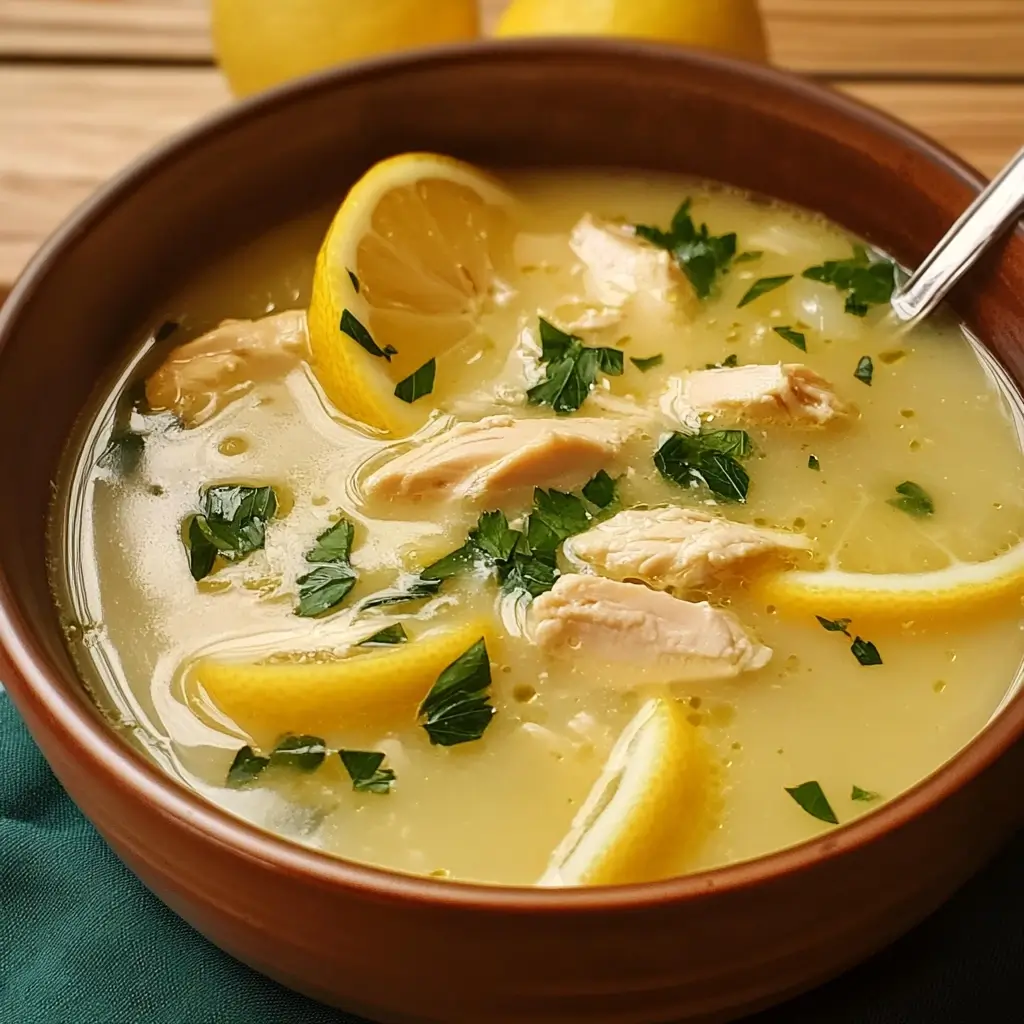

There are certain dishes that transcend mere sustenance; they are edible hugs, liquid comfort, a taste of tradition and home. For my family, and I suspect for many others, Greek Lemon Chicken Soup, or Avgolemono (Αυγολέμονο), is precisely that. The first time I successfully made a truly silky, vibrant Avgolemono, the aroma alone transported me. It wasn’t just chicken soup; it was a sunshine-yellow elixir, tangy from the lemon, rich from the eggs, and deeply savory from the slowly simmered chicken. My kids, usually picky eaters, devoured their bowls, their faces brightened by the zesty warmth. My partner, who has Greek heritage, declared it “just like Yiayia used to make,” which, as any cook knows, is the highest praise imaginable. Since then, it’s become a staple in our home, especially during colder months or when someone needs a little TLC. It’s more than a recipe; it’s a ritual, a connection to a rich culinary heritage, and a guaranteed way to bring smiles to the table. The magic lies in its deceptive simplicity – common ingredients transformed into something extraordinary through careful technique, particularly the art of tempering the eggs. This recipe is my tried-and-true method, honed over many bowls, to achieve that perfect, creamy, curdle-free Avgolemono every single time.
Ingredients for Authentic Greek Lemon Chicken Soup (Avgolemono)
To embark on your Avgolemono journey, you’ll need a selection of fresh, quality ingredients. The beauty of this soup lies in its simplicity, so letting each component shine is key.
- For the Chicken and Broth:
- 1 whole chicken (about 3.5 – 4 lbs / 1.6 – 1.8 kg), preferably free-range or organic, rinsed
- 12 cups (approx. 3 liters) cold water, or enough to cover the chicken
- 1 large yellow onion, peeled and quartered
- 2-3 carrots, peeled and roughly chopped
- 2-3 celery stalks, roughly chopped
- 2 bay leaves
- 1 teaspoon whole black peppercorns
- Salt to taste (start with 1 tablespoon for the broth, adjust later)
- Optional: A few sprigs of fresh parsley or dill for the broth
- For the Soup Assembly:
- 1 cup (approx. 200g) medium-grain rice (like Arborio or Carolina) or Orzo pasta. Rice is more traditional for a thicker soup, orzo for a slightly different texture.
- Salt and freshly ground black pepper to taste
- For the Avgolemono Sauce (The Magic!):
- 3 large eggs, preferably at room temperature
- ½ cup (120 ml) freshly squeezed lemon juice (from about 2-3 large lemons), more or less to taste
- Freshly chopped dill or parsley, for garnish (optional)
- Extra virgin olive oil, for drizzling (optional)
Step-by-Step Instructions for Perfect Avgolemono
Creating the perfect Avgolemono is a process of patience and care, especially when it comes to the egg-lemon sauce. Follow these steps closely for a delicious, creamy result.
Phase 1: Crafting the Flavorful Chicken and Broth
- Prepare the Chicken: Rinse the whole chicken under cold water, removing any giblets from the cavity (you can save these for another stock or discard). Pat the chicken dry with paper towels.
- Simmer the Chicken: Place the whole chicken in a large stockpot or Dutch oven. Add the quartered onion, chopped carrots, celery stalks, bay leaves, whole peppercorns, and the initial 1 tablespoon of salt. If using, add the parsley or dill sprigs. Pour in the cold water, ensuring the chicken is mostly submerged. If not, add a little more water.
- Bring to a Boil, then Simmer: Place the pot over medium-high heat and bring the water to a gentle boil. Once boiling, you’ll notice foam and impurities rising to the surface. Skim this off diligently with a large spoon or skimmer for a clearer, cleaner-tasting broth. This step is crucial.
- Gentle Simmer: Once skimmed, reduce the heat to low, cover the pot loosely (leaving a small gap for steam to escape), and let the chicken simmer gently for 1 to 1.5 hours, or until the chicken is cooked through and tender. The meat should be easily pulling away from the bone. Avoid a rolling boil, as this can make the chicken tough and the broth cloudy.
- Remove Chicken and Strain Broth: Carefully remove the cooked chicken from the pot and set it aside on a cutting board to cool slightly. Once cool enough to handle, shred or dice the chicken meat, discarding the skin, bones, and cartilage. You’ll want about 3-4 cups of shredded chicken for the soup.
- Strain the Broth: Strain the broth through a fine-mesh sieve into a large clean bowl or another pot to remove the vegetables and peppercorns. Discard the solids. You should have approximately 8-10 cups of rich, flavorful chicken broth. If you have significantly more, you can boil it down a bit to concentrate flavors; if less, you can top it up with a little water or store-bought low-sodium chicken broth. Taste the broth and adjust seasoning with salt if necessary.
Phase 2: Cooking the Rice (or Orzo) and Assembling the Soup Base
- Cook the Rice/Orzo: Return about 8 cups of the strained chicken broth to the clean stockpot. Bring it to a gentle simmer over medium heat.
- Add Rice/Orzo: Add the 1 cup of medium-grain rice or orzo pasta to the simmering broth. Stir well to prevent sticking.
- Simmer until Tender: Cook the rice or orzo according to package directions, usually about 15-20 minutes for rice and 8-10 minutes for orzo, or until it’s al dente (tender but still with a slight bite). Stir occasionally to prevent it from sticking to the bottom of the pot. The starch from the rice will also help to naturally thicken the soup.
- Return Chicken to Pot: Once the rice/orzo is cooked, add the shredded or diced chicken meat back into the pot. Stir to combine and let it heat through for a few minutes. Reduce the heat to the lowest possible setting to keep the soup warm but not simmering vigorously. This is very important for the next step.
Phase 3: Creating and Incorporating the Avgolemono Sauce (Tempering)
This is the most critical part of the recipe. Tempering the eggs prevents them from scrambling when added to the hot soup.
- Prepare Egg-Lemon Mixture: In a medium-sized heatproof bowl, crack the 3 large eggs. Whisk them vigorously with a wire whisk or an immersion blender for a minute or two until they are pale yellow, frothy, and well combined.
- Add Lemon Juice: While continuing to whisk, slowly pour the ½ cup of fresh lemon juice into the beaten eggs. Whisk until completely incorporated. The mixture should look smooth and slightly thickened.
- Temper the Eggs (The Crucial Step): Ensure your soup is warm, not boiling or rapidly simmering. Take a ladle (about ½ to ¾ cup) of the hot broth from the soup pot. Very, very slowly, begin to drizzle the hot broth into the egg-lemon mixture while whisking constantly and vigorously. Start with just a tiny trickle, then gradually increase the flow as the egg mixture warms up. This slowly raises the temperature of the eggs, preventing them from cooking and curdling.
- Continue Tempering: Continue adding ladlefuls of hot broth, one at a time, whisking continuously, until you have incorporated about 2 to 3 cups of the hot broth into the egg-lemon mixture. The mixture in the bowl should now be warm to the touch and noticeably thinner.
- Combine with Soup: Now, slowly pour the warmed egg-lemon-broth mixture from the bowl back into the main soup pot, stirring the soup gently and constantly as you pour.
- Gentle Heating (Do Not Boil!): Continue to stir the soup gently over very low heat for another 2-5 minutes to allow it to thicken slightly. Crucially, do not let the soup come to a simmer or boil once the Avgolemono sauce has been added, as this will cause the eggs to curdle. The soup should become visibly creamier and silkier.
- Final Seasoning: Taste the soup one last time. Adjust with more salt, freshly ground black pepper, or a little more lemon juice if desired. Some prefer it tangier, others milder.
Nutritional Snapshot: Understanding Your Bowl
While exact nutritional values can vary based on specific ingredients (like the fat content of the chicken) and portion sizes, here’s an approximate breakdown:
- Servings: This recipe yields approximately 6-8 generous servings.
- Calories per serving (approximate): Around 350-450 calories per serving.
This soup is a good source of protein from the chicken and eggs, carbohydrates from the rice/orzo, and contains vitamins and minerals from the broth and lemon. It’s relatively low in fat if you use lean chicken and skim the broth well.
Time Commitment: From Prep to Plate
Understanding the time involved will help you plan your cooking:
- Preparation Time: Approximately 25-30 minutes (chopping vegetables, rinsing chicken, preparing egg-lemon mixture).
- Cook Time:
- Chicken and broth simmering: 1 hour to 1.5 hours.
- Cooking rice/orzo: 10-20 minutes.
- Tempering eggs and finishing soup: 10 minutes.
- Total Time: Approximately 1 hour 45 minutes to 2 hours 30 minutes.
While it’s not a quick 30-minute meal, much of this is hands-off simmering time, allowing the flavors to develop beautifully.
Serving Suggestions: Elevating Your Avgolemono Experience
Avgolemono is delightful on its own, but a few simple accompaniments can enhance the experience:
- Garnishes:
- Fresh Herbs: A generous sprinkle of freshly chopped dill or flat-leaf parsley right before serving adds a burst of freshness and color. Dill is particularly traditional and complementary.
- Black Pepper: A good grind of fresh black pepper on top is essential for many.
- Lemon Wedges: Serve with extra lemon wedges on the side, allowing individuals to adjust the tanginess to their preference.
- Olive Oil Drizzle: A small swirl of high-quality extra virgin olive oil over each bowl can add richness and a peppery note.
- Breads for Dipping:
- Crusty Bread: A good loaf of crusty European-style bread, sourdough, or a traditional Greek village bread (Horiatiko Psomi) is perfect for soaking up every last drop of the delicious soup.
- Pita Bread: Warm, soft pita bread, either plain or lightly grilled, is another excellent choice.
- Side Dishes:
- Greek Salad (Horiatiki): A simple salad of tomatoes, cucumbers, red onion, Kalamata olives, and feta cheese, dressed with olive oil and oregano, provides a refreshing contrast.
- Olives: A small bowl of good quality Greek olives (like Kalamata or Halkidiki) on the side.
- Feta Cheese: Crumbled feta cheese can be offered on the side to be added to the soup by those who enjoy the salty, tangy kick.
- Presentation:
- Serve the soup hot in warmed bowls to maintain its temperature.
- Ladle generously, ensuring each serving gets a good amount of chicken, rice/orzo, and that silky broth.
Pro Tips for Mastering Your Greek Lemon Chicken Soup
Achieving Avgolemono perfection comes with practice, but these tips will set you on the right path:
- Quality of Broth is Key: The foundation of your soup is the chicken broth. Using a whole chicken and simmering it slowly with aromatics yields a much richer and more flavorful base than using pre-made broth alone. Don’t skip the skimming process for a clearer soup.
- Room Temperature Eggs: While not strictly mandatory, allowing your eggs to come to room temperature for about 30 minutes before whisking can help them combine more easily and create a smoother emulsion with the lemon juice. They are also less likely to “shock” when the warm broth is introduced.
- Patience with Tempering: This cannot be stressed enough. Add the first few ladlefuls of hot broth to the egg-lemon mixture extremely slowly, a trickle at a time, while whisking vigorously. Rushing this step is the primary reason for curdled Avgolemono.
- Control the Heat – No Boiling After Eggs!: Once the tempered egg-lemon mixture is added back to the main pot, the soup must not boil. Keep it on the lowest heat, just enough to warm through and slightly thicken. Boiling will instantly scramble the eggs. If you need to reheat leftovers, do so gently over low heat, stirring frequently, and again, do not let it boil.
- Fresh Lemon Juice Always: The vibrant, zesty flavor of Avgolemono comes from fresh lemons. Bottled lemon juice simply doesn’t compare and can impart an off-taste. Squeeze your lemons just before making the sauce for the best flavor. Adjust the amount to your personal preference – some like it very tangy, others prefer a milder lemon note.
Frequently Asked Questions (FAQ) about Avgolemono
Here are answers to some common questions about making Greek Lemon Chicken Soup:
- Q: Why did my Avgolemono curdle? How can I prevent it?
- A: Curdling is the most common issue and usually happens for two reasons:
- Tempering too quickly: Adding the hot broth to the egg-lemon mixture too fast shocks the eggs, causing them to cook and scramble. Go very slowly, especially with the first cup of broth.
- Boiling after adding eggs: Once the full Avgolemono sauce is incorporated into the soup, if the soup boils (or even simmers too vigorously), the eggs will curdle. Maintain very low heat.
- Prevention: Follow the tempering instructions meticulously and keep the heat low once eggs are in.
- A: Curdling is the most common issue and usually happens for two reasons:
- Q: Can I make Avgolemono ahead of time? How do I store and reheat it?
- A: Yes, you can make it ahead. Store it in an airtight container in the refrigerator for up to 3-4 days. To reheat, do so gently over low heat on the stovetop, stirring frequently. Do not bring it to a boil, as this can cause it to curdle even when reheating. Avoid microwaving if possible, as it can heat unevenly and risk curdling. If the soup thickens too much upon refrigeration (the rice/orzo will continue to absorb liquid), you can stir in a little warm water or chicken broth while reheating to reach your desired consistency.
- Q: Can I use leftover cooked chicken or rotisserie chicken?
- A: Absolutely! If you’re short on time, using pre-cooked chicken is a great shortcut. You’ll miss out on making your own rich broth from scratch, so in this case, use a high-quality store-bought chicken broth (about 8-10 cups). Shred or dice the leftover chicken and add it to the broth along with the rice/orzo once the broth is simmering. Then proceed with the Avgolemono sauce as directed.
- Q: Is Avgolemono gluten-free?
- A: It depends on the starch used. If you make it with rice (as in this recipe), it is naturally gluten-free. However, if you choose to use orzo pasta (which is made from wheat), or another wheat-based pasta, then it will not be gluten-free. Always check your pasta packaging if you have celiac disease or gluten sensitivity.
- Q: My soup isn’t as thick or creamy as I’d like. What can I do?
- A: Several factors contribute to thickness:
- Rice/Orzo Ratio: Using more rice or orzo will naturally thicken the soup as it cooks and releases starch.
- Number of Eggs: Some recipes call for more eggs (e.g., 4-5 for this volume) which will result in a richer, thicker sauce. You can experiment, but be even more careful with tempering.
- Cornstarch (Non-Traditional Fix): For a quick fix, though not traditional, you can make a slurry with 1 tablespoon of cornstarch mixed with 2 tablespoons of cold water. Whisk this into the soup before adding the Avgolemono sauce, and let it simmer for a minute to thicken. Then proceed with tempering and adding the egg-lemon mixture. Traditionalists might frown, but it works in a pinch.
- Allow to Sit: Sometimes, just letting the soup sit off the heat for 10-15 minutes before serving allows it to thicken slightly on its own.
- A: Several factors contribute to thickness:
Greek Lemon Chicken Soup Recipe
Ingredients
- For the Chicken and Broth:
- 1 whole chicken (about 3.5 – 4 lbs / 1.6 – 1.8 kg), preferably free-range or organic, rinsed
- 12 cups (approx. 3 liters) cold water, or enough to cover the chicken
- 1 large yellow onion, peeled and quartered
- 2–3 carrots, peeled and roughly chopped
- 2–3 celery stalks, roughly chopped
- 2 bay leaves
- 1 teaspoon whole black peppercorns
- Salt to taste (start with 1 tablespoon for the broth, adjust later)
- Optional: A few sprigs of fresh parsley or dill for the broth
- For the Soup Assembly:
- 1 cup (approx. 200g) medium-grain rice (like Arborio or Carolina) or Orzo pasta. Rice is more traditional for a thicker soup, orzo for a slightly different texture.
- Salt and freshly ground black pepper to taste
- For the Avgolemono Sauce (The Magic!):
- 3 large eggs, preferably at room temperature
- ½ cup (120 ml) freshly squeezed lemon juice (from about 2–3 large lemons), more or less to taste
- Freshly chopped dill or parsley, for garnish (optional)
- Extra virgin olive oil, for drizzling (optional)
Instructions
Phase 1: Crafting the Flavorful Chicken and Broth
- Prepare the Chicken: Rinse the whole chicken under cold water, removing any giblets from the cavity (you can save these for another stock or discard). Pat the chicken dry with paper towels.
- Simmer the Chicken: Place the whole chicken in a large stockpot or Dutch oven. Add the quartered onion, chopped carrots, celery stalks, bay leaves, whole peppercorns, and the initial 1 tablespoon of salt. If using, add the parsley or dill sprigs. Pour in the cold water, ensuring the chicken is mostly submerged. If not, add a little more water.
- Bring to a Boil, then Simmer: Place the pot over medium-high heat and bring the water to a gentle boil. Once boiling, you’ll notice foam and impurities rising to the surface. Skim this off diligently with a large spoon or skimmer for a clearer, cleaner-tasting broth. This step is crucial.
- Gentle Simmer: Once skimmed, reduce the heat to low, cover the pot loosely (leaving a small gap for steam to escape), and let the chicken simmer gently for 1 to 1.5 hours, or until the chicken is cooked through and tender. The meat should be easily pulling away from the bone. Avoid a rolling boil, as this can make the chicken tough and the broth cloudy.
- Remove Chicken and Strain Broth: Carefully remove the cooked chicken from the pot and set it aside on a cutting board to cool slightly. Once cool enough to handle, shred or dice the chicken meat, discarding the skin, bones, and cartilage. You’ll want about 3-4 cups of shredded chicken for the soup.
- Strain the Broth: Strain the broth through a fine-mesh sieve into a large clean bowl or another pot to remove the vegetables and peppercorns. Discard the solids. You should have approximately 8-10 cups of rich, flavorful chicken broth. If you have significantly more, you can boil it down a bit to concentrate flavors; if less, you can top it up with a little water or store-bought low-sodium chicken broth. Taste the broth and adjust seasoning with salt if necessary.
Phase 2: Cooking the Rice (or Orzo) and Assembling the Soup Base
- Cook the Rice/Orzo: Return about 8 cups of the strained chicken broth to the clean stockpot. Bring it to a gentle simmer over medium heat.
- Add Rice/Orzo: Add the 1 cup of medium-grain rice or orzo pasta to the simmering broth. Stir well to prevent sticking.
- Simmer until Tender: Cook the rice or orzo according to package directions, usually about 15-20 minutes for rice and 8-10 minutes for orzo, or until it’s al dente (tender but still with a slight bite). Stir occasionally to prevent it from sticking to the bottom of the pot. The starch from the rice will also help to naturally thicken the soup.
- Return Chicken to Pot: Once the rice/orzo is cooked, add the shredded or diced chicken meat back into the pot. Stir to combine and let it heat through for a few minutes. Reduce the heat to the lowest possible setting to keep the soup warm but not simmering vigorously. This is very important for the next step.
Phase 3: Creating and Incorporating the Avgolemono Sauce (Tempering)
This is the most critical part of the recipe. Tempering the eggs prevents them from scrambling when added to the hot soup.
- Prepare Egg-Lemon Mixture: In a medium-sized heatproof bowl, crack the 3 large eggs. Whisk them vigorously with a wire whisk or an immersion blender for a minute or two until they are pale yellow, frothy, and well combined.
- Add Lemon Juice: While continuing to whisk, slowly pour the ½ cup of fresh lemon juice into the beaten eggs. Whisk until completely incorporated. The mixture should look smooth and slightly thickened.
- Temper the Eggs (The Crucial Step): Ensure your soup is warm, not boiling or rapidly simmering. Take a ladle (about ½ to ¾ cup) of the hot broth from the soup pot. Very, very slowly, begin to drizzle the hot broth into the egg-lemon mixture while whisking constantly and vigorously. Start with just a tiny trickle, then gradually increase the flow as the egg mixture warms up. This slowly raises the temperature of the eggs, preventing them from cooking and curdling.
- Continue Tempering: Continue adding ladlefuls of hot broth, one at a time, whisking continuously, until you have incorporated about 2 to 3 cups of the hot broth into the egg-lemon mixture. The mixture in the bowl should now be warm to the touch and noticeably thinner.
- Combine with Soup: Now, slowly pour the warmed egg-lemon-broth mixture from the bowl back into the main soup pot, stirring the soup gently and constantly as you pour.
- Gentle Heating (Do Not Boil!): Continue to stir the soup gently over very low heat for another 2-5 minutes to allow it to thicken slightly. Crucially, do not let the soup come to a simmer or boil once the Avgolemono sauce has been added, as this will cause the eggs to curdle. The soup should become visibly creamier and silkier.
- Final Seasoning: Taste the soup one last time. Adjust with more salt, freshly ground black pepper, or a little more lemon juice if desired. Some prefer it tangier, others milder.
Nutrition
- Serving Size: One Normal Portion
- Calories: 350-450