
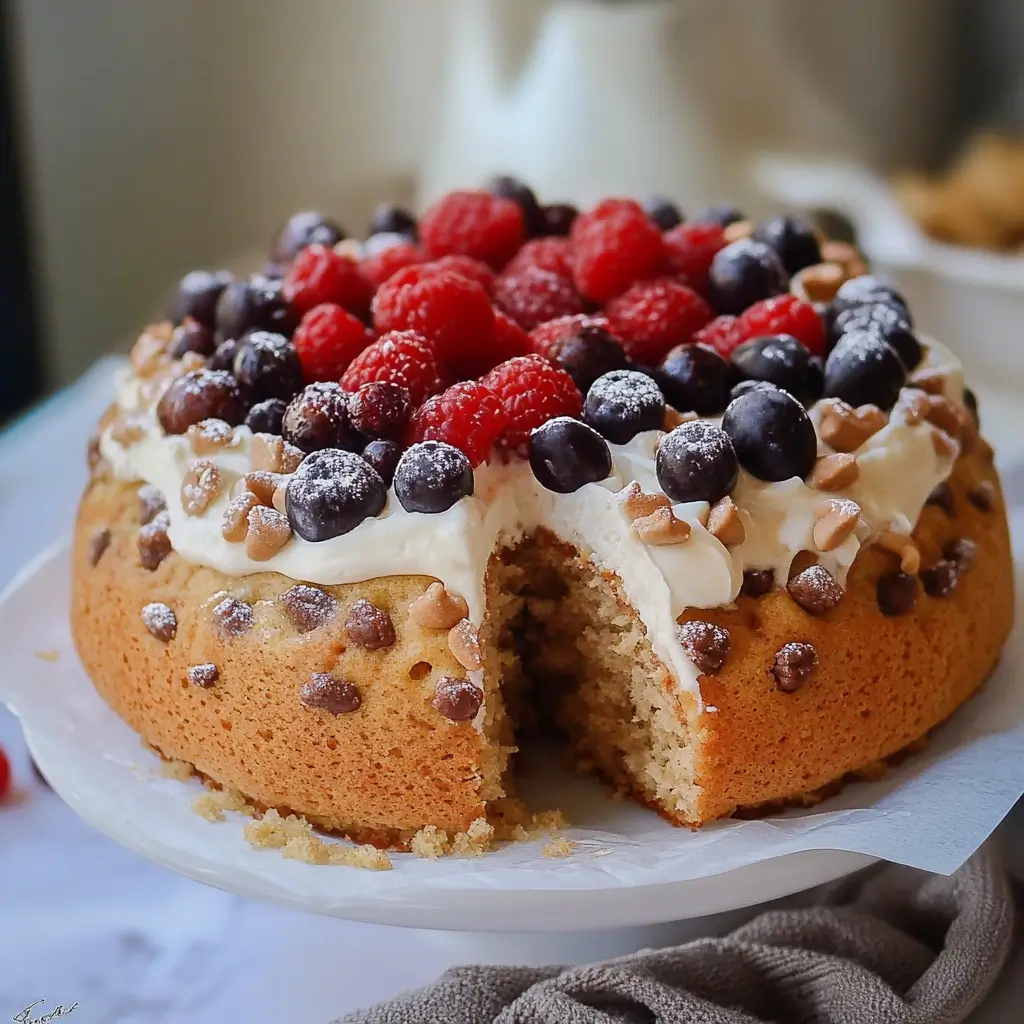

This Greek Yogurt Cake has become an absolute staple in our household, a go-to recipe that never fails to impress. The first time I baked it, I was looking for something a little lighter than a traditional pound cake but still satisfyingly moist and flavorful. The aroma that filled my kitchen as it baked – a warm, slightly tangy, sweet scent – was already a good omen. When it came out of the oven, golden brown and perfectly risen, I could hardly wait for it to cool. The first slice was a revelation: incredibly tender, with a delicate crumb and a beautiful, subtle tang from the Greek yogurt that balanced the sweetness perfectly. My family devoured it! My kids, who can sometimes be picky, asked for seconds, and my husband declared it one of the best “simple” cakes he’d ever had. It’s since become our favorite for weekend brunches, afternoon tea, and even as a light dessert after dinner. Its versatility is another huge plus; delicious on its own, it’s also a fantastic canvas for fresh berries, a dusting of powdered sugar, or a zesty lemon glaze. It’s the kind of recipe you’ll make again and again.
Ingredients for the Perfect Greek Yogurt Cake
Crafting this delightful cake requires a handful of simple, high-quality ingredients. The star, of course, is the Greek yogurt, which lends unparalleled moisture and a lovely tang. Here’s what you’ll need to gather:
- All-Purpose Flour: 1 ½ cups (180g) – Provides the main structure for the cake.
- Baking Powder: 2 teaspoons – The primary leavening agent, helping the cake rise and become light.
- Baking Soda: ½ teaspoon – Works with the acidity of the Greek yogurt for an extra lift.
- Salt: ½ teaspoon – Balances the sweetness and enhances the overall flavor.
- Granulated Sugar: 1 cup (200g) – For sweetness; you can slightly reduce if preferred, but it also contributes to texture.
- Large Eggs: 3 – Bind the ingredients, add richness, and help with leavening. Ensure they are at room temperature.
- Full-Fat Greek Yogurt: 1 cup (240g) – The hero ingredient! Use plain, unsweetened. Full-fat yields the best texture and moisture. Room temperature is ideal.
- Vegetable Oil (or other neutral oil like canola, sunflower): ½ cup (120ml) – Contributes to a moist and tender crumb. Light olive oil can also be used for a subtle fruity note.
- Vanilla Extract: 1 ½ teaspoons – Adds a classic warm flavor that complements the yogurt.
- Lemon Zest: From 1 large lemon (optional, but highly recommended) – Brightens the flavor and adds a lovely citrusy aroma. Orange zest works well too.
A note on ingredients: Using room temperature eggs and Greek yogurt is crucial. Cold ingredients don’t emulsify as well, which can result in a denser cake. If you forget to take them out, you can place eggs in a bowl of warm (not hot) water for 5-10 minutes, and microwave Greek yogurt for just 10-15 seconds (be careful not to cook it).
Step-by-Step Instructions for Baking Your Greek Yogurt Cake
Follow these instructions carefully, and you’ll be rewarded with a beautifully moist and flavorful cake. The process is straightforward, making it a great recipe for bakers of all skill levels.
- Preheat and Prepare:
- Preheat your oven to 350°F (175°C).
- Grease and flour a 9-inch round cake pan or a standard loaf pan (approximately 8.5 x 4.5 inches or 9 x 5 inches). Alternatively, line the bottom with parchment paper and grease the sides for easier removal. This step is vital to prevent the cake from sticking.
- Combine Dry Ingredients:
- In a medium-sized mixing bowl, whisk together the all-purpose flour, baking powder, baking soda, and salt. Whisking helps to aerate the flour and distribute the leavening agents evenly, which contributes to a lighter cake. Set aside.
- Combine Wet Ingredients:
- In a separate large mixing bowl, add the granulated sugar and the large eggs. Using an electric hand mixer or a stand mixer fitted with the paddle attachment, beat the eggs and sugar together on medium speed for about 2-3 minutes, or until the mixture is pale, light, and slightly fluffy. This step incorporates air, which also contributes to a lighter texture.
- Add the full-fat Greek yogurt, vegetable oil, and vanilla extract to the egg and sugar mixture. If you’re using lemon zest, add it now as well. Beat on low speed until everything is just combined and smooth. Scrape down the sides of the bowl as needed to ensure all ingredients are incorporated. Be careful not to overmix at this stage.
- Combine Wet and Dry Mixtures:
- Gradually add the dry ingredient mixture to the wet ingredient mixture in two or three additions. Mix on low speed or fold gently with a spatula until just combined. It’s very important not to overmix here; mix only until you no longer see streaks of flour. A few small lumps are perfectly fine. Overmixing develops the gluten in the flour, which can result in a tougher, denser cake.
- Pour Batter and Bake:
- Pour the prepared batter evenly into your greased and floured cake pan. Use a spatula to spread it out smoothly.
- Bake in the preheated oven for 35-45 minutes for a round pan, or 45-55 minutes for a loaf pan. The baking time can vary depending on your oven and the pan type.
- The cake is done when it’s golden brown on top, and a wooden skewer or toothpick inserted into the center comes out clean, or with a few moist crumbs attached (but no wet batter).
- Cool the Cake:
- Once baked, remove the cake from the oven and let it cool in the pan on a wire rack for about 10-15 minutes. This allows the cake to set slightly, making it easier to remove from the pan without breaking.
- After 10-15 minutes, carefully invert the cake onto the wire rack to cool completely. If you used parchment paper on the bottom, peel it off. Complete cooling is essential, especially if you plan to glaze or frost it, as a warm cake will melt any toppings. This can take 1-2 hours.
Nutritional Insights: A Closer Look at Your Cake
While this Greek Yogurt Cake is undeniably a treat, the inclusion of Greek yogurt does offer some nutritional benefits compared to more traditional butter-laden cakes. Here’s an approximate breakdown:
- Servings: This recipe typically yields 10-12 servings, depending on how you slice it.
- Calories per serving (approximate): Around 280-330 calories per serving (if sliced into 10).
Key Nutritional Points:
- Protein: Greek yogurt is a good source of protein, which contributes a small amount to each slice. Eggs also add to the protein content.
- Fat: The fat content comes primarily from the oil and full-fat Greek yogurt. Using oil instead of butter generally means less saturated fat.
- Carbohydrates: Primarily from the flour and sugar.
- Calcium: Greek yogurt provides some calcium.
Please note that these are estimates. Actual nutritional values can vary based on specific ingredient brands, precise measurements, and final serving sizes. If you’re looking to reduce sugar or fat, you can experiment, but be aware that it might alter the cake’s texture and moisture. For instance, using low-fat yogurt might result in a slightly less tender cake.
Time Commitment: From Prep to Perfection
Understanding the time involved will help you plan your baking session. This cake is relatively quick to whip up, with most of the time dedicated to baking and cooling.
- Preparation Time: 15-20 minutes
- This includes gathering and measuring ingredients, preheating the oven, and preparing the cake pan.
- Baking Time: 35-55 minutes
- 35-45 minutes for a 9-inch round pan.
- 45-55 minutes for a standard loaf pan.
- Always rely on the doneness test (toothpick method) as oven temperatures can vary.
- Cooling Time: 1 – 2 hours (minimum)
- 10-15 minutes in the pan.
- At least 1 hour (preferably 2) on a wire rack to cool completely before slicing or decorating. Patience during cooling is key for the best texture and to prevent the cake from crumbling.
Total Estimated Time: Approximately 2 to 3 hours (including full cooling). Active time is only about 15-20 minutes.
Serving Suggestions: Elevate Your Greek Yogurt Cake Experience
This Greek Yogurt Cake is wonderfully versatile. It’s delicious served plain, perhaps with a cup of coffee or tea, but it also provides a fantastic base for various toppings and accompaniments. Here are some ideas to inspire you:
- Simply Dusted:
- A light dusting of powdered sugar just before serving adds a touch of elegance and sweetness.
- Fresh & Fruity:
- Serve with a medley of fresh berries (strawberries, blueberries, raspberries, blackberries). The tartness of the berries beautifully complements the cake.
- A dollop of fruit compote or a warm fruit sauce (like a berry coulis or a warm peach sauce) is divine.
- Creamy Accompaniments:
- A spoonful of extra Greek yogurt (sweetened or plain) on the side reinforces the cake’s primary flavor.
- A dollop of lightly sweetened whipped cream or crème fraîche adds richness.
- A scoop of vanilla bean ice cream turns it into a more decadent dessert, especially if the cake is slightly warm.
- Zesty Glazes:
- A simple lemon glaze (powdered sugar mixed with fresh lemon juice) drizzled over the cooled cake enhances the citrus notes.
- An orange glaze (using orange juice and zest) offers a different citrus twist.
- Other Toppings:
- A sprinkle of toasted sliced almonds or chopped pistachios for a bit of crunch.
- A drizzle of honey for a natural sweetness that pairs well with yogurt.
- For a richer treat, a thin layer of chocolate ganache or a drizzle of melted chocolate.
- As a Breakfast or Brunch Item:
- Serve slices alongside a fruit salad and a cup of coffee for a delightful start to the day.
- With a Hot Beverage:
- Perfect with coffee, tea (black, green, or herbal), or even a latte.
Experiment with these suggestions or come up with your own! The cake’s balanced flavor profile makes it adaptable to many pairings.
Pro Tips for the Ultimate Greek Yogurt Cake
To ensure your Greek Yogurt Cake turns out perfectly every time, keep these professional tips in mind:
- Room Temperature Ingredients are Key: This cannot be stressed enough. Eggs, Greek yogurt, and even oil (if stored in a cold pantry) should be at room temperature. This helps them emulsify properly, creating a smoother batter and a lighter, more tender crumb. Cold ingredients can lead to a dense, unevenly baked cake.
- Don’t Overmix the Batter: Once you combine the wet and dry ingredients, mix only until they are just incorporated. A few small lumps in the batter are perfectly fine. Overmixing develops the gluten in the flour, which will result in a tough, chewy cake rather than a tender one. Use a spatula for the final mixing stages for better control.
- Proper Pan Preparation: Thoroughly grease your cake pan with butter or baking spray, then lightly dust it with flour, tapping out any excess. Alternatively, line the bottom with parchment paper and grease the sides. This creates a non-stick surface, ensuring your cake releases easily from the pan without tearing.
- The Toothpick Test is Your Best Friend: Ovens can vary, so baking times are always an estimate. Start checking for doneness a few minutes before the minimum recommended time. Insert a wooden skewer or toothpick into the thickest part of the cake. If it comes out clean or with a few moist crumbs attached, it’s done. If there’s wet batter, it needs more time.
- Cool Completely Before Slicing or Glazing: Be patient! Let the cake cool in the pan for 10-15 minutes before inverting it onto a wire rack to cool completely. Attempting to slice or glaze a warm cake can cause it to crumble or the glaze to melt and slide off. A fully cooled cake will have a better texture and hold its shape.
Frequently Asked Questions (FAQ) About Greek Yogurt Cake
Here are answers to some common questions you might have about making this Greek Yogurt Cake:
- Q: Can I use low-fat or non-fat Greek yogurt?
- A: Yes, you can, but full-fat Greek yogurt is highly recommended for the best results. Full-fat yogurt contributes more moisture and richness, leading to a more tender and flavorful cake. Using low-fat or non-fat versions might result in a slightly drier or less tender crumb. If you do use a lower-fat option, ensure it’s still plain and unsweetened.
- Q: Can I make this cake gluten-free?
- A: Yes, you can try substituting the all-purpose flour with a good quality 1:1 gluten-free baking flour blend (one that contains xanthan gum or another binder). The texture might be slightly different from the original, but it should still yield a delicious cake. Ensure your other ingredients (like baking powder) are also certified gluten-free if catering to someone with celiac disease.
- Q: How should I store the Greek Yogurt Cake?
- A: Store the cake in an airtight container at room temperature for up to 3 days. If your kitchen is very warm, or if you’ve added a glaze with dairy, it’s best to store it in an airtight container in the refrigerator for up to 5 days. Allow refrigerated cake to come to room temperature before serving for the best flavor and texture.
- Q: Can I freeze this cake?
- A: Yes, this cake freezes well! Allow it to cool completely, then wrap it tightly in plastic wrap, followed by a layer of aluminum foil or place it in a freezer-safe container. It can be frozen whole or in individual slices for up to 3 months. Thaw overnight in the refrigerator or at room temperature for a few hours before serving.
- Q: Can I add other flavorings or mix-ins?
- A: Absolutely! This cake is a great base for experimentation.
- Citrus: Try orange zest instead of or in addition to lemon zest. A tablespoon or two of fresh lemon or orange juice can also be added to the wet ingredients.
- Spices: Add ½ teaspoon of cardamom or a pinch of nutmeg for a warm, spiced flavor.
- Extracts: Substitute part of the vanilla with almond extract or orange blossom water for a different aroma.
- Mix-ins: Gently fold in ½ to ¾ cup of fresh or frozen (don’t thaw) berries, chocolate chips, or chopped nuts into the batter just before pouring it into the pan. If using berries, lightly toss them in a tablespoon of flour first to prevent them from sinking to the bottom.
- A: Absolutely! This cake is a great base for experimentation.
Greek Yogurt Cake Recipe
Ingredients
- All-Purpose Flour: 1 ½ cups (180g) – Provides the main structure for the cake.
- Baking Powder: 2 teaspoons – The primary leavening agent, helping the cake rise and become light.
- Baking Soda: ½ teaspoon – Works with the acidity of the Greek yogurt for an extra lift.
- Salt: ½ teaspoon – Balances the sweetness and enhances the overall flavor.
- Granulated Sugar: 1 cup (200g) – For sweetness; you can slightly reduce if preferred, but it also contributes to texture.
- Large Eggs: 3 – Bind the ingredients, add richness, and help with leavening. Ensure they are at room temperature.
- Full-Fat Greek Yogurt: 1 cup (240g) – The hero ingredient! Use plain, unsweetened. Full-fat yields the best texture and moisture. Room temperature is ideal.
- Vegetable Oil (or other neutral oil like canola, sunflower): ½ cup (120ml) – Contributes to a moist and tender crumb. Light olive oil can also be used for a subtle fruity note.
- Vanilla Extract: 1 ½ teaspoons – Adds a classic warm flavor that complements the yogurt.
- Lemon Zest: From 1 large lemon (optional, but highly recommended) – Brightens the flavor and adds a lovely citrusy aroma. Orange zest works well too.
Instructions
- Preheat and Prepare:
- Preheat your oven to 350°F (175°C).
- Grease and flour a 9-inch round cake pan or a standard loaf pan (approximately 8.5 x 4.5 inches or 9 x 5 inches). Alternatively, line the bottom with parchment paper and grease the sides for easier removal. This step is vital to prevent the cake from sticking.
- Combine Dry Ingredients:
- In a medium-sized mixing bowl, whisk together the all-purpose flour, baking powder, baking soda, and salt. Whisking helps to aerate the flour and distribute the leavening agents evenly, which contributes to a lighter cake. Set aside.
- Combine Wet Ingredients:
- In a separate large mixing bowl, add the granulated sugar and the large eggs. Using an electric hand mixer or a stand mixer fitted with the paddle attachment, beat the eggs and sugar together on medium speed for about 2-3 minutes, or until the mixture is pale, light, and slightly fluffy. This step incorporates air, which also contributes to a lighter texture.
- Add the full-fat Greek yogurt, vegetable oil, and vanilla extract to the egg and sugar mixture. If you’re using lemon zest, add it now as well. Beat on low speed until everything is just combined and smooth. Scrape down the sides of the bowl as needed to ensure all ingredients are incorporated. Be careful not to overmix at this stage.
- Combine Wet and Dry Mixtures:
- Gradually add the dry ingredient mixture to the wet ingredient mixture in two or three additions. Mix on low speed or fold gently with a spatula until just combined. It’s very important not to overmix here; mix only until you no longer see streaks of flour. A few small lumps are perfectly fine. Overmixing develops the gluten in the flour, which can result in a tougher, denser cake.
- Pour Batter and Bake:
- Pour the prepared batter evenly into your greased and floured cake pan. Use a spatula to spread it out smoothly.
- Bake in the preheated oven for 35-45 minutes for a round pan, or 45-55 minutes for a loaf pan. The baking time can vary depending on your oven and the pan type.
- The cake is done when it’s golden brown on top, and a wooden skewer or toothpick inserted into the center comes out clean, or with a few moist crumbs attached (but no wet batter).
- Cool the Cake:
- Once baked, remove the cake from the oven and let it cool in the pan on a wire rack for about 10-15 minutes. This allows the cake to set slightly, making it easier to remove from the pan without breaking.
- After 10-15 minutes, carefully invert the cake onto the wire rack to cool completely. If you used parchment paper on the bottom, peel it off. Complete cooling is essential, especially if you plan to glaze or frost it, as a warm cake will melt any toppings. This can take 1-2 hours.
Nutrition
- Serving Size: One Normal Portion
- Calories: 280-330