
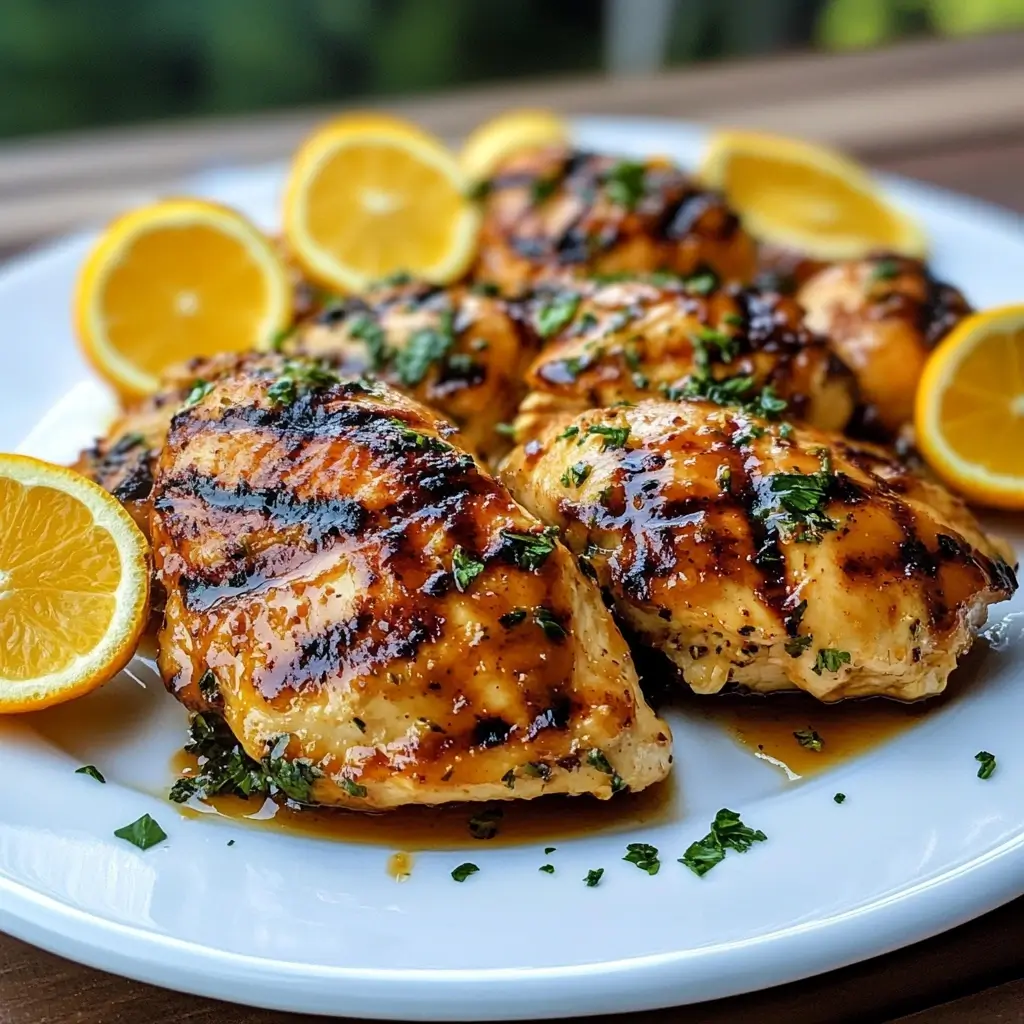

This Grilled Citrus Chicken with Glaze isn’t just another recipe in my collection; it’s become a symbol of warm evenings, backyard gatherings, and pure, unadulterated flavour satisfaction in our house. The first time I tested this, the aroma wafting from the grill was intoxicating – that bright, zesty citrus mingling with the subtle smokiness of the charcoal. My family, initially drawn outside by the incredible smell, was absolutely silent during the first few bites, followed by a chorus of “Wow, what is this?!” The chicken was unbelievably moist, bursting with tangy freshness from the marinade, and the glaze… oh, that glaze! It added a sticky, sweet, slightly caramelized layer that perfectly balanced the citrus tang. It was an instant hit, requested repeatedly for weekend BBQs and even special occasions. It manages to be both sophisticated enough for guests and easy enough for a weeknight treat (with a little planning for the marinating time). The balance of sweet, tangy, savoury, and smoky is simply divine, creating a dish that truly tastes like sunshine on a plate. It has consistently delivered juicy, flavourful results every single time, making it one of my most reliable and beloved grilling recipes. Sharing it feels like sharing a little piece of our family’s summer joy.
Ingredients for Grilled Citrus Chicken and Glaze
To achieve that perfect balance of zesty, sweet, and savoury, you’ll need two sets of components: one for the flavour-infusing marinade and another for the irresistible sticky glaze. Using fresh ingredients, especially citrus, is key here.
For the Citrus Chicken Marinade:
- Chicken: 4 medium-sized boneless, skinless chicken breasts (about 6-8 oz / 170-225g each), or 6-8 boneless, skinless chicken thighs. Ensure they are relatively uniform in thickness for even cooking. You can lightly pound thicker parts of the breasts if needed.
- Orange Juice: 1/2 cup (120ml) freshly squeezed orange juice. Using fresh provides the brightest flavour compared to bottled.
- Lemon Juice: 1/4 cup (60ml) freshly squeezed lemon juice. Adds a necessary sharp tang.
- Lime Juice: 2 tablespoons (30ml) freshly squeezed lime juice. Brings another layer of citrus complexity.
- Orange Zest: 1 tablespoon freshly grated orange zest. Zest contains essential oils for intense citrus aroma and flavour – zest before juicing!
- Lemon Zest: 1 teaspoon freshly grated lemon zest.
- Olive Oil: 1/4 cup (60ml) extra virgin olive oil. Helps distribute flavours, adds richness, and prevents sticking.
- Garlic: 3-4 cloves garlic, minced (about 1 tablespoon). Fresh garlic is best.
- Soy Sauce: 2 tablespoons (30ml) low-sodium soy sauce or tamari for gluten-free. Adds umami depth and saltiness.
- Dijon Mustard: 1 tablespoon (15ml). Adds a subtle tang and helps emulsify the marinade.
- Dried Oregano: 1 teaspoon.
- Smoked Paprika: 1/2 teaspoon. Adds a hint of smokiness that complements the grill.
- Black Pepper: 1/2 teaspoon freshly ground black pepper.
- Salt: 1/4 teaspoon kosher salt (adjust based on soy sauce sodium level). Remember soy sauce adds saltiness.
- (Optional) Red Pepper Flakes: 1/4 – 1/2 teaspoon for a touch of heat.
For the Sweet Citrus Glaze:
- Orange Juice: 1/3 cup (80ml) freshly squeezed orange juice.
- Honey: 1/4 cup (60ml). Provides sweetness and helps the glaze thicken and caramelize. Maple syrup or agave can be substituted.
- Brown Sugar: 2 tablespoons packed light brown sugar. Adds depth of flavour and aids caramelization.
- Soy Sauce: 1 tablespoon (15ml) low-sodium soy sauce or tamari.
- Apple Cider Vinegar: 1 tablespoon (15ml). Adds a balancing acidity to the sweetness.
- Cornstarch: 1 teaspoon mixed with 1 tablespoon cold water (slurry). To thicken the glaze.
- Butter: 1 tablespoon unsalted butter (optional, but adds richness and shine at the end).
- Ginger: 1 teaspoon freshly grated ginger (optional, adds a warm spice note).
Step-by-Step Instructions
Follow these steps carefully for perfectly marinated, grilled, and glazed citrus chicken. The process involves marinating, preparing the grill and glaze, grilling the chicken, and finishing with that luscious glaze.
1. Prepare the Marinade:
- In a medium-sized bowl, whisk together all the marinade ingredients: fresh orange juice, lemon juice, lime juice, orange zest, lemon zest, olive oil, minced garlic, soy sauce, Dijon mustard, dried oregano, smoked paprika, black pepper, salt, and optional red pepper flakes.
- Ensure the ingredients are well combined. The olive oil might separate slightly, but a good whisking will emulsify it temporarily. Taste and adjust seasoning if necessary, keeping in mind the flavours will intensify as the chicken marinates.
2. Marinate the Chicken:
- Pat the chicken pieces completely dry with paper towels. This step is crucial as it helps the marinade adhere better and allows the chicken to sear nicely on the grill rather than steam.
- Place the chicken pieces in a large resealable plastic bag or a non-reactive dish (like glass or ceramic).
- Pour the prepared marinade over the chicken, ensuring all pieces are evenly coated. Seal the bag, pressing out as much air as possible, or cover the dish tightly with plastic wrap.
- Massage the marinade gently into the chicken through the bag.
- Refrigerate the chicken to marinate for at least 30 minutes, but ideally for 2-4 hours for optimal flavour infusion. Important: Due to the acidity of the citrus juices, do not marinate for longer than 6-8 hours, especially for chicken breasts, as the texture can become mushy. Chicken thighs are more forgiving.
3. Prepare the Grill:
- About 20-30 minutes before you plan to cook, prepare your grill for medium-high heat (around 400-450°F or 200-230°C).
- For a charcoal grill: Arrange the hot coals for two-zone cooking – one side with a concentrated layer of coals (direct heat) and the other side with few or no coals (indirect heat).
- For a gas grill: Preheat all burners on high, then turn one or two burners down to medium or low to create direct and indirect heat zones.
- Clean the grill grates thoroughly with a grill brush. This prevents sticking and ensures clean grill marks.
- Just before placing the chicken on the grill, oil the grates. Fold a paper towel, dip it lightly in a high-smoke-point oil (like canola, vegetable, or grapeseed oil), and use long tongs to carefully wipe the hot grates.
4. Prepare the Citrus Glaze:
- While the grill is preheating or the chicken is nearing the end of its marinating time, prepare the glaze.
- In a small saucepan, combine the glaze ingredients: orange juice, honey, brown sugar, soy sauce, and apple cider vinegar (and optional ginger, if using).
- Bring the mixture to a simmer over medium heat, stirring occasionally until the sugar dissolves completely.
- In a separate small cup, whisk together the cornstarch and cold water until smooth to create a slurry.
- Slowly pour the cornstarch slurry into the simmering glaze mixture while whisking constantly.
- Continue to simmer and whisk for 1-2 minutes, or until the glaze thickens enough to coat the back of a spoon. It will thicken further as it cools slightly.
- Remove the glaze from the heat. If using, stir in the optional tablespoon of butter until melted for extra richness and shine. Set aside. Note: You will use about half of the glaze during grilling and reserve the rest for serving.
5. Grill the Chicken:
- Remove the chicken from the marinade, letting any excess marinade drip off. Discard the used marinade – it is not safe to consume without boiling thoroughly first. Pat the chicken pieces lightly again with paper towels; this helps achieve better grill marks and prevents flare-ups from dripping marinade.
- Place the chicken pieces on the preheated, oiled grill grates over the direct heat zone.
- Sear the chicken for about 3-5 minutes per side, or until golden brown grill marks appear. Don’t move the chicken too much during this searing phase to allow marks to develop.
- If the chicken is browning too quickly or flare-ups occur, move the chicken to the indirect heat zone.
- Continue grilling over indirect heat (or medium heat if only using direct), flipping occasionally, until the chicken is cooked through. The total grilling time will vary depending on the thickness of the chicken and the heat of your grill, typically taking 15-25 minutes in total. Chicken breasts should reach an internal temperature of 165°F (74°C) in the thickest part, checked with an instant-read thermometer. Chicken thighs can be cooked slightly higher, to 170-175°F (77-79°C), for better texture.
6. Glaze and Finish:
- During the last 5-7 minutes of grilling (when the chicken is almost cooked through), start brushing the chicken generously with about half of the prepared citrus glaze.
- Flip the chicken and brush the other side. Continue to grill for a few more minutes, brushing with glaze 1-2 more times, allowing the glaze to caramelize slightly. Watch carefully during this stage, as the sugars in the glaze can burn easily. Move to indirect heat if needed to prevent burning while the chicken finishes cooking.
7. Rest the Chicken:
- Once the chicken reaches the safe internal temperature, remove it from the grill and transfer it to a clean cutting board or platter.
- Tent the chicken loosely with foil and let it rest for 5-10 minutes. This crucial step allows the juices to redistribute throughout the meat, resulting in a much juicier and more tender piece of chicken. Skipping this step will cause the juices to run out when you cut into it.
8. Serve:
- After resting, slice the chicken against the grain (if serving sliced) or serve whole pieces.
- Drizzle or brush the reserved citrus glaze over the chicken just before serving for an extra layer of flavour and a beautiful sheen. Garnish as desired (see serving suggestions). Enjoy immediately!
Nutrition Facts (Approximate)
Please note that these values are estimates and can vary based on the specific ingredients used (e.g., size of chicken pieces, brand of soy sauce, exact amount of oil absorbed) and serving size.
- Servings: 4 servings (assuming 1 medium chicken breast or 1.5-2 thighs per serving)
- Calories per Serving: Approximately 380-450 kcal
Disclaimer: This nutritional information is calculated using standard databases and should be considered an approximation. Factors like specific ingredient brands, exact portion sizes, and variations in cooking methods can alter the values. For precise nutritional information, it’s recommended to use a dedicated nutrition calculator with your specific ingredients. The majority of calories come from the chicken protein, olive oil in the marinade, and sugars (honey, brown sugar, orange juice) in the glaze.
Preparation and Cooking Time
Planning your time ensures a smooth cooking process, especially considering the necessary marinating period.
- Preparation Time: 20 minutes (Includes making the marinade, preparing the chicken, and making the glaze)
- Marinating Time: 30 minutes (minimum) to 4 hours (recommended). Up to 8 hours is acceptable, but avoid longer times.
- Grilling Time: 15-25 minutes (depending on chicken thickness and grill temperature)
- Resting Time: 5-10 minutes
- Total Active Time: Approximately 40-50 minutes (Prep + Grilling)
- Total Time (including minimum marinating & resting): Approximately 1 hour 20 minutes
- Total Time (including recommended marinating & resting): Approximately 2 hours 35 minutes to 4 hours 35 minutes
Why This Grilled Citrus Chicken Recipe Works So Well
Understanding the science and culinary principles behind this recipe helps appreciate why it yields such delicious results consistently.
- Tenderization and Flavour Infusion: The acidity from the orange, lemon, and lime juices works to gently tenderize the chicken muscle fibers. Unlike harsher acids, citrus provides a bright flavour profile without making the chicken overly acidic or tough (if marinated for the correct duration). The salt (from soy sauce and added salt) also helps the muscle fibers retain moisture through brining action. The olive oil carries fat-soluble flavours (like those in garlic and zest) deep into the meat.
- The Power of Citrus Zest: While the juice provides acidity and liquid, the zest is where the potent aromatic oils reside. Including zest in the marinade delivers a much more intense and complex citrus aroma and flavour that permeates the chicken.
- Balanced Flavour Profile: The recipe carefully balances key taste elements:
- Tanginess: From the multiple citrus juices and vinegar in the glaze.
- Sweetness: From the honey, brown sugar, and natural sweetness of orange juice in the glaze, balancing the acidity and creating caramelization potential.
- Savouriness (Umami): Provided by the soy sauce in both the marinade and glaze, adding depth and a satisfying meaty background note.
- Saltiness: Crucial for enhancing all other flavours, primarily from soy sauce and added salt.
- Aromatic & Spice Notes: Garlic, oregano, smoked paprika, black pepper, and optional ginger/red pepper flakes add layers of complexity beyond the core flavours.
- Maillard Reaction and Caramelization: Grilling over medium-high heat achieves two critical flavour-building processes. The Maillard reaction occurs between amino acids and reducing sugars in the chicken and marinade, creating hundreds of different flavour compounds responsible for the characteristic browned, “meaty” taste of grilled food. The glaze, rich in sugars (honey, brown sugar, juice), undergoes caramelization when heated, creating deep, nutty, slightly bittersweet notes and that appealing sticky texture. Applying the glaze towards the end prevents the sugars from burning before the chicken is cooked.
- Two-Zone Grilling: Setting up direct and indirect heat zones gives you control. Searing over direct heat develops flavour and grill marks, while moving to indirect heat allows the chicken to cook through gently and evenly without burning the exterior or drying out the interior. This is especially important once the sugary glaze is applied.
- Resting is Essential: Allowing the grilled chicken to rest before slicing lets the muscle fibers relax and reabsorb the juices that were pushed towards the center during cooking. This simple step makes a significant difference in the final juiciness and tenderness of the chicken.
Choosing the Right Chicken Cut
While the recipe specifies boneless, skinless breasts or thighs, understanding the differences can help you choose based on preference and occasion:
- Boneless, Skinless Chicken Breasts: Leaner and cook relatively quickly. They benefit greatly from marinating to boost flavour and moisture. Be cautious not to overcook them, as they can dry out easily. Pounding thicker ends slightly helps ensure even cooking. Ideal for those seeking a lower-fat option.
- Boneless, Skinless Chicken Thighs: Contain slightly more fat, which translates to more flavour and moisture. They are more forgiving and less prone to drying out, even if slightly overcooked. Thighs often have a richer taste that pairs wonderfully with the citrus glaze. Cooking time might be slightly longer than for breasts of similar thickness.
- Bone-In Chicken Pieces (Breasts, Thighs, Drumsticks): The bone adds flavour and helps conduct heat, potentially leading to more even cooking, but significantly increases grilling time. You’ll rely more heavily on indirect heat after an initial sear. Ensure the meat near the bone reaches the safe internal temperature. The skin, if left on, can become wonderfully crispy but also adds fat. Adjust grilling time accordingly (expect 35-50 minutes or more).
- Chicken Tenders: Cook very quickly due to their small size. Reduce grilling time significantly (perhaps 6-10 minutes total). Ideal for faster cooking or for kids.
- Whole Spatchcocked Chicken: Marinate the flattened chicken and grill using primarily indirect heat after searing both sides. Excellent for feeding a crowd, but requires longer cooking time (45-60 minutes+).
For this specific recipe, boneless, skinless breasts or thighs offer the best balance of flavour absorption, ease of eating, and manageable grilling times. Thighs are often preferred for their inherent juiciness.
Mastering the Grill for Perfect Chicken
Grilling chicken perfectly requires attention to detail. Here are some pointers specifically for this recipe:
- Preheat Properly: Don’t rush this step. A fully preheated grill ensures a good sear, helps prevent sticking, and cooks the chicken evenly. Aim for that 400-450°F (200-230°C) range.
- Clean and Oil Grates: Dirty grates cause sticking and impart off-flavours. Oiling hot grates just before adding the chicken creates a non-stick barrier.
- Manage Flare-Ups: Dripping marinade (especially the oil) and chicken fat can cause flare-ups. Keep a spray bottle with water nearby for minor flames, but the best defense is moving the chicken temporarily to the indirect heat zone until the flames subside. Patting the chicken dry before grilling also helps minimize drips.
- Use a Thermometer: This is the only foolproof way to know when chicken is cooked safely and perfectly. Colour and juice clarity are unreliable indicators. Insert the thermometer into the thickest part of the meat, avoiding bone. 165°F (74°C) for breasts, 170-175°F (77-79°C) for thighs.
- Don’t Over-Flip: Let the chicken sear undisturbed for the first few minutes on each side to develop good grill marks. After searing, flip occasionally (every 4-6 minutes) for even cooking.
- Control the Heat: Learn your grill’s hot spots. Use the two-zone setup strategically. If the outside is cooking too fast, rely more on indirect heat. If it’s cooking too slowly, move it closer to the direct heat (but watch for burning, especially after glazing).
- Glaze Timing: Remember, glaze contains sugar! Apply it only during the last 5-10 minutes of cooking to prevent it from burning black before the chicken is done.
How to Serve Your Grilled Citrus Chicken
This versatile chicken pairs beautifully with a wide variety of side dishes. Here are some ideas, broken down by category:
As a Main Course:
- Serve whole or sliced chicken breasts/thighs as the star of the plate.
- Drizzle generously with the reserved warm glaze just before serving.
- Garnish with fresh chopped cilantro or parsley, extra orange or lemon wedges, or thinly sliced green onions.
Pairing with Starches & Grains:
- Rice:
- Simple steamed white or brown rice.
- Coconut rice (adds a lovely tropical note).
- Cilantro-lime rice (enhances the citrus theme).
- Quinoa salad with black beans, corn, and a light vinaigrette.
- Potatoes:
- Grilled potato wedges (cook them alongside the chicken).
- Roasted potatoes with herbs like rosemary or thyme.
- Creamy mashed potatoes (a comforting classic).
- A light potato salad with a vinaigrette dressing.
- Other Grains/Pasta:
- Orzo salad with feta, cucumbers, tomatoes, and a lemon vinaigrette.
- Couscous salad with grilled vegetables and chickpeas.
Vegetable & Salad Sides:
- Grilled Vegetables:
- Asparagus drizzled with olive oil and lemon juice.
- Zucchini and yellow squash planks.
- Bell pepper strips (various colours).
- Corn on the cob (grilled until lightly charred).
- Salads:
- A simple green salad with a citrus vinaigrette.
- Arugula salad with shaved Parmesan and a lemon dressing (peppery arugula balances the sweet glaze).
- Caprese salad (fresh tomatoes, mozzarella, basil).
- A crunchy coleslaw (creamy or vinegar-based).
- Avocado and mango salsa (adds creaminess and tropical sweetness).
Other Serving Ideas:
- Tacos/Wraps: Slice the chicken and serve in warm tortillas or wraps with toppings like shredded lettuce, pico de gallo, avocado, and a dollop of sour cream or Greek yogurt.
- Salad Topper: Slice the chicken and serve it warm over a large mixed green salad for a complete meal.
- Sandwiches/Sliders: Serve sliced chicken on buns with lettuce, tomato, and maybe a citrus aioli.
Additional Tips for Perfect Grilled Citrus Chicken
Elevate your citrus chicken game with these extra pointers:
- Don’t Skip the Zest: The zest contains the most potent citrus oils. Use a microplane or fine grater to remove only the coloured part of the peel, avoiding the bitter white pith underneath. Always zest your citrus before juicing it – it’s much harder afterwards!
- Uniform Chicken Thickness: For even cooking, especially with chicken breasts, ensure the pieces are relatively uniform in thickness. If one end is much thicker, place it between two sheets of plastic wrap and gently pound it with a meat mallet or heavy pan to flatten it slightly. This prevents the thinner parts from drying out while the thicker part cooks through.
- Monitor Glaze Thickness: The glaze should be thick enough to coat the chicken but not so thick that it becomes gloopy. If it’s too thin, simmer it a little longer. If it accidentally becomes too thick, whisk in a teaspoon or two of warm water or orange juice until it reaches the desired consistency. Remember it thickens as it cools.
- Reserve Glaze Safely: Never use leftover marinade as a sauce unless boiled vigorously for several minutes. For the glaze, make sure to set aside about half in a separate clean bowl before you start brushing it onto the raw/partially cooked chicken on the grill. This reserved portion is safe to use for drizzling over the cooked chicken at the end.
- Experiment with Citrus: While orange and lemon are classic, feel free to experiment! Try adding grapefruit juice and zest for a slightly more bitter edge, or use blood oranges for a beautiful colour and slightly different flavour profile. Ensure the total amount of acidic juice remains roughly the same to avoid over-tenderizing.
Recipe Variations to Try
Once you’ve mastered the basic recipe, feel free to get creative!
- Herbal Infusion: Add finely chopped fresh herbs like cilantro, parsley, mint, or rosemary to the marinade for an extra layer of freshness.
- Spicy Citrus Kick: Increase the red pepper flakes in the marinade, or add a finely minced jalapeño or serrano pepper (seeds removed for less heat) for a noticeable spicy kick. A dash of hot sauce in the glaze also works.
- Different Sweeteners: Swap the honey and brown sugar in the glaze for maple syrup for a different flavour profile, or use agave nectar. Note that maple syrup might make the glaze slightly thinner.
- Add Umami Depth: A teaspoon of Worcestershire sauce or a splash of fish sauce (use sparingly) in the marinade can add even more savoury complexity.
- Tropical Twist: Use pineapple juice alongside or instead of some of the orange juice in the marinade and glaze. Add grilled pineapple rings as a side. Coconut aminos can replace soy sauce for a different vibe.
Make-Ahead and Storage Instructions
Plan ahead or save leftovers safely:
- Marinade: The marinade can be made up to 2 days in advance and stored in an airtight container in the refrigerator.
- Glaze: The glaze can also be made up to 2-3 days ahead, stored in an airtight container in the refrigerator. Gently reheat it on the stovetop or in the microwave before using, whisking in a tiny bit of water if it has thickened too much.
- Marinating: You can start marinating the chicken in the morning for dinner that evening (within the recommended time frame).
- Leftovers: Store leftover cooked grilled citrus chicken in an airtight container in the refrigerator for up to 3-4 days.
- Reheating: Reheat gently to avoid drying out the chicken. You can microwave it, warm it in a low oven (300°F/150°C) loosely covered with foil, or quickly pan-fry slices in a lightly oiled skillet. Reheating on the grill is also an option, but watch carefully to prevent burning.
- Freezing: Cooked chicken can be frozen for longer storage (up to 2-3 months). Let it cool completely, then store in freezer-safe bags or containers. Thaw overnight in the refrigerator before reheating. The texture might be slightly drier after freezing and reheating. Freezing uncooked chicken in the marinade is generally not recommended for long periods due to the acidity affecting texture, but it can work for short-term (up to 1 month). Thaw in the refrigerator.
Pairing Drinks with Grilled Citrus Chicken
The bright, sweet, and tangy flavours of this dish pair well with refreshing beverages:
- White Wine: Crisp, high-acid white wines are excellent choices. Think Sauvignon Blanc (especially from New Zealand, with its grapefruit notes), Pinot Grigio, un-oaked Chardonnay, or a dry Riesling. A Spanish Albariño would also be lovely.
- Rosé Wine: A dry Rosé from Provence or Spain offers fruity notes and refreshing acidity that complements the chicken without overpowering it.
- Beer: Lighter beers work best. Consider a Belgian Witbier (with its own citrus and coriander notes), a crisp Pilsner, a Pale Ale (avoid overly hoppy IPAs that might clash), or a refreshing Lager.
- Non-Alcoholic: Sparkling water with lemon or lime wedges, iced tea (sweetened or unsweetened), lemonade, or even a citrus-based mocktail would be fantastic.
Frequently Asked Questions (FAQ)
1. Can I bake this chicken instead of grilling it?
- Yes, absolutely! Preheat your oven to 400°F (200°C). Place the marinated chicken (after letting excess marinade drip off) in a baking dish or on a foil-lined baking sheet. Bake for 20-30 minutes, or until the internal temperature reaches 165°F (74°C). Brush with the glaze during the last 5-10 minutes of baking. You can also finish it under the broiler for a minute or two (watch carefully!) to help caramelize the glaze, mimicking the grill effect.
2. Can I use frozen chicken?
- It’s highly recommended to thaw chicken completely before marinating and grilling. Thaw it safely in the refrigerator overnight. Marinating partially frozen chicken won’t allow the flavours to penetrate evenly, and grilling frozen chicken leads to uneven cooking (burnt outside, potentially raw inside).
3. My glaze didn’t thicken properly. What went wrong?
- There are a few possibilities:
- Not enough simmering time: Ensure the glaze simmers for 1-2 minutes after adding the cornstarch slurry to activate its thickening power.
- Cornstarch slurry ratio: Make sure you used the correct ratio (1 tsp cornstarch to 1 tbsp cold water) and mixed it well. Adding cornstarch directly to hot liquid causes clumps.
- Not hot enough: The liquid needs to be simmering for the cornstarch to work effectively.
- Fix: If it’s still too thin after cooling slightly, you can return it to the saucepan over low heat. Make a little more slurry (e.g., 1/2 tsp cornstarch + 1.5 tsp cold water), whisk it in, and simmer briefly until thickened.
4. Can I make this recipe gluten-free?
- Yes, easily! The main source of gluten is the soy sauce. Simply substitute the regular soy sauce with certified gluten-free tamari or coconut aminos in both the marinade and the glaze. All other listed ingredients are typically gluten-free, but always double-check labels if you have severe allergies or celiac disease.
5. What if I don’t have fresh citrus juice? Can I use bottled?
- Freshly squeezed citrus juice provides a significantly brighter and more vibrant flavour, which is central to this recipe. Bottled juice often lacks the same aromatic complexity and can sometimes have a slightly ‘cooked’ or muted taste. While you can use bottled juice in a pinch, the results won’t be quite as spectacular. If using bottled, try to find 100% juice, not from concentrate, and definitely still try to use fresh zest if possible, as that adds a huge amount of flavour that bottled juice lacks entirely.
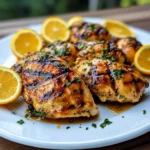
Grilled Citrus Chicken with Glaze Recipe
Ingredients
For the Citrus Chicken Marinade:
- Chicken: 4 medium-sized boneless, skinless chicken breasts (about 6-8 oz / 170-225g each), or 6-8 boneless, skinless chicken thighs. Ensure they are relatively uniform in thickness for even cooking. You can lightly pound thicker parts of the breasts if needed.
- Orange Juice: 1/2 cup (120ml) freshly squeezed orange juice. Using fresh provides the brightest flavour compared to bottled.
- Lemon Juice: 1/4 cup (60ml) freshly squeezed lemon juice. Adds a necessary sharp tang.
- Lime Juice: 2 tablespoons (30ml) freshly squeezed lime juice. Brings another layer of citrus complexity.
- Orange Zest: 1 tablespoon freshly grated orange zest. Zest contains essential oils for intense citrus aroma and flavour – zest before juicing!
- Lemon Zest: 1 teaspoon freshly grated lemon zest.
- Olive Oil: 1/4 cup (60ml) extra virgin olive oil. Helps distribute flavours, adds richness, and prevents sticking.
- Garlic: 3-4 cloves garlic, minced (about 1 tablespoon). Fresh garlic is best.
- Soy Sauce: 2 tablespoons (30ml) low-sodium soy sauce or tamari for gluten-free. Adds umami depth and saltiness.
- Dijon Mustard: 1 tablespoon (15ml). Adds a subtle tang and helps emulsify the marinade.
- Dried Oregano: 1 teaspoon.
- Smoked Paprika: 1/2 teaspoon. Adds a hint of smokiness that complements the grill.
- Black Pepper: 1/2 teaspoon freshly ground black pepper.
- Salt: 1/4 teaspoon kosher salt (adjust based on soy sauce sodium level). Remember soy sauce adds saltiness.
- (Optional) Red Pepper Flakes: 1/4 – 1/2 teaspoon for a touch of heat.
For the Sweet Citrus Glaze:
- Orange Juice: 1/3 cup (80ml) freshly squeezed orange juice.
- Honey: 1/4 cup (60ml). Provides sweetness and helps the glaze thicken and caramelize. Maple syrup or agave can be substituted.
- Brown Sugar: 2 tablespoons packed light brown sugar. Adds depth of flavour and aids caramelization.
- Soy Sauce: 1 tablespoon (15ml) low-sodium soy sauce or tamari.
- Apple Cider Vinegar: 1 tablespoon (15ml). Adds a balancing acidity to the sweetness.
- Cornstarch: 1 teaspoon mixed with 1 tablespoon cold water (slurry). To thicken the glaze.
- Butter: 1 tablespoon unsalted butter (optional, but adds richness and shine at the end).
- Ginger: 1 teaspoon freshly grated ginger (optional, adds a warm spice note).
Instructions
1. Prepare the Marinade:
- In a medium-sized bowl, whisk together all the marinade ingredients: fresh orange juice, lemon juice, lime juice, orange zest, lemon zest, olive oil, minced garlic, soy sauce, Dijon mustard, dried oregano, smoked paprika, black pepper, salt, and optional red pepper flakes.
- Ensure the ingredients are well combined. The olive oil might separate slightly, but a good whisking will emulsify it temporarily. Taste and adjust seasoning if necessary, keeping in mind the flavours will intensify as the chicken marinates.
2. Marinate the Chicken:
- Pat the chicken pieces completely dry with paper towels. This step is crucial as it helps the marinade adhere better and allows the chicken to sear nicely on the grill rather than steam.
- Place the chicken pieces in a large resealable plastic bag or a non-reactive dish (like glass or ceramic).
- Pour the prepared marinade over the chicken, ensuring all pieces are evenly coated. Seal the bag, pressing out as much air as possible, or cover the dish tightly with plastic wrap.
- Massage the marinade gently into the chicken through the bag.
- Refrigerate the chicken to marinate for at least 30 minutes, but ideally for 2-4 hours for optimal flavour infusion. Important: Due to the acidity of the citrus juices, do not marinate for longer than 6-8 hours, especially for chicken breasts, as the texture can become mushy. Chicken thighs are more forgiving.
3. Prepare the Grill:
- About 20-30 minutes before you plan to cook, prepare your grill for medium-high heat (around 400-450°F or 200-230°C).
- For a charcoal grill: Arrange the hot coals for two-zone cooking – one side with a concentrated layer of coals (direct heat) and the other side with few or no coals (indirect heat).
- For a gas grill: Preheat all burners on high, then turn one or two burners down to medium or low to create direct and indirect heat zones.
- Clean the grill grates thoroughly with a grill brush. This prevents sticking and ensures clean grill marks.
- Just before placing the chicken on the grill, oil the grates. Fold a paper towel, dip it lightly in a high-smoke-point oil (like canola, vegetable, or grapeseed oil), and use long tongs to carefully wipe the hot grates.
4. Prepare the Citrus Glaze:
- While the grill is preheating or the chicken is nearing the end of its marinating time, prepare the glaze.
- In a small saucepan, combine the glaze ingredients: orange juice, honey, brown sugar, soy sauce, and apple cider vinegar (and optional ginger, if using).
- Bring the mixture to a simmer over medium heat, stirring occasionally until the sugar dissolves completely.
- In a separate small cup, whisk together the cornstarch and cold water until smooth to create a slurry.
- Slowly pour the cornstarch slurry into the simmering glaze mixture while whisking constantly.
- Continue to simmer and whisk for 1-2 minutes, or until the glaze thickens enough to coat the back of a spoon. It will thicken further as it cools slightly.
- Remove the glaze from the heat. If using, stir in the optional tablespoon of butter until melted for extra richness and shine. Set aside. Note: You will use about half of the glaze during grilling and reserve the rest for serving.
5. Grill the Chicken:
- Remove the chicken from the marinade, letting any excess marinade drip off. Discard the used marinade – it is not safe to consume without boiling thoroughly first. Pat the chicken pieces lightly again with paper towels; this helps achieve better grill marks and prevents flare-ups from dripping marinade.
- Place the chicken pieces on the preheated, oiled grill grates over the direct heat zone.
- Sear the chicken for about 3-5 minutes per side, or until golden brown grill marks appear. Don’t move the chicken too much during this searing phase to allow marks to develop.
- If the chicken is browning too quickly or flare-ups occur, move the chicken to the indirect heat zone.
- Continue grilling over indirect heat (or medium heat if only using direct), flipping occasionally, until the chicken is cooked through. The total grilling time will vary depending on the thickness of the chicken and the heat of your grill, typically taking 15-25 minutes in total. Chicken breasts should reach an internal temperature of 165°F (74°C) in the thickest part, checked with an instant-read thermometer. Chicken thighs can be cooked slightly higher, to 170-175°F (77-79°C), for better texture.
6. Glaze and Finish:
- During the last 5-7 minutes of grilling (when the chicken is almost cooked through), start brushing the chicken generously with about half of the prepared citrus glaze.
- Flip the chicken and brush the other side. Continue to grill for a few more minutes, brushing with glaze 1-2 more times, allowing the glaze to caramelize slightly. Watch carefully during this stage, as the sugars in the glaze can burn easily. Move to indirect heat if needed to prevent burning while the chicken finishes cooking.
7. Rest the Chicken:
- Once the chicken reaches the safe internal temperature, remove it from the grill and transfer it to a clean cutting board or platter.
- Tent the chicken loosely with foil and let it rest for 5-10 minutes. This crucial step allows the juices to redistribute throughout the meat, resulting in a much juicier and more tender piece of chicken. Skipping this step will cause the juices to run out when you cut into it.
8. Serve:
- After resting, slice the chicken against the grain (if serving sliced) or serve whole pieces.
- Drizzle or brush the reserved citrus glaze over the chicken just before serving for an extra layer of flavour and a beautiful sheen. Garnish as desired (see serving suggestions). Enjoy immediately!
Nutrition
- Serving Size: one normal portion
- Calories: 380-450