


Of all the culinary anthems of summer, the sound of a thick-cut steak hitting a hot grill is my absolute favorite. It’s a percussive sizzle that promises pure, unadulterated flavor. For years, I chased the “perfect” steakhouse experience at home, often with mixed results. That all changed the day I paired a beautifully marbled New York strip with a vibrant, zesty chimichurri sauce. The first time I served this combination, it was a revelation. My family, usually content with a simple salt-and-pepper steak, fell silent. The rich, beefy flavor of the perfectly grilled strip, with its gorgeous crust and juicy pink center, was magnificent on its own. But when topped with the fresh, garlicky, herb-packed punch of the chimichurri, it transformed into something truly special. The bright, acidic sauce cut through the richness of the meat in a way that was both refreshing and incredibly addictive. It turned a simple backyard barbecue into a gourmet event, and ever since that day, this Grilled New York Strip with Chimichurri Sauce has become our signature dish for celebrations, special occasions, or any time we want a meal that feels like a true indulgence. It’s more than just a recipe; it’s a guaranteed “wow” moment on a plate.
The Ultimate Grilled New York Strip with Chimichurri Sauce
This recipe is a celebration of two culinary powerhouses: the robust, beefy New York strip steak and the vibrant, herb-forward Argentinian chimichurri. We will guide you through every step, from selecting the perfect cut of meat to achieving those coveted grill marks and whipping up a sauce that will have you dreaming about it for days.
Ingredients for an Unforgettable Steak Dinner
To achieve restaurant-quality results, starting with high-quality ingredients is non-negotiable. This recipe is designed for two generous servings, but it can be easily doubled or tripled for a crowd.
For the Chimichurri Sauce:
- Fresh Herbs: 1 cup packed fresh flat-leaf parsley, tough stems removed
- Aromatic Kick: 1/2 cup packed fresh cilantro, leaves and tender stems (optional, can be replaced with more parsley)
- The Allium: 4-6 cloves of garlic, peeled and roughly chopped
- Dried Herb: 1 tablespoon fresh oregano leaves (or 1 teaspoon dried oregano)
- The Acid: 1/4 cup red wine vinegar
- The Heat: 1 teaspoon red pepper flakes (adjust to your spice preference)
- The Foundation: 1/2 cup high-quality extra-virgin olive oil
- Seasoning: 1/2 teaspoon kosher salt
- Seasoning: 1/4 teaspoon freshly ground black pepper
For the Grilled New York Strip Steaks:
- The Star: 2 (12-14 ounce) New York strip steaks, about 1.5 inches thick
- Fat for Searing: 1 tablespoon high-smoke-point oil (like canola, avocado, or grapeseed oil)
- The Only Seasoning You Need: 2 teaspoons coarse kosher salt
- A Touch of Spice: 1 teaspoon coarsely ground black pepper
Step-by-Step Instructions for Grilling Perfection
Follow these detailed instructions closely for a flawless execution. The process is divided into making the sauce, preparing the steaks, and the crucial grilling and resting phase.
Part 1: Crafting the Vibrant Chimichurri Sauce
This sauce is best made at least 30 minutes ahead of time to allow the flavors to meld together beautifully. You can make it up to 24 hours in advance.
- Prepare the Herbs and Garlic: Finely chop the fresh parsley, cilantro (if using), and fresh oregano. Mince the garlic cloves. The traditional method is to do this all by hand with a sharp knife for the best texture, which results in a rustic, slightly chunky sauce.
- Food Processor Method (Optional): For a quicker, more uniform sauce, you can use a food processor. Add the garlic cloves and red pepper flakes and pulse a few times until minced. Add the parsley, cilantro, and oregano and pulse in short bursts until finely chopped. Be careful not to over-process, or you’ll end up with a pesto-like paste instead of a textured sauce.
- Combine the Ingredients: Transfer the chopped herb and garlic mixture to a medium bowl. Pour in the red wine vinegar and stir to combine. Let this mixture sit for 5-10 minutes. This step allows the acid from the vinegar to slightly “cook” and mellow the raw bite of the garlic.
- Emulsify the Oil: Slowly whisk in the extra-virgin olive oil. Continue whisking until the sauce is well combined. It won’t fully emulsify like a vinaigrette, which is perfectly normal.
- Season and Rest: Stir in the kosher salt and black pepper. Taste and adjust the seasoning if necessary. You might want more salt, more red pepper flakes for heat, or a splash more vinegar for tang. Cover the bowl and set it aside at room temperature while you prepare and cook the steaks.
Part 2: Preparing the New York Strip Steaks
Proper preparation is the key to a juicy interior and a perfect crust.
- Bring to Room Temperature: Remove the steaks from the refrigerator about 45-60 minutes before you plan to grill. Placing a cold steak on a hot grill can cause it to cook unevenly. Pat the steaks completely dry with paper towels. A dry surface is essential for creating a deep, flavorful crust (the Maillard reaction).
- Season Generously: Just before grilling, rub both sides of each steak with the high-smoke-point oil. Then, season all sides—including the edges—very generously with the coarse kosher salt and coarsely ground black pepper. Press the seasoning into the meat to ensure it adheres.
Part 3: Grilling, Resting, and Serving
This is where the magic happens. A meat thermometer is your best friend here.
- Preheat the Grill: Prepare your grill for two-zone cooking (one side with high, direct heat and one side with lower, indirect heat).
- For a gas grill: Turn half the burners to high heat and leave the other half off or on low.
- For a charcoal grill: Bank the hot coals to one side of the grill.
- Clean the grates thoroughly with a grill brush. The ideal temperature for the hot zone is between 450-550°F (232-288°C).
- Sear for the Crust: Place the seasoned steaks directly over the high-heat zone. Grill for 2-3 minutes per side with the lid closed, until you have a deep brown crust and beautiful grill marks. For diamond grill marks, place the steak on the grill, then after 90 seconds, rotate it 45 degrees without flipping. Repeat on the other side.
- Cook to Desired Doneness: Move the steaks to the cooler, indirect-heat side of the grill. Close the lid and continue to cook until they reach your desired internal temperature. Use an instant-read meat thermometer inserted into the thickest part of the steak for accuracy.
- Rare: 125°F (52°C) – Cool red center
- Medium-Rare: 135°F (57°C) – Warm red center (Recommended for New York Strip)
- Medium: 145°F (63°C) – Warm pink center
- Medium-Well: 150°F (66°C) – Slightly pink center
- Well-Done: 160°F+ (71°C+) – Little to no pink
- The Crucial Rest: This is the most important, and often skipped, step. Transfer the grilled steaks to a cutting board or platter. Tent them loosely with foil and let them rest for 10-15 minutes. This allows the juices to redistribute throughout the meat, ensuring every bite is tender and moist. The internal temperature will also rise by about 5°F during this time (carryover cooking), so pull them off the grill just before they hit your target temperature.
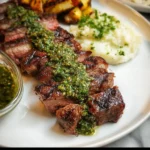
- Slice and Serve: After resting, slice the steak against the grain into 1/2-inch thick strips. Slicing against the grain shortens the muscle fibers, making the meat more tender to chew. Arrange the sliced steak on a platter and spoon the vibrant chimichurri sauce generously over the top.
Nutrition Facts
- Servings: 2
- Calories per serving: Approximately 850-950 kcal
Disclaimer: The nutritional information provided is an estimate and can vary based on the specific ingredients used, such as the exact size and fat content of the steak and the amount of olive oil.
Preparation Time
- Chimichurri Prep Time: 15 minutes
- Steak Prep Time: 5 minutes (+ 45-60 minutes for the steak to come to room temperature)
- Cook Time: 10-15 minutes (depending on steak thickness and desired doneness)
- Resting Time: 10-15 minutes
- Total Time: Approximately 1 hour 40 minutes (including resting and room temperature time)
A Deep Dive into the Perfect New York Strip Steak
To truly master this recipe, it helps to understand its star player. The New York strip, also known as a strip loin, Kansas City strip, or shell steak, is cut from the short loin of the cow. It’s a muscle that doesn’t do a tremendous amount of work, which contributes to its tenderness.
What Makes the New York Strip Ideal for Grilling?
- Balance of Tenderness and Flavor: It strikes a perfect balance. It’s not as melt-in-your-mouth tender as a filet mignon, but it has a much more robust, beefy flavor. It’s not as richly marbled as a ribeye, but it has a tighter texture and a satisfying chew.
- The Fat Cap: A good New York strip will have a notable cap of fat running along one edge. When grilled, this fat renders, basting the steak as it cooks and adding an immense amount of flavor.
- Uniform Shape: Its relatively uniform, rectangular shape makes it easy to cook evenly, ensuring a consistent level of doneness from edge to edge.
How to Choose a High-Quality New York Strip
When you’re at the butcher counter or grocery store, look for these key indicators:
- Thickness: Always opt for a thicker steak, at least 1.5 inches. A thick steak allows you to develop a deep, dark crust on the outside without overcooking the interior. A thin steak will often cook through to well-done by the time a decent sear is achieved.
- Marbling: Look for thin, web-like flecks of intramuscular fat distributed throughout the muscle. This is marbling. Marbling equals flavor and juiciness. More marbling is better.
- USDA Grade: If available, look for USDA Prime, which has the most marbling and is the highest quality. USDA Choice is a fantastic and more widely available option with great flavor. USDA Select is leaner and can be less tender and juicy.
How to Serve Your Grilled Masterpiece
Presentation elevates a great meal to an unforgettable one. The bold colors of the steak and sauce deserve a beautiful backdrop.
- Family-Style Platter: The best way to serve this dish is on a large wooden cutting board or a rustic ceramic platter.
- Arrange the sliced steak fanned out across the board.
- Drizzle a generous amount of the chimichurri sauce directly over the slices.
- Serve the remaining chimichurri in a small bowl on the side for extra dipping.
- Finish with a sprinkle of flaky sea salt (like Maldon) over the steak for a final pop of flavor and texture.
- Classic Side Dish Pairings:
- Potatoes: Crispy roasted potatoes, garlic mashed potatoes, or thick-cut steak fries are classic and hearty companions.
- Grilled Vegetables: Asparagus, bell peppers, onions, and zucchini, grilled alongside the steak, absorb the smoky flavor and complement the meal perfectly.
- Simple Green Salad: A simple arugula salad with a lemon vinaigrette, shaved Parmesan, and toasted pine nuts provides a fresh, peppery contrast to the rich steak.
- Wine Pairings:
- Malbec: The classic Argentinian pairing for steak and chimichurri. Its dark fruit flavors, hints of spice, and smooth tannins are a perfect match.
- Cabernet Sauvignon: A bold, full-bodied Cabernet from California or Bordeaux stands up beautifully to the beefy flavor of the New York strip.
- Syrah/Shiraz: With its notes of black pepper and savory herbs, a Syrah complements both the seasoned steak and the garlicky sauce.
5 Additional Tips for Steakhouse-Worthy Results
- Master the Two-Zone Fire: This is the single most important grilling technique for thick-cut steaks. Searing over high, direct heat creates the crust. Moving to lower, indirect heat allows the steak’s interior to cook through gently and evenly without burning the exterior. It gives you total control.
- Consider a Dry Brine: For even more flavor, try a dry brine. Up to 24 hours before cooking, season the steak with kosher salt and place it on a wire rack set over a baking sheet in the refrigerator, uncovered. The salt will initially draw out moisture, then this moisture will dissolve the salt and be reabsorbed into the meat, seasoning it from the inside out and drying the surface for a superior crust.
- Don’t Be Shy With Seasoning: A thick steak needs more seasoning than you think. The coarse kosher salt and black pepper should form a visible, even layer on the surface. Much of it will render off during cooking, so you need to start with a generous amount to ensure the final product is well-flavored.
- Embrace the Hand-Chopped Chimichurri: While a food processor is fast, taking the time to chop your chimichurri ingredients by hand yields a far superior texture. The herbs and garlic remain distinct, creating a rustic sauce where each bite is a little different, rather than a homogenous green puree.
- Know Your Grill’s Hot Spots: Every grill, gas or charcoal, has hot and cool spots. Get to know yours. When you first place the steaks on the grill, you might notice one side is searing faster than the other. Don’t be afraid to move them around within the high-heat zone to ensure an even crust on all sides.
Frequently Asked Questions (FAQ)
1. Can I use a different cut of steak for this recipe?
Absolutely! While the New York strip is a fantastic choice, this recipe works wonderfully with other great grilling cuts.
- Ribeye: This cut has more marbling, making it incredibly rich and juicy. It’s a top-tier choice.
- Sirloin: A more budget-friendly option that is still lean and flavorful. Be careful not to overcook it, as it can become tough.
- Skirt or Flank Steak: These are thinner, tougher cuts that are packed with flavor. They must be cooked hot and fast to medium-rare and sliced very thinly against the grain. The chimichurri is a classic pairing for these cuts.
2. I don’t have a grill. Can I cook this steak in a pan?
Yes, you can achieve amazing results using a cast-iron skillet. Heat the skillet over high heat until it’s smoking slightly. Add a tablespoon of oil. Sear the steak for 2-3 minutes per side. For a thicker steak, you can finish it in a 400°F (200°C) oven until it reaches the desired internal temperature. This is known as the “reverse sear” if you start in the oven, or simply a pan-to-oven method if you start with the sear. Don’t forget to rest it just like a grilled steak.
3. My chimichurri tastes bitter. What went wrong?
Bitterness in chimichurri usually comes from one of two things:
- Over-processing in a food processor: If you blend the parsley and olive oil for too long, it can break down the chlorophyll in the parsley and bruise the oil, releasing bitter compounds. Pulse gently or chop by hand.
- Stale or poor-quality ingredients: Old, dried-out garlic can be bitter, and a low-quality or old olive oil can also have an unpleasant, bitter aftertaste. Always use fresh ingredients.
4. How should I store leftovers?
Store leftover steak and chimichurri in separate airtight containers in the refrigerator. The steak will be good for up to 3 days, and the chimichurri will last for up to a week. The chimichurri’s flavor will actually deepen and improve after a day or two. To reheat the steak, do it gently in a low oven or in a skillet over low heat to avoid overcooking it. Leftover sliced steak is also fantastic cold in salads or sandwiches.
5. Can I make substitutions in the chimichurri sauce?
Certainly. Chimichurri is a versatile sauce.
- Vinegar: If you don’t have red wine vinegar, you can substitute it with white wine vinegar or even fresh lemon juice for a brighter, more citrus-forward flavor.
- Herbs: While parsley is the traditional base, you can play with the ratios. If you dislike cilantro, simply replace it with more parsley. A little fresh mint can also be a delicious addition.
- Heat: If you don’t like spicy food, you can reduce or omit the red pepper flakes. Conversely, for more heat, you can add a finely minced fresh chili like a jalapeño or serrano.
Grilled New York Strip with Chimichurri Sauce Recipe
Ingredients
For the Chimichurri Sauce:
- Fresh Herbs: 1 cup packed fresh flat-leaf parsley, tough stems removed
- Aromatic Kick: 1/2 cup packed fresh cilantro, leaves and tender stems (optional, can be replaced with more parsley)
- The Allium: 4-6 cloves of garlic, peeled and roughly chopped
- Dried Herb: 1 tablespoon fresh oregano leaves (or 1 teaspoon dried oregano)
- The Acid: 1/4 cup red wine vinegar
- The Heat: 1 teaspoon red pepper flakes (adjust to your spice preference)
- The Foundation: 1/2 cup high-quality extra-virgin olive oil
- Seasoning: 1/2 teaspoon kosher salt
- Seasoning: 1/4 teaspoon freshly ground black pepper
For the Grilled New York Strip Steaks:
- The Star: 2 (12-14 ounce) New York strip steaks, about 1.5 inches thick
- Fat for Searing: 1 tablespoon high-smoke-point oil (like canola, avocado, or grapeseed oil)
- The Only Seasoning You Need: 2 teaspoons coarse kosher salt
- A Touch of Spice: 1 teaspoon coarsely ground black pepper
Instructions
Part 1: Crafting the Vibrant Chimichurri Sauce
This sauce is best made at least 30 minutes ahead of time to allow the flavors to meld together beautifully. You can make it up to 24 hours in advance.
- Prepare the Herbs and Garlic: Finely chop the fresh parsley, cilantro (if using), and fresh oregano. Mince the garlic cloves. The traditional method is to do this all by hand with a sharp knife for the best texture, which results in a rustic, slightly chunky sauce.
- Food Processor Method (Optional): For a quicker, more uniform sauce, you can use a food processor. Add the garlic cloves and red pepper flakes and pulse a few times until minced. Add the parsley, cilantro, and oregano and pulse in short bursts until finely chopped. Be careful not to over-process, or you’ll end up with a pesto-like paste instead of a textured sauce.
- Combine the Ingredients: Transfer the chopped herb and garlic mixture to a medium bowl. Pour in the red wine vinegar and stir to combine. Let this mixture sit for 5-10 minutes. This step allows the acid from the vinegar to slightly “cook” and mellow the raw bite of the garlic.
- Emulsify the Oil: Slowly whisk in the extra-virgin olive oil. Continue whisking until the sauce is well combined. It won’t fully emulsify like a vinaigrette, which is perfectly normal.
- Season and Rest: Stir in the kosher salt and black pepper. Taste and adjust the seasoning if necessary. You might want more salt, more red pepper flakes for heat, or a splash more vinegar for tang. Cover the bowl and set it aside at room temperature while you prepare and cook the steaks.
Part 2: Preparing the New York Strip Steaks
Proper preparation is the key to a juicy interior and a perfect crust.
- Bring to Room Temperature: Remove the steaks from the refrigerator about 45-60 minutes before you plan to grill. Placing a cold steak on a hot grill can cause it to cook unevenly. Pat the steaks completely dry with paper towels. A dry surface is essential for creating a deep, flavorful crust (the Maillard reaction).
- Season Generously: Just before grilling, rub both sides of each steak with the high-smoke-point oil. Then, season all sides—including the edges—very generously with the coarse kosher salt and coarsely ground black pepper. Press the seasoning into the meat to ensure it adheres.
Part 3: Grilling, Resting, and Serving
This is where the magic happens. A meat thermometer is your best friend here.
- Preheat the Grill: Prepare your grill for two-zone cooking (one side with high, direct heat and one side with lower, indirect heat).
- For a gas grill: Turn half the burners to high heat and leave the other half off or on low.
- For a charcoal grill: Bank the hot coals to one side of the grill.
- Clean the grates thoroughly with a grill brush. The ideal temperature for the hot zone is between 450-550°F (232-288°C).
- Sear for the Crust: Place the seasoned steaks directly over the high-heat zone. Grill for 2-3 minutes per side with the lid closed, until you have a deep brown crust and beautiful grill marks. For diamond grill marks, place the steak on the grill, then after 90 seconds, rotate it 45 degrees without flipping. Repeat on the other side.
- Cook to Desired Doneness: Move the steaks to the cooler, indirect-heat side of the grill. Close the lid and continue to cook until they reach your desired internal temperature. Use an instant-read meat thermometer inserted into the thickest part of the steak for accuracy.
- Rare: 125°F (52°C) – Cool red center
- Medium-Rare: 135°F (57°C) – Warm red center (Recommended for New York Strip)
- Medium: 145°F (63°C) – Warm pink center
- Medium-Well: 150°F (66°C) – Slightly pink center
- Well-Done: 160°F+ (71°C+) – Little to no pink
- The Crucial Rest: This is the most important, and often skipped, step. Transfer the grilled steaks to a cutting board or platter. Tent them loosely with foil and let them rest for 10-15 minutes. This allows the juices to redistribute throughout the meat, ensuring every bite is tender and moist. The internal temperature will also rise by about 5°F during this time (carryover cooking), so pull them off the grill just before they hit your target temperature.
- Slice and Serve: After resting, slice the steak against the grain into 1/2-inch thick strips. Slicing against the grain shortens the muscle fibers, making the meat more tender to chew. Arrange the sliced steak on a platter and spoon the vibrant chimichurri sauce generously over the top.
Nutrition
- Serving Size: One Normal Portion
- Calories: 850-950 kcal