
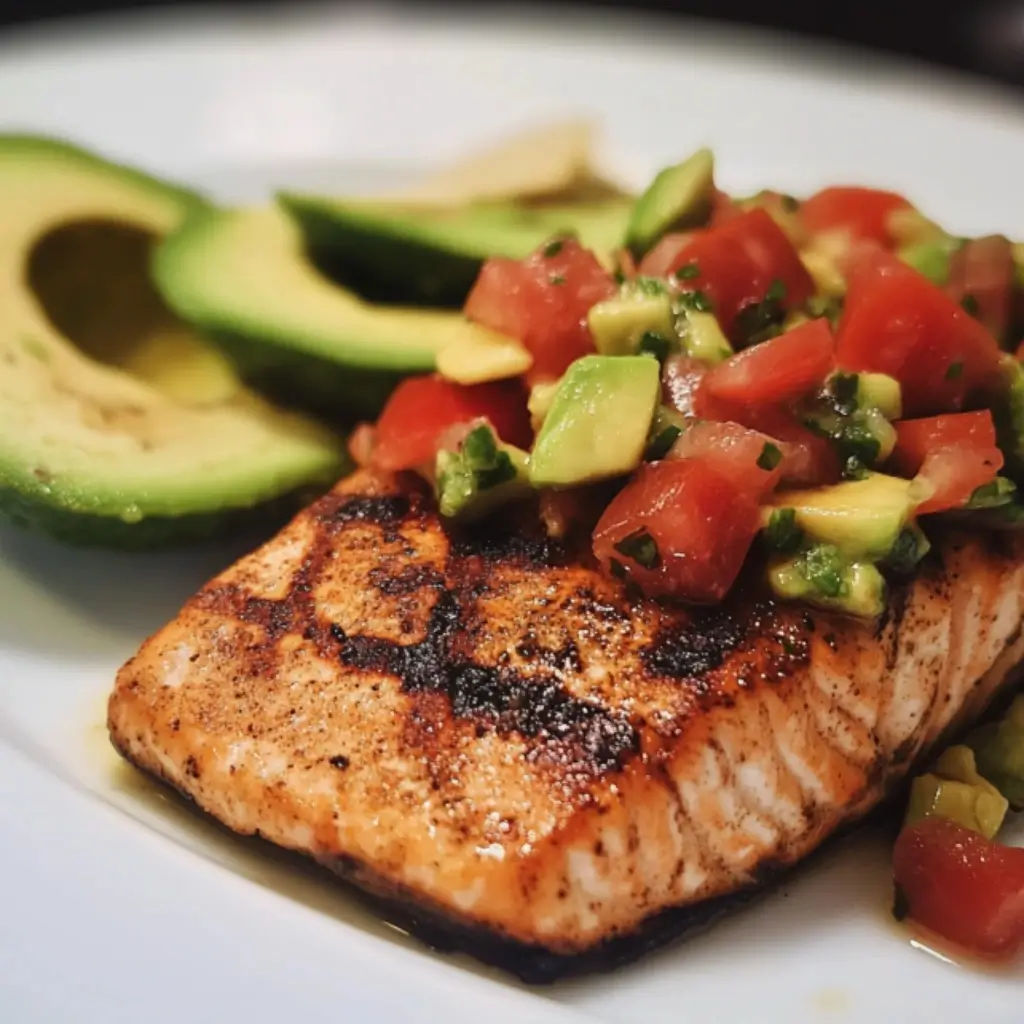

Grilled Salmon with Avocado Salsa is more than just a dish; it’s a vibrant culinary experience that has quickly become a staple in our household. From the moment the salmon hits the grill, filling the kitchen with its enticing aroma, to the first bite where flaky fish meets creamy avocado salsa, this recipe is a symphony of flavors and textures. Even my pickiest eaters, who usually shy away from fish, devour this salmon with gusto, often asking for seconds. The freshness of the salsa perfectly complements the richness of the grilled salmon, creating a light yet satisfying meal that’s perfect for a weeknight dinner or a weekend gathering. It’s a dish that’s both healthy and indulgent, proving that nutritious food can be incredibly delicious and easy to prepare. This recipe isn’t just about cooking; it’s about creating a moment of joy and flavor that everyone at the table will appreciate.
Ingredients: The Building Blocks of Flavor
The magic of Grilled Salmon with Avocado Salsa lies in the quality and freshness of its ingredients. Each component plays a vital role in creating the harmonious blend of flavors and textures that make this dish so irresistible. Let’s delve deeper into each ingredient and understand why they are essential for achieving the perfect grilled salmon and vibrant avocado salsa.
For the Flavorful Salmon Marinade:
- 1 tbsp Olive Oil: The foundation of our marinade, olive oil does more than just prevent the salmon from sticking to the baking sheet; it’s a flavor carrier. Opt for a good quality extra virgin olive oil. Its fruity notes will subtly enhance the salmon’s natural taste, while its richness adds a luxurious mouthfeel. Olive oil also helps to keep the salmon moist during cooking, preventing it from drying out and becoming tough.
- 1 Clove Garlic, Minced: Garlic is the aromatic powerhouse of this marinade. Minced garlic infuses the salmon with its pungent and slightly sweet flavor. Freshly minced garlic is always preferred over pre-minced, as it retains more of its volatile aromatic compounds. The garlic not only adds depth of flavor but also works synergistically with the other spices to create a complex and inviting aroma. If you are a garlic lover, feel free to add another half clove for an extra garlicky punch.
- ½ tsp Chilli Powder: Don’t let the name “chilli powder” intimidate you. In this recipe, it’s not about fiery heat, but about adding warmth and complexity. A good quality chilli powder offers a subtle, smoky depth with a hint of gentle spice that complements the richness of the salmon. It adds a layer of flavor that goes beyond just heat, contributing to the overall savory profile of the dish. For those who prefer a spicier kick, you can use a chilli powder blend that includes cayenne pepper or add a pinch of red pepper flakes to the marinade.
- ½ tsp Ground Cumin: Cumin is an essential spice that brings an earthy and slightly nutty warmth to the marinade. Its distinctive aroma and flavor are crucial in creating a well-rounded spice profile that balances the other seasonings. Cumin’s earthy notes pair beautifully with both the salmon and the avocado salsa, tying the dish together with a cohesive flavor thread. For a fresher, more intense cumin flavor, you can lightly toast cumin seeds in a dry pan and then grind them just before adding them to the marinade.
- ½ tsp Onion Powder: Onion powder adds a subtle, savory sweetness to the marinade that complements the garlic and other spices. It offers a concentrated onion flavor without the moisture or texture of fresh onions, ensuring a smooth and even marinade. Onion powder enhances the umami notes of the salmon and adds another layer of complexity to the overall flavor profile. Make sure your onion powder is fresh for the best flavor, as it can lose its potency over time.
- ¼ tsp Black Pepper: Freshly ground black pepper is a fundamental seasoning that adds a subtle bite and enhances the flavors of all the other ingredients. Its pungent notes provide a contrast to the richness of the salmon and the other spices, adding a layer of complexity and depth. Freshly cracked black pepper is always preferable as it has a brighter and more intense flavor than pre-ground pepper.
- ¼ tsp Salt: Salt is the ultimate flavor enhancer, bringing out the natural flavors of the salmon and the other marinade ingredients. It also plays a crucial role in seasoning the dish to perfection. Use fine sea salt or kosher salt for the marinade. Salt not only enhances flavor but also helps to tenderize the salmon slightly. Remember to season to taste, and adjust the salt level as needed.
- 170 g Salmon Fillets: The star of the show, salmon fillets should be of high quality and as fresh as possible. Look for salmon that is bright in color, firm to the touch, and has a fresh, sea-like smell. Wild-caught salmon is often preferred for its richer flavor and higher omega-3 fatty acid content, but sustainably farmed salmon is also a good option. The thickness of the fillets will affect the cooking time, so try to choose fillets that are relatively uniform in thickness for even cooking. Skin-on or skin-off salmon fillets can be used, depending on your preference. Skin-on fillets will result in crispier skin if grilled skin-side down first, while skin-off fillets are easier to serve and eat.
For the Refreshing Avocado Salsa:
- 1 Ripe Avocado, Pitted & Diced: The creamy and buttery avocado is the heart of the salsa. Ripe avocados are essential for achieving the desired texture and flavor. To check for ripeness, gently press the avocado; it should yield slightly but not be mushy. Diced avocado provides a beautiful creamy texture that contrasts perfectly with the flaky salmon and adds a rich, healthy fat to the dish. The mild, slightly nutty flavor of avocado complements the other salsa ingredients and the grilled salmon beautifully.
- 1 Tomato, Diced: Tomato adds a burst of juicy freshness and a touch of acidity to the salsa. Choose a ripe but firm tomato for the best texture. Diced tomatoes provide a vibrant color and a refreshing counterpoint to the richness of the avocado. The natural sweetness and slight tanginess of tomatoes enhance the overall flavor profile of the salsa, adding a layer of complexity. For a more intense tomato flavor, you can use Roma tomatoes or vine-ripened tomatoes.
- 2 tbsp Onion, Diced: Onion adds a pungent and slightly sharp flavor to the salsa, providing a nice contrast to the creamy avocado and sweet tomato. Red onion is often preferred for salsa because of its slightly milder and sweeter flavor compared to yellow or white onions. Diced onion adds a subtle crunch and aromatic depth to the salsa. If you prefer a milder onion flavor, you can soak the diced onion in cold water for a few minutes before adding it to the salsa to reduce its sharpness.
- 2 tbsp Cilantro, Minced: Cilantro is the herbaceous star of the salsa, adding a bright, fresh, and slightly citrusy flavor. Fresh cilantro is crucial for achieving the vibrant flavor of the salsa. Minced cilantro adds a burst of freshness and a distinctive aroma that complements the other salsa ingredients perfectly. If you are not a fan of cilantro, you can substitute it with fresh parsley, although it will slightly alter the flavor profile.
- 1 tbsp Olive Oil: Similar to the marinade, olive oil in the salsa adds richness and helps to bind the ingredients together. A good quality extra virgin olive oil will enhance the flavors of the fresh vegetables and herbs. It also adds a subtle fruity note and a smooth mouthfeel to the salsa.
- 1 tbsp Lime Juice: Fresh lime juice is essential for the avocado salsa. It adds a bright, tangy acidity that balances the richness of the avocado and prevents it from browning. Lime juice also enhances the flavors of all the other salsa ingredients, creating a vibrant and refreshing taste. Freshly squeezed lime juice is always preferred over bottled lime juice for its brighter and more authentic flavor.
- Salt & Pepper to Taste: Seasoning is key to bringing all the flavors of the salsa together. Salt enhances the natural flavors of the vegetables and herbs, while pepper adds a subtle bite. Season the salsa to your preference, tasting and adjusting as needed until you achieve the perfect balance of flavors.
Instructions: From Prep to Plate in Minutes
This Grilled Salmon with Avocado Salsa recipe is not only delicious but also incredibly easy and quick to prepare. From start to finish, you’ll have a healthy and flavorful meal on the table in just about 22 minutes. Let’s break down the step-by-step instructions to guide you through the cooking process.
Getting Started: Preheating and Preparation
- Heat the Oven to 400°F (200°C). Preheating the oven is the first crucial step. Setting the oven to 400°F (200°C) ensures that the salmon cooks quickly and evenly. This temperature is ideal for baking salmon, as it’s hot enough to cook the fish through without drying it out. Make sure your oven is properly preheated before you place the salmon in, as this will help it cook correctly.
- Line a Baking Sheet with Aluminum Foil. Lining a baking sheet with aluminum foil is a simple but essential step for easy cleanup. The foil prevents the salmon from sticking to the baking sheet and makes washing up a breeze. You can also lightly grease the foil with cooking spray to further ensure that the salmon doesn’t stick.
Marinating the Salmon: Infusing Flavor
- Place the Olive Oil, Garlic, and Spices into a Small Bowl, Mix Well to Combine, and then Brush Over the Salmon Fillets. This is where the flavor magic begins. In a small bowl, combine the olive oil, minced garlic, chilli powder, ground cumin, onion powder, black pepper, and salt. Mix these ingredients thoroughly until they are well combined and form a fragrant marinade. The olive oil acts as a base, while the spices and garlic infuse it with their aromatic essence. Generously brush this flavorful marinade over both sides of the salmon fillets, ensuring that each fillet is evenly coated. Allow the salmon to marinate for at least 5-10 minutes. While the recipe doesn’t specify a marinating time, even a short marination period allows the flavors to penetrate the salmon and enhance its taste.
Baking the Salmon: Achieving Perfect Flakiness
- Lay the Salmon on the Baking Sheet and Place it in the Hot Oven to Bake for 12-15 Minutes or Until Cooked. Carefully place the marinated salmon fillets on the prepared baking sheet. Ensure they are spaced apart so that they cook evenly. Place the baking sheet in the preheated oven and bake for 12-15 minutes. The cooking time will depend on the thickness of your salmon fillets and your oven’s temperature accuracy. To check if the salmon is cooked, gently flake it with a fork. It should be opaque and flake easily, with no raw or translucent parts. Avoid overcooking the salmon, as it can become dry and tough. Perfectly cooked salmon is moist, flaky, and tender.
Preparing the Avocado Salsa: Fresh and Vibrant
- In the Meantime, Make the Avocado Salsa. Place the Avocado, Tomato, Onion, and Cilantro into a Large Mixing Bowl. While the salmon is baking, you can prepare the refreshing avocado salsa. In a large mixing bowl, combine the diced avocado, diced tomato, diced onion, and minced cilantro. These fresh ingredients create the base of the salsa, providing a vibrant mix of flavors and textures.
- Drizzle with Olive Oil and Fresh Lime Juice, and Season with a Pinch of Salt and Pepper. Drizzle olive oil and fresh lime juice over the vegetables in the mixing bowl. The olive oil adds richness, while the lime juice provides acidity and prevents the avocado from browning. Season the salsa with a pinch of salt and pepper to taste. Start with a small amount and adjust as needed to achieve the perfect balance of flavors.
- Mix Well and Set Aside Until Ready to Serve. Gently mix all the salsa ingredients together until they are well combined. Be careful not to overmix, as you want to maintain the texture of the diced avocado and vegetables. Set the salsa aside until the salmon is cooked and ready to serve. This allows the flavors to meld together slightly.
Serving: The Final Flourish
- Top the Salmon with Avocado Salsa and Serve Immediately. Once the salmon is cooked to perfection, remove it from the oven. Immediately top each salmon fillet with a generous spoonful of the fresh avocado salsa. Serve immediately while the salmon is still warm and the salsa is fresh and vibrant. The contrast between the warm salmon and the cool salsa is part of what makes this dish so delightful.
Nutrition Facts: Healthy and Delicious
Grilled Salmon with Avocado Salsa is not only a culinary delight but also a nutritional powerhouse. It’s a dish that’s packed with healthy fats, lean protein, and essential vitamins and minerals, making it a guilt-free indulgence. Understanding the nutritional profile of this recipe highlights why it’s such a great choice for a healthy and balanced diet.
- Servings: 2 people
This recipe is designed to comfortably serve two people, making it perfect for a romantic dinner for two or a healthy meal for a small household. The portion sizes are generous enough to be satisfying without being overly heavy.
- Calories: 540 kcal per serving
Each serving of Grilled Salmon with Avocado Salsa contains approximately 540 calories. This calorie count is moderate and fits well within a balanced diet, especially considering the high nutritional value of the ingredients. The calories primarily come from healthy fats in the avocado and olive oil, and lean protein in the salmon.
Nutritional Highlights:
- Lean Protein: Salmon is an excellent source of high-quality protein, which is essential for building and repairing tissues, supporting muscle growth, and maintaining satiety. Protein is crucial for overall health and plays a vital role in numerous bodily functions.
- Omega-3 Fatty Acids: Salmon is renowned for being rich in omega-3 fatty acids, particularly EPA and DHA. These essential fatty acids are beneficial for heart health, brain function, reducing inflammation, and supporting overall well-being. Regular consumption of omega-3 fatty acids is associated with numerous health benefits.
- Healthy Fats: Avocado and olive oil provide healthy monounsaturated and polyunsaturated fats. These fats are beneficial for heart health, help to lower bad cholesterol levels, and are essential for nutrient absorption. Healthy fats are an important part of a balanced diet and contribute to satiety and overall health.
- Vitamins and Minerals: Salmon is a good source of various vitamins and minerals, including vitamin D, vitamin B12, selenium, and potassium. Avocado is rich in vitamin K, vitamin C, vitamin E, and folate. Tomatoes are a good source of vitamin C and antioxidants like lycopene. Cilantro provides vitamin K and antioxidants. These vitamins and minerals are essential for various bodily functions, including immune support, bone health, and energy production.
- Fiber: While not a high-fiber dish, the avocado and vegetables in the salsa contribute some dietary fiber. Fiber is important for digestive health, helps to regulate blood sugar levels, and promotes satiety.
Grilled Salmon with Avocado Salsa is a nutritionally dense meal that provides a good balance of macronutrients and micronutrients. It’s a delicious way to incorporate more healthy fats, lean protein, and essential vitamins and minerals into your diet.
Preparation Time: Quick and Convenient
One of the many appeals of this Grilled Salmon with Avocado Salsa recipe is its speed and convenience. It’s perfect for busy weeknights when you want a healthy and flavorful meal without spending hours in the kitchen. The total preparation time is minimal, allowing you to enjoy a delicious dinner in just over 20 minutes.
- Prep Time: 10 minutes
The prep time for this recipe is remarkably short, clocking in at just 10 minutes. This includes mincing the garlic, dicing the vegetables for the salsa, and mixing the marinade. The quick prep time makes this recipe ideal for those evenings when you are short on time but still want to enjoy a home-cooked meal.
- Cook Time: 12 minutes
The cook time for the salmon is equally efficient, taking only about 12 minutes in the oven. Baking at 400°F (200°C) ensures that the salmon cooks quickly and evenly without drying out. The short cooking time means you can have dinner on the table in no time.
- Total Time: 22 minutes
The total time from start to finish, including both prep and cook time, is just 22 minutes. This makes Grilled Salmon with Avocado Salsa a fantastic option for a quick and easy weeknight dinner. The minimal time commitment doesn’t compromise on flavor or nutritional value, making it a winner in every aspect.
The speed and simplicity of this recipe make it accessible to cooks of all skill levels. Whether you are a beginner cook or an experienced chef, you can easily whip up this delicious and healthy meal in under half an hour. The minimal prep and cook time mean less time spent in the kitchen and more time enjoying your meal.
How to Serve: Creative Serving Suggestions
Grilled Salmon with Avocado Salsa is a versatile dish that can be served in numerous ways, making it suitable for various occasions and meal preferences. While it’s delicious served simply as is, exploring different serving options can elevate the dining experience and cater to different tastes.
Here are some creative ways to serve Grilled Salmon with Avocado Salsa:
- Classic Plate with Sides:
- Quinoa or Rice: Serve the grilled salmon and avocado salsa over a bed of fluffy quinoa or brown rice. These grains provide a healthy and satisfying base that complements the flavors of the salmon and salsa. Quinoa adds extra protein and fiber, while brown rice offers a nutty flavor and wholesome texture.
- Roasted Vegetables: Pair the salmon with roasted vegetables like asparagus, broccoli, bell peppers, or zucchini. Roasting vegetables brings out their natural sweetness and adds a nutritious and colorful side dish. Tossing the vegetables with olive oil, salt, and pepper before roasting enhances their flavor.
- Green Salad: A simple green salad with a light vinaigrette dressing provides a refreshing and crisp contrast to the richness of the salmon and avocado salsa. Arugula, mixed greens, or spinach are excellent choices for a base, and you can add sliced cucumbers, tomatoes, or bell peppers for extra texture and flavor.
- Tacos or Bowls:
- Salmon Tacos: Flake the grilled salmon and serve it in warm tortillas (corn or flour) topped with avocado salsa and other taco fixings like shredded cabbage, pickled onions, or a drizzle of chipotle mayo. Salmon tacos are a fun and flavorful way to enjoy this dish, perfect for a casual lunch or dinner.
- Salmon Bowls: Create vibrant and nutritious bowls by layering quinoa or rice, grilled salmon, avocado salsa, black beans, corn, and a sprinkle of cotija cheese or crumbled feta. Salmon bowls are customizable and allow you to incorporate a variety of healthy and flavorful ingredients.
- Elegant Entrée:
- Asparagus Spears: Serve the grilled salmon alongside grilled or steamed asparagus spears. The delicate flavor of asparagus pairs beautifully with the richness of the salmon and the freshness of the salsa. A drizzle of lemon juice over the asparagus can enhance its flavor.
- Creamy Polenta: For a more indulgent meal, serve the grilled salmon over a bed of creamy polenta. The smooth and comforting polenta provides a luxurious base that complements the flaky salmon and vibrant salsa. You can add Parmesan cheese or herbs to the polenta for extra flavor.
- Wine Pairing: Enhance the dining experience by pairing the Grilled Salmon with Avocado Salsa with a crisp white wine such as Sauvignon Blanc, Pinot Grigio, or Albariño. These wines complement the flavors of the salmon and salsa without overpowering them.
- Appetizer or Light Lunch:
- Salmon Crostini: Flake the grilled salmon and mix it with the avocado salsa. Spoon the mixture onto toasted baguette slices or crostini for a delicious appetizer or light lunch. A drizzle of balsamic glaze or a sprinkle of red pepper flakes can add extra flavor.
- Salmon Salad Lettuce Wraps: For a low-carb option, flake the grilled salmon and mix it with the avocado salsa. Serve the mixture in crisp lettuce cups (like butter lettuce or romaine lettuce) for a refreshing and light salad. This is a healthy and flavorful option for a light lunch or appetizer.
No matter how you choose to serve it, Grilled Salmon with Avocado Salsa is sure to be a crowd-pleaser. Its versatility and vibrant flavors make it a dish that can be adapted to suit any occasion and personal preference.
Additional Tips: Elevating Your Dish
While Grilled Salmon with Avocado Salsa is already a fantastic recipe, a few additional tips can help you elevate your dish to the next level and ensure perfect results every time. These tips cover everything from ingredient selection to cooking techniques and flavor enhancements.
Here are five additional tips to make your Grilled Salmon with Avocado Salsa even better:
- Choose High-Quality Salmon: The quality of your salmon significantly impacts the flavor and texture of the dish. Opt for fresh, high-quality salmon fillets. Look for salmon that is bright in color, firm to the touch, and has a fresh, sea-like smell. Wild-caught salmon often has a richer flavor, but sustainably farmed salmon is also a good choice. If using frozen salmon, ensure it is properly thawed before cooking and pat it dry to remove excess moisture.
- Don’t Overcook the Salmon: Overcooked salmon can become dry and tough. To ensure perfectly moist and flaky salmon, cook it just until it is cooked through. The internal temperature should reach 145°F (63°C). A good indicator of doneness is when the salmon flakes easily with a fork and is opaque throughout. Start checking for doneness around the 12-minute mark and adjust the cooking time accordingly based on the thickness of your fillets.
- Make the Salsa Fresh and Just Before Serving: Avocado salsa is best when made fresh and served immediately. Avocado can brown quickly once it’s cut and exposed to air. Prepare the salsa just before you are ready to serve the salmon to ensure it is vibrant in color and flavor. The lime juice in the salsa helps to slow down browning, but it’s still best to make it close to serving time. If you need to prepare it slightly ahead, store it in an airtight container in the refrigerator and gently stir before serving.
- Adjust Spices to Your Preference: The spice levels in the marinade are designed to be mild and flavorful, but you can easily adjust them to suit your taste. If you prefer a spicier dish, add a pinch of red pepper flakes to the marinade or use a spicier chilli powder blend. For a milder flavor, you can reduce the amount of chilli powder or omit it altogether. Taste the marinade before brushing it on the salmon and adjust the spices as needed.
- Grill for a Smoky Flavor: While this recipe is written for baking, grilling the salmon can add a delicious smoky flavor. If you prefer grilled salmon, preheat your grill to medium heat. Lightly oil the grill grates to prevent sticking. Grill the salmon skin-side down first (if using skin-on fillets) for about 4-5 minutes, then flip and grill for another 3-5 minutes, or until cooked through. Grilling adds a beautiful char and smoky aroma that complements the fresh salsa perfectly.
By following these additional tips, you can further enhance the flavor and texture of your Grilled Salmon with Avocado Salsa, making it an even more delightful and memorable meal.
FAQ: Your Recipe Questions Answered
Have questions about making Grilled Salmon with Avocado Salsa? We’ve compiled a list of frequently asked questions to help you navigate the recipe and achieve perfect results. From ingredient substitutions to storage tips, these FAQs cover common queries to ensure your cooking experience is smooth and enjoyable.
Q1: Can I use frozen salmon fillets for this recipe?
A: Yes, you can definitely use frozen salmon fillets. Just make sure to thaw them completely before cooking. The best way to thaw salmon is to place it in the refrigerator overnight. If you need to thaw it quickly, you can place the sealed fillets in a bowl of cold water for about 30-60 minutes, changing the water every 15 minutes. Once thawed, pat the salmon fillets dry with paper towels to remove excess moisture before marinating and cooking.
Q2: I don’t have all the spices listed in the marinade. Can I substitute or omit any?
A: Yes, you can make some substitutions or omissions based on what you have on hand and your flavor preferences. If you don’t have chilli powder, you can use paprika for a milder smoky flavor or a pinch of cayenne pepper for heat. If you don’t have cumin, you can omit it or use a pinch of coriander for a slightly different earthy note. Onion powder is easily substituted with garlic powder if needed. However, for the best flavor profile, it’s recommended to use all the spices as listed, as they work together to create a balanced and delicious marinade.
Q3: Can I make the avocado salsa ahead of time?
A: While avocado salsa is best when made fresh, you can prepare it up to an hour or two in advance. The lime juice helps to prevent the avocado from browning, but it’s still best to make it closer to serving time. If you need to make it ahead, store it in an airtight container in the refrigerator. Before serving, gently stir the salsa to redistribute the ingredients. You may want to add a squeeze of extra lime juice just before serving to freshen it up.
Q4: How do I store leftover Grilled Salmon with Avocado Salsa?
A: Store leftover grilled salmon and avocado salsa separately to maintain their quality. Place the leftover salmon in an airtight container and refrigerate it for up to 2-3 days. Store leftover avocado salsa in a separate airtight container in the refrigerator for up to 1 day. The salsa may lose some of its freshness and the avocado may brown slightly over time, even with lime juice. It’s best to consume the salsa as soon as possible. Reheat the salmon gently in the oven, microwave, or skillet until warmed through.
Q5: Can I use a different type of fish instead of salmon?
A: Yes, you can use other types of fish for this recipe, although the flavor profile may vary slightly. Good substitutes for salmon include trout, cod, mahi-mahi, or halibut. These fish are all relatively firm and can be baked or grilled similarly to salmon. Adjust the cooking time as needed based on the thickness of the fish fillets. Consider the flavor profile of the fish you choose; milder fish like cod or halibut will take on the marinade flavors more prominently, while stronger flavored fish like trout will still shine through.
We hope these FAQs have answered your questions and provided helpful guidance for making Grilled Salmon with Avocado Salsa. Enjoy cooking and savoring this delicious and healthy dish!
Print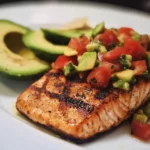
Grilled Salmon with Avocado Salsa Recipe
Ingredients
For the Flavorful Salmon Marinade:
- 1 tbsp Olive Oil: The foundation of our marinade, olive oil does more than just prevent the salmon from sticking to the baking sheet; it’s a flavor carrier. Opt for a good quality extra virgin olive oil. Its fruity notes will subtly enhance the salmon’s natural taste, while its richness adds a luxurious mouthfeel. Olive oil also helps to keep the salmon moist during cooking, preventing it from drying out and becoming tough.
- 1 Clove Garlic, Minced: Garlic is the aromatic powerhouse of this marinade. Minced garlic infuses the salmon with its pungent and slightly sweet flavor. Freshly minced garlic is always preferred over pre-minced, as it retains more of its volatile aromatic compounds. The garlic not only adds depth of flavor but also works synergistically with the other spices to create a complex and inviting aroma. If you are a garlic lover, feel free to add another half clove for an extra garlicky punch.
- ½ tsp Chilli Powder: Don’t let the name “chilli powder” intimidate you. In this recipe, it’s not about fiery heat, but about adding warmth and complexity. A good quality chilli powder offers a subtle, smoky depth with a hint of gentle spice that complements the richness of the salmon. It adds a layer of flavor that goes beyond just heat, contributing to the overall savory profile of the dish. For those who prefer a spicier kick, you can use a chilli powder blend that includes cayenne pepper or add a pinch of red pepper flakes to the marinade.
- ½ tsp Ground Cumin: Cumin is an essential spice that brings an earthy and slightly nutty warmth to the marinade. Its distinctive aroma and flavor are crucial in creating a well-rounded spice profile that balances the other seasonings. Cumin’s earthy notes pair beautifully with both the salmon and the avocado salsa, tying the dish together with a cohesive flavor thread. For a fresher, more intense cumin flavor, you can lightly toast cumin seeds in a dry pan and then grind them just before adding them to the marinade.
- ½ tsp Onion Powder: Onion powder adds a subtle, savory sweetness to the marinade that complements the garlic and other spices. It offers a concentrated onion flavor without the moisture or texture of fresh onions, ensuring a smooth and even marinade. Onion powder enhances the umami notes of the salmon and adds another layer of complexity to the overall flavor profile. Make sure your onion powder is fresh for the best flavor, as it can lose its potency over time.
- ¼ tsp Black Pepper: Freshly ground black pepper is a fundamental seasoning that adds a subtle bite and enhances the flavors of all the other ingredients. Its pungent notes provide a contrast to the richness of the salmon and the other spices, adding a layer of complexity and depth. Freshly cracked black pepper is always preferable as it has a brighter and more intense flavor than pre-ground pepper.
- ¼ tsp Salt: Salt is the ultimate flavor enhancer, bringing out the natural flavors of the salmon and the other marinade ingredients. It also plays a crucial role in seasoning the dish to perfection. Use fine sea salt or kosher salt for the marinade. Salt not only enhances flavor but also helps to tenderize the salmon slightly. Remember to season to taste, and adjust the salt level as needed.
- 170 g Salmon Fillets: The star of the show, salmon fillets should be of high quality and as fresh as possible. Look for salmon that is bright in color, firm to the touch, and has a fresh, sea-like smell. Wild-caught salmon is often preferred for its richer flavor and higher omega-3 fatty acid content, but sustainably farmed salmon is also a good option. The thickness of the fillets will affect the cooking time, so try to choose fillets that are relatively uniform in thickness for even cooking. Skin-on or skin-off salmon fillets can be used, depending on your preference. Skin-on fillets will result in crispier skin if grilled skin-side down first, while skin-off fillets are easier to serve and eat.
For the Refreshing Avocado Salsa:
- 1 Ripe Avocado, Pitted & Diced: The creamy and buttery avocado is the heart of the salsa. Ripe avocados are essential for achieving the desired texture and flavor. To check for ripeness, gently press the avocado; it should yield slightly but not be mushy. Diced avocado provides a beautiful creamy texture that contrasts perfectly with the flaky salmon and adds a rich, healthy fat to the dish. The mild, slightly nutty flavor of avocado complements the other salsa ingredients and the grilled salmon beautifully.
- 1 Tomato, Diced: Tomato adds a burst of juicy freshness and a touch of acidity to the salsa. Choose a ripe but firm tomato for the best texture. Diced tomatoes provide a vibrant color and a refreshing counterpoint to the richness of the avocado. The natural sweetness and slight tanginess of tomatoes enhance the overall flavor profile of the salsa, adding a layer of complexity. For a more intense tomato flavor, you can use Roma tomatoes or vine-ripened tomatoes.
- 2 tbsp Onion, Diced: Onion adds a pungent and slightly sharp flavor to the salsa, providing a nice contrast to the creamy avocado and sweet tomato. Red onion is often preferred for salsa because of its slightly milder and sweeter flavor compared to yellow or white onions. Diced onion adds a subtle crunch and aromatic depth to the salsa. If you prefer a milder onion flavor, you can soak the diced onion in cold water for a few minutes before adding it to the salsa to reduce its sharpness.
- 2 tbsp Cilantro, Minced: Cilantro is the herbaceous star of the salsa, adding a bright, fresh, and slightly citrusy flavor. Fresh cilantro is crucial for achieving the vibrant flavor of the salsa. Minced cilantro adds a burst of freshness and a distinctive aroma that complements the other salsa ingredients perfectly. If you are not a fan of cilantro, you can substitute it with fresh parsley, although it will slightly alter the flavor profile.
- 1 tbsp Olive Oil: Similar to the marinade, olive oil in the salsa adds richness and helps to bind the ingredients together. A good quality extra virgin olive oil will enhance the flavors of the fresh vegetables and herbs. It also adds a subtle fruity note and a smooth mouthfeel to the salsa.
- 1 tbsp Lime Juice: Fresh lime juice is essential for the avocado salsa. It adds a bright, tangy acidity that balances the richness of the avocado and prevents it from browning. Lime juice also enhances the flavors of all the other salsa ingredients, creating a vibrant and refreshing taste. Freshly squeezed lime juice is always preferred over bottled lime juice for its brighter and more authentic flavor.
- Salt & Pepper to Taste: Seasoning is key to bringing all the flavors of the salsa together. Salt enhances the natural flavors of the vegetables and herbs, while pepper adds a subtle bite. Season the salsa to your preference, tasting and adjusting as needed until you achieve the perfect balance of flavors.
Instructions
Getting Started: Preheating and Preparation
- Heat the Oven to 400°F (200°C). Preheating the oven is the first crucial step. Setting the oven to 400°F (200°C) ensures that the salmon cooks quickly and evenly. This temperature is ideal for baking salmon, as it’s hot enough to cook the fish through without drying it out. Make sure your oven is properly preheated before you place the salmon in, as this will help it cook correctly.
- Line a Baking Sheet with Aluminum Foil. Lining a baking sheet with aluminum foil is a simple but essential step for easy cleanup. The foil prevents the salmon from sticking to the baking sheet and makes washing up a breeze. You can also lightly grease the foil with cooking spray to further ensure that the salmon doesn’t stick.
Marinating the Salmon: Infusing Flavor
- Place the Olive Oil, Garlic, and Spices into a Small Bowl, Mix Well to Combine, and then Brush Over the Salmon Fillets. This is where the flavor magic begins. In a small bowl, combine the olive oil, minced garlic, chilli powder, ground cumin, onion powder, black pepper, and salt. Mix these ingredients thoroughly until they are well combined and form a fragrant marinade. The olive oil acts as a base, while the spices and garlic infuse it with their aromatic essence. Generously brush this flavorful marinade over both sides of the salmon fillets, ensuring that each fillet is evenly coated. Allow the salmon to marinate for at least 5-10 minutes. While the recipe doesn’t specify a marinating time, even a short marination period allows the flavors to penetrate the salmon and enhance its taste.
Baking the Salmon: Achieving Perfect Flakiness
- Lay the Salmon on the Baking Sheet and Place it in the Hot Oven to Bake for 12-15 Minutes or Until Cooked. Carefully place the marinated salmon fillets on the prepared baking sheet. Ensure they are spaced apart so that they cook evenly. Place the baking sheet in the preheated oven and bake for 12-15 minutes. The cooking time will depend on the thickness of your salmon fillets and your oven’s temperature accuracy. To check if the salmon is cooked, gently flake it with a fork. It should be opaque and flake easily, with no raw or translucent parts. Avoid overcooking the salmon, as it can become dry and tough. Perfectly cooked salmon is moist, flaky, and tender.
Preparing the Avocado Salsa: Fresh and Vibrant
- In the Meantime, Make the Avocado Salsa. Place the Avocado, Tomato, Onion, and Cilantro into a Large Mixing Bowl. While the salmon is baking, you can prepare the refreshing avocado salsa. In a large mixing bowl, combine the diced avocado, diced tomato, diced onion, and minced cilantro. These fresh ingredients create the base of the salsa, providing a vibrant mix of flavors and textures.
- Drizzle with Olive Oil and Fresh Lime Juice, and Season with a Pinch of Salt and Pepper. Drizzle olive oil and fresh lime juice over the vegetables in the mixing bowl. The olive oil adds richness, while the lime juice provides acidity and prevents the avocado from browning. Season the salsa with a pinch of salt and pepper to taste. Start with a small amount and adjust as needed to achieve the perfect balance of flavors.
- Mix Well and Set Aside Until Ready to Serve. Gently mix all the salsa ingredients together until they are well combined. Be careful not to overmix, as you want to maintain the texture of the diced avocado and vegetables. Set the salsa aside until the salmon is cooked and ready to serve. This allows the flavors to meld together slightly.
Serving: The Final Flourish
- Top the Salmon with Avocado Salsa and Serve Immediately. Once the salmon is cooked to perfection, remove it from the oven. Immediately top each salmon fillet with a generous spoonful of the fresh avocado salsa. Serve immediately while the salmon is still warm and the salsa is fresh and vibrant. The contrast between the warm salmon and the cool salsa is part of what makes this dish so delightful.
Nutrition
- Serving Size: One Normal Portion
- Calories: 540 kcal