

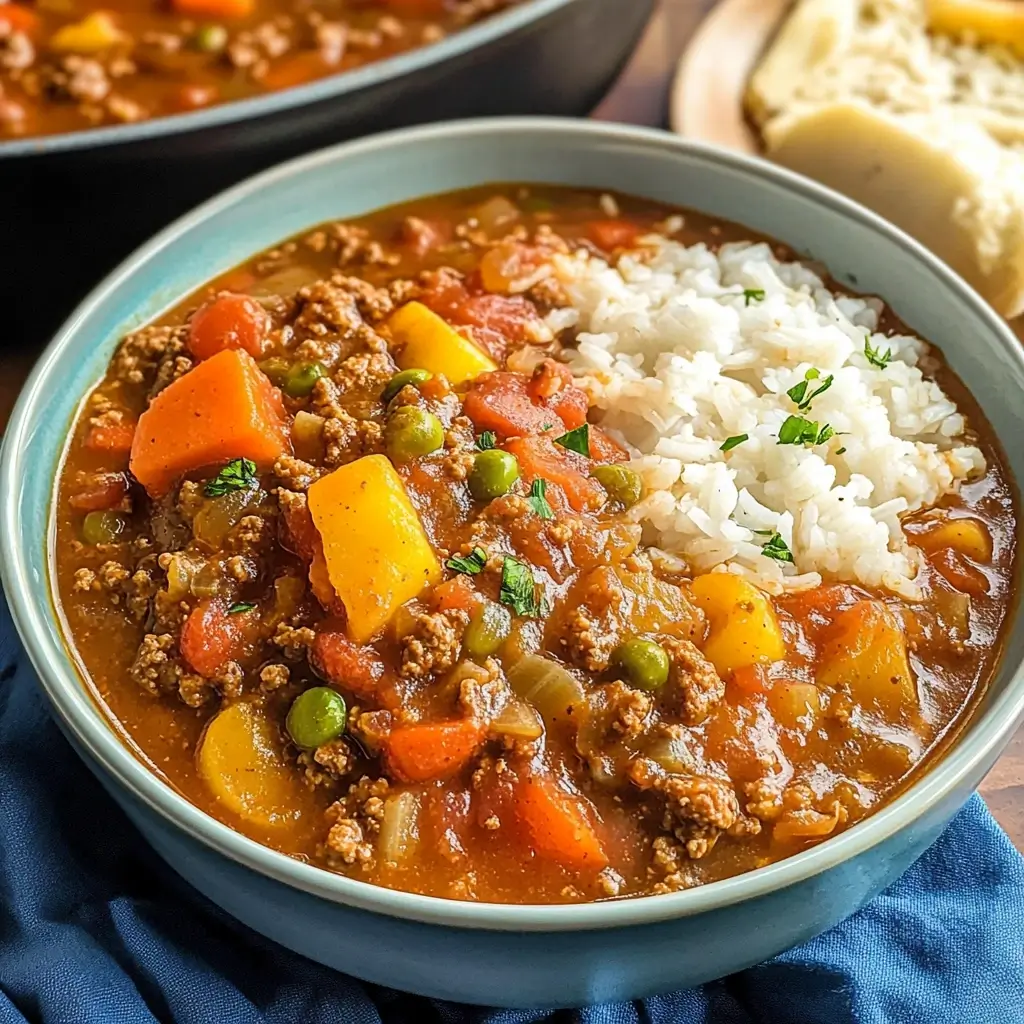

There are some meals that just feel like a warm hug in a bowl, and this Hamburger Stew with Rice is precisely that for my family. I remember the first time I made it on a particularly chilly autumn evening; the aroma filling the kitchen was instantly comforting, drawing everyone away from their screens and activities. My youngest, usually a picky eater, surprised us all by asking for seconds, declaring it “the best beefy soup ever!” Since then, it’s become a staple in our rotation, especially during colder months or on busy weeknights when I need something hearty, relatively quick, and guaranteed to please everyone. It’s the kind of dish that simmers gently on the stove, requiring minimal fuss once everything’s in the pot, allowing precious time to reconnect after a long day. The combination of savory ground beef, tender vegetables, and a rich, flavorful broth, all served over fluffy rice, is simple perfection. It’s budget-friendly, utilizes pantry staples, and the leftovers (if there are any!) taste even better the next day. This recipe isn’t just food; it’s comfort, nostalgia, and delicious practicality all rolled into one satisfying meal.
The Enduring Appeal of Hamburger Stew
Before we dive into the specifics, let’s take a moment to appreciate why Hamburger Stew, especially when paired with rice, holds such a special place in home cooking. It’s a descendant of countless peasant stews from around the world – simple, nourishing concoctions designed to stretch ingredients and provide maximum comfort. Using ground beef makes it incredibly accessible and quick-cooking compared to tougher cuts requiring long braising times. It’s inherently versatile, welcoming a wide array of vegetables based on season or preference. The addition of rice provides a perfect, neutral base to soak up the rich gravy, making the meal even more substantial and satisfying. It hits all the right notes: savory, hearty, warm, and deeply flavorful. It’s the culinary equivalent of a cozy blanket, perfect for chasing away the chill and bringing families together around the dinner table. This particular version aims for that perfect balance – rich flavor without being overly heavy, packed with vegetables, and easy enough for even novice cooks to master.
Essential Ingredients for Perfect Hamburger Stew with Rice
Crafting the perfect Hamburger Stew hinges on using quality ingredients in the right proportions. Below is the list you’ll need to create this comforting classic, designed to serve approximately 6 people generously.
- Ground Beef: 1.5 lbs (Lean, 85/15 or 90/10 recommended)
- Olive Oil or Vegetable Oil: 2 tablespoons
- Yellow Onion: 1 large, chopped (about 1.5 cups)
- Garlic: 4 cloves, minced (about 1.5 tablespoons)
- Carrots: 3 medium, peeled and sliced or diced (about 1.5 cups)
- Celery: 3 stalks, sliced or diced (about 1.5 cups)
- All-Purpose Flour: 3 tablespoons (for thickening)
- Tomato Paste: 3 tablespoons
- Beef Broth: 4 cups (32 oz), preferably low-sodium
- Diced Tomatoes: 1 can (14.5 oz), undrained
- Potatoes: 2 medium (like Russet or Yukon Gold), peeled and diced into ½-inch cubes (about 2 cups) – Optional, but classic
- Worcestershire Sauce: 2 tablespoons
- Dried Thyme: 1 teaspoon
- Dried Rosemary: ½ teaspoon (or 1 sprig fresh)
- Paprika: 1 teaspoon (Sweet or Smoked)
- Bay Leaf: 1
- Frozen Peas: 1 cup
- Frozen Corn: 1 cup (optional)
- Salt: 1 teaspoon (adjust to taste)
- Black Pepper: ½ teaspoon (adjust to taste)
- Long-Grain White Rice: 1.5 cups, uncooked
- Water (for rice): 3 cups (or follow package directions)
- Butter or Oil (for rice): 1 tablespoon (optional)
- Salt (for rice): ½ teaspoon (optional)
- Fresh Parsley: Chopped, for garnish (optional)
Deep Dive into the Key Components:
- The Ground Beef: The star of the show! Using lean ground beef (85/15 or 90/10) minimizes excess grease you’d need to drain off, keeping more flavor in the pot. Don’t be afraid to let it brown properly; those crispy bits (fond) build the foundation of the stew’s flavor. If you prefer, ground turkey, chicken, or even plant-based grounds can be substituted, though cooking times and flavor profiles will vary slightly. Remember to adjust seasoning accordingly if using leaner alternatives.
- The Aromatic Base (Mirepoix & Garlic): Onion, carrots, and celery form the classic “mirepoix,” a fundamental building block of flavor in Western cooking. Sautéing them until softened releases their natural sweetness and creates an aromatic base for the stew. Don’t rush this step! Taking the time to properly soften the vegetables prevents raw, harsh flavors and adds depth. Garlic joins the party later to prevent burning, adding its pungent kick. Feel free to adjust the ratios slightly based on your preference – love onions? Add a bit more!
- The Vegetable Medley: Beyond the mirepoix, potatoes add heartiness and a creamy texture as they cook down slightly. Canned diced tomatoes contribute acidity, liquid, and umami depth. We add frozen peas and corn near the end to maintain their bright color and fresh pop – adding them too early results in mushy, grey vegetables. Feel free to experiment! Bell peppers, mushrooms, green beans, or butternut squash can all be wonderful additions. Just consider their cooking times and add them accordingly.
- The Savory Liquid Gold (Broth & Flavor Enhancers): Beef broth forms the soul of the stew. Using a good quality, low-sodium broth allows you to control the salt level better. Tomato paste, when properly “bloomed” (cooked briefly in the fat), adds concentrated tomato flavor and richness. Worcestershire sauce is a secret weapon, providing complex savory, tangy, and slightly sweet notes that enhance the beefiness. The undrained diced tomatoes also contribute significant liquid and flavor.
- The Seasoning Symphony: Herbs and spices transform the basic ingredients into a complex, delicious stew. Thyme and rosemary offer classic, earthy notes that pair beautifully with beef. Paprika adds color and a subtle sweetness (or smokiness, if using smoked paprika). A bay leaf infuses a subtle background aroma while simmering (remember to remove it before serving!). Salt and pepper are essential for enhancing all the other flavors – taste and adjust seasoning at the end of cooking, as flavors concentrate during simmering.
- The Thickening Agent: All-purpose flour, tossed with the browned beef and sautéed vegetables before adding liquid, creates a roux-like base that gently thickens the stew as it simmers. This prevents a watery consistency and creates a luscious gravy. A cornstarch slurry (cornstarch mixed with cold water) can be used as an alternative thickening method near the end of cooking if needed.
- The Perfect Rice Companion: Long-grain white rice is a classic choice, cooking up fluffy and separate, providing the perfect bed for the rich stew. Follow the package directions or the standard 1:2 ratio (1 part rice to 2 parts water/broth). Adding a touch of butter and salt to the cooking water enhances the rice’s flavor. Brown rice is a healthier alternative, offering more fiber, but it requires a longer cooking time. Quinoa or couscous could also work as substitutes. The key is to cook the rice separately to control its texture perfectly.
Step-by-Step Instructions for Hamburger Stew Glory
Follow these instructions carefully to achieve a perfectly balanced and flavorful Hamburger Stew with Rice. Prepare your ingredients (chopping, measuring – mise en place) before you begin cooking for a smoother process.
- Brown the Beef: Heat the olive oil in a large pot or Dutch oven over medium-high heat. Once shimmering, add the ground beef. Break it apart with a spoon and cook, stirring occasionally, until it’s thoroughly browned and no pink remains (about 7-10 minutes). Focus on getting some nice brown crust on the meat – this Maillard reaction is crucial for flavor development. Drain off any excess fat if necessary (especially if using higher-fat beef), leaving about 1-2 tablespoons in the pot for flavor and for sautéing the vegetables.
- Sauté the Aromatics: Add the chopped onion, carrots, and celery to the pot with the browned beef. Cook over medium heat, stirring frequently, until the vegetables begin to soften and the onion becomes translucent (about 5-7 minutes). Don’t let them brown too much at this stage, just soften and release their aromas.
- Add Garlic and Tomato Paste: Stir in the minced garlic and cook for about 1 minute more, until fragrant. Be careful not to burn the garlic, as it can become bitter. Push the meat and vegetables slightly to the side to create a small clearing in the pot. Add the tomato paste to this clearing and cook, stirring it constantly for about 1-2 minutes. This process, often called “blooming,” cooks off the raw tomato taste and deepens its flavor significantly. Then, stir the bloomed paste into the meat and vegetable mixture.
- Incorporate Flour and Seasonings: Sprinkle the all-purpose flour evenly over the meat and vegetable mixture. Stir continuously for 1-2 minutes to cook out the raw flour taste and ensure everything is coated. This flour will help thicken the stew later. Stir in the dried thyme, dried rosemary, paprika, salt, and pepper.
- Deglaze and Add Liquids: Pour in about ½ cup of the beef broth. Scrape the bottom of the pot with a wooden spoon or spatula to lift any browned bits (fond) stuck to the bottom. These bits are packed with flavor! Once the bottom is clean, gradually stir in the remaining beef broth, the can of undrained diced tomatoes, and the Worcestershire sauce. Stir everything together until well combined.
- Add Potatoes and Simmer: Stir in the diced potatoes (if using) and add the bay leaf. Bring the mixture to a gentle boil, then reduce the heat to low, cover the pot, and let it simmer for at least 25-30 minutes, or until the potatoes (if used) and carrots are tender. Stir occasionally to prevent sticking. The longer it simmers gently, the more the flavors will meld and deepen.
- Cook the Rice: While the stew is simmering, prepare the rice. In a separate medium saucepan, combine the 1.5 cups of uncooked rice, 3 cups of water, the optional tablespoon of butter/oil, and the optional ½ teaspoon of salt. Bring the water to a boil over medium-high heat. Once boiling, stir the rice once, reduce the heat to the lowest setting, cover the pot tightly, and let it simmer for 15-20 minutes (or according to package directions) until all the water is absorbed and the rice is tender and fluffy. Do not lift the lid or stir during this simmering time. Once cooked, remove the rice from the heat and let it stand, covered, for 5-10 minutes. Fluff with a fork before serving.
- Finish the Stew: Once the vegetables in the stew are tender, check the consistency. If you prefer a thicker stew, you can mix 1 tablespoon of cornstarch with 2 tablespoons of cold water to create a slurry, then stir it into the simmering stew and cook for another 1-2 minutes until thickened. Remove the bay leaf. Stir in the frozen peas and frozen corn (if using). Cook for another 3-5 minutes, just until the peas and corn are heated through. Avoid overcooking them.
- Taste and Adjust: Taste the stew carefully. Adjust seasoning as needed, adding more salt, pepper, or even a splash more Worcestershire sauce if desired. Remember that flavors have concentrated during simmering.
- Serve: Ladle the hot Hamburger Stew generously over bowls of the fluffy cooked rice. Garnish with fresh chopped parsley, if desired, for a touch of color and freshness.
Nutritional Insights (Estimated)
Understanding the nutritional profile can be helpful for meal planning. Please note these are estimates and can vary based on specific ingredients used (e.g., fat content of beef, sodium in broth, specific vegetables added).
- Servings: This recipe makes approximately 6 generous servings.
- Calories Per Serving (Approximate): Around 550-600 kcal per serving (including approximately ¾ cup cooked rice).
Breakdown:
- Protein: Primarily from the ground beef, contributing significantly to satiety.
- Carbohydrates: From the rice, potatoes, vegetables, and a small amount from the flour and tomato products. Provides energy.
- Fat: Mainly from the ground beef and cooking oil. Choosing leaner beef reduces saturated fat content.
- Fiber: Contributed by the vegetables (carrots, celery, peas, corn, potatoes) and potentially more if using brown rice.
- Vitamins & Minerals: A good source of iron (from beef), Vitamin A (from carrots), Vitamin C (from tomatoes/potatoes if fresh), and various B vitamins.
Tips for Adjusting Nutrition:
- Use extra-lean ground beef (93/7) or ground turkey/chicken.
- Increase the volume of non-starchy vegetables (peppers, mushrooms, green beans).
- Use brown rice instead of white rice for increased fiber.
- Opt for low-sodium beef broth and control added salt carefully.
- Skip the optional butter in the rice.
Timing Your Culinary Creation: Prep and Cook Time
Knowing the time commitment helps you plan your meal effectively.
- Preparation Time: Approximately 25 minutes. This includes chopping the vegetables (onion, carrots, celery, potatoes), mincing the garlic, and measuring out other ingredients (mise en place). You can save time by using pre-chopped vegetables or a food processor for quicker chopping.
- Cook Time: Approximately 45-55 minutes. This includes browning the beef (7-10 mins), sautéing vegetables (5-7 mins), simmering the stew (25-30 mins), cooking the rice (15-20 mins concurrently), and finishing the stew (5 mins).
- Total Time: Approximately 1 hour 10 minutes to 1 hour 20 minutes from start to finish.
Streamlining Tips:
- Mise en Place: Have all ingredients prepped and ready before starting. This prevents frantic chopping while something else is cooking.
- Multitasking: Start the rice cooking while the stew begins its simmering phase.
- Batch Prep: Chop extra onions, carrots, and celery over the weekend and store them in the fridge for quick use during the week.
How to Serve Your Masterpiece: Presentation Matters
Serving this Hamburger Stew thoughtfully enhances the dining experience. Here are some ideas:
- Classic Bowl: Ladle the hot stew into shallow, wide bowls. Create a well in the center and spoon a generous portion of fluffy rice into it. Alternatively, serve the rice alongside or create a bed of rice in the bowl first and ladle the stew over the top. This allows diners to mix the rice and stew as they please.
- Garnish Power:
- Sprinkle with fresh chopped parsley for a burst of color and freshness.
- A dollop of sour cream or plain Greek yogurt can add a cool, tangy counterpoint.
- A sprinkle of sharp cheddar cheese adds extra richness.
- Thinly sliced green onions provide a mild oniony bite.
- Bread is Best: Serve with a side of warm, crusty bread (like a baguette or sourdough) or soft dinner rolls. Perfect for soaking up every last drop of the delicious gravy! Cornbread is also a fantastic pairing.
- Simple Salad: A light green salad with a simple vinaigrette provides a fresh contrast to the hearty stew. Think mixed greens, cucumber, and maybe a few cherry tomatoes.
- Family Style: Serve the stew in a large tureen or pot and the rice in a separate bowl, allowing everyone to serve themselves at the table.
Pro Tips for Elevating Your Hamburger Stew
Take your stew from great to exceptional with these simple tips:
- Master the Maillard Reaction (Don’t Rush Browning): When browning the ground beef, resist the urge to stir it constantly. Let it sit undisturbed for periods to develop a deep brown crust on the bottom of the pan. This creates complex flavors (fond) that form the backbone of your stew. Similarly, give your mirepoix (onions, carrots, celery) enough time to soften and slightly caramelize – don’t just sweat them.
- Bloom That Tomato Paste: Never just squeeze tomato paste directly into the liquid. Cooking it for a minute or two in the hot fat before adding broth deepens its flavor, reduces acidity, and adds umami richness. It’s a small step with a big impact on the overall taste profile.
- Deglaze Like a Pro: That brown stuff stuck to the bottom of the pot after browning the meat and veggies? That’s pure flavor! Pouring in a small amount of liquid (broth works best here) and scraping vigorously with a wooden spoon dissolves these flavorful bits (fond) back into the stew. Don’t skip this – it adds incredible depth.
- Low and Slow Simmer: While this stew doesn’t need hours like a beef chuck stew, simmering it gently over low heat (don’t let it rapidly boil) is key. This allows the flavors to meld beautifully and the vegetables to become perfectly tender without turning to mush. Patience during the simmer pays off in flavor.
- Taste and Adjust at the End: Ingredients release salt and flavors concentrate as the stew simmers. Wait until the stew has finished simmering and you’ve added the final ingredients (like peas/corn) before doing your final taste test. Adjust salt, pepper, or even add a tiny pinch of sugar or a splash of vinegar (like apple cider or red wine vinegar) if needed to brighten the flavors and balance the richness.
Frequently Asked Questions (FAQ)
Here are answers to some common questions about making Hamburger Stew with Rice:
- Can I make Hamburger Stew ahead of time?
- Absolutely! Stews often taste even better the next day as the flavors have more time to meld. Prepare the stew completely, let it cool, and store it in an airtight container in the refrigerator for up to 3-4 days. Reheat gently on the stovetop or in the microwave. Cook the rice fresh just before serving, or reheat leftover rice separately (adding a splash of water can help prevent dryness when microwaving).
- Can I freeze Hamburger Stew?
- Yes, this stew freezes quite well, but potatoes can sometimes become slightly grainy or mushy upon thawing and reheating. If you plan to freeze it, consider slightly undercooking the potatoes or omitting them and adding freshly boiled potatoes when reheating. Let the stew cool completely before transferring it to freezer-safe containers or heavy-duty freezer bags. Leave some headspace for expansion. Freeze for up to 3 months. Thaw overnight in the refrigerator before reheating gently. The rice should be cooked fresh when serving.
- What other vegetables can I add?
- This recipe is very adaptable! Feel free to add or substitute vegetables based on preference or what’s in season. Good options include:
- Mushrooms: Sauté with the onions, carrots, and celery.
- Bell Peppers (any color): Add along with the onions/carrots/celery.
- Green Beans (fresh or frozen): Add during the last 10-15 minutes of simmering.
- Butternut Squash or Sweet Potatoes: Peel, dice, and add along with the potatoes (they cook similarly).
- Zucchini or Yellow Squash: Dice and add during the last 10 minutes of simmering.
- This recipe is very adaptable! Feel free to add or substitute vegetables based on preference or what’s in season. Good options include:
- How can I make the stew thicker or thinner?
- Thicker: If your stew isn’t as thick as you’d like after simmering, create a slurry by mixing 1 tablespoon of cornstarch with 2 tablespoons of cold water until smooth. Stir this slurry into the simmering stew and cook for 1-2 minutes more until it thickens. Repeat if necessary. Alternatively, you can mash some of the cooked potatoes against the side of the pot to release their starch.
- Thinner: Simply stir in a bit more beef broth or hot water until you reach your desired consistency. Adjust seasoning if needed after thinning.
- Can I use ground turkey or chicken instead of beef?
- Yes, you can substitute ground turkey or chicken. Keep in mind they are leaner, so you might not need to drain any fat after browning. Because they have a milder flavor than beef, you may want to slightly increase the seasonings or add a dash more Worcestershire sauce or even a teaspoon of soy sauce for extra umami depth. The overall cooking process remains the same. Plant-based grounds can also work for a vegetarian version, following the same principles.

Hamburger Stew with Rice Recipe
Ingredients
- Ground Beef: 1.5 lbs (Lean, 85/15 or 90/10 recommended)
- Olive Oil or Vegetable Oil: 2 tablespoons
- Yellow Onion: 1 large, chopped (about 1.5 cups)
- Garlic: 4 cloves, minced (about 1.5 tablespoons)
- Carrots: 3 medium, peeled and sliced or diced (about 1.5 cups)
- Celery: 3 stalks, sliced or diced (about 1.5 cups)
- All-Purpose Flour: 3 tablespoons (for thickening)
- Tomato Paste: 3 tablespoons
- Beef Broth: 4 cups (32 oz), preferably low-sodium
- Diced Tomatoes: 1 can (14.5 oz), undrained
- Potatoes: 2 medium (like Russet or Yukon Gold), peeled and diced into ½-inch cubes (about 2 cups) – Optional, but classic
- Worcestershire Sauce: 2 tablespoons
- Dried Thyme: 1 teaspoon
- Dried Rosemary: ½ teaspoon (or 1 sprig fresh)
- Paprika: 1 teaspoon (Sweet or Smoked)
- Bay Leaf: 1
- Frozen Peas: 1 cup
- Frozen Corn: 1 cup (optional)
- Salt: 1 teaspoon (adjust to taste)
- Black Pepper: ½ teaspoon (adjust to taste)
- Long-Grain White Rice: 1.5 cups, uncooked
- Water (for rice): 3 cups (or follow package directions)
- Butter or Oil (for rice): 1 tablespoon (optional)
- Salt (for rice): ½ teaspoon (optional)
- Fresh Parsley: Chopped, for garnish (optional)
Instructions
- Brown the Beef: Heat the olive oil in a large pot or Dutch oven over medium-high heat. Once shimmering, add the ground beef. Break it apart with a spoon and cook, stirring occasionally, until it’s thoroughly browned and no pink remains (about 7-10 minutes). Focus on getting some nice brown crust on the meat – this Maillard reaction is crucial for flavor development. Drain off any excess fat if necessary (especially if using higher-fat beef), leaving about 1-2 tablespoons in the pot for flavor and for sautéing the vegetables.
- Sauté the Aromatics: Add the chopped onion, carrots, and celery to the pot with the browned beef. Cook over medium heat, stirring frequently, until the vegetables begin to soften and the onion becomes translucent (about 5-7 minutes). Don’t let them brown too much at this stage, just soften and release their aromas.
- Add Garlic and Tomato Paste: Stir in the minced garlic and cook for about 1 minute more, until fragrant. Be careful not to burn the garlic, as it can become bitter. Push the meat and vegetables slightly to the side to create a small clearing in the pot. Add the tomato paste to this clearing and cook, stirring it constantly for about 1-2 minutes. This process, often called “blooming,” cooks off the raw tomato taste and deepens its flavor significantly. Then, stir the bloomed paste into the meat and vegetable mixture.
- Incorporate Flour and Seasonings: Sprinkle the all-purpose flour evenly over the meat and vegetable mixture. Stir continuously for 1-2 minutes to cook out the raw flour taste and ensure everything is coated. This flour will help thicken the stew later. Stir in the dried thyme, dried rosemary, paprika, salt, and pepper.
- Deglaze and Add Liquids: Pour in about ½ cup of the beef broth. Scrape the bottom of the pot with a wooden spoon or spatula to lift any browned bits (fond) stuck to the bottom. These bits are packed with flavor! Once the bottom is clean, gradually stir in the remaining beef broth, the can of undrained diced tomatoes, and the Worcestershire sauce. Stir everything together until well combined.
- Add Potatoes and Simmer: Stir in the diced potatoes (if using) and add the bay leaf. Bring the mixture to a gentle boil, then reduce the heat to low, cover the pot, and let it simmer for at least 25-30 minutes, or until the potatoes (if used) and carrots are tender. Stir occasionally to prevent sticking. The longer it simmers gently, the more the flavors will meld and deepen.
- Cook the Rice: While the stew is simmering, prepare the rice. In a separate medium saucepan, combine the 1.5 cups of uncooked rice, 3 cups of water, the optional tablespoon of butter/oil, and the optional ½ teaspoon of salt. Bring the water to a boil over medium-high heat. Once boiling, stir the rice once, reduce the heat to the lowest setting, cover the pot tightly, and let it simmer for 15-20 minutes (or according to package directions) until all the water is absorbed and the rice is tender and fluffy. Do not lift the lid or stir during this simmering time. Once cooked, remove the rice from the heat and let it stand, covered, for 5-10 minutes. Fluff with a fork before serving.
- Finish the Stew: Once the vegetables in the stew are tender, check the consistency. If you prefer a thicker stew, you can mix 1 tablespoon of cornstarch with 2 tablespoons of cold water to create a slurry, then stir it into the simmering stew and cook for another 1-2 minutes until thickened. Remove the bay leaf. Stir in the frozen peas and frozen corn (if using). Cook for another 3-5 minutes, just until the peas and corn are heated through. Avoid overcooking them.
- Taste and Adjust: Taste the stew carefully. Adjust seasoning as needed, adding more salt, pepper, or even a splash more Worcestershire sauce if desired. Remember that flavors have concentrated during simmering.
- Serve: Ladle the hot Hamburger Stew generously over bowls of the fluffy cooked rice. Garnish with fresh chopped parsley, if desired, for a touch of color and freshness.
Nutrition
- Serving Size: One Normal Portion
- Calories: 550-600