Introduction
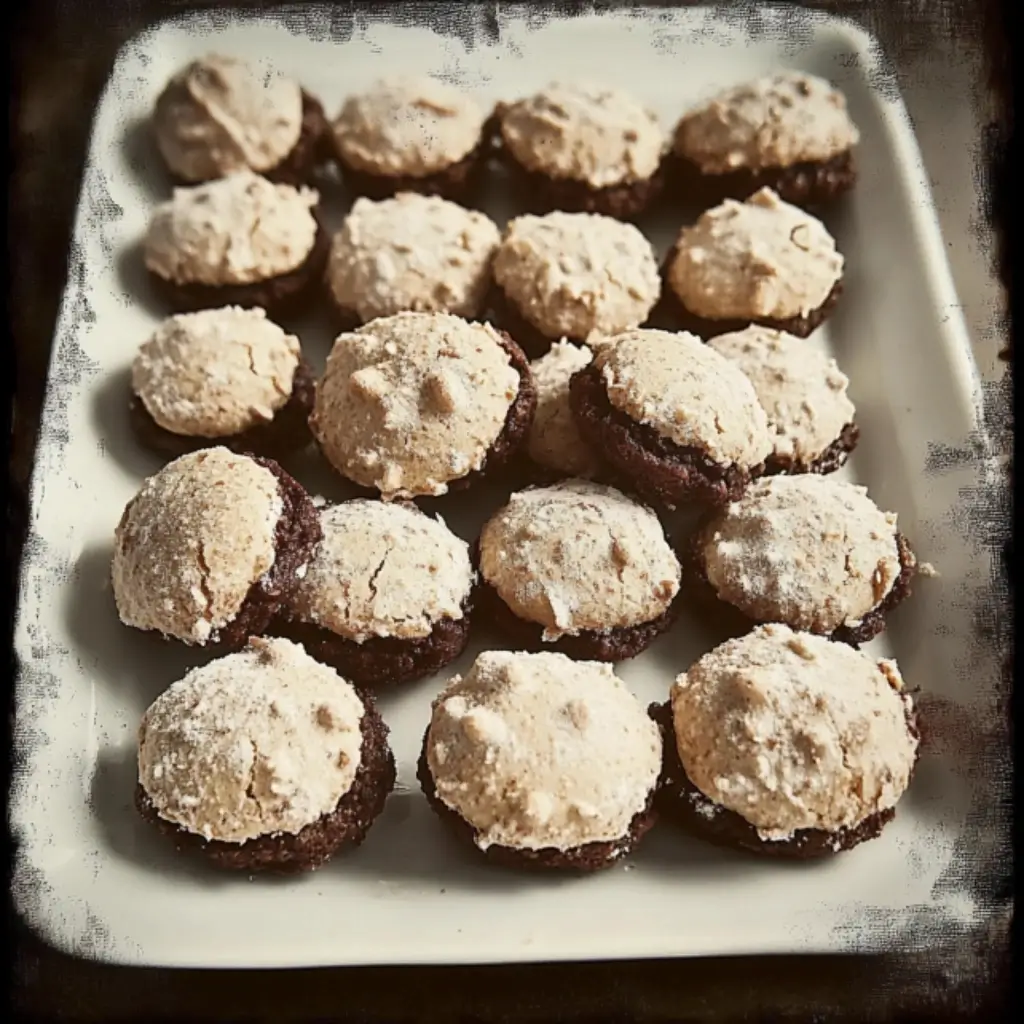
There’s something truly magical about a simple cookie done exceptionally well, and these Hazelnut Macaroons are a perfect example. In my kitchen, baking is often a family affair, and these macaroons were an instant hit. The delicate crunch on the outside giving way to a chewy, nutty interior had everyone reaching for seconds (and thirds!). What I especially loved was how straightforward they are to make. Don’t let the “macaroon” name intimidate you – these are far simpler than their meringue-based French cousins. The natural sweetness of hazelnuts shines through, enhanced by a hint of warm spice, and that optional drizzle of dark chocolate? Pure bliss. Whether you’re a seasoned baker or just starting out, these Hazelnut Macaroons are a guaranteed crowd-pleaser, perfect for a cozy afternoon treat, a festive gathering, or a thoughtful homemade gift. They are naturally gluten-free too, which is a wonderful bonus for those with dietary restrictions or preferences. Trust me, once you try these, they’ll become a regular in your baking repertoire.
Ingredients
This recipe for Hazelnut Macaroons uses just a handful of everyday ingredients, highlighting the beauty of simplicity. Each ingredient plays a crucial role in creating the perfect texture and flavor. Here’s what you’ll need:
- 4 large egg whites: Egg whites are the foundation of these macaroons, providing structure and lift. Using large eggs ensures you have the right volume of egg whites, which is crucial for achieving the desired airy texture. Make sure your eggs are fresh for the best results.
- 3 cups (426g) hazelnuts, toasted and ground*: Hazelnuts are the star of the show, lending their rich, nutty flavor and satisfying texture. Toasting the hazelnuts before grinding is a critical step as it deepens their flavor and makes them easier to grind. Using pre-ground hazelnuts is an option to save time, but freshly ground toasted hazelnuts will always deliver superior flavor.
- 2 tablespoons + 2 teaspoons all-purpose flour: A small amount of flour is added to provide a bit of structure and help bind the macaroons together. While these macaroons are naturally gluten-free in the sense that they don’t rely on wheat flour as a primary ingredient, a tiny amount of all-purpose flour is used in this particular recipe. For a truly gluten-free version, you can substitute with a gluten-free all-purpose flour blend or even cornstarch in a pinch.
- 1 teaspoon ground cinnamon: Cinnamon adds a warm, comforting spice note that complements the hazelnuts beautifully. It enhances the overall sweetness and creates a cozy flavor profile. Freshly ground cinnamon will have a more potent aroma and flavor, but pre-ground cinnamon works perfectly well too.
- 1/4 teaspoon ground cloves: Cloves bring a touch of warmth and depth, adding a subtle complexity to the spice blend. A little goes a long way with cloves, so be sure to measure accurately. Like cinnamon, freshly ground cloves will offer a more intense flavor, but pre-ground is convenient and readily available.
- 1 & 1/3 cups (266g) granulated sugar: Granulated sugar provides the sweetness and structure necessary for the macaroons. It helps create the characteristic crisp exterior and chewy interior. The amount of sugar is carefully balanced to complement the nutty flavor of the hazelnuts without being overly sweet.
- 4 ounces bittersweet chocolate, melted (optional): While delicious plain, a drizzle of melted bittersweet chocolate elevates these macaroons to another level. The slight bitterness of the dark chocolate provides a wonderful contrast to the sweetness of the macaroon and the nuttiness of the hazelnuts. Use good quality bittersweet chocolate for the best flavor. You can also experiment with semi-sweet or milk chocolate depending on your preference.
Note on Hazelnuts: The recipe specifies “toasted and ground* hazelnuts.” Let’s delve deeper into this crucial step. Toasting hazelnuts is essential for unlocking their full flavor potential. Raw hazelnuts can taste a bit bland and their skins can be slightly bitter. Toasting removes the bitterness, enhances the nutty aroma, and makes the skins easier to remove (although removing all skins is not strictly necessary for this recipe, some skin is fine).
How to Toast Hazelnuts:
- Oven Method: Preheat your oven to 350°F (175°C). Spread the hazelnuts in a single layer on a baking sheet. Toast for 10-15 minutes, or until the skins start to crack and the nuts become fragrant. Keep a close eye on them as they can burn quickly.
- Stovetop Method: Place the hazelnuts in a dry skillet over medium heat. Cook, stirring frequently, for 5-7 minutes, or until fragrant and lightly browned.
Grinding Hazelnuts: Once toasted and slightly cooled, you can grind the hazelnuts. A food processor is the easiest tool for this. Pulse the hazelnuts in the food processor until they are finely ground. Be careful not to over-process, or you’ll end up with hazelnut butter! You want a coarse, flour-like consistency, but not a paste. If you don’t have a food processor, you can use a nut grinder or even a sturdy blender in short pulses. You can also manually chop them very finely, but it will take more time and effort to achieve a uniform grind.
Instructions
Making these Hazelnut Macaroons is surprisingly straightforward, even for beginner bakers. Follow these step-by-step instructions for perfectly nutty and delicious cookies every time.
Step 1: Prepare the Egg Whites
- Separate the Eggs: Carefully separate the egg whites from the yolks. Ensure that no yolk gets into the whites, as any trace of fat can prevent the egg whites from whipping properly. It’s easiest to separate eggs when they are cold, but for this recipe, we need room temperature egg whites. So, separate them while cold, and then let the whites come to room temperature.
- Let Egg Whites Sit at Room Temperature: Place the egg whites in a large, clean, grease-free mixing bowl. Let them sit at room temperature for 30 minutes. This step is important because room temperature egg whites whip up to a greater volume than cold egg whites. As the egg whites warm up, their surface tension decreases, allowing them to incorporate more air when beaten, resulting in a lighter and fluffier meringue.
Step 2: Combine Dry Ingredients
- Whisk Dry Ingredients: In a separate medium-sized bowl, whisk together the ground hazelnuts, all-purpose flour, ground cinnamon, and ground cloves. Whisking ensures that the spices and flour are evenly distributed throughout the hazelnut mixture, preventing clumps and ensuring a consistent flavor in each macaroon. Setting this mixture aside now streamlines the baking process later.
Step 3: Whip the Egg Whites to Soft Peaks
- Start Whipping: Using an electric mixer (stand mixer or hand mixer) fitted with the whisk attachment, begin to beat the room temperature egg whites on high speed. Start at a medium speed and gradually increase to high.
- Beat to Soft Peaks: Continue beating until soft peaks form. Soft peaks are achieved when you lift the whisk out of the egg whites, and the peaks that form gently droop over at the tip. This stage is crucial; you want to incorporate air into the egg whites but not over-whip them at this point.
Step 4: Gradually Add Sugar and Beat to Stiff Peaks
- Slowly Add Sugar: With the mixer still running on medium-high speed, gradually add the granulated sugar to the egg whites over 1-2 minutes. Adding the sugar slowly allows it to dissolve properly into the egg whites and prevents deflating the meringue.
- Beat to Stiff Peaks: Continue beating on high speed until stiff peaks form. Stiff peaks are achieved when you lift the whisk out of the egg whites, and the peaks stand straight up and hold their shape firmly. The meringue should be glossy and voluminous. Be careful not to over-beat the meringue at this stage either. Over-beaten meringue can become dry and grainy. You want it to be stiff and glossy.
Step 5: Fold in Hazelnut Mixture
- Gently Fold: Using a rubber spatula or a large spoon, carefully fold the hazelnut mixture into the beaten egg whites. Folding is a gentle technique that incorporates the dry ingredients into the meringue without deflating it. Use a figure-eight motion, scraping down the sides of the bowl and gently turning the mixture over.
- Combine Until Just Incorporated: Continue folding until the hazelnut mixture is just incorporated into the meringue and no streaks of dry ingredients remain. Be careful not to overmix at this stage, as overmixing can deflate the meringue and result in dense macaroons.
Step 6: Let Dough Stand
- Cover and Let Stand: Cover the bowl with plastic wrap or a clean kitchen towel and let the mixture stand at room temperature for 30 minutes. This resting period allows the hazelnut flour to absorb some of the moisture from the egg whites, which helps to create a slightly thicker and more stable dough, making it easier to pipe or scoop and helping the macaroons hold their shape during baking.
Step 7: Preheat Oven and Prepare Baking Sheets
- Preheat Oven: Preheat your oven to 325°F (160°C). Accurate oven temperature is essential for baking macaroons. An oven thermometer is a helpful tool to ensure your oven is at the correct temperature.
- Line Baking Sheets: Line baking sheets with parchment paper or silicone baking mats. Parchment paper prevents sticking and makes cleanup easy. Silicone mats are reusable and also provide excellent non-stick properties. Do not grease the baking sheets directly, as this can cause the macaroons to spread too much.
Step 8: Portion and Bake Macaroons
- Portion Dough: Drop the macaroon dough onto the prepared baking sheets, using about 1 to 1 1/2 teaspoons of dough per cookie. Space the cookies about 1-2 inches apart to allow for slight spreading during baking. You can use a small cookie scoop for easier and more uniform portioning, which will result in evenly sized macaroons that bake at the same rate. If you don’t have a scoop, you can use two spoons to portion the dough.
- Bake: Bake in the preheated oven for 10-12 minutes, or until the edges are lightly browned and the tops appear dry and set. Keep a close eye on the macaroons as baking times can vary slightly depending on your oven. You want them to be just lightly golden around the edges and no longer wet on top.
- Check for Doneness: To check for doneness, gently touch the top of a macaroon. It should feel set and slightly firm, not sticky or wet. If the tops are still wet, bake for another minute or two, checking frequently.
Step 9: Cool and Decorate (Optional)
- Cool on Baking Sheets: Remove the baking sheets from the oven and let the macaroons cool on the pans for 10 minutes. This allows them to firm up slightly before transferring them to a wire rack.
- Transfer to Wire Rack: After 10 minutes, carefully transfer the macaroons to a wire rack to cool completely. Cooling them completely on a wire rack prevents the bottoms from becoming soggy.
- Melt Chocolate (Optional): While the macaroons are cooling, melt the bittersweet chocolate. You can melt it in a double boiler or in the microwave in short intervals, stirring in between, until smooth.
- Decorate with Chocolate (Optional): Once the macaroons are completely cool, spread the bottom of each cookie with melted chocolate. You can use a small offset spatula or a butter knife. Place the chocolate-covered side down on parchment paper or a wire rack to allow the chocolate to set. Alternatively, you can drizzle the melted chocolate over the tops of the macaroons for a different look.
- Let Chocolate Set: Allow the chocolate to set completely before serving or storing the macaroons. This will take about 15-20 minutes at room temperature, or you can speed up the process by placing them in the refrigerator for a shorter time.
Nutrition Facts
(Please note: Nutritional information is an estimate and can vary based on specific ingredients and portion sizes.)
Servings: Approximately 130 cookies (yield from recipe)
Serving Size: Let’s estimate a serving size of 2 macaroons. This would give us approximately 65 servings from the entire batch.
Estimated Nutrition per Serving (2 macaroons):
- Calories: Approximately 80-100 calories (This is an estimate and depends heavily on the size of your macaroons and the amount of chocolate used)
- Fat: 5-7g (primarily from hazelnuts)
- Saturated Fat: 1-2g (from hazelnuts and chocolate)
- Cholesterol: Minimal
- Sodium: Minimal
- Carbohydrates: 8-10g (from sugar and flour)
- Fiber: 1-2g (from hazelnuts)
- Sugar: 6-8g (added sugar)
- Protein: 1-2g (from egg whites and hazelnuts)
Important Considerations:
- These macaroons are relatively low in fat compared to many other cookies, thanks to the use of egg whites as the base. However, the hazelnuts do contribute healthy fats.
- They are a good source of fiber and protein due to the hazelnuts.
- The sugar content is moderate for a cookie, but it’s still important to enjoy them in moderation as part of a balanced diet.
- Adding chocolate will increase the calorie and fat content per serving.
For more precise nutritional information, you can use online recipe analyzers or nutrition calculators, inputting the exact brands and measurements of your ingredients.
Preparation Time
Let’s break down the preparation time for these Hazelnut Macaroons as outlined in the recipe:
- Prep Time: 20 minutes (This includes toasting and grinding hazelnuts, preparing egg whites, mixing dry ingredients, and making the batter)
- Cook Time: 12 minutes (Baking time in the oven)
- Additional Time: 1 hour (This includes letting egg whites sit, letting the batter stand, cooling time on baking sheets and wire rack, and chocolate setting time if used)
- Total Time: 1 hour 32 minutes
This total time is a good estimate, but it can vary slightly depending on your pace and kitchen setup. The “additional time” is mostly passive time, meaning you don’t need to be actively working in the kitchen during these periods. You can use this time to do other tasks or simply relax while the macaroons are resting and cooling.
How to Serve Hazelnut Macaroons
Hazelnut Macaroons are delightful on their own, but here are several ways to serve them to enhance their flavor and presentation:
- Simple and Classic:
- Plain: Enjoy them as they are! Their nutty flavor and delicate texture are wonderful on their own, perfect for a quick treat with coffee or tea.
- With Coffee or Tea: Pair them with a hot cup of coffee, espresso, cappuccino, latte, or your favorite tea. The subtle sweetness of the macaroon complements the bitterness of coffee and the warmth of tea beautifully.
- With Milk: A glass of cold milk (dairy or non-dairy) is a classic and comforting pairing, especially for children and those who prefer a milder flavor combination.
- Elevated and Elegant:
- Chocolate Drizzled: As the recipe suggests, a drizzle or coating of melted dark chocolate adds a touch of sophistication and richness. You can also use white chocolate or milk chocolate for different flavor profiles.
- Dust with Powdered Sugar: A light dusting of powdered sugar before serving adds a delicate sweetness and a beautiful snowy appearance.
- Serve with Fresh Berries: Arrange macaroons on a plate with a side of fresh raspberries, strawberries, or blueberries. The tartness of the berries provides a lovely contrast to the sweetness of the macaroons.
- Alongside Ice Cream or Sorbet: Serve a few macaroons alongside a scoop of vanilla ice cream, hazelnut gelato, or raspberry sorbet for a more substantial dessert.
- Part of a Dessert Platter: Include Hazelnut Macaroons as part of a larger dessert platter with other cookies, brownies, fruit tarts, and candies for a visually appealing and varied spread.
- Gift Giving: Package them in decorative boxes or bags to give as homemade gifts to friends, family, or neighbors. They are especially lovely for holiday gifting.
- Creative and Unique:
- Macaroon Ice Cream Sandwiches: Use two macaroons to sandwich a scoop of your favorite ice cream. Freeze briefly to firm up before serving for a fun and refreshing treat.
- Crumbled as a Topping: Crumble leftover macaroons and use them as a crunchy topping for yogurt, oatmeal, or fruit crisps.
- Hazelnut Macaroon Crumble Base: Crush macaroons finely and use them as a base for a no-bake cheesecake or pie crust, adding a unique nutty flavor.
- Decorated with Nuts or Sprinkles: Before baking, you can lightly sprinkle the tops of the macaroons with chopped hazelnuts, slivered almonds, or colorful sprinkles for added visual appeal and texture.
No matter how you choose to serve them, Hazelnut Macaroons are sure to be a delightful treat. Their versatility makes them perfect for any occasion, from casual snacking to elegant entertaining.
Additional Tips for Perfect Hazelnut Macaroons
To ensure your Hazelnut Macaroons turn out perfectly every time, here are five additional tips to keep in mind:
- Use Room Temperature Egg Whites: As mentioned earlier, room temperature egg whites whip up to a greater volume, resulting in lighter and airier macaroons. Plan ahead and take your eggs out of the refrigerator at least 30 minutes before you start baking. If you forget, you can quickly warm them by placing the eggs (in their shells) in a bowl of warm (not hot) water for about 5-10 minutes.
- Ensure Your Bowl and Whisk are Grease-Free: Even a tiny trace of grease can prevent egg whites from whipping properly. Make sure your mixing bowl and whisk attachment are scrupulously clean and dry. You can wipe them down with a bit of lemon juice or vinegar to remove any potential grease residue.
- Don’t Overmix the Batter: Overmixing the batter after folding in the hazelnut mixture is a common mistake that can lead to dense, flat macaroons. Fold gently until just combined, and stop as soon as no streaks of dry ingredients remain. It’s better to undermix slightly than to overmix.
- Test Bake a Few Macaroons: Oven temperatures can vary, so it’s always a good idea to test bake a few macaroons first. Bake 2-3 cookies and observe how they bake in your oven. If they spread too much, your oven might be too hot. If they don’t brown enough, you may need to increase the baking time slightly. Adjust the baking time and temperature as needed for the rest of the batch based on your test cookies.
- Store Macaroons Properly: Once completely cooled, store Hazelnut Macaroons in an airtight container at room temperature. They will stay fresh for 3-4 days. For longer storage, you can freeze them in an airtight container for up to 2 months. Thaw them at room temperature before serving. If you’ve added chocolate, store them in a cool, dry place to prevent the chocolate from blooming (developing white streaks).
By following these tips along with the recipe instructions, you’ll be well on your way to baking perfect Hazelnut Macaroons that are sure to impress.
FAQ Section: Hazelnut Macaroon Troubleshooting and Questions
Here are some frequently asked questions about making Hazelnut Macaroons to help you troubleshoot any issues and bake with confidence:
Q1: My macaroons spread too much and are flat. What went wrong?
A: There are several potential reasons for flat macaroons:
- Overmixing the Batter: Overmixing deflates the meringue, causing the cookies to spread. Be gentle when folding in the hazelnut mixture and stop mixing as soon as everything is just combined.
- Oven Temperature Too Low: If your oven temperature is too low, the macaroons may spread before they set. Ensure your oven is preheated to the correct temperature (325°F/160°C) and consider using an oven thermometer to verify accuracy.
- Too Much Moisture in the Batter: If your egg whites weren’t properly aged at room temperature, or if your hazelnuts were not completely dry after toasting, there might be too much moisture in the batter, leading to spreading.
- Greased Baking Sheets: Do not grease the baking sheets. Use parchment paper or silicone baking mats, as greasing can encourage spreading.
Q2: My macaroons are cracked on top. Why?
A: Cracking can sometimes happen and is not necessarily a sign of failure, but here are possible causes:
- Oven Temperature Too High: If the oven is too hot, the tops of the macaroons can set too quickly and crack as the interior expands. Check your oven temperature and ensure it’s accurate.
- Folding Too Vigorously: Over-vigorous folding might deflate the meringue and cause cracking. Fold gently and carefully.
- Dough Too Dry: If the dough is too dry (perhaps from over-grinding the hazelnuts into a very fine flour), it can crack during baking. Ensure your hazelnuts are ground to a coarse, flour-like consistency, not a super-fine powder.
Q3: Can I substitute other nuts for hazelnuts?
A: Yes, you can substitute other nuts for hazelnuts in this recipe, although the flavor profile will change. Good alternatives include:
- Almonds: Toasted and ground almonds will create almond macaroons, which are also delicious.
- Pecans: Toasted and ground pecans will offer a richer, sweeter flavor.
- Walnuts: Toasted and ground walnuts will provide a slightly more earthy and robust flavor.
- Pistachios: Toasted and ground pistachios will add a beautiful green color and a unique flavor.
When substituting, use the same weight of nuts as specified for hazelnuts in the recipe and ensure they are toasted and ground in the same way.
Q4: Can I make these macaroons without flour?
A: This particular recipe includes a small amount of all-purpose flour. However, you can make hazelnut macaroons that are entirely flourless. To do so, you can omit the flour completely. The macaroons will still hold together due to the egg whites and sugar. Omit the 2 tablespoons + 2 teaspoons of all-purpose flour for a flourless version. They will be naturally gluten-free without the added flour.
Q5: How long do Hazelnut Macaroons last and how should I store them?
A: Hazelnut Macaroons are best enjoyed within 3-4 days of baking when stored properly.
- Storage: Store completely cooled macaroons in an airtight container at room temperature.
- Freezing: For longer storage, you can freeze them in an airtight container for up to 2 months. Thaw them at room temperature for about 30 minutes before serving.
- Chocolate-Dipped Macaroons: If you’ve added chocolate, store them in a cool, dry place to prevent the chocolate from melting or blooming. Avoid storing them in a humid environment.
By understanding these common questions and troubleshooting tips, you’ll be well-equipped to bake perfect Hazelnut Macaroons and enjoy these delightful nutty cookies anytime!
Print
Hazelnut Macaroons Recipe
Ingredients
- 4 large egg whites: Egg whites are the foundation of these macaroons, providing structure and lift. Using large eggs ensures you have the right volume of egg whites, which is crucial for achieving the desired airy texture. Make sure your eggs are fresh for the best results.
- 3 cups (426g) hazelnuts, toasted and ground*: Hazelnuts are the star of the show, lending their rich, nutty flavor and satisfying texture. Toasting the hazelnuts before grinding is a critical step as it deepens their flavor and makes them easier to grind. Using pre-ground hazelnuts is an option to save time, but freshly ground toasted hazelnuts will always deliver superior flavor.
- 2 tablespoons + 2 teaspoons all-purpose flour: A small amount of flour is added to provide a bit of structure and help bind the macaroons together. While these macaroons are naturally gluten-free in the sense that they don’t rely on wheat flour as a primary ingredient, a tiny amount of all-purpose flour is used in this particular recipe. For a truly gluten-free version, you can substitute with a gluten-free all-purpose flour blend or even cornstarch in a pinch.
- 1 teaspoon ground cinnamon: Cinnamon adds a warm, comforting spice note that complements the hazelnuts beautifully. It enhances the overall sweetness and creates a cozy flavor profile. Freshly ground cinnamon will have a more potent aroma and flavor, but pre-ground cinnamon works perfectly well too.
- 1/4 teaspoon ground cloves: Cloves bring a touch of warmth and depth, adding a subtle complexity to the spice blend. A little goes a long way with cloves, so be sure to measure accurately. Like cinnamon, freshly ground cloves will offer a more intense flavor, but pre-ground is convenient and readily available.
- 1 & 1/3 cups (266g) granulated sugar: Granulated sugar provides the sweetness and structure necessary for the macaroons. It helps create the characteristic crisp exterior and chewy interior. The amount of sugar is carefully balanced to complement the nutty flavor of the hazelnuts without being overly sweet.
- 4 ounces bittersweet chocolate, melted (optional): While delicious plain, a drizzle of melted bittersweet chocolate elevates these macaroons to another level. The slight bitterness of the dark chocolate provides a wonderful contrast to the sweetness of the macaroon and the nuttiness of the hazelnuts. Use good quality bittersweet chocolate for the best flavor. You can also experiment with semi-sweet or milk chocolate depending on your preference.
Instructions
Step 1: Prepare the Egg Whites
- Separate the Eggs: Carefully separate the egg whites from the yolks. Ensure that no yolk gets into the whites, as any trace of fat can prevent the egg whites from whipping properly. It’s easiest to separate eggs when they are cold, but for this recipe, we need room temperature egg whites. So, separate them while cold, and then let the whites come to room temperature.
- Let Egg Whites Sit at Room Temperature: Place the egg whites in a large, clean, grease-free mixing bowl. Let them sit at room temperature for 30 minutes. This step is important because room temperature egg whites whip up to a greater volume than cold egg whites. As the egg whites warm up, their surface tension decreases, allowing them to incorporate more air when beaten, resulting in a lighter and fluffier meringue.
Step 2: Combine Dry Ingredients
- Whisk Dry Ingredients: In a separate medium-sized bowl, whisk together the ground hazelnuts, all-purpose flour, ground cinnamon, and ground cloves. Whisking ensures that the spices and flour are evenly distributed throughout the hazelnut mixture, preventing clumps and ensuring a consistent flavor in each macaroon. Setting this mixture aside now streamlines the baking process later.
Step 3: Whip the Egg Whites to Soft Peaks
- Start Whipping: Using an electric mixer (stand mixer or hand mixer) fitted with the whisk attachment, begin to beat the room temperature egg whites on high speed. Start at a medium speed and gradually increase to high.
- Beat to Soft Peaks: Continue beating until soft peaks form. Soft peaks are achieved when you lift the whisk out of the egg whites, and the peaks that form gently droop over at the tip. This stage is crucial; you want to incorporate air into the egg whites but not over-whip them at this point.
Step 4: Gradually Add Sugar and Beat to Stiff Peaks
- Slowly Add Sugar: With the mixer still running on medium-high speed, gradually add the granulated sugar to the egg whites over 1-2 minutes. Adding the sugar slowly allows it to dissolve properly into the egg whites and prevents deflating the meringue.
- Beat to Stiff Peaks: Continue beating on high speed until stiff peaks form. Stiff peaks are achieved when you lift the whisk out of the egg whites, and the peaks stand straight up and hold their shape firmly. The meringue should be glossy and voluminous. Be careful not to over-beat the meringue at this stage either. Over-beaten meringue can become dry and grainy. You want it to be stiff and glossy.
Step 5: Fold in Hazelnut Mixture
- Gently Fold: Using a rubber spatula or a large spoon, carefully fold the hazelnut mixture into the beaten egg whites. Folding is a gentle technique that incorporates the dry ingredients into the meringue without deflating it. Use a figure-eight motion, scraping down the sides of the bowl and gently turning the mixture over.
- Combine Until Just Incorporated: Continue folding until the hazelnut mixture is just incorporated into the meringue and no streaks of dry ingredients remain. Be careful not to overmix at this stage, as overmixing can deflate the meringue and result in dense macaroons.
Step 6: Let Dough Stand
- Cover and Let Stand: Cover the bowl with plastic wrap or a clean kitchen towel and let the mixture stand at room temperature for 30 minutes. This resting period allows the hazelnut flour to absorb some of the moisture from the egg whites, which helps to create a slightly thicker and more stable dough, making it easier to pipe or scoop and helping the macaroons hold their shape during baking.
Step 7: Preheat Oven and Prepare Baking Sheets
- Preheat Oven: Preheat your oven to 325°F (160°C). Accurate oven temperature is essential for baking macaroons. An oven thermometer is a helpful tool to ensure your oven is at the correct temperature.
- Line Baking Sheets: Line baking sheets with parchment paper or silicone baking mats. Parchment paper prevents sticking and makes cleanup easy. Silicone mats are reusable and also provide excellent non-stick properties. Do not grease the baking sheets directly, as this can cause the macaroons to spread too much.
Step 8: Portion and Bake Macaroons
- Portion Dough: Drop the macaroon dough onto the prepared baking sheets, using about 1 to 1 1/2 teaspoons of dough per cookie. Space the cookies about 1-2 inches apart to allow for slight spreading during baking. You can use a small cookie scoop for easier and more uniform portioning, which will result in evenly sized macaroons that bake at the same rate. If you don’t have a scoop, you can use two spoons to portion the dough.
- Bake: Bake in the preheated oven for 10-12 minutes, or until the edges are lightly browned and the tops appear dry and set. Keep a close eye on the macaroons as baking times can vary slightly depending on your oven. You want them to be just lightly golden around the edges and no longer wet on top.
- Check for Doneness: To check for doneness, gently touch the top of a macaroon. It should feel set and slightly firm, not sticky or wet. If the tops are still wet, bake for another minute or two, checking frequently.
Step 9: Cool and Decorate (Optional)
- Cool on Baking Sheets: Remove the baking sheets from the oven and let the macaroons cool on the pans for 10 minutes. This allows them to firm up slightly before transferring them to a wire rack.
- Transfer to Wire Rack: After 10 minutes, carefully transfer the macaroons to a wire rack to cool completely. Cooling them completely on a wire rack prevents the bottoms from becoming soggy.
- Melt Chocolate (Optional): While the macaroons are cooling, melt the bittersweet chocolate. You can melt it in a double boiler or in the microwave in short intervals, stirring in between, until smooth.
- Decorate with Chocolate (Optional): Once the macaroons are completely cool, spread the bottom of each cookie with melted chocolate. You can use a small offset spatula or a butter knife. Place the chocolate-covered side down on parchment paper or a wire rack to allow the chocolate to set. Alternatively, you can drizzle the melted chocolate over the tops of the macaroons for a different look.
- Let Chocolate Set: Allow the chocolate to set completely before serving or storing the macaroons. This will take about 15-20 minutes at room temperature, or you can speed up the process by placing them in the refrigerator for a shorter time.
Nutrition
- Serving Size: One Normal Portion
- Calories: 80-100
- Sugar: 6-8g
- Fat: 5-7g
- Saturated Fat: 1-2g
- Carbohydrates: 8-10g
- Fiber: 1-2g
- Protein: 1-2g