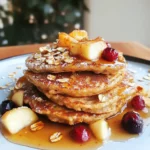
Ingredients
Scale
- For the Pancakes:
- 1 ½ cups rolled oats (old-fashioned oats), or use quick-cooking oats
- 1 cup all-purpose flour (or whole wheat flour for extra fiber, or a gluten-free blend)
- 2 teaspoons baking powder
- ½ teaspoon baking soda
- 1 teaspoon ground cinnamon
- ¼ teaspoon ground nutmeg (optional, but recommended)
- ¼ teaspoon salt
- 1 ½ cups milk (dairy, almond, soy, or oat milk all work well)
- 2 large eggs, lightly beaten
- 2 tablespoons maple syrup or honey (optional, for added sweetness)
- 1 teaspoon vanilla extract
- 2 tablespoons melted unsalted butter or coconut oil, plus more for greasing the pan
- 1 large apple (or 2 small), peeled, cored, and finely diced or grated (about 1 to 1 ½ cups) – Granny Smith, Fuji, or Honeycrisp work well.
- Why these ingredients?
- Rolled Oats: These provide a wonderful, slightly chewy texture and are packed with soluble fiber, particularly beta-glucan, which is known for its heart-health benefits and ability to help regulate blood sugar.
- Flour: All-purpose flour gives a classic pancake texture. Whole wheat flour adds more fiber and a nuttier taste. Gluten-free all-purpose blends can be substituted for those with sensitivities.
- Baking Powder & Baking Soda: These are our leavening agents, crucial for making the pancakes light and fluffy. Baking soda reacts with acidic components (like buttermilk if you were using it, or sometimes even the apple), while baking powder provides a more sustained lift.
- Cinnamon & Nutmeg: These warm spices are a classic pairing with apples and oats, adding depth of flavor and a cozy aroma.
- Milk: Provides moisture and richness. The type of milk can be adjusted based on dietary preferences without significantly altering the outcome.
- Eggs: Act as a binder, holding the pancakes together, and contribute to their richness and structure.
- Maple Syrup/Honey: While optional, a touch of natural sweetener can enhance the overall flavor profile, especially if using tarter apples.
- Vanilla Extract: A flavor enhancer that complements the sweet and spicy notes.
- Melted Butter/Coconut Oil: Adds richness, flavor, and helps prevent sticking. Coconut oil can add a subtle tropical hint.
- Apples: The star of the show! They provide natural sweetness, moisture, a pleasant tartness (depending on the variety), and additional fiber and vitamins. Dicing gives you tender chunks, while grating incorporates the apple more subtly into the batter.
Instructions
- Prepare the Dry Ingredients:
- In a large mixing bowl, whisk together the rolled oats, flour (all-purpose, whole wheat, or GF blend), baking powder, baking soda, ground cinnamon, ground nutmeg (if using), and salt. Whisking helps to combine them evenly and aerate the mixture, contributing to lighter pancakes. Set aside.
- Why this step is important: Evenly distributing the leavening agents (baking powder and soda) and spices is crucial for consistent flavor and rise in every pancake.
- Prepare the Wet Ingredients:
- In a separate medium mixing bowl, whisk together the milk, lightly beaten eggs, maple syrup or honey (if using), and vanilla extract until well combined.
- Stir in the melted butter or coconut oil. If your butter/oil is hot, you might want to let it cool slightly or temper it by adding a little of the milk mixture to it first, to avoid scrambling the eggs.
- Why this step is important: Combining wet ingredients separately ensures they are fully incorporated before being added to the dry, which helps prevent overmixing.
- Combine Wet and Dry Ingredients:
- Pour the wet ingredient mixture into the dry ingredient mixture.
- Using a spatula or wooden spoon, gently stir until just combined. It’s perfectly fine if there are still a few lumps in the batter. Overmixing develops the gluten in the flour too much, which can result in tough, chewy pancakes instead of light and fluffy ones.
- The “just combined” rule: This is perhaps the most critical rule for tender pancakes. Stop mixing as soon as you no longer see large streaks of dry flour.
- Fold in the Apples:
- Gently fold the finely diced or grated apple into the batter. Try to distribute them evenly without overmixing.
- Tip for apples: If you dice your apples, aim for small pieces (about ¼-inch) so they cook through and don’t make the pancakes too chunky or difficult to flip. Grating them on the large holes of a box grater works wonderfully for a more integrated apple flavor and texture.
- Rest the Batter (Optional but Recommended):
- If you have time, let the batter rest for 5-10 minutes. This allows the oats to absorb some of the liquid and the gluten to relax, which can result in even tenderer pancakes. The baking powder will also start to work its magic.
- Cook the Pancakes:
- Heat a lightly oiled griddle or non-stick frying pan over medium heat. The pan is ready when a drop of water sizzles and evaporates quickly. You can use a knob of butter, a drizzle of oil, or cooking spray.
- Pour or scoop the batter onto the hot griddle, using approximately ¼ to ⅓ cup of batter per pancake, depending on your desired size. Leave some space between pancakes for easy flipping.
- Cook for about 2-4 minutes on the first side, or until bubbles start to appear on the surface and the edges look set and slightly dry. The underside should be golden brown.
- Temperature control: If the pancakes are browning too quickly before the inside is cooked, reduce the heat slightly.
- Carefully flip the pancakes with a thin, wide spatula and cook for another 2-3 minutes on the other side, or until golden brown and cooked through. The center should spring back when lightly touched.
- Avoid pressing down: Resist the urge to press down on the pancakes with the spatula while they cook, as this will deflate them and make them dense.
- Serve and Repeat:
- Transfer the cooked pancakes to a plate. You can keep them warm in a low oven (around 200°F or 90°C) on an oven-safe plate while you cook the remaining batter.
- Repeat with the remaining batter, adding more butter or oil to the pan as needed between batches.
Nutrition
- Serving Size: One Normal Portion
- Calories: 280-350
- Sugar: 8-12g
- Sodium: 300-400mg
- Fat: 10-14g
- Saturated Fat: 4-7g
- Carbohydrates: 35-45g
- Fiber: 4-6g
- Protein: 8-10g
- Cholesterol: 70-90mg