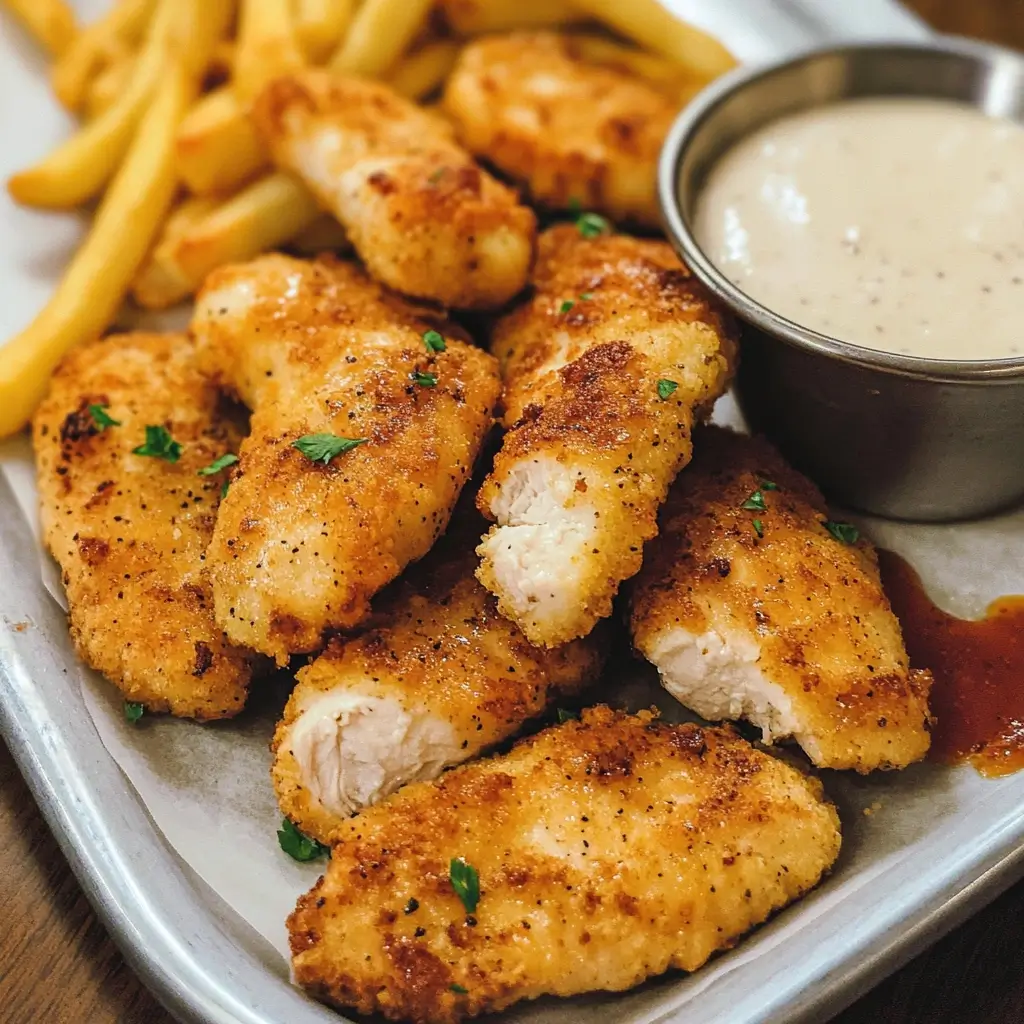

These Healthy Baked Chicken Tenders have become an absolute game-changer in our household, a true testament to the fact that “healthy” and “delicious” can joyfully coexist on the same plate. I was initially skeptical, wondering if we could truly achieve that satisfying crunch and juicy interior without resorting to a deep fryer. My kids, notorious for their discerning (read: picky) palates when it comes to “healthy” alternatives, were the ultimate test. The verdict? An overwhelming two thumbs up! They devoured them, asking for seconds, and didn’t even seem to notice they weren’t the usual fried version. The golden, crispy coating, seasoned to perfection, gives way to incredibly tender, moist chicken on the inside. It’s become our go-to for a quick weeknight dinner, a fantastic protein-packed lunch, or even a crowd-pleasing appetizer when friends are over. The simplicity of the preparation, combined with the wholesome ingredients, makes me feel good about serving it, and the enthusiastic reception it always gets makes it a joy to prepare. This recipe isn’t just about eating well; it’s about enjoying food that loves you back, without sacrificing a single bit of flavor or texture.
Ingredients
Here’s what you’ll need to create these incredibly delicious and healthy baked chicken tenders. This recipe aims for a balance of flavor, texture, and wholesome goodness, ensuring every bite is as satisfying as it is nutritious.
- For the Chicken:
- 1.5 lbs (approx. 680g) boneless, skinless chicken breasts, preferably organic or free-range
- 1 tablespoon olive oil (for tossing with chicken, optional but helps with moisture)
- Pinch of salt and freshly ground black pepper (for seasoning chicken directly)
- For the Breading Station:
- Bowl 1: The Foundation
- 1/2 cup (60g) whole wheat flour (or almond flour for gluten-free/lower carb)
- 1 teaspoon paprika (sweet or smoked, for color and flavor)
- 1/2 teaspoon garlic powder
- 1/2 teaspoon onion powder
- 1/4 teaspoon fine sea salt
- 1/4 teaspoon black pepper
- Bowl 2: The Binder
- 2 large eggs, lightly beaten
- 1 tablespoon Dijon mustard (optional, adds a subtle tang and helps binder stick)
- 1 tablespoon water or unsweetened almond milk (to thin the egg wash slightly)
- Bowl 3: The Crispy Coat
- 1.5 cups (120g) whole wheat panko breadcrumbs (these provide superior crunch; regular whole wheat breadcrumbs can be used but may be less crispy)
- 1/4 cup (25g) grated Parmesan cheese (optional, but adds amazing flavor and helps with browning)
- 1 teaspoon dried Italian herb blend (or a mix of dried oregano, basil, and thyme)
- 1/2 teaspoon salt
- 1/4 teaspoon black pepper
- A pinch of cayenne pepper (optional, for a little kick)
- Bowl 1: The Foundation
- For Baking:
- Olive oil cooking spray or a light drizzle of olive oil for the baking sheet and top of tenders
This combination of ingredients is designed to create a flavorful, multi-layered coating that adheres well to the chicken and bakes up beautifully golden and crisp. The seasonings are balanced to complement the natural taste of the chicken without overpowering it.
Instructions
Follow these step-by-step instructions to achieve perfectly baked, crispy, and juicy chicken tenders every time. The key is in the preparation and a properly heated oven.
- Preheat and Prepare: Preheat your oven to 400°F (200°C). Line a large baking sheet with parchment paper for easy cleanup or a wire rack set inside a baking sheet for maximum crispiness all around. If not using a wire rack, lightly spray the parchment paper with olive oil cooking spray or drizzle with a teaspoon of olive oil and spread it thinly.
- Prepare the Chicken:
- If your chicken breasts are thick, you can slice them in half horizontally to create thinner cutlets before cutting them into strips. This ensures more even cooking.
- Pat the chicken breasts dry with paper towels. This is a crucial step as it helps the breading adhere better.
- Cut the chicken breasts lengthwise into tenders, about 1/2 to 3/4 inch thick and 3-4 inches long. Aim for uniform sizes for even cooking.
- Optional: In a medium bowl, toss the chicken tenders with 1 tablespoon of olive oil, a pinch of salt, and pepper. This step can add a little extra moisture and help the first layer of flour stick.
- Set Up the Breading Station: You’ll need three shallow dishes or plates.
- Dish 1 (Flour Mixture): Combine the whole wheat flour (or almond flour), paprika, garlic powder, onion powder, 1/4 teaspoon salt, and 1/4 teaspoon pepper. Whisk until well combined.
- Dish 2 (Egg Wash): In the second dish, whisk together the large eggs, Dijon mustard (if using), and water or almond milk until smooth and slightly frothy.
- Dish 3 (Panko Mixture): In the third dish, combine the whole wheat panko breadcrumbs, grated Parmesan cheese (if using), Italian herb blend, 1/2 teaspoon salt, 1/4 teaspoon black pepper, and cayenne pepper (if using). Mix thoroughly so the seasonings are evenly distributed.
- Dredge the Chicken Tenders: Working with one chicken tender at a time, follow this dredging process:
- First, lightly coat the tender in the flour mixture (Dish 1), shaking off any excess. This dry layer helps the egg wash stick.
- Next, dip the flour-coated tender into the egg wash (Dish 2), ensuring it’s fully coated. Allow any excess egg to drip off for a few seconds.
- Finally, press the egg-coated tender firmly into the panko breadcrumb mixture (Dish 3), ensuring all sides are generously coated. Gently pat the breadcrumbs onto the chicken to help them adhere.
- Arrange on Baking Sheet: Place the breaded chicken tenders in a single layer on the prepared baking sheet (or wire rack). Ensure there’s a little space between each tender; do not overcrowd the pan. Overcrowding will cause the tenders to steam rather than crisp up. You might need to use two baking sheets if making a large batch.
- Spray and Bake: Lightly spray the tops of the chicken tenders with olive oil cooking spray or drizzle very lightly with olive oil. This helps them get golden brown and crispy.
- Bake: Bake in the preheated 400°F (200°C) oven for 10-12 minutes.
- Flip and Continue Baking: Carefully flip the chicken tenders using tongs. Spray the other side lightly with olive oil spray. Continue baking for another 8-12 minutes, or until the tenders are golden brown, crispy, and the internal temperature reaches 165°F (74°C) when checked with a meat thermometer inserted into the thickest part of a tender. Cooking time will vary depending on the thickness of your tenders.
- Rest (Optional but Recommended): Once cooked, remove the baking sheet from the oven. Let the chicken tenders rest on the baking sheet (or transfer to a clean wire rack) for 2-3 minutes before serving. This allows the juices to redistribute, resulting in more tender chicken.
- Serve Warm: Serve immediately with your favorite dipping sauces and side dishes.
By following these detailed steps, you’ll be rewarded with healthy baked chicken tenders that are irresistibly crispy on the outside and wonderfully juicy and tender on the inside.
Nutrition Facts
The nutritional information provided below is an estimate and can vary based on the specific ingredients used (e.g., brand of panko, exact size of chicken pieces, use of optional Parmesan). This estimate is for the chicken tenders themselves, excluding any dipping sauces or side dishes.
- Servings: This recipe yields approximately 4-6 servings, depending on appetite and how many tenders are consumed per person. Assuming 1.5 lbs of chicken, this would be about 4-6 tenders per serving if cut to a standard size.
- Calories per serving (estimated, assuming 5 servings): Approximately 350-450 calories.
Breakdown per estimated serving (based on 5 servings):
- Protein: Approximately 40-50g (Chicken is a fantastic source of lean protein, essential for muscle repair and growth, satiety, and overall bodily functions.)
- Fat: Approximately 10-15g (Primarily from the olive oil used and Parmesan, if included. Using lean chicken breast keeps saturated fat content relatively low. Healthy fats are important for hormone production and nutrient absorption.)
- Carbohydrates: Approximately 20-30g (Mainly from the whole wheat flour and whole wheat panko breadcrumbs. Whole wheat options provide more fiber than refined white flour versions, aiding digestion and promoting a slower release of energy.)
- Fiber: Approximately 3-5g (Contributed by the whole wheat flour and panko. Fiber is crucial for digestive health and can help with blood sugar control.)
- Sodium: Approximately 500-700mg (This can vary significantly based on the amount of salt added and the sodium content of your breadcrumbs and Parmesan. You can control this by adjusting added salt.)
Key Nutritional Highlights:
- Lean Protein Powerhouse: Chicken breast is an excellent source of high-quality, complete protein.
- Lower in Fat: Baking instead of frying drastically reduces the overall fat content, especially unhealthy trans fats and excessive saturated fats.
- Whole Grains: Using whole wheat flour and panko breadcrumbs increases the fiber content, contributing to better digestion and sustained energy.
- Controlled Ingredients: Making them at home allows you to control the quality of ingredients, sodium levels, and avoid unnecessary additives often found in store-bought or restaurant versions.
To get the most accurate nutritional information, you can use an online recipe nutrition calculator and input your specific ingredients and quantities. Remember that serving these tenders with healthy sides like steamed vegetables or a fresh salad will further enhance the overall nutritional value of your meal.
Preparation Time
Understanding the time commitment for a recipe is crucial for planning your meals, especially on busy weeknights. Here’s a breakdown of the preparation and cooking time for these Healthy Baked Chicken Tenders:
- Active Preparation Time: 20-25 minutes
- This includes:
- Gathering and measuring ingredients.
- Preparing the chicken (patting dry, cutting into tenders).
- Setting up the three-step breading station.
- Dredging each chicken tender through the flour, egg, and panko mixtures.
- Arranging the tenders on the baking sheet.
- The time can vary slightly depending on how quickly you work and whether your chicken needs much trimming. If you’re new to the dredging process, it might take a few extra minutes.
- This includes:
- Cooking Time: 18-24 minutes
- This includes the initial 10-12 minutes of baking, the time to flip the tenders, and the final 8-12 minutes of baking until golden brown and cooked through.
- The exact cooking time will depend on the thickness of your chicken tenders and the accuracy of your oven’s temperature. Using a meat thermometer is the best way to ensure they are perfectly cooked without drying out.
- Resting Time (Post-Cooking): 2-3 minutes
- While optional, allowing the tenders to rest briefly helps the juices redistribute, making them more tender and flavorful.
- Total Estimated Time: Approximately 40-52 minutes
- From starting the prep to having them ready to serve, you’re looking at under an hour, making this a very manageable recipe for a weeknight dinner or a quick, healthy meal.
Tips for Efficient Preparation:
- Mise en Place: Have all your ingredients measured out and your breading station set up before you begin dredging the chicken. This streamlines the process significantly.
- Clean Hands/Gloves: Designate one hand for dry ingredients (flour, panko) and the other for wet ingredients (egg wash) to avoid a clumpy mess on your fingers. Alternatively, disposable food-grade gloves can be helpful.
- Preheat Promptly: Start preheating your oven as the very first step so it’s ready to go when your tenders are breaded.
By allocating about 45-50 minutes, you can comfortably prepare and cook these delicious and healthy chicken tenders from scratch.
How to Serve
These Healthy Baked Chicken Tenders are incredibly versatile and can be served in numerous ways, making them suitable for various meals and occasions. Here are some serving suggestions to inspire you:
- Classic Comfort Meal:
- Serve alongside baked sweet potato fries or roasted potato wedges for a healthier take on a classic pairing.
- Include a side of steamed green beans, broccoli, or a colorful medley of roasted vegetables (like bell peppers, zucchini, and carrots) for added nutrients and color.
- Don’t forget the dipping sauces! Offer a variety, such as:
- Classic ketchup (look for low-sugar options)
- Honey mustard (easy to make homemade: equal parts Dijon, honey, and a touch of mayo or Greek yogurt)
- BBQ sauce (choose one with lower sugar content)
- Ranch dip (make a healthier version with Greek yogurt, herbs, and spices)
- A creamy garlic aioli or a spicy sriracha mayo.
- Plain Greek yogurt mixed with lemon juice, dill, and garlic powder.
- In Salads:
- Slice the cooked tenders and add them as a protein-packed topping to your favorite garden salad or Caesar salad.
- Create a Chicken Tender Cobb Salad with mixed greens, avocado, hard-boiled eggs, tomatoes, and a light vinaigrette.
- In Wraps or Sandwiches:
- Stuff the tenders into whole wheat tortillas or pita bread with lettuce, tomato, cucumber, and a drizzle of your favorite sauce for a quick and satisfying lunch wrap.
- Use them in a chicken tender sub or sandwich on a whole grain bun with your preferred toppings.
- For Kids’ Meals:
- Serve with kid-friendly sides like apple slices, carrot sticks with hummus, or a small portion of whole wheat macaroni and cheese.
- Cut them into smaller, bite-sized pieces for younger children.
- The familiar “tender” shape and crispy texture make them highly appealing to children.
- As Appetizers:
- Arrange them on a platter with an array of dipping sauces for a party or game day appetizer. They are always a crowd-pleaser.
- Serve with toothpicks for easy grabbing.
- In Bowls:
- Create a nourishing grain bowl by layering cooked quinoa or brown rice, roasted vegetables, sliced chicken tenders, and a flavorful dressing (like a tahini-lemon dressing or a light vinaigrette).
- Make a Southwestern-style bowl with black beans, corn salsa, avocado, and a cilantro-lime dressing.
- With Global Flavors:
- If you’ve seasoned them with more neutral spices, you can pair them with international flavors. For instance, serve with a side of tzatziki and a Greek salad, or with an Asian-inspired dipping sauce and some stir-fried noodles.
No matter how you choose to serve them, these healthy baked chicken tenders are sure to be a hit. Their versatility allows them to fit seamlessly into a wide range of meal plans and dietary preferences.
Additional Tips
To ensure your Healthy Baked Chicken Tenders turn out perfectly every single time and to offer some variations, here are five additional tips:
- Don’t Overcrowd the Pan for Maximum Crispiness: This is a golden rule for anything you want to get crispy in the oven. When chicken tenders (or any food) are placed too close together on a baking sheet, they trap steam. This steam prevents the exterior from drying out and crisping up, leading to softer, sometimes even soggy, results. If necessary, use two baking sheets or bake in two batches. Ensure there’s at least an inch of space around each tender. Using a wire rack set inside a baking sheet also promotes air circulation all around the tenders, further enhancing crispiness.
- Use a Meat Thermometer for Perfect Doneness: Chicken can go from perfectly juicy to dry and tough in a matter of minutes. The most reliable way to ensure your chicken tenders are cooked through without being overcooked is to use an instant-read meat thermometer. Insert the thermometer into the thickest part of a tender; it should register 165°F (74°C). This takes the guesswork out of cooking and guarantees safe and succulent chicken every time.
- Toast Panko Breadcrumbs for Extra Crunch (Optional): For an even deeper golden color and an extra layer of crunch, you can lightly toast your panko breadcrumbs before using them in the breading mixture. Spread the panko on a dry baking sheet and toast in a 350°F (175°C) oven for 3-5 minutes, stirring occasionally, until lightly golden. Let them cool completely before mixing with other breading ingredients. This pre-toasting step can make a noticeable difference in the final texture.
- Marinate for Enhanced Flavor and Tenderness (Optional): While these tenders are delicious as is, a short marination can elevate them further. Consider marinating the raw chicken strips for 20-30 minutes (or up to a few hours in the refrigerator) in a simple mixture before patting them dry and proceeding with the breading. Good options include:
- Buttermilk or plain yogurt (the acidity helps tenderize)
- Lemon juice, olive oil, and herbs
- Pickle juice (a popular trick for fried chicken that works for baked too!)
Remember to pat the chicken very dry after marinating and before dredging to help the breading stick.
- Experiment with Spices and Breading Add-ins: Don’t be afraid to customize the flavor profile to your liking.
- Spicy: Add more cayenne pepper, chili powder, or a pinch of red pepper flakes to the flour or panko mixture.
- Smoky: Use smoked paprika instead of sweet paprika, and consider adding a tiny bit of chipotle powder.
- Cheesy: Mix in different finely grated hard cheeses like Asiago or Romano into the panko.
- Nutty/Seeded: Add a tablespoon or two of sesame seeds, flax seeds, or finely chopped nuts (like almonds or pecans) to the panko mixture for added texture and nutrients.
- Herbaceous: Use fresh, finely chopped herbs like parsley or chives in the panko mixture for a brighter flavor, adding them towards the end of mixing.
By incorporating these tips, you can refine your technique, customize the recipe to your taste, and ensure consistently delicious and healthy baked chicken tenders.
FAQ Section
Here are answers to some frequently asked questions about making Healthy Baked Chicken Tenders:
- Q: Can I make these chicken tenders gluten-free?
- A: Absolutely! To make this recipe gluten-free, you’ll need to make a few simple substitutions. Instead of whole wheat flour, use a gluten-free all-purpose flour blend, almond flour, or even cornstarch for the initial dredge. For the breading, use certified gluten-free panko breadcrumbs (many brands are now available) or crush gluten-free cornflakes or rice cakes for a crispy coating. Almond flour can also be used in the final coating, perhaps mixed with some Parmesan for better browning, though it won’t be as traditionally “crispy” as panko. Ensure all your other seasonings (like Italian herb blends) are certified gluten-free if celiac disease is a concern.
- Q: How do I get my baked chicken tenders extra crispy without frying?
- A: Several factors contribute to crispiness:
- Panko Breadcrumbs: Use panko breadcrumbs instead of regular breadcrumbs. Panko is flakier and absorbs less oil, resulting in a lighter, crispier coating. Whole wheat panko is a great healthy option.
- Don’t Overcrowd: As mentioned in the tips, give the tenders space on the baking sheet.
- Use a Wire Rack: Placing a wire rack on your baking sheet allows hot air to circulate all around the tenders, crisping up the bottom as well as the top.
- Sufficient Heat: Bake at a relatively high temperature (400°F / 200°C).
- Oil Spray: A light spray of olive oil or avocado oil on the tenders before and during baking helps them brown and crisp.
- Pat Chicken Dry: Ensure the chicken is patted very dry before breading; moisture is the enemy of crispiness.
- Optional Toasting: Pre-toasting the panko can also enhance crispiness (see Additional Tips).
- A: Several factors contribute to crispiness:
- Q: How do I store and reheat leftover baked chicken tenders?
- A:
- Storage: Allow the chicken tenders to cool completely to room temperature. Then, store them in an airtight container in the refrigerator for up to 3-4 days.
- Reheating: To maintain some of their crispiness, it’s best to reheat them in an oven or air fryer rather than the microwave (which can make them soggy).
- Oven: Preheat your oven to 375-400°F (190-200°C). Place the tenders on a baking sheet or wire rack and bake for 10-15 minutes, or until heated through and re-crisped.
- Air Fryer: Preheat your air fryer to 350-375°F (175-190°C). Place the tenders in a single layer in the basket and heat for 3-5 minutes, flipping halfway, until crispy and hot.
- Toaster Oven: Works similarly to a conventional oven for smaller batches.
- A:
- Q: Can I prepare these chicken tenders in advance or freeze them?
- A: Yes, you can!
- Advance Preparation (Uncooked): You can bread the chicken tenders, place them in a single layer on a baking sheet, cover with plastic wrap, and refrigerate for a few hours (up to a day, though sooner is better for best texture) before baking.
- Freezing (Uncooked): Bread the tenders as directed. Place them in a single layer on a parchment-lined baking sheet and freeze until solid (about 1-2 hours). Once frozen, transfer them to a freezer-safe bag or container. They can be frozen for up to 3 months. Bake directly from frozen, adding approximately 10-15 minutes to the baking time, ensuring they reach an internal temperature of 165°F (74°C).
- Freezing (Cooked): Allow cooked tenders to cool completely. Freeze them in a single layer on a baking sheet, then transfer to a freezer-safe bag or container. Reheat from frozen using the oven or air fryer methods described above, adding extra time as needed.
- A: Yes, you can!
- Q: Why are my chicken tenders coming out dry instead of juicy?
- A: Dry chicken tenders are usually a result of overcooking or using chicken that was already too lean and thin.
- Overcooking: This is the most common culprit. Use a meat thermometer to check for an internal temperature of 165°F (74°C). Remove them from the oven as soon as they reach this temperature. Even a few extra minutes can dry them out.
- Chicken Thickness: If your chicken strips are cut too thinly, they will cook very quickly and can dry out easily. Aim for about 1/2 to 3/4 inch thickness. If using very thin pre-cut tenderloins, reduce the cooking time significantly.
- Oven Temperature: Ensure your oven is accurately calibrated. If it runs hot, your tenders will cook faster.
- Not Resting: Letting the chicken rest for a few minutes after baking allows the juices to redistribute, making them seem moister.
- Type of Chicken: While chicken breast is lean, try not to trim all visible fat if there’s a tiny bit, as it can help with moisture. However, the recipe is designed for lean breast.
- Marinating (Optional): A brief soak in buttermilk or a yogurt-based marinade before breading can help keep them moist.
- A: Dry chicken tenders are usually a result of overcooking or using chicken that was already too lean and thin.
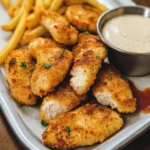
Healthy Baked Chicken Tenders Recipe
Ingredients
- For the Chicken:
- 1.5 lbs (approx. 680g) boneless, skinless chicken breasts, preferably organic or free-range
- 1 tablespoon olive oil (for tossing with chicken, optional but helps with moisture)
- Pinch of salt and freshly ground black pepper (for seasoning chicken directly)
- For the Breading Station:
- Bowl 1: The Foundation
- 1/2 cup (60g) whole wheat flour (or almond flour for gluten-free/lower carb)
- 1 teaspoon paprika (sweet or smoked, for color and flavor)
- 1/2 teaspoon garlic powder
- 1/2 teaspoon onion powder
- 1/4 teaspoon fine sea salt
- 1/4 teaspoon black pepper
- Bowl 2: The Binder
- 2 large eggs, lightly beaten
- 1 tablespoon Dijon mustard (optional, adds a subtle tang and helps binder stick)
- 1 tablespoon water or unsweetened almond milk (to thin the egg wash slightly)
- Bowl 3: The Crispy Coat
- 1.5 cups (120g) whole wheat panko breadcrumbs (these provide superior crunch; regular whole wheat breadcrumbs can be used but may be less crispy)
- 1/4 cup (25g) grated Parmesan cheese (optional, but adds amazing flavor and helps with browning)
- 1 teaspoon dried Italian herb blend (or a mix of dried oregano, basil, and thyme)
- 1/2 teaspoon salt
- 1/4 teaspoon black pepper
- A pinch of cayenne pepper (optional, for a little kick)
- Bowl 1: The Foundation
- For Baking:
- Olive oil cooking spray or a light drizzle of olive oil for the baking sheet and top of tenders
Instructions
- Preheat and Prepare: Preheat your oven to 400°F (200°C). Line a large baking sheet with parchment paper for easy cleanup or a wire rack set inside a baking sheet for maximum crispiness all around. If not using a wire rack, lightly spray the parchment paper with olive oil cooking spray or drizzle with a teaspoon of olive oil and spread it thinly.
- Prepare the Chicken:
- If your chicken breasts are thick, you can slice them in half horizontally to create thinner cutlets before cutting them into strips. This ensures more even cooking.
- Pat the chicken breasts dry with paper towels. This is a crucial step as it helps the breading adhere better.
- Cut the chicken breasts lengthwise into tenders, about 1/2 to 3/4 inch thick and 3-4 inches long. Aim for uniform sizes for even cooking.
- Optional: In a medium bowl, toss the chicken tenders with 1 tablespoon of olive oil, a pinch of salt, and pepper. This step can add a little extra moisture and help the first layer of flour stick.
- Set Up the Breading Station: You’ll need three shallow dishes or plates.
- Dish 1 (Flour Mixture): Combine the whole wheat flour (or almond flour), paprika, garlic powder, onion powder, 1/4 teaspoon salt, and 1/4 teaspoon pepper. Whisk until well combined.
- Dish 2 (Egg Wash): In the second dish, whisk together the large eggs, Dijon mustard (if using), and water or almond milk until smooth and slightly frothy.
- Dish 3 (Panko Mixture): In the third dish, combine the whole wheat panko breadcrumbs, grated Parmesan cheese (if using), Italian herb blend, 1/2 teaspoon salt, 1/4 teaspoon black pepper, and cayenne pepper (if using). Mix thoroughly so the seasonings are evenly distributed.
- Dredge the Chicken Tenders: Working with one chicken tender at a time, follow this dredging process:
- First, lightly coat the tender in the flour mixture (Dish 1), shaking off any excess. This dry layer helps the egg wash stick.
- Next, dip the flour-coated tender into the egg wash (Dish 2), ensuring it’s fully coated. Allow any excess egg to drip off for a few seconds.
- Finally, press the egg-coated tender firmly into the panko breadcrumb mixture (Dish 3), ensuring all sides are generously coated. Gently pat the breadcrumbs onto the chicken to help them adhere.
- Arrange on Baking Sheet: Place the breaded chicken tenders in a single layer on the prepared baking sheet (or wire rack). Ensure there’s a little space between each tender; do not overcrowd the pan. Overcrowding will cause the tenders to steam rather than crisp up. You might need to use two baking sheets if making a large batch.
- Spray and Bake: Lightly spray the tops of the chicken tenders with olive oil cooking spray or drizzle very lightly with olive oil. This helps them get golden brown and crispy.
- Bake: Bake in the preheated 400°F (200°C) oven for 10-12 minutes.
- Flip and Continue Baking: Carefully flip the chicken tenders using tongs. Spray the other side lightly with olive oil spray. Continue baking for another 8-12 minutes, or until the tenders are golden brown, crispy, and the internal temperature reaches 165°F (74°C) when checked with a meat thermometer inserted into the thickest part of a tender. Cooking time will vary depending on the thickness of your tenders.
- Rest (Optional but Recommended): Once cooked, remove the baking sheet from the oven. Let the chicken tenders rest on the baking sheet (or transfer to a clean wire rack) for 2-3 minutes before serving. This allows the juices to redistribute, resulting in more tender chicken.
- Serve Warm: Serve immediately with your favorite dipping sauces and side dishes.
Nutrition
- Serving Size: One Normal Portion
- Calories: 350-450
- Sodium: 500-700mg
- Fat: 10-15g
- Carbohydrates: 20-30g
- Fiber: 3-5g
- Protein: 40-50g