
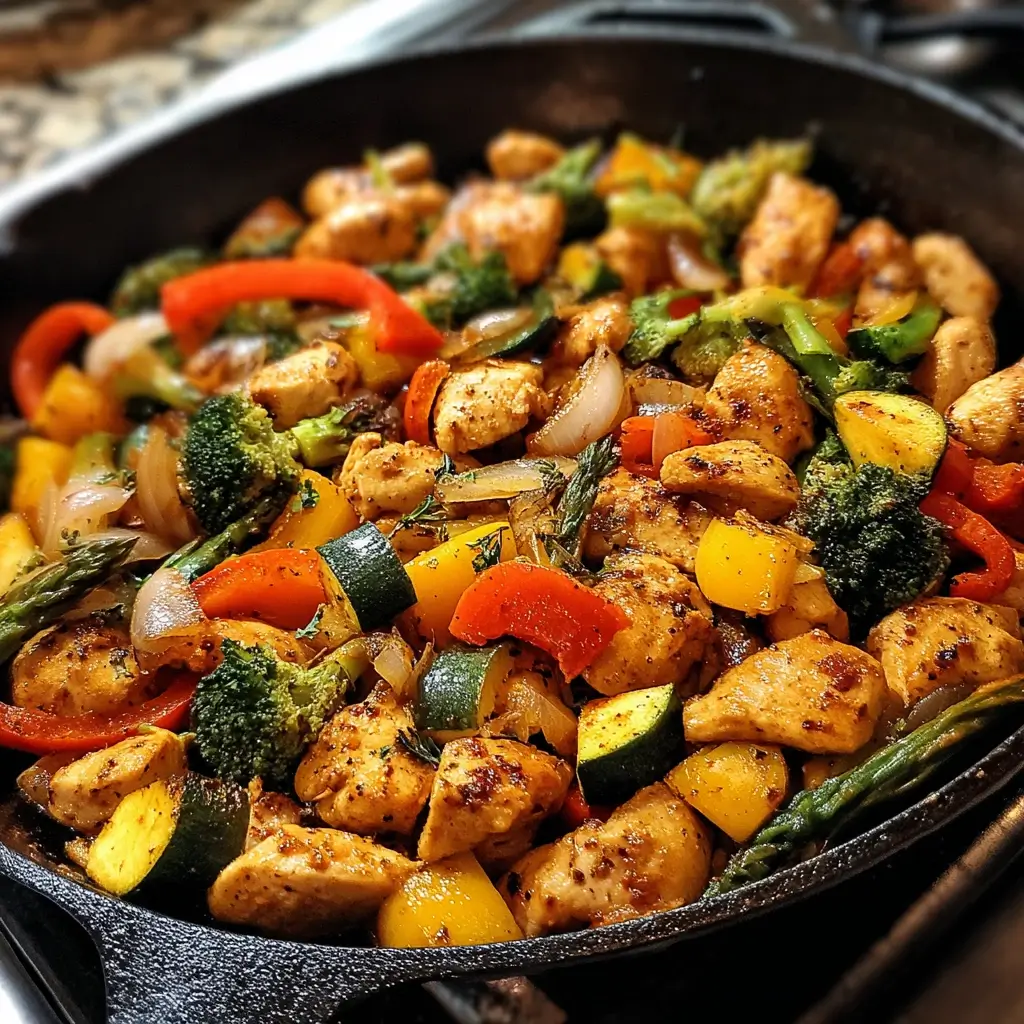
This Healthy Chicken and Vegetables Skillet has become an absolute lifesaver in our household. I remember the first time I made it – I was scrambling for a quick, nutritious dinner idea on a Tuesday night, with a hungry family and not a lot of time. I grabbed some chicken breasts, a colorful array of whatever veggies I had in the crisper, and hoped for the best. The aroma alone, as the chicken sizzled and the vegetables softened, told me I was onto something good. My kids, who can be notoriously picky about vegetables, actually asked for seconds, and my partner loved how flavorful and light yet satisfying it was. Since then, it’s become a regular in our meal rotation. It’s incredibly versatile, forgiving if you swap out a vegetable or two, and the cleanup is a breeze – a true one-pan wonder! It’s the kind of meal that makes you feel good about what you’re eating without sacrificing taste or spending hours in the kitchen.
Ingredients
This recipe is designed for flexibility, but here’s a fantastic base to get you started, yielding approximately 4 servings.
- For the Chicken:
- 1.5 lbs (about 680g) boneless, skinless chicken breasts, cut into 1-inch cubes
- 1 tablespoon olive oil (plus more as needed)
- 1 teaspoon smoked paprika
- 1 teaspoon dried oregano
- ½ teaspoon garlic powder
- ½ teaspoon onion powder
- ½ teaspoon salt (or to taste)
- ¼ teaspoon black pepper (or to taste)
- Optional: ¼ teaspoon red pepper flakes for a little heat
- For the Vegetables:
- 1 tablespoon olive oil
- 1 medium red onion, thinly sliced or chopped
- 2 cloves garlic, minced
- 1 large red bell pepper, cored, seeded, and sliced or chopped
- 1 large yellow or orange bell pepper, cored, seeded, and sliced or chopped
- 1 medium head of broccoli, cut into small florets (about 2-3 cups)
- 1 medium zucchini, trimmed and sliced into half-moons or diced
- 1 cup cherry or grape tomatoes, halved (optional, add at the end)
- ½ cup low-sodium chicken broth or water (for deglazing and steaming)
- For Garnish & Flavor Boost (Optional):
- 2 tablespoons fresh parsley, chopped
- 1 tablespoon fresh lemon juice
- Crumbled feta cheese or grated Parmesan cheese
Why These Ingredients Shine:
- Chicken Breast: A fantastic source of lean protein, essential for muscle repair, satiety, and overall bodily functions. Choosing boneless, skinless keeps the fat content lower.
- Olive Oil: Rich in monounsaturated fats, particularly oleic acid, which is known for its anti-inflammatory properties and heart health benefits. Extra virgin olive oil also contains antioxidants.
- Bell Peppers (Red, Yellow, Orange): These vibrant vegetables are packed with Vitamin C (red peppers are especially high), Vitamin A, and various antioxidants. The different colors offer a slightly different nutrient profile and visual appeal.
- Broccoli: A cruciferous powerhouse, broccoli is rich in fiber, Vitamin C, Vitamin K, and sulforaphane, a compound linked to cancer prevention and detoxification.
- Zucchini: A low-calorie summer squash that provides Vitamin A, Vitamin C, potassium, and fiber. Its mild flavor makes it incredibly versatile.
- Red Onion & Garlic: Members of the allium family, known for their organosulfur compounds which have immune-boosting, anti-inflammatory, and heart-protective properties. They are flavor cornerstones in countless savory dishes.
- Herbs & Spices (Paprika, Oregano, etc.): Beyond adding incredible flavor without calories, many herbs and spices contain potent antioxidants and phytochemicals with health benefits. Smoked paprika, for instance, offers a deep, smoky flavor without actual smoking.
- Lemon Juice: Adds a bright, fresh acidity that cuts through richness and enhances the other flavors. It’s also a good source of Vitamin C.
Instructions
Follow these steps for a perfectly cooked, flavorful, and healthy chicken and vegetable skillet every time.
- Prepare the Chicken:
- Pat the chicken breast cubes dry with paper towels. This helps them sear better.
- In a medium bowl, combine the chicken cubes, 1 tablespoon of olive oil, smoked paprika, dried oregano, garlic powder, onion powder, salt, pepper, and red pepper flakes (if using). Toss well to ensure the chicken is evenly coated. Set aside to marinate for at least 10 minutes while you prep the vegetables (or up to 30 minutes at room temperature, or longer in the fridge).
- Prepare the Vegetables (Mise en Place):
- Wash and chop all your vegetables as indicated in the ingredients list. Having everything prepped before you start cooking makes the process much smoother – this is known as “mise en place.”
- Keep harder vegetables (like broccoli florets and bell pepper strips) separate from softer ones (like zucchini and halved cherry tomatoes) if you want to control their cooking time more precisely, though for a one-pan meal, adding them in stages works well.
- Cook the Chicken:
- Heat 1 tablespoon of olive oil in a large, heavy-bottomed skillet (cast iron or stainless steel works best) over medium-high heat. The oil should be shimmering but not smoking.
- Carefully add the seasoned chicken to the hot skillet in a single layer. Avoid overcrowding the pan; cook in batches if necessary. Overcrowding will steam the chicken rather than sear it.
- Cook for 3-5 minutes per side, until golden brown and cooked through. The internal temperature should reach 165°F (74°C).
- Once cooked, remove the chicken from the skillet and set it aside on a clean plate. Cover loosely with foil to keep warm.
- Sauté Aromatics & Harder Vegetables:
- To the same skillet (don’t wipe it clean – those browned bits are flavor!), add another tablespoon of olive oil if the pan looks dry.
- Add the sliced red onion and cook over medium heat for 3-4 minutes, until softened and slightly translucent.
- Stir in the minced garlic and cook for another minute until fragrant, being careful not to burn it.
- Add the bell peppers and broccoli florets to the skillet. Sauté for 5-7 minutes, stirring occasionally, until they begin to soften but are still crisp-tender.
- Add Softer Vegetables & Deglaze:
- Add the sliced zucchini to the skillet. Cook for another 3-4 minutes, until it’s tender-crisp.
- If using, add the halved cherry tomatoes now.
- Pour in the ½ cup of chicken broth or water. Scrape the bottom of the pan with a wooden spoon or spatula to loosen any browned bits (this is called deglazing and adds immense flavor).
- Bring the liquid to a simmer, then cover the skillet and let the vegetables steam for 2-3 minutes, or until they reach your desired tenderness.
- Combine and Finish:
- Return the cooked chicken (and any accumulated juices from the plate) to the skillet with the vegetables.
- Stir everything together to combine and allow the chicken to heat through, about 1-2 minutes.
- Taste and adjust seasonings if necessary (more salt, pepper, or a pinch of herbs).
- Garnish and Serve:
- Remove the skillet from the heat.
- If using, stir in the fresh lemon juice and sprinkle with chopped fresh parsley.
- Serve immediately, straight from the skillet if desired.
Nutrition Facts
- Servings: 4
- Calories per serving: Approximately 350-450 calories (This is an estimate and can vary based on the exact cut of chicken, specific vegetables used, and amount of oil.)
A Note on Nutritional Estimates:
The provided calorie count is a general guideline. For a precise calculation, it’s recommended to use an online nutrition calculator and input your specific ingredient brands and quantities. This dish is inherently healthy, focusing on:
- Lean Protein: Primarily from the chicken breast, crucial for muscle maintenance and satiety.
- Fiber: Abundant from the variety of vegetables, aiding digestion and promoting fullness.
- Vitamins & Minerals: A rich spectrum including Vitamin C (bell peppers, broccoli, lemon), Vitamin A (bell peppers, zucchini), Vitamin K (broccoli), Potassium (zucchini, tomatoes), and B vitamins (chicken).
- Healthy Fats: From olive oil, contributing to heart health.
- Low in Saturated Fat: Especially when using skinless chicken breast.
- Relatively Low Carb: Depending on the vegetable choices, this can be a good option for lower-carb diets.
Preparation Time
- Prep Time (Chopping & Marinating): 15-20 minutes (can be reduced if using pre-chopped vegetables or marinating chicken briefly)
- Cook Time: 20-25 minutes
- Total Time: Approximately 35-45 minutes
Streamlining Your Prep for Quicker Meals:
- Chop Ahead: Vegetables like onions, bell peppers, and broccoli can be chopped a day or two in advance and stored in airtight containers in the refrigerator.
- Marinate Longer: You can marinate the chicken for several hours or even overnight in the refrigerator for deeper flavor.
- Pre-Cooked Chicken: If you have leftover cooked chicken (like rotisserie chicken), you can shred or dice it and add it towards the end with the softer vegetables, just to heat through. This significantly cuts down on cooking time.
- Frozen Vegetables: While fresh is often preferred for texture, frozen vegetables can be a great time-saver. Add them directly from frozen, but be aware they might release more water, so you may not need as much (or any) added broth.
How to Serve
This Healthy Chicken and Vegetables Skillet is wonderfully versatile and can be served in numerous ways to suit different dietary preferences and occasions:
- As a Standalone Meal:
- Perfect for a light, low-carb, and protein-packed dinner or lunch.
- Serve directly from the skillet for a rustic, family-style presentation.
- With Whole Grains:
- Quinoa: A complete protein and gluten-free grain, offering a nutty flavor.
- Brown Rice: A fiber-rich classic that complements the dish well.
- Farro or Barley: Chewy, hearty grains that add texture and nutrients.
- Couscous (Whole Wheat): Cooks quickly and absorbs the skillet juices beautifully.
- With Low-Carb Alternatives:
- Cauliflower Rice: A popular low-carb, grain-free option.
- Zucchini Noodles (Zoodles): Adds more veggies and keeps the meal light.
- Spaghetti Squash: Roast and shred for a pasta-like base.
- Alongside Bread:
- A slice of crusty whole-grain bread or a warm pita is great for soaking up any delicious pan juices.
- Toppings and Garnishes for Extra Flair:
- Fresh Herbs: Beyond parsley, try fresh cilantro, dill, or chives.
- Cheese: A sprinkle of crumbled feta, goat cheese, or freshly grated Parmesan cheese adds a salty, savory note.
- Nuts/Seeds: Toasted slivered almonds or sunflower seeds for a bit of crunch.
- Sauce Drizzle: A light drizzle of balsamic glaze, a dollop of Greek yogurt mixed with herbs, or even a bit of pesto.
- Lemon Wedges: Serve with extra lemon wedges on the side for those who like an extra citrusy kick.
Additional Tips
- Don’t Overcrowd the Pan: This is crucial for both the chicken and vegetables. Cooking in batches if necessary allows ingredients to sear and brown properly, developing more flavor. Overcrowding leads to steaming, resulting in softer, less flavorful components.
- High Heat for Searing Chicken: Ensure your skillet and oil are properly heated before adding the chicken. This creates a nice golden-brown crust, locking in juices and adding a depth of flavor that you won’t get from lower temperatures. Don’t move the chicken around too much initially; let it develop that sear.
- Customize Your Vegetables Seasonally: This recipe is a fantastic template. Feel free to swap vegetables based on what’s in season or what you have on hand. Asparagus in spring, green beans in summer, Brussels sprouts or butternut squash (cubed small) in fall/winter can all work beautifully. Adjust cooking times accordingly for harder or softer vegetables.
- Meal Prep Masterpiece: This dish is excellent for meal prepping. Cook a large batch on Sunday, then portion it into airtight containers with a side of quinoa or cauliflower rice for healthy lunches throughout the week. It reheats well in the microwave or on the stovetop.
- Unlock Flavor with a Marinade or Brine: While the spice rub is great, taking an extra 30 minutes (or even a few hours) to marinate the chicken in a mixture of olive oil, lemon juice, garlic, and herbs can make it even more tender and flavorful. Alternatively, a quick brine (soaking chicken in saltwater) for 20-30 minutes before seasoning can also enhance juiciness.
FAQ Section
Q1: Can I use chicken thighs instead of chicken breasts?
A1: Absolutely! Chicken thighs are more forgiving and tend to be juicier than breasts. They will require a slightly longer cooking time to ensure they reach an internal temperature of 165-175°F (74-79°C). Use boneless, skinless thighs cut into similar-sized pieces for best results. The flavor will be richer.
Q2: Can I use frozen vegetables for this recipe?
A2: Yes, you can use frozen vegetables, which can be a great time-saver. It’s often best to add them directly from frozen towards the end of the vegetable cooking time, as they cook quickly. You might not need to add as much (or any) chicken broth, as frozen vegetables release more water. Be aware that the texture might be slightly softer than when using fresh vegetables.
Q3: How do I store and reheat leftovers?
A3: Store any leftovers in an airtight container in the refrigerator for up to 3-4 days. To reheat, you can microwave individual portions until heated through. Alternatively, for best texture, reheat gently in a skillet over medium-low heat, adding a splash of water or broth if needed to prevent drying out, until warmed.
Q4: Is this recipe gluten-free and/or dairy-free?
A4: Yes, this recipe is naturally gluten-free as long as your chicken broth and spices are certified gluten-free (most are, but it’s good to check labels if you have celiac disease). It is also dairy-free if you omit any optional cheese garnishes like feta or Parmesan.
Q5: What’s the best type of skillet to use for this recipe?
A5: A large, heavy-bottomed skillet is ideal. Cast iron skillets are excellent because they retain and distribute heat evenly, promoting great searing. A heavy-duty stainless steel skillet is also a great choice. Non-stick skillets can work, but you may not achieve the same level of browning on the chicken and vegetables. Aim for a 12-inch skillet or larger to avoid overcrowding.
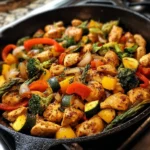
Healthy Chicken and Vegetables Skillet Recipe
Ingredients
- For the Chicken:
- 1.5 lbs (about 680g) boneless, skinless chicken breasts, cut into 1-inch cubes
- 1 tablespoon olive oil (plus more as needed)
- 1 teaspoon smoked paprika
- 1 teaspoon dried oregano
- ½ teaspoon garlic powder
- ½ teaspoon onion powder
- ½ teaspoon salt (or to taste)
- ¼ teaspoon black pepper (or to taste)
- Optional: ¼ teaspoon red pepper flakes for a little heat
- For the Vegetables:
- 1 tablespoon olive oil
- 1 medium red onion, thinly sliced or chopped
- 2 cloves garlic, minced
- 1 large red bell pepper, cored, seeded, and sliced or chopped
- 1 large yellow or orange bell pepper, cored, seeded, and sliced or chopped
- 1 medium head of broccoli, cut into small florets (about 2–3 cups)
- 1 medium zucchini, trimmed and sliced into half-moons or diced
- 1 cup cherry or grape tomatoes, halved (optional, add at the end)
- ½ cup low-sodium chicken broth or water (for deglazing and steaming)
- For Garnish & Flavor Boost (Optional):
- 2 tablespoons fresh parsley, chopped
- 1 tablespoon fresh lemon juice
- Crumbled feta cheese or grated Parmesan cheese
Instructions
- Prepare the Chicken:
- Pat the chicken breast cubes dry with paper towels. This helps them sear better.
- In a medium bowl, combine the chicken cubes, 1 tablespoon of olive oil, smoked paprika, dried oregano, garlic powder, onion powder, salt, pepper, and red pepper flakes (if using). Toss well to ensure the chicken is evenly coated. Set aside to marinate for at least 10 minutes while you prep the vegetables (or up to 30 minutes at room temperature, or longer in the fridge).
- Prepare the Vegetables (Mise en Place):
- Wash and chop all your vegetables as indicated in the ingredients list. Having everything prepped before you start cooking makes the process much smoother – this is known as “mise en place.”
- Keep harder vegetables (like broccoli florets and bell pepper strips) separate from softer ones (like zucchini and halved cherry tomatoes) if you want to control their cooking time more precisely, though for a one-pan meal, adding them in stages works well.
- Cook the Chicken:
- Heat 1 tablespoon of olive oil in a large, heavy-bottomed skillet (cast iron or stainless steel works best) over medium-high heat. The oil should be shimmering but not smoking.
- Carefully add the seasoned chicken to the hot skillet in a single layer. Avoid overcrowding the pan; cook in batches if necessary. Overcrowding will steam the chicken rather than sear it.
- Cook for 3-5 minutes per side, until golden brown and cooked through. The internal temperature should reach 165°F (74°C).
- Once cooked, remove the chicken from the skillet and set it aside on a clean plate. Cover loosely with foil to keep warm.
- Sauté Aromatics & Harder Vegetables:
- To the same skillet (don’t wipe it clean – those browned bits are flavor!), add another tablespoon of olive oil if the pan looks dry.
- Add the sliced red onion and cook over medium heat for 3-4 minutes, until softened and slightly translucent.
- Stir in the minced garlic and cook for another minute until fragrant, being careful not to burn it.
- Add the bell peppers and broccoli florets to the skillet. Sauté for 5-7 minutes, stirring occasionally, until they begin to soften but are still crisp-tender.
- Add Softer Vegetables & Deglaze:
- Add the sliced zucchini to the skillet. Cook for another 3-4 minutes, until it’s tender-crisp.
- If using, add the halved cherry tomatoes now.
- Pour in the ½ cup of chicken broth or water. Scrape the bottom of the pan with a wooden spoon or spatula to loosen any browned bits (this is called deglazing and adds immense flavor).
- Bring the liquid to a simmer, then cover the skillet and let the vegetables steam for 2-3 minutes, or until they reach your desired tenderness.
- Combine and Finish:
- Return the cooked chicken (and any accumulated juices from the plate) to the skillet with the vegetables.
- Stir everything together to combine and allow the chicken to heat through, about 1-2 minutes.
- Taste and adjust seasonings if necessary (more salt, pepper, or a pinch of herbs).
- Garnish and Serve:
- Remove the skillet from the heat.
- If using, stir in the fresh lemon juice and sprinkle with chopped fresh parsley.
- Serve immediately, straight from the skillet if desired.
Nutrition
- Serving Size: One Normal Portion
- Calories: 350-450