
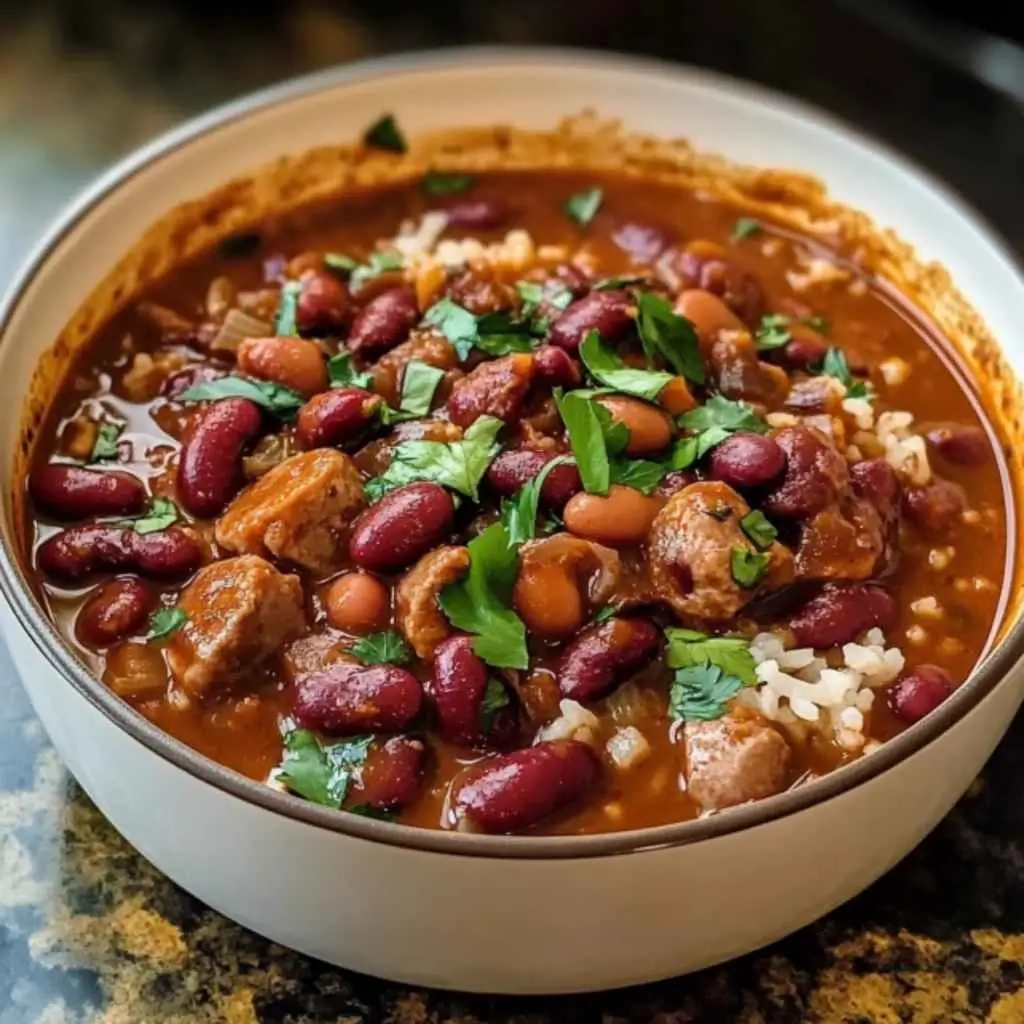

There are certain dishes that transcend mere sustenance; they become woven into the fabric of family life, evoking memories and sparking anticipation with just a whiff of their aroma. For us, Louisiana Red Beans and Rice is unequivocally one of those meals. From the first time I simmered a pot of these creamy, flavorful beans, the rich, smoky scent filled our home, instantly transporting us to the heart of Southern comfort. My family, initially hesitant about a bean-centric dish, were quickly converted. The hearty texture of the red beans, perfectly balanced with the savory andouille sausage and aromatic spices, created a symphony of flavors that had them reaching for seconds, and then thirds! This isn’t just a recipe; it’s an experience, a culinary journey to Louisiana that you can embark on right in your own kitchen. Whether it’s a chilly weeknight dinner or a relaxed weekend gathering, this Red Beans and Rice recipe has become a cherished staple, consistently earning rave reviews and empty bowls. It’s a testament to the simple magic of wholesome ingredients, slow cooking, and a touch of Southern charm. Prepare to be captivated by the deep flavors and comforting warmth of this truly unforgettable dish – it’s guaranteed to become a beloved favorite in your home too.
Ingredients: The Heart and Soul of Authentic Red Beans and Rice
The magic of Louisiana Red Beans and Rice lies not just in the cooking process, but also in the quality and careful selection of its ingredients. Each component plays a crucial role in building the depth of flavor and the signature creamy texture that makes this dish so irresistible. Let’s delve into each ingredient, understanding its purpose and offering insights for the best possible outcome.
- 1 pound dry red beans: The star of the show! Dry red kidney beans are essential for achieving that classic creamy texture and robust bean flavor. Don’t be tempted to use canned beans for this recipe; the slow cooking process with dried beans is what releases their natural starches, creating the signature creamy consistency without relying on thickeners. For the best results, opt for small red beans, sometimes labeled as “Louisiana Red Beans” or “kidney beans”. Avoid using large kidney beans, as they tend to be less creamy when cooked down. Quality matters here; look for beans that are uniform in color and size, indicating freshness. Older beans may take longer to cook and might not soften as well. Storing dry beans in an airtight container in a cool, dark place will help maintain their quality.
- 2 tablespoons olive oil: Olive oil serves as the foundation for sautéing the vegetables and browning the sausage, adding a subtle richness and depth of flavor. Extra virgin olive oil is a great choice for its robust flavor profile, but regular olive oil or even vegetable oil can be used as well. The key is to use an oil with a neutral to slightly savory flavor that won’t overpower the other ingredients. The oil also helps prevent the vegetables from sticking to the bottom of the Dutch oven and ensures even cooking.
- 12 to 14 ounces andouille sausage, cut into ¼-inch slices: Andouille sausage is the quintessential protein in authentic Red Beans and Rice, delivering a smoky, spicy kick that is absolutely crucial to the dish’s character. Look for genuine andouille sausage, which is typically made from pork and heavily seasoned with cayenne pepper and other spices. Its coarse texture and pronounced flavor stand up beautifully to the long cooking process and complement the creamy beans perfectly. If you can’t find andouille sausage, you can substitute with another smoked sausage, such as kielbasa or chorizo, but be aware that the flavor profile will be slightly different. For a milder dish, you can use a less spicy smoked sausage or even ham hocks, which will impart a rich, smoky depth but without the heat. Slicing the sausage into ¼-inch pieces ensures even browning and allows the smoky flavors to infuse the dish effectively.
- ½ tablespoon butter: While olive oil starts the cooking process, a touch of butter adds an extra layer of richness and enhances the sautéing of the onions. The butter’s creamy texture and subtle sweetness complement the savory flavors of the vegetables and sausage. Unsalted butter is recommended so you can control the overall saltiness of the dish. If you prefer to keep the recipe dairy-free, you can simply omit the butter or substitute with an additional tablespoon of olive oil.
- 6 cloves garlic, minced: Garlic is a foundational aromatic in countless cuisines, and Red Beans and Rice is no exception. Freshly minced garlic provides a pungent, savory base that builds complexity and depth of flavor. Six cloves might seem like a lot, but garlic mellows out beautifully during the cooking process, contributing a subtle sweetness and umami without being overpowering. Pre-minced garlic from a jar can be used in a pinch, but fresh garlic will always deliver a superior flavor. Mincing the garlic ensures it cooks quickly and evenly, releasing its aromatic oils into the dish.
- 1 large yellow onion, diced: Onions are another essential aromatic building block, providing sweetness and savory depth to the Red Beans and Rice. Yellow onions are a versatile choice, offering a balanced flavor that isn’t too sharp or too mild. Dicing the onion into small, even pieces ensures that it cooks down properly and blends seamlessly into the final dish. Sautéing the onions until soft and translucent is crucial for releasing their sweetness and preventing them from being crunchy in the finished dish.
- 2 celery ribs, diced: Celery, along with onions and bell peppers, forms the “holy trinity” of Cajun and Creole cuisine, providing a foundational aromatic base for many dishes, including Red Beans and Rice. Celery adds a subtle vegetal sweetness and a refreshing, slightly peppery note that balances the richness of the beans and sausage. Dicing the celery into small pieces ensures it cooks evenly and blends into the texture of the dish.
- 1 small red bell pepper, diced: Red bell pepper brings a touch of sweetness and vibrant color to the Red Beans and Rice. Bell peppers contribute a slightly fruity and subtly smoky flavor that complements the other vegetables and spices. Red bell peppers are sweeter than green bell peppers, making them a great choice for this recipe. Dicing the bell pepper ensures it cooks down properly and adds visual appeal to the dish.
- 1 small green bell pepper, diced: Green bell pepper adds a slightly more bitter and grassy note compared to red bell pepper, contributing to the overall complexity of the flavor profile. The combination of red and green bell peppers provides a balanced sweetness and subtle bitterness that enhances the overall taste of the Red Beans and Rice. Dicing the green bell pepper ensures even cooking and texture.
- 6 to 7 cups low sodium vegetable broth (or chicken broth): Broth is the liquid base for cooking the beans and creating the flavorful sauce. Low sodium vegetable broth is a great choice for keeping the sodium content in check while still providing a rich, savory flavor. Chicken broth can also be used for a slightly richer and meatier flavor profile. Using low sodium broth allows you to control the salt level of the dish and season it to your preference. The amount of broth may need to be adjusted depending on the desired consistency of your Red Beans and Rice; start with 6 cups and add more if needed to achieve a creamy, saucy texture.
- 2 bay leaves: Bay leaves are a subtle but essential aromatic that infuses the Red Beans and Rice with a delicate, slightly floral and herbaceous flavor. They add depth and complexity without being overpowering. Dried bay leaves are commonly used and readily available. Remember to remove the bay leaves before serving, as they are not meant to be eaten. Two bay leaves are generally sufficient for a pot of this size; adding too many can make the dish taste bitter.
- ½ cup chopped fresh parsley plus more for garnish: Fresh parsley provides a bright, herbaceous, and slightly peppery note that adds freshness and vibrancy to the Red Beans and Rice. It’s added towards the end of cooking to retain its fresh flavor and bright green color. Parsley also serves as a beautiful garnish, adding visual appeal to the finished dish. Flat-leaf parsley (Italian parsley) is generally preferred for its more robust flavor compared to curly parsley.
- ¼ cup chopped fresh green onions plus more for garnish: Green onions, also known as scallions, contribute a mild oniony flavor with a slightly grassy and fresh edge. They are added towards the end of cooking and used as a garnish, adding a final layer of flavor and visual appeal. The green parts of the green onions are milder than the white parts and are typically used for garnish and fresh flavor.
- 1 teaspoon salt or to taste: Salt is a fundamental seasoning that enhances the flavors of all the other ingredients and balances the overall taste of the dish. Start with 1 teaspoon and adjust to your preference, keeping in mind that the andouille sausage and broth may already contain some salt. It’s always better to season gradually and taste as you go, rather than adding too much salt at once.
- 1 teaspoon dried oregano: Dried oregano provides a warm, slightly peppery, and earthy flavor that is characteristic of many Southern and Mediterranean dishes. It adds depth and complexity to the spice blend, complementing the other seasonings. Dried oregano is potent, so a teaspoon is usually sufficient for this recipe.
- ½ teaspoon dried thyme: Dried thyme offers a subtle earthy, slightly minty, and lemony flavor that adds another layer of complexity to the spice blend. It complements the oregano and other seasonings, creating a well-rounded flavor profile. Dried thyme is also quite potent, so half a teaspoon is usually enough.
- ½ teaspoon paprika: Paprika, particularly smoked paprika, adds a subtle smoky sweetness and a vibrant red color to the Red Beans and Rice. It enhances the smoky flavor of the andouille sausage and contributes to the overall depth of flavor. Regular paprika can also be used, but smoked paprika will provide a more authentic and flavorful result.
- ⅛ teaspoon ground cayenne red pepper or to taste: Cayenne pepper is the spice that brings the heat to Red Beans and Rice. ⅛ teaspoon provides a mild warmth, but you can adjust the amount to your preference if you like a spicier dish. Start with a small amount and taste as you go, adding more gradually until you reach your desired level of spiciness. Cayenne pepper adds a clean, bright heat that complements the other flavors without being overpowering (unless you add too much!).
- Freshly ground black pepper to taste: Freshly ground black pepper adds a pungent, slightly spicy, and earthy note that enhances the overall flavor profile and balances the other seasonings. Freshly ground pepper is always preferable to pre-ground pepper, as it has a more vibrant and complex flavor. Season generously with black pepper to taste, adjusting to your preference.
Instructions: Crafting Creamy Perfection, Step by Step
Making authentic Louisiana Red Beans and Rice is a journey of flavors and textures, and while it requires some time, the process itself is quite straightforward. Follow these detailed instructions to create a pot of creamy, flavorful Red Beans and Rice that will impress your family and friends.
- Soak the Dry Beans: The Key to Creaminess and Even Cooking: Begin the process by soaking the dry red beans. This crucial step significantly reduces the cooking time and helps ensure that the beans cook evenly and become wonderfully creamy. There are two primary methods for soaking beans:
- Overnight Soak (Cold Soak): Place the dry red beans in a large bowl or pot. Cover them generously with cool water, ensuring the water level is at least 2-3 inches above the beans, as they will expand as they absorb water. Let them soak at room temperature for at least 8 hours or ideally overnight. This method is simple and effective, allowing for a long, slow hydration of the beans.
- Quick Soak (Hot Soak): If you’re short on time, the quick soak method is a faster alternative. Place the dry red beans in a large pot and cover them with water, again ensuring the water level is a few inches above the beans. Bring the water to a rolling boil and let it boil vigorously for 2-3 minutes. Then, remove the pot from the heat, cover it, and let the beans soak in the hot water for 1 hour. This method uses heat to accelerate the hydration process.
- Brown the Sausage: Building a Smoky Flavor Base: Heat the olive oil in a large, heavy-bottomed pot, preferably a Dutch oven, over medium-high heat. Once the oil is shimmering and hot, add the sliced andouille sausage to the pot in a single layer, if possible. Avoid overcrowding the pot, as this will steam the sausage instead of browning it. Work in batches if necessary. Brown the sausage slices on both sides until they are nicely browned and slightly crispy, about 3-5 minutes per side. Browning the sausage is essential for developing a deep, smoky flavor that will infuse the entire dish. Once browned, remove the sausage from the pot and set it aside on a plate. Leave the flavorful rendered sausage fat in the pot – this will contribute to the overall richness of the Red Beans and Rice.
- Sauté the Aromatics: Layering Flavors for Depth: Reduce the heat to medium and add the butter to the same pot with the sausage fat. Once the butter is melted and shimmering, add the diced yellow onion to the pot. Cook the onion, stirring occasionally, until it becomes soft and translucent, about 5-7 minutes. This process, known as sweating the onions, draws out their natural sweetness and creates a flavorful base for the vegetables. Next, add the diced celery, bell peppers (both red and green), and minced garlic to the pot. Cook, stirring frequently, for another 5-7 minutes, until the vegetables are softened and fragrant. The goal is to soften the vegetables and release their aromatic compounds, creating a complex flavor foundation for the Red Beans and Rice. Be careful not to brown the garlic at this stage, as it can become bitter.
- Bloom the Spices: Unlocking Maximum Flavor: Stir in the salt, dried oregano, dried thyme, paprika, and cayenne pepper to the pot with the vegetables. Cook, stirring constantly, for about 1 minute, or until the spices become fragrant. This process, known as blooming the spices, gently toasts them in the hot oil and vegetables, releasing their aromatic oils and intensifying their flavors. Blooming the spices is a crucial step for maximizing the depth and complexity of the spice blend in the dish.
- Deglaze and Simmer: Building a Rich and Creamy Broth: Pour in the vegetable broth (or chicken broth) into the pot. Use a wooden spoon or spatula to scrape up any browned bits that may have stuck to the bottom of the pot (this is called fond), incorporating them into the broth. These browned bits are packed with flavor and will add depth to the sauce. Add the soaked and drained red beans, the browned sausage (that you set aside earlier), and the bay leaves to the pot. Stir everything together to combine. Bring the mixture to a boil over high heat. Once it reaches a boil, reduce the heat to low, cover the pot tightly with a lid, and let it simmer gently for 1.5 to 2 hours, or until the beans are tender. Simmering over low heat allows the flavors to meld together beautifully and the beans to cook slowly and evenly, resulting in a creamy texture.
- Check for Doneness: The Bean Mash Test: After simmering for 1.5 to 2 hours, check the beans for doneness. The beans should be tender but still intact, not mushy. A good way to check is to mash a bean against the side of the pot with a spoon or fork. It should mash easily but not completely disintegrate. If the beans are still firm, continue to simmer for another 15-30 minutes, or until they reach the desired tenderness. The cooking time may vary depending on the freshness and type of beans used.
- Create Creaminess: The Secret Bean Mashing Technique: This is the key to achieving that signature creamy texture in Red Beans and Rice without adding cream or other thickeners. Carefully remove about 1 cup of cooked beans from the pot using a ladle or slotted spoon and place them in a separate bowl. Using a fork or potato masher, mash the removed beans until they are mostly smooth and creamy. Stir the mashed beans back into the pot with the rest of the beans and broth. Stir well to incorporate the mashed beans evenly throughout the pot. The mashed beans act as a natural thickener, creating a luscious, creamy sauce that coats the whole dish.
- Final Seasoning and Freshness: Adjust the seasoning to your taste. Taste the Red Beans and Rice and add more salt, black pepper, cayenne pepper, or any other seasonings as needed. Stir in the chopped fresh parsley and chopped fresh green onions. Simmer briefly for another 5-10 minutes to allow the fresh herbs to infuse their flavor into the dish. This final simmer also helps to thicken the sauce slightly if needed.
- Serve and Enjoy! Remove the bay leaves from the pot before serving. Serve the Louisiana Red Beans and Rice hot over cooked white rice. Garnish each serving with extra chopped fresh parsley and green onions for a final touch of freshness and visual appeal.
Nutrition Facts: A Hearty and Wholesome Meal
Louisiana Red Beans and Rice is not only delicious and comforting but also surprisingly nutritious. This dish offers a good balance of protein, carbohydrates, and fiber, making it a satisfying and wholesome meal. Please note that the nutrition facts are estimates and can vary based on specific ingredients and portion sizes.
Serving Size: Approximately 1.5 cups of Red Beans and Rice
Servings per Recipe: 6
Approximate Nutrition Facts Per Serving:
- Calories: 450-550 (This can vary depending on the amount of sausage and oil used)
- Protein: 25-30 grams
- Fat: 20-25 grams (This can vary depending on the type and amount of sausage used)
- Saturated Fat: 8-10 grams (This can vary depending on the type and amount of sausage used)
- Cholesterol: 50-70 mg (This can vary depending on the type and amount of sausage used)
- Sodium: 600-800 mg (This can be reduced by using no-salt-added broth and controlling added salt)
- Carbohydrates: 50-60 grams
- Fiber: 15-20 grams
- Sugar: 5-7 grams
Nutritional Highlights:
- Excellent Source of Protein: Red beans are a fantastic source of plant-based protein, and the addition of andouille sausage further boosts the protein content. Protein is essential for building and repairing tissues, supporting muscle growth, and promoting satiety.
- High in Fiber: Red beans are packed with dietary fiber, which is crucial for digestive health, regulating blood sugar levels, and promoting feelings of fullness. Fiber also contributes to heart health by helping to lower cholesterol levels.
- Good Source of Iron: Red beans are a good source of iron, an essential mineral for carrying oxygen throughout the body and preventing iron deficiency anemia.
- Rich in Folate: Red beans are a good source of folate (vitamin B9), which is important for cell growth and development, especially during pregnancy.
- Contains Essential Minerals: Red beans and the vegetables in this recipe provide various essential minerals such as potassium, magnesium, and phosphorus, which are important for various bodily functions.
Tips for a Healthier Version:
- Use Leaner Sausage: Opt for leaner smoked sausage varieties or use ham hocks instead of andouille sausage to reduce the fat and saturated fat content.
- Reduce Oil: Use less olive oil or substitute some of it with cooking spray to reduce the overall fat content.
- Use No-Salt-Added Broth: Using no-salt-added vegetable or chicken broth and controlling added salt can significantly reduce the sodium content of the dish.
- Increase Vegetables: Adding more vegetables like bell peppers, celery, and onions will further increase the nutritional value and fiber content of the dish.
- Serve with Brown Rice: Serving Red Beans and Rice over brown rice instead of white rice will increase the fiber content and provide more complex carbohydrates.
Preparation Time: Plan Ahead for Flavorful Results
While the active cooking time for Red Beans and Rice is relatively short, the total preparation time, including soaking the beans, is longer. However, much of this time is hands-off simmering, allowing you to attend to other tasks while the flavors develop.
- Soaking Time: 8 hours (overnight soak) or 1 hour (quick soak)
- Prep Time (chopping vegetables, slicing sausage): 20-30 minutes
- Cook Time (sautéing, simmering, mashing): 2 hours to 2 hours 15 minutes
- Total Time: 2 hours 45 minutes to 9 hours 45 minutes (depending on soaking method)
Tips for Time Management:
- Soak Beans Overnight: The overnight soak method is the most convenient as you can soak the beans the night before and then start cooking the dish the next day.
- Prep Vegetables in Advance: Chop the onions, celery, and bell peppers ahead of time and store them in airtight containers in the refrigerator. This can save you valuable time on the day of cooking.
- Use Pre-Sliced Sausage: Purchasing pre-sliced andouille sausage can save you a few minutes of prep time.
- Weeknight Meal Strategy: Start soaking the beans in the morning before work, and then begin cooking the dish in the evening. The long simmering time is mostly hands-off, allowing you to relax or do other things while it cooks.
- Weekend Cooking: Red Beans and Rice is an excellent dish to make on the weekend when you have more time. The long simmering time is perfect for a relaxed weekend cooking project.
How to Serve: Enhancing the Southern Comfort Experience
Louisiana Red Beans and Rice is a complete and satisfying meal on its own, but there are many ways to enhance the serving experience and create a truly memorable Southern feast.
- Essential Accompaniment: Rice:
- White Rice: Classic long-grain white rice is the traditional accompaniment, providing a fluffy and neutral base that soaks up the flavorful bean sauce.
- Brown Rice: For a healthier option, serve with brown rice, which offers a nutty flavor and more fiber.
- Jasmine Rice: Jasmine rice with its fragrant aroma and slightly sticky texture can also be a delicious pairing.
- Classic Toppings and Garnishes:
- Chopped Fresh Parsley and Green Onions: These fresh herbs are essential for adding a pop of color and freshness to the finished dish.
- Hot Sauce: A dash of your favorite hot sauce, like Tabasco or Crystal Hot Sauce, adds an extra layer of heat and flavor.
- Pickled Okra or Hot Peppers: Pickled vegetables provide a tangy and crunchy contrast to the creamy beans.
- Creole Seasoning: A sprinkle of Creole seasoning can enhance the Southern flavors.
- Side Dishes for a Complete Southern Meal:
- Cornbread: Buttery and slightly sweet cornbread is a classic Southern side that pairs perfectly with Red Beans and Rice.
- Coleslaw: Creamy or vinegar-based coleslaw provides a cool and refreshing contrast to the rich and savory beans.
- Green Salad: A simple green salad with a vinaigrette dressing adds freshness and lightness to the meal.
- Fried Green Tomatoes: Crispy fried green tomatoes are a Southern delicacy that complements the flavors of Red Beans and Rice beautifully.
- Mac and Cheese: For an extra indulgent Southern feast, serve with creamy mac and cheese.
- Serving Suggestions for Different Occasions:
- Weeknight Dinner: Serve simply over white rice with a garnish of fresh herbs and a side of cornbread for a quick and comforting weeknight meal.
- Weekend Brunch: Serve Red Beans and Rice with a fried egg on top for a hearty and flavorful brunch dish.
- Potluck or Gathering: Red Beans and Rice is a perfect dish to bring to potlucks or gatherings as it’s easy to transport and serves a crowd. Keep it warm in a slow cooker or chafing dish.
- Game Day Feast: Serve Red Beans and Rice as part of a game day spread with other Southern favorites like chicken wings, sliders, and potato salad.
Additional Tips for Red Beans and Rice Perfection
Elevate your Red Beans and Rice from delicious to extraordinary with these helpful tips and tricks gleaned from years of cooking this Southern classic.
- Don’t Skip the Soaking: Soaking the beans is not just about reducing cooking time; it significantly improves the texture and digestibility of the beans. Soaked beans cook more evenly, become creamier, and are less likely to cause digestive discomfort. Whether you choose the overnight soak or the quick soak method, this step is crucial for the best results.
- Brown the Sausage Thoroughly: Taking the time to properly brown the andouille sausage is essential for developing a deep, smoky flavor that permeates the entire dish. Don’t rush this step. Browning the sausage in batches if necessary ensures that each piece gets nicely caramelized and flavorful. The rendered sausage fat is also a flavor powerhouse, so be sure to cook the vegetables in it.
- Layer the Flavors Gradually: Building flavor in stages is key to a complex and delicious Red Beans and Rice. Sautéing the aromatics (onions, celery, bell peppers, garlic) until softened and fragrant, and blooming the spices in the hot oil, releases their full potential and creates a multi-dimensional flavor profile. Don’t skip these seemingly small steps; they make a big difference.
- Simmer Low and Slow: Patience is a virtue when it comes to simmering Red Beans and Rice. Low and slow simmering allows the beans to cook gently and evenly, developing a creamy texture and allowing the flavors to meld and deepen over time. Resist the temptation to rush the simmering process. A gentle simmer is key to achieving the perfect consistency and flavor.
- Make it Ahead for Even Better Flavor: Red Beans and Rice is one of those dishes that actually tastes even better the next day. The flavors continue to meld and deepen as it sits in the refrigerator overnight. Making it a day ahead is a great time-saving strategy for busy weeknights or when entertaining. Simply reheat gently on the stovetop or in the microwave before serving. The texture might thicken slightly upon cooling, so you may need to add a splash of broth or water when reheating to reach your desired consistency.
FAQ: Your Red Beans and Rice Ingredient Questions Answered
Navigating the ingredient list for Red Beans and Rice can sometimes raise questions. Here are answers to some common queries about the ingredients to ensure your cooking experience is smooth and successful.
Q1: Can I use canned red beans instead of dry beans to save time?
A: While canned red beans can be used in a pinch, it is highly recommended to use dry red beans for authentic Red Beans and Rice. Dry beans, when soaked and slow-cooked, release their natural starches, creating the signature creamy texture and richer flavor that canned beans simply cannot replicate. Canned beans are already cooked and will not break down and become creamy in the same way. For the best flavor and texture, stick with dry red beans and allow for the soaking and simmering time.
Q2: What if I can’t find andouille sausage? What’s a good substitute?
A: Andouille sausage is the traditional and preferred sausage for Red Beans and Rice due to its smoky and spicy flavor. However, if you can’t find it, there are acceptable substitutes. Kielbasa or chorizo (Spanish or Mexican chorizo, not Brazilian) can be used as alternatives, offering a smoky flavor profile, though they may be less spicy than andouille. Smoked ham hocks are another excellent option, providing a rich, smoky flavor without the spiciness of andouille. If using ham hocks, you may want to shred the meat from the hocks after cooking and return it to the pot. For a vegetarian version, you can omit the sausage altogether or use smoked paprika and liquid smoke to enhance the smoky flavor.
Q3: Can I use chicken broth instead of vegetable broth? Does it significantly change the flavor?
A: Yes, you can absolutely use chicken broth instead of vegetable broth in Red Beans and Rice. Chicken broth will impart a slightly richer and meatier flavor to the dish, which some people prefer. The difference in flavor is subtle but noticeable. Vegetable broth keeps the dish vegetarian and provides a clean, savory base. Both options work well, and the choice depends on your personal preference and dietary needs. If you are vegetarian or vegan, ensure you use vegetable broth.
Q4: Is it necessary to use both red and green bell peppers, or can I use just one?
A: Using both red and green bell peppers is recommended for a balanced flavor profile in Red Beans and Rice. Red bell peppers contribute sweetness, while green bell peppers offer a slightly bitter and grassy note. Together, they create a more complex and nuanced flavor. However, if you only have one type of bell pepper on hand, you can certainly use just that. Using only red bell pepper will result in a sweeter dish, while using only green bell pepper will be slightly more bitter. If you are missing one, don’t let it stop you from making the recipe – it will still be delicious!
Q5: Can I adjust the spice level of this recipe? It sounds a bit spicy for my family.
A: Yes, you can easily adjust the spice level of Red Beans and Rice to suit your family’s preferences. The cayenne pepper is the main source of heat in this recipe. For a milder dish, reduce or completely omit the cayenne pepper. You can also use a milder smoked sausage if you are concerned about the spice from the andouille. Conversely, if you like it spicier, you can increase the amount of cayenne pepper or add a pinch of red pepper flakes. It’s always best to start with a smaller amount of spice and add more to taste as you go. You can also serve hot sauce on the side for those who want to add extra heat to their individual servings.
Print
Hearty Louisiana Red Beans and Rice Recipe
Ingredients
- 1 pound dry red beans: The star of the show! Dry red kidney beans are essential for achieving that classic creamy texture and robust bean flavor. Don’t be tempted to use canned beans for this recipe; the slow cooking process with dried beans is what releases their natural starches, creating the signature creamy consistency without relying on thickeners. For the best results, opt for small red beans, sometimes labeled as “Louisiana Red Beans” or “kidney beans”. Avoid using large kidney beans, as they tend to be less creamy when cooked down. Quality matters here; look for beans that are uniform in color and size, indicating freshness. Older beans may take longer to cook and might not soften as well. Storing dry beans in an airtight container in a cool, dark place will help maintain their quality.
- 2 tablespoons olive oil: Olive oil serves as the foundation for sautéing the vegetables and browning the sausage, adding a subtle richness and depth of flavor. Extra virgin olive oil is a great choice for its robust flavor profile, but regular olive oil or even vegetable oil can be used as well. The key is to use an oil with a neutral to slightly savory flavor that won’t overpower the other ingredients. The oil also helps prevent the vegetables from sticking to the bottom of the Dutch oven and ensures even cooking.
- 12 to 14 ounces andouille sausage, cut into ¼-inch slices: Andouille sausage is the quintessential protein in authentic Red Beans and Rice, delivering a smoky, spicy kick that is absolutely crucial to the dish’s character. Look for genuine andouille sausage, which is typically made from pork and heavily seasoned with cayenne pepper and other spices. Its coarse texture and pronounced flavor stand up beautifully to the long cooking process and complement the creamy beans perfectly. If you can’t find andouille sausage, you can substitute with another smoked sausage, such as kielbasa or chorizo, but be aware that the flavor profile will be slightly different. For a milder dish, you can use a less spicy smoked sausage or even ham hocks, which will impart a rich, smoky depth but without the heat. Slicing the sausage into ¼-inch pieces ensures even browning and allows the smoky flavors to infuse the dish effectively.
- ½ tablespoon butter: While olive oil starts the cooking process, a touch of butter adds an extra layer of richness and enhances the sautéing of the onions. The butter’s creamy texture and subtle sweetness complement the savory flavors of the vegetables and sausage. Unsalted butter is recommended so you can control the overall saltiness of the dish. If you prefer to keep the recipe dairy-free, you can simply omit the butter or substitute with an additional tablespoon of olive oil.
- 6 cloves garlic, minced: Garlic is a foundational aromatic in countless cuisines, and Red Beans and Rice is no exception. Freshly minced garlic provides a pungent, savory base that builds complexity and depth of flavor. Six cloves might seem like a lot, but garlic mellows out beautifully during the cooking process, contributing a subtle sweetness and umami without being overpowering. Pre-minced garlic from a jar can be used in a pinch, but fresh garlic will always deliver a superior flavor. Mincing the garlic ensures it cooks quickly and evenly, releasing its aromatic oils into the dish.
- 1 large yellow onion, diced: Onions are another essential aromatic building block, providing sweetness and savory depth to the Red Beans and Rice. Yellow onions are a versatile choice, offering a balanced flavor that isn’t too sharp or too mild. Dicing the onion into small, even pieces ensures that it cooks down properly and blends seamlessly into the final dish. Sautéing the onions until soft and translucent is crucial for releasing their sweetness and preventing them from being crunchy in the finished dish.
- 2 celery ribs, diced: Celery, along with onions and bell peppers, forms the “holy trinity” of Cajun and Creole cuisine, providing a foundational aromatic base for many dishes, including Red Beans and Rice. Celery adds a subtle vegetal sweetness and a refreshing, slightly peppery note that balances the richness of the beans and sausage. Dicing the celery into small pieces ensures it cooks evenly and blends into the texture of the dish.
- 1 small red bell pepper, diced: Red bell pepper brings a touch of sweetness and vibrant color to the Red Beans and Rice. Bell peppers contribute a slightly fruity and subtly smoky flavor that complements the other vegetables and spices. Red bell peppers are sweeter than green bell peppers, making them a great choice for this recipe. Dicing the bell pepper ensures it cooks down properly and adds visual appeal to the dish.
- 1 small green bell pepper, diced: Green bell pepper adds a slightly more bitter and grassy note compared to red bell pepper, contributing to the overall complexity of the flavor profile. The combination of red and green bell peppers provides a balanced sweetness and subtle bitterness that enhances the overall taste of the Red Beans and Rice. Dicing the green bell pepper ensures even cooking and texture.
- 6 to 7 cups low sodium vegetable broth (or chicken broth): Broth is the liquid base for cooking the beans and creating the flavorful sauce. Low sodium vegetable broth is a great choice for keeping the sodium content in check while still providing a rich, savory flavor. Chicken broth can also be used for a slightly richer and meatier flavor profile. Using low sodium broth allows you to control the salt level of the dish and season it to your preference. The amount of broth may need to be adjusted depending on the desired consistency of your Red Beans and Rice; start with 6 cups and add more if needed to achieve a creamy, saucy texture.
- 2 bay leaves: Bay leaves are a subtle but essential aromatic that infuses the Red Beans and Rice with a delicate, slightly floral and herbaceous flavor. They add depth and complexity without being overpowering. Dried bay leaves are commonly used and readily available. Remember to remove the bay leaves before serving, as they are not meant to be eaten. Two bay leaves are generally sufficient for a pot of this size; adding too many can make the dish taste bitter.
- ½ cup chopped fresh parsley plus more for garnish: Fresh parsley provides a bright, herbaceous, and slightly peppery note that adds freshness and vibrancy to the Red Beans and Rice. It’s added towards the end of cooking to retain its fresh flavor and bright green color. Parsley also serves as a beautiful garnish, adding visual appeal to the finished dish. Flat-leaf parsley (Italian parsley) is generally preferred for its more robust flavor compared to curly parsley.
- ¼ cup chopped fresh green onions plus more for garnish: Green onions, also known as scallions, contribute a mild oniony flavor with a slightly grassy and fresh edge. They are added towards the end of cooking and used as a garnish, adding a final layer of flavor and visual appeal. The green parts of the green onions are milder than the white parts and are typically used for garnish and fresh flavor.
- 1 teaspoon salt or to taste: Salt is a fundamental seasoning that enhances the flavors of all the other ingredients and balances the overall taste of the dish. Start with 1 teaspoon and adjust to your preference, keeping in mind that the andouille sausage and broth may already contain some salt. It’s always better to season gradually and taste as you go, rather than adding too much salt at once.
- 1 teaspoon dried oregano: Dried oregano provides a warm, slightly peppery, and earthy flavor that is characteristic of many Southern and Mediterranean dishes. It adds depth and complexity to the spice blend, complementing the other seasonings. Dried oregano is potent, so a teaspoon is usually sufficient for this recipe.
- ½ teaspoon dried thyme: Dried thyme offers a subtle earthy, slightly minty, and lemony flavor that adds another layer of complexity to the spice blend. It complements the oregano and other seasonings, creating a well-rounded flavor profile. Dried thyme is also quite potent, so half a teaspoon is usually enough.
- ½ teaspoon paprika: Paprika, particularly smoked paprika, adds a subtle smoky sweetness and a vibrant red color to the Red Beans and Rice. It enhances the smoky flavor of the andouille sausage and contributes to the overall depth of flavor. Regular paprika can also be used, but smoked paprika will provide a more authentic and flavorful result.
- ⅛ teaspoon ground cayenne red pepper or to taste: Cayenne pepper is the spice that brings the heat to Red Beans and Rice. ⅛ teaspoon provides a mild warmth, but you can adjust the amount to your preference if you like a spicier dish. Start with a small amount and taste as you go, adding more gradually until you reach your desired level of spiciness. Cayenne pepper adds a clean, bright heat that complements the other flavors without being overpowering (unless you add too much!).
- Freshly ground black pepper to taste: Freshly ground black pepper adds a pungent, slightly spicy, and earthy note that enhances the overall flavor profile and balances the other seasonings. Freshly ground pepper is always preferable to pre-ground pepper, as it has a more vibrant and complex flavor. Season generously with black pepper to taste, adjusting to your preference.
Instructions
- Soak the Dry Beans: The Key to Creaminess and Even Cooking: Begin the process by soaking the dry red beans. This crucial step significantly reduces the cooking time and helps ensure that the beans cook evenly and become wonderfully creamy. There are two primary methods for soaking beans:
- Overnight Soak (Cold Soak): Place the dry red beans in a large bowl or pot. Cover them generously with cool water, ensuring the water level is at least 2-3 inches above the beans, as they will expand as they absorb water. Let them soak at room temperature for at least 8 hours or ideally overnight. This method is simple and effective, allowing for a long, slow hydration of the beans.
- Quick Soak (Hot Soak): If you’re short on time, the quick soak method is a faster alternative. Place the dry red beans in a large pot and cover them with water, again ensuring the water level is a few inches above the beans. Bring the water to a rolling boil and let it boil vigorously for 2-3 minutes. Then, remove the pot from the heat, cover it, and let the beans soak in the hot water for 1 hour. This method uses heat to accelerate the hydration process.
After soaking using either method, drain the beans thoroughly and rinse them under cold running water. Discard the soaking water, as it contains indigestible sugars that can contribute to digestive discomfort.
- Brown the Sausage: Building a Smoky Flavor Base: Heat the olive oil in a large, heavy-bottomed pot, preferably a Dutch oven, over medium-high heat. Once the oil is shimmering and hot, add the sliced andouille sausage to the pot in a single layer, if possible. Avoid overcrowding the pot, as this will steam the sausage instead of browning it. Work in batches if necessary. Brown the sausage slices on both sides until they are nicely browned and slightly crispy, about 3-5 minutes per side. Browning the sausage is essential for developing a deep, smoky flavor that will infuse the entire dish. Once browned, remove the sausage from the pot and set it aside on a plate. Leave the flavorful rendered sausage fat in the pot – this will contribute to the overall richness of the Red Beans and Rice.
- Sauté the Aromatics: Layering Flavors for Depth: Reduce the heat to medium and add the butter to the same pot with the sausage fat. Once the butter is melted and shimmering, add the diced yellow onion to the pot. Cook the onion, stirring occasionally, until it becomes soft and translucent, about 5-7 minutes. This process, known as sweating the onions, draws out their natural sweetness and creates a flavorful base for the vegetables. Next, add the diced celery, bell peppers (both red and green), and minced garlic to the pot. Cook, stirring frequently, for another 5-7 minutes, until the vegetables are softened and fragrant. The goal is to soften the vegetables and release their aromatic compounds, creating a complex flavor foundation for the Red Beans and Rice. Be careful not to brown the garlic at this stage, as it can become bitter.
- Bloom the Spices: Unlocking Maximum Flavor: Stir in the salt, dried oregano, dried thyme, paprika, and cayenne pepper to the pot with the vegetables. Cook, stirring constantly, for about 1 minute, or until the spices become fragrant. This process, known as blooming the spices, gently toasts them in the hot oil and vegetables, releasing their aromatic oils and intensifying their flavors. Blooming the spices is a crucial step for maximizing the depth and complexity of the spice blend in the dish.
- Deglaze and Simmer: Building a Rich and Creamy Broth: Pour in the vegetable broth (or chicken broth) into the pot. Use a wooden spoon or spatula to scrape up any browned bits that may have stuck to the bottom of the pot (this is called fond), incorporating them into the broth. These browned bits are packed with flavor and will add depth to the sauce. Add the soaked and drained red beans, the browned sausage (that you set aside earlier), and the bay leaves to the pot. Stir everything together to combine. Bring the mixture to a boil over high heat. Once it reaches a boil, reduce the heat to low, cover the pot tightly with a lid, and let it simmer gently for 1.5 to 2 hours, or until the beans are tender. Simmering over low heat allows the flavors to meld together beautifully and the beans to cook slowly and evenly, resulting in a creamy texture.
- Check for Doneness: The Bean Mash Test: After simmering for 1.5 to 2 hours, check the beans for doneness. The beans should be tender but still intact, not mushy. A good way to check is to mash a bean against the side of the pot with a spoon or fork. It should mash easily but not completely disintegrate. If the beans are still firm, continue to simmer for another 15-30 minutes, or until they reach the desired tenderness. The cooking time may vary depending on the freshness and type of beans used.
- Create Creaminess: The Secret Bean Mashing Technique: This is the key to achieving that signature creamy texture in Red Beans and Rice without adding cream or other thickeners. Carefully remove about 1 cup of cooked beans from the pot using a ladle or slotted spoon and place them in a separate bowl. Using a fork or potato masher, mash the removed beans until they are mostly smooth and creamy. Stir the mashed beans back into the pot with the rest of the beans and broth. Stir well to incorporate the mashed beans evenly throughout the pot. The mashed beans act as a natural thickener, creating a luscious, creamy sauce that coats the whole dish.
- Final Seasoning and Freshness: Adjust the seasoning to your taste. Taste the Red Beans and Rice and add more salt, black pepper, cayenne pepper, or any other seasonings as needed. Stir in the chopped fresh parsley and chopped fresh green onions. Simmer briefly for another 5-10 minutes to allow the fresh herbs to infuse their flavor into the dish. This final simmer also helps to thicken the sauce slightly if needed.
- Serve and Enjoy! Remove the bay leaves from the pot before serving. Serve the Louisiana Red Beans and Rice hot over cooked white rice. Garnish each serving with extra chopped fresh parsley and green onions for a final touch of freshness and visual appeal.
Nutrition
- Serving Size: One Normal Portion
- Calories: 450-550
- Sugar: 5-7 grams
- Sodium: 600-800 mg
- Fat: 20-25 grams
- Saturated Fat: 8-10 grams
- Carbohydrates: 50-60 grams
- Fiber: 15-20 grams
- Protein: 25-30 grams
- Cholesterol: 50-70 mg