

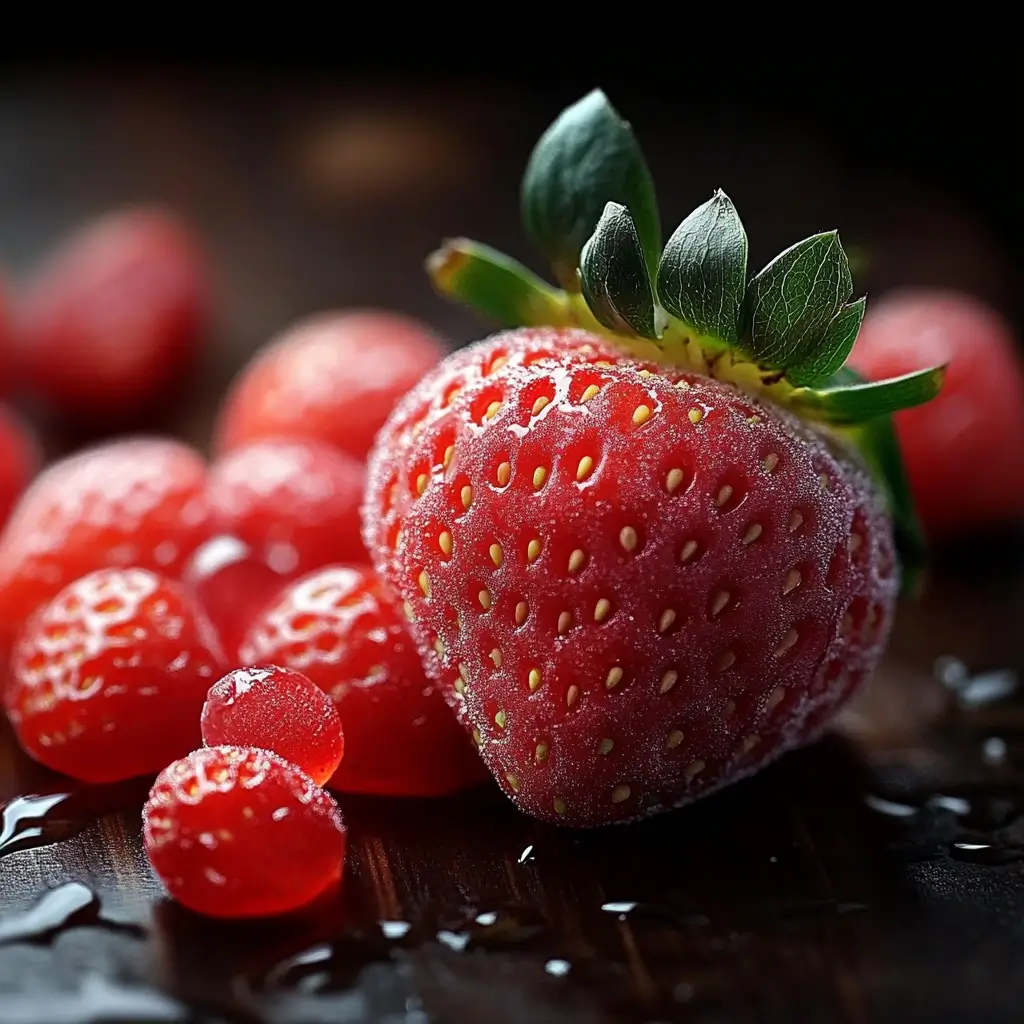
There’s something truly magical about transforming simple ingredients into delightful treats right in your own kitchen. Recently, I embarked on a candy-making adventure with this incredibly straightforward strawberry candy recipe, and let me tell you, the results were phenomenal! My family, usually accustomed to store-bought sweets, absolutely devoured these homemade strawberry jewels. The vibrant strawberry flavor, the satisfyingly hard yet melt-in-your-mouth texture – it was a far cry from anything pre-packaged. What impressed me most was the sheer simplicity of the process. No fancy equipment, no obscure ingredients – just a handful of kitchen staples and a little bit of patience. If you’re looking for a fun, rewarding, and utterly delicious project, this strawberry candy recipe is your golden ticket. Get ready to fill your home with the sweet aroma of strawberries and create a batch of candy that will impress everyone, from the little ones to the seasoned sweet tooths in your life. Let’s dive into the world of homemade strawberry candy and discover how easy it is to create these delectable delights!
Ingredients: Your Simple Candy Arsenal
The beauty of this strawberry candy recipe lies in its minimalist ingredient list. You likely have most, if not all, of these items already in your pantry. Let’s break down each component and understand its role in creating candy perfection:
- 1 Cup of Fresh or Frozen Strawberries: The star of the show! Strawberries provide the vibrant flavor and beautiful color to our candy. Whether you choose fresh, sun-ripened berries bursting with summer sweetness, or opt for frozen strawberries for year-round candy making, the key is quality.
- Fresh Strawberries: If using fresh strawberries, select ripe, fragrant berries. The deeper red the berry, the more intense the flavor will be. Wash them thoroughly, hull them (remove the green tops), and they are ready to go.
- Frozen Strawberries: Frozen strawberries are a fantastic and convenient alternative, especially when fresh berries are out of season. They are often picked at peak ripeness and frozen immediately, locking in their flavor. You can use them directly from frozen, no need to thaw.
- 1 Cup of Granulated Sugar: Sugar is the backbone of candy, providing sweetness and structure. Granulated sugar, also known as white sugar, is the standard choice for hard candies because it melts smoothly and crystallizes beautifully.
- The Science of Sugar: Sugar, when heated, undergoes a fascinating transformation. It melts and then, as the water evaporates, it thickens and eventually hardens into a glassy solid – the candy we know and love. The type of sugar used greatly impacts the texture and final result of the candy.
- 1/2 Cup of Light Corn Syrup: Corn syrup is a crucial ingredient in hard candy making. It might sound like a simple sweetener, but it plays a vital role in preventing sugar crystallization and creating a smooth, clear candy.
- Crystallization Control: Sugar has a natural tendency to crystallize as it cools, which can lead to grainy or cloudy candy. Corn syrup, a type of inverted sugar, interferes with this crystallization process, resulting in a candy with a desirable smooth and glassy texture. Light corn syrup is preferred as it has a neutral flavor that won’t overpower the strawberry.
- 1/2 Cup of Water: Water is essential for dissolving the sugar and corn syrup and creating the syrup base for our candy. It acts as a solvent, allowing the ingredients to combine and transform during the cooking process.
- Evaporation Magic: As the mixture cooks, the water evaporates, concentrating the sugar and corn syrup and raising the temperature. This process is crucial for reaching the “hard-crack” stage, the point where the candy will solidify properly.
- Food Coloring (Optional): While strawberries naturally impart a lovely pink hue, food coloring can enhance the vibrancy and create a more intensely colored candy. This is entirely optional and depends on your desired aesthetic.
- Color Enhancement: A few drops of red or pink food coloring (gel food coloring is recommended for its concentrated color and minimal liquid content) can boost the strawberry color, especially if your strawberries are a bit paler or if you want a more dramatic look. Natural food colorings, like beet juice, can also be used, though they may slightly alter the flavor and color intensity.
- Flavorings (Optional): To further elevate the strawberry flavor or add a unique twist, you can incorporate flavorings. Extracts and oils are great options for adding depth and complexity.
- Strawberry Extract: For an intensified strawberry flavor, a few drops of pure strawberry extract can work wonders. Be sure to use pure extract rather than imitation flavoring for the best taste.
- Other Flavor Enhancements: Consider a touch of vanilla extract for a creamy undertone, lemon juice for a tangy kick, or citric acid for a sour candy experience. Experiment with different flavor combinations to create your signature strawberry candy.
Instructions: Crafting Your Strawberry Candy Masterpiece
Now comes the exciting part – transforming these simple ingredients into delicious strawberry candy! Follow these step-by-step instructions carefully, and you’ll be amazed at how easy it is to make candy at home.
- Prepare Your Strawberries: If using fresh strawberries, wash, hull, and roughly chop them. If using frozen strawberries, no need to thaw.
- Chopping for Flavor Release: Chopping the strawberries, whether fresh or frozen, helps to release their juice and flavor more readily during the cooking process. Smaller pieces will also break down faster and infuse the syrup more effectively.
- Combine Ingredients in the Saucepan: In your medium-sized saucepan with a heavy bottom, combine the granulated sugar, light corn syrup, and water. Add the prepared strawberries to the saucepan.
- Heavy-Bottomed Pan Importance: A heavy-bottomed saucepan is crucial for even heat distribution. This prevents hot spots and scorching, which can ruin the candy. Stainless steel or copper-bottomed pans are excellent choices.
- Mashing for Maximum Strawberry Flavor: Using your silicone spatula or a potato masher, gently mash the strawberries in the saucepan to release their juice. This step is essential for extracting the maximum strawberry flavor and color into the syrup.
- Bring to a Boil and Simmer: Place the saucepan over medium heat and stir the mixture constantly with your silicone spatula until the sugar dissolves completely. Once the sugar is dissolved, bring the mixture to a rolling boil. Reduce the heat to low and simmer gently for 10-15 minutes, stirring occasionally.
- Dissolving Sugar Properly: Stirring constantly while heating ensures that the sugar dissolves evenly and prevents it from burning or sticking to the bottom of the pan.
- Simmering for Flavor Infusion: Simmering the mixture allows the strawberry flavor to fully infuse into the syrup. The gentle heat also helps to break down the strawberries further, creating a smoother candy base.
- Insert Candy Thermometer and Continue Cooking: Clip your candy thermometer to the side of the saucepan, ensuring the bulb is submerged in the syrup but not touching the bottom of the pan. Continue cooking the mixture over medium heat, without stirring now, until the candy thermometer registers 300°F (149°C), the “hard-crack” stage.
- Candy Thermometer: Your Candy-Making Ally: A candy thermometer is absolutely essential for making hard candy. It accurately measures the temperature of the syrup, which is crucial for achieving the correct consistency and hardness. Don’t rely on visual cues alone; temperature is key!
- The Hard-Crack Stage: 300°F (149°C) is the “hard-crack” stage in candy making. At this temperature, the syrup has reached the correct sugar concentration to solidify into hard candy when cooled. If you don’t reach this temperature, your candy will be too soft and sticky. If you overheat it, it might become brittle or burnt.
- No Stirring During Hard-Crack Stage: Once you reach the hard-crack stage cooking, avoid stirring the mixture. Stirring at this point can encourage crystallization and cloudiness.
- Remove from Heat and Add Optional Ingredients: Once the candy reaches 300°F (149°C), immediately remove the saucepan from the heat. If using, quickly stir in food coloring and flavorings.
- Timing is Crucial: Remove the saucepan from the heat as soon as it reaches 300°F (149°C). The temperature will continue to rise slightly even after you take it off the heat due to residual heat.
- Quick Incorporation of Color and Flavor: Stir in food coloring and flavorings quickly and gently to ensure they are evenly distributed throughout the hot candy syrup.
- Pour onto Prepared Baking Sheet: Carefully and quickly pour the hot candy syrup onto the baking sheet lined with parchment paper. Spread it out evenly with your silicone spatula to your desired thickness.
- Parchment Paper is Your Friend: Parchment paper prevents the candy from sticking to the baking sheet, making it easy to remove once cooled. Do not use wax paper, as it can melt and stick to the candy.
- Working Quickly and Safely: Hot candy syrup is extremely hot and can cause burns. Work quickly and carefully, using oven mitts or heat-resistant gloves if needed.
- Cool and Harden: Let the candy cool completely at room temperature until it is completely hardened. This may take 30-60 minutes, depending on the thickness of your candy and the room temperature.
- Patience is a Virtue: Allowing the candy to cool and harden completely is crucial. Don’t try to rush the process by refrigerating it, as this can cause condensation and make the candy sticky.
- Break into Pieces and Serve: Once the candy is completely hardened, break it into bite-sized pieces. You can use your hands or gently tap it with the handle of a knife to break it apart.
- Breaking Techniques: You can break the candy into irregular shards for a rustic look or score it lightly with a knife while it’s still slightly warm to create more uniform pieces once fully hardened.
- Store Properly: Store your homemade strawberry candy in an airtight container at room temperature.
- Airtight Storage is Key: Hard candy is hygroscopic, meaning it absorbs moisture from the air, which can make it sticky. Storing it in an airtight container, especially in humid climates, is essential to maintain its crispness and prevent it from becoming sticky.
Nutrition Facts (Approximate)
(Per Serving, assuming recipe makes approximately 30 pieces and serving size is 2-3 pieces)
- Servings: Approximately 10-15 servings (2-3 pieces per serving)
- Calories per serving: Approximately 100-150 calories (depending on serving size)
- Sugar: Approximately 25-35 grams per serving (primarily from added sugar)
- Fat: 0 grams
- Protein: 0 grams
- Sodium: Minimal
Note: These are approximate values and can vary depending on the exact ingredient quantities and serving size. This candy is primarily sugar and should be consumed in moderation as part of a balanced diet.
Preparation Time
- Prep time: 15 minutes (chopping strawberries, measuring ingredients)
- Cook time: 25-30 minutes (boiling and reaching hard-crack stage)
- Cooling time: 30-60 minutes (or until completely hardened)
- Total time: Approximately 1 hour 10 minutes to 1 hour 45 minutes
How to Serve Your Strawberry Candy
Strawberry candy is a versatile treat that can be enjoyed in countless ways. Here are some delightful serving suggestions:
- Simple Snacking: The most straightforward and satisfying way to enjoy your homemade strawberry candy is simply as a snack. Pop a piece or two for a sweet pick-me-up anytime.
- Party Favors: Package individual pieces or small bags of strawberry candy as charming and delicious party favors for birthdays, holidays, or any special occasion.
- Gift Giving: Homemade candy makes a thoughtful and personal gift. Present your strawberry candy in decorative jars, tins, or cellophane bags tied with ribbons for a sweet gesture.
- Candy Buffets: Add homemade strawberry candy to a candy buffet or dessert table for a pop of color and fruity flavor. It pairs beautifully with other candies, chocolates, and desserts.
- Topping for Desserts: Crush strawberry candy into small pieces and use it as a crunchy and flavorful topping for ice cream, yogurt, cupcakes, or cakes.
- Strawberry Candy Bark: Melt white chocolate or dark chocolate and spread it on parchment paper. Sprinkle crushed strawberry candy pieces and other toppings like nuts or sprinkles over the melted chocolate. Let it harden for a delightful candy bark.
- Strawberry Candy Lollipops: Pour the hot candy syrup onto parchment paper in small circles and insert lollipop sticks into each circle before it hardens. Let them cool completely to create homemade strawberry lollipops.
Additional Tips for Candy-Making Success
Making candy can be a bit of an art, but with these helpful tips, you’ll be well on your way to becoming a candy-making pro:
- Invest in a Reliable Candy Thermometer: As mentioned earlier, a candy thermometer is indispensable for hard candy making. Ensure yours is accurate and easy to read. Calibrate it in boiling water before use to verify its accuracy.
- Maintain Consistent Heat: Use medium heat for cooking the candy syrup. Avoid turning the heat up too high, as this can cause the sugar to burn or caramelize prematurely. If your syrup starts to brown too quickly, reduce the heat slightly.
- Don’t Stir After Reaching Hard-Crack Stage Cooking: Once the candy thermometer reaches around 260°F (127°C), avoid stirring the mixture. Stirring at higher temperatures can introduce air bubbles and encourage crystallization, resulting in cloudy or grainy candy.
- Work Quickly and Safely with Hot Syrup: Hot candy syrup is extremely hot and can cause severe burns. Work quickly but carefully when pouring and spreading the syrup. Use oven mitts or heat-resistant gloves if needed. Have your prepared baking sheet ready and within easy reach before the candy reaches the hard-crack stage.
- Practice Makes Perfect: Don’t be discouraged if your first batch isn’t picture-perfect. Candy making takes a little practice. Each time you make it, you’ll become more comfortable with the process and learn to recognize the visual cues and temperature changes.
Frequently Asked Questions (FAQ) About Strawberry Candy Making
Here are some common questions and answers to help you troubleshoot and enhance your strawberry candy making experience:
Q1: Can I use a different type of sugar instead of granulated sugar?
A: Granulated sugar is the best choice for hard candy due to its clean flavor and reliable crystallization properties. Other sugars, like brown sugar or powdered sugar, will not work in this recipe and may result in a different texture and flavor.
Q2: Can I omit the corn syrup?
A: It is not recommended to omit the corn syrup. Corn syrup is crucial for preventing sugar crystallization and creating a smooth, clear hard candy. Without corn syrup, your candy is likely to become grainy and cloudy.
Q3: My candy is sticky, what did I do wrong?
A: Sticky candy usually indicates that the candy did not reach the hard-crack stage temperature of 300°F (149°C). It might also be due to storing the candy in a humid environment. Ensure you use a candy thermometer to reach the correct temperature, and store your candy in an airtight container.
Q4: Can I use different fruits for this recipe?
A: Yes, you can adapt this recipe to use other fruits like raspberries, blueberries, or peaches. The process remains similar, but cooking times may vary slightly depending on the fruit’s water content. Adjust flavorings accordingly to complement the fruit.
Q5: How long does homemade strawberry candy last?
A: Properly stored in an airtight container at room temperature, homemade strawberry candy can last for several weeks. However, its quality is best within the first 1-2 weeks, as it may gradually become slightly softer over time, especially in humid conditions.
With these simple recipes, tips, and answers, you are now fully equipped to embark on your strawberry candy-making journey. Get ready to experience the joy of creating sweet, flavorful treats right in your own kitchen. Happy candy making!
Print
Homemade Strawberry Candy Recipe
Ingredients
- 1 Cup of Fresh or Frozen Strawberries: The star of the show! Strawberries provide the vibrant flavor and beautiful color to our candy. Whether you choose fresh, sun-ripened berries bursting with summer sweetness, or opt for frozen strawberries for year-round candy making, the key is quality.
- Fresh Strawberries: If using fresh strawberries, select ripe, fragrant berries. The deeper red the berry, the more intense the flavor will be. Wash them thoroughly, hull them (remove the green tops), and they are ready to go.
- Frozen Strawberries: Frozen strawberries are a fantastic and convenient alternative, especially when fresh berries are out of season. They are often picked at peak ripeness and frozen immediately, locking in their flavor. You can use them directly from frozen, no need to thaw.
- 1 Cup of Granulated Sugar: Sugar is the backbone of candy, providing sweetness and structure. Granulated sugar, also known as white sugar, is the standard choice for hard candies because it melts smoothly and crystallizes beautifully.
- The Science of Sugar: Sugar, when heated, undergoes a fascinating transformation. It melts and then, as the water evaporates, it thickens and eventually hardens into a glassy solid – the candy we know and love. The type of sugar used greatly impacts the texture and final result of the candy.
- 1/2 Cup of Light Corn Syrup: Corn syrup is a crucial ingredient in hard candy making. It might sound like a simple sweetener, but it plays a vital role in preventing sugar crystallization and creating a smooth, clear candy.
- Crystallization Control: Sugar has a natural tendency to crystallize as it cools, which can lead to grainy or cloudy candy. Corn syrup, a type of inverted sugar, interferes with this crystallization process, resulting in a candy with a desirable smooth and glassy texture. Light corn syrup is preferred as it has a neutral flavor that won’t overpower the strawberry.
- 1/2 Cup of Water: Water is essential for dissolving the sugar and corn syrup and creating the syrup base for our candy. It acts as a solvent, allowing the ingredients to combine and transform during the cooking process.
- Evaporation Magic: As the mixture cooks, the water evaporates, concentrating the sugar and corn syrup and raising the temperature. This process is crucial for reaching the “hard-crack” stage, the point where the candy will solidify properly.
- Food Coloring (Optional): While strawberries naturally impart a lovely pink hue, food coloring can enhance the vibrancy and create a more intensely colored candy. This is entirely optional and depends on your desired aesthetic.
- Color Enhancement: A few drops of red or pink food coloring (gel food coloring is recommended for its concentrated color and minimal liquid content) can boost the strawberry color, especially if your strawberries are a bit paler or if you want a more dramatic look. Natural food colorings, like beet juice, can also be used, though they may slightly alter the flavor and color intensity.
- Flavorings (Optional): To further elevate the strawberry flavor or add a unique twist, you can incorporate flavorings. Extracts and oils are great options for adding depth and complexity.
- Strawberry Extract: For an intensified strawberry flavor, a few drops of pure strawberry extract can work wonders. Be sure to use pure extract rather than imitation flavoring for the best taste.
- Other Flavor Enhancements: Consider a touch of vanilla extract for a creamy undertone, lemon juice for a tangy kick, or citric acid for a sour candy experience. Experiment with different flavor combinations to create your signature strawberry candy.
Instructions
- Prepare Your Strawberries: If using fresh strawberries, wash, hull, and roughly chop them. If using frozen strawberries, no need to thaw.
- Chopping for Flavor Release: Chopping the strawberries, whether fresh or frozen, helps to release their juice and flavor more readily during the cooking process. Smaller pieces will also break down faster and infuse the syrup more effectively.
- Combine Ingredients in the Saucepan: In your medium-sized saucepan with a heavy bottom, combine the granulated sugar, light corn syrup, and water. Add the prepared strawberries to the saucepan.
- Heavy-Bottomed Pan Importance: A heavy-bottomed saucepan is crucial for even heat distribution. This prevents hot spots and scorching, which can ruin the candy. Stainless steel or copper-bottomed pans are excellent choices.
- Mashing for Maximum Strawberry Flavor: Using your silicone spatula or a potato masher, gently mash the strawberries in the saucepan to release their juice. This step is essential for extracting the maximum strawberry flavor and color into the syrup.
- Bring to a Boil and Simmer: Place the saucepan over medium heat and stir the mixture constantly with your silicone spatula until the sugar dissolves completely. Once the sugar is dissolved, bring the mixture to a rolling boil. Reduce the heat to low and simmer gently for 10-15 minutes, stirring occasionally.
- Dissolving Sugar Properly: Stirring constantly while heating ensures that the sugar dissolves evenly and prevents it from burning or sticking to the bottom of the pan.
- Simmering for Flavor Infusion: Simmering the mixture allows the strawberry flavor to fully infuse into the syrup. The gentle heat also helps to break down the strawberries further, creating a smoother candy base.
- Insert Candy Thermometer and Continue Cooking: Clip your candy thermometer to the side of the saucepan, ensuring the bulb is submerged in the syrup but not touching the bottom of the pan. Continue cooking the mixture over medium heat, without stirring now, until the candy thermometer registers 300°F (149°C), the “hard-crack” stage.
- Candy Thermometer: Your Candy-Making Ally: A candy thermometer is absolutely essential for making hard candy. It accurately measures the temperature of the syrup, which is crucial for achieving the correct consistency and hardness. Don’t rely on visual cues alone; temperature is key!
- The Hard-Crack Stage: 300°F (149°C) is the “hard-crack” stage in candy making. At this temperature, the syrup has reached the correct sugar concentration to solidify into hard candy when cooled. If you don’t reach this temperature, your candy will be too soft and sticky. If you overheat it, it might become brittle or burnt.
- No Stirring During Hard-Crack Stage: Once you reach the hard-crack stage cooking, avoid stirring the mixture. Stirring at this point can encourage crystallization and cloudiness.
- Remove from Heat and Add Optional Ingredients: Once the candy reaches 300°F (149°C), immediately remove the saucepan from the heat. If using, quickly stir in food coloring and flavorings.
- Timing is Crucial: Remove the saucepan from the heat as soon as it reaches 300°F (149°C). The temperature will continue to rise slightly even after you take it off the heat due to residual heat.
- Quick Incorporation of Color and Flavor: Stir in food coloring and flavorings quickly and gently to ensure they are evenly distributed throughout the hot candy syrup.
- Pour onto Prepared Baking Sheet: Carefully and quickly pour the hot candy syrup onto the baking sheet lined with parchment paper. Spread it out evenly with your silicone spatula to your desired thickness.
- Parchment Paper is Your Friend: Parchment paper prevents the candy from sticking to the baking sheet, making it easy to remove once cooled. Do not use wax paper, as it can melt and stick to the candy.
- Working Quickly and Safely: Hot candy syrup is extremely hot and can cause burns. Work quickly and carefully, using oven mitts or heat-resistant gloves if needed.
- Cool and Harden: Let the candy cool completely at room temperature until it is completely hardened. This may take 30-60 minutes, depending on the thickness of your candy and the room temperature.
- Patience is a Virtue: Allowing the candy to cool and harden completely is crucial. Don’t try to rush the process by refrigerating it, as this can cause condensation and make the candy sticky.
- Break into Pieces and Serve: Once the candy is completely hardened, break it into bite-sized pieces. You can use your hands or gently tap it with the handle of a knife to break it apart.
- Breaking Techniques: You can break the candy into irregular shards for a rustic look or score it lightly with a knife while it’s still slightly warm to create more uniform pieces once fully hardened.
- Store Properly: Store your homemade strawberry candy in an airtight container at room temperature.
- Airtight Storage is Key: Hard candy is hygroscopic, meaning it absorbs moisture from the air, which can make it sticky. Storing it in an airtight container, especially in humid climates, is essential to maintain its crispness and prevent it from becoming sticky.
Nutrition
- Serving Size: One Normal Portion
- Calories: 100-150
- Sugar: 25-35 grams
- Fat: 0 grams
- Protein: 0 grams