
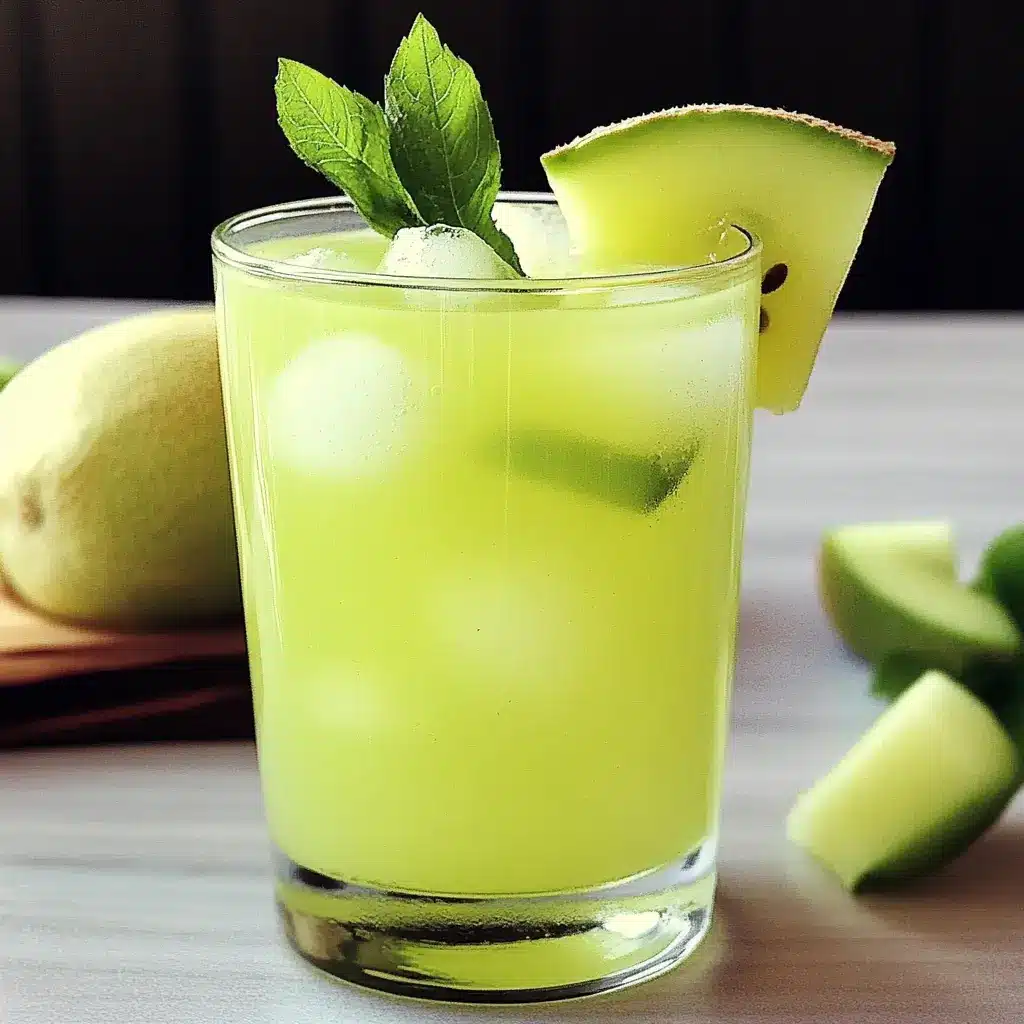

The first time I whipped up this Honeydew Lemonade, it was purely on a whim. We had half a glorious, ripe honeydew melon sitting in the fridge, leftover from a weekend fruit platter, and the summer heat was particularly relentless that afternoon. Classic lemonade sounded good, but predictable. Staring at that pale green melon orb, an idea sparked – what if I combined that sweet, subtle melon flavor with the zesty punch of lemonade? Skepticism lingered amongst the family ranks; melon in lemonade sounded… odd. But the moment the blender whirred, filling the kitchen with a fresh, almost floral-citrus aroma, intrigue replaced doubt. The resulting concoction was a revelation. It was unbelievably refreshing, the natural sweetness of the honeydew perfectly balancing the tart lemon, creating a drink that was familiar yet excitingly new. The color alone – a beautiful, soft pastel green – was captivating. My kids, usually lemonade purists, gulped it down, demanding refills. My partner, initially hesitant, declared it the “official drink of the summer.” It wasn’t just lemonade; it was an experience. It was cool, hydrating, subtly sweet, invigoratingly tart, and just plain delicious. Since that day, Honeydew Lemonade has become a staple in our house whenever good melons are in season. It’s our go-to for BBQs, lazy afternoons, and any time we need a sophisticated yet simple thirst quencher that feels a little special. It proved that sometimes, the most unexpected combinations yield the most delightful results, transforming a simple beverage into a cherished memory. This recipe captures that magic, and I’m thrilled to share it, hoping it brings as much refreshment and joy to your table as it has to ours. It’s more than just a recipe; it’s a sip of sunshine, a unique twist on a classic, and a guaranteed crowd-pleaser.
Honeydew Lemonade Recipe: Ingredients
Crafting the perfect Honeydew Lemonade hinges on quality ingredients. The star, of course, is the honeydew melon, whose ripeness will dictate the sweetness and depth of flavor. Fresh lemon juice is non-negotiable for that authentic, bright tartness that defines lemonade. Here’s what you’ll need to create approximately 6 servings of this delightful beverage:
- Ripe Honeydew Melon: 1 medium (about 3-4 lbs), yielding approximately 4 cups of cubed melon. Look for a melon that feels heavy for its size, has a slightly tacky, creamy-yellow rind (not deep green), and gives off a subtle sweet aroma at the blossom end (opposite the stem end). A slight give when pressed gently is also a good sign. The ripeness is key to minimizing the amount of added sweetener needed.
- Freshly Squeezed Lemon Juice: 1 cup (from about 5-7 large, juicy lemons). Please use fresh lemons! Bottled juice simply cannot replicate the vibrant, zesty flavor essential for great lemonade. The acidity cuts through the melon’s sweetness beautifully.
- Water: 3 cups, cold, still water. Filtered water is recommended for the purest taste, preventing any chlorine or mineral notes from interfering with the delicate flavors. You can adjust this amount slightly depending on your desired consistency.
- Sweetener: ½ to ¾ cup Granulated Sugar OR Simple Syrup (adjust to taste). See notes below for simple syrup instructions and alternative sweetener options. The amount needed will vary significantly based on the natural sweetness of your honeydew melon and your personal preference. Start with less; you can always add more.
- To make Simple Syrup: Combine equal parts granulated sugar and water (e.g., 1 cup sugar, 1 cup water) in a small saucepan. Heat gently, stirring constantly, just until the sugar has completely dissolved. Do not boil. Let it cool completely before using. Simple syrup integrates more smoothly into cold drinks than granulated sugar.
- Optional Garnish:
- Fresh Mint Sprigs: Adds a lovely aroma and a hint of cool freshness.
- Thin Lemon Slices or Twists: Classic lemonade garnish, visually appealing.
- Small Honeydew Melon Balls or Cubes: Reinforces the key ingredient visually and adds a small treat.
- Ice Cubes: Plenty for serving.
Ingredient Considerations:
- Melon Choice: While this recipe specifies honeydew, you could experiment with other melons like Cantaloupe or Galia, though the flavor profile and sweetness will change, requiring adjustments to the lemon juice and sweetener.
- Lemon Variety: Standard lemons like Eureka or Lisbon are perfect. Meyer lemons, being naturally sweeter and less acidic, might require slightly less added sweetener and potentially a touch more juice for balance.
- Sweetener Alternatives: Feel free to substitute agave nectar (use slightly less than sugar, as it’s sweeter), honey (will impart its own flavor), or a sugar substitute like stevia or erythritol according to package directions and your taste preferences. Remember that liquid sweeteners like agave and honey blend in easily, similar to simple syrup.
Step-by-Step Instructions
Making Honeydew Lemonade is surprisingly straightforward. The main steps involve preparing the melon puree and then combining it with the classic lemonade components. Follow these steps for a perfectly blended, refreshing drink:
- Prepare the Honeydew Melon:
- Wash the outside of the honeydew melon thoroughly.
- Carefully cut the melon in half lengthwise using a large, sharp knife.
- Scoop out the seeds and stringy pulp from the center of each half using a spoon. Discard the seeds and pulp.
- Cut each half into wedges.
- Carefully run your knife between the rind and the flesh to separate them, or use a spoon to scoop out the flesh if the melon is very ripe.
- Cut the melon flesh into rough cubes (about 1-inch). You should have approximately 4 cups of cubed melon.
- Blend the Melon:
- Place the honeydew melon cubes into a high-speed blender.
- Blend on high speed until the melon is completely liquefied and smooth. This might take 30 seconds to a minute, depending on your blender’s power. Scrape down the sides if necessary to ensure everything is incorporated. You’re looking for a vibrant green, smooth puree.
- Strain the Melon Puree (Highly Recommended):
- Position a fine-mesh sieve over a large bowl or pitcher.
- Pour the blended honeydew puree through the sieve.
- Use the back of a spoon or a spatula to gently press the puree against the mesh, extracting as much liquid as possible. You want to leave most of the pulp behind in the sieve for a smoother, less thick lemonade. Discard the pulp (or save it for smoothies!).
- For an extra-smooth texture, you can strain the juice a second time, perhaps lining the sieve with cheesecloth. You should have roughly 2 to 2.5 cups of strained honeydew juice.
- Prepare the Lemonade Base:
- Juice your lemons until you have 1 cup of fresh lemon juice. Strain the juice through a small sieve to remove any seeds or pulp.
- If using granulated sugar instead of simple syrup, you might want to dissolve it first. Combine the sugar with 1 cup of the cold water in a jar or bowl and stir vigorously until the sugar is mostly dissolved. This prevents grittiness. If using simple syrup, you can skip this specific step.
- Combine the Ingredients:
- In a large pitcher (at least 2-quart capacity), combine the strained honeydew juice, the fresh lemon juice, and the remaining 2 cups of cold water.
- If using simple syrup, add ½ cup to start. If using the sugar-water mixture from step 4, add it now. If you didn’t pre-dissolve granulated sugar, add ½ cup now, understanding it will take more stirring to dissolve fully in the cold liquid.
- Stir everything together very well until thoroughly combined.
- Taste and Adjust Sweetness:
- This is a crucial step! Taste the lemonade. Is it tart enough? Sweet enough? Does the honeydew flavor come through?
- If it’s too tart, add more sweetener (simple syrup, dissolved sugar, or your alternative) gradually, stirring well and tasting after each addition, until it reaches your desired sweetness level. You might need the full ¾ cup of sweetener or even slightly more, depending on your melon and lemons.
- If it’s too sweet, you can add a tiny bit more lemon juice or a splash of water, but be cautious not to dilute the honeydew flavor too much.
- If the honeydew flavor seems weak (unlikely if you used a ripe melon), there isn’t much to do at this stage, but note it for next time – choose a riper melon!
- Chill Thoroughly:
- Cover the pitcher and refrigerate the Honeydew Lemonade for at least 1 hour, or preferably 2-3 hours, before serving. Chilling allows the flavors to meld together beautifully and ensures the drink is ice-cold and maximally refreshing.
- Serve:
- Just before serving, give the lemonade a good stir, as some natural settling of the fine melon particles may occur.
- Fill glasses with plenty of ice cubes.
- Pour the chilled Honeydew Lemonade over the ice.
- Garnish as desired with fresh mint sprigs, lemon slices, or small honeydew melon balls. Serve immediately and enjoy the vibrant taste of summer!
Nutrition Facts (Approximate)
Understanding the nutritional profile can be helpful, especially when incorporating beverages into a balanced diet. Please note that these values are estimates and can vary significantly based on the actual size and ripeness (sugar content) of your honeydew melon, the size of your lemons, and especially the amount and type of sweetener used.
- Servings: This recipe makes approximately 6 servings.
- Serving Size: About 8-10 ounces per serving (excluding ice).
- Calories per Serving (Estimate): Approximately 120-180 kcal.
Breakdown Factors:
- Honeydew Melon: Relatively low in calories but provides natural sugars, vitamins (like Vitamin C and Potassium), and hydration. 4 cups of cubed honeydew contain roughly 240 calories.
- Lemon Juice: Very low in calories, primarily contributing Vitamin C and acidity. 1 cup of lemon juice has about 60 calories.
- Sweetener: This is the biggest variable.
- Using ½ cup granulated sugar adds about 385 calories total (approx. 64 kcal per serving).
- Using ¾ cup granulated sugar adds about 577 calories total (approx. 96 kcal per serving).
- Simple syrup has a similar calorie count to the sugar used to make it.
- Using alternatives like stevia or erythritol would significantly reduce the calorie count. Honey and agave nectar have slightly more calories per tablespoon than sugar but are often used in smaller quantities due to higher sweetness.
Disclaimer: This nutritional information is provided as a general guideline only. For precise nutritional data, using a specific nutritional calculator and inputting your exact ingredient measurements and brands is recommended. This Honeydew Lemonade, especially when made with less added sugar, can be a more wholesome alternative to commercially produced sodas and sugary drinks, offering hydration and some vitamins from the fresh fruit.
Preparation Time
Knowing how long a recipe takes helps plan your cooking schedule. This Honeydew Lemonade comes together relatively quickly, with most of the time dedicated to chilling.
- Active Preparation Time: 15 – 25 minutes
- Cutting and preparing melon: 5 – 10 minutes
- Blending and straining melon: 3 – 5 minutes
- Juicing lemons: 5 – 7 minutes
- Combining and mixing ingredients: 2 – 3 minutes
- Chilling Time: Minimum 1 hour, ideally 2-3 hours (or longer)
- Total Time: Approximately 1 hour 20 minutes to 3 hours 25 minutes (depending heavily on chilling duration)
Time-Saving Notes:
- You can prepare the honeydew melon cubes a day in advance and store them in an airtight container in the refrigerator.
- Fresh lemon juice can also be squeezed ahead of time and stored in the fridge for a day or two, though its flavor is brightest when freshly squeezed.
- Simple syrup can be made well in advance and kept refrigerated for several weeks.
- The active prep time is quite manageable, making this a feasible recipe even for a weeknight treat if you plan for the chilling time.
How to Serve Your Refreshing Honeydew Lemonade
Presentation and serving style can elevate your homemade Honeydew Lemonade from a simple drink to a special beverage experience. Here are some ideas:
- Glassware Choices:
- Tall Collins or Highball Glasses: Perfect for showcasing the beautiful pale green color and allowing ample room for ice and garnishes.
- Mason Jars: Offer a rustic, casual feel, great for picnics, BBQs, or relaxed gatherings. Add a colorful paper straw for fun.
- Wine Glasses (Stemless or Regular): Can lend a more elegant touch, suitable for brunches or garden parties.
- Punch Bowl: If making a large batch for a party, serve it from a clear glass punch bowl with lemon slices and melon balls floating inside. Provide a ladle and glasses nearby.
- Garnishes (Use one or a combination):
- Fresh Mint Sprig: Gently slap the mint between your palms before adding it to the glass to release its aromatic oils.
- Thin Lemon Wheel or Slice: Perched on the rim of the glass or floating within the drink. A lemon twist adds a touch of elegance.
- Honeydew Melon Ball or Small Cube: Skewer a couple onto a cocktail pick and rest it across the rim of the glass, or simply drop a few into the drink. Use a melon baller for neat spheres.
- Edible Flowers: For a very special occasion, a few pansies or violas can add stunning visual appeal (ensure they are food-grade).
- Serving Temperature:
- Always Chilled: Serve this lemonade ice-cold. Ensure it’s thoroughly chilled in the refrigerator before serving.
- Plenty of Ice: Fill glasses generously with ice cubes before pouring the lemonade. This keeps it colder for longer without diluting it too quickly. Consider using large ice cubes or spheres, which melt more slowly. You could even make ice cubes from some of the honeydew lemonade (freeze in trays) to avoid dilution altogether!
- Occasions:
- Summer BBQs and Picnics: The ultimate thirst quencher for outdoor events.
- Poolside Lounging: Hydrating and refreshing under the sun.
- Brunches and Luncheons: A sophisticated non-alcoholic option that pairs well with lighter fare.
- Baby Showers or Garden Parties: The lovely color and refreshing taste make it a perfect fit.
- Everyday Treat: A wonderful way to cool down on any warm afternoon.
- Food Pairings:
- Light Salads: Especially those with grilled chicken, shrimp, or feta cheese.
- Grilled Foods: Chicken, fish, vegetables – the lemonade cuts through richness.
- Spicy Dishes: The coolness and slight sweetness provide a pleasant contrast to heat (e.g., tacos, spicy noodles).
- Fruit Platters: Complements other fresh fruits beautifully.
- Light Appetizers: Bruschetta, caprese skewers, shrimp cocktail.
Pro Tips for the Perfect Honeydew Lemonade
Take your Honeydew Lemonade from great to absolutely phenomenal with these five expert tips:
- Master the Melon Selection: The single most crucial factor for flavor is the ripeness of your honeydew. An underripe melon will yield a bland, watery lemonade, while a perfectly ripe one provides intense sweetness and characteristic flavor. Look for these signs: a creamy yellow (not green) rind, a slightly tacky feel to the skin, a noticeable sweet, floral fragrance at the blossom end (opposite the stem scar), and a slight softness when gently pressed. It should also feel heavy for its size. Don’t hesitate to ask your grocer for help selecting a ripe one! Letting a slightly underripe melon sit on your counter for a day or two can also help.
- Taste and Adjust Sweetness Strategically: Don’t just dump in the full amount of sweetener at once. Honeydew melons vary wildly in their natural sugar content. Start by adding about half the recommended sweetener (preferably as simple syrup for easy integration). Stir well, then taste. Is it balanced? Does the honeydew flavor shine, complemented by the tart lemon? Add more sweetener gradually, tablespoon by tablespoon, tasting after each addition until you achieve the perfect balance for your palate and your specific melon. Remember, you can always add more sweetness, but it’s hard to take it away.
- Strain for Supreme Smoothness: While you can skip straining the melon puree, doing so results in a thicker, slightly pulpy lemonade. For a truly refreshing, elegant drink with a smoother mouthfeel, straining through a fine-mesh sieve is highly recommended. Gently pressing (not forcing) the pulp extracts maximum juice without cloudiness. For an ultra-refined texture, consider a second strain through cheesecloth or a nut milk bag. This step makes a noticeable difference in the final quality.
- Embrace the Fizz (Optional but Recommended!): Transform your Honeydew Lemonade into a sparkling delight! Prepare the base recipe (honeydew juice, lemon juice, sweetener) but use only about 1.5-2 cups of still water initially. Chill this concentrated base thoroughly. When ready to serve, pour the base into glasses filled with ice (filling them about halfway to two-thirds full) and top off with chilled sparkling water, club soda, or even a lemon-lime soda for extra zing. Stir gently just before serving. This adds a delightful effervescence that enhances the refreshment factor.
- Batching for a Crowd & Storage Savvy: This recipe is easily scalable for parties. Simply multiply the ingredients based on your needs. Make the lemonade base (melon juice, lemon juice, sweetener, still water) ahead of time – even the day before. Store it covered in an airtight pitcher or container in the coldest part of your refrigerator. Natural separation is normal; just give it a vigorous stir before serving. If making a sparkling version, keep the base concentrated and add the sparkling water just before serving to maintain maximum fizz. The lemonade is best enjoyed within 2-3 days for optimal flavor and freshness.
Frequently Asked Questions (FAQ)
Here are answers to some common questions about making Honeydew Lemonade:
- Q: Can I use a different type of melon instead of honeydew?
- A: Yes, you absolutely can experiment with other melons! Cantaloupe will lend a muskier, orange-hued result, potentially requiring less added sweetener. Watermelon creates a lighter, pinker lemonade, also likely needing less sugar and maybe slightly more lemon juice for balance. Galia or Canary melons could also work. Each melon brings its unique flavor profile, so be prepared to taste and adjust the lemon juice and sweetener accordingly to achieve the desired balance. The basic process remains the same.
- Q: How long does homemade Honeydew Lemonade last in the refrigerator? Can I make it ahead of time?
- A: Homemade Honeydew Lemonade is best enjoyed fresh, ideally within 2-3 days of making it. Store it in a well-sealed, airtight pitcher or container in the refrigerator. While it will remain safe to drink for a bit longer (perhaps up to 4-5 days), the fresh flavors, particularly the vibrant notes from the lemon and honeydew, will start to diminish over time. Natural separation of the fine melon particles is normal; simply stir well before each serving. It’s perfect for making a day ahead for a party or event!
- Q: How can I make this Honeydew Lemonade sugar-free or lower in sugar?
- A: Easily! The best way is to leverage the natural sweetness of a very ripe honeydew melon, which might significantly reduce the need for added sweeteners. For a completely sugar-free version, replace the granulated sugar or simple syrup with your preferred sugar substitute. Options include:
- Stevia: A natural, zero-calorie sweetener. Add liquid or powdered stevia gradually, as it’s very potent.
- Erythritol: A sugar alcohol that measures similarly to sugar but has almost zero calories. It dissolves well.
- Monk Fruit Sweetener: Another natural, zero-calorie option.
- Follow the package instructions for substitution ratios, and always taste and adjust, as alternative sweeteners can have different sweetness levels and occasional aftertastes. You can also simply reduce the amount of regular sugar used for a lower-sugar version.
- A: Easily! The best way is to leverage the natural sweetness of a very ripe honeydew melon, which might significantly reduce the need for added sweeteners. For a completely sugar-free version, replace the granulated sugar or simple syrup with your preferred sugar substitute. Options include:
- Q: My Honeydew Lemonade separated in the pitcher. Is it still okay? What should I do?
- A: Yes, it is perfectly normal and absolutely okay! The separation you see is usually the fine, natural solids and pulp from the honeydew melon settling at the bottom over time, even after straining. It doesn’t mean the lemonade has gone bad. Simply give the lemonade a vigorous stir with a long spoon or whisk right before pouring and serving. This will redistribute the particles evenly and restore the lemonade’s consistent appearance and taste.
- Q: Can I add alcohol to make an adult version of this Honeydew Lemonade?
- A: Definitely! Honeydew Lemonade makes a fantastic base for cocktails. Its refreshing profile pairs well with clear spirits. Consider adding:
- Vodka: For a clean spike that lets the fruit flavors shine (Honeydew Lemonade Vodka Cooler).
- Gin: Adds botanical notes that can complement the melon and lemon beautifully (Honeydew Gin Fizz – especially if made sparkling).
- White Rum: Lends a touch of tropical sweetness (Honeydew Mojito Twist, if you muddle mint in the glass too).
- Tequila Blanco: Creates a unique, agave-kissed variation (Honeydew Margarita riff).
- A good starting point is to add 1.5 to 2 ounces of your chosen spirit per serving (per glass) just before serving. You can also add a proportional amount to the entire pitcher if serving a crowd, stirring well. Taste and adjust the spirit level as needed. Remember to enjoy responsibly!
- A: Definitely! Honeydew Lemonade makes a fantastic base for cocktails. Its refreshing profile pairs well with clear spirits. Consider adding:

Honeydew Lemonade Recipe
Ingredients
- Ripe Honeydew Melon: 1 medium (about 3-4 lbs), yielding approximately 4 cups of cubed melon. Look for a melon that feels heavy for its size, has a slightly tacky, creamy-yellow rind (not deep green), and gives off a subtle sweet aroma at the blossom end (opposite the stem end). A slight give when pressed gently is also a good sign. The ripeness is key to minimizing the amount of added sweetener needed.
- Freshly Squeezed Lemon Juice: 1 cup (from about 5-7 large, juicy lemons). Please use fresh lemons! Bottled juice simply cannot replicate the vibrant, zesty flavor essential for great lemonade. The acidity cuts through the melon’s sweetness beautifully.
- Water: 3 cups, cold, still water. Filtered water is recommended for the purest taste, preventing any chlorine or mineral notes from interfering with the delicate flavors. You can adjust this amount slightly depending on your desired consistency.
- Sweetener: ½ to ¾ cup Granulated Sugar OR Simple Syrup (adjust to taste). See notes below for simple syrup instructions and alternative sweetener options. The amount needed will vary significantly based on the natural sweetness of your honeydew melon and your personal preference. Start with less; you can always add more.
- To make Simple Syrup: Combine equal parts granulated sugar and water (e.g., 1 cup sugar, 1 cup water) in a small saucepan. Heat gently, stirring constantly, just until the sugar has completely dissolved. Do not boil. Let it cool completely before using. Simple syrup integrates more smoothly into cold drinks than granulated sugar.
- Optional Garnish:
- Fresh Mint Sprigs: Adds a lovely aroma and a hint of cool freshness.
- Thin Lemon Slices or Twists: Classic lemonade garnish, visually appealing.
- Small Honeydew Melon Balls or Cubes: Reinforces the key ingredient visually and adds a small treat.
- Ice Cubes: Plenty for serving.
Instructions
- Prepare the Honeydew Melon:
- Wash the outside of the honeydew melon thoroughly.
- Carefully cut the melon in half lengthwise using a large, sharp knife.
- Scoop out the seeds and stringy pulp from the center of each half using a spoon. Discard the seeds and pulp.
- Cut each half into wedges.
- Carefully run your knife between the rind and the flesh to separate them, or use a spoon to scoop out the flesh if the melon is very ripe.
- Cut the melon flesh into rough cubes (about 1-inch). You should have approximately 4 cups of cubed melon.
- Blend the Melon:
- Place the honeydew melon cubes into a high-speed blender.
- Blend on high speed until the melon is completely liquefied and smooth. This might take 30 seconds to a minute, depending on your blender’s power. Scrape down the sides if necessary to ensure everything is incorporated. You’re looking for a vibrant green, smooth puree.
- Strain the Melon Puree (Highly Recommended):
- Position a fine-mesh sieve over a large bowl or pitcher.
- Pour the blended honeydew puree through the sieve.
- Use the back of a spoon or a spatula to gently press the puree against the mesh, extracting as much liquid as possible. You want to leave most of the pulp behind in the sieve for a smoother, less thick lemonade. Discard the pulp (or save it for smoothies!).
- For an extra-smooth texture, you can strain the juice a second time, perhaps lining the sieve with cheesecloth. You should have roughly 2 to 2.5 cups of strained honeydew juice.
- Prepare the Lemonade Base:
- Juice your lemons until you have 1 cup of fresh lemon juice. Strain the juice through a small sieve to remove any seeds or pulp.
- If using granulated sugar instead of simple syrup, you might want to dissolve it first. Combine the sugar with 1 cup of the cold water in a jar or bowl and stir vigorously until the sugar is mostly dissolved. This prevents grittiness. If using simple syrup, you can skip this specific step.
- Combine the Ingredients:
- In a large pitcher (at least 2-quart capacity), combine the strained honeydew juice, the fresh lemon juice, and the remaining 2 cups of cold water.
- If using simple syrup, add ½ cup to start. If using the sugar-water mixture from step 4, add it now. If you didn’t pre-dissolve granulated sugar, add ½ cup now, understanding it will take more stirring to dissolve fully in the cold liquid.
- Stir everything together very well until thoroughly combined.
- Taste and Adjust Sweetness:
- This is a crucial step! Taste the lemonade. Is it tart enough? Sweet enough? Does the honeydew flavor come through?
- If it’s too tart, add more sweetener (simple syrup, dissolved sugar, or your alternative) gradually, stirring well and tasting after each addition, until it reaches your desired sweetness level. You might need the full ¾ cup of sweetener or even slightly more, depending on your melon and lemons.
- If it’s too sweet, you can add a tiny bit more lemon juice or a splash of water, but be cautious not to dilute the honeydew flavor too much.
- If the honeydew flavor seems weak (unlikely if you used a ripe melon), there isn’t much to do at this stage, but note it for next time – choose a riper melon!
- Chill Thoroughly:
- Cover the pitcher and refrigerate the Honeydew Lemonade for at least 1 hour, or preferably 2-3 hours, before serving. Chilling allows the flavors to meld together beautifully and ensures the drink is ice-cold and maximally refreshing.
- Serve:
- Just before serving, give the lemonade a good stir, as some natural settling of the fine melon particles may occur.
- Fill glasses with plenty of ice cubes.
- Pour the chilled Honeydew Lemonade over the ice.
- Garnish as desired with fresh mint sprigs, lemon slices, or small honeydew melon balls. Serve immediately and enjoy the vibrant taste of summer!
Nutrition
- Serving Size: One Normal Portion
- Calories: 120-180 kcal