
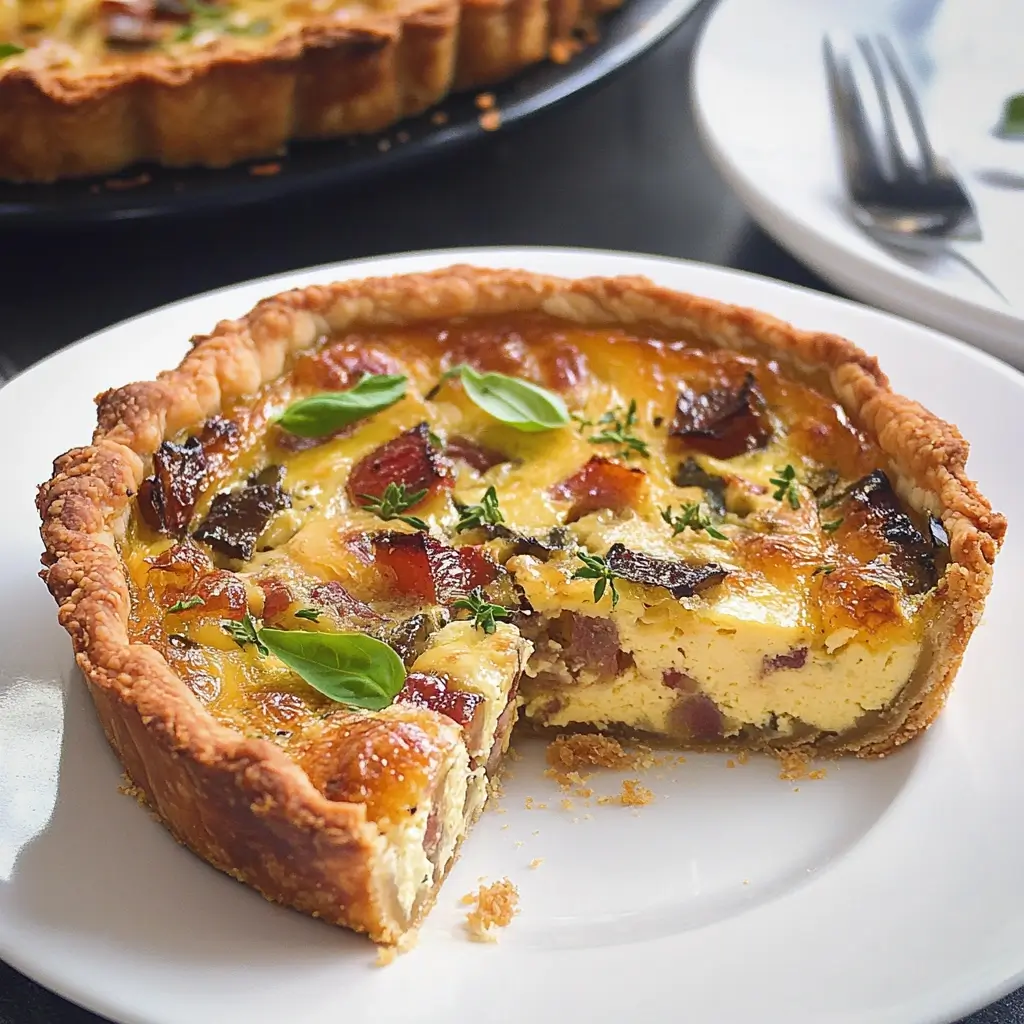

As a food enthusiast and a home cook always on the lookout for recipes that promise both deliciousness and a touch of elegance, Ina Garten’s Quiche has been a delightful discovery. From the moment the aroma of buttery crust and savory fillings wafted through my kitchen, I knew this recipe was a keeper. My family, often my toughest critics, devoured it with gusto, praising the perfectly flaky crust and the rich, flavorful filling. It’s become a weekend staple, a dish that effortlessly elevates brunch or makes for a sophisticated light dinner. What’s truly wonderful about this quiche is its versatility. While the classic bacon and Gruyere combination is divine, it’s also a fantastic base for experimentation, allowing for endless variations to suit your taste and what you have on hand. This isn’t just a recipe; it’s an invitation to create a culinary masterpiece, and trust me, the effort is absolutely worth the reward.
Ingredients
Before you embark on this culinary adventure, gather your ingredients. Having everything prepped and ready will make the process smoother and more enjoyable. This recipe is divided into two main components: the crust and the filling. Let’s break down what you’ll need for each.
For the Crust:
- 1 cup all-purpose flour, plus more for dusting: All-purpose flour is the workhorse of baking, providing the structure for a tender yet crisp crust. Keep extra flour handy for dusting your work surface and rolling pin to prevent sticking.
- Kosher salt, to taste: Salt is crucial for flavor development, both in the crust and the filling. Kosher salt is preferred by many bakers for its clean taste and ease of use.
- 1 stick (8 tablespoons) cold unsalted butter, cut in small pieces: Cold butter is the key to a flaky pie crust. Unsalted butter allows you to control the overall saltiness of the recipe. Cutting it into small pieces ensures it incorporates evenly into the flour. Make sure it’s fridge-cold right up until you use it!
- 3 to 5 tablespoons ice water: Ice water keeps the butter cold and helps bind the dough without overworking it. Adding it gradually ensures you achieve the perfect dough consistency.
For the Filling:
- 1 tablespoon unsalted butter: This is for sautéing the onions and adds richness to the filling base.
- 1 small yellow onion, very thinly sliced: Yellow onions provide a sweet and savory base flavor. Thinly slicing them ensures they cook down completely and become tender.
- Kosher salt and freshly ground black pepper, to taste: Seasoning is essential for bringing out the flavors of all the ingredients in the filling. Freshly ground black pepper offers a more vibrant flavor than pre-ground.
- 4 ounces bacon, cut into ½-inch pieces: Bacon adds a smoky, salty depth of flavor that is quintessential to a classic quiche. Cutting it into ½-inch pieces ensures it cooks evenly and is nicely distributed throughout the filling.
- 2 teaspoons fresh thyme leaves, divided: Fresh thyme imparts a delicate, earthy, and slightly lemony flavor that complements the bacon, Gruyere, and eggs beautifully. Dividing it ensures it’s used both in the filling mixture and as a final garnish.
- ½ cup shredded Gruyere (about 2 ounces): Gruyere cheese is a star in quiche. It’s a nutty, slightly salty, and complex cheese that melts beautifully and provides a wonderful depth of flavor. Shredding it makes it easy to distribute evenly.
- 1 cup heavy cream: Heavy cream is what gives the quiche its richness and luxurious texture. It creates a custard-like filling that is both decadent and satisfying.
- 2 large eggs: Eggs are the binding agent for the quiche filling, providing structure and richness. Large eggs are standard in most recipes, ensuring the right ratio of egg to cream.
Instructions
Now, let’s move on to the step-by-step instructions for creating this incredible Ina Garten Quiche. Don’t be intimidated by the multiple steps; each one is relatively straightforward and contributes to the overall success of the dish. We’ll break it down into two sections: making the crust and preparing the filling.
Making the Crust:
- Pulse Dry Ingredients: Begin by combining the dry ingredients in your food processor. Place 1 cup of all-purpose flour and ½ teaspoon of kosher salt into the bowl of a food processor. Pulse a few times until these ingredients are just combined. This ensures the salt is evenly distributed throughout the flour.
- Incorporate Cold Butter: Now, add the star ingredient for a flaky crust: cold butter. Scatter the 1 stick (8 tablespoons) of cold unsalted butter, cut into small pieces, over the flour mixture in the food processor. Pulse in short bursts, about 8-10 times, until the mixture resembles coarse cornmeal. You should still see small pieces of butter, which is exactly what you want for flakiness. Avoid over-processing at this stage, as it can lead to a tough crust.
- Add Ice Water Gradually: This is where the magic happens. Sprinkle 3 tablespoons of ice water over the flour-butter mixture. Pulse again, a few seconds at a time, until the dough just starts to come together. It should look slightly crumbly but begin to clump.
- Test Dough Consistency: To ensure the dough is ready, pinch a small amount between your fingers. If it holds together, it’s perfect. If it’s still too dry and crumbly, add more ice water, 1 tablespoon at a time, and pulse a couple more times after each addition. Be careful not to add too much water, as this can make the dough sticky. Aim for a dough that is just moist enough to hold together.
- Form Dough Disc and Chill: Once the dough has come together, transfer it to a sheet of plastic wrap. Gently pat it into a disc about 1 inch thick. Wrap it tightly in the plastic wrap. Now, the crucial step: refrigerate the dough for at least 1 hour, or preferably overnight. This chilling time allows the gluten in the flour to relax, making the dough easier to roll out and preventing shrinkage during baking. Cold butter also helps maintain flakiness.
- Roll Out Dough: When you’re ready to bake, remove the dough from the refrigerator. Lightly flour a clean work surface and your rolling pin. Place the chilled dough disc on the floured surface and roll it out into an 11-inch round that’s about ⅛-inch thick. Work from the center outwards, rotating the dough occasionally to ensure an even circle. If the dough starts to stick, add a little more flour to your work surface and rolling pin.
- Line Tart Pan: Carefully transfer the rolled-out dough to a 9-inch fluted tart pan with a removable bottom. Gently press the dough into the bottom and up the sides of the pan, ensuring it fits snugly into the flutes. Leave an even overhang of dough all around the rim.
- Trim Excess Dough: To create a neat and professional edge, roll a rolling pin firmly over the top of the tart pan. This will cut off the excess dough, leaving a clean edge. Discard the excess dough (or save it to make small cookies if you’re feeling creative!).
- Prick Crust and Chill Again: Use a fork to prick the bottom of the crust all over. This prevents the crust from puffing up during baking. Return the lined tart pan to the refrigerator to chill for another 30 minutes. This second chilling step helps prevent shrinkage even further.
- Preheat Oven and Prepare for Blind Baking: Position an oven rack in the lower third of your oven and preheat the oven to 375°F (190°C). This lower rack position will ensure the crust bakes evenly from the bottom up.
- Blind Bake with Weights: To prevent the crust from slumping and to ensure it cooks evenly, we need to blind bake it. Press a piece of parchment paper or aluminum foil over the chilled crust, making sure it covers the entire surface. Fill the parchment or foil with pie weights, dried beans, or rice. These weights will prevent the crust from puffing up during baking. Place the tart pan on a baking sheet for easier handling and to ensure even heat distribution.
- First Bake: Bake the crust in the preheated oven for about 40 minutes, or until the edges are golden brown. The center may still look slightly pale at this point.
- Remove Weights and Second Bake: Carefully remove the baking sheet from the oven. Gently lift out the parchment paper and pie weights (or beans/rice). Return the crust to the oven for another 15 minutes, or until the bottom of the crust is dry and slightly golden. This second bake without weights ensures the crust is fully cooked and crisp.
- Cool Crust: Once baked, remove the crust from the oven and let it cool completely in the tart pan for about 30 minutes. This allows the crust to firm up and makes it easier to handle when adding the filling.
Making the Filling:
- Sauté Onions: While the crust is cooling, prepare the filling. In a medium skillet, melt 1 tablespoon of unsalted butter over medium-low heat. Add the thinly sliced yellow onion, ½ teaspoon of kosher salt, and ½ cup of water to the skillet.
- Cook Onions Slowly: Cook the onions over medium-low heat for about 30 minutes, stirring occasionally. The water will help steam the onions initially, then evaporate as they soften and caramelize. Continue cooking until the onions are completely softened, translucent, and slightly golden. Slow cooking brings out their natural sweetness.
- Cook Bacon: While the onions are cooking, prepare the bacon. In a separate medium skillet set over medium-low heat, cook the 4 ounces of bacon, cut into ½-inch pieces. Cook for about 10-15 minutes, stirring occasionally, until the bacon is crisp and the fat has rendered. Cooking over medium-low heat prevents the bacon from burning and allows it to crisp up nicely.
- Combine Onions and Bacon: Once the onions are cooked and the bacon is crisp, use a slotted spoon to transfer the bacon to the skillet with the onions. This leaves behind most of the bacon fat in the bacon skillet.
- Add Thyme and Pepper: Stir in 1 teaspoon of fresh thyme leaves and ½ teaspoon of freshly ground black pepper to the onion and bacon mixture. These aromatics enhance the flavor profile of the filling.
- Assemble Quiche: Spread the onion and bacon mixture evenly over the bottom of the cooled pre-baked crust. Sprinkle the ½ cup of shredded Gruyere cheese evenly over the onion mixture.
- Prepare Egg Mixture: In a medium bowl, whisk together 1 cup of heavy cream, 2 large eggs, and ½ teaspoon of kosher salt until well combined and slightly frothy. Whisking ensures the eggs and cream are fully incorporated and creates a smooth custard base.
- Pour Filling and Garnish: Carefully pour the egg mixture evenly over the filling in the crust, ensuring it reaches all corners. Sprinkle the remaining 1 teaspoon of fresh thyme leaves over the top of the quiche for a final touch of flavor and visual appeal.
- Bake Quiche: Place the baking sheet with the quiche in the oven. Bake in the preheated oven at 375°F (190°C) for about 30 minutes, or until the quiche is set and golden brown on top. The center should be just set and not jiggly.
- Cool Before Serving: Once baked, remove the quiche from the oven and let it cool for at least 30 minutes before slicing and serving. This cooling time allows the quiche to set completely and makes it easier to cut into clean slices. It also allows the flavors to meld together beautifully.
Nutrition Facts
While Ina Garten’s Quiche is undeniably delicious, it’s helpful to be mindful of its nutritional content, especially if you are tracking calories or macronutrients. Please note that these are estimations and can vary based on ingredient variations and serving sizes.
- Servings: Approximately 6-8 servings per 9-inch quiche.
- Calories per Serving (Estimated): 450-600 calories (This is a rough estimate. Actual calorie count can vary significantly based on specific ingredients and portion sizes.)
It’s important to remember that this quiche is rich in flavor and ingredients like heavy cream, cheese, and bacon contribute to its higher calorie and fat content. Enjoy it in moderation as part of a balanced diet.
Preparation Time
Understanding the timeline for making this quiche is crucial for planning your cooking schedule. Here’s a breakdown of the preparation, cooking, and total time:
- Prep Time: 30 minutes (This includes preparing the crust dough, slicing onions, and chopping bacon.)
- Cook Time: 1 hour 25 minutes (This includes blind baking the crust and baking the filled quiche.)
- Additional Time: 1 hour 30 minutes (This is primarily for chilling the crust dough – 1 hour minimum, ideally overnight – and cooling the baked quiche.)
- Total Time: 3 hours 25 minutes (This is the sum of all the above times.)
While the total time might seem lengthy, much of it is hands-off chilling and baking time. You can break up the process by making the crust dough the day before.
How to Serve
Ina Garten’s Quiche is incredibly versatile and can be served for various meals and occasions. Here are some delightful ways to serve it:
- Brunch Star: Quiche is a quintessential brunch dish. Serve it warm or at room temperature alongside a fresh fruit salad, mimosas, and coffee for a perfect weekend brunch spread.
- Lunch Delight: A slice of quiche makes a satisfying and elegant lunch. Pair it with a light green salad dressed with a simple vinaigrette for a balanced and flavorful midday meal.
- Light Dinner Option: For a sophisticated yet easy dinner, serve quiche with a side of roasted asparagus or a mixed green salad. It’s a wonderful option when you want something flavorful but not too heavy.
- Appetizer Portions: Cut the quiche into smaller squares or triangles and serve it as a delightful appetizer at a party or gathering. It’s a crowd-pleasing option that can be made ahead of time.
- Picnic Perfect: Quiche travels well and is delicious served cold or at room temperature, making it ideal for picnics. Pack it in a container along with other picnic favorites like sandwiches, fruit, and cheese.
- Holiday Feast: Quiche is an excellent addition to holiday buffets, especially for Easter brunch or Christmas morning. It’s a visually appealing and crowd-pleasing dish that caters to various tastes.
- Accompaniments: Consider serving quiche with:
- Fresh Fruit Salad: Berries, melon, and grapes complement the richness of the quiche.
- Green Salad: A simple salad with mixed greens, vinaigrette, and perhaps some toasted nuts.
- Roasted Vegetables: Asparagus, broccoli, or bell peppers roasted with olive oil and herbs.
- Soup: A light soup like tomato soup or a creamy vegetable soup can pair nicely with quiche.
Additional Tips
To ensure your Ina Garten Quiche is a resounding success, here are five additional tips to keep in mind:
- Keep Butter Cold: The secret to a flaky pie crust is cold butter. Make sure your butter is fridge-cold right up until you use it. If your kitchen is warm, you can even chill the flour and food processor bowl before starting. Cold butter prevents gluten development and creates steam during baking, resulting in flaky layers.
- Don’t Overwork the Dough: Overworking the dough develops gluten, which can lead to a tough crust. Pulse the dough in the food processor just until it comes together. Handle it gently when forming the disc and rolling it out.
- Blind Bake Properly: Blind baking the crust is crucial for preventing a soggy bottom. Make sure to use pie weights or beans to weigh down the parchment paper and bake it until the edges are golden and the bottom is dry. The second bake without weights is also important to fully cook the crust.
- Customize Your Fillings: While bacon and Gruyere are classic, feel free to experiment with other fillings. Consider adding:
- Vegetables: Sautéed spinach, mushrooms, roasted red peppers, or asparagus.
- Cheeses: Cheddar, Swiss, Feta, goat cheese, or Monterey Jack.
- Proteins: Ham, sausage, crab meat, or smoked salmon.
- Herbs: Chives, parsley, tarragon, or rosemary.
Adjust seasoning accordingly based on your chosen fillings.
- Make Ahead and Freeze: Quiche is a great make-ahead dish. You can assemble the unbaked quiche and freeze it for up to 2 months. To bake from frozen, bake at 325°F (160°C) for about 1 hour 15 minutes to 1 hour 30 minutes, or until set and golden. You can also bake the quiche completely, let it cool, and then freeze slices individually for easy reheating.
FAQ Section
Here are some frequently asked questions about making quiche, specifically related to Ina Garten’s recipe and quiche-making in general:
Q1: Can I make the crust dough ahead of time?
A: Absolutely! In fact, it’s highly recommended. You can make the crust dough up to 2 days ahead of time and store it tightly wrapped in plastic wrap in the refrigerator. You can also freeze the dough disc for up to a month. Just thaw it in the refrigerator overnight before rolling it out.
Q2: Can I use a store-bought pie crust to save time?
A: Yes, you can use a store-bought pie crust if you’re short on time. However, homemade crust truly elevates the quiche. If you opt for store-bought, choose a good quality all-butter crust and blind bake it according to package instructions before adding the filling.
Q3: My quiche filling is watery. What did I do wrong?
A: A watery filling can be due to a few reasons. Ensure you cook the onions thoroughly to evaporate excess moisture. Also, make sure you don’t add too much liquid to the egg mixture. Using the correct ratio of cream to eggs is crucial. Overfilling the crust can also lead to a watery center.
Q4: How do I know when the quiche is done?
A: The quiche is done when the filling is set and no longer jiggly in the center. The top should be golden brown. You can gently shake the baking sheet; the center should have a slight wobble but not be liquid. An instant-read thermometer inserted into the center should read around 175-180°F (80-82°C).
Q5: Can I reheat leftover quiche?
A: Yes, leftover quiche reheats beautifully. You can reheat it in the oven at 350°F (175°C) for about 15-20 minutes, or until heated through. You can also microwave individual slices for a quicker reheat, but the crust may not be as crisp. Reheating in the oven is recommended for best results.

Ina Garten’s Quiche Recipe
Ingredients
For the Crust:
- 1 cup all-purpose flour, plus more for dusting: All-purpose flour is the workhorse of baking, providing the structure for a tender yet crisp crust. Keep extra flour handy for dusting your work surface and rolling pin to prevent sticking.
- Kosher salt, to taste: Salt is crucial for flavor development, both in the crust and the filling. Kosher salt is preferred by many bakers for its clean taste and ease of use.
- 1 stick (8 tablespoons) cold unsalted butter, cut in small pieces: Cold butter is the key to a flaky pie crust. Unsalted butter allows you to control the overall saltiness of the recipe. Cutting it into small pieces ensures it incorporates evenly into the flour. Make sure it’s fridge-cold right up until you use it!
- 3 to 5 tablespoons ice water: Ice water keeps the butter cold and helps bind the dough without overworking it. Adding it gradually ensures you achieve the perfect dough consistency.
For the Filling:
- 1 tablespoon unsalted butter: This is for sautéing the onions and adds richness to the filling base.
- 1 small yellow onion, very thinly sliced: Yellow onions provide a sweet and savory base flavor. Thinly slicing them ensures they cook down completely and become tender.
- Kosher salt and freshly ground black pepper, to taste: Seasoning is essential for bringing out the flavors of all the ingredients in the filling. Freshly ground black pepper offers a more vibrant flavor than pre-ground.
- 4 ounces bacon, cut into ½-inch pieces: Bacon adds a smoky, salty depth of flavor that is quintessential to a classic quiche. Cutting it into ½-inch pieces ensures it cooks evenly and is nicely distributed throughout the filling.
- 2 teaspoons fresh thyme leaves, divided: Fresh thyme imparts a delicate, earthy, and slightly lemony flavor that complements the bacon, Gruyere, and eggs beautifully. Dividing it ensures it’s used both in the filling mixture and as a final garnish.
- ½ cup shredded Gruyere (about 2 ounces): Gruyere cheese is a star in quiche. It’s a nutty, slightly salty, and complex cheese that melts beautifully and provides a wonderful depth of flavor. Shredding it makes it easy to distribute evenly.
- 1 cup heavy cream: Heavy cream is what gives the quiche its richness and luxurious texture. It creates a custard-like filling that is both decadent and satisfying.
- 2 large eggs: Eggs are the binding agent for the quiche filling, providing structure and richness. Large eggs are standard in most recipes, ensuring the right ratio of egg to cream.
Instructions
Making the Crust:
- Pulse Dry Ingredients: Begin by combining the dry ingredients in your food processor. Place 1 cup of all-purpose flour and ½ teaspoon of kosher salt into the bowl of a food processor. Pulse a few times until these ingredients are just combined. This ensures the salt is evenly distributed throughout the flour.
- Incorporate Cold Butter: Now, add the star ingredient for a flaky crust: cold butter. Scatter the 1 stick (8 tablespoons) of cold unsalted butter, cut into small pieces, over the flour mixture in the food processor. Pulse in short bursts, about 8-10 times, until the mixture resembles coarse cornmeal. You should still see small pieces of butter, which is exactly what you want for flakiness. Avoid over-processing at this stage, as it can lead to a tough crust.
- Add Ice Water Gradually: This is where the magic happens. Sprinkle 3 tablespoons of ice water over the flour-butter mixture. Pulse again, a few seconds at a time, until the dough just starts to come together. It should look slightly crumbly but begin to clump.
- Test Dough Consistency: To ensure the dough is ready, pinch a small amount between your fingers. If it holds together, it’s perfect. If it’s still too dry and crumbly, add more ice water, 1 tablespoon at a time, and pulse a couple more times after each addition. Be careful not to add too much water, as this can make the dough sticky. Aim for a dough that is just moist enough to hold together.
- Form Dough Disc and Chill: Once the dough has come together, transfer it to a sheet of plastic wrap. Gently pat it into a disc about 1 inch thick. Wrap it tightly in the plastic wrap. Now, the crucial step: refrigerate the dough for at least 1 hour, or preferably overnight. This chilling time allows the gluten in the flour to relax, making the dough easier to roll out and preventing shrinkage during baking. Cold butter also helps maintain flakiness.
- Roll Out Dough: When you’re ready to bake, remove the dough from the refrigerator. Lightly flour a clean work surface and your rolling pin. Place the chilled dough disc on the floured surface and roll it out into an 11-inch round that’s about ⅛-inch thick. Work from the center outwards, rotating the dough occasionally to ensure an even circle. If the dough starts to stick, add a little more flour to your work surface and rolling pin.
- Line Tart Pan: Carefully transfer the rolled-out dough to a 9-inch fluted tart pan with a removable bottom. Gently press the dough into the bottom and up the sides of the pan, ensuring it fits snugly into the flutes. Leave an even overhang of dough all around the rim.
- Trim Excess Dough: To create a neat and professional edge, roll a rolling pin firmly over the top of the tart pan. This will cut off the excess dough, leaving a clean edge. Discard the excess dough (or save it to make small cookies if you’re feeling creative!).
- Prick Crust and Chill Again: Use a fork to prick the bottom of the crust all over. This prevents the crust from puffing up during baking. Return the lined tart pan to the refrigerator to chill for another 30 minutes. This second chilling step helps prevent shrinkage even further.
- Preheat Oven and Prepare for Blind Baking: Position an oven rack in the lower third of your oven and preheat the oven to 375°F (190°C). This lower rack position will ensure the crust bakes evenly from the bottom up.
- Blind Bake with Weights: To prevent the crust from slumping and to ensure it cooks evenly, we need to blind bake it. Press a piece of parchment paper or aluminum foil over the chilled crust, making sure it covers the entire surface. Fill the parchment or foil with pie weights, dried beans, or rice. These weights will prevent the crust from puffing up during baking. Place the tart pan on a baking sheet for easier handling and to ensure even heat distribution.
- First Bake: Bake the crust in the preheated oven for about 40 minutes, or until the edges are golden brown. The center may still look slightly pale at this point.
- Remove Weights and Second Bake: Carefully remove the baking sheet from the oven. Gently lift out the parchment paper and pie weights (or beans/rice). Return the crust to the oven for another 15 minutes, or until the bottom of the crust is dry and slightly golden. This second bake without weights ensures the crust is fully cooked and crisp.
- Cool Crust: Once baked, remove the crust from the oven and let it cool completely in the tart pan for about 30 minutes. This allows the crust to firm up and makes it easier to handle when adding the filling.
Making the Filling:
- Sauté Onions: While the crust is cooling, prepare the filling. In a medium skillet, melt 1 tablespoon of unsalted butter over medium-low heat. Add the thinly sliced yellow onion, ½ teaspoon of kosher salt, and ½ cup of water to the skillet.
- Cook Onions Slowly: Cook the onions over medium-low heat for about 30 minutes, stirring occasionally. The water will help steam the onions initially, then evaporate as they soften and caramelize. Continue cooking until the onions are completely softened, translucent, and slightly golden. Slow cooking brings out their natural sweetness.
- Cook Bacon: While the onions are cooking, prepare the bacon. In a separate medium skillet set over medium-low heat, cook the 4 ounces of bacon, cut into ½-inch pieces. Cook for about 10-15 minutes, stirring occasionally, until the bacon is crisp and the fat has rendered. Cooking over medium-low heat prevents the bacon from burning and allows it to crisp up nicely.
- Combine Onions and Bacon: Once the onions are cooked and the bacon is crisp, use a slotted spoon to transfer the bacon to the skillet with the onions. This leaves behind most of the bacon fat in the bacon skillet.
- Add Thyme and Pepper: Stir in 1 teaspoon of fresh thyme leaves and ½ teaspoon of freshly ground black pepper to the onion and bacon mixture. These aromatics enhance the flavor profile of the filling.
- Assemble Quiche: Spread the onion and bacon mixture evenly over the bottom of the cooled pre-baked crust. Sprinkle the ½ cup of shredded Gruyere cheese evenly over the onion mixture.
- Prepare Egg Mixture: In a medium bowl, whisk together 1 cup of heavy cream, 2 large eggs, and ½ teaspoon of kosher salt until well combined and slightly frothy. Whisking ensures the eggs and cream are fully incorporated and creates a smooth custard base.
- Pour Filling and Garnish: Carefully pour the egg mixture evenly over the filling in the crust, ensuring it reaches all corners. Sprinkle the remaining 1 teaspoon of fresh thyme leaves over the top of the quiche for a final touch of flavor and visual appeal.
- Bake Quiche: Place the baking sheet with the quiche in the oven. Bake in the preheated oven at 375°F (190°C) for about 30 minutes, or until the quiche is set and golden brown on top. The center should be just set and not jiggly.
- Cool Before Serving: Once baked, remove the quiche from the oven and let it cool for at least 30 minutes before slicing and serving. This cooling time allows the quiche to set completely and makes it easier to cut into clean slices. It also allows the flavors to meld together beautifully.
Nutrition
- Serving Size: one normal portion
- Calories: 450-600