
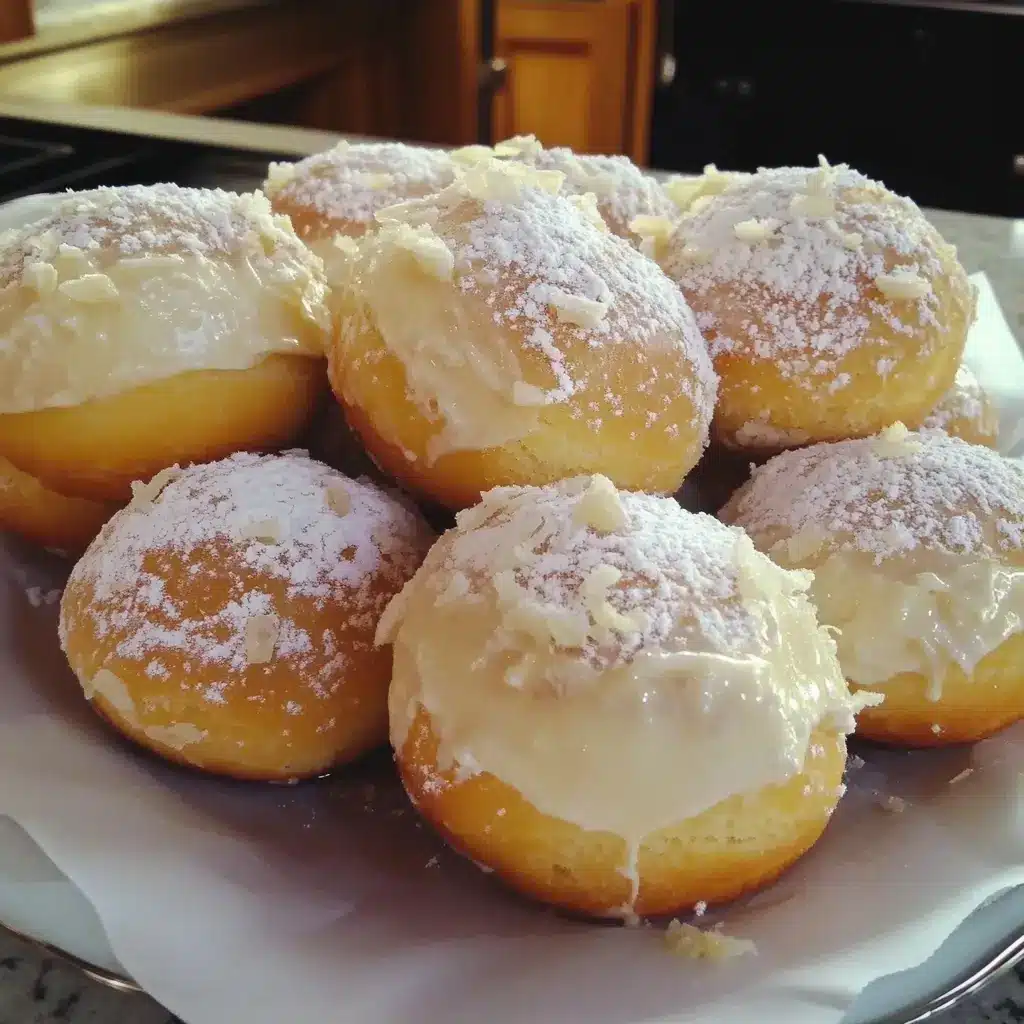
Imagine biting into a cloud of golden, fried dough, so light and airy it practically melts in your mouth. Then, a rush of rich, creamy custard explodes onto your palate, a sweet symphony of textures and flavors that transports you straight to a sun-drenched Italian pasticceria. That’s the magic of Italian Cream Bombs, or Bomboloni as they’re affectionately known. My family absolutely devours these – weekend mornings have become synonymous with the aroma of gently frying dough and the eager faces waiting for the first batch to be dusted with powdered sugar. They’re surprisingly simple to make at home, and trust me, once you’ve tasted a freshly made bombolone, store-bought doughnuts will never quite measure up. This recipe is a guaranteed crowd-pleaser, perfect for a special brunch, a delightful dessert, or simply a sweet treat to brighten any day. Get ready to embark on a culinary adventure that will fill your kitchen with warmth and your heart with joy!
Ingredients
Creating exceptional Italian Cream Bombs starts with selecting high-quality ingredients. Each component plays a vital role in the final texture and taste of these delectable pastries. Let’s delve into each ingredient for both the dough, filling, and topping to ensure your bomboloni are truly unforgettable.
For the Dough:
- 4 cups All-Purpose Flour: The foundation of our bomboloni, all-purpose flour provides the necessary structure. It’s crucial to use good quality all-purpose flour for the best results. If you want a slightly richer flavor and texture, you can substitute up to 1 cup of all-purpose flour with bread flour. Bread flour has a higher protein content, which can lead to a slightly chewier, more robust dough. However, for the classic light and airy bomboloni, all-purpose flour is perfect. Make sure to measure your flour correctly – spoon it into your measuring cup and level off the top, rather than scooping directly from the bag, which can lead to using too much flour and a denser dough.
- Pinch of Salt: Don’t underestimate the power of a pinch of salt! Salt enhances the flavors of all the other ingredients, balancing the sweetness and adding depth to the dough. It also plays a role in gluten development, contributing to the dough’s elasticity and structure. A fine sea salt or kosher salt is ideal.
- 1/3 cup Granulated Sugar: Sugar not only adds sweetness but also feeds the yeast, aiding in the rising process and contributing to the golden-brown color of the fried bomboloni. Use regular granulated sugar for this recipe. You can slightly adjust the sugar level based on your preference, but this amount provides a perfect balance without being overly sweet.
- 1 cup Whole Milk, Warmed: Warmed milk is essential for activating the yeast. The ideal temperature is lukewarm, around 100-110°F (38-43°C). If the milk is too hot, it can kill the yeast; if it’s too cold, the yeast won’t activate properly. Whole milk is recommended for its richness and fat content, which contributes to a softer, more tender dough. You can substitute with 2% milk if needed, but whole milk will yield the best texture. Dairy-free alternatives like oat milk or almond milk can also be used, though they may slightly alter the final taste and texture.
- 25 g Fresh Yeast or 1 packet (7g) Instant Dried Yeast: Yeast is the leavening agent that gives bomboloni their signature light and airy texture. Fresh yeast, also known as cake yeast, provides a slightly more nuanced flavor and often results in a slightly softer dough. If using fresh yeast, ensure it’s fresh and fragrant, not dry or crumbly. Instant dried yeast is more convenient and readily available. It can be added directly to the dry ingredients without proofing in water first, although this recipe suggests proofing it in warm milk to ensure activity. If using active dry yeast, you will need to proof it in warm milk with a teaspoon of sugar for 5-10 minutes until foamy before adding it to the other ingredients.
- 4 oz (1 stick) Sweet Butter, Softened: Butter adds richness, flavor, and tenderness to the dough. Use unsalted sweet butter so you can control the salt content precisely. Ensure the butter is properly softened, not melted, to incorporate smoothly into the dough. Softened butter should be pliable but still hold its shape. If you forget to soften your butter ahead of time, you can microwave it in short intervals (5-10 seconds) on low power, checking frequently to avoid melting.
- 2 Large Eggs, Beaten: Eggs contribute to the dough’s richness, moisture, and structure. They also add color and help with browning during frying. Use large eggs at room temperature for better incorporation. Beating the eggs before adding them to the dough ensures they are evenly distributed.
- Vegetable Oil for Frying: Vegetable oil is a neutral-flavored oil with a high smoke point, making it ideal for frying bomboloni. Other neutral oils like canola oil or sunflower oil can also be used. Avoid oils with strong flavors like olive oil, as they will affect the taste of the bomboloni. You’ll need about 1 inch of oil in your deep pan for frying.
For the Filling:
- Custard Crema Pasticcera: The heart of a bombolone is its creamy filling. Crema Pasticcera, Italian pastry cream, is the classic choice. The recipe provided offers a simple and delicious version using milk, egg yolks, sugar, cornstarch, and vanilla extract. You can also use your preferred custard recipe. For a richer custard, you can use heavy cream in place of some of the milk, or add a touch of butter at the end of cooking for extra smoothness. Flavor variations are also welcome – consider adding lemon zest, orange zest, or a hint of almond extract to your custard. For a chocolate version, whisk in cocoa powder or melted dark chocolate after the custard is cooked.
- 2 cups Milk: Whole milk is recommended for a richer custard, but 2% milk can also be used.
- 4 Egg Yolks: Egg yolks provide richness, color, and thickening power to the custard. Use fresh, high-quality egg yolks.
- 1/3 cup Sugar: Granulated sugar sweetens the custard and balances the richness of the egg yolks.
- 3 tbsp Cornstarch: Cornstarch is the primary thickening agent for the custard, giving it a smooth and creamy texture. Make sure to whisk it thoroughly with the sugar before adding the milk to prevent lumps.
- 1 tsp Vanilla Extract: Vanilla extract enhances the flavor of the custard and adds a warm, aromatic note. Use pure vanilla extract for the best flavor. Vanilla bean paste or the seeds scraped from a vanilla bean can also be used for a more intense vanilla flavor.
For Topping:
- Powdered Sugar: A generous dusting of powdered sugar is the classic finish for bomboloni. It adds sweetness, visual appeal, and a delicate, melt-in-your-mouth texture. Use good quality powdered sugar that is finely milled for the best results. You can also experiment with flavored powdered sugars, such as vanilla powdered sugar or cinnamon powdered sugar, for a twist.
Instructions
Let’s walk through the step-by-step process of creating these delightful Italian Cream Bombs. Each step is crucial to achieving the perfect light, airy, and flavorful bomboloni.
Prepare the Dough:
- Combine Dry Ingredients: In a large mixing bowl, or the bowl of your stand mixer fitted with a dough hook, whisk together the 4 cups of all-purpose flour, a pinch of salt, and 1/3 cup of granulated sugar. Creating a well in the center of the dry ingredients is important for the next step, as it helps to evenly distribute the liquid ingredients.
- Activate the Yeast: Pour the 1 cup of warmed whole milk into the well you created in the center of the dry ingredients. Sprinkle the crumbled fresh yeast (or instant dried yeast) over the warm milk. Let this mixture sit undisturbed for about 5 minutes. You’ll notice the yeast mixture becoming foamy and bubbly, which indicates that the yeast is active and ready to leaven the dough. This step is crucial for ensuring your bomboloni rise properly and have a light texture.
- Incorporate Wet Ingredients: Add the 4 oz (1 stick) of softened butter and 2 beaten large eggs to the bowl with the yeast mixture and dry ingredients. The softened butter and eggs will add richness and moisture to the dough.
- Knead the Dough: If using a stand mixer, attach the dough hook and knead on low speed for about 8 minutes. If kneading by hand, turn the dough out onto a lightly floured surface and knead for 8-10 minutes. The kneading process is essential for developing gluten, which gives the dough its structure and elasticity. Knead until the dough becomes smooth, silky, and slightly tacky but not sticky. It should pull away from the sides of the bowl or your hands as you knead.
First Rise:
- Grease a Bowl: Lightly grease a large bowl with vegetable oil or cooking spray. This will prevent the dough from sticking to the bowl as it rises.
- Place Dough in Bowl and Cover: Form the kneaded dough into a smooth ball and place it in the greased bowl. Turn the dough ball to coat it lightly with oil on all sides. Cover the bowl tightly with plastic wrap or a damp cloth. The damp cloth prevents the dough from drying out during the rising process.
- First Rise in a Warm Place: Let the dough rise in a warm, draft-free place for about 90 minutes, or until it has doubled in size. A warm place is crucial for yeast activity. Ideal spots include a slightly warmed oven (turned off), a sunny spot in your kitchen, or near a warm stovetop. The rising time may vary depending on the temperature of your kitchen; warmer temperatures will lead to faster rising.
Shape the Bomboloni:
- Roll Out the Dough: Once the dough has doubled in size, gently punch it down to release the air. Turn the dough out onto a lightly floured surface. Use a rolling pin to roll the dough out to about 1/2 inch thickness. Rolling it to a consistent thickness ensures even cooking.
- Cut Out Rounds: Use a 2¼-inch cookie cutter or biscuit cutter to cut out rounds from the rolled dough. You can use a sharp knife if you don’t have a cutter, but a cutter will provide cleaner, more uniform shapes.
- Second Rise (Resting): Place the cut-out rounds on a parchment-lined baking sheet. This prevents sticking and makes it easier to transfer them for frying. Cover the rounds loosely with a light cloth or plastic wrap. Let them rest for 10 minutes (or 5 minutes in a warm kitchen). This short resting period, sometimes called a “bench rest,” allows the gluten to relax slightly, resulting in even more tender bomboloni.
Fry the Bomboloni:
- Heat the Oil: Pour about 1 inch of vegetable oil into a deep, heavy-bottomed pan or Dutch oven. Heat the oil over medium-low heat until it reaches a temperature of 350°F (175°C). Use a candy thermometer or deep-fry thermometer to accurately monitor the oil temperature. Maintaining the correct oil temperature is crucial for even cooking and preventing the bomboloni from burning on the outside while remaining raw on the inside.
- Fry in Batches: Carefully place the bomboloni rounds in the hot oil, frying in small batches of 5-6 at a time to avoid overcrowding the pan and lowering the oil temperature too much. Overcrowding can also lead to uneven cooking.
- Fry Until Golden Brown: Fry the bomboloni for about 2-3 minutes per side, until they are golden brown and puffed up. Flip them carefully with a slotted spoon or spatula to ensure even browning on both sides.
- Drain on Paper Towels: Remove the fried bomboloni from the oil with a slotted spoon and place them on a plate lined with paper towels to drain excess oil. Allow them to cool slightly before filling.
Fill the Bomboloni:
- Create a Pocket: While the bomboloni are still slightly warm, use a small paring knife to make a slit in the center (or side) of each bombolone, creating a small pocket for the filling. You can also use a chopstick or skewer to create the pocket.
- Prepare Piping Bag: Fill a piping bag fitted with a round tip, or a small Ziploc bag with a corner snipped off, with the prepared custard (Crema Pasticcera) or your chosen filling.
- Fill with Custard: Pipe about a teaspoon of custard (or your chosen filling) into the pocket of each bombolone. Be generous but avoid overfilling, which can cause the filling to ooze out.
Finish and Serve:
- Dust with Powdered Sugar: Generously dust the filled bomboloni with powdered sugar while they are still slightly warm. The warmth helps the powdered sugar adhere better.
- Serve Immediately: Serve the bomboloni warm or at room temperature. Freshly made bomboloni are best enjoyed within a few hours of frying for optimal texture and flavor.
Nutrition Facts
Serving Size: 1 Bombolone
Approximate Servings per Recipe: 20-24 bomboloni (depending on cutter size and dough rolling thickness)
Calories per Serving (approximate): 200 kcal
Note: Nutritional information is an estimate and can vary based on specific ingredients used, portion sizes, and cooking methods. This approximate calorie count is based on the provided recipe and assumes a standard serving size. For a more precise nutritional breakdown, you can use online nutritional calculators, inputting the specific brands and quantities of each ingredient you use.
Preparation Time
- Prep Time: 20 minutes (for dough preparation and custard making)
- Cook Time: 20 minutes (for frying bomboloni)
- Rising Time: 1 hour 40 minutes (first rise and second rest)
- Total Time: 2 hours 20 minutes
Understanding the Time Breakdown:
- Prep Time: This includes the time it takes to measure and combine the ingredients for the dough, prepare the custard (if making homemade), and get everything ready for the rising and frying stages.
- Cook Time: This is the active frying time. It’s relatively quick, but requires constant monitoring to ensure even cooking and prevent burning.
- Rising Time: The majority of the time is spent waiting for the dough to rise. This is crucial for developing the light and airy texture of bomboloni. The first rise is longer (90 minutes) to allow for significant volume increase, while the second rest (10 minutes) is shorter and more for relaxing the dough after shaping.
How to Serve
Italian Cream Bombs are incredibly versatile and can be enjoyed in various ways. Here are some serving suggestions:
- Warm and Fresh: The absolute best way to enjoy bomboloni is warm, shortly after they’ve been fried and filled. The slight warmth enhances the creamy custard and the melt-in-your-mouth texture of the dough.
- With Coffee or Tea: Bomboloni are a perfect accompaniment to your morning coffee, afternoon tea, or even a late-night espresso. The sweetness of the pastry balances the bitterness of coffee and tea beautifully.
- Dessert Platter: Include bomboloni as part of a dessert platter alongside other Italian treats like biscotti, cannoli, and tiramisu for a truly Italian-inspired dessert spread.
- Brunch or Breakfast: Elevate your brunch or breakfast spread by adding bomboloni to the menu. They are a delightful alternative to pancakes or waffles.
- Party Treat: Bomboloni are excellent for parties and gatherings. They can be prepared ahead of time (fried and stored unfilled) and then filled and dusted with powdered sugar just before serving.
- Different Fillings: Experiment with different fillings beyond classic custard. Consider chocolate pastry cream, Nutella, jam, ricotta cream, or even savory fillings for a unique twist.
- Seasonal Variations: Adapt the fillings and toppings to suit the seasons. In fall, try pumpkin spice custard and cinnamon sugar. In summer, use fresh berry jam and a dusting of citrus zest.
Additional Tips for Perfect Bomboloni
- Yeast Activity is Key: Ensure your yeast is fresh and active. Proofing the yeast in warm milk is a good practice, even for instant yeast, to confirm it’s working. If the yeast doesn’t foam after 5-10 minutes, it might be inactive, and you should start with fresh yeast.
- Don’t Overwork the Dough: Knead the dough until it’s smooth and silky, but avoid over-kneading, which can make the bomboloni tough. Stop kneading as soon as the dough reaches the desired texture.
- Maintain Oil Temperature: Use a thermometer to monitor the oil temperature and keep it consistent at 350°F (175°C). Too low, and the bomboloni will be greasy; too high, and they will burn on the outside before cooking through. Adjust the heat as needed during frying.
- Fry in Small Batches: Avoid overcrowding the pan when frying. Fry in small batches to maintain the oil temperature and ensure even cooking. Overcrowding can also lower the oil temperature, leading to soggy bomboloni.
- Cool Slightly Before Filling: Let the fried bomboloni cool slightly before filling them. If they are too hot, the custard filling might melt and become runny. However, filling them while still slightly warm makes them easier to handle and prevents them from becoming too dense.
FAQ Section: Ingredients
Q1: Can I use bread flour instead of all-purpose flour?
A: Yes, you can substitute up to 1 cup of all-purpose flour with bread flour for a slightly chewier texture. However, for the classic light and airy bomboloni, all-purpose flour is generally preferred. Using only bread flour may result in a denser, chewier bombolone, which is not traditional.
Q2: Can I use milk alternatives for the dough?
A: Yes, you can use dairy-free milk alternatives like oat milk, almond milk, or soy milk. However, whole milk provides the best richness and flavor. Using milk alternatives may slightly alter the final taste and texture of the bomboloni. Oat milk tends to be a good substitute due to its creamy texture.
Q3: Can I use active dry yeast instead of instant dried yeast?
A: Yes, you can use active dry yeast. However, you will need to proof it differently. Instead of adding it directly to the dry ingredients, dissolve the active dry yeast in the warm milk with a teaspoon of sugar and let it sit for 5-10 minutes until foamy before adding it to the other ingredients.
Q4: Can I reduce the amount of sugar in the dough or custard?
A: You can slightly reduce the sugar in both the dough and custard if you prefer less sweetness. However, sugar plays a role in yeast activity and the overall texture of the bomboloni. Reducing it too much may affect the rise and browning. For the custard, reducing sugar significantly might make it less stable.
Q5: Can I use margarine instead of butter in the dough?
A: While margarine can be used as a substitute for butter in terms of fat content, it will likely affect the flavor and texture of the bomboloni. Butter contributes significantly to the rich flavor and tender texture of the dough. For the best results, using real butter is highly recommended. If you need a dairy-free option, consider using a high-quality vegan butter alternative that is designed for baking.

Italian Cream Bombs (Bomboloni) Recipe
Ingredients
For the Dough:
- 4 cups All-Purpose Flour: The foundation of our bomboloni, all-purpose flour provides the necessary structure. It’s crucial to use good quality all-purpose flour for the best results. If you want a slightly richer flavor and texture, you can substitute up to 1 cup of all-purpose flour with bread flour. Bread flour has a higher protein content, which can lead to a slightly chewier, more robust dough. However, for the classic light and airy bomboloni, all-purpose flour is perfect. Make sure to measure your flour correctly – spoon it into your measuring cup and level off the top, rather than scooping directly from the bag, which can lead to using too much flour and a denser dough.
- Pinch of Salt: Don’t underestimate the power of a pinch of salt! Salt enhances the flavors of all the other ingredients, balancing the sweetness and adding depth to the dough. It also plays a role in gluten development, contributing to the dough’s elasticity and structure. A fine sea salt or kosher salt is ideal.
- 1/3 cup Granulated Sugar: Sugar not only adds sweetness but also feeds the yeast, aiding in the rising process and contributing to the golden-brown color of the fried bomboloni. Use regular granulated sugar for this recipe. You can slightly adjust the sugar level based on your preference, but this amount provides a perfect balance without being overly sweet.
- 1 cup Whole Milk, Warmed: Warmed milk is essential for activating the yeast. The ideal temperature is lukewarm, around 100-110°F (38-43°C). If the milk is too hot, it can kill the yeast; if it’s too cold, the yeast won’t activate properly. Whole milk is recommended for its richness and fat content, which contributes to a softer, more tender dough. You can substitute with 2% milk if needed, but whole milk will yield the best texture. Dairy-free alternatives like oat milk or almond milk can also be used, though they may slightly alter the final taste and texture.
- 25 g Fresh Yeast or 1 packet (7g) Instant Dried Yeast: Yeast is the leavening agent that gives bomboloni their signature light and airy texture. Fresh yeast, also known as cake yeast, provides a slightly more nuanced flavor and often results in a slightly softer dough. If using fresh yeast, ensure it’s fresh and fragrant, not dry or crumbly. Instant dried yeast is more convenient and readily available. It can be added directly to the dry ingredients without proofing in water first, although this recipe suggests proofing it in warm milk to ensure activity. If using active dry yeast, you will need to proof it in warm milk with a teaspoon of sugar for 5-10 minutes until foamy before adding it to the other ingredients.
- 4 oz (1 stick) Sweet Butter, Softened: Butter adds richness, flavor, and tenderness to the dough. Use unsalted sweet butter so you can control the salt content precisely. Ensure the butter is properly softened, not melted, to incorporate smoothly into the dough. Softened butter should be pliable but still hold its shape. If you forget to soften your butter ahead of time, you can microwave it in short intervals (5–10 seconds) on low power, checking frequently to avoid melting.
- 2 Large Eggs, Beaten: Eggs contribute to the dough’s richness, moisture, and structure. They also add color and help with browning during frying. Use large eggs at room temperature for better incorporation. Beating the eggs before adding them to the dough ensures they are evenly distributed.
- Vegetable Oil for Frying: Vegetable oil is a neutral-flavored oil with a high smoke point, making it ideal for frying bomboloni. Other neutral oils like canola oil or sunflower oil can also be used. Avoid oils with strong flavors like olive oil, as they will affect the taste of the bomboloni. You’ll need about 1 inch of oil in your deep pan for frying.
For the Filling:
- Custard Crema Pasticcera: The heart of a bombolone is its creamy filling. Crema Pasticcera, Italian pastry cream, is the classic choice. The recipe provided offers a simple and delicious version using milk, egg yolks, sugar, cornstarch, and vanilla extract. You can also use your preferred custard recipe. For a richer custard, you can use heavy cream in place of some of the milk, or add a touch of butter at the end of cooking for extra smoothness. Flavor variations are also welcome – consider adding lemon zest, orange zest, or a hint of almond extract to your custard. For a chocolate version, whisk in cocoa powder or melted dark chocolate after the custard is cooked.
- 2 cups Milk: Whole milk is recommended for a richer custard, but 2% milk can also be used.
- 4 Egg Yolks: Egg yolks provide richness, color, and thickening power to the custard. Use fresh, high-quality egg yolks.
- 1/3 cup Sugar: Granulated sugar sweetens the custard and balances the richness of the egg yolks.
- 3 tbsp Cornstarch: Cornstarch is the primary thickening agent for the custard, giving it a smooth and creamy texture. Make sure to whisk it thoroughly with the sugar before adding the milk to prevent lumps.
- 1 tsp Vanilla Extract: Vanilla extract enhances the flavor of the custard and adds a warm, aromatic note. Use pure vanilla extract for the best flavor. Vanilla bean paste or the seeds scraped from a vanilla bean can also be used for a more intense vanilla flavor.
For Topping:
- Powdered Sugar: A generous dusting of powdered sugar is the classic finish for bomboloni. It adds sweetness, visual appeal, and a delicate, melt-in-your-mouth texture. Use good quality powdered sugar that is finely milled for the best results. You can also experiment with flavored powdered sugars, such as vanilla powdered sugar or cinnamon powdered sugar, for a twist.
Instructions
Prepare the Dough:
- Combine Dry Ingredients: In a large mixing bowl, or the bowl of your stand mixer fitted with a dough hook, whisk together the 4 cups of all-purpose flour, a pinch of salt, and 1/3 cup of granulated sugar. Creating a well in the center of the dry ingredients is important for the next step, as it helps to evenly distribute the liquid ingredients.
- Activate the Yeast: Pour the 1 cup of warmed whole milk into the well you created in the center of the dry ingredients. Sprinkle the crumbled fresh yeast (or instant dried yeast) over the warm milk. Let this mixture sit undisturbed for about 5 minutes. You’ll notice the yeast mixture becoming foamy and bubbly, which indicates that the yeast is active and ready to leaven the dough. This step is crucial for ensuring your bomboloni rise properly and have a light texture.
- Incorporate Wet Ingredients: Add the 4 oz (1 stick) of softened butter and 2 beaten large eggs to the bowl with the yeast mixture and dry ingredients. The softened butter and eggs will add richness and moisture to the dough.
- Knead the Dough: If using a stand mixer, attach the dough hook and knead on low speed for about 8 minutes. If kneading by hand, turn the dough out onto a lightly floured surface and knead for 8-10 minutes. The kneading process is essential for developing gluten, which gives the dough its structure and elasticity. Knead until the dough becomes smooth, silky, and slightly tacky but not sticky. It should pull away from the sides of the bowl or your hands as you knead.
First Rise:
- Grease a Bowl: Lightly grease a large bowl with vegetable oil or cooking spray. This will prevent the dough from sticking to the bowl as it rises.
- Place Dough in Bowl and Cover: Form the kneaded dough into a smooth ball and place it in the greased bowl. Turn the dough ball to coat it lightly with oil on all sides. Cover the bowl tightly with plastic wrap or a damp cloth. The damp cloth prevents the dough from drying out during the rising process.
- First Rise in a Warm Place: Let the dough rise in a warm, draft-free place for about 90 minutes, or until it has doubled in size. A warm place is crucial for yeast activity. Ideal spots include a slightly warmed oven (turned off), a sunny spot in your kitchen, or near a warm stovetop. The rising time may vary depending on the temperature of your kitchen; warmer temperatures will lead to faster rising.
Shape the Bomboloni:
- Roll Out the Dough: Once the dough has doubled in size, gently punch it down to release the air. Turn the dough out onto a lightly floured surface. Use a rolling pin to roll the dough out to about 1/2 inch thickness. Rolling it to a consistent thickness ensures even cooking.
- Cut Out Rounds: Use a 2¼-inch cookie cutter or biscuit cutter to cut out rounds from the rolled dough. You can use a sharp knife if you don’t have a cutter, but a cutter will provide cleaner, more uniform shapes.
- Second Rise (Resting): Place the cut-out rounds on a parchment-lined baking sheet. This prevents sticking and makes it easier to transfer them for frying. Cover the rounds loosely with a light cloth or plastic wrap. Let them rest for 10 minutes (or 5 minutes in a warm kitchen). This short resting period, sometimes called a “bench rest,” allows the gluten to relax slightly, resulting in even more tender bomboloni.
Fry the Bomboloni:
- Heat the Oil: Pour about 1 inch of vegetable oil into a deep, heavy-bottomed pan or Dutch oven. Heat the oil over medium-low heat until it reaches a temperature of 350°F (175°C). Use a candy thermometer or deep-fry thermometer to accurately monitor the oil temperature. Maintaining the correct oil temperature is crucial for even cooking and preventing the bomboloni from burning on the outside while remaining raw on the inside.
- Fry in Batches: Carefully place the bomboloni rounds in the hot oil, frying in small batches of 5-6 at a time to avoid overcrowding the pan and lowering the oil temperature too much. Overcrowding can also lead to uneven cooking.
- Fry Until Golden Brown: Fry the bomboloni for about 2-3 minutes per side, until they are golden brown and puffed up. Flip them carefully with a slotted spoon or spatula to ensure even browning on both sides.
- Drain on Paper Towels: Remove the fried bomboloni from the oil with a slotted spoon and place them on a plate lined with paper towels to drain excess oil. Allow them to cool slightly before filling.
Fill the Bomboloni:
- Create a Pocket: While the bomboloni are still slightly warm, use a small paring knife to make a slit in the center (or side) of each bombolone, creating a small pocket for the filling. You can also use a chopstick or skewer to create the pocket.
- Prepare Piping Bag: Fill a piping bag fitted with a round tip, or a small Ziploc bag with a corner snipped off, with the prepared custard (Crema Pasticcera) or your chosen filling.
- Fill with Custard: Pipe about a teaspoon of custard (or your chosen filling) into the pocket of each bombolone. Be generous but avoid overfilling, which can cause the filling to ooze out.
Finish and Serve:
- Dust with Powdered Sugar: Generously dust the filled bomboloni with powdered sugar while they are still slightly warm. The warmth helps the powdered sugar adhere better.
- Serve Immediately: Serve the bomboloni warm or at room temperature. Freshly made bomboloni are best enjoyed within a few hours of frying for optimal texture and flavor.
Nutrition
- Serving Size: One Normal Portion
- Calories: 200 kcal