It’s funny how certain dishes become ingrained in your family’s weekly rotation, almost without you realizing it. For us, Kimchi Fried Rice, or “Kimchi Bokkeumbap” as it’s known in Korean, is one such culinary cornerstone. I remember the first time I made it; I was a little intimidated, thinking authentic Korean flavors would be hard to replicate. But the moment that pungent, spicy kimchi hit the hot pan with day-old rice and sizzling pork belly, and the entire kitchen filled with an aroma that was simultaneously comforting and exhilarating, I knew I was onto a winner. My kids, who can be notoriously picky, surprisingly gobbled it up, their faces flushed slightly from the spice, big smiles all around. My partner, a lover of all things flavorful and umami-rich, declared it restaurant-quality. Since then, it’s become our go-to for using up leftover rice, a quick weeknight lifesaver, and a dish that genuinely brings a little bit of joy and a lot of flavor to our table. It’s more than just fried rice; it’s a vibrant tapestry of textures and tastes – spicy, savory, tangy, with that delightful chewiness from the rice and the satisfying crunch of perfectly cooked kimchi. And the crowning glory? A perfectly fried egg on top, its runny yolk cascading down to enrich every single bite. This isn’t just a recipe; it’s a culinary hug in a bowl.
Ingredients
Here’s what you’ll need to create this iconic Korean comfort food, typically serving 2-3 hungry individuals:
- Cooked Rice: 3 cups, day-old and chilled (short or medium grain rice like Calrose or Nishiki works best)
- Kimchi: 1 cup, well-fermented and roughly chopped (reserve 2-3 tablespoons of kimchi juice)
- Pork Belly (Optional but Recommended): 4-6 ounces (about 1/2-inch thick slices), cut into ½-inch pieces. (Alternatives: bacon, Spam, firm tofu, mushrooms)
- Gochujang (Korean Chili Paste): 1-2 tablespoons (adjust to your spice preference)
- Gochugaru (Korean Chili Flakes): 1-2 teaspoons (optional, for extra heat and color, adjust to spice preference)
- Soy Sauce: 1 tablespoon (low sodium recommended)
- Sesame Oil: 1 tablespoon, plus more for drizzling
- Vegetable Oil (or other neutral oil): 1 tablespoon (if not using fatty pork belly)
- Garlic: 2-3 cloves, minced
- Onion: ½ medium, chopped (optional, for extra aromatics)
- Green Onions/Scallions: 2-3 stalks, chopped (whites and greens separated)
- Eggs: 2-3 (for frying, one per serving)
- Toasted Sesame Seeds: For garnish
- Roasted Seaweed (Gim/Nori): Crumbled or cut into strips, for garnish (optional)
- Sugar (Optional): ½ – 1 teaspoon (to balance the sourness of very fermented kimchi)
- Black Pepper: A pinch, to taste
A Note on Key Ingredients:
- Kimchi: The star of the show! Well-fermented kimchi (the kind that’s a bit sour and very flavorful) is crucial. The juice from the kimchi jar is liquid gold – don’t discard it! It adds incredible depth.
- Rice: Day-old, chilled rice is non-negotiable for the best texture. Freshly cooked rice will result in a mushy fried rice. If you must use fresh rice, spread it on a baking sheet and chill it in the fridge for at least an hour, or even briefly in the freezer.
- Gochujang & Gochugaru: These provide the signature Korean spiciness and umami. Gochujang is a fermented chili paste, while gochugaru is chili flakes. Adjust the amounts based on your heat tolerance. You can find them in most Asian supermarkets or online.
Instructions
Follow these steps carefully to achieve Kimchi Fried Rice perfection:
- Prepare Your Ingredients (Mise en Place): This dish comes together quickly, so it’s essential to have everything prepped and ready. Chop your kimchi (reserving the juice), cut your pork belly (or chosen protein), mince the garlic, chop the onion (if using), and slice the green onions. Separate the day-old rice grains with your wet hands or a spoon to prevent clumping. In a small bowl, whisk together the gochujang, gochugaru (if using), soy sauce, and reserved kimchi juice. Set aside.
- Cook the Protein (if using): Heat a large skillet, wok, or heavy-bottomed pan over medium-high heat. If using pork belly or bacon, add it to the hot pan (no extra oil needed, as it will render its own fat). Cook, stirring occasionally, for 5-7 minutes, or until it’s nicely browned and crispy. If using a leaner protein like tofu or chicken, add 1 tablespoon of vegetable oil before adding the protein and cook until done. Remove the cooked protein from the pan and set aside, leaving about 1-2 tablespoons of rendered fat in the pan (or add oil if needed).
- Sauté Aromatics & Kimchi: Reduce the heat to medium. Add the minced garlic and chopped onion (if using) to the pan. Sauté for about 1-2 minutes until fragrant and the onion is translucent. Be careful not to burn the garlic. Add the chopped kimchi to the pan. Stir-fry for 3-5 minutes. Cooking the kimchi first allows its flavors to deepen and caramelize slightly, which is key to a delicious Kimchi Fried Rice. If your kimchi is very sour, you can add ½ – 1 teaspoon of sugar at this stage to balance the flavors.
- Add the Rice: Add the day-old, chilled rice to the skillet. Break up any large clumps with your spatula. Stir-fry for 2-3 minutes, ensuring the rice grains are mostly separated and heated through. Try to get some crispy bits of rice by letting it sit undisturbed for 30-60 seconds at a time.
- Combine and Season: Pour the prepared gochujang sauce mixture over the rice. Add the cooked protein back into the pan. Stir everything together vigorously, ensuring every grain of rice is coated with the vibrant red sauce and all ingredients are well combined. Cook for another 3-5 minutes, stirring frequently, until the rice is heated through and slightly toasted. You want to hear that satisfying sizzle!
- Finish with Sesame Oil & Green Onions: Turn off the heat. Stir in 1 tablespoon of toasted sesame oil and the white/light green parts of the chopped green onions. Taste and adjust seasoning if necessary – you might want a tiny bit more soy sauce for saltiness or a pinch of black pepper.
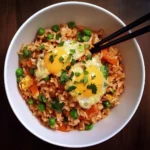
- Fry the Eggs: While the fried rice is finishing, or just before, fry your eggs. In a separate small non-stick skillet, heat a little oil over medium heat. Crack the eggs into the pan and cook to your preference – sunny-side up with a runny yolk is classic and highly recommended, as the yolk creates a delicious sauce for the rice.
- Serve Immediately: Divide the Kimchi Fried Rice among serving bowls. Top each portion with a fried egg. Garnish generously with the remaining green parts of the green onions, toasted sesame seeds, and crumbled roasted seaweed (gim/nori), if desired. A final, light drizzle of sesame oil over the egg and rice can add an extra layer of nutty aroma.
Nutrition Facts
- Servings: This recipe makes approximately 2-3 servings.
- Calories per serving (approximate): 550-750 kcal.
Please note: The nutritional information is an estimate and can vary significantly based on the exact ingredients used (especially the type and amount of protein, oil, and specific brands of kimchi and gochujang).
Kimchi Fried Rice is a hearty dish. It provides a good balance of carbohydrates from the rice, protein (especially if pork belly or another protein source is included), and fats. Kimchi itself is low in calories and rich in fiber and probiotics, which are beneficial for gut health. Gochujang and gochugaru add capsaicin, which has been linked to various health benefits. However, due to the sodium content in kimchi, soy sauce, and gochujang, it’s something to be mindful of if you’re watching your sodium intake.
Preparation Time
- Prep Time: 15-20 minutes (includes chopping vegetables, protein, and measuring ingredients).
- Cook Time: 15-20 minutes.
- Total Time: Approximately 30-40 minutes.
This makes Kimchi Fried Rice an excellent option for a quick and satisfying weeknight meal, especially if you have leftover rice on hand. The speed of cooking is one of its many appeals.
How to Serve
Kimchi Fried Rice is wonderfully versatile in how it can be presented and enjoyed. Here are some popular ways to serve it, ensuring an authentic and delightful experience:
- The Classic Presentation:
- Serve hot, directly from the wok or skillet, in individual bowls.
- Crucial Topping: Always, always top with a freshly fried egg. A sunny-side-up egg with a perfectly runny yolk is traditional and adds a rich, creamy sauce that melds beautifully with the spicy rice.
- Garnishes Galore:
- Sprinkle generously with toasted sesame seeds for a nutty crunch.
- Add a scattering of freshly chopped green onions (the green parts) for color and a mild oniony bite.
- Include strips or crumbles of roasted seaweed (gim/nori) for an extra umami and textural element.
- A final, light drizzle of toasted sesame oil over everything enhances the aroma.
- With Extra Kimchi:
- Offer a small bowl of fresh, cold kimchi on the side. The contrast in temperature and texture can be very pleasing.
- Accompaniments (Banchan):
- While a meal in itself, you can serve it with a few simple Korean side dishes (banchan) for a more complete Korean meal experience:
- Danmuji (Yellow Pickled Radish): Its sweet, tangy crunch provides a great counterpoint to the rich fried rice.
- Seasoned Spinach (Sigeumchi Namul): A light, healthy, and flavorful vegetable side.
- Soybean Sprout Salad (Kongnamul Muchim): Another classic, refreshing banchan.
- Simple Miso Soup: A warm, comforting soup to sip alongside.
- While a meal in itself, you can serve it with a few simple Korean side dishes (banchan) for a more complete Korean meal experience:
- Family Style:
- You can serve it directly from the skillet placed in the center of the table, allowing everyone to help themselves. Just ensure individual plates are provided for the fried eggs.
- For a Crowd:
- This recipe can easily be doubled or tripled. If cooking a large batch, it’s best to fry the rice in batches to avoid overcrowding the pan, which can lead to steaming rather than frying. Keep cooked batches warm in a low oven.
- Make it a “Bap” Bowl:
- Consider adding other elements for a more substantial “bibimbap-style” bowl, such as sautéed shiitake mushrooms, blanched spinach, or shredded carrots alongside the kimchi fried rice.
No matter how you choose to serve it, the key is to enjoy it while it’s hot and the egg yolk is still runny!
Additional Tips
To elevate your Kimchi Fried Rice from good to absolutely unforgettable, consider these five essential tips:
- The Rice Really Matters (Day-Old is Best!):
This cannot be stressed enough. Using day-old, chilled rice is paramount. Freshly cooked rice contains too much moisture and will turn your fried rice into a gummy, mushy mess. The chilling process allows the rice grains to firm up and separate, making them ideal for stir-frying. They’ll absorb the flavors better and achieve that slightly chewy, distinct-grain texture.- Pro-Tip: If you’re in a pinch and only have fresh rice, cook it with slightly less water than usual. Once cooked, spread it thinly on a baking sheet and place it in the refrigerator uncovered for at least 1-2 hours, or even in the freezer for 20-30 minutes (be careful not to freeze it solid).
- Maximize Kimchi Flavor – Sauté it First & Use the Juice:
Don’t just toss the kimchi in with the rice. Sautéing the chopped kimchi in a bit of oil (or the rendered pork fat) for a few minutes before adding the rice makes a huge difference. This step caramelizes the kimchi slightly, intensifies its flavor, and mellows some of its raw sharpness. And that precious kimchi juice? It’s liquid gold! It adds an extra layer of tangy, spicy, umami depth to the rice. Always reserve a few tablespoons to mix into your sauce or directly into the rice. - High Heat and Don’t Crowd the Pan:
Authentic fried rice, including Kimchi Fried Rice, benefits from high heat. This helps to quickly evaporate moisture and gives the rice a slightly smoky flavor (often called “wok hei” if using a wok). Equally important is not to overcrowd your pan or wok. If you add too much rice at once, the temperature of the pan will drop, and the rice will steam rather than fry. This results in a softer, less flavorful dish. If you’re making a large batch, cook the fried rice in two or more batches. - Taste and Adjust Seasoning – Balance is Key:
Kimchi brands vary in saltiness, sourness, and spiciness. Gochujang brands also differ. Therefore, it’s crucial to taste your Kimchi Fried Rice towards the end of cooking and adjust the seasonings accordingly.- Too Sour? A pinch of sugar (about ½ to 1 teaspoon) can balance overly fermented kimchi.
- Not Salty Enough? Add a touch more soy sauce.
- Not Spicy Enough? Add more gochugaru (Korean chili flakes) or a little more gochujang.
- Needs More Umami? A dash of fish sauce (if you’re not vegetarian) can add depth, or ensure you’ve used enough kimchi juice.
The goal is a harmonious blend of spicy, savory, tangy, and slightly sweet flavors.
- The Runny Egg Yolk is Non-Negotiable (Almost!):
While technically optional, topping your Kimchi Fried Rice with a perfectly fried sunny-side-up egg with a runny yolk is a game-changer. When you break into the yolk, it oozes down and coats the spicy rice, creating an incredibly rich, creamy, and luscious sauce that balances the heat and enhances the overall texture and flavor. It transforms the dish from a simple stir-fry into a more indulgent and satisfying meal. Cook the egg gently to ensure the white is set but the yolk remains gloriously liquid.
FAQ Section
Here are answers to some frequently asked questions about making Kimchi Fried Rice:
Q1: Can I use freshly cooked rice if I don’t have day-old rice?
A: While day-old, chilled rice is strongly recommended for the best texture (firm, separate grains), you can use freshly cooked rice in a pinch with a workaround. Cook the rice with slightly less water than usual. Once cooked, immediately spread it out in a thin layer on a large baking sheet. Let it cool completely at room temperature, or better yet, place it in the refrigerator uncovered for at least an hour (or the freezer for about 20-30 minutes) to help it dry out and firm up. This helps prevent the fried rice from becoming mushy.
Q2: My Kimchi Fried Rice is too spicy/not spicy enough. How can I adjust it?
A: The spiciness primarily comes from the kimchi itself, gochujang (Korean chili paste), and gochugaru (Korean chili flakes).
- To Reduce Spice: Use a milder kimchi. Reduce the amount of gochujang and omit the gochugaru entirely. You can also add a little extra sugar to balance the heat or serve it with a dollop of sour cream or a sprinkle of cheese (like mozzarella, a popular fusion addition in Korea) to mellow the spice.
- To Increase Spice: Use a spicier kimchi. Increase the amount of gochujang and be generous with the gochugaru. You can even add a few slices of fresh chili peppers (like serrano or Korean cheongyang peppers) when sautéing the aromatics.
Q3: What can I use if I don’t have gochujang or gochugaru?
A: Gochujang and gochugaru are quite unique and provide the signature Korean flavor and color. It’s hard to replicate them perfectly.
- Gochujang Substitute (will alter flavor): In a real pinch, you could try a paste made from other chili pastes like Sriracha or Sambal Oelek mixed with a bit of miso paste (for umami) and a touch of honey/sugar (for sweetness), but the flavor profile will be distinctly different.
- Gochugaru Substitute: You can use other red pepper flakes, like crushed red pepper, but they often have a different heat level and flavor. Use sparingly at first.
Honestly, for authentic Kimchi Fried Rice, investing in a tub of gochujang and a bag of gochugaru from an Asian market or online is highly recommended. They have a long shelf life when stored properly.
Q4: Can I make Kimchi Fried Rice vegan or vegetarian?
A: Absolutely! Kimchi Fried Rice is easily adaptable.
- For Vegetarian: Omit the pork belly. You can add diced firm tofu (pan-fried until golden), edamame, or a variety of mushrooms (like shiitake or king oyster) for a protein and textural element. Ensure your kimchi is vegetarian (some traditional kimchi uses fish sauce or shrimp paste – check the label or make your own vegan kimchi). The egg on top is optional; omit for strict vegetarian or if preferred.
- For Vegan: Follow the vegetarian modifications (tofu, mushrooms, vegan kimchi) and omit the egg, or use a vegan fried egg substitute if available. Ensure all other condiments like soy sauce are vegan.
Q5: How do I store and reheat leftover Kimchi Fried Rice?
A: Store any leftover Kimchi Fried Rice in an airtight container in the refrigerator. It will keep well for 3-4 days.
- Reheating:
- Microwave: Place the fried rice in a microwave-safe bowl, cover loosely, and heat until warmed through, stirring once or twice.
- Stovetop (Recommended for best texture): Heat a little oil in a skillet or wok over medium-high heat. Add the leftover fried rice and stir-fry until heated through and slightly crispy again.
It’s best to fry a fresh egg to top the reheated rice, as reheated fried eggs aren’t as appealing.
Kimchi Fried Rice Recipe
Ingredients
- Cooked Rice: 3 cups, day-old and chilled (short or medium grain rice like Calrose or Nishiki works best)
- Kimchi: 1 cup, well-fermented and roughly chopped (reserve 2-3 tablespoons of kimchi juice)
- Pork Belly (Optional but Recommended): 4-6 ounces (about 1/2-inch thick slices), cut into ½-inch pieces. (Alternatives: bacon, Spam, firm tofu, mushrooms)
- Gochujang (Korean Chili Paste): 1-2 tablespoons (adjust to your spice preference)
- Gochugaru (Korean Chili Flakes): 1-2 teaspoons (optional, for extra heat and color, adjust to spice preference)
- Soy Sauce: 1 tablespoon (low sodium recommended)
- Sesame Oil: 1 tablespoon, plus more for drizzling
- Vegetable Oil (or other neutral oil): 1 tablespoon (if not using fatty pork belly)
- Garlic: 2-3 cloves, minced
- Onion: ½ medium, chopped (optional, for extra aromatics)
- Green Onions/Scallions: 2-3 stalks, chopped (whites and greens separated)
- Eggs: 2-3 (for frying, one per serving)
- Toasted Sesame Seeds: For garnish
- Roasted Seaweed (Gim/Nori): Crumbled or cut into strips, for garnish (optional)
- Sugar (Optional): ½ – 1 teaspoon (to balance the sourness of very fermented kimchi)
- Black Pepper: A pinch, to taste
Instructions
- Prepare Your Ingredients (Mise en Place): This dish comes together quickly, so it’s essential to have everything prepped and ready. Chop your kimchi (reserving the juice), cut your pork belly (or chosen protein), mince the garlic, chop the onion (if using), and slice the green onions. Separate the day-old rice grains with your wet hands or a spoon to prevent clumping. In a small bowl, whisk together the gochujang, gochugaru (if using), soy sauce, and reserved kimchi juice. Set aside.
- Cook the Protein (if using): Heat a large skillet, wok, or heavy-bottomed pan over medium-high heat. If using pork belly or bacon, add it to the hot pan (no extra oil needed, as it will render its own fat). Cook, stirring occasionally, for 5-7 minutes, or until it’s nicely browned and crispy. If using a leaner protein like tofu or chicken, add 1 tablespoon of vegetable oil before adding the protein and cook until done. Remove the cooked protein from the pan and set aside, leaving about 1-2 tablespoons of rendered fat in the pan (or add oil if needed).
- Sauté Aromatics & Kimchi: Reduce the heat to medium. Add the minced garlic and chopped onion (if using) to the pan. Sauté for about 1-2 minutes until fragrant and the onion is translucent. Be careful not to burn the garlic. Add the chopped kimchi to the pan. Stir-fry for 3-5 minutes. Cooking the kimchi first allows its flavors to deepen and caramelize slightly, which is key to a delicious Kimchi Fried Rice. If your kimchi is very sour, you can add ½ – 1 teaspoon of sugar at this stage to balance the flavors.
- Add the Rice: Add the day-old, chilled rice to the skillet. Break up any large clumps with your spatula. Stir-fry for 2-3 minutes, ensuring the rice grains are mostly separated and heated through. Try to get some crispy bits of rice by letting it sit undisturbed for 30-60 seconds at a time.
- Combine and Season: Pour the prepared gochujang sauce mixture over the rice. Add the cooked protein back into the pan. Stir everything together vigorously, ensuring every grain of rice is coated with the vibrant red sauce and all ingredients are well combined. Cook for another 3-5 minutes, stirring frequently, until the rice is heated through and slightly toasted. You want to hear that satisfying sizzle!
- Finish with Sesame Oil & Green Onions: Turn off the heat. Stir in 1 tablespoon of toasted sesame oil and the white/light green parts of the chopped green onions. Taste and adjust seasoning if necessary – you might want a tiny bit more soy sauce for saltiness or a pinch of black pepper.
- Fry the Eggs: While the fried rice is finishing, or just before, fry your eggs. In a separate small non-stick skillet, heat a little oil over medium heat. Crack the eggs into the pan and cook to your preference – sunny-side up with a runny yolk is classic and highly recommended, as the yolk creates a delicious sauce for the rice.
- Serve Immediately: Divide the Kimchi Fried Rice among serving bowls. Top each portion with a fried egg. Garnish generously with the remaining green parts of the green onions, toasted sesame seeds, and crumbled roasted seaweed (gim/nori), if desired. A final, light drizzle of sesame oil over the egg and rice can add an extra layer of nutty aroma.
Nutrition
- Serving Size: One Normal Portion
- Calories: 550-750