

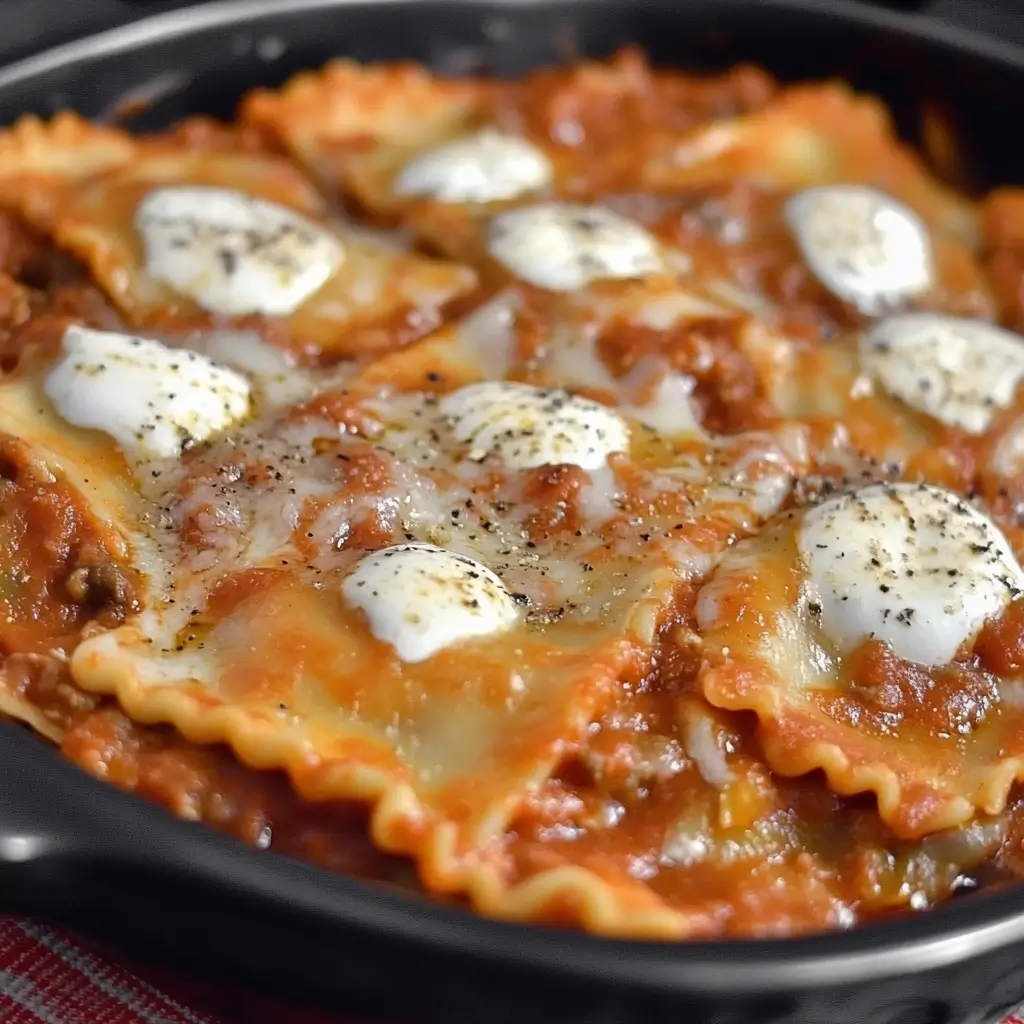

Lasagna Ravioli – the name itself is a delightful paradox, isn’t it? When I first stumbled upon this recipe, I admit I was intrigued and slightly skeptical. Could the hearty comfort of lasagna and the delicate charm of ravioli truly harmonize? Let me tell you, the answer is a resounding YES! From the moment the aroma started wafting from my oven, a rich, savory promise filling the kitchen, I knew we were in for something special. And special it was. My family, usually divided in their dinner preferences, united in their enthusiastic praise for this dish. The layers of cheesy ravioli nestled in a robust tomato sauce, baked to golden perfection, were an absolute revelation. It was lasagna, but lighter, quicker, and undeniably more fun. The individual ravioli pockets held pockets of deliciousness, each bite a perfect balance of textures and flavors. This Lasagna Ravioli has become a regular feature in our meal rotation, a testament to its ease, crowd-pleasing nature, and sheer deliciousness. Prepare to be amazed – this is not just a recipe; it’s a weeknight dinner game-changer.
Ingredients
The beauty of Lasagna Ravioli lies in its simplicity and the readily available ingredients. This recipe is designed to be both delicious and accessible, making it perfect for busy weeknights or a relaxed weekend gathering. You’ll find that many of these items are pantry staples, and the fresh ingredients add a burst of flavor that elevates the dish to something truly special. Let’s break down each component to ensure you have everything you need to create this culinary masterpiece.
For the Ravioli Layer:
- 2 (25 ounce) packages of frozen ravioli: Frozen ravioli are the star of the show, providing the “lasagna” layers in this recipe. You can opt for cheese ravioli, meat ravioli, or even a combination for added depth of flavor. Consider using a high-quality brand of frozen ravioli, as the quality of the ravioli will directly impact the overall taste and texture of your dish. For a vegetarian option, spinach and ricotta ravioli work wonderfully. If you are feeling adventurous, you can even use homemade ravioli, though frozen ravioli are incredibly convenient and work perfectly for this recipe, making it a truly weeknight-friendly meal. The frozen nature of the ravioli also helps them maintain their shape during baking, preventing them from becoming too mushy.
- 1 tablespoon olive oil: Olive oil is used to lightly coat the baking dish, preventing the ravioli from sticking and adding a touch of richness to the base of the dish. Extra virgin olive oil is recommended for its superior flavor and health benefits, but regular olive oil will also work perfectly well. You can also use cooking spray if you prefer to reduce the amount of oil, but olive oil adds a subtle flavor that complements the other ingredients beautifully.
For the Hearty Tomato Sauce:
- 2 tablespoons olive oil: More olive oil is used to sauté the vegetables that form the base of our flavorful tomato sauce. Using olive oil for sautéing adds depth and richness to the sauce, creating a more complex and satisfying flavor profile.
- 1 large onion, chopped: Onion is the aromatic foundation of many great sauces, and this recipe is no exception. Yellow or white onions are ideal for this recipe, offering a mild and sweet flavor that mellows as it cooks. Finely chopping the onion ensures it cooks evenly and blends seamlessly into the sauce, adding flavor without overpowering the other ingredients. Diced onion provides a subtle texture to the sauce, while finely chopped onion will almost melt into the sauce.
- 2 cloves garlic, minced: Garlic is another essential aromatic ingredient, adding a pungent and savory note to the tomato sauce. Freshly minced garlic is always preferred for its robust flavor, but pre-minced garlic from a jar can be used for convenience. Be careful not to burn the garlic while sautéing, as burnt garlic can become bitter. Sautéing garlic gently in olive oil releases its aroma and mellows its sharpness, creating a delicious base for the sauce.
- 1 (28 ounce) can crushed tomatoes: Crushed tomatoes form the body of our tomato sauce, providing a rich and slightly chunky texture. Using canned crushed tomatoes is convenient and ensures consistency in flavor throughout the year. Look for high-quality canned tomatoes for the best flavor. You can also use diced tomatoes or tomato puree if you prefer a different texture, but crushed tomatoes offer a good balance of texture and flavor for this lasagna ravioli.
- 1 (15 ounce) can tomato sauce: Tomato sauce adds depth and richness to the sauce, intensifying the tomato flavor and creating a smoother consistency. Using both crushed tomatoes and tomato sauce creates a multi-layered tomato flavor that is both robust and balanced. Ensure you are using tomato sauce and not tomato paste, as tomato paste is much more concentrated and will require dilution.
- 1 teaspoon dried oregano: Dried oregano is a classic Italian herb that adds warmth and herbaceousness to the tomato sauce. Oregano complements tomatoes beautifully, enhancing their sweetness and adding a savory note. If you have fresh oregano, you can use about 1 tablespoon of chopped fresh oregano instead of dried.
- 1 teaspoon dried basil: Dried basil is another essential Italian herb, adding a sweet and slightly peppery flavor to the sauce. Basil is a classic pairing with tomatoes and garlic, creating a quintessential Italian flavor profile. Similar to oregano, you can use about 1 tablespoon of chopped fresh basil if you have it on hand.
- 1/2 teaspoon salt: Salt is crucial for seasoning the sauce and enhancing the flavors of all the other ingredients. Start with half a teaspoon and adjust to taste as needed. The amount of salt needed may vary depending on the saltiness of your canned tomatoes and other ingredients.
- 1/4 teaspoon black pepper: Black pepper adds a subtle warmth and spice to the sauce, balancing the sweetness of the tomatoes and herbs. Freshly ground black pepper is always preferred for its more pungent flavor, but pre-ground black pepper will also work.
- 1/4 cup red wine (optional): Red wine adds depth and complexity to the tomato sauce, creating a richer and more sophisticated flavor profile. A dry red wine like Cabernet Sauvignon or Merlot works best. If you don’t have red wine or prefer not to use it, you can simply omit it or substitute with a tablespoon of balsamic vinegar for a similar depth of flavor. The alcohol in the wine will cook off during simmering, leaving behind only the flavor.
For the Cheesy Topping:
- 1 1/2 cups ricotta cheese: Ricotta cheese adds a creamy and slightly tangy layer to the lasagna ravioli, complementing the rich tomato sauce and providing a delightful contrast in texture. Whole milk ricotta is recommended for its richer flavor and creamier texture, but part-skim ricotta will also work. Make sure to drain any excess liquid from the ricotta before using it to prevent the lasagna ravioli from becoming watery.
- 1/2 cup grated Parmesan cheese: Parmesan cheese adds a salty, nutty, and savory flavor to the topping, creating a delicious crust when baked. Freshly grated Parmesan cheese is always preferred for its superior flavor and texture, but pre-grated Parmesan can be used for convenience. Parmesan cheese also melts beautifully, creating a golden brown and slightly crispy topping.
- 1/4 cup chopped fresh parsley: Fresh parsley adds a bright, herbaceous, and slightly peppery flavor to the topping, as well as a pop of color. Parsley is a classic garnish for Italian dishes and complements the other flavors beautifully. Italian flat-leaf parsley is recommended for its more robust flavor, but curly parsley will also work.
Instructions
Creating Lasagna Ravioli is surprisingly straightforward, even for beginner cooks. The beauty of this recipe lies in its simplicity and the clever use of frozen ravioli to streamline the lasagna-making process. Follow these step-by-step instructions to create a delicious and satisfying meal that your family will adore. Each step is designed to be clear and easy to follow, ensuring success every time you make this dish.
Step 1: Prepare the Hearty Tomato Sauce
- Sauté Aromatics: In a large saucepan or Dutch oven, heat 2 tablespoons of olive oil over medium heat. Once the oil is shimmering, add the chopped onion and sauté for 5-7 minutes, or until softened and translucent. Stir occasionally to prevent the onion from burning. Sautéing the onion until softened releases its sweetness and creates a flavorful base for the sauce.
- Add Garlic: Add the minced garlic to the saucepan and sauté for another 1-2 minutes, until fragrant. Be careful not to burn the garlic, as burnt garlic can become bitter and ruin the flavor of the sauce. The aroma of sautéing garlic is a wonderful indicator that it is ready.
- Build the Sauce Base: Pour in the crushed tomatoes, tomato sauce, dried oregano, dried basil, salt, and black pepper. If using, add the red wine at this stage. Stir well to combine all the ingredients and ensure the spices are evenly distributed throughout the sauce.
- Simmer for Flavor: Bring the sauce to a simmer over medium-high heat, then reduce the heat to low, cover the saucepan, and simmer for at least 20 minutes, or up to 30 minutes, stirring occasionally. Simmering the sauce allows the flavors to meld and deepen, creating a richer and more complex taste. The longer you simmer the sauce, the more developed the flavors will become. Taste the sauce and adjust seasonings as needed, adding more salt, pepper, or herbs to your preference.
Step 2: Assemble the Lasagna Ravioli
- Preheat Oven and Prepare Baking Dish: Preheat your oven to 375°F (190°C). Lightly grease a 9×13 inch baking dish with the remaining 1 tablespoon of olive oil or cooking spray. Greasing the baking dish prevents the ravioli from sticking and makes cleanup easier.
- Layering Begins: Spread a thin layer of the tomato sauce (about 1 cup) evenly over the bottom of the prepared baking dish. This layer of sauce will prevent the ravioli from sticking to the bottom and add moisture to the dish.
- Ravioli Layer: Arrange half of the frozen ravioli in a single layer over the sauce in the baking dish. There is no need to thaw the ravioli beforehand, as they will cook perfectly in the oven. Arrange the ravioli in a slightly overlapping manner to create a solid layer.
- Ricotta Cheese Layer: In a small bowl, combine the ricotta cheese and half of the grated Parmesan cheese. Mix well to combine. Dollop half of the ricotta mixture evenly over the ravioli layer. Distribute the ricotta mixture in small spoonfuls across the ravioli, ensuring an even layer.
- Sauce and Repeat: Spoon another layer of tomato sauce (about 1 cup) over the ricotta cheese, spreading it evenly. Top with the remaining frozen ravioli in a single layer. Again, arrange them slightly overlapping.
- Final Ricotta and Sauce: Dollop the remaining ricotta mixture over the second layer of ravioli, distributing it evenly. Pour the remaining tomato sauce over the ricotta, ensuring all the ravioli are covered in sauce. The sauce should come almost to the top of the baking dish.
- Cheesy Finale: Sprinkle the remaining grated Parmesan cheese evenly over the top of the sauce. The Parmesan cheese will melt and create a golden brown and crispy crust during baking.
Step 3: Bake to Perfection
- Bake Covered: Cover the baking dish tightly with aluminum foil. This helps to trap the steam and cook the ravioli through evenly, preventing the top from browning too quickly before the ravioli are heated.
- Bake Time: Bake in the preheated oven for 30 minutes, covered.
- Uncover and Brown: Remove the aluminum foil and continue to bake for another 15-20 minutes, or until the cheese is melted, bubbly, and lightly golden brown, and the sauce is bubbling around the edges. Uncovering the dish allows the cheese to brown and become beautifully melted and slightly crispy.
- Rest Before Serving: Let the Lasagna Ravioli rest for 5-10 minutes before serving. This allows the dish to set slightly, making it easier to serve and preventing the sauce from being too runny. Resting also allows the flavors to meld together even further.
- Garnish and Serve: Garnish with fresh chopped parsley before serving. Serve hot and enjoy!
Nutrition Facts
Understanding the nutritional content of your meals is important for maintaining a balanced diet. Please note that these nutrition facts are estimates and can vary based on specific ingredient brands, portion sizes, and variations in preparation. This information is intended as a general guideline.
Servings: Approximately 8 servings
Calories per serving: Approximately 450-550 calories
Approximate Nutritional Breakdown per Serving (Estimated):
- Protein: 25-30 grams
- Fat: 20-25 grams
- Saturated Fat: 10-12 grams
- Cholesterol: 80-100 mg
- Sodium: 800-1000 mg
- Carbohydrates: 40-50 grams
- Fiber: 5-7 grams
- Sugar: 10-15 grams
Important Considerations:
- These values are estimates and can fluctuate. Using different brands of ravioli, cheese, and tomatoes will affect the nutritional content.
- Serving sizes can vary. Adjust portion sizes to meet your individual dietary needs.
- To reduce calories and fat, consider using part-skim ricotta cheese, reduced-fat mozzarella (if adding mozzarella), and lean ground meat in the sauce (if adding meat).
- This dish provides a good source of protein and carbohydrates, along with some fiber and healthy fats.
For more precise nutritional information, you can use online nutrition calculators and input the specific brands and quantities of ingredients you use.
Preparation Time
One of the great advantages of Lasagna Ravioli is its relatively quick preparation time, especially compared to traditional lasagna. This makes it an excellent choice for weeknight dinners when you want a satisfying and flavorful meal without spending hours in the kitchen.
Total Preparation Time: Approximately 45-55 minutes
Breakdown:
- Active Preparation Time: 20-25 minutes (This includes chopping vegetables, making the sauce, and assembling the lasagna ravioli)
- Cook Time: 45-50 minutes (This includes simmering the sauce and baking the lasagna ravioli in the oven)
Tips to Speed Up Preparation:
- Utilize Pre-Chopped Vegetables: If you are short on time, you can purchase pre-chopped onions and minced garlic from the grocery store to save a few minutes on prep work.
- Frozen Ravioli Convenience: Using frozen ravioli eliminates the need for making pasta from scratch, significantly reducing the overall preparation time.
- Make Sauce Ahead: The tomato sauce can be made ahead of time, even a day or two in advance. Simply store it in the refrigerator and reheat it before assembling the lasagna ravioli. This can break up the cooking process and make weeknight dinner even easier.
- Efficient Assembly: Once the sauce is simmering, focus on assembling the lasagna ravioli while the sauce cooks, maximizing your time in the kitchen.
Lasagna Ravioli is a fantastic option when you crave the comforting flavors of lasagna but are short on time. Its streamlined preparation allows you to enjoy a delicious and satisfying meal without the lengthy process of traditional lasagna.
How to Serve
Lasagna Ravioli is a versatile dish that can be served in various ways, making it suitable for both casual family dinners and more formal gatherings. Its hearty nature makes it a satisfying main course, and it pairs well with a variety of side dishes to create a complete and balanced meal.
Serving Suggestions:
- Classic Italian Side Dishes:
- Garlic Bread: Crispy garlic bread is a quintessential companion to lasagna and ravioli. It’s perfect for soaking up the delicious tomato sauce.
- Side Salad: A fresh and vibrant side salad with a light vinaigrette dressing provides a refreshing contrast to the richness of the lasagna ravioli. Consider a simple green salad, a Caprese salad, or a Caesar salad.
- Steamed Vegetables: Steamed or roasted vegetables like broccoli, asparagus, or green beans offer a healthy and colorful side dish that complements the Italian flavors.
- Bruschetta: Toasted bread topped with tomatoes, basil, and garlic makes a delightful appetizer or side dish to start the meal.
- Wine Pairings:
- Chianti: A classic Italian red wine like Chianti pairs beautifully with the tomato-based sauce and cheesy richness of Lasagna Ravioli.
- Merlot: A medium-bodied Merlot with its soft tannins and fruity notes is another excellent red wine option.
- Pinot Grigio: For a lighter option, a crisp Pinot Grigio white wine can also complement the dish, especially if serving it in warmer weather.
- Occasions to Serve:
- Weeknight Family Dinner: Lasagna Ravioli is quick and easy enough for a weeknight meal, providing a comforting and satisfying dinner for the whole family.
- Casual Gatherings: It’s a crowd-pleasing dish perfect for potlucks, casual get-togethers with friends, or backyard barbecues.
- Holiday Meals: While not traditional lasagna, Lasagna Ravioli can be a fun and less labor-intensive alternative for holiday gatherings, especially for smaller groups.
- Potlucks and Parties: It travels well and can be easily reheated, making it a great dish to bring to potlucks or parties.
- Garnishes:
- Fresh Parsley: Chopped fresh parsley adds a pop of color and freshness as a garnish.
- Extra Parmesan Cheese: Offer extra grated Parmesan cheese at the table for guests to sprinkle on top of their servings.
- Red Pepper Flakes: For those who like a little heat, a sprinkle of red pepper flakes adds a touch of spice.
- Fresh Basil Leaves: A few fresh basil leaves can also be used as a garnish, enhancing the Italian flavors.
No matter how you choose to serve it, Lasagna Ravioli is sure to be a hit. Its delicious flavors and easy preparation make it a winner for any occasion.
Additional Tips for Perfect Lasagna Ravioli
To elevate your Lasagna Ravioli from delicious to extraordinary, consider these helpful tips and tricks. These suggestions are designed to enhance the flavor, texture, and overall enjoyment of your dish, ensuring success every time you prepare it.
- Enhance the Sauce Flavor: For a richer and more complex tomato sauce, try adding a tablespoon of tomato paste along with the canned tomatoes. Tomato paste intensifies the tomato flavor and adds depth to the sauce. Sauté the tomato paste with the onions and garlic for a minute or two before adding the other sauce ingredients to bring out its flavor. You can also add a pinch of sugar to the sauce to balance the acidity of the tomatoes, especially if using canned tomatoes. A bay leaf simmered in the sauce and removed before serving can also add a subtle layer of flavor.
- Customize Your Ravioli: Don’t be afraid to experiment with different types of ravioli to create variations of this dish. Cheese ravioli is a classic choice, but you can also use meat ravioli, spinach and ricotta ravioli, mushroom ravioli, or even lobster ravioli for a more decadent version. Using a combination of different ravioli types can also add interest and variety to the dish. Consider using fresh ravioli for an even more luxurious experience, although frozen ravioli are perfectly convenient and delicious for a weeknight meal.
- Add a Layer of Vegetables or Meat: To make Lasagna Ravioli even heartier and more nutritious, consider adding a layer of sautéed vegetables or cooked meat between the ravioli layers. Sautéed spinach, mushrooms, zucchini, or bell peppers would all work well. For meat lovers, you can add a layer of cooked ground beef, Italian sausage (cooked and crumbled), or shredded chicken. Brown the meat and drain off any excess fat before adding it to the lasagna ravioli. This addition can transform the dish into a complete one-pot meal.
- Cheese Variations for Extra Deliciousness: While ricotta and Parmesan are the classic cheeses for lasagna, you can enhance the cheesy flavor by adding other cheeses to your Lasagna Ravioli. Shredded mozzarella cheese sprinkled between the layers or on top will add a melty, gooey texture. Provolone cheese offers a slightly sharper and tangier flavor. For a richer flavor, consider adding a layer of shredded Fontina or Gruyere cheese. Experiment with different cheese combinations to find your favorite flavor profile.
- Make Ahead and Freezer-Friendly: Lasagna Ravioli is an excellent make-ahead dish. You can assemble it completely and store it in the refrigerator, covered, for up to 24 hours before baking. This makes it perfect for meal prepping or preparing for a dinner party in advance. For longer storage, you can freeze unbaked Lasagna Ravioli. Wrap it tightly in plastic wrap and then aluminum foil and freeze for up to 2-3 months. To bake from frozen, thaw overnight in the refrigerator or bake directly from frozen, adding about 30-45 minutes to the baking time and ensuring it is heated through to an internal temperature of 165°F (74°C). Baked Lasagna Ravioli can also be stored in the refrigerator for 3-4 days and reheated in the oven or microwave.
Frequently Asked Questions (FAQ)
Got questions about making Lasagna Ravioli? You’re not alone! Here are some frequently asked questions to help you troubleshoot and perfect your dish. We’ve compiled common queries and provided clear, concise answers to ensure your Lasagna Ravioli experience is smooth and successful.
Q1: Can I use fresh ravioli instead of frozen?
A: Yes, you absolutely can use fresh ravioli! Fresh ravioli will cook even faster than frozen ravioli, so you may need to reduce the baking time slightly. Check for doneness after about 30-35 minutes of baking. Fresh ravioli will result in a slightly softer texture compared to frozen ravioli, which hold their shape a bit better during baking. If using fresh ravioli, you might also want to consider gently blanching them in boiling water for a minute or two before layering them in the baking dish to ensure they are cooked through properly and don’t become too mushy.
Q2: Can I make this vegetarian or vegan?
A: Yes, Lasagna Ravioli is easily adaptable for vegetarian diets! Simply use cheese ravioli and ensure all other ingredients are vegetarian-friendly. To make it vegan, use vegan ravioli (many brands are available now), vegan ricotta cheese (made from tofu or nuts), and vegan Parmesan cheese alternatives. You can also enhance the vegetable content by adding layers of sautéed vegetables like spinach, mushrooms, zucchini, or eggplant. For a vegan cheese sauce, you can create a cashew-based cream sauce to replace the ricotta layer.
Q3: What if I don’t have red wine? Can I still make the sauce?
A: Absolutely! Red wine adds depth to the sauce, but it’s not essential. If you don’t have red wine or prefer not to use it, simply omit it. You can substitute a tablespoon of balsamic vinegar or a splash of beef broth for a similar depth of flavor. Another option is to add a teaspoon of Worcestershire sauce (check to ensure it is vegetarian/vegan if needed) to enhance the savory notes of the sauce. The sauce will still be delicious without red wine, just slightly less complex in flavor.
Q4: Can I add meat to this recipe?
A: Yes, adding meat is a great way to make Lasagna Ravioli even heartier! Cook ground beef, Italian sausage (removed from casings and crumbled), or shredded chicken separately. Brown the meat in a skillet and drain off any excess fat. You can then add the cooked meat to the tomato sauce and simmer it together for a few minutes to meld the flavors, or layer the cooked meat between the ravioli layers during assembly. Adding meat transforms Lasagna Ravioli into a more substantial and protein-rich meal.
Q5: How do I prevent the lasagna ravioli from being watery?
A: To prevent watery Lasagna Ravioli, ensure you drain any excess liquid from the ricotta cheese before using it. You can also gently press the ricotta in a cheesecloth or paper towels to remove excess moisture. Avoid over-saucing the dish; use just enough sauce to coat the ravioli layers. If your canned tomatoes seem very watery, you can simmer the sauce uncovered for a bit longer to reduce some of the liquid before assembling the lasagna ravioli. Also, ensure the oven temperature is accurate and the baking dish is not overcrowded, as overcrowding can lead to steaming rather than baking. Allowing the Lasagna Ravioli to rest for 5-10 minutes after baking also helps the sauce to thicken slightly and prevents it from being too runny when served.
Print
Lasagna Ravioli Recipe
Ingredients
For the Ravioli Layer:
- 2 (25 ounce) packages of frozen ravioli: Frozen ravioli are the star of the show, providing the “lasagna” layers in this recipe. You can opt for cheese ravioli, meat ravioli, or even a combination for added depth of flavor. Consider using a high-quality brand of frozen ravioli, as the quality of the ravioli will directly impact the overall taste and texture of your dish. For a vegetarian option, spinach and ricotta ravioli work wonderfully. If you are feeling adventurous, you can even use homemade ravioli, though frozen ravioli are incredibly convenient and work perfectly for this recipe, making it a truly weeknight-friendly meal. The frozen nature of the ravioli also helps them maintain their shape during baking, preventing them from becoming too mushy.
- 1 tablespoon olive oil: Olive oil is used to lightly coat the baking dish, preventing the ravioli from sticking and adding a touch of richness to the base of the dish. Extra virgin olive oil is recommended for its superior flavor and health benefits, but regular olive oil will also work perfectly well. You can also use cooking spray if you prefer to reduce the amount of oil, but olive oil adds a subtle flavor that complements the other ingredients beautifully.
For the Hearty Tomato Sauce:
- 2 tablespoons olive oil: More olive oil is used to sauté the vegetables that form the base of our flavorful tomato sauce. Using olive oil for sautéing adds depth and richness to the sauce, creating a more complex and satisfying flavor profile.
- 1 large onion, chopped: Onion is the aromatic foundation of many great sauces, and this recipe is no exception. Yellow or white onions are ideal for this recipe, offering a mild and sweet flavor that mellows as it cooks. Finely chopping the onion ensures it cooks evenly and blends seamlessly into the sauce, adding flavor without overpowering the other ingredients. Diced onion provides a subtle texture to the sauce, while finely chopped onion will almost melt into the sauce.
- 2 cloves garlic, minced: Garlic is another essential aromatic ingredient, adding a pungent and savory note to the tomato sauce. Freshly minced garlic is always preferred for its robust flavor, but pre-minced garlic from a jar can be used for convenience. Be careful not to burn the garlic while sautéing, as burnt garlic can become bitter. Sautéing garlic gently in olive oil releases its aroma and mellows its sharpness, creating a delicious base for the sauce.
- 1 (28 ounce) can crushed tomatoes: Crushed tomatoes form the body of our tomato sauce, providing a rich and slightly chunky texture. Using canned crushed tomatoes is convenient and ensures consistency in flavor throughout the year. Look for high-quality canned tomatoes for the best flavor. You can also use diced tomatoes or tomato puree if you prefer a different texture, but crushed tomatoes offer a good balance of texture and flavor for this lasagna ravioli.
- 1 (15 ounce) can tomato sauce: Tomato sauce adds depth and richness to the sauce, intensifying the tomato flavor and creating a smoother consistency. Using both crushed tomatoes and tomato sauce creates a multi-layered tomato flavor that is both robust and balanced. Ensure you are using tomato sauce and not tomato paste, as tomato paste is much more concentrated and will require dilution.
- 1 teaspoon dried oregano: Dried oregano is a classic Italian herb that adds warmth and herbaceousness to the tomato sauce. Oregano complements tomatoes beautifully, enhancing their sweetness and adding a savory note. If you have fresh oregano, you can use about 1 tablespoon of chopped fresh oregano instead of dried.
- 1 teaspoon dried basil: Dried basil is another essential Italian herb, adding a sweet and slightly peppery flavor to the sauce. Basil is a classic pairing with tomatoes and garlic, creating a quintessential Italian flavor profile. Similar to oregano, you can use about 1 tablespoon of chopped fresh basil if you have it on hand.
- 1/2 teaspoon salt: Salt is crucial for seasoning the sauce and enhancing the flavors of all the other ingredients. Start with half a teaspoon and adjust to taste as needed. The amount of salt needed may vary depending on the saltiness of your canned tomatoes and other ingredients.
- 1/4 teaspoon black pepper: Black pepper adds a subtle warmth and spice to the sauce, balancing the sweetness of the tomatoes and herbs. Freshly ground black pepper is always preferred for its more pungent flavor, but pre-ground black pepper will also work.
- 1/4 cup red wine (optional): Red wine adds depth and complexity to the tomato sauce, creating a richer and more sophisticated flavor profile. A dry red wine like Cabernet Sauvignon or Merlot works best. If you don’t have red wine or prefer not to use it, you can simply omit it or substitute with a tablespoon of balsamic vinegar for a similar depth of flavor. The alcohol in the wine will cook off during simmering, leaving behind only the flavor.
For the Cheesy Topping:
- 1 1/2 cups ricotta cheese: Ricotta cheese adds a creamy and slightly tangy layer to the lasagna ravioli, complementing the rich tomato sauce and providing a delightful contrast in texture. Whole milk ricotta is recommended for its richer flavor and creamier texture, but part-skim ricotta will also work. Make sure to drain any excess liquid from the ricotta before using it to prevent the lasagna ravioli from becoming watery.
- 1/2 cup grated Parmesan cheese: Parmesan cheese adds a salty, nutty, and savory flavor to the topping, creating a delicious crust when baked. Freshly grated Parmesan cheese is always preferred for its superior flavor and texture, but pre-grated Parmesan can be used for convenience. Parmesan cheese also melts beautifully, creating a golden brown and slightly crispy topping.
- 1/4 cup chopped fresh parsley: Fresh parsley adds a bright, herbaceous, and slightly peppery flavor to the topping, as well as a pop of color. Parsley is a classic garnish for Italian dishes and complements the other flavors beautifully. Italian flat-leaf parsley is recommended for its more robust flavor, but curly parsley will also work.
Instructions
Step 1: Prepare the Hearty Tomato Sauce
- Sauté Aromatics: In a large saucepan or Dutch oven, heat 2 tablespoons of olive oil over medium heat. Once the oil is shimmering, add the chopped onion and sauté for 5-7 minutes, or until softened and translucent. Stir occasionally to prevent the onion from burning. Sautéing the onion until softened releases its sweetness and creates a flavorful base for the sauce.
- Add Garlic: Add the minced garlic to the saucepan and sauté for another 1-2 minutes, until fragrant. Be careful not to burn the garlic, as burnt garlic can become bitter and ruin the flavor of the sauce. The aroma of sautéing garlic is a wonderful indicator that it is ready.
- Build the Sauce Base: Pour in the crushed tomatoes, tomato sauce, dried oregano, dried basil, salt, and black pepper. If using, add the red wine at this stage. Stir well to combine all the ingredients and ensure the spices are evenly distributed throughout the sauce.
- Simmer for Flavor: Bring the sauce to a simmer over medium-high heat, then reduce the heat to low, cover the saucepan, and simmer for at least 20 minutes, or up to 30 minutes, stirring occasionally. Simmering the sauce allows the flavors to meld and deepen, creating a richer and more complex taste. The longer you simmer the sauce, the more developed the flavors will become. Taste the sauce and adjust seasonings as needed, adding more salt, pepper, or herbs to your preference.
Step 2: Assemble the Lasagna Ravioli
- Preheat Oven and Prepare Baking Dish: Preheat your oven to 375°F (190°C). Lightly grease a 9×13 inch baking dish with the remaining 1 tablespoon of olive oil or cooking spray. Greasing the baking dish prevents the ravioli from sticking and makes cleanup easier.
- Layering Begins: Spread a thin layer of the tomato sauce (about 1 cup) evenly over the bottom of the prepared baking dish. This layer of sauce will prevent the ravioli from sticking to the bottom and add moisture to the dish.
- Ravioli Layer: Arrange half of the frozen ravioli in a single layer over the sauce in the baking dish. There is no need to thaw the ravioli beforehand, as they will cook perfectly in the oven. Arrange the ravioli in a slightly overlapping manner to create a solid layer.
- Ricotta Cheese Layer: In a small bowl, combine the ricotta cheese and half of the grated Parmesan cheese. Mix well to combine. Dollop half of the ricotta mixture evenly over the ravioli layer. Distribute the ricotta mixture in small spoonfuls across the ravioli, ensuring an even layer.
- Sauce and Repeat: Spoon another layer of tomato sauce (about 1 cup) over the ricotta cheese, spreading it evenly. Top with the remaining frozen ravioli in a single layer. Again, arrange them slightly overlapping.
- Final Ricotta and Sauce: Dollop the remaining ricotta mixture over the second layer of ravioli, distributing it evenly. Pour the remaining tomato sauce over the ricotta, ensuring all the ravioli are covered in sauce. The sauce should come almost to the top of the baking dish.
- Cheesy Finale: Sprinkle the remaining grated Parmesan cheese evenly over the top of the sauce. The Parmesan cheese will melt and create a golden brown and crispy crust during baking.
Step 3: Bake to Perfection
- Bake Covered: Cover the baking dish tightly with aluminum foil. This helps to trap the steam and cook the ravioli through evenly, preventing the top from browning too quickly before the ravioli are heated.
- Bake Time: Bake in the preheated oven for 30 minutes, covered.
- Uncover and Brown: Remove the aluminum foil and continue to bake for another 15-20 minutes, or until the cheese is melted, bubbly, and lightly golden brown, and the sauce is bubbling around the edges. Uncovering the dish allows the cheese to brown and become beautifully melted and slightly crispy.
- Rest Before Serving: Let the Lasagna Ravioli rest for 5-10 minutes before serving. This allows the dish to set slightly, making it easier to serve and preventing the sauce from being too runny. Resting also allows the flavors to meld together even further.
- Garnish and Serve: Garnish with fresh chopped parsley before serving. Serve hot and enjoy!
Nutrition
- Serving Size: one normal portion
- Calories: 450-550
- Sugar: 10-15 grams
- Sodium: 800-1000 mg
- Fat: 20-25 grams
- Saturated Fat: 10-12 grams
- Carbohydrates: 40-50 grams
- Fiber: 5-7 grams
- Protein: 25-30 grams
- Cholesterol: 80-100 mg