
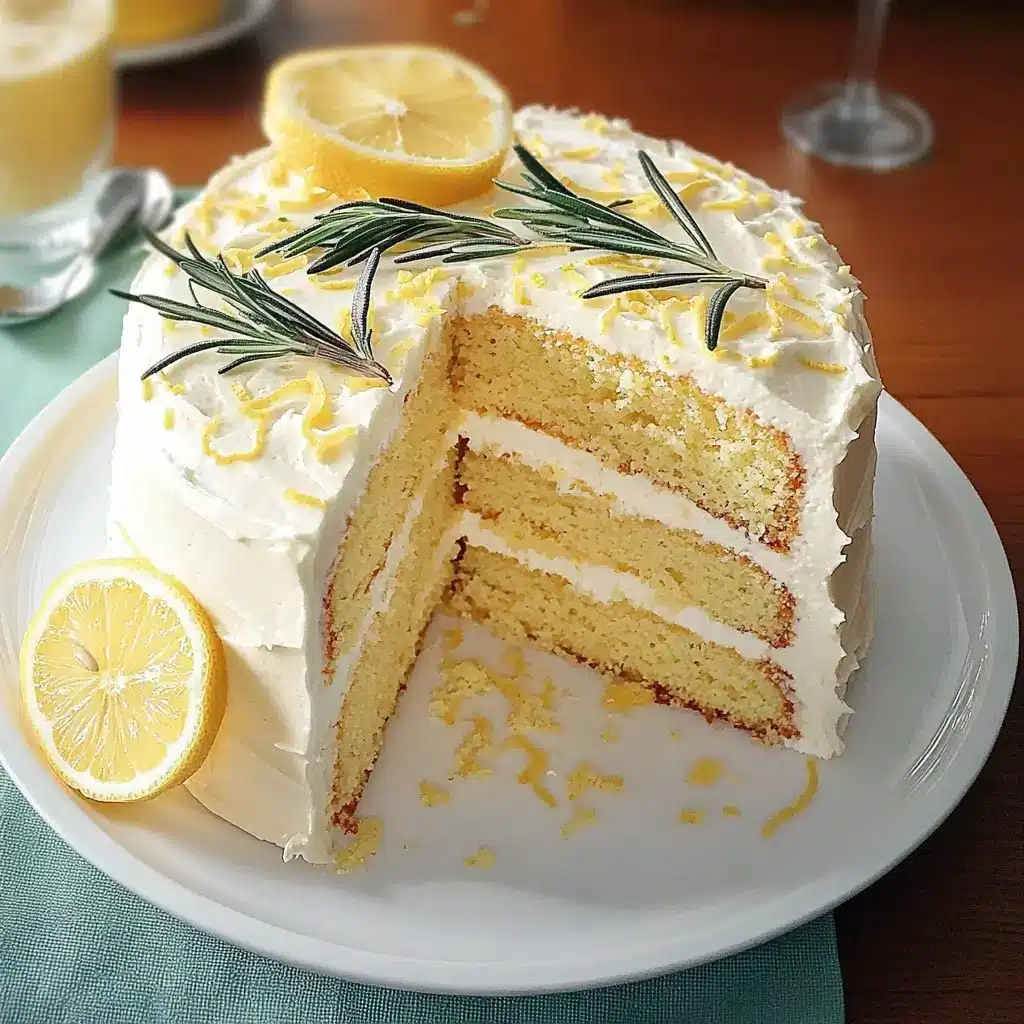

In our home, baking is more than just following recipes; it’s about creating moments. And let me tell you, this Lemon-Rosemary Layer Cake? It’s a moment-maker. From the first whiff of citrusy rosemary filling the kitchen to the final, blissful bite, this cake has become a family favorite. My kids, usually picky eaters, devour slice after slice, and my husband, a self-proclaimed dessert connoisseur, declares it “unforgettable.” The delicate balance of bright lemon and fragrant rosemary is simply divine, a sophisticated yet comforting combination that elevates any occasion. Whether it’s a sunny afternoon tea, a celebratory birthday, or just a craving for something extraordinary, this Lemon-Rosemary Layer Cake is guaranteed to impress and delight. It’s not just a cake; it’s an experience, a journey of flavors that will leave you wanting more. Prepare to be captivated by the magic this recipe brings to your kitchen and your taste buds!
Ingredients
Creating the perfect Lemon-Rosemary Layer Cake requires a harmonious blend of high-quality ingredients. Each component plays a vital role in achieving the desired texture, flavor, and overall deliciousness of this exquisite dessert. Let’s delve into the specifics of what you’ll need:
For the Lemon Cake Layers:
- 2 ½ cups (300g) All-Purpose Flour: The foundation of our cake, all-purpose flour provides the structure. For the best results, use a good quality unbleached all-purpose flour. If you prefer a slightly softer crumb, you can substitute ¼ cup of all-purpose flour with cake flour.
- 2 ½ teaspoons Baking Powder: This leavening agent is crucial for creating light and airy cake layers. Ensure your baking powder is fresh for optimal rise.
- ½ teaspoon Baking Soda: Working in tandem with baking powder, baking soda also contributes to the cake’s rise and light texture. It also reacts with the acidity of the lemon juice, further enhancing the cake’s tenderness.
- ½ teaspoon Salt: Salt is a flavor enhancer, balancing the sweetness and bringing out the other flavors in the cake. It’s a subtle but essential ingredient.
- 1 cup (2 sticks, 227g) Unsalted Butter, softened: Butter is key for richness, moisture, and flavor. Using unsalted butter allows you to control the salt content precisely. Make sure it’s properly softened to cream smoothly with the sugar.
- 1 ¾ cups (350g) Granulated Sugar: Sugar not only sweetens the cake but also contributes to its moisture and tenderness. Granulated sugar is the standard choice for cakes, providing a clean sweetness.
- 4 Large Eggs: Eggs bind the ingredients, add richness, and contribute to the cake’s structure. Use large eggs at room temperature for better emulsification and volume.
- 1 cup (240ml) Buttermilk: Buttermilk adds a tangy flavor and tender crumb to the cake. If you don’t have buttermilk, you can make a substitute by adding 1 tablespoon of lemon juice or white vinegar to 1 cup of milk and letting it sit for 5 minutes until slightly thickened.
- ¼ cup (60ml) Vegetable Oil: Vegetable oil adds extra moisture to the cake, keeping it soft and tender for longer. Use a neutral-flavored oil like canola or vegetable oil.
- 2 tablespoons Lemon Zest: Fresh lemon zest is essential for a vibrant lemon flavor. Use a microplane or fine grater to zest the lemons, ensuring you only get the yellow part of the peel and avoid the bitter white pith.
- ¼ cup (60ml) Fresh Lemon Juice: Lemon juice provides acidity, enhancing the lemon flavor and reacting with the baking soda for a tender crumb. Freshly squeezed lemon juice is always preferred for the best flavor.
- 1 tablespoon Fresh Rosemary, finely chopped: Fresh rosemary brings a unique, aromatic, and slightly savory note that beautifully complements the lemon. Finely chop the rosemary to ensure even distribution and prevent large pieces in the cake.
For the Lemon-Rosemary Syrup:
- ½ cup (100g) Granulated Sugar: Sugar sweetens the syrup and helps create a lovely glaze for the cake layers.
- ½ cup (120ml) Water: Water is the base of the syrup, dissolving the sugar and creating the liquid consistency.
- ¼ cup (60ml) Fresh Lemon Juice: Lemon juice adds a bright, tangy flavor to the syrup, enhancing the overall lemon profile of the cake.
- 2 sprigs Fresh Rosemary: Rosemary sprigs infuse the syrup with their aromatic essence. Using sprigs allows for easy removal after infusing.
For the Lemon Buttercream Frosting:
- 1 cup (2 sticks, 227g) Unsalted Butter, softened: Butter is the foundation of buttercream frosting, providing richness and structure. Ensure it’s properly softened for a smooth and creamy frosting.
- 3 cups (360g) Powdered Sugar: Powdered sugar sweetens and thickens the buttercream, creating a smooth and stable frosting. Sift the powdered sugar to remove any lumps for the smoothest texture.
- ¼ cup (60ml) Heavy Cream or Milk: Heavy cream adds richness and helps create a light and fluffy buttercream. Milk can be used for a slightly lighter frosting. Adjust the amount of liquid to achieve your desired consistency.
- ¼ cup (60ml) Fresh Lemon Juice: Lemon juice adds a vibrant citrus flavor to the buttercream, perfectly complementing the lemon cake and rosemary.
- 1 tablespoon Lemon Zest: Lemon zest intensifies the lemon flavor in the buttercream and adds visual appeal.
- 1 teaspoon Vanilla Extract: Vanilla extract enhances the overall flavor of the buttercream, adding depth and warmth.
- Pinch of Salt: Salt balances the sweetness and enhances the flavors of the buttercream.
Instructions
Now that we have all our ingredients ready, let’s embark on the delightful journey of baking this Lemon-Rosemary Layer Cake. Follow these step-by-step instructions carefully to create a masterpiece that will impress everyone.
Step 1: Prepare the Lemon Cake Layers
- Preheat Oven and Prepare Pans: Preheat your oven to 350°F (175°C). Grease and flour three 8-inch round cake pans. You can also line the bottoms with parchment paper for easier removal. This prevents sticking and ensures even baking.
- Combine Dry Ingredients: In a medium bowl, whisk together the all-purpose flour, baking powder, baking soda, and salt. Whisking ensures even distribution of the leavening agents and salt throughout the flour. Set aside.
- Cream Butter and Sugar: In a large bowl or the bowl of a stand mixer fitted with the paddle attachment, cream together the softened butter and granulated sugar until light and fluffy. This process incorporates air into the mixture, which is essential for a light and tender cake. Cream for 3-5 minutes until the mixture is pale and noticeably fluffy.
- Incorporate Eggs: Beat in the eggs one at a time, mixing well after each addition. Ensure each egg is fully incorporated before adding the next. This helps create a smooth and emulsified batter.
- Combine Wet Ingredients: In a separate liquid measuring cup, whisk together the buttermilk, vegetable oil, lemon zest, and lemon juice. This pre-mixing ensures even distribution of the liquid ingredients into the batter.
- Alternate Wet and Dry Ingredients: Gradually add the dry ingredients to the wet ingredients in three additions, alternating with the wet ingredients in two additions, beginning and ending with the dry ingredients. Beat on low speed until just combined after each addition. Be careful not to overmix, as this can lead to a tough cake. Mix until just incorporated, leaving a few streaks of flour is okay, they will disappear with the final mixing.
- Stir in Rosemary: Gently fold in the finely chopped fresh rosemary until evenly distributed throughout the batter. Folding ensures the rosemary is incorporated without overmixing the batter.
- Divide Batter and Bake: Divide the batter evenly among the prepared cake pans. Use a kitchen scale for precise division to ensure even layers. Bake for 25-30 minutes, or until a toothpick inserted into the center comes out clean. The baking time may vary depending on your oven. Start checking for doneness around 25 minutes.
- Cool Cakes: Let the cakes cool in the pans for 10-15 minutes before inverting them onto a wire rack to cool completely. Cooling in the pans prevents the cakes from breaking apart while still warm. Ensure the cakes are completely cool before frosting to prevent the frosting from melting.
Step 2: Prepare the Lemon-Rosemary Syrup
- Combine Syrup Ingredients: In a small saucepan, combine the granulated sugar, water, lemon juice, and rosemary sprigs.
- Simmer and Infuse: Bring the mixture to a simmer over medium heat, stirring until the sugar is dissolved. Reduce the heat to low and simmer for 5-7 minutes to allow the rosemary to infuse the syrup. Simmering concentrates the flavors and creates a syrupy consistency.
- Strain and Cool: Remove the saucepan from the heat and strain the syrup through a fine-mesh sieve to remove the rosemary sprigs. Let the syrup cool completely before using. Cooling the syrup prevents it from melting the frosting and ensures it soaks into the cake layers properly.
Step 3: Prepare the Lemon Buttercream Frosting
- Beat Butter: In a large bowl or the bowl of a stand mixer fitted with the paddle attachment, beat the softened butter until smooth and creamy. This creates a smooth base for the buttercream. Beat for 2-3 minutes until light and fluffy.
- Add Powdered Sugar: Gradually add the sifted powdered sugar, one cup at a time, beating on low speed until combined. Increase the speed to medium and beat until light and fluffy, scraping down the sides of the bowl as needed. Adding powdered sugar gradually prevents it from creating a cloud and ensures it mixes in smoothly.
- Incorporate Wet Ingredients: Gradually add the heavy cream (or milk), lemon juice, vanilla extract, lemon zest, and salt. Beat on medium speed until the frosting is smooth, light, and fluffy. Adjust the amount of liquid to achieve your desired consistency. If the frosting is too thick, add a little more liquid; if it’s too thin, add a little more powdered sugar.
- Whip for Fluffiness: Continue to beat the frosting for another 2-3 minutes until it is very light and fluffy. This incorporates more air into the frosting, making it even lighter and smoother.
Step 4: Assemble the Cake
- Level Cake Layers (Optional): If your cake layers are slightly domed, use a serrated knife to level the tops for a flat and even surface. This ensures the cake layers stack evenly and the frosting is applied smoothly.
- Syrup Soak: Place one cake layer on a serving plate or cake stand. Generously brush the top of the cake layer with the lemon-rosemary syrup. This step adds moisture and enhances the lemon-rosemary flavor throughout the cake.
- Frost First Layer: Spread a layer of lemon buttercream frosting evenly over the syrup-soaked cake layer.
- Repeat Layers: Top with the second cake layer, soak with syrup, and frost with buttercream. Repeat with the final cake layer, soaking it with syrup as well.
- Frost the Cake: Frost the top and sides of the cake with the remaining lemon buttercream frosting. You can create a smooth finish or decorative swirls, depending on your preference.
- Chill (Optional): For easier slicing and serving, chill the frosted cake in the refrigerator for at least 30 minutes before serving. Chilling firms up the frosting and makes the cake more stable.
- Garnish (Optional): Garnish the cake with fresh rosemary sprigs, lemon slices, or candied lemon zest for an elegant presentation.
Nutrition Facts
(Please note that these are approximate values and can vary based on ingredient brands and specific measurements. These values are estimates per serving, assuming the cake is cut into 12 servings.)
- Servings: 12
- Calories per serving: Approximately 450-550 kcal
Approximate Nutritional Breakdown per Serving:
- Fat: 25-30g
- Saturated Fat: 15-20g
- Cholesterol: 100-120mg
- Sodium: 200-250mg
- Carbohydrates: 60-70g
- Sugar: 40-50g
- Protein: 4-5g
Disclaimer: Nutritional information is an estimate and should be used as a general guideline. For precise nutritional information, use a nutrition calculator with the specific brands and quantities of ingredients used.
Preparation Time
- Prep time: 45 minutes (includes measuring ingredients, making batter, syrup, and frosting)
- Bake time: 25-30 minutes
- Cooling time: 2-3 hours (for cakes and syrup to cool completely, and for chilling the frosted cake)
- Total time: Approximately 3 hours 10 minutes – 4 hours (including cooling and chilling)
How to Serve
This Lemon-Rosemary Layer Cake is versatile and can be served in various delightful ways to enhance the experience. Here are some serving suggestions:
- Classic Slice: The simplest and most satisfying way to enjoy this cake is as a classic slice. Cut a generous wedge and savor the layers of flavor.
- With Fresh Berries: Serve each slice alongside a medley of fresh berries such as raspberries, blueberries, or strawberries. The tartness of the berries complements the sweetness and citrus notes of the cake beautifully.
- Dollop of Whipped Cream: A light and airy dollop of freshly whipped cream or crème fraîche adds a touch of extra indulgence and creaminess.
- Lemon Curd: For an extra lemony punch, serve a small spoonful of homemade or store-bought lemon curd alongside each slice. This intensifies the citrus flavor and adds a delightful tang.
- Herbal Tea Pairing: Pair this cake with a cup of herbal tea, such as chamomile, lemon verbena, or rosemary tea, to complement the rosemary notes in the cake.
- Coffee or Espresso: For a richer pairing, serve with a cup of strong coffee or espresso. The bitterness of the coffee balances the sweetness of the cake.
- Dessert Platter: Include slices of this cake as part of a dessert platter featuring other citrus-themed treats, cookies, and fresh fruit for a visually appealing and diverse spread.
- Special Occasions: This cake is perfect for celebrations! Serve it as a birthday cake, anniversary cake, or for any special gathering. Decorate it further with candles, edible flowers, or personalized cake toppers for a festive touch.
- Elegant Tea Party: Serve smaller, daintier slices at a tea party. The sophisticated flavor profile is perfect for an elegant afternoon gathering.
Additional Tips for Baking Perfection
To ensure your Lemon-Rosemary Layer Cake is a resounding success, consider these helpful tips:
- Use Room Temperature Ingredients: Ensure your butter, eggs, and buttermilk are at room temperature. Room temperature ingredients emulsify better, creating a smoother batter and a more tender cake.
- Don’t Overmix the Batter: Overmixing develops gluten, which can result in a tough cake. Mix until just combined, and stop as soon as the ingredients are incorporated. A few streaks of flour are okay at the end; they will disappear with the final mixing.
- Measure Flour Correctly: Too much flour can lead to a dry cake. Use the “spoon and level” method: spoon flour into your measuring cup and level it off with a straight edge, rather than scooping directly from the bag.
- Infuse Rosemary Flavor Gently: For a more subtle rosemary flavor, you can infuse the rosemary into the buttermilk by gently heating the buttermilk with rosemary sprigs, letting it steep for 30 minutes, and then straining before using. This creates a milder, more integrated rosemary essence.
- Test for Doneness Properly: Use a toothpick inserted into the center of the cake to test for doneness. It should come out clean or with a few moist crumbs attached. Avoid overbaking, as this can dry out the cake.
Frequently Asked Questions (FAQ)
Q1: Can I use dried rosemary instead of fresh?
A: While fresh rosemary is highly recommended for the best flavor, you can use dried rosemary in a pinch. Use about 1 teaspoon of dried rosemary, finely crushed, in the cake batter and ½ teaspoon in the syrup. However, fresh rosemary provides a brighter and more aromatic flavor that is ideal for this recipe.
Q2: Can I make this cake ahead of time?
A: Yes, you can definitely make components of this cake ahead of time. The cake layers can be baked, cooled, and wrapped tightly in plastic wrap for up to 2 days at room temperature or frozen for up to a month. The lemon-rosemary syrup can be made up to a week in advance and stored in the refrigerator. The buttercream frosting is best made fresh, but can be made a day ahead and stored in an airtight container in the refrigerator. Bring it to room temperature and re-whip before using. Assembled and frosted cake can be stored in the refrigerator for up to 3 days.
Q3: Can I make this cake gluten-free?
A: Yes, you can adapt this recipe to be gluten-free by substituting the all-purpose flour with a good quality gluten-free all-purpose flour blend. Ensure the blend is designed for baking and contains xanthan gum or another binder. Gluten-free cakes may sometimes be slightly denser, so you may need to adjust baking time slightly.
Q4: How should I store leftover Lemon-Rosemary Layer Cake?
A: Store leftover cake in an airtight container in the refrigerator for up to 3-4 days. For best results, bring the cake to room temperature for about 30 minutes before serving to allow the frosting to soften slightly and the flavors to fully emerge.
Q5: Can I double the recipe to make a larger cake or cupcakes?
A: Yes, you can easily double this recipe to make a larger cake or cupcakes. For a larger cake, you can use 9-inch pans or a sheet pan. For cupcakes, the recipe should yield approximately 24 cupcakes. Adjust baking time accordingly – cupcakes will bake faster than layer cakes, and a larger cake may require slightly longer baking time. Always check for doneness with a toothpick.
This Lemon-Rosemary Layer Cake is more than just a dessert; it’s an experience to be savored and shared. Enjoy the delightful journey of baking and tasting this zesty and aromatic masterpiece!
Print
Lemon-Rosemary Layer Cake Recipe
Ingredients
For the Lemon Cake Layers:
- 2 ½ cups (300g) All-Purpose Flour: The foundation of our cake, all-purpose flour provides the structure. For the best results, use a good quality unbleached all-purpose flour. If you prefer a slightly softer crumb, you can substitute ¼ cup of all-purpose flour with cake flour.
- 2 ½ teaspoons Baking Powder: This leavening agent is crucial for creating light and airy cake layers. Ensure your baking powder is fresh for optimal rise.
- ½ teaspoon Baking Soda: Working in tandem with baking powder, baking soda also contributes to the cake’s rise and light texture. It also reacts with the acidity of the lemon juice, further enhancing the cake’s tenderness.
- ½ teaspoon Salt: Salt is a flavor enhancer, balancing the sweetness and bringing out the other flavors in the cake. It’s a subtle but essential ingredient.
- 1 cup (2 sticks, 227g) Unsalted Butter, softened: Butter is key for richness, moisture, and flavor. Using unsalted butter allows you to control the salt content precisely. Make sure it’s properly softened to cream smoothly with the sugar.
- 1 ¾ cups (350g) Granulated Sugar: Sugar not only sweetens the cake but also contributes to its moisture and tenderness. Granulated sugar is the standard choice for cakes, providing a clean sweetness.
- 4 Large Eggs: Eggs bind the ingredients, add richness, and contribute to the cake’s structure. Use large eggs at room temperature for better emulsification and volume.
- 1 cup (240ml) Buttermilk: Buttermilk adds a tangy flavor and tender crumb to the cake. If you don’t have buttermilk, you can make a substitute by adding 1 tablespoon of lemon juice or white vinegar to 1 cup of milk and letting it sit for 5 minutes until slightly thickened.
- ¼ cup (60ml) Vegetable Oil: Vegetable oil adds extra moisture to the cake, keeping it soft and tender for longer. Use a neutral-flavored oil like canola or vegetable oil.
- 2 tablespoons Lemon Zest: Fresh lemon zest is essential for a vibrant lemon flavor. Use a microplane or fine grater to zest the lemons, ensuring you only get the yellow part of the peel and avoid the bitter white pith.
- ¼ cup (60ml) Fresh Lemon Juice: Lemon juice provides acidity, enhancing the lemon flavor and reacting with the baking soda for a tender crumb. Freshly squeezed lemon juice is always preferred for the best flavor.
- 1 tablespoon Fresh Rosemary, finely chopped: Fresh rosemary brings a unique, aromatic, and slightly savory note that beautifully complements the lemon. Finely chop the rosemary to ensure even distribution and prevent large pieces in the cake.
For the Lemon-Rosemary Syrup:
- ½ cup (100g) Granulated Sugar: Sugar sweetens the syrup and helps create a lovely glaze for the cake layers.
- ½ cup (120ml) Water: Water is the base of the syrup, dissolving the sugar and creating the liquid consistency.
- ¼ cup (60ml) Fresh Lemon Juice: Lemon juice adds a bright, tangy flavor to the syrup, enhancing the overall lemon profile of the cake.
- 2 sprigs Fresh Rosemary: Rosemary sprigs infuse the syrup with their aromatic essence. Using sprigs allows for easy removal after infusing.
For the Lemon Buttercream Frosting:
- 1 cup (2 sticks, 227g) Unsalted Butter, softened: Butter is the foundation of buttercream frosting, providing richness and structure. Ensure it’s properly softened for a smooth and creamy frosting.
- 3 cups (360g) Powdered Sugar: Powdered sugar sweetens and thickens the buttercream, creating a smooth and stable frosting. Sift the powdered sugar to remove any lumps for the smoothest texture.
- ¼ cup (60ml) Heavy Cream or Milk: Heavy cream adds richness and helps create a light and fluffy buttercream. Milk can be used for a slightly lighter frosting. Adjust the amount of liquid to achieve your desired consistency.
- ¼ cup (60ml) Fresh Lemon Juice: Lemon juice adds a vibrant citrus flavor to the buttercream, perfectly complementing the lemon cake and rosemary.
- 1 tablespoon Lemon Zest: Lemon zest intensifies the lemon flavor in the buttercream and adds visual appeal.
- 1 teaspoon Vanilla Extract: Vanilla extract enhances the overall flavor of the buttercream, adding depth and warmth.
- Pinch of Salt: Salt balances the sweetness and enhances the flavors of the buttercream.
Instructions
Step 1: Prepare the Lemon Cake Layers
- Preheat Oven and Prepare Pans: Preheat your oven to 350°F (175°C). Grease and flour three 8-inch round cake pans. You can also line the bottoms with parchment paper for easier removal. This prevents sticking and ensures even baking.
- Combine Dry Ingredients: In a medium bowl, whisk together the all-purpose flour, baking powder, baking soda, and salt. Whisking ensures even distribution of the leavening agents and salt throughout the flour. Set aside.
- Cream Butter and Sugar: In a large bowl or the bowl of a stand mixer fitted with the paddle attachment, cream together the softened butter and granulated sugar until light and fluffy. This process incorporates air into the mixture, which is essential for a light and tender cake. Cream for 3-5 minutes until the mixture is pale and noticeably fluffy.
- Incorporate Eggs: Beat in the eggs one at a time, mixing well after each addition. Ensure each egg is fully incorporated before adding the next. This helps create a smooth and emulsified batter.
- Combine Wet Ingredients: In a separate liquid measuring cup, whisk together the buttermilk, vegetable oil, lemon zest, and lemon juice. This pre-mixing ensures even distribution of the liquid ingredients into the batter.
- Alternate Wet and Dry Ingredients: Gradually add the dry ingredients to the wet ingredients in three additions, alternating with the wet ingredients in two additions, beginning and ending with the dry ingredients. Beat on low speed until just combined after each addition. Be careful not to overmix, as this can lead to a tough cake. Mix until just incorporated, leaving a few streaks of flour is okay, they will disappear with the final mixing.
- Stir in Rosemary: Gently fold in the finely chopped fresh rosemary until evenly distributed throughout the batter. Folding ensures the rosemary is incorporated without overmixing the batter.
- Divide Batter and Bake: Divide the batter evenly among the prepared cake pans. Use a kitchen scale for precise division to ensure even layers. Bake for 25-30 minutes, or until a toothpick inserted into the center comes out clean. The baking time may vary depending on your oven. Start checking for doneness around 25 minutes.
- Cool Cakes: Let the cakes cool in the pans for 10-15 minutes before inverting them onto a wire rack to cool completely. Cooling in the pans prevents the cakes from breaking apart while still warm. Ensure the cakes are completely cool before frosting to prevent the frosting from melting.
Step 2: Prepare the Lemon-Rosemary Syrup
- Combine Syrup Ingredients: In a small saucepan, combine the granulated sugar, water, lemon juice, and rosemary sprigs.
- Simmer and Infuse: Bring the mixture to a simmer over medium heat, stirring until the sugar is dissolved. Reduce the heat to low and simmer for 5-7 minutes to allow the rosemary to infuse the syrup. Simmering concentrates the flavors and creates a syrupy consistency.
- Strain and Cool: Remove the saucepan from the heat and strain the syrup through a fine-mesh sieve to remove the rosemary sprigs. Let the syrup cool completely before using. Cooling the syrup prevents it from melting the frosting and ensures it soaks into the cake layers properly.
Step 3: Prepare the Lemon Buttercream Frosting
- Beat Butter: In a large bowl or the bowl of a stand mixer fitted with the paddle attachment, beat the softened butter until smooth and creamy. This creates a smooth base for the buttercream. Beat for 2-3 minutes until light and fluffy.
- Add Powdered Sugar: Gradually add the sifted powdered sugar, one cup at a time, beating on low speed until combined. Increase the speed to medium and beat until light and fluffy, scraping down the sides of the bowl as needed. Adding powdered sugar gradually prevents it from creating a cloud and ensures it mixes in smoothly.
- Incorporate Wet Ingredients: Gradually add the heavy cream (or milk), lemon juice, vanilla extract, lemon zest, and salt. Beat on medium speed until the frosting is smooth, light, and fluffy. Adjust the amount of liquid to achieve your desired consistency. If the frosting is too thick, add a little more liquid; if it’s too thin, add a little more powdered sugar.
- Whip for Fluffiness: Continue to beat the frosting for another 2-3 minutes until it is very light and fluffy. This incorporates more air into the frosting, making it even lighter and smoother.
Step 4: Assemble the Cake
- Level Cake Layers (Optional): If your cake layers are slightly domed, use a serrated knife to level the tops for a flat and even surface. This ensures the cake layers stack evenly and the frosting is applied smoothly.
- Syrup Soak: Place one cake layer on a serving plate or cake stand. Generously brush the top of the cake layer with the lemon-rosemary syrup. This step adds moisture and enhances the lemon-rosemary flavor throughout the cake.
- Frost First Layer: Spread a layer of lemon buttercream frosting evenly over the syrup-soaked cake layer.
- Repeat Layers: Top with the second cake layer, soak with syrup, and frost with buttercream. Repeat with the final cake layer, soaking it with syrup as well.
- Frost the Cake: Frost the top and sides of the cake with the remaining lemon buttercream frosting. You can create a smooth finish or decorative swirls, depending on your preference.
- Chill (Optional): For easier slicing and serving, chill the frosted cake in the refrigerator for at least 30 minutes before serving. Chilling firms up the frosting and makes the cake more stable.
- Garnish (Optional): Garnish the cake with fresh rosemary sprigs, lemon slices, or candied lemon zest for an elegant presentation.
Nutrition
- Serving Size: one normal portion
- Calories: 450-550 kcal
- Sugar: 40-50g
- Sodium: 200-250mg
- Fat: 25-30g
- Saturated Fat: 15-20g
- Carbohydrates: 60-70g
- Protein: 4-5g
- Cholesterol: 100-120mg