
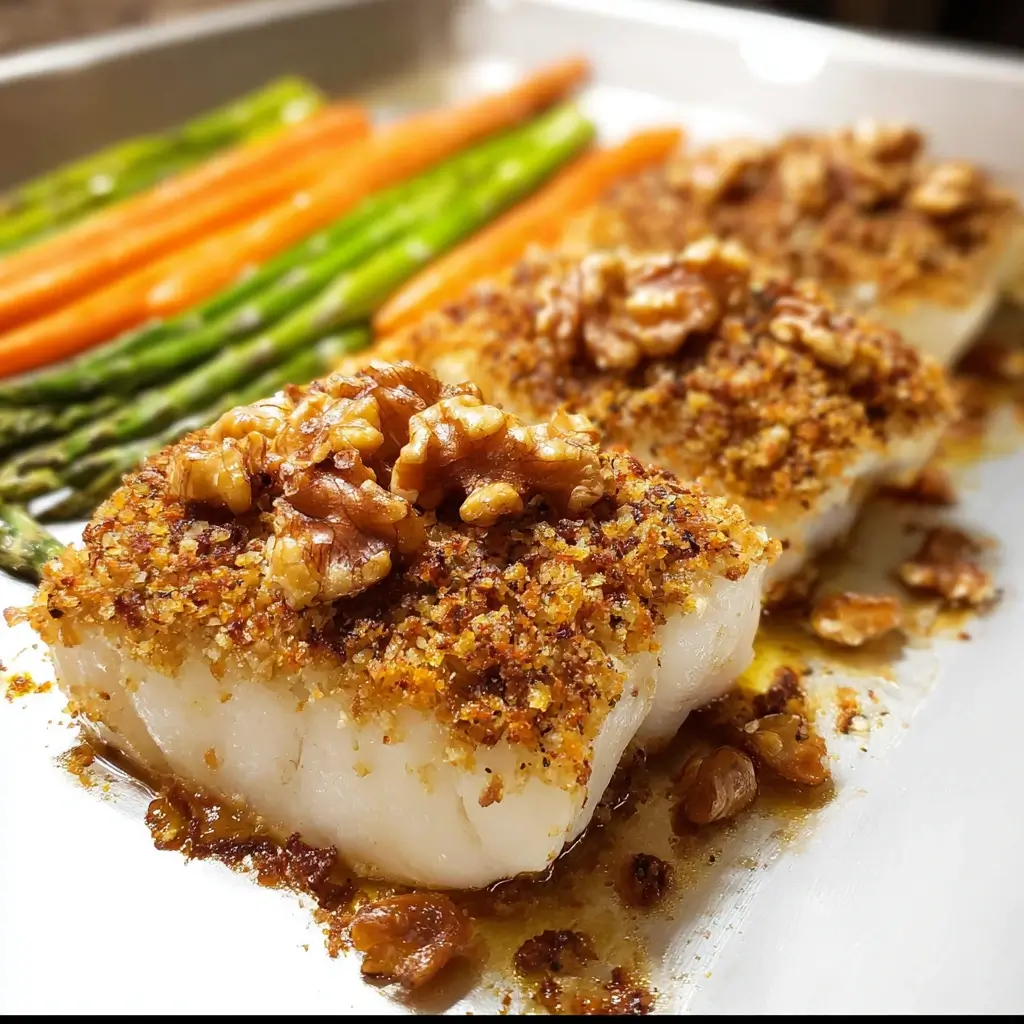

Of all the weeknight dinner dilemmas, the quest for a meal that is simultaneously elegant, incredibly delicious, and ridiculously easy is the holy grail. For years, I cycled through the same old standbys, resigning myself to the idea that “special” meals were reserved for weekends. That all changed the day I created this Maple Walnut Crusted Sheet Pan Halibut. I remember the first time I served it; my family, accustomed to my usual quick pastas and stir-fries, fell silent. The only sounds were the clinking of forks and the occasional “Wow.” The sweetness of the maple syrup, perfectly balanced by the tangy Dijon and the rich, earthy crunch of the walnuts, creates a crust that is simply divine. Beneath it, the halibut steams to flaky perfection, while the roasted asparagus and cherry tomatoes on the same pan soak up all the delicious flavors, becoming sweet and tender. It looked like something from a high-end restaurant, yet it came together on one pan with minimal cleanup. This recipe didn’t just solve a dinner problem; it transformed our perception of what a weeknight meal could be. It’s now our go-to for celebrating small victories, impressing last-minute guests, or simply elevating a regular Tuesday into something memorable.
Maple Walnut Crusted Sheet Pan Halibut: A Complete Recipe
This recipe is designed for simplicity and flavor, bringing together premium ingredients for a truly restaurant-quality meal made in your own kitchen.
Yields: 4 Servings
Prep time: 15 minutes
Cook time: 15-20 minutes
Ingredients
For the Halibut and Crust:
- Halibut: 4 (6-ounce) halibut fillets, about 1 to 1.5 inches thick, skin removed
- Walnuts: 1 cup, raw, finely chopped
- Panko Breadcrumbs: ½ cup, Japanese-style breadcrumbs
- Pure Maple Syrup: ¼ cup (use Grade A Amber or Dark for a more robust flavor)
- Dijon Mustard: 2 tablespoons
- Melted Butter: 2 tablespoons, unsalted
- Fresh Parsley: 2 tablespoons, finely chopped, plus more for garnish
- Salt: ½ teaspoon, kosher or sea salt
- Black Pepper: ¼ teaspoon, freshly ground
For the Sheet Pan Vegetables:
- Asparagus: 1 large bunch (about 1.5 pounds), tough ends trimmed
- Cherry or Grape Tomatoes: 1 pint (about 2 cups)
- Olive Oil: 2 tablespoons
- Garlic Powder: ½ teaspoon
- Salt: ½ teaspoon
- Black Pepper: ¼ teaspoon
For Serving (Optional):
- Lemon Wedges
Instructions
Follow these step-by-step instructions for a flawless result every time. The key is in the preparation and assembly before the pan ever hits the oven.
Step 1: Preheat and Prepare the Pan
Position an oven rack in the center of the oven and preheat to 400°F (200°C). Line a large, rimmed baking sheet with parchment paper. This is a crucial step for easy cleanup and prevents the fish and vegetables from sticking.
Step 2: Prepare the Vegetables
In a large bowl, combine the trimmed asparagus and cherry tomatoes. Drizzle with the 2 tablespoons of olive oil, and sprinkle with ½ teaspoon garlic powder, ½ teaspoon salt, and ¼ teaspoon black pepper. Toss everything together until the vegetables are evenly coated. Spread the vegetables in a single layer on one half of the prepared baking sheet, leaving the other half empty for the halibut.
Step 3: Prepare the Halibut Fillets
Gently pat the halibut fillets completely dry with a paper towel. This step is essential for helping the crust adhere properly and for achieving the right texture. Season both sides of the fillets lightly with salt and pepper. Arrange the fillets on the empty half of the baking sheet, ensuring they are not touching each other.
Step 4: Create the Maple Walnut Topping
In a medium bowl, combine the finely chopped walnuts, panko breadcrumbs, ¼ cup pure maple syrup, 2 tablespoons Dijon mustard, 2 tablespoons melted butter, and 2 tablespoons of chopped fresh parsley. Mix with a fork until all the ingredients are well-combined and have formed a thick, paste-like mixture.
Step 5: Apply the Crust
Divide the maple-walnut mixture evenly among the four halibut fillets. Using your fingers or the back of a spoon, gently press the topping onto the surface of each fillet, creating a thick, even crust. Be generous with the topping; it’s the star of the show.
Step 6: Roast to Perfection
Carefully place the baking sheet in the preheated oven. Roast for 15-20 minutes. The cooking time will vary depending on the exact thickness of your halibut fillets. The dish is done when the fish is opaque and flakes easily with a fork, and the walnut crust is golden brown and fragrant. The asparagus should be tender-crisp, and the tomatoes should be soft and slightly blistered. An instant-read thermometer inserted into the thickest part of the fish should read 140-145°F (60-63°C).
Step 7: Rest and Serve
Remove the sheet pan from the oven. Let the halibut rest for a couple of minutes directly on the pan. This allows the juices to redistribute, resulting in a more tender and flavorful fish. Serve immediately, garnished with additional fresh parsley and lemon wedges on the side for squeezing over the fish and vegetables.
Nutrition Facts
The nutritional information is an estimate and can vary based on the exact size of the fillets and specific ingredients used.
- Servings: 4
- Calories per serving: Approximately 650-700 kcal
Breakdown per serving (approximate):
- Protein: 45g
- Fat: 38g (primarily healthy unsaturated fats from walnuts, olive oil, and halibut)
- Carbohydrates: 32g
- Fiber: 7g
- Sugar: 15g (mostly from maple syrup and tomatoes)
- Sodium: 800mg
This meal is an excellent source of high-quality protein, heart-healthy Omega-3 fatty acids from both the halibut and walnuts, and essential vitamins and minerals from the vegetables.
Preparation Time
Understanding the time commitment helps in planning your meal prep and cooking schedule.
- Active Preparation Time: 15 minutes
- This includes washing and trimming vegetables, patting the fish dry, and mixing the crust ingredients.
- Cooking Time: 15-20 minutes
- Total Time: 30-35 minutes
- From starting your prep to pulling a finished meal out of the oven, this recipe is a true 30-minute meal, making it perfect for busy weeknights.
Why This Recipe Works: The Science of Flavor and Simplicity
This dish isn’t just a random assortment of ingredients; it’s a carefully balanced composition where each element plays a critical role. Understanding why it works can help you become a better cook.
- The One-Pan Method: The genius of the sheet pan dinner lies in its efficiency. By cooking the protein and vegetables together, flavors meld. The juices from the tomatoes and the savory notes of the asparagus subtly perfume the halibut as it cooks. It also means synchronized cooking times and, most importantly, minimal cleanup.
- Flavor Balancing Act: The flavor profile is a classic example of culinary harmony.
- Sweet: The pure maple syrup provides a gentle, complex sweetness that caramelizes slightly in the heat.
- Savory/Umami: The halibut itself, the Dijon mustard, and the toasted walnuts bring deep savory notes.
- Tangy: Dijon mustard cuts through the richness of the butter and walnuts, preventing the dish from feeling heavy.
- Richness: The melted butter and the natural oils in the walnuts create a luxurious mouthfeel and help the crust turn golden brown.
- Textural Contrast: A great dish engages more than just your sense of taste. This recipe provides a symphony of textures: the crisp, crunchy walnut-panko crust, the tender, flaky halibut beneath, the soft burst of the roasted tomatoes, and the tender-crisp snap of the asparagus.
- Healthy Yet Indulgent: It feels like an indulgence, but it’s packed with nutrients. Halibut is a lean protein powerhouse rich in Omega-3s. Walnuts are one of the best plant-based sources of Omega-3s and antioxidants. Asparagus and tomatoes are loaded with vitamins and fiber. It’s a meal that nourishes your body while satisfying your cravings.
A Deep Dive into the Star Ingredient: Halibut
Halibut is the perfect canvas for this recipe due to its firm texture and mild, slightly sweet flavor. It’s a premium fish that’s worth understanding better.
- Choosing the Best Halibut: When at the fish counter, look for fillets that are translucent, white, and glossy. They should smell fresh and clean, like the ocean, with no “fishy” or ammonia-like odor. If you press the flesh gently, it should spring back. Pacific halibut is generally considered a more sustainable choice than Atlantic halibut, which has been overfished. Check the Monterey Bay Aquarium Seafood Watch guide for the most up-to-date recommendations.
- Fresh vs. Frozen: While fresh is often ideal, high-quality flash-frozen halibut can be just as good, and sometimes even better if you don’t live near the coast. To thaw frozen halibut, place it in the refrigerator overnight. For a quicker thaw, you can place the vacuum-sealed fish in a bowl of cold water for about an hour. Never thaw fish at room temperature or in the microwave, as it can compromise the texture.
- Why Halibut is Ideal for Roasting: Halibut’s firm, meaty texture means it holds up exceptionally well to the high heat of roasting. Unlike more delicate fish like sole or flounder, it won’t fall apart when you apply the crust or transfer it to a plate. Its thickness allows the crust to brown perfectly in the same amount of time it takes for the inside to cook through.
How to Serve Maple Walnut Crusted Halibut
While this is a complete meal on its own, you can easily elevate it further with the right pairings. Here are some ideas to round out your dinner plate:
- Starch and Grain Pairings:
- Quinoa: A fluffy bed of quinoa is a fantastic, protein-rich base. Cook it in vegetable or chicken broth instead of water for extra flavor.
- Wild Rice Pilaf: The nutty flavor of a wild rice blend complements the walnuts in the crust beautifully.
- Creamy Polenta: Soft, creamy polenta provides a wonderful textural contrast to the crispy crust and roasted vegetables.
- Roasted Potatoes: If you have a second oven rack, you can roast some diced Yukon Gold or red potatoes tossed in olive oil, rosemary, and salt. Start them about 15-20 minutes before you put the fish in.
- Crusty Bread: A warm baguette or slice of sourdough is perfect for sopping up the delicious pan juices from the blistered tomatoes.
- Salad and Green Pairings:
- Simple Arugula Salad: A peppery arugula salad tossed with a simple lemon vinaigrette, shaved Parmesan, and a few extra toasted walnuts.
- Fennel and Orange Salad: A bright, crisp salad of thinly sliced fennel and orange segments can cut through the richness of the fish.
- Wine Pairings:
- Sauvignon Blanc: A classic choice. Its crisp acidity and citrus or grassy notes will cleanse the palate and complement the fish without overpowering it.
- Unoaked or Lightly Oaked Chardonnay: A Chardonnay that isn’t a “butter bomb” can be a great match. Its notes of apple and pear will harmonize with the maple glaze.
- Pinot Grigio: A light, dry Pinot Grigio is another excellent option that provides a refreshing counterpoint.
Additional Tips for a Perfect Outcome
These five tips will help you master this recipe and troubleshoot any potential issues.
- Don’t Overcook the Halibut: This is the most important rule of cooking fish. Overcooked halibut becomes dry and tough. Start checking for doneness at the 15-minute mark. The fish is ready when it transitions from translucent to opaque and flakes easily with a fork. If you use a thermometer, pull it from the oven when it hits 140°F; it will continue to cook for a minute or two as it rests.
- Toast the Walnuts for Deeper Flavor: While the recipe works with raw walnuts, taking an extra 5 minutes to toast them elevates the dish. Spread the walnuts on a dry baking sheet and toast them in the 400°F oven for 5-7 minutes, until fragrant and slightly browned. Let them cool before chopping. This process releases their natural oils and intensifies their nutty, earthy flavor.
- Customize Your Vegetables: Don’t feel limited to asparagus and tomatoes. This recipe is highly adaptable.
- Broccoli or Broccolini: Cut into florets. They may need a few extra minutes in the oven, so consider putting them in 5 minutes before adding the fish pan.
- Bell Peppers: Sliced red, yellow, or orange bell peppers will add sweetness and color.
- Green Beans: Trimmed green beans are a great substitute for asparagus.
- Achieve the Perfect Crust Consistency: The topping mixture should be thick and slightly sticky, like wet sand. If it seems too dry (perhaps your maple syrup was very thick), add another teaspoon of melted butter or syrup. If it seems too wet, add another tablespoon of panko breadcrumbs. This will ensure it adheres to the fish and doesn’t slide off during baking.
- Don’t Crowd the Pan: Use the largest rimmed baking sheet you have. Giving the vegetables and fish enough space is key to roasting, not steaming. If the pan is overcrowded, moisture will get trapped, and your vegetables will become soggy instead of getting that delicious caramelized char. If necessary, use two separate sheet pans.
Frequently Asked Questions (FAQ)
Here are answers to some common questions about this recipe.
1. Can I use a different type of fish?
Absolutely. This maple-walnut crust is delicious on other firm, white fish. The best substitutes would be Cod, Mahi-Mahi, or Haddock. You could even try it on Salmon, though you may need to adjust the cooking time slightly, as salmon can cook a bit faster than a thick halibut fillet. Adjust cooking time based on the thickness of the fillet you choose.
2. Can I make this recipe gluten-free?
Yes, it’s very easy to adapt. The only ingredient containing gluten is the panko breadcrumbs. Simply substitute them with gluten-free panko breadcrumbs, which are widely available in most supermarkets. You could also use coarsely crushed gluten-free crackers or even more chopped walnuts for a denser crust.
3. My crust got soggy. What went wrong?
Sogginess is usually caused by excess moisture. Here are a few common culprits:
- The fish wasn’t patted dry: Any surface moisture on the halibut will turn to steam under the crust. Be sure to pat it very dry with paper towels.
- The pan was overcrowded: Too many vegetables release a lot of water, creating a steamy environment. Give everything space to breathe.
- Your oven temperature was too low: A hot 400°F oven is necessary to quickly crisp the crust. If your oven runs cool, the crust won’t have a chance to brown before the fish is cooked through.
4. How do I store and reheat leftovers?
Store any leftovers in an airtight container in the refrigerator for up to 2 days. Reheating fish, especially with a crust, can be tricky. The microwave is not recommended as it will make the fish rubbery and the crust soggy. The best way to reheat is in an oven or toaster oven. Place the fish on a baking sheet and heat at 350°F (175°C) for 8-10 minutes, or until just warmed through. This will help re-crisp the topping.
5. Can I prepare any components of this recipe ahead of time?
Yes, you can do some prep work to make assembly even faster.
- Vegetables: You can wash, trim, and store the asparagus and tomatoes in the refrigerator a day ahead.
- Crust: You can mix all the dry ingredients for the crust (walnuts, panko, parsley, salt, pepper) and store them in an airtight container at room temperature. Just before cooking, mix in the wet ingredients (maple syrup, mustard, butter). Do not pre-mix the entire crust, as the panko will absorb the liquid and become soft.
Maple Walnut Crusted Sheet Pan Halibut Recipe
Ingredients
For the Halibut and Crust:
- Halibut: 4 (6-ounce) halibut fillets, about 1 to 1.5 inches thick, skin removed
- Walnuts: 1 cup, raw, finely chopped
- Panko Breadcrumbs: ½ cup, Japanese-style breadcrumbs
- Pure Maple Syrup: ¼ cup (use Grade A Amber or Dark for a more robust flavor)
- Dijon Mustard: 2 tablespoons
- Melted Butter: 2 tablespoons, unsalted
- Fresh Parsley: 2 tablespoons, finely chopped, plus more for garnish
- Salt: ½ teaspoon, kosher or sea salt
- Black Pepper: ¼ teaspoon, freshly ground
For the Sheet Pan Vegetables:
- Asparagus: 1 large bunch (about 1.5 pounds), tough ends trimmed
- Cherry or Grape Tomatoes: 1 pint (about 2 cups)
- Olive Oil: 2 tablespoons
- Garlic Powder: ½ teaspoon
- Salt: ½ teaspoon
- Black Pepper: ¼ teaspoon
Instructions
Step 1: Preheat and Prepare the Pan
Position an oven rack in the center of the oven and preheat to 400°F (200°C). Line a large, rimmed baking sheet with parchment paper. This is a crucial step for easy cleanup and prevents the fish and vegetables from sticking.
Step 2: Prepare the Vegetables
In a large bowl, combine the trimmed asparagus and cherry tomatoes. Drizzle with the 2 tablespoons of olive oil, and sprinkle with ½ teaspoon garlic powder, ½ teaspoon salt, and ¼ teaspoon black pepper. Toss everything together until the vegetables are evenly coated. Spread the vegetables in a single layer on one half of the prepared baking sheet, leaving the other half empty for the halibut.
Step 3: Prepare the Halibut Fillets
Gently pat the halibut fillets completely dry with a paper towel. This step is essential for helping the crust adhere properly and for achieving the right texture. Season both sides of the fillets lightly with salt and pepper. Arrange the fillets on the empty half of the baking sheet, ensuring they are not touching each other.
Step 4: Create the Maple Walnut Topping
In a medium bowl, combine the finely chopped walnuts, panko breadcrumbs, ¼ cup pure maple syrup, 2 tablespoons Dijon mustard, 2 tablespoons melted butter, and 2 tablespoons of chopped fresh parsley. Mix with a fork until all the ingredients are well-combined and have formed a thick, paste-like mixture.
Step 5: Apply the Crust
Divide the maple-walnut mixture evenly among the four halibut fillets. Using your fingers or the back of a spoon, gently press the topping onto the surface of each fillet, creating a thick, even crust. Be generous with the topping; it’s the star of the show.
Step 6: Roast to Perfection
Carefully place the baking sheet in the preheated oven. Roast for 15-20 minutes. The cooking time will vary depending on the exact thickness of your halibut fillets. The dish is done when the fish is opaque and flakes easily with a fork, and the walnut crust is golden brown and fragrant. The asparagus should be tender-crisp, and the tomatoes should be soft and slightly blistered. An instant-read thermometer inserted into the thickest part of the fish should read 140-145°F (60-63°C).
Step 7: Rest and Serve
Remove the sheet pan from the oven. Let the halibut rest for a couple of minutes directly on the pan. This allows the juices to redistribute, resulting in a more tender and flavorful fish. Serve immediately, garnished with additional fresh parsley and lemon wedges on the side for squeezing over the fish and vegetables.
Nutrition
- Serving Size: One Normal Portion
- Calories: 650-700
- Sugar: 15g
- Sodium: 800mg
- Fat: 38g
- Carbohydrates: 32g
- Fiber: 7g
- Protein: 45g