
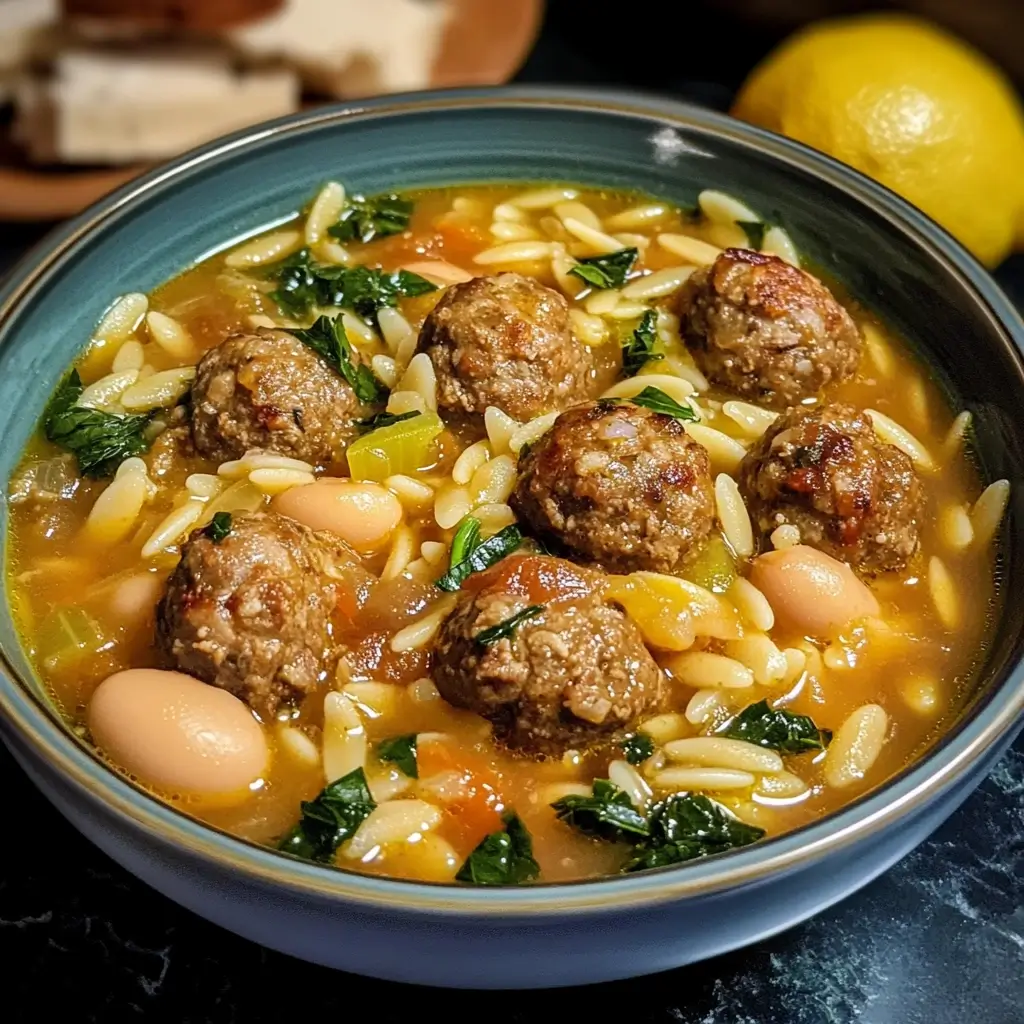

Meatball Stew with Orzo and White Beans has become a cherished staple in our home, a dish that effortlessly bridges the gap between hearty comfort food and wholesome nourishment. I remember the first time I made it; the aroma alone filled the kitchen with an inviting warmth, promising a meal that would satisfy both the stomach and the soul. My family, usually a tough crowd to please on weeknights, devoured it with gusto, the kids especially loving the tender meatballs and the fun little orzo pasta. What I appreciate most about this recipe is its versatility – it’s robust enough for a chilly evening yet light enough to enjoy year-round. It’s become my go-to when I crave something flavorful and satisfying without spending hours in the kitchen. This Meatball Stew with Orzo and White Beans is more than just a recipe; it’s a comforting hug in a bowl, perfect for bringing everyone together around the table.
Ingredients
To create this delicious and hearty Meatball Stew with Orzo and White Beans, you’ll need a selection of fresh, flavorful ingredients. Each component plays a vital role in building the depth of flavor and satisfying texture of the dish. Let’s break down each ingredient category and discuss why they are essential and how to choose the best options for your stew.
For the Meatballs:
- 1 pound Ground Meat (Beef, Pork, or a Blend): The foundation of our meatballs! The type of ground meat you choose significantly impacts the flavor and texture.
- Ground Beef: Opt for 80/20 ground beef for the best balance of flavor and moisture. The fat content renders during cooking, keeping the meatballs tender and juicy. Using leaner ground beef (90/10 or leaner) can result in drier meatballs unless you add extra moisture, like grated vegetables or breadcrumbs soaked in milk.
- Ground Pork: Ground pork adds a richer, slightly sweeter flavor to the meatballs. It’s also naturally fattier, which contributes to a more succulent texture. If you’re using ground pork, consider balancing its richness with a bit of ground beef or veal.
- Beef and Pork Blend: A 50/50 blend of ground beef and ground pork is a classic choice for meatballs, offering a wonderful combination of flavor and texture. You can also add a touch of ground veal to this blend for even more depth.
- Ground Turkey or Chicken (Leaner Option): For a lighter version, ground turkey or chicken can be used. However, these meats are leaner and tend to be drier. To compensate, ensure you add moisture-rich ingredients like grated zucchini, finely diced onions, or soaked breadcrumbs to the meatball mixture. You might also need to adjust cooking times slightly as leaner meats cook faster.
- 1/2 cup Breadcrumbs (Panko or Italian Style): Breadcrumbs act as a binder, holding the meatballs together and preventing them from becoming dense.
- Panko Breadcrumbs: Panko breadcrumbs are Japanese-style breadcrumbs that are coarser and lighter than traditional breadcrumbs. They create a more tender meatball texture.
- Italian Style Breadcrumbs: Italian style breadcrumbs are finer and often pre-seasoned with herbs and spices, adding extra flavor to the meatballs. You can use either, or even a combination of both. For a gluten-free option, use gluten-free breadcrumbs or finely ground almond flour.
- Fresh Breadcrumbs (from stale bread): For an even more authentic touch, you can make your own fresh breadcrumbs from stale bread. Simply pulse stale bread in a food processor until you achieve the desired crumb texture.
- 1/4 cup Grated Parmesan Cheese: Parmesan cheese adds a salty, savory, and nutty flavor to the meatballs. It also contributes to binding and helps create a golden-brown crust when cooked.
- Freshly Grated Parmesan: Freshly grated Parmesan cheese is always preferred for its superior flavor and texture compared to pre-grated options. Look for a block of Parmigiano-Reggiano or Grana Padano at your grocery store.
- Pecorino Romano (Alternative): Pecorino Romano, a sheep’s milk cheese, can be used as a substitute for Parmesan. It has a saltier and sharper flavor.
- 1 Egg (Large): The egg acts as a binder, further helping to hold the meatballs together and adding moisture. Use a large egg for the right balance of binding and moisture.
- Egg Substitutes (for allergies or dietary restrictions): If you have egg allergies or are following a vegan diet, you can use substitutes like flax eggs (1 tablespoon ground flaxseed meal mixed with 3 tablespoons of water, let sit for 5 minutes) or chia eggs (same ratio as flax eggs). These will provide binding and moisture similar to a chicken egg.
- 2 cloves Garlic (Minced): Garlic is a foundational flavor in Italian-inspired cuisine and adds a pungent, aromatic note to the meatballs. Freshly minced garlic is always best for flavor.
- Garlic Powder (Substitute): If you don’t have fresh garlic, you can use garlic powder as a substitute. Use about 1 teaspoon of garlic powder for every 2 cloves of fresh garlic. However, fresh garlic offers a brighter and more complex flavor.
- 1 teaspoon Dried Italian Herbs: Italian herbs are a blend of dried herbs like oregano, basil, rosemary, thyme, and marjoram. They provide a classic Italian flavor profile to the meatballs.
- Fresh Herbs (Alternative): If you have fresh Italian herbs on hand, you can use them instead of dried. Use about 1 tablespoon of chopped fresh herbs for every teaspoon of dried herbs. Fresh oregano, basil, and parsley are excellent additions.
- Salt and Black Pepper (to taste): Salt and pepper are essential seasonings that enhance the flavor of all the other ingredients. Season generously to taste, as salt is crucial for bringing out the flavors of the meat and other components. Freshly ground black pepper adds a more robust flavor than pre-ground pepper.
For the Stew:
- 2 tablespoons Olive Oil: Olive oil is the cooking fat for this stew, adding flavor and helping to sauté the vegetables. Extra virgin olive oil is preferred for its richer flavor and health benefits.
- Other Cooking Oils (Substitutes): You can use other cooking oils like avocado oil, canola oil, or vegetable oil if you don’t have olive oil. However, olive oil contributes a distinct Mediterranean flavor that complements the dish.
- 1 large Onion (Chopped): Onion forms the aromatic base of the stew, adding sweetness and depth of flavor as it cooks down. Yellow or white onions are suitable choices.
- Shallots (Alternative): For a milder, more delicate onion flavor, you can use shallots instead of a large onion. Use about 2-3 shallots, chopped.
- 2 Carrots (Chopped): Carrots add sweetness, color, and texture to the stew. They also contribute to the overall nutritional value.
- Celery (Addition): You can add 1-2 stalks of chopped celery along with the carrots and onions for a classic mirepoix base, which further enhances the flavor depth of the stew.
- 2 cloves Garlic (Minced): More garlic! Just like in the meatballs, garlic is crucial for flavoring the stew base. Freshly minced garlic is recommended.
- 1 (28-ounce) can Crushed Tomatoes: Crushed tomatoes form the liquid base of the stew and provide a rich, tomatoey flavor. Look for good quality crushed tomatoes for the best taste.
- Diced Tomatoes (Alternative): You can use diced tomatoes instead of crushed tomatoes for a chunkier stew. If using diced tomatoes, you might want to crush some of them slightly with a spoon or potato masher to thicken the sauce.
- Tomato Puree (for richer flavor): For a more concentrated tomato flavor, you can add a tablespoon or two of tomato puree or tomato paste along with the crushed tomatoes.
- 1 (15-ounce) can Cannellini Beans (White Kidney Beans), rinsed and drained: Cannellini beans add creamy texture, protein, and fiber to the stew. White kidney beans are a classic choice for Italian stews.
- Other White Beans (Substitutes): You can substitute cannellini beans with other white beans like Great Northern beans or navy beans. These beans have a similar creamy texture and mild flavor.
- 4 cups Chicken Broth (or Vegetable Broth for vegetarian option): Chicken broth provides the liquid volume for the stew and adds savory flavor. Low-sodium broth is recommended to control the salt level.
- Vegetable Broth (Vegetarian/Vegan Option): For a vegetarian or vegan version of the stew, use vegetable broth instead of chicken broth. Ensure the vegetable broth is flavorful to maintain the richness of the stew.
- Beef Broth (Richer Flavor): For a richer, more robust flavor, you can use beef broth instead of chicken broth, especially if you are using ground beef for the meatballs.
- 1 cup Orzo Pasta: Orzo pasta adds a delightful texture and heartiness to the stew. It cooks directly in the stew, absorbing the flavors.
- Other Small Pasta Shapes (Substitutes): You can use other small pasta shapes like ditalini, small shells, or acini de pepe instead of orzo. Cooking times may need to be adjusted slightly depending on the pasta shape.
- Rice (Gluten-Free Option): For a gluten-free option, you can substitute orzo with rice. Add the rice to the stew at a point where it will have sufficient time to cook through, considering the type of rice you are using (white rice cooks faster than brown rice).
- 1/2 cup Fresh Parsley (Chopped): Fresh parsley adds a bright, herbaceous, and fresh flavor to the stew, especially when added at the end. It also provides a pop of color.
- Fresh Basil (Addition): You can also add some fresh basil along with the parsley for an even more aromatic and herbaceous finish.
- Salt and Black Pepper (to taste): Season the stew generously with salt and black pepper to taste. Taste and adjust seasonings throughout the cooking process.
- Optional: Red Pepper Flakes (for a touch of heat): If you like a little heat, add a pinch of red pepper flakes to the stew along with the onions and carrots.
Instructions
Making this Meatball Stew with Orzo and White Beans is a straightforward process, broken down into manageable steps. Follow these instructions to create a delicious and satisfying meal. We’ll go through each stage in detail, ensuring you achieve perfect results every time.
Step 1: Prepare the Meatballs
- Combine Meatball Ingredients: In a large bowl, gently combine the ground meat, breadcrumbs, grated Parmesan cheese, egg, minced garlic, dried Italian herbs, salt, and black pepper. Use your hands to mix everything together until just combined. Be careful not to overmix, as this can result in tough meatballs. Overmixing develops the gluten in the breadcrumbs and proteins in the meat, leading to a denser texture. Aim for a mixture that is just cohesive.
- Form the Meatballs: Using your hands or a tablespoon, roll the meat mixture into 1-inch meatballs. Aim for uniform size so they cook evenly. Wet your hands with water or a little olive oil to prevent the meat mixture from sticking. Place the formed meatballs on a plate or baking sheet lined with parchment paper. This prevents them from sticking to the surface.
- Brown the Meatballs (Optional but Recommended): Heat 1 tablespoon of olive oil in a large Dutch oven or pot over medium-high heat. Working in batches to avoid overcrowding the pot, brown the meatballs on all sides until they are nicely seared. Browning adds a depth of flavor and color to the meatballs and helps to create a richer stew. Don’t worry about cooking them through at this stage; they will finish cooking in the stew. Remove the browned meatballs from the pot and set aside.
Step 2: Sauté the Vegetables for the Stew Base
- Sauté Aromatics: In the same pot (no need to clean it after browning the meatballs, as the browned bits add flavor), add the remaining 1 tablespoon of olive oil over medium heat. Add the chopped onion and carrots (and celery, if using). Sauté for 5-7 minutes, or until the onions become softened and translucent and the carrots are slightly tender. Stir occasionally to prevent sticking and ensure even cooking. Sautéing the vegetables softens them and releases their flavors, creating a flavorful foundation for the stew.
- Add Garlic and Spices (if using): Add the minced garlic and red pepper flakes (if using) to the pot and sauté for another minute until fragrant. Be careful not to burn the garlic, as it can become bitter. Sautéing garlic briefly releases its aroma and enhances its flavor.
Step 3: Build the Stew
- Add Tomatoes and Broth: Pour in the crushed tomatoes and chicken broth (or vegetable broth). Stir well to combine, scraping up any browned bits from the bottom of the pot. These browned bits, called fond, are packed with flavor and will enrich the stew.
- Add White Beans and Meatballs: Add the rinsed and drained cannellini beans and the browned meatballs to the pot. Gently stir to combine.
- Bring to a Simmer and Cook: Bring the stew to a simmer, then reduce the heat to low, cover the pot, and let it simmer for 20-25 minutes, or until the meatballs are cooked through and tender and the flavors have melded together. Simmering allows the flavors to deepen and develop, and it ensures the meatballs are fully cooked and infused with the stew’s flavor.
Step 4: Add Orzo Pasta and Finish Cooking
- Add Orzo Pasta: Stir in the orzo pasta into the simmering stew. Make sure the orzo is submerged in the liquid.
- Continue Simmering: Continue to simmer, uncovered, for another 10-12 minutes, or until the orzo pasta is cooked al dente and has absorbed some of the liquid. Stir occasionally to prevent the orzo from sticking to the bottom of the pot. Orzo cooks relatively quickly, and simmering uncovered allows the stew to thicken slightly as the pasta releases starch.
- Check Seasoning and Adjust: Taste the stew and adjust seasoning with salt and black pepper as needed. Seasoning is crucial at this stage to ensure the final dish is flavorful. You may need to add more salt than you initially think.
Step 5: Garnish and Serve
- Stir in Fresh Parsley: Stir in the chopped fresh parsley just before serving. Fresh parsley adds a burst of freshness and brightness to the finished stew.
- Serve Hot: Serve the Meatball Stew with Orzo and White Beans hot, garnished with extra fresh parsley and a sprinkle of grated Parmesan cheese, if desired.
Nutrition Facts
(Note: Nutritional information is an estimate and can vary based on specific ingredients and portion sizes.)
Servings: Approximately 6 servings
Estimated Calories per Serving: 450-550 calories
Approximate Breakdown per Serving:
- Protein: 30-35 grams
- Fat: 20-25 grams
- Carbohydrates: 40-50 grams
- Fiber: 8-10 grams
Key Nutritional Highlights:
- High in Protein: From the meatballs and white beans, this stew is a good source of protein, essential for muscle building and satiety.
- Good Source of Fiber: White beans, vegetables, and orzo contribute to a good amount of dietary fiber, promoting digestive health and helping you feel full.
- Rich in Vitamins and Minerals: Tomatoes provide Vitamin C and lycopene, carrots offer Vitamin A, and the overall dish contains various vitamins and minerals from the vegetables, beans, and herbs.
- Balanced Macronutrients: This stew provides a balanced combination of protein, fats, and carbohydrates, making it a satisfying and nutritious meal.
Disclaimer: These nutritional values are estimates and for informational purposes only. Actual values may vary. For precise nutritional information, use a nutrition calculator with the specific brands and quantities of ingredients used.
Preparation Time
This Meatball Stew with Orzo and White Beans is wonderfully achievable, even on a weeknight. Here’s a breakdown of the preparation and cooking times:
- Prep Time: 30 minutes (includes preparing meatballs and chopping vegetables)
- Meatball Preparation: 15 minutes (mixing ingredients and forming meatballs)
- Vegetable Preparation: 15 minutes (chopping onions, carrots, garlic, and parsley)
- Cook Time: 45 minutes
- Meatball Browning (Optional): 10 minutes
- Vegetable Sautéing: 7 minutes
- Stew Simmering (before Orzo): 25 minutes
- Simmering with Orzo: 12 minutes
Total Time: Approximately 1 hour 15 minutes
This recipe is efficient, with active cooking time interspersed with simmering time, allowing you to multitask or relax while the stew develops its flavors. The browning of the meatballs, though optional, adds a significant depth of flavor and is highly recommended if you have the extra time.
How to Serve
Meatball Stew with Orzo and White Beans is a complete meal in itself, but you can elevate the dining experience with thoughtful serving suggestions. Consider these options to complement and enhance your stew:
- Crusty Bread:
- Serve with warm, crusty bread like Italian bread, sourdough, or baguette.
- Bread is perfect for soaking up the flavorful stew broth and enjoying every last drop.
- Consider toasting the bread lightly with a drizzle of olive oil and a sprinkle of herbs for extra flavor and texture.
- Grated Parmesan Cheese:
- Offer freshly grated Parmesan cheese at the table for guests to sprinkle over their stew.
- Parmesan adds a salty, savory, and umami-rich finish that complements the tomato-based stew beautifully.
- Pecorino Romano or Grana Padano are also excellent alternatives for a slightly different cheese flavor profile.
- Fresh Herbs (Extra Parsley or Basil):
- Garnish each bowl with an extra sprinkle of fresh chopped parsley or basil.
- Fresh herbs provide a vibrant aroma and a pop of color, enhancing the visual appeal and freshness of the dish.
- A chiffonade of basil leaves or a sprig of parsley can make a simple yet elegant garnish.
- Side Salad:
- Pair the hearty stew with a light and refreshing side salad.
- A simple green salad with a vinaigrette dressing provides a contrast in texture and flavor to the rich stew.
- Consider a salad with bitter greens like arugula or radicchio to balance the richness of the stew, or a Caprese salad for an Italian-inspired pairing.
- Garlic Bread:
- Garlic bread is a classic accompaniment to Italian-American dishes and works wonderfully with this stew.
- Homemade garlic bread, or even store-bought high-quality garlic bread, adds another layer of comforting flavor.
- For a lighter option, try bruschetta – toasted bread rubbed with garlic and topped with fresh tomatoes and basil.
- Glass of Red Wine (Optional, for adults):
- For a truly Italian-inspired meal, serve with a glass of medium-bodied red wine.
- Chianti, Sangiovese, or a light-bodied Merlot would pair well with the tomato-based stew and savory meatballs.
- The acidity and tannins in red wine can cut through the richness of the stew and complement its flavors.
Additional Tips
To make your Meatball Stew with Orzo and White Beans even more delicious and successful, consider these helpful tips:
- Don’t Overmix the Meatball Mixture: Overmixing the meatball mixture can result in tough meatballs. Mix the ingredients gently until just combined. Think of folding the ingredients together rather than vigorously kneading them. A light hand will ensure tender meatballs.
- Brown the Meatballs for Deeper Flavor: While optional, browning the meatballs before adding them to the stew significantly enhances the flavor. The Maillard reaction during browning creates complex flavors and adds a richer, more savory dimension to the dish. Take the time to brown them on all sides for the best results.
- Simmer Low and Slow for Flavor Development: Simmering the stew for the recommended time, or even a bit longer, allows the flavors to meld and deepen. Low and slow cooking is key to developing rich and complex flavors in stews and braises. Avoid boiling, as this can toughen the meatballs; a gentle simmer is ideal.
- Adjust Liquid Consistency to Your Preference: Depending on your preference for stew consistency, you can adjust the amount of chicken broth. For a thicker stew, use slightly less broth or simmer uncovered for a longer time to reduce the liquid. For a soupier stew, add a bit more broth. You can also add a touch of tomato paste for a richer, thicker sauce.
- Make it Ahead for Even Better Flavor: This stew is an excellent make-ahead dish. The flavors actually improve overnight and the next day as they have more time to meld together in the refrigerator. Prepare the stew a day in advance and reheat it gently before serving. This is perfect for meal prepping or for busy weeknights.
FAQ Section
Q1: Can I use frozen meatballs instead of making them from scratch?
A: Yes, you can use frozen meatballs to save time. However, for the best flavor and texture, homemade meatballs are highly recommended. If using frozen meatballs, choose high-quality ones and ensure they are fully cooked through when added to the stew. You can brown frozen meatballs in the pot before adding the vegetables to add some depth of flavor, or simply add them directly to the stew and adjust cooking time accordingly.
Q2: Can I substitute the orzo pasta with another type of pasta or grain?
A: Absolutely! If you don’t have orzo, you can substitute it with other small pasta shapes like ditalini, small shells, or acini de pepe. Cooking times may vary slightly, so check the pasta package instructions and adjust accordingly. For a gluten-free option, you can use rice (white or brown rice, consider cooking times for different rice types) or quinoa. If using rice or quinoa, you might need to add a bit more broth as they tend to absorb more liquid than pasta.
Q3: Is this stew freezer-friendly?
A: Yes, Meatball Stew with Orzo and White Beans freezes very well. Allow the stew to cool completely before transferring it to freezer-safe containers or zip-top bags. When freezing pasta-based dishes, be aware that the pasta may become slightly softer upon thawing and reheating. To minimize this, you can slightly undercook the orzo initially. Thaw the stew overnight in the refrigerator and reheat gently on the stovetop or in the microwave until heated through.
Q4: Can I make this stew vegetarian or vegan?
A: Yes, with some modifications! To make it vegetarian, replace the ground meat in the meatballs with plant-based ground meat alternatives or a mixture of lentils and finely chopped vegetables and breadcrumbs. Use vegetable broth instead of chicken broth. For a vegan version, ensure your breadcrumbs and Parmesan cheese substitute (if using a vegan Parmesan alternative) are vegan-friendly. You can also omit the cheese altogether or use nutritional yeast for a cheesy flavor. Consider adding extra vegetables like mushrooms or zucchini for more heartiness.
Q5: How can I make this stew spicier?
A: If you like a spicier stew, there are several ways to add heat. You can increase the amount of red pepper flakes or add a pinch of cayenne pepper to the meatball mixture and/or the stew base. You can also add a chopped fresh chili pepper (like jalapeño or serrano) along with the onions and carrots. Another option is to serve the stew with a drizzle of chili oil or a side of hot sauce for those who want to add extra heat to their individual servings.
Print
Meatball Stew with Orzo and White Beans Recipe
Ingredients
For the Meatballs:
- 1 pound Ground Meat (Beef, Pork, or a Blend): The foundation of our meatballs! The type of ground meat you choose significantly impacts the flavor and texture.
- Ground Beef: Opt for 80/20 ground beef for the best balance of flavor and moisture. The fat content renders during cooking, keeping the meatballs tender and juicy. Using leaner ground beef (90/10 or leaner) can result in drier meatballs unless you add extra moisture, like grated vegetables or breadcrumbs soaked in milk.
- Ground Pork: Ground pork adds a richer, slightly sweeter flavor to the meatballs. It’s also naturally fattier, which contributes to a more succulent texture. If you’re using ground pork, consider balancing its richness with a bit of ground beef or veal.
- Beef and Pork Blend: A 50/50 blend of ground beef and ground pork is a classic choice for meatballs, offering a wonderful combination of flavor and texture. You can also add a touch of ground veal to this blend for even more depth.
- Ground Turkey or Chicken (Leaner Option): For a lighter version, ground turkey or chicken can be used. However, these meats are leaner and tend to be drier. To compensate, ensure you add moisture-rich ingredients like grated zucchini, finely diced onions, or soaked breadcrumbs to the meatball mixture. You might also need to adjust cooking times slightly as leaner meats cook faster.
- 1/2 cup Breadcrumbs (Panko or Italian Style): Breadcrumbs act as a binder, holding the meatballs together and preventing them from becoming dense.
- Panko Breadcrumbs: Panko breadcrumbs are Japanese-style breadcrumbs that are coarser and lighter than traditional breadcrumbs. They create a more tender meatball texture.
- Italian Style Breadcrumbs: Italian style breadcrumbs are finer and often pre-seasoned with herbs and spices, adding extra flavor to the meatballs. You can use either, or even a combination of both. For a gluten-free option, use gluten-free breadcrumbs or finely ground almond flour.
- Fresh Breadcrumbs (from stale bread): For an even more authentic touch, you can make your own fresh breadcrumbs from stale bread. Simply pulse stale bread in a food processor until you achieve the desired crumb texture.
- 1/4 cup Grated Parmesan Cheese: Parmesan cheese adds a salty, savory, and nutty flavor to the meatballs. It also contributes to binding and helps create a golden-brown crust when cooked.
- Freshly Grated Parmesan: Freshly grated Parmesan cheese is always preferred for its superior flavor and texture compared to pre-grated options. Look for a block of Parmigiano-Reggiano or Grana Padano at your grocery store.
- Pecorino Romano (Alternative): Pecorino Romano, a sheep’s milk cheese, can be used as a substitute for Parmesan. It has a saltier and sharper flavor.
- 1 Egg (Large): The egg acts as a binder, further helping to hold the meatballs together and adding moisture. Use a large egg for the right balance of binding and moisture.
- Egg Substitutes (for allergies or dietary restrictions): If you have egg allergies or are following a vegan diet, you can use substitutes like flax eggs (1 tablespoon ground flaxseed meal mixed with 3 tablespoons of water, let sit for 5 minutes) or chia eggs (same ratio as flax eggs). These will provide binding and moisture similar to a chicken egg.
- 2 cloves Garlic (Minced): Garlic is a foundational flavor in Italian-inspired cuisine and adds a pungent, aromatic note to the meatballs. Freshly minced garlic is always best for flavor.
- Garlic Powder (Substitute): If you don’t have fresh garlic, you can use garlic powder as a substitute. Use about 1 teaspoon of garlic powder for every 2 cloves of fresh garlic. However, fresh garlic offers a brighter and more complex flavor.
- 1 teaspoon Dried Italian Herbs: Italian herbs are a blend of dried herbs like oregano, basil, rosemary, thyme, and marjoram. They provide a classic Italian flavor profile to the meatballs.
- Fresh Herbs (Alternative): If you have fresh Italian herbs on hand, you can use them instead of dried. Use about 1 tablespoon of chopped fresh herbs for every teaspoon of dried herbs. Fresh oregano, basil, and parsley are excellent additions.
- Salt and Black Pepper (to taste): Salt and pepper are essential seasonings that enhance the flavor of all the other ingredients. Season generously to taste, as salt is crucial for bringing out the flavors of the meat and other components. Freshly ground black pepper adds a more robust flavor than pre-ground pepper.
For the Stew:
- 2 tablespoons Olive Oil: Olive oil is the cooking fat for this stew, adding flavor and helping to sauté the vegetables. Extra virgin olive oil is preferred for its richer flavor and health benefits.
- Other Cooking Oils (Substitutes): You can use other cooking oils like avocado oil, canola oil, or vegetable oil if you don’t have olive oil. However, olive oil contributes a distinct Mediterranean flavor that complements the dish.
- 1 large Onion (Chopped): Onion forms the aromatic base of the stew, adding sweetness and depth of flavor as it cooks down. Yellow or white onions are suitable choices.
- Shallots (Alternative): For a milder, more delicate onion flavor, you can use shallots instead of a large onion. Use about 2-3 shallots, chopped.
- 2 Carrots (Chopped): Carrots add sweetness, color, and texture to the stew. They also contribute to the overall nutritional value.
- Celery (Addition): You can add 1-2 stalks of chopped celery along with the carrots and onions for a classic mirepoix base, which further enhances the flavor depth of the stew.
- 2 cloves Garlic (Minced): More garlic! Just like in the meatballs, garlic is crucial for flavoring the stew base. Freshly minced garlic is recommended.
- 1 (28-ounce) can Crushed Tomatoes: Crushed tomatoes form the liquid base of the stew and provide a rich, tomatoey flavor. Look for good quality crushed tomatoes for the best taste.
- Diced Tomatoes (Alternative): You can use diced tomatoes instead of crushed tomatoes for a chunkier stew. If using diced tomatoes, you might want to crush some of them slightly with a spoon or potato masher to thicken the sauce.
- Tomato Puree (for richer flavor): For a more concentrated tomato flavor, you can add a tablespoon or two of tomato puree or tomato paste along with the crushed tomatoes.
- 1 (15-ounce) can Cannellini Beans (White Kidney Beans), rinsed and drained: Cannellini beans add creamy texture, protein, and fiber to the stew. White kidney beans are a classic choice for Italian stews.
- Other White Beans (Substitutes): You can substitute cannellini beans with other white beans like Great Northern beans or navy beans. These beans have a similar creamy texture and mild flavor.
- 4 cups Chicken Broth (or Vegetable Broth for vegetarian option): Chicken broth provides the liquid volume for the stew and adds savory flavor. Low-sodium broth is recommended to control the salt level.
- Vegetable Broth (Vegetarian/Vegan Option): For a vegetarian or vegan version of the stew, use vegetable broth instead of chicken broth. Ensure the vegetable broth is flavorful to maintain the richness of the stew.
- Beef Broth (Richer Flavor): For a richer, more robust flavor, you can use beef broth instead of chicken broth, especially if you are using ground beef for the meatballs.
- 1 cup Orzo Pasta: Orzo pasta adds a delightful texture and heartiness to the stew. It cooks directly in the stew, absorbing the flavors.
- Other Small Pasta Shapes (Substitutes): You can use other small pasta shapes like ditalini, small shells, or acini de pepe instead of orzo. Cooking times may need to be adjusted slightly depending on the pasta shape.
- Rice (Gluten-Free Option): For a gluten-free option, you can substitute orzo with rice. Add the rice to the stew at a point where it will have sufficient time to cook through, considering the type of rice you are using (white rice cooks faster than brown rice).
- 1/2 cup Fresh Parsley (Chopped): Fresh parsley adds a bright, herbaceous, and fresh flavor to the stew, especially when added at the end. It also provides a pop of color.
- Fresh Basil (Addition): You can also add some fresh basil along with the parsley for an even more aromatic and herbaceous finish.
- Salt and Black Pepper (to taste): Season the stew generously with salt and black pepper to taste. Taste and adjust seasonings throughout the cooking process.
- Optional: Red Pepper Flakes (for a touch of heat): If you like a little heat, add a pinch of red pepper flakes to the stew along with the onions and carrots.
Instructions
Step 1: Prepare the Meatballs
- Combine Meatball Ingredients: In a large bowl, gently combine the ground meat, breadcrumbs, grated Parmesan cheese, egg, minced garlic, dried Italian herbs, salt, and black pepper. Use your hands to mix everything together until just combined. Be careful not to overmix, as this can result in tough meatballs. Overmixing develops the gluten in the breadcrumbs and proteins in the meat, leading to a denser texture. Aim for a mixture that is just cohesive.
- Form the Meatballs: Using your hands or a tablespoon, roll the meat mixture into 1-inch meatballs. Aim for uniform size so they cook evenly. Wet your hands with water or a little olive oil to prevent the meat mixture from sticking. Place the formed meatballs on a plate or baking sheet lined with parchment paper. This prevents them from sticking to the surface.
- Brown the Meatballs (Optional but Recommended): Heat 1 tablespoon of olive oil in a large Dutch oven or pot over medium-high heat. Working in batches to avoid overcrowding the pot, brown the meatballs on all sides until they are nicely seared. Browning adds a depth of flavor and color to the meatballs and helps to create a richer stew. Don’t worry about cooking them through at this stage; they will finish cooking in the stew. Remove the browned meatballs from the pot and set aside.
Step 2: Sauté the Vegetables for the Stew Base
- Sauté Aromatics: In the same pot (no need to clean it after browning the meatballs, as the browned bits add flavor), add the remaining 1 tablespoon of olive oil over medium heat. Add the chopped onion and carrots (and celery, if using). Sauté for 5-7 minutes, or until the onions become softened and translucent and the carrots are slightly tender. Stir occasionally to prevent sticking and ensure even cooking. Sautéing the vegetables softens them and releases their flavors, creating a flavorful foundation for the stew.
- Add Garlic and Spices (if using): Add the minced garlic and red pepper flakes (if using) to the pot and sauté for another minute until fragrant. Be careful not to burn the garlic, as it can become bitter. Sautéing garlic briefly releases its aroma and enhances its flavor.
Step 3: Build the Stew
- Add Tomatoes and Broth: Pour in the crushed tomatoes and chicken broth (or vegetable broth). Stir well to combine, scraping up any browned bits from the bottom of the pot. These browned bits, called fond, are packed with flavor and will enrich the stew.
- Add White Beans and Meatballs: Add the rinsed and drained cannellini beans and the browned meatballs to the pot. Gently stir to combine.
- Bring to a Simmer and Cook: Bring the stew to a simmer, then reduce the heat to low, cover the pot, and let it simmer for 20-25 minutes, or until the meatballs are cooked through and tender and the flavors have melded together. Simmering allows the flavors to deepen and develop, and it ensures the meatballs are fully cooked and infused with the stew’s flavor.
Step 4: Add Orzo Pasta and Finish Cooking
- Add Orzo Pasta: Stir in the orzo pasta into the simmering stew. Make sure the orzo is submerged in the liquid.
- Continue Simmering: Continue to simmer, uncovered, for another 10-12 minutes, or until the orzo pasta is cooked al dente and has absorbed some of the liquid. Stir occasionally to prevent the orzo from sticking to the bottom of the pot. Orzo cooks relatively quickly, and simmering uncovered allows the stew to thicken slightly as the pasta releases starch.
- Check Seasoning and Adjust: Taste the stew and adjust seasoning with salt and black pepper as needed. Seasoning is crucial at this stage to ensure the final dish is flavorful. You may need to add more salt than you initially think.
Step 5: Garnish and Serve
- Stir in Fresh Parsley: Stir in the chopped fresh parsley just before serving. Fresh parsley adds a burst of freshness and brightness to the finished stew.
- Serve Hot: Serve the Meatball Stew with Orzo and White Beans hot, garnished with extra fresh parsley and a sprinkle of grated Parmesan cheese, if desired.
Nutrition
- Serving Size: one normal portion
- Calories: 450-550
- Fat: 20-25 grams
- Carbohydrates: 40-50 grams
- Fiber: 8-10 grams
- Protein: 30-35 grams