
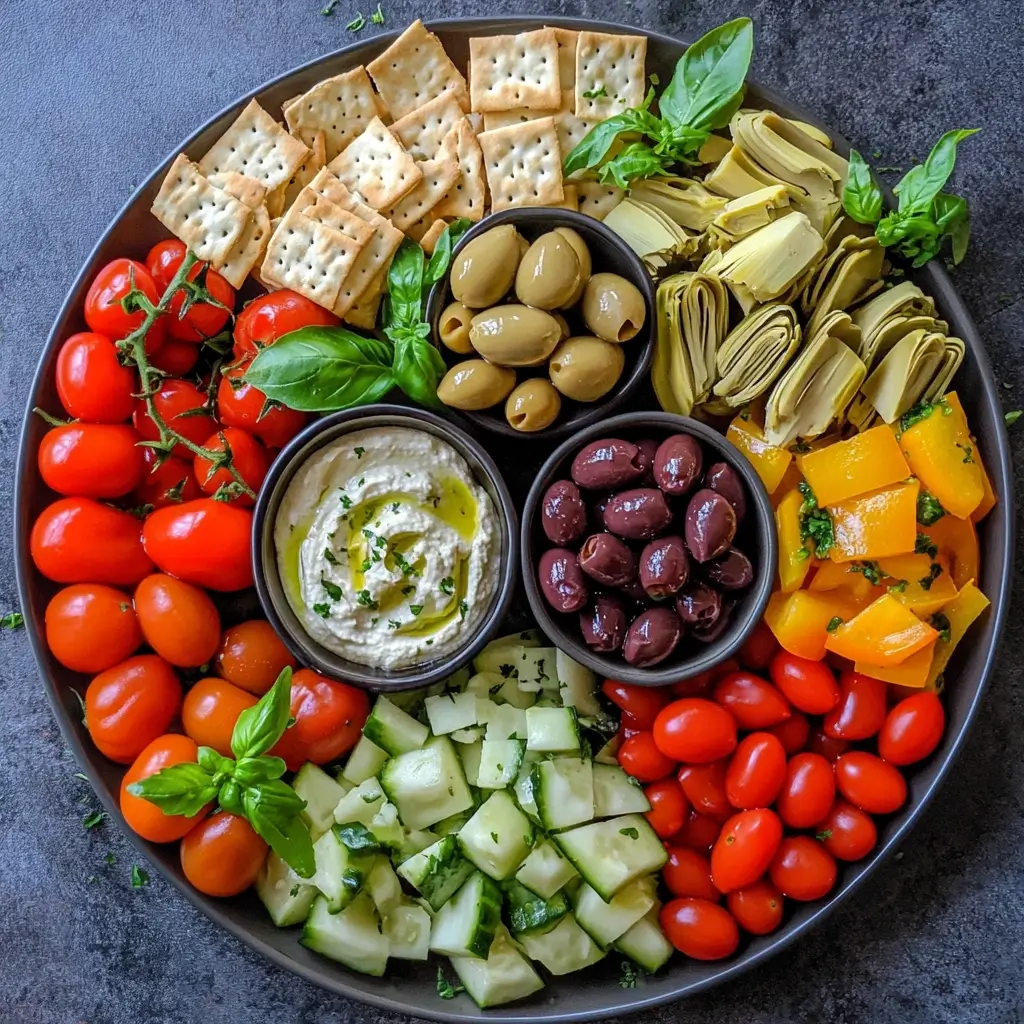
The Mediterranean Antipasto Platter is a delightful array of flavors and textures that promises to transport your taste buds to the sun-kissed shores of the Mediterranean. This dish is not only visually appealing but also offers a rich blend of nutrients, making it a perfect starter for gatherings or a light meal. In this article, we will explore how to create an exquisite Mediterranean Antipasto Platter, delve into its nutritional benefits, and offer some handy tips and FAQs to ensure your platter is the star of any occasion.
Ingredients
To craft the perfect Mediterranean Antipasto Platter, you’ll need the following ingredients. These are carefully chosen to provide a harmonious blend of flavors:
- 1 cup olives (mixed varieties)
- 1 cup cherry tomatoes, halved
- 1 cup cucumber, sliced
- 1 cup bell peppers, sliced
- 1 cup artichoke hearts (jarred or canned)
- 1 cup hummus (your choice of flavor)
- 1 cup feta cheese, cubed (or vegan cheese)
- 1 cup whole grain crackers or pita chips
- Fresh basil or parsley for garnish
Instructions
Creating a Mediterranean Antipasto Platter is as easy as it is rewarding. Follow these simple steps to assemble your platter:
- Arrange the Ingredients: Begin by arranging the olives, cherry tomatoes, cucumber, bell peppers, artichoke hearts, and feta cheese on a large platter. Ensure the ingredients are spread out evenly to create a visually appealing arrangement.
- Add the Hummus: Place small bowls of hummus on the platter. Position them strategically among the other ingredients for ease of access and visual balance.
- Scatter the Crackers: Distribute the whole grain crackers or pita chips around the vegetables and dips. This not only adds texture but also complements the flavors of the other components.
- Garnish: For a pop of color and added freshness, garnish the platter with fresh basil or parsley. This simple touch elevates the dish’s presentation.
- Serve and Enjoy: Once your platter is assembled, it’s ready to serve. Enjoy the medley of flavors with friends and family!
Nutrition Facts
Understanding the nutritional content of your Mediterranean Antipasto Platter is essential, especially if you’re mindful of your dietary intake. Here’s a breakdown of the nutrition facts per serving (serves 4):
- Calories: 250
- Protein: 8g
- Carbohydrates: 30g
- Dietary Fiber: 6g
- Total Fat: 12g
- Saturated Fat: 4g
How to Serve
The Mediterranean Antipasto Platter is a versatile dish that can be served in various ways to suit different occasions. Its vibrant colors, diverse flavors, and multitude of textures make it an appealing choice for any event or meal. Here’s a detailed look at some of the best ways to serve this delightful dish:
As an Appetizer
The Mediterranean Antipasto Platter is an ideal starter for parties, gatherings, or any festive occasion. When serving as an appetizer, consider these tips to enhance the experience:
- Presentation: Use a large, round platter or a wooden board to display the ingredients. Artfully arrange the items, grouping similar flavors together, such as olives, cheeses, and cured meats. Garnish with fresh herbs like basil or rosemary for added color and aroma.
- Serving Size: Aim for a variety of items to ensure there’s something for everyone. A good rule of thumb is to include at least three types of cheeses, two types of cured meats, a selection of olives, marinated vegetables, and dips like hummus or tzatziki.
- Accompaniments: Provide a selection of crackers, breadsticks, or slices of crusty bread alongside the platter. This adds a satisfying crunch and offers a way for guests to create their own personalized bites.
- Interactive Element: Encourage guests to assemble their own combinations from the platter. This not only makes for a more engaging experience but also allows them to tailor their bites to their personal preferences.
Light Lunch
The Mediterranean Antipasto Platter can easily transition into a light lunch option, making it both nutritious and satisfying. Here are some suggestions for serving it as a meal:
- Pairing with Salads: Serve the antipasto platter alongside a simple green salad or a grain-based salad like quinoa or tabbouleh. The freshness of the salad complements the rich flavors of the antipasto, while the variety of textures keeps the meal interesting.
- Soup Side: For a heartier option, pair the platter with a warm bowl of soup, such as a classic minestrone or a creamy tomato basil soup. The warmth of the soup balances the cool, fresh elements of the antipasto, creating a satisfying lunch.
- Wraps and Sandwiches: Use the components of the antipasto to create wraps or sandwiches. Spread hummus or pesto on a whole grain wrap, layer with slices of salami, cheese, and roasted vegetables for a flavorful, portable meal.
Picnic Delight
The Mediterranean Antipasto Platter is a great choice for picnics, offering a refreshing and easy outdoor meal. Here’s how to make the most of it:
- Packing Tips: Pack the components separately in airtight containers to keep everything fresh. Consider using small jars for dips and spreads, and wrap bread and crackers in parchment to prevent them from becoming soggy.
- Assembly at the Picnic Spot: Once you arrive at your picnic location, set up a designated area with a blanket and arrange the items on a portable picnic table or a large cutting board. This not only keeps everything organized but also adds an element of elegance to your outdoor dining experience.
- Beverage Pairings: Don’t forget to bring along refreshing beverages. Sparkling water with lemon slices or a light, fruity sangria can enhance the flavors of the antipasto while keeping the picnic vibe light and enjoyable.
Wine Pairing
Enhancing the flavors of the Mediterranean Antipasto Platter with the right wine can elevate your dining experience. Here are some suggestions for perfect pairings:
- Crisp White Wines: Wines such as Sauvignon Blanc, Pinot Grigio, or a dry Riesling complement the fresh, briny flavors of olives and cheeses beautifully. Their acidity cuts through the richness of cured meats, providing a balanced palate experience.
- Light Reds: If you prefer red wine, consider a light-bodied option like Pinot Noir or Gamay. These wines offer fruity notes that harmonize well with the savory elements of the platter without overwhelming the palate.
- Rosé Options: A chilled rosé is another excellent choice, as it combines the best of both worlds, offering refreshing fruitiness and a hint of structure. It pairs wonderfully with a variety of antipasto ingredients, making it a versatile choice for any gathering.
- Serving Temperature: Be mindful of serving your wines at the right temperature. White wines should be chilled, while light reds can be served slightly below room temperature for an optimal tasting experience.
By considering these serving suggestions, you can transform the Mediterranean Antipasto Platter into a delightful centerpiece that caters to a variety of occasions, ensuring that every guest leaves satisfied and impressed.
Additional Tips
To truly impress your guests and enhance the overall experience of your Mediterranean Antipasto Platter, consider implementing these detailed tips. Each suggestion is designed not only to diversify flavors but also to create a visually stunning and memorable presentation.
1. Variety of Olives
Olives are a cornerstone of any antipasto platter, offering briny richness and a delightful contrast to other ingredients. To elevate your platter:
- Choose a Range of Types: Incorporate a mix of Kalamata olives, known for their dark purple hue and rich, fruity flavor; green olives, which are typically firmer and have a slightly bitter taste; and stuffed olives, such as those filled with pimentos, garlic, or blue cheese, for added surprise.
- Marinate Your Olives: Consider marinating your olives in a mixture of olive oil, lemon zest, garlic, and herbs like oregano or thyme. This adds an extra layer of flavor and makes them more aromatic.
- Serve with Olive Picks: Provide small toothpicks or olive picks for easy serving. This not only enhances the experience but also encourages guests to sample more varieties.
2. Hummus Flavors
Hummus serves as a creamy and nutritious dip that complements the savory elements of the platter. To keep your offering exciting:
- Variety is Key: In addition to traditional plain hummus, include exciting flavors such as roasted red pepper, which adds a sweet smokiness; garlic, which brings a bold punch; or lemon hummus for a zesty kick.
- Create a Hummus Bar: Present multiple hummus options in small bowls, garnished with corresponding toppings such as chopped herbs, paprika, or toasted pine nuts. This not only encourages guests to customize their experience but also adds vibrant colors to the platter.
- Consider Other Dips: Alongside hummus, include other Mediterranean dips like baba ganoush or tzatziki to further diversify the spread and cater to different tastes.
3. Cheese Alternatives
For guests with dietary restrictions, providing vegan options can ensure everyone enjoys the platter:
- Explore Vegan Cheese Options: Look for plant-based cheeses made from nuts, soy, or coconut that mimic the textures and flavors of traditional cheeses. Brands often offer varieties that replicate feta, mozzarella, or even aged cheeses.
- Incorporate Plant-Based Spreads: Additionally, consider using spreads made from blended nuts or seeds, such as cashew cream or almond cheese, which can add creaminess to the platter while being entirely plant-based.
- Label Clearly: If you offer both dairy and vegan options, label them clearly to avoid confusion and help guests make informed choices.
4. Herb Infusion
A drizzle of infused olive oil can elevate the flavors of your platter significantly:
- Create Your Own Infused Oil: Combine high-quality extra virgin olive oil with fresh herbs such as rosemary, thyme, or basil. Let the mixture sit for at least a few hours (or overnight) to allow the flavors to meld.
- Add Flavorful Accents: You can also incorporate crushed red pepper flakes or garlic cloves into the oil for additional flavor. Drizzling this oil over the platter not only enhances the taste but also adds a glistening, appetizing appearance.
- Serve with Fresh Herbs: Garnish the platter with sprigs of fresh herbs for a pop of color and a fresh aroma, enticing guests even further.
5. Seasonal Ingredients
Utilizing seasonal produce can make your antipasto platter not only more vibrant but also fresher:
- Select Seasonal Vegetables: Depending on the time of year, include seasonal vegetables such as roasted butternut squash in fall, heirloom tomatoes in summer, or crunchy cucumbers in spring. Each season offers unique flavors and textures that can enhance the overall experience.
- Incorporate Fresh Fruits: Add seasonal fruits like figs, pears, or grapes to provide a sweet contrast to the savory elements. They can be served whole, sliced, or even as part of a fruit salad for an added touch of freshness.
- Highlight Local Produce: If possible, source ingredients from local farmers’ markets. This not only supports local agriculture but also ensures that your platter is made with the freshest ingredients available.
By thoughtfully incorporating these tips into your Mediterranean Antipasto Platter, you can create a diverse, flavorful, and visually appealing spread that will delight your guests and elevate any gathering.
FAQs
Q1: Can I prepare the platter in advance? A: Yes, you can prepare most components of the platter in advance. However, it’s best to add the crackers and garnish just before serving to maintain their texture and freshness.
Q2: How do I store leftovers? A: Store leftovers in airtight containers in the refrigerator. It’s advisable to store wet ingredients like olives and artichoke hearts separately from dry ingredients like crackers to prevent sogginess.
Q3: What other items can I add to the platter? A: You can customize your platter with additional items such as marinated mushrooms, roasted red peppers, or slices of cured meats like prosciutto or salami for a non-vegetarian option.
Q4: Is the platter suitable for gluten-free diets? A: Yes, simply substitute the whole grain crackers or pita chips with gluten-free alternatives to make the platter gluten-free.
Conclusion
The Mediterranean Antipasto Platter is a feast for the senses, offering a harmonious blend of flavors, textures, and colors that reflect the rich culinary heritage of the Mediterranean region. Perfect for any occasion, this platter is both elegant and easy to prepare, making it an excellent choice for entertaining guests, enjoying a casual meal, or elevating a simple gathering.
One of the most appealing aspects of this dish is its versatility. With a variety of fresh vegetables, cured meats, cheeses, olives, and dips like hummus or tzatziki, the platter can be tailored to suit your preferences and dietary needs. Add roasted red peppers, marinated artichokes, or sun-dried tomatoes for a burst of flavor, or include warm, crusty bread or crackers to complete the experience. The endless customization options ensure that every platter is unique and perfectly suited to the occasion.
Beyond its delicious flavors, the Mediterranean Antipasto Platter is a nod to the healthful qualities of the Mediterranean diet. Rich in heart-healthy fats from olive oil, fiber from fresh produce, and protein from meats and cheeses, it’s a balanced, nutrient-packed option that satisfies both the palate and the body. Its fresh and wholesome ingredients make it a guilt-free indulgence that can be enjoyed any time of day.
Preparing the platter is as enjoyable as eating it. Arrange the components artfully on a large serving board or platter, creating a visually stunning display that invites everyone to dig in. The process is simple yet rewarding, allowing you to focus on presentation and creativity rather than complex cooking techniques.
The Mediterranean Antipasto Platter is more than just a dish—it’s an experience. It encourages communal dining, where friends and family gather around, share stories, and enjoy the variety of tastes and textures. Its vibrant presentation and bold flavors bring a touch of the Mediterranean’s warmth and hospitality to your table.
So, gather your favorite ingredients, let your creativity flow, and assemble a platter that reflects the beauty and bounty of Mediterranean cuisine. Whether it’s for a festive occasion or a relaxed evening at home, the Mediterranean Antipasto Platter is sure to delight and leave a lasting impression. Enjoy every bite and savor the essence of the Mediterranean!
Print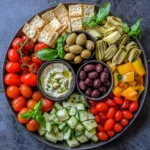
Mediterranean Antipasto Platter
Ingredients
To craft the perfect Mediterranean Antipasto Platter, you’ll need the following ingredients. These are carefully chosen to provide a harmonious blend of flavors:
- 1 cup olives (mixed varieties)
- 1 cup cherry tomatoes, halved
- 1 cup cucumber, sliced
- 1 cup bell peppers, sliced
- 1 cup artichoke hearts (jarred or canned)
- 1 cup hummus (your choice of flavor)
- 1 cup feta cheese, cubed (or vegan cheese)
- 1 cup whole grain crackers or pita chips
- Fresh basil or parsley for garnish
Instructions
Creating a Mediterranean Antipasto Platter is as easy as it is rewarding. Follow these simple steps to assemble your platter:
- Arrange the Ingredients: Begin by arranging the olives, cherry tomatoes, cucumber, bell peppers, artichoke hearts, and feta cheese on a large platter. Ensure the ingredients are spread out evenly to create a visually appealing arrangement.
- Add the Hummus: Place small bowls of hummus on the platter. Position them strategically among the other ingredients for ease of access and visual balance.
- Scatter the Crackers: Distribute the whole grain crackers or pita chips around the vegetables and dips. This not only adds texture but also complements the flavors of the other components.
- Garnish: For a pop of color and added freshness, garnish the platter with fresh basil or parsley. This simple touch elevates the dish’s presentation.
- Serve and Enjoy: Once your platter is assembled, it’s ready to serve. Enjoy the medley of flavors with friends and family!
Nutrition
- Serving Size: 1 normal portion
- Calories: 250
- Fat: 12g
- Saturated Fat: 4g
- Carbohydrates: 30g
- Fiber: 6g
- Protein: 8g