
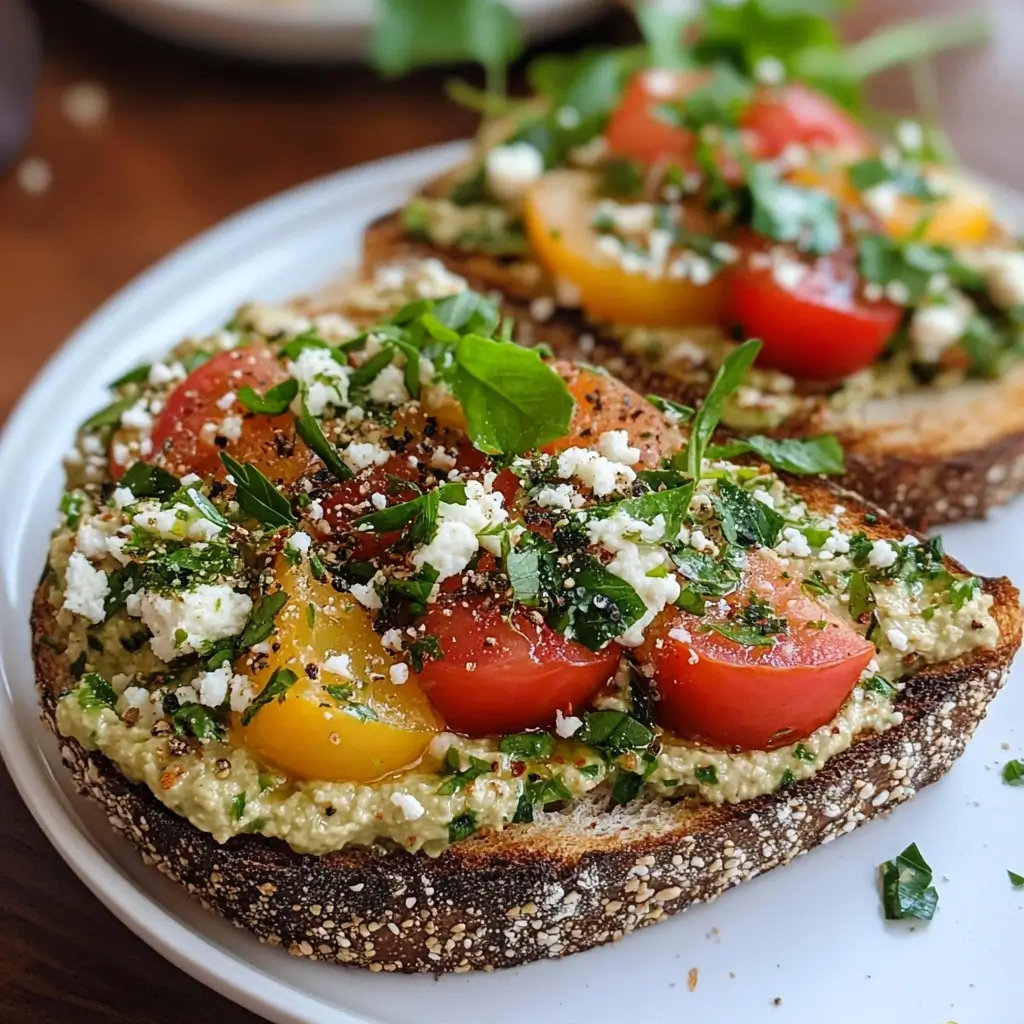
Mediterranean Hummus Toast with Za’atar has become a delightful and frequent star in our kitchen. What started as a quick experiment one busy morning has transformed into a beloved staple that my family enthusiastically requests. The vibrant flavors of the Mediterranean, combined with the satisfying crunch of toast and the creamy richness of hummus, create a symphony of textures and tastes that simply brightens any meal. From hurried weekday breakfasts to leisurely weekend brunches, and even as a light lunch or snack, this toast has proven its versatility and universal appeal. Even my pickiest eater, who usually shies away from anything remotely “green,” devours this toast, especially when adorned with a sprinkle of feta and juicy cherry tomatoes. It’s a testament to how simple, fresh ingredients, when combined thoughtfully, can create something truly extraordinary and universally loved. This recipe is not just about making toast; it’s about bringing a taste of the sun-drenched Mediterranean into your home, effortlessly and deliciously.
Ingredients for Mediterranean Hummus Toast with Za’atar
The beauty of Mediterranean Hummus Toast with Za’atar lies in its simplicity and the quality of its ingredients. Each component plays a crucial role in building the final flavor profile, so choosing wisely can elevate this simple dish to gourmet levels. Here’s a detailed breakdown of what you’ll need:
- Bread: The foundation of our toast, bread choice is paramount.
- Sourdough: My personal favorite. Sourdough’s tangy flavor provides a wonderful contrast to the creamy hummus and earthy za’atar. Its sturdy texture holds up beautifully when toasted and topped, preventing sogginess. Look for a loaf with a good crust and a slightly chewy interior.
- Whole Wheat: For a healthier and nuttier option, whole wheat bread is excellent. It adds a robust flavor and more fiber, contributing to a more satisfying and nutritious meal. Ensure it’s a good quality whole wheat bread that isn’t too dense or dry.
- Multigrain: Similar to whole wheat, multigrain bread offers a hearty texture and a variety of grains for added nutritional benefits and flavor complexity. The different grains can lend a subtle sweetness and interesting textural elements.
- Ciabatta: If you prefer a lighter and airier texture, ciabatta is a great choice. Its open crumb structure becomes wonderfully crisp when toasted, and its mild flavor allows the other ingredients to shine. Slice it a bit thicker to ensure it can handle the toppings.
- Gluten-Free Options: For those avoiding gluten, there are numerous excellent gluten-free bread options available. Look for gluten-free sourdough or multigrain loaves that are specifically designed for toasting and holding toppings. Brands like Schar, Canyon Bakehouse, or Little Northern Bakehouse often have good options.
- Quantity: Plan for 1-2 slices of bread per serving, depending on appetite and whether it’s a main meal or a snack.
- Hummus: The creamy heart of our toast, hummus provides richness, protein, and a delightful base flavor.
- Homemade Hummus: For the ultimate flavor and control over ingredients, homemade hummus is unbeatable. It’s surprisingly easy to make and tastes significantly fresher than store-bought versions. (Consider adding a mini-recipe for homemade hummus within this section for even greater depth – e.g., canned chickpeas, tahini, lemon juice, garlic, olive oil, cumin, salt, water). Homemade allows you to adjust the texture and flavor exactly to your liking.
- Store-Bought Hummus: In a pinch, high-quality store-bought hummus is perfectly acceptable. Look for brands that use minimal preservatives and have a creamy, smooth texture. Explore different flavors beyond classic, such as roasted red pepper hummus, garlic hummus, or even spicy harissa hummus for a twist. Consider brands like Sabra, Tribe, or Cedar’s for readily available options. Organic options are also available for those seeking cleaner ingredients.
- Quantity: Aim for approximately 2-3 tablespoons of hummus per slice of toast, or adjust to your preference. A standard 10-12 ounce container of hummus should be sufficient for 4-6 servings, depending on how generously you spread it.
- Za’atar: This quintessential Middle Eastern spice blend is the star flavor enhancer, bringing an earthy, tangy, and aromatic complexity.
- What is Za’atar? Za’atar is traditionally a blend of dried thyme, sumac, sesame seeds, and salt. However, regional variations exist, and some blends may include oregano, marjoram, or caraway seeds.
- Flavor Profile: The sumac provides a vibrant lemony tang, while thyme and other herbs lend an earthy, savory depth. Sesame seeds contribute a nutty richness. The overall flavor is warm, herbaceous, and slightly acidic, making it incredibly versatile and addictive.
- Where to Buy: Za’atar is increasingly available in well-stocked grocery stores, particularly in the spice or international food aisles. Middle Eastern grocery stores will undoubtedly have a variety of za’atar blends, often of excellent quality. Online retailers like Amazon or specialty spice shops are also reliable sources.
- Homemade Za’atar (Optional): If you can’t find za’atar or want to customize it, you can easily make your own. A basic recipe involves:
- 2 tablespoons dried thyme
- 1 tablespoon sumac
- 1 tablespoon sesame seeds (toasted or untoasted, depending on preference)
- ½ teaspoon salt
- Optional additions: 1 teaspoon dried oregano, ½ teaspoon dried marjoram, ¼ teaspoon cumin seeds, ¼ teaspoon coriander seeds.
Simply combine all ingredients and store in an airtight container.
- Quantity: You’ll need about 1-2 teaspoons of za’atar per slice of toast, for sprinkling. Adjust to taste; some prefer a more generous coating.
- Olive Oil: High-quality extra virgin olive oil is essential for drizzling, adding richness, flavor, and healthy fats.
- Extra Virgin Olive Oil (EVOO): Opt for a good quality EVOO. The flavor of olive oil is quite prominent in this dish, so a flavorful, fruity EVOO will make a noticeable difference. Look for oils labeled “extra virgin” and ideally “cold-pressed” or “first cold-pressed.”
- Flavor Profile: Good EVOO can range in flavor from mild and buttery to peppery and robust. Choose one you enjoy the taste of. For this recipe, a medium-intensity EVOO is generally a good choice, allowing the other flavors to shine through while still contributing its own character.
- Quantity: You’ll need a drizzle of olive oil per slice of toast, approximately 1-2 teaspoons per serving.
- Optional Toppings (Fresh and Flavorful Enhancements): These toppings are where you can truly customize your Mediterranean Hummus Toast and add layers of texture and freshness. Choose 2-3 or more for a well-rounded toast.
- Cucumber: Thinly sliced or diced cucumber adds a refreshing crunch and coolness, balancing the richness of the hummus and the warmth of the za’atar. English cucumbers or Persian cucumbers are excellent choices due to their lower seed content and thinner skins.
- Cherry Tomatoes: Halved or quartered cherry tomatoes burst with sweetness and acidity, providing a juicy counterpoint to the savory elements. Use ripe, flavorful cherry tomatoes for the best taste. Heirloom varieties can add even more flavor complexity.
- Kalamata Olives: Pitted and halved or sliced Kalamata olives offer a salty, briny, and slightly tangy flavor. Their meaty texture and intense flavor are classic Mediterranean additions. Ensure they are pitted for ease of eating.
- Feta Cheese: Crumbled feta cheese brings a salty, tangy, and creamy element. Its crumbly texture contrasts nicely with the smooth hummus and crunchy toast. Use a good quality feta, preferably one packed in brine for better flavor and moisture. For a vegan option, consider using a plant-based feta alternative or nutritional yeast for a cheesy umami note.
- Red Onion: Thinly sliced red onion adds a sharp, pungent bite. If you find raw red onion too strong, you can soak the slices in cold water for 10-15 minutes to mellow their flavor. Alternatively, pickled red onions offer a tangy sweetness that complements the other flavors beautifully.
- Fresh Herbs: Chopped fresh herbs like parsley, mint, or dill add a final flourish of freshness and aroma. Parsley provides a clean, herbaceous note. Mint offers a cool, refreshing lift. Dill brings a slightly citrusy, anise-like flavor. Choose one or a combination based on your preference and what you have on hand.
- Lemon Juice (Optional): A squeeze of fresh lemon juice at the end can brighten all the flavors and add a touch of acidity. This is especially beneficial if you are using store-bought hummus, as homemade hummus often has a fresher lemon flavor.
Instructions: Crafting Your Mediterranean Hummus Toast
Creating Mediterranean Hummus Toast with Za’atar is incredibly straightforward, making it perfect for busy mornings or quick meals. Here’s a step-by-step guide to ensure perfectly delicious results:
- Prepare Your Ingredients: Start by gathering all your ingredients. This mise en place approach will streamline the process and make cooking more enjoyable.
- Slice your chosen bread to your desired thickness. For sourdough or heartier breads, about ½ to ¾ inch thick is ideal. For softer breads like ciabatta, slightly thicker slices work well.
- If using fresh toppings, wash and prepare them. Halve or quarter cherry tomatoes, thinly slice cucumber and red onion, pit and halve olives, and crumble feta cheese if using. Chop fresh herbs if desired.
- Have your hummus, za’atar, and olive oil readily available.
- Toast the Bread: Toasting the bread is crucial for texture and flavor. You have several options for toasting:
- Toaster: The quickest and easiest method, especially for single servings. Toast to your preferred level of crispness. A light golden brown is generally recommended for hummus toast – enough to be sturdy but not overly dry.
- Toaster Oven: Offers more control and even toasting. Preheat your toaster oven to around 350°F (175°C). Place bread slices on the rack and toast for 3-5 minutes, or until golden brown and crisp. Keep a close eye to prevent burning.
- Skillet/Pan Toasting: For a richer flavor and slightly oiled toast, use a skillet. Heat a lightly oiled skillet (using olive oil or butter) over medium heat. Place bread slices in the skillet and toast for 2-3 minutes per side, until golden brown and crisp. This method imparts a lovely buttery flavor and slightly crisper exterior.
- Broiler (Oven Broiler): For quick toasting of multiple slices, the broiler works well. Preheat your broiler to high. Place bread slices on a baking sheet and broil for 1-2 minutes per side, watching very carefully to avoid burning as broilers can toast bread very quickly.
- Spread the Hummus: Once the toast is ready, immediately spread a generous layer of hummus on each slice.
- Warm Toast, Easier Spreading: Spreading hummus on warm toast makes it smoother and easier to apply. The warmth slightly softens the hummus, making it more pliable.
- Thickness: Aim for a layer of about ¼ to ½ inch of hummus, depending on your preference. You want enough hummus to provide a creamy base and flavor, but not so much that it overwhelms the other toppings.
- Even Distribution: Ensure the hummus is spread evenly across the toast surface, reaching the edges for maximum flavor in every bite.
- Sprinkle with Za’atar: Generously sprinkle za’atar spice blend over the hummus-covered toast.
- Coverage: Distribute the za’atar evenly across the hummus. You can use your fingers to gently pat it down if desired, helping it adhere to the hummus.
- Quantity: Adjust the amount of za’atar to your taste. Start with about 1 teaspoon per slice and add more if you prefer a stronger za’atar flavor.
- Add Toppings (Optional but Highly Recommended): Now, layer on your chosen toppings for added flavor, texture, and visual appeal.
- Layering Order: There’s no strict rule, but consider layering based on texture and flavor. For example, start with cucumber slices, then tomatoes, olives, feta, and finally herbs.
- Creative Arrangements: Don’t just pile toppings on haphazardly. Arrange them in a visually appealing way. For example, neatly arrange cucumber slices, scatter cherry tomato halves, and crumble feta over the top. A little visual care enhances the dining experience.
- Balance and Variety: Aim for a balance of flavors and textures in your toppings. Combine crunchy (cucumber), juicy (tomatoes), salty (olives, feta), and fresh (herbs) elements for a well-rounded toast.
- Drizzle with Olive Oil: Finish with a generous drizzle of high-quality extra virgin olive oil over the topped toast.
- Flavor and Moisture: Olive oil adds richness, enhances the flavors of all the ingredients, and provides a pleasant mouthfeel. It also helps to bind the toppings together slightly.
- Visual Appeal: The glistening drizzle of olive oil adds a final touch of elegance and visual appeal.
- Quantity: Drizzle about 1-2 teaspoons of olive oil per slice, or adjust to your preference.
- Optional Lemon Juice: If desired, squeeze a wedge of fresh lemon over the toast just before serving.
- Brightening Flavors: Lemon juice adds a final burst of acidity that brightens all the flavors and cuts through the richness of the hummus and olive oil.
- Freshness: A squeeze of lemon just before serving enhances the overall freshness of the dish.
- Serve Immediately: Mediterranean Hummus Toast with Za’atar is best enjoyed immediately while the toast is still warm and crisp, and the toppings are fresh.
Nutrition Facts: A Wholesome and Satisfying Choice
Mediterranean Hummus Toast with Za’atar is not only delicious but also packed with nutritional benefits. Here’s a general overview of the nutrition facts, keeping in mind that actual values can vary based on specific ingredients and portion sizes.
- Serving Size: 1 slice of Mediterranean Hummus Toast with Za’atar (estimated based on one slice of bread, 2 tablespoons of hummus, 1 teaspoon za’atar, 1 teaspoon olive oil, and a small amount of toppings).
- Approximate Calories per Serving: 250-350 calories. This range is an estimate and can vary depending on the type of bread, the amount of hummus and olive oil used, and the toppings. Whole wheat or multigrain bread will generally have slightly fewer calories than white bread, but may be denser.
- Macronutrient Breakdown (Approximate, per serving):
- Protein: 8-12 grams. Hummus is a good source of plant-based protein, and whole wheat bread also contributes. Toppings like feta cheese will further increase the protein content.
- Fat: 12-20 grams. Primarily from healthy fats found in olive oil, hummus (tahini and olive oil), and potentially feta cheese. These are mostly monounsaturated and polyunsaturated fats, which are beneficial for heart health.
- Carbohydrates: 25-35 grams. Primarily from the bread and chickpeas in hummus. Choose whole grain bread for higher fiber content.
- Fiber: 4-7 grams. Especially if using whole wheat or multigrain bread and homemade hummus (chickpeas are high in fiber). Fiber is essential for digestive health, satiety, and blood sugar control.
- Micronutrients (Significant vitamins and minerals):
- Vitamins: Good source of B vitamins (from chickpeas and whole grains), Vitamin E (from olive oil), and potentially Vitamin C and Vitamin K depending on toppings like tomatoes and herbs.
- Minerals: Rich in iron, magnesium, phosphorus, potassium, and zinc (from chickpeas, sesame seeds in za’atar, and whole grains). Calcium can be significant if feta cheese is included.
- Health Benefits:
- Heart-Healthy Fats: Olive oil and tahini in hummus are sources of monounsaturated and polyunsaturated fats, which are beneficial for cardiovascular health.
- Plant-Based Protein: Hummus provides a good source of plant-based protein, making this dish a suitable option for vegetarians and vegans.
- High in Fiber: Especially when made with whole grain bread and homemade hummus, this toast is a good source of dietary fiber, promoting digestive health and satiety.
- Rich in Antioxidants: Olive oil, za’atar spices, and fresh vegetables are rich in antioxidants, which help protect the body against cell damage.
- Mediterranean Diet Friendly: This recipe aligns perfectly with the principles of the Mediterranean diet, emphasizing whole grains, legumes, healthy fats, and fresh vegetables.
- Disclaimer: These nutrition facts are estimates and can vary. For precise nutritional information, use a nutrition calculator and input the specific brands and quantities of ingredients you are using. Consider consulting a registered dietitian or nutritionist for personalized dietary advice.
Preparation Time: Quick and Convenient
Mediterranean Hummus Toast with Za’atar is a champion of quick and easy recipes. Here’s a breakdown of the preparation time:
- Prep Time: 5-10 minutes. This includes gathering ingredients, slicing bread, preparing toppings (chopping vegetables, crumbling feta, etc.), and getting your hummus and za’atar ready. If using pre-cut vegetables and store-bought hummus, prep time can be even shorter.
- Cook Time (Toasting): 2-5 minutes. Toasting time will vary depending on your chosen method (toaster, toaster oven, skillet, broiler) and your desired level of crispness. Skillet toasting may take slightly longer than a toaster.
- Total Time: 7-15 minutes. From start to finish, you can have a delicious and nutritious Mediterranean Hummus Toast ready in under 15 minutes, making it ideal for busy weekdays, quick lunches, or last-minute snacks.
This recipe is perfect for those who want a healthy and flavorful meal without spending a lot of time in the kitchen. The minimal preparation and short cooking time make it a go-to option for individuals and families alike.
How to Serve Mediterranean Hummus Toast with Za’atar
The versatility of Mediterranean Hummus Toast with Za’atar extends to how you can serve it. It’s adaptable for various occasions and meal times. Here are some serving suggestions:
- Breakfast or Brunch:
- Quick Weekday Breakfast: Perfect for a nutritious and energizing start to the day. Serve alongside a glass of fresh juice or a cup of coffee.
- Weekend Brunch Star: Elevate your weekend brunch spread by offering a platter of Mediterranean Hummus Toast with various topping options for guests to customize their own. Pair with scrambled eggs, a side salad, or fresh fruit for a more substantial brunch.
- Brunch Buffet Item: Include it as part of a larger brunch buffet, alongside other Mediterranean-inspired dishes like shakshuka, labneh, or a feta and olive salad.
- Lunch:
- Light and Satisfying Lunch: Ideal for a light yet satisfying midday meal. Serve with a side salad or a cup of soup for a more complete lunch.
- Packed Lunch Option: Components can be prepped separately and assembled just before eating. Toast bread and pack separately, hummus in a container, and toppings in another container. Assemble at lunchtime for the best texture.
- Lunch with Colleagues: Easy to prepare and share with colleagues for a healthy and flavorful office lunch.
- Snack:
- Afternoon Pick-Me-Up: A healthy and flavorful snack to tide you over between meals.
- Pre- or Post-Workout Snack: Provides a good balance of carbohydrates, protein, and healthy fats to fuel workouts or aid in recovery.
- Party Appetizer: Cut toast into smaller pieces or use baguette slices to create bite-sized Mediterranean Hummus Toast appetizers for parties or gatherings.
- Appetizer or Starter:
- Mediterranean Mezze Platter: Include hummus toast as part of a Mediterranean mezze platter alongside other dips like baba ghanoush, pita bread, olives, cheeses, and stuffed grape leaves.
- Pre-Dinner Appetizer: Serve as a flavorful and light appetizer before a Mediterranean-themed dinner.
- Elegant Canapés: For a more formal setting, create smaller, more refined versions of hummus toast using baguette slices or crostini and artfully arranged toppings.
- Side Dish:
- Accompanying Soups or Salads: Serve alongside a hearty soup like lentil soup or a refreshing Mediterranean salad.
- With Grilled Meats or Fish: Pairs well with grilled chicken, fish, or lamb as a flavorful and lighter side dish option.
- Presentation Ideas:
- Garnish Creatively: Use fresh herbs like parsley, mint, or dill to garnish each toast slice for added visual appeal.
- Olive Oil Drizzle: Ensure a generous and visually appealing drizzle of high-quality olive oil.
- Arrangement on Platter: Arrange the toast slices attractively on a platter, perhaps alternating directions or creating a layered effect.
- Serving Boards: Use rustic wooden serving boards or ceramic platters to enhance the Mediterranean aesthetic.
Additional Tips for Perfect Mediterranean Hummus Toast
Elevate your Mediterranean Hummus Toast with these helpful tips to ensure delicious results every time:
- Elevate Your Hummus: While store-bought hummus is convenient, homemade hummus truly takes this toast to the next level. Freshly made hummus is creamier, more flavorful, and you have complete control over the ingredients. Experiment with adding roasted garlic, sun-dried tomatoes, or roasted red peppers to your homemade hummus for exciting flavor variations. If using store-bought, try warming it slightly before spreading on the toast for a richer texture and aroma.
- Bread is Key: Don’t underestimate the importance of good quality bread. Choose bread that is sturdy enough to hold the toppings without becoming soggy, and flavorful enough to complement the other ingredients. Sourdough, whole wheat, multigrain, and ciabatta are all excellent choices. For extra flavor, consider lightly brushing the bread with olive oil before toasting. If using day-old bread, toasting will revive its texture beautifully.
- Za’atar Freshness Matters: Za’atar is best when fresh. If you buy pre-made za’atar, store it in an airtight container in a cool, dark place to maintain its flavor and aroma. If you are making your own za’atar, consider toasting the sesame seeds lightly before grinding for a nuttier flavor. Don’t be afraid to experiment with different ratios of ingredients in your za’atar blend to find your perfect balance.
- Maximize Topping Flavor: Fresh, high-quality toppings are essential for a vibrant and flavorful toast. Use ripe, in-season vegetables for the best taste. Consider grilling or roasting some of the vegetables like bell peppers or zucchini for a smoky, caramelized flavor dimension. Marinating toppings like cucumbers or tomatoes in a little olive oil, lemon juice, and herbs before adding them to the toast can further enhance their flavor.
- Make it Ahead (Components): While assembled hummus toast is best enjoyed immediately, you can prep components ahead of time to save time later. You can make hummus up to 3-4 days in advance and store it in the refrigerator. Chop vegetables and store them separately in airtight containers in the fridge. You can even toast the bread slightly ahead of time and store it in an airtight container at room temperature – just give it a quick re-toast before assembling if you prefer it extra crispy. This makes it easy to assemble fresh hummus toast quickly whenever you’re ready to eat.
Frequently Asked Questions (FAQ) about Mediterranean Hummus Toast with Za’atar
Here are some common questions about making and enjoying Mediterranean Hummus Toast with Za’atar:
Q1: Can I make Mediterranean Hummus Toast vegan?
A: Absolutely! Mediterranean Hummus Toast with Za’atar is naturally vegan if you omit the feta cheese topping. Hummus itself is typically vegan, made from chickpeas, tahini, lemon juice, garlic, and olive oil. Ensure your bread is also vegan-friendly (many are, but some may contain eggs or dairy). All the other core ingredients – za’atar, olive oil, vegetables, and herbs – are plant-based, making this a delicious and inherently vegan meal option.
Q2: Can I make this recipe gluten-free?
A: Yes, easily! To make Mediterranean Hummus Toast gluten-free, simply substitute gluten-free bread for regular bread. There are many excellent gluten-free bread options available now, including sourdough and multigrain varieties. Ensure that all other ingredients are also gluten-free if you are strictly avoiding gluten, although the core ingredients of this recipe are naturally gluten-free.
Q3: What are some other topping variations I can try?
A: The topping possibilities are endless! Get creative and use what you have on hand. Some delicious variations include:
* Roasted Vegetables: Roasted bell peppers, zucchini, eggplant, or artichoke hearts add a smoky and sweet flavor.
* Sun-dried Tomatoes: Provide a chewy texture and intense tomato flavor.
* Avocado: Sliced or mashed avocado adds creaminess and healthy fats.
* Hard-boiled Egg: Sliced or chopped hard-boiled egg adds protein and richness.
* Spicy Peppers: Pickled jalapeños, banana peppers, or a sprinkle of red pepper flakes for heat.
* Pine Nuts or Toasted Almonds: For added crunch and nutty flavor.
* Artichoke Hearts: Marinated artichoke hearts offer a tangy and slightly acidic flavor.
* Grilled Halloumi Cheese: For a non-vegan variation, grilled halloumi adds a salty and squeaky texture.
Q4: How long does Mediterranean Hummus Toast keep?
A: Mediterranean Hummus Toast is best enjoyed immediately after assembly for the best texture and flavor, especially to keep the toast crisp. However, if you have leftovers, it’s best to store the components separately. Toasted bread can be stored in an airtight container at room temperature for a day or two. Hummus can be stored in an airtight container in the refrigerator for up to 3-4 days. Topped toast will become soggy if stored assembled, so it’s recommended to assemble just before serving.
Q5: Where can I find Za’atar spice blend?
A: Za’atar is becoming increasingly common and can be found in several places:
* Grocery Stores: Many well-stocked grocery stores, especially those with international or spice sections, now carry za’atar. Look in the spice aisle or the international foods section.
* Middle Eastern Grocery Stores: These stores are your best bet for a wide variety of za’atar blends, often of excellent quality and freshness.
* Online Retailers: Websites like Amazon, spice shops online, and ethnic food retailers offer a wide selection of za’atar, often with different regional variations.
* Make Your Own: As mentioned earlier, you can easily make your own za’atar blend at home if you have access to the individual spices (thyme, sumac, sesame seeds, salt). This allows you to customize the flavor to your preference.
Enjoy creating and savoring your delicious and healthy Mediterranean Hummus Toast with Za’atar!
Print
Mediterranean Hummus Toast with Za’atar Recipe
Ingredients
- Bread: The foundation of our toast, bread choice is paramount.
- Sourdough: My personal favorite. Sourdough’s tangy flavor provides a wonderful contrast to the creamy hummus and earthy za’atar. Its sturdy texture holds up beautifully when toasted and topped, preventing sogginess. Look for a loaf with a good crust and a slightly chewy interior.
- Whole Wheat: For a healthier and nuttier option, whole wheat bread is excellent. It adds a robust flavor and more fiber, contributing to a more satisfying and nutritious meal. Ensure it’s a good quality whole wheat bread that isn’t too dense or dry.
- Multigrain: Similar to whole wheat, multigrain bread offers a hearty texture and a variety of grains for added nutritional benefits and flavor complexity. The different grains can lend a subtle sweetness and interesting textural elements.
- Ciabatta: If you prefer a lighter and airier texture, ciabatta is a great choice. Its open crumb structure becomes wonderfully crisp when toasted, and its mild flavor allows the other ingredients to shine. Slice it a bit thicker to ensure it can handle the toppings.
- Gluten-Free Options: For those avoiding gluten, there are numerous excellent gluten-free bread options available. Look for gluten-free sourdough or multigrain loaves that are specifically designed for toasting and holding toppings. Brands like Schar, Canyon Bakehouse, or Little Northern Bakehouse often have good options.
- Quantity: Plan for 1-2 slices of bread per serving, depending on appetite and whether it’s a main meal or a snack.
- Hummus: The creamy heart of our toast, hummus provides richness, protein, and a delightful base flavor.
- Homemade Hummus: For the ultimate flavor and control over ingredients, homemade hummus is unbeatable. It’s surprisingly easy to make and tastes significantly fresher than store-bought versions. (Consider adding a mini-recipe for homemade hummus within this section for even greater depth – e.g., canned chickpeas, tahini, lemon juice, garlic, olive oil, cumin, salt, water). Homemade allows you to adjust the texture and flavor exactly to your liking.
- Store-Bought Hummus: In a pinch, high-quality store-bought hummus is perfectly acceptable. Look for brands that use minimal preservatives and have a creamy, smooth texture. Explore different flavors beyond classic, such as roasted red pepper hummus, garlic hummus, or even spicy harissa hummus for a twist. Consider brands like Sabra, Tribe, or Cedar’s for readily available options. Organic options are also available for those seeking cleaner ingredients.
- Quantity: Aim for approximately 2-3 tablespoons of hummus per slice of toast, or adjust to your preference. A standard 10-12 ounce container of hummus should be sufficient for 4-6 servings, depending on how generously you spread it.
- Za’atar: This quintessential Middle Eastern spice blend is the star flavor enhancer, bringing an earthy, tangy, and aromatic complexity.
- What is Za’atar? Za’atar is traditionally a blend of dried thyme, sumac, sesame seeds, and salt. However, regional variations exist, and some blends may include oregano, marjoram, or caraway seeds.
- Flavor Profile: The sumac provides a vibrant lemony tang, while thyme and other herbs lend an earthy, savory depth. Sesame seeds contribute a nutty richness. The overall flavor is warm, herbaceous, and slightly acidic, making it incredibly versatile and addictive.
- Where to Buy: Za’atar is increasingly available in well-stocked grocery stores, particularly in the spice or international food aisles. Middle Eastern grocery stores will undoubtedly have a variety of za’atar blends, often of excellent quality. Online retailers like Amazon or specialty spice shops are also reliable sources.
- Homemade Za’atar (Optional): If you can’t find za’atar or want to customize it, you can easily make your own. A basic recipe involves:
- 2 tablespoons dried thyme
- 1 tablespoon sumac
- 1 tablespoon sesame seeds (toasted or untoasted, depending on preference)
- ½ teaspoon salt
- Optional additions: 1 teaspoon dried oregano, ½ teaspoon dried marjoram, ¼ teaspoon cumin seeds, ¼ teaspoon coriander seeds.
Simply combine all ingredients and store in an airtight container.
- Quantity: You’ll need about 1-2 teaspoons of za’atar per slice of toast, for sprinkling. Adjust to taste; some prefer a more generous coating.
- Olive Oil: High-quality extra virgin olive oil is essential for drizzling, adding richness, flavor, and healthy fats.
- Extra Virgin Olive Oil (EVOO): Opt for a good quality EVOO. The flavor of olive oil is quite prominent in this dish, so a flavorful, fruity EVOO will make a noticeable difference. Look for oils labeled “extra virgin” and ideally “cold-pressed” or “first cold-pressed.”
- Flavor Profile: Good EVOO can range in flavor from mild and buttery to peppery and robust. Choose one you enjoy the taste of. For this recipe, a medium-intensity EVOO is generally a good choice, allowing the other flavors to shine through while still contributing its own character.
- Quantity: You’ll need a drizzle of olive oil per slice of toast, approximately 1-2 teaspoons per serving.
Instructions
- Prepare Your Ingredients: Start by gathering all your ingredients. This mise en place approach will streamline the process and make cooking more enjoyable.
- Slice your chosen bread to your desired thickness. For sourdough or heartier breads, about ½ to ¾ inch thick is ideal. For softer breads like ciabatta, slightly thicker slices work well.
- If using fresh toppings, wash and prepare them. Halve or quarter cherry tomatoes, thinly slice cucumber and red onion, pit and halve olives, and crumble feta cheese if using. Chop fresh herbs if desired.
- Have your hummus, za’atar, and olive oil readily available.
- Toast the Bread: Toasting the bread is crucial for texture and flavor. You have several options for toasting:
- Toaster: The quickest and easiest method, especially for single servings. Toast to your preferred level of crispness. A light golden brown is generally recommended for hummus toast – enough to be sturdy but not overly dry.
- Toaster Oven: Offers more control and even toasting. Preheat your toaster oven to around 350°F (175°C). Place bread slices on the rack and toast for 3-5 minutes, or until golden brown and crisp. Keep a close eye to prevent burning.
- Skillet/Pan Toasting: For a richer flavor and slightly oiled toast, use a skillet. Heat a lightly oiled skillet (using olive oil or butter) over medium heat. Place bread slices in the skillet and toast for 2-3 minutes per side, until golden brown and crisp. This method imparts a lovely buttery flavor and slightly crisper exterior.
- Broiler (Oven Broiler): For quick toasting of multiple slices, the broiler works well. Preheat your broiler to high. Place bread slices on a baking sheet and broil for 1-2 minutes per side, watching very carefully to avoid burning as broilers can toast bread very quickly.
- Spread the Hummus: Once the toast is ready, immediately spread a generous layer of hummus on each slice.
- Warm Toast, Easier Spreading: Spreading hummus on warm toast makes it smoother and easier to apply. The warmth slightly softens the hummus, making it more pliable.
- Thickness: Aim for a layer of about ¼ to ½ inch of hummus, depending on your preference. You want enough hummus to provide a creamy base and flavor, but not so much that it overwhelms the other toppings.
- Even Distribution: Ensure the hummus is spread evenly across the toast surface, reaching the edges for maximum flavor in every bite.
- Sprinkle with Za’atar: Generously sprinkle za’atar spice blend over the hummus-covered toast.
- Coverage: Distribute the za’atar evenly across the hummus. You can use your fingers to gently pat it down if desired, helping it adhere to the hummus.
- Quantity: Adjust the amount of za’atar to your taste. Start with about 1 teaspoon per slice and add more if you prefer a stronger za’atar flavor.
- Add Toppings (Optional but Highly Recommended): Now, layer on your chosen toppings for added flavor, texture, and visual appeal.
- Layering Order: There’s no strict rule, but consider layering based on texture and flavor. For example, start with cucumber slices, then tomatoes, olives, feta, and finally herbs.
- Creative Arrangements: Don’t just pile toppings on haphazardly. Arrange them in a visually appealing way. For example, neatly arrange cucumber slices, scatter cherry tomato halves, and crumble feta over the top. A little visual care enhances the dining experience.
- Balance and Variety: Aim for a balance of flavors and textures in your toppings. Combine crunchy (cucumber), juicy (tomatoes), salty (olives, feta), and fresh (herbs) elements for a well-rounded toast.
- Drizzle with Olive Oil: Finish with a generous drizzle of high-quality extra virgin olive oil over the topped toast.
- Flavor and Moisture: Olive oil adds richness, enhances the flavors of all the ingredients, and provides a pleasant mouthfeel. It also helps to bind the toppings together slightly.
- Visual Appeal: The glistening drizzle of olive oil adds a final touch of elegance and visual appeal.
- Quantity: Drizzle about 1-2 teaspoons of olive oil per slice, or adjust to your preference.
- Optional Lemon Juice: If desired, squeeze a wedge of fresh lemon over the toast just before serving.
- Brightening Flavors: Lemon juice adds a final burst of acidity that brightens all the flavors and cuts through the richness of the hummus and olive oil.
- Freshness: A squeeze of lemon just before serving enhances the overall freshness of the dish.
- Serve Immediately: Mediterranean Hummus Toast with Za’atar is best enjoyed immediately while the toast is still warm and crisp, and the toppings are fresh.
Nutrition
- Serving Size: one normal portion
- Calories: 250-350
- Fat: 12-20 grams
- Carbohydrates: 25-35 grams
- Fiber: 4-7 grams
- Protein: 8-12 grams