
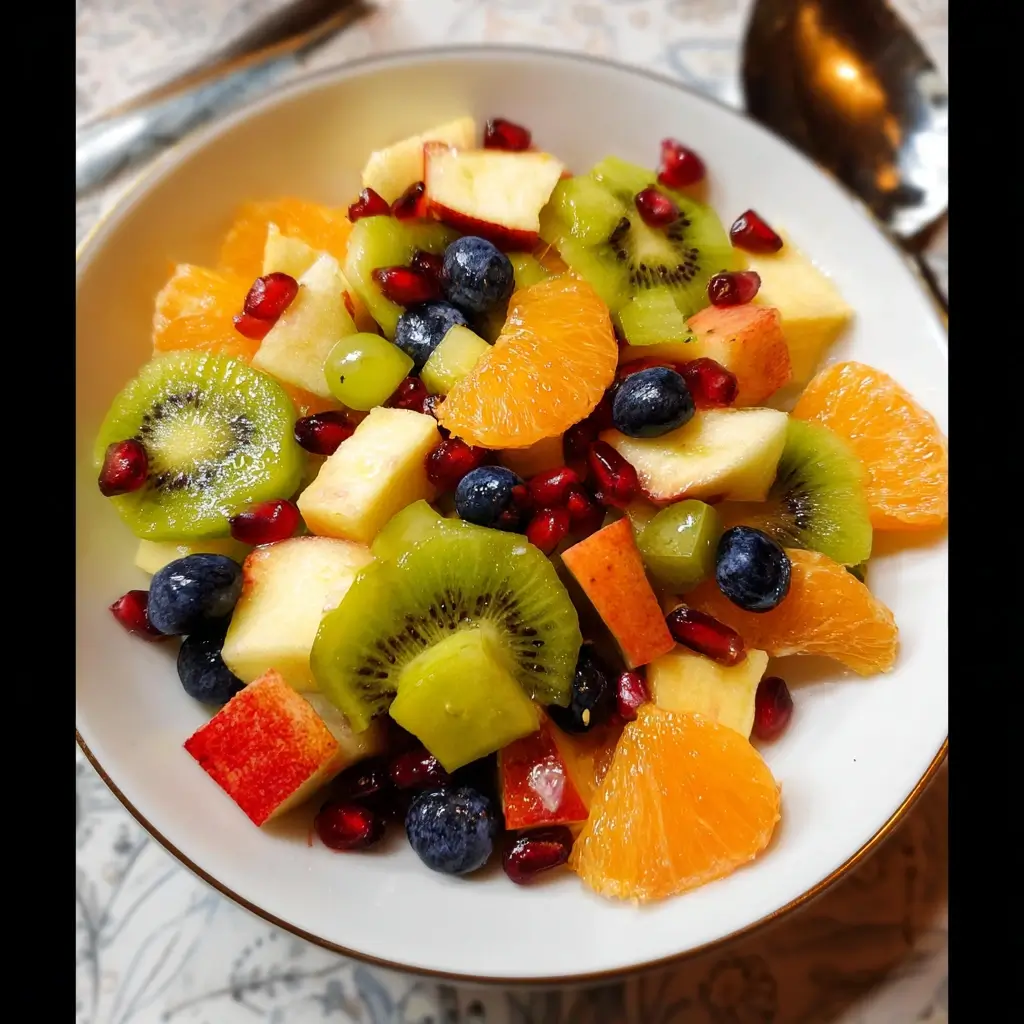

Of all the dishes that grace our table during the colder months, none surprise and delight quite like this Mixed Fruit Winter Salad. I first threw it together on a whim one particularly gray December afternoon. The pantry was full of the usual heavy stews and root vegetables, and my family, including myself, was craving something bright, something alive with color and flavor. I gathered the jewels of the winter harvest—gleaming pomegranates, sunny citrus, and sweet persimmons—and a new tradition was born. The moment I placed the sparkling, vibrant bowl on the dinner table, it was like a switch had been flipped. The kids, who usually balk at the word “salad,” were mesmerized by the colors. My husband, a lover of hearty winter fare, was taken aback by how refreshing and satisfying it was. It’s more than just a recipe now; it’s our little bowl of sunshine on a cloudy day, a guaranteed centerpiece for holiday gatherings, and the perfect, healthy antidote to the winter blues. It’s the recipe I’m most asked for, and I’m thrilled to share it in its full glory with you.
The Ultimate Mixed Fruit Winter Salad: A Symphony of Seasonal Flavors
Winter cooking often conjures images of simmering pots, roasted meats, and heavy, comforting starches. While those dishes have their cherished place, this Mixed Fruit Winter Salad recipe offers a stunning and necessary contrast. It’s a celebration of the surprisingly vibrant produce that thrives in the colder months, proving that salads aren’t just for summer. This recipe is designed to be a feast for the eyes and the palate, combining sweet, tart, and juicy elements with a light, zesty dressing that ties everything together.
Why This Winter Salad Belongs on Your Table
Before we dive into the “how-to,” let’s talk about the “why.” What makes this particular fruit salad so special?
- A Burst of Vibrancy: In a season dominated by browns and beiges, the brilliant reds, oranges, and greens in this salad are a visual delight. It instantly brightens up any meal or buffet table, making it perfect for holidays like Christmas, New Year’s, or even a festive winter brunch.
- Peak Seasonal Ingredients: This isn’t about using out-of-season, flavorless fruit. This recipe champions the best of winter’s bounty. Pomegranates are at their juiciest, citrus is bursting with flavor, and persimmons offer a unique, honeyed sweetness you can’t find any other time of year.
- Immunity-Boosting Powerhouse: Winter is synonymous with cold and flu season. This salad is packed with Vitamin C from the citrus and kiwis, along with powerful antioxidants from the pomegranate seeds. It’s a delicious way to help support your immune system when it needs it most.
- Incredibly Versatile: Don’t box this in as just a side dish. It’s a fantastic light breakfast served with Greek yogurt and granola, a refreshing dessert after a heavy meal, or a standalone healthy snack.
- Effortlessly Elegant, Deceptively Simple: While it looks like a gourmet creation that took hours, this salad comes together with simple chopping and mixing. It’s the perfect recipe for impressing guests without spending all day in the kitchen.
A Closer Look at Our Star Ingredients
The magic of this salad lies in the synergy of its components. Each fruit is chosen not just for its flavor, but for its texture, color, and how it complements the others.
- Pomegranate Arils: These are the ruby-red jewels of the salad. They provide a delightful pop of tart juice and a subtle, satisfying crunch. They are also packed with antioxidants and add a luxurious feel to the dish. We’ll use the arils from a whole pomegranate for maximum freshness.
- Navel Oranges: Sweet, seedless, and easy to work with, Navel oranges form the juicy, sunny base of our salad. Their bright, classic citrus flavor is essential. We will supreme them to remove any bitterness from the pith and membrane, resulting in pure, tender segments.
- Grapefruit (Ruby Red or Pink): Grapefruit adds a more complex, slightly bitter, and tangy note that beautifully balances the sweeter fruits. Its deeper color also adds another layer of visual appeal.
- Fuyu Persimmons: If you haven’t tried a Fuyu persimmon, you’re in for a treat. Unlike their astringent Hachiya cousins, Fuyu persimmons are non-astringent and can be eaten while still firm. They are squat and tomato-shaped, with a delicate, honeyed, and slightly cinnamon-like flavor and a crisp-yet-tender texture.
- Kiwi: The brilliant green of the kiwi provides a stunning color contrast and a unique tropical tang. It also adds a soft texture that plays well with the crispness of the other fruits.
- Bosc or Anjou Pears: A ripe winter pear adds a buttery, mellow sweetness and a satisfying, fibrous bite. Bosc pears hold their shape well, making them an excellent choice for this salad.
- The Honey-Lime-Mint Dressing: This is the simple, elegant glue that holds the salad together. The honey (or maple syrup) provides a touch of sweetness, the fresh lime juice adds a zesty kick that prevents the fruit from browning, and the fresh mint provides an invigorating, cool aroma and flavor that elevates the entire dish.
Complete Recipe: Mixed Fruit Winter Salad
This recipe yields a generous portion, perfect for a family meal or a small gathering. It can easily be doubled for a larger crowd or holiday party.
Ingredients
For the Salad:
- 2 large Navel Oranges
- 1 large Ruby Red Grapefruit
- 1 cup Pomegranate Arils (from 1 medium-large pomegranate)
- 2 firm, ripe Fuyu Persimmons, peeled and diced into ½-inch cubes
- 3 Kiwi Fruits, peeled and sliced into rounds, then quartered
- 1 firm, ripe Bosc Pear, cored and diced into ½-inch cubes
For the Honey-Lime Dressing:
- 3 tablespoons Extra Virgin Olive Oil (a light, fruity variety works best)
- 2 tablespoons Fresh Lime Juice (from about 1 large lime)
- 1 tablespoon Honey (or maple syrup for a vegan option)
- 1 tablespoon Fresh Mint, finely chopped (plus more for garnish)
- 1 pinch of salt (this enhances the sweetness of the fruit)
Step-by-Step Instructions
Follow these detailed steps to ensure a perfect salad with distinct, beautiful fruit pieces and a well-balanced flavor.
Step 1: Prepare the Honey-Lime Dressing
In a small bowl or a glass jar with a lid, combine the extra virgin olive oil, fresh lime juice, honey (or maple syrup), finely chopped mint, and a tiny pinch of salt. Whisk vigorously or shake the jar until the dressing is well emulsified and slightly thickened. Set it aside to allow the flavors to meld together while you prepare the fruit.
Step 2: Supreme the Citrus
“Supreming” is the technique of cutting away the peel, pith, and membrane from citrus fruit, leaving you with perfect, tender segments. It’s worth the extra effort for a superior texture.
- Slice off the top and bottom of one orange. Stand it on one of the flat ends on your cutting board.
- Using a sharp knife, carefully slice downwards, following the curve of the fruit, to remove the peel and the white pith. Rotate the fruit and continue until all the peel and pith are removed.
- Now, hold the peeled orange over a large mixing bowl to catch the juices. Carefully cut along the inside of each membrane to release the segments, letting them fall into the bowl.
- Repeat this entire process with the second orange and the grapefruit. Squeeze any remaining juice from the membranes into the bowl before discarding them.
Step 3: Prepare the Remaining Fruit
- Pomegranate: If you’re starting with a whole pomegranate, the easiest way to de-seed it is to cut it in half horizontally. Hold one half, cut-side down, over your large mixing bowl and firmly whack the back of it with a wooden spoon. The arils will fall right out into the bowl. Repeat with the other half.
- Persimmons, Pear, and Kiwi: Peel the persimmons and kiwis. Core the pear. Dice the persimmons and pear into neat, ½-inch cubes. Slice the kiwis into rounds and then cut the rounds into quarters. Add all of these prepared fruits to the large bowl with the citrus segments and pomegranate arils.
Step 4: Combine and Dress the Salad
- Gently toss the mixed fruits in the bowl. Use a large, soft spatula or your hands to mix, being careful not to break up the delicate citrus segments.
- Just before you are ready to serve, give your dressing another quick whisk or shake. Pour about two-thirds of the dressing over the fruit.
- Gently toss again to coat all the fruit evenly. Taste the salad. If you feel it needs more zest or sweetness, add the remaining dressing.
Step 5: Garnish and Serve
- Transfer the finished Mixed Fruit Winter Salad to a beautiful serving bowl, preferably a glass one to show off the vibrant colors.
- Garnish with a sprinkle of fresh, whole mint leaves.
- Serve immediately for the best texture and flavor.
Nutrition Facts
- Servings: This recipe makes approximately 6-8 side-dish servings.
- Calories per serving (approximate): 150-180 calories.
Disclaimer: The nutritional information is an estimate and can vary based on the exact size and ripeness of the fruit and the specific brands of ingredients used.
Preparation Time
- Preparation Time: 20-25 minutes (This includes all chopping, peeling, and mixing)
- Total Time: 25 minutes
- Skill Level: Easy to Medium (the only slightly technical part is supreming the citrus)
How to Serve Your Vibrant Winter Salad
This salad’s versatility is one of its greatest strengths. Think beyond the simple side dish and get creative with how you present and pair it.
- As a Stunning Holiday Side Dish:
- Serve it alongside rich, savory main courses like roasted turkey, glazed ham, or a slow-roasted pork loin. The salad’s acidity and freshness cut through the richness of the meat perfectly.
- Place it on a holiday buffet in a large, clear glass trifle bowl to showcase its beautiful layers of color.
- As a Healthy and Energizing Breakfast:
- Spoon a generous portion over a bowl of plain Greek yogurt or cottage cheese.
- Top with a sprinkle of your favorite granola or a handful of toasted nuts like almonds or pecans for added crunch and protein.
- As a Refreshing and Light Dessert:
- Serve it on its own as a guilt-free dessert that satisfies a sweet craving.
- For a slightly more indulgent treat, serve it alongside a slice of angel food cake or a light pound cake.
- Drizzle with a tiny bit of extra honey or a dollop of coconut cream.
- For a Festive Brunch Centerpiece:
- Make it the star of a brunch spread. It pairs wonderfully with quiche, frittatas, and freshly baked scones.
- Serve it alongside a mimosa bar; guests can even add a spoonful to their champagne for a fruity twist.
Additional Tips for Salad Perfection
Take your Mixed Fruit Winter Salad from great to absolutely unforgettable with these five professional tips.
1. Embrace the Supreme Technique: It might seem fussy, but taking the time to supreme the oranges and grapefruit makes a world of difference. Removing the tough, slightly bitter white membrane ensures that every bite is tender, juicy, and purely flavorful. It elevates the salad from a simple fruit mix to a truly refined dish.
2. Don’t Dress the Salad Too Early: The salt and sugar in the dressing will draw moisture out of the fruit through a process called osmosis. If you dress the salad hours ahead of time, you’ll end up with softer fruit swimming in a pool of juice. For the crispest texture and most vibrant presentation, toss the fruit with the dressing right before you plan to serve it.
3. Chill Your Serving Bowl: This is a simple restaurant trick that makes a big impact. Pop your empty serving bowl into the refrigerator or even the freezer for 15-20 minutes before you’re ready to assemble the salad. Serving the cold fruit in a chilled bowl helps it stay crisp, cool, and refreshing for longer on the table.
4. Taste and Adjust the Dressing: Fruits are natural products, and their sweetness can vary greatly. A lime might be more or less juicy, and your honey might be milder or more robust. Always taste your dressing before you add it to the fruit. More importantly, taste the salad after adding the initial amount of dressing. It might need another squeeze of lime for brightness or a touch more honey to balance a tart grapefruit.
5. Prevent Browning with Acidity: The lime juice in the dressing is not just for flavor; its acidity helps prevent the pear from oxidizing and turning brown. If you decide to add other fruits prone to browning, like apples, make sure to toss them in a little lime or lemon juice immediately after chopping, even before adding them to the main bowl.
Frequently Asked Questions (FAQ)
Here are answers to some common questions you might have about making this delicious winter salad.
1. Can I make this Mixed Fruit Winter Salad ahead of time?
Yes, you can do most of the prep in advance to save time. You can chop all the fruit (persimmon, pear, kiwi) and de-seed the pomegranate up to 24 hours ahead. Store them in separate airtight containers in the refrigerator. You can also supreme the citrus and store it in its own juices. The dressing can be made up to 3 days in advance and stored in the fridge. However, for the best result, you should only combine all the fruits and toss them with the dressing right before serving.
2. What other fruits can I add to this winter salad?
This recipe is a fantastic template for customization! Feel free to add or substitute other seasonal fruits. Excellent additions include:
- Crisp apples (like Honeycrisp or Fuji)
- Red or green grapes for a sweet pop
- Fresh cranberries (halved or quartered, use sparingly as they are very tart)
- Star fruit (carambola) for a beautiful star shape and mild flavor
- Blood oranges for an even more dramatic color
3. I can’t find Fuyu persimmons. What can I use instead?
If Fuyu persimmons are unavailable, you have a few options. You could use a crisp, sweet apple like a Honeycrisp to mimic the texture. Another great, though softer, option is a ripe-but-still-firm mango for a tropical twist. You could also simply increase the amount of pear in the recipe. Be sure not to use a Hachiya persimmon unless it is mushy-ripe, as it will be unpleasantly astringent otherwise.
4. How can I make this recipe vegan?
This recipe is very easy to adapt for a vegan diet. The only non-vegan ingredient is the honey in the dressing. Simply swap the tablespoon of honey for a tablespoon of maple syrup or agave nectar. The flavor profile will be slightly different but equally delicious.
5. What is the easiest way to de-seed a pomegranate? I always make a mess!
The “whack-it-with-a-spoon” method described in the instructions is very effective. Another popular and mess-free method is the water bowl technique. Fill a large bowl with water. Cut the pomegranate in half. Submerge one half in the water and use your fingers to gently break it apart and pry the arils away from the white pith. The arils will sink to the bottom, and the pith will float to the top. Simply skim off the pith, drain the water, and you’re left with perfectly clean pomegranate seeds.
I truly hope this Mixed Fruit Winter Salad brings a burst of color and joy to your table. It’s a testament to the fact that even in the coldest months, nature provides us with vibrant, life-giving foods that can nourish our bodies and lift our spirits. Enjoy
Print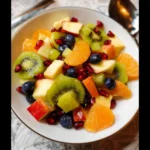
Mixed Fruit Winter Salad Recipe
Ingredients
For the Salad:
- 2 large Navel Oranges
- 1 large Ruby Red Grapefruit
- 1 cup Pomegranate Arils (from 1 medium-large pomegranate)
- 2 firm, ripe Fuyu Persimmons, peeled and diced into ½-inch cubes
- 3 Kiwi Fruits, peeled and sliced into rounds, then quartered
- 1 firm, ripe Bosc Pear, cored and diced into ½-inch cubes
For the Honey-Lime Dressing:
- 3 tablespoons Extra Virgin Olive Oil (a light, fruity variety works best)
- 2 tablespoons Fresh Lime Juice (from about 1 large lime)
- 1 tablespoon Honey (or maple syrup for a vegan option)
- 1 tablespoon Fresh Mint, finely chopped (plus more for garnish)
- 1 pinch of salt (this enhances the sweetness of the fruit)
Instructions
Step 1: Prepare the Honey-Lime Dressing
In a small bowl or a glass jar with a lid, combine the extra virgin olive oil, fresh lime juice, honey (or maple syrup), finely chopped mint, and a tiny pinch of salt. Whisk vigorously or shake the jar until the dressing is well emulsified and slightly thickened. Set it aside to allow the flavors to meld together while you prepare the fruit.
Step 2: Supreme the Citrus
“Supreming” is the technique of cutting away the peel, pith, and membrane from citrus fruit, leaving you with perfect, tender segments. It’s worth the extra effort for a superior texture.
- Slice off the top and bottom of one orange. Stand it on one of the flat ends on your cutting board.
- Using a sharp knife, carefully slice downwards, following the curve of the fruit, to remove the peel and the white pith. Rotate the fruit and continue until all the peel and pith are removed.
- Now, hold the peeled orange over a large mixing bowl to catch the juices. Carefully cut along the inside of each membrane to release the segments, letting them fall into the bowl.
- Repeat this entire process with the second orange and the grapefruit. Squeeze any remaining juice from the membranes into the bowl before discarding them.
Step 3: Prepare the Remaining Fruit
- Pomegranate: If you’re starting with a whole pomegranate, the easiest way to de-seed it is to cut it in half horizontally. Hold one half, cut-side down, over your large mixing bowl and firmly whack the back of it with a wooden spoon. The arils will fall right out into the bowl. Repeat with the other half.
- Persimmons, Pear, and Kiwi: Peel the persimmons and kiwis. Core the pear. Dice the persimmons and pear into neat, ½-inch cubes. Slice the kiwis into rounds and then cut the rounds into quarters. Add all of these prepared fruits to the large bowl with the citrus segments and pomegranate arils.
Step 4: Combine and Dress the Salad
- Gently toss the mixed fruits in the bowl. Use a large, soft spatula or your hands to mix, being careful not to break up the delicate citrus segments.
- Just before you are ready to serve, give your dressing another quick whisk or shake. Pour about two-thirds of the dressing over the fruit.
- Gently toss again to coat all the fruit evenly. Taste the salad. If you feel it needs more zest or sweetness, add the remaining dressing.
Step 5: Garnish and Serve
- Transfer the finished Mixed Fruit Winter Salad to a beautiful serving bowl, preferably a glass one to show off the vibrant colors.
- Garnish with a sprinkle of fresh, whole mint leaves.
- Serve immediately for the best texture and flavor.
Nutrition
- Serving Size: One Normal Portion
- Calories: 150-180