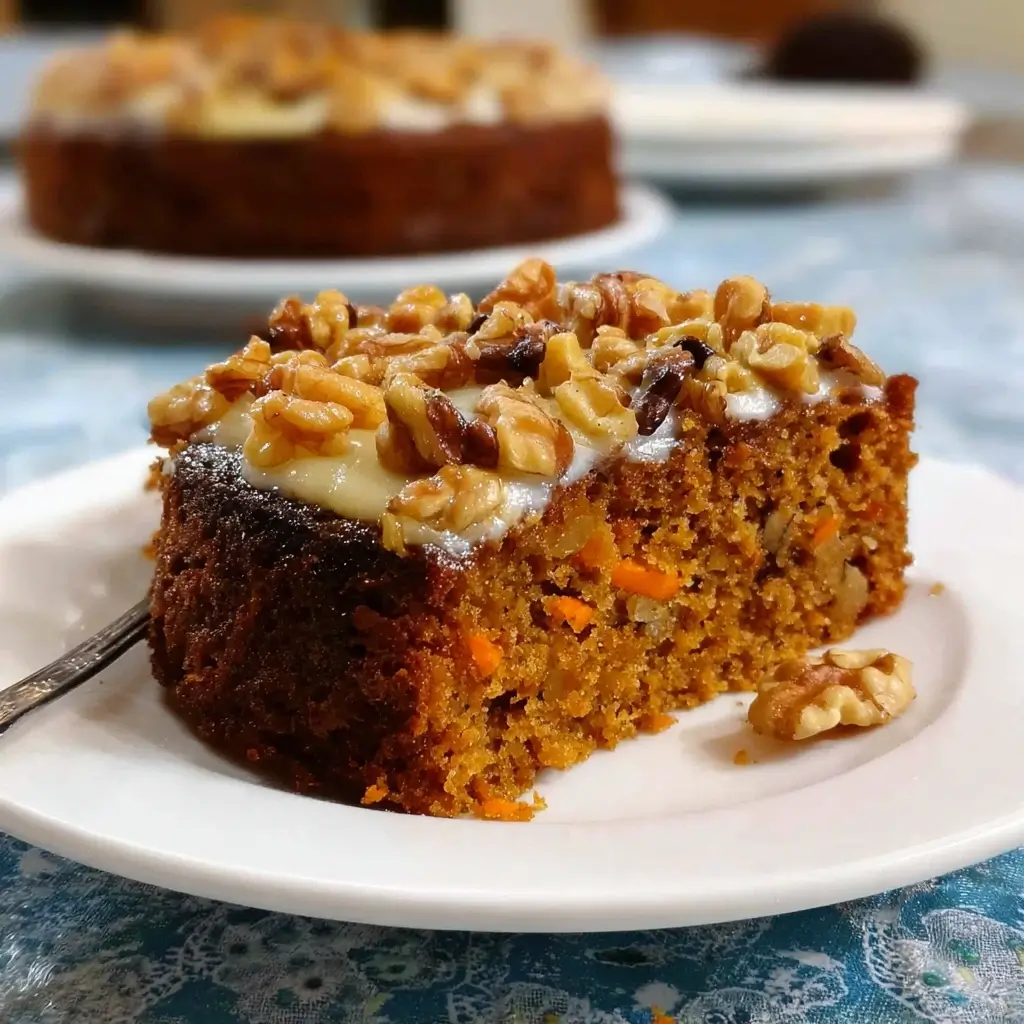

Of all the cakes that grace our family table, there is one that disappears faster than any other, leaving behind only a trail of crumbs and happy sighs. That cake is this very Carrot Walnut Cake. I first baked it for an Easter gathering years ago, skeptical that a cake filled with vegetables could truly win over a crowd of dedicated chocolate lovers. But from the moment it came out of the oven, filling the entire house with the warm, intoxicating aroma of cinnamon, nutmeg, and sweet, baking carrots, I knew it was special. The first slice was a revelation: unbelievably moist, tender, and packed with flavor. The sweetness of the carrots, the earthy crunch of the walnuts, and the gentle warmth of the spices all played together in perfect harmony. And the frosting—oh, the frosting! It’s a thick, tangy, not-too-sweet cream cheese frosting that provides the perfect counterpoint to the rich cake. It’s now the most requested dessert for birthdays, holidays, and any day that needs a little bit of comfort and joy. This recipe isn’t just a set of instructions; it’s a guaranteed crowd-pleaser and a vessel for creating cherished memories.
The Ultimate Moist Carrot Walnut Cake Recipe
This recipe has been tested and perfected over many years to achieve the ideal balance of moisture, spice, and texture. It yields a two-layer, 9-inch round cake that is as beautiful as it is delicious.
Ingredients for the Carrot Walnut Cake
Dry Ingredients:
- 2 ½ cups (315g) All-Purpose Flour
- 2 teaspoons Baking Soda
- 1 teaspoon Baking Powder
- ½ teaspoon Fine Sea Salt
- 2 teaspoons Ground Cinnamon
- 1 teaspoon Ground Ginger
- ½ teaspoon Ground Nutmeg
- ¼ teaspoon Ground Cloves
Wet Ingredients:
- 1 ¼ cups (250ml) Canola or other neutral vegetable oil
- 1 cup (200g) Granulated Sugar
- 1 cup (220g) Firmly Packed Light Brown Sugar
- 4 large Eggs, at room temperature
- 1 teaspoon Pure Vanilla Extract
- 3 cups (about 340g) Finely Grated Carrots (from about 4-5 medium carrots)
- 1 cup (120g) Chopped Walnuts, toasted
Ingredients for the Tangy Cream Cheese Frosting
- 16 ounces (452g) Full-Fat Block Cream Cheese, softened to room temperature
- ½ cup (113g) Unsalted Butter, softened to room temperature
- 4 cups (480g) Powdered Sugar (confectioners’ sugar), sifted
- 1 ½ teaspoons Pure Vanilla Extract
- 1-2 tablespoons Heavy Cream or Milk (optional, for consistency)
- Pinch of Salt
Step-by-Step Instructions for Baking Perfection
Following these detailed instructions will guide you to a flawless carrot cake. The process is broken down into making the cake, baking it, and then preparing the heavenly frosting.
Part 1: Preparing and Baking the Cake Layers
- Preheat and Prep: Preheat your oven to 350°F (175°C). Grease and flour two 9-inch round cake pans. For extra insurance against sticking, trace the bottom of the pans onto parchment paper, cut out the circles, and place them in the bottom of the greased pans. Grease the parchment paper as well.
- Toast the Walnuts: Spread the chopped walnuts on a small baking sheet. Toast in the preheated oven for 6-8 minutes, or until they are fragrant and lightly browned. Shaking the pan halfway through helps them toast evenly. Set them aside to cool completely. Toasting is a crucial step that unlocks the deep, nutty flavor of the walnuts.
- Combine Dry Ingredients: In a large bowl, whisk together the all-purpose flour, baking soda, baking powder, salt, cinnamon, ginger, nutmeg, and cloves. Whisking aerates the flour and ensures the leavening agents and spices are evenly distributed, preventing pockets of spice in the finished cake.
- Combine Wet Ingredients: In a separate, larger bowl (or the bowl of a stand mixer fitted with the paddle attachment), combine the canola oil, granulated sugar, and light brown sugar. Beat on medium speed until well-combined. The mixture will look grainy.
- Add Eggs and Vanilla: Add the eggs one at a time, beating well after each addition until the mixture is smooth and slightly lighter in color. Scrape down the sides and bottom of the bowl as needed. Beat in the vanilla extract.
- Incorporate Dry Ingredients: With the mixer on low speed, gradually add the dry ingredient mixture to the wet ingredients. Mix only until the flour is just incorporated. It’s very important not to overmix at this stage. Overmixing develops the gluten in the flour, which can result in a tough, dense cake instead of a tender one. A few small streaks of flour are okay.
- Fold in Carrots and Walnuts: Remove the bowl from the mixer. Using a rubber spatula, gently fold in the finely grated carrots and the cooled, toasted walnuts. The batter will be quite thick and dense at this point; this is completely normal.
- Divide and Bake: Evenly divide the batter between the two prepared cake pans. Use an offset spatula to smooth the tops. Bake in the preheated oven for 30-40 minutes. The cake is done when a wooden skewer or toothpick inserted into the center comes out clean or with a few moist crumbs attached (but no wet batter). The tops should be springy to the touch.
- Cool Completely: Let the cake layers cool in their pans on a wire rack for 15 minutes. Then, carefully run a knife around the edge of each pan and invert the cakes onto the wire rack. Peel off the parchment paper and let them cool completely to room temperature. This can take 1-2 hours. Do not attempt to frost a warm cake, as the frosting will melt and slide off.
Part 2: Crafting the Cream Cheese Frosting
- Beat Cream Cheese and Butter: In the bowl of a stand mixer with the paddle attachment (or a large bowl with a hand mixer), beat the softened cream cheese and softened butter on medium-high speed until completely smooth, creamy, and free of lumps, about 2-3 minutes. Room temperature ingredients are essential here for a non-lumpy frosting.
- Add Sugar Gradually: With the mixer on low speed, gradually add the sifted powdered sugar, one cup at a time. Sifting prevents lumps. Once all the sugar is added, the frosting will be very thick.
- Finish the Frosting: Add the vanilla extract and a pinch of salt (the salt balances the sweetness). Increase the speed to medium-high and beat for another 2-3 minutes until the frosting is light and fluffy. If the frosting is too stiff, add heavy cream or milk one tablespoon at a time until you reach a smooth, spreadable consistency.
- Assemble and Frost: Place one cake layer, top-side down, on a serving plate or cake stand. Spread a generous layer of frosting (about 1 to 1 ½ cups) evenly over the top. Place the second cake layer on top, again with the top-side down to create a flat surface. Apply a thin “crumb coat” of frosting over the entire cake to trap any loose crumbs. Chill the cake in the refrigerator for 20-30 minutes to set the crumb coat.
- Final Decoration: Apply the remaining frosting to the top and sides of the cake, using an offset spatula to create smooth surfaces or decorative swirls. You can garnish with additional toasted walnuts, a sprinkle of cinnamon, or even some finely grated carrot for a pop of color.
Nutrition Facts
- Servings: 16 generous slices
- Calories per serving (approximate): 650-750 calories
Disclaimer: The nutritional information provided is an estimate and can vary based on the specific ingredients and brands used, as well as the final serving size.
Preparation Time
Understanding the time commitment helps in planning your baking day. The majority of the time is hands-off while the cake bakes and cools.
- Active Preparation Time: 30 minutes
- Baking Time: 30-40 minutes
- Cooling Time: 2 hours
- Frosting and Assembly Time: 20 minutes
- Total Time: Approximately 3 hours 30 minutes
The Magic Behind the Perfect Carrot Walnut Cake
What makes this recipe so consistently successful? It’s a bit of baking science. The elements work in concert to create a cake that is greater than the sum of its parts.
The Role of Key Ingredients
- Oil, Not Butter: While butter provides flavor, oil provides superior moisture. A cake made with oil will be more tender and stay moist for days longer than a butter-based cake. The flavor in this cake comes from the spices, carrots, and brown sugar, so you don’t miss the butter.
- Brown Sugar: Brown sugar is not just for sweetness; its molasses content adds a deep, caramel-like flavor and, crucially, contributes significant moisture. The combination of both white and brown sugar provides the perfect balance of structure and moistness.
- Freshly Grated Carrots: Pre-shredded carrots from the store are often thick and dry. Grating your own carrots on the fine side of a box grater releases their natural moisture and sugar, which then bakes directly into the cake, creating an incredibly tender crumb.
- A Symphony of Spices: The blend of cinnamon, ginger, nutmeg, and cloves creates a warm, complex spice profile that is the hallmark of a great carrot cake. They complement the sweetness of the carrots without overpowering them.
- Toasted Walnuts: Raw walnuts can sometimes have a slightly bitter, waxy taste. Toasting them for just a few minutes in the oven transforms them completely, deepening their nutty flavor and giving them a satisfying, brittle crunch that provides a wonderful textural contrast to the soft cake.
How to Serve Your Masterpiece
Serving a carrot walnut cake can be as simple or as elegant as you wish. It’s a versatile dessert that fits any occasion.
- For a Cozy Afternoon:
- Serve a simple, unadorned slice with a hot cup of freshly brewed coffee or a strong black tea like English Breakfast.
- The warmth of the beverage beautifully complements the spices in the cake.
- For a Special Occasion or Holiday (like Easter or Thanksgiving):
- Garnish the top of the cake with a ring of perfectly toasted walnut halves around the edge.
- Create decorative swirls in the frosting with the back of a spoon or an offset spatula.
- For a professional touch, pipe frosting rosettes around the top and bottom borders of the cake.
- A light dusting of cinnamon or a sprinkle of finely chopped pistachios can add a beautiful color contrast.
- For a Dessert Platter:
- Cut the cake into smaller, bite-sized squares instead of large wedges.
- Serve alongside other treats like fresh berries, a scoop of high-quality vanilla bean ice cream, or a drizzle of salted caramel sauce.
- Temperature Matters:
- For the best flavor and texture, serve the cake at room temperature. If you’ve been storing it in the refrigerator, take it out about 30-60 minutes before you plan to serve it to allow the frosting and cake to soften slightly.
Additional Tips for a Flawless Cake Every Time
- Room Temperature is Non-Negotiable: This is especially true for the eggs and the frosting ingredients (butter and cream cheese). Room temperature eggs incorporate more easily into the batter, creating a more uniform structure. Room temperature butter and cream cheese are essential for a smooth, non-lumpy frosting. Cold ingredients will seize up and create a curdled-looking mess.
- Don’t Squeeze the Carrots: After grating your carrots, resist the urge to squeeze out their liquid. That moisture is liquid gold for your cake! It’s a key component that ensures the final product is supremely moist and tender.
- The Importance of a Crumb Coat: Don’t skip the crumb coat step. It may seem fussy, but it’s the professional secret to a beautifully clean finish. This thin layer of frosting acts like a primer, trapping all the loose cake crumbs so that your final, thick layer of frosting is pristine and crumb-free.
- Sift Your Dry Ingredients: Sifting isn’t just for powdered sugar. Sifting the flour, leavening agents, and spices together does two things: it breaks up any clumps for a smoother batter, and more importantly, it evenly distributes the baking soda, baking powder, and spices. This prevents any single bite from being overly salty or spicy and ensures an even rise.
- Making Ahead for Less Stress: This cake is an excellent candidate for making in advance. You can bake the cake layers, let them cool completely, and then wrap them tightly in two layers of plastic wrap. They can be stored at room temperature for a day or in the freezer for up to two months. The frosting can also be made ahead and stored in an airtight container in the refrigerator for up to a week. Let it come to room temperature and re-whip it for a few minutes before frosting the cake.
Frequently Asked Questions (FAQ)
Here are answers to some of the most common questions about making a carrot walnut cake from scratch.
1. Why did my cake sink in the middle?
A sunken cake is usually caused by one of a few things. The most common culprit is opening the oven door too early or too frequently during baking, which causes the temperature to drop and the cake’s structure to collapse before it’s fully set. It can also be caused by underbaking, so always do the toothpick test. Finally, over-mixing the batter after adding the flour can develop too much gluten, leading to a weak structure that can’t support itself.
2. Can I make this cake without walnuts? Or use a different nut?
Absolutely! If you have a nut allergy or simply don’t care for walnuts, you can omit them entirely without any other adjustments. The cake will still be wonderfully moist and delicious. If you want a nutty crunch, toasted pecans are a fantastic substitute and are often used interchangeably with walnuts in carrot cake recipes.
3. Can I use butter instead of oil in the cake?
You can, but it will change the texture. A cake made with oil will be moister and have a more tender, even crumb. A cake made with melted butter will have a slightly richer, buttery flavor but will be a bit denser and can dry out more quickly. If you choose to use butter, use an equal amount of melted and cooled unsalted butter in place of the oil.
4. How do I properly store leftover carrot cake?
Because of the cream cheese frosting, the finished cake must be stored in the refrigerator. Place it in an airtight cake carrier or cover it loosely with plastic wrap (use toothpicks to keep the wrap from touching the frosting). It will stay fresh and delicious in the refrigerator for up to 5 days. For the best taste and texture, let individual slices sit at room temperature for about 20-30 minutes before eating.
5. Can I bake this recipe as cupcakes?
Yes, this recipe works beautifully for cupcakes! Line a standard muffin tin with paper liners and fill each one about two-thirds full with batter. Bake at 350°F (175°C) for 18-22 minutes, or until a toothpick inserted into the center comes out clean. This recipe will yield approximately 24 cupcakes. Let them cool completely before frosting.
Moist Carrot Walnut Cake Recipe
Ingredients
Dry Ingredients:
- 2 ½ cups (315g) All-Purpose Flour
- 2 teaspoons Baking Soda
- 1 teaspoon Baking Powder
- ½ teaspoon Fine Sea Salt
- 2 teaspoons Ground Cinnamon
- 1 teaspoon Ground Ginger
- ½ teaspoon Ground Nutmeg
- ¼ teaspoon Ground Cloves
Wet Ingredients:
- 1 ¼ cups (250ml) Canola or other neutral vegetable oil
- 1 cup (200g) Granulated Sugar
- 1 cup (220g) Firmly Packed Light Brown Sugar
- 4 large Eggs, at room temperature
- 1 teaspoon Pure Vanilla Extract
- 3 cups (about 340g) Finely Grated Carrots (from about 4–5 medium carrots)
- 1 cup (120g) Chopped Walnuts, toasted
Instructions
Part 1: Preparing and Baking the Cake Layers
- Preheat and Prep: Preheat your oven to 350°F (175°C). Grease and flour two 9-inch round cake pans. For extra insurance against sticking, trace the bottom of the pans onto parchment paper, cut out the circles, and place them in the bottom of the greased pans. Grease the parchment paper as well.
- Toast the Walnuts: Spread the chopped walnuts on a small baking sheet. Toast in the preheated oven for 6-8 minutes, or until they are fragrant and lightly browned. Shaking the pan halfway through helps them toast evenly. Set them aside to cool completely. Toasting is a crucial step that unlocks the deep, nutty flavor of the walnuts.
- Combine Dry Ingredients: In a large bowl, whisk together the all-purpose flour, baking soda, baking powder, salt, cinnamon, ginger, nutmeg, and cloves. Whisking aerates the flour and ensures the leavening agents and spices are evenly distributed, preventing pockets of spice in the finished cake.
- Combine Wet Ingredients: In a separate, larger bowl (or the bowl of a stand mixer fitted with the paddle attachment), combine the canola oil, granulated sugar, and light brown sugar. Beat on medium speed until well-combined. The mixture will look grainy.
- Add Eggs and Vanilla: Add the eggs one at a time, beating well after each addition until the mixture is smooth and slightly lighter in color. Scrape down the sides and bottom of the bowl as needed. Beat in the vanilla extract.
- Incorporate Dry Ingredients: With the mixer on low speed, gradually add the dry ingredient mixture to the wet ingredients. Mix only until the flour is just incorporated. It’s very important not to overmix at this stage. Overmixing develops the gluten in the flour, which can result in a tough, dense cake instead of a tender one. A few small streaks of flour are okay.
- Fold in Carrots and Walnuts: Remove the bowl from the mixer. Using a rubber spatula, gently fold in the finely grated carrots and the cooled, toasted walnuts. The batter will be quite thick and dense at this point; this is completely normal.
- Divide and Bake: Evenly divide the batter between the two prepared cake pans. Use an offset spatula to smooth the tops. Bake in the preheated oven for 30-40 minutes. The cake is done when a wooden skewer or toothpick inserted into the center comes out clean or with a few moist crumbs attached (but no wet batter). The tops should be springy to the touch.
- Cool Completely: Let the cake layers cool in their pans on a wire rack for 15 minutes. Then, carefully run a knife around the edge of each pan and invert the cakes onto the wire rack. Peel off the parchment paper and let them cool completely to room temperature. This can take 1-2 hours. Do not attempt to frost a warm cake, as the frosting will melt and slide off.
Part 2: Crafting the Cream Cheese Frosting
- Beat Cream Cheese and Butter: In the bowl of a stand mixer with the paddle attachment (or a large bowl with a hand mixer), beat the softened cream cheese and softened butter on medium-high speed until completely smooth, creamy, and free of lumps, about 2-3 minutes. Room temperature ingredients are essential here for a non-lumpy frosting.
- Add Sugar Gradually: With the mixer on low speed, gradually add the sifted powdered sugar, one cup at a time. Sifting prevents lumps. Once all the sugar is added, the frosting will be very thick.
- Finish the Frosting: Add the vanilla extract and a pinch of salt (the salt balances the sweetness). Increase the speed to medium-high and beat for another 2-3 minutes until the frosting is light and fluffy. If the frosting is too stiff, add heavy cream or milk one tablespoon at a time until you reach a smooth, spreadable consistency.
- Assemble and Frost: Place one cake layer, top-side down, on a serving plate or cake stand. Spread a generous layer of frosting (about 1 to 1 ½ cups) evenly over the top. Place the second cake layer on top, again with the top-side down to create a flat surface. Apply a thin “crumb coat” of frosting over the entire cake to trap any loose crumbs. Chill the cake in the refrigerator for 20-30 minutes to set the crumb coat.
- Final Decoration: Apply the remaining frosting to the top and sides of the cake, using an offset spatula to create smooth surfaces or decorative swirls. You can garnish with additional toasted walnuts, a sprinkle of cinnamon, or even some finely grated carrot for a pop of color.
Nutrition
- Serving Size: One Normal Portion
- Calories: 650-750