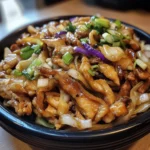
Ingredients
Scale
- 1 pound boneless, skinless chicken breasts, thinly sliced: Chicken breast is the lean protein foundation of this dish. Opt for boneless, skinless breasts for ease of preparation and quicker cooking. The key here is to slice the chicken thinly, ideally against the grain. This ensures that the chicken cooks quickly and remains tender, absorbing the flavors of the marinade and sauce effectively. Thin slices also mimic the traditional texture of Moo Shu dishes, making for a more authentic eating experience. You can also use chicken thighs for a richer flavor, but ensure they are also boneless, skinless, and thinly sliced. For vegetarian options, consider using firm tofu, sliced portobello mushrooms, or even jackfruit, all prepared in a similar thin slice.
- 2 tablespoons soy sauce: Soy sauce is the cornerstone of the savory umami flavor in Moo Shu Chicken. It not only seasons the chicken but also contributes to the overall depth of the sauce. Use regular soy sauce for a balanced flavor. If you are watching your sodium intake, you can opt for low-sodium soy sauce. For a richer, more complex flavor profile, you can experiment with dark soy sauce, though be mindful of its stronger flavor and salt content, adjusting the quantity accordingly. Alternatively, tamari can be used as a gluten-free substitute for soy sauce, offering a similar savory depth.
- 1 tablespoon hoisin sauce: Hoisin sauce is a thick, fragrant sauce with a sweet and savory profile. It adds a characteristic Chinese flavor to the dish, contributing notes of sweetness, spice, and umami. It’s a vital ingredient in authentic Moo Shu Chicken, providing a distinct depth of flavor that cannot be easily replicated. Look for a good quality hoisin sauce in the Asian food section of your grocery store. If you are unable to find hoisin sauce, a mixture of soy sauce, peanut butter, honey, and a touch of vinegar can be used as a substitute, though the flavor profile will be slightly different.
- 1 tablespoon oyster sauce: Oyster sauce adds a rich, savory, and slightly briny depth of flavor to the sauce, enhancing the umami notes. It’s a key ingredient in many Chinese stir-fries and brings a complexity that elevates the overall taste of the Moo Shu Chicken. If you are vegetarian or vegan, you can use vegetarian oyster sauce made from mushrooms, which provides a similar umami richness. If you don’t have oyster sauce, you can try substituting it with a bit more soy sauce and a dash of fish sauce (for non-vegetarians) or mushroom broth (for vegetarians) to add depth.
- 1 tablespoon vegetable oil: Vegetable oil is used for stir-frying the chicken and vegetables. Choose a neutral oil with a high smoke point, such as canola oil, peanut oil, or grapeseed oil. These oils can withstand high heat without breaking down or imparting unwanted flavors to the dish, making them ideal for stir-frying. Avoid using olive oil for high-heat stir-frying, as it has a lower smoke point and can become bitter.
- 2 cloves garlic, minced: Garlic is an aromatic powerhouse that adds a pungent and savory base to the dish. Freshly minced garlic is always preferred for its brighter and more intense flavor compared to pre-minced garlic. Mince the garlic finely to ensure it cooks quickly and evenly, releasing its aroma and flavor into the oil before adding the other ingredients. If you are a garlic lover, feel free to add an extra clove for a more pronounced garlic flavor.
- 1 teaspoon fresh ginger, grated: Fresh ginger brings a warm, zesty, and slightly spicy note to the dish. It complements the garlic beautifully and adds a layer of complexity to the flavor profile. Fresh ginger is essential for its vibrant flavor; dried ginger powder is not a suitable substitute in this recipe. Grate the ginger finely to release its juices and aroma effectively. Peel the ginger skin before grating for the best flavor.
- 2 cups shredded cabbage: Cabbage provides a satisfying crunch and mild sweetness to the Moo Shu Chicken. Napa cabbage is a classic choice for Moo Shu dishes due to its tender leaves and slightly sweet flavor. However, you can also use green cabbage or even Savoy cabbage. Shred the cabbage thinly for even cooking and a pleasant texture. Pre-shredded cabbage can be used for convenience, but ensure it is fresh and crisp.
- 1 cup sliced mushrooms: Mushrooms add an earthy and umami flavor to the dish, as well as a meaty texture. Shiitake mushrooms are a traditional choice for Moo Shu dishes, offering a rich and savory flavor. Cremini mushrooms or white button mushrooms can also be used as readily available alternatives. Slice the mushrooms thinly so they cook quickly and evenly in the stir-fry. For a more intense mushroom flavor, consider using dried shiitake mushrooms, rehydrated and sliced, and using the soaking liquid in the sauce for added depth.
- 1/2 cup shredded carrots: Carrots contribute sweetness, color, and a slightly crunchy texture to the Moo Shu Chicken. Shredded carrots cook quickly and blend well with the other vegetables. You can use pre-shredded carrots for convenience or shred them yourself using a box grater or food processor. Julienned carrots can also be used for a slightly different texture.
- 4 green onions, sliced: Green onions, also known as scallions, add a mild onion flavor and a fresh, vibrant green color to the dish. They are used both in the stir-fry and as a garnish, adding a final touch of freshness and visual appeal. Slice the green onions thinly, both the white and green parts, for maximum flavor and visual interest.
- 1/4 cup bamboo shoots, sliced: Bamboo shoots provide a unique crunchy texture and a slightly sweet, earthy flavor to the Moo Shu Chicken. They add a distinctive element that is characteristic of authentic Moo Shu dishes. Canned bamboo shoots are readily available, usually pre-sliced. Drain and rinse them before adding them to the stir-fry. If you prefer a stronger bamboo shoot flavor, you can find fresh bamboo shoots at Asian markets, but they require more preparation.
- 1 tablespoon sesame oil: Sesame oil is used as a finishing touch, adding a nutty aroma and flavor to the Moo Shu Chicken. Toasted sesame oil is preferred for its richer and more pronounced flavor compared to regular sesame oil. Drizzle it over the dish at the very end of cooking to preserve its delicate aroma and flavor. A little goes a long way, so use it sparingly to avoid overpowering the other flavors.
- Salt and pepper to taste: Salt and pepper are essential seasonings to balance the flavors and enhance the overall taste of the dish. Season the chicken and vegetables with salt and pepper to taste, adjusting the amount according to your preference. Taste the dish at the end of cooking and add more salt and pepper if needed to achieve the desired flavor balance.
- 8 Mandarin pancakes or flour tortillas: Mandarin pancakes are the traditional accompaniment for Moo Shu Chicken, providing soft, thin wraps to encase the flavorful filling. They are delicate and slightly chewy, offering a perfect textural contrast to the stir-fried chicken and vegetables. You can find Mandarin pancakes in the frozen section of Asian grocery stores or some well-stocked supermarkets. Flour tortillas are a readily available and convenient substitute for Mandarin pancakes. They are also soft and pliable, making them suitable for wrapping the Moo Shu Chicken filling. Warm both Mandarin pancakes and flour tortillas before serving to enhance their texture and flavor.
Instructions
- Prepare the Sauce: In a small bowl, embark on the flavor-building journey by combining the soy sauce, hoisin sauce, and oyster sauce. Whisk these umami-rich ingredients together until they are well blended, creating a harmonious sauce that will coat and flavor the chicken and vegetables beautifully. Set this flavorful mixture aside, ready to infuse the dish with its signature Chinese taste. This pre-mixing ensures that the sauce is evenly distributed when added to the stir-fry later.
- Heat the Skillet: Place a large skillet or wok over medium-high heat. Allow the pan to heat up properly before adding the oil. This is crucial for achieving a good sear on the chicken and preventing it from sticking to the pan. A hot pan ensures that the stir-fry process begins correctly, leading to perfectly cooked and flavorful ingredients.
- Cook the Chicken: Add the vegetable oil to the hot skillet. Once the oil is shimmering and heated through (but not smoking), carefully add the thinly sliced chicken breasts. Spread the chicken in a single layer in the skillet, avoiding overcrowding, which can lower the pan temperature and steam the chicken instead of searing it. Cook the chicken for approximately 5-7 minutes, stirring occasionally, until it is golden brown and cooked through. The internal temperature of the chicken should reach 165°F (74°C). Remove the cooked chicken from the skillet and set it aside. Leaving the chicken aside while you cook the vegetables helps maintain its tenderness and prevents it from overcooking.
- Sauté Aromatics: In the same skillet, now infused with the savory chicken flavors, add the minced garlic and grated ginger. Sauté these aromatics for about 30 seconds, or until they become fragrant. Be careful not to burn the garlic and ginger, as this can impart a bitter taste. Sautéing them briefly in the residual oil from the chicken releases their aromatic oils and creates a flavorful base for the vegetables. The fragrant aroma will signal that they are ready for the next step.
- Stir-Fry Vegetables: Add the shredded cabbage, sliced mushrooms, shredded carrots, sliced green onions, and sliced bamboo shoots to the skillet. Stir-fry the vegetables over medium-high heat for approximately 4-5 minutes, or until they are tender-crisp. Stir frequently to ensure even cooking and prevent burning. The goal is to cook the vegetables until they are slightly softened but still retain a pleasant crunch. Avoid overcooking them, as they will lose their texture and become mushy. The vibrant colors of the vegetables should remain bright and appealing.
- Combine and Sauce: Return the cooked chicken to the skillet with the stir-fried vegetables. Pour the prepared sauce mixture over the chicken and vegetables. Stir well to combine, ensuring that all the ingredients are evenly coated with the flavorful sauce. Continue to stir-fry for another 1-2 minutes, allowing the sauce to thicken slightly and the flavors to meld together beautifully. This final stir-fry step is crucial for bringing all the components of the dish together in a harmonious and flavorful way.
- Finish with Sesame Oil: Drizzle the sesame oil over the Moo Shu Chicken mixture. Season with salt and pepper to taste. Stir gently to incorporate the sesame oil and seasonings. Taste the dish and adjust the salt and pepper as needed to achieve the perfect flavor balance. The sesame oil adds a final touch of nutty aroma and flavor, enhancing the overall complexity of the dish.
- Serve and Enjoy: Serve the Moo Shu Chicken hot with warm Mandarin pancakes or flour tortillas. Allow everyone to assemble their own wraps by placing a spoonful of the Moo Shu Chicken filling onto a pancake or tortilla, folding it up, and enjoying the delightful combination of flavors and textures. Optional accompaniments like steamed jasmine rice or a refreshing cucumber salad can be served alongside to complement the dish.
Nutrition
- Serving Size: One Normal Portion
- Calories: 350-450