

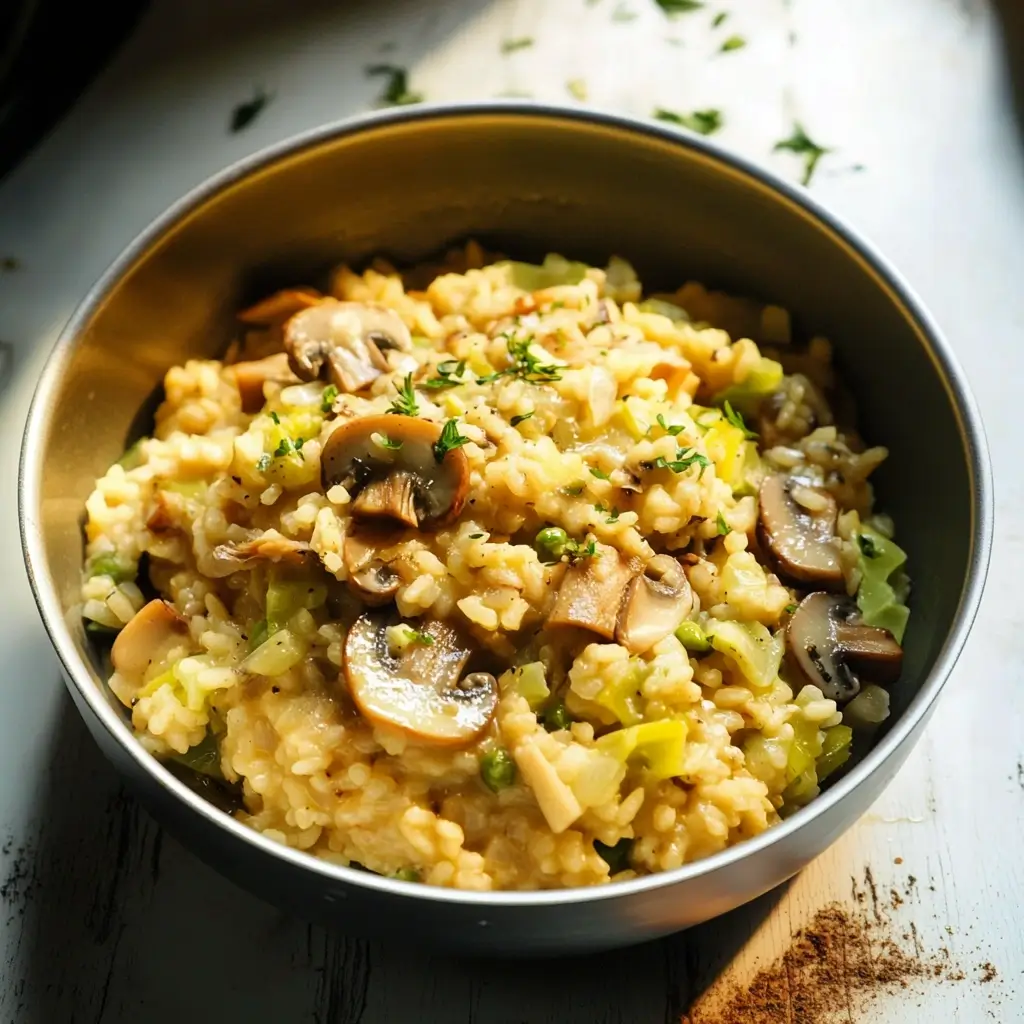

Mushroom and Leek Risotto is one of those dishes that has become a staple in our household, not just because it’s incredibly satisfying and comforting, but also surprisingly versatile for a weeknight dinner or a more elegant weekend meal. I remember the first time I made it; my family, usually quite critical of new recipes, devoured it with gusto. The creamy texture, the earthy mushrooms, the subtle sweetness of the leeks, all melded together in perfect harmony. Even my youngest, who usually picks at anything green, asked for seconds! Since then, it’s become a regular request, and I’ve tweaked and perfected the recipe over time to make it even more foolproof and flavorful. If you’re looking for a dish that’s both impressive and approachable, this Mushroom and Leek Risotto is an absolute must-try. Trust me, the aroma alone while it simmers on the stove is enough to make anyone’s mouth water.
Ingredients
Creating a truly exceptional Mushroom and Leek Risotto hinges on the quality and selection of your ingredients. Each component plays a crucial role in achieving that signature creamy texture and rich, savory flavor profile. Let’s delve into each ingredient, understanding its purpose and offering some tips for choosing the best options.
- Arborio Rice: 1 ½ cups. Arborio rice is the quintessential choice for risotto, and for good reason. Its high starch content is key to creating that creamy, luscious texture that defines a perfect risotto. Unlike long-grain rice, Arborio rice releases starch as it cooks, thickening the surrounding liquid and resulting in a naturally creamy sauce without the need for excessive cream or cheese. When selecting Arborio rice, look for plump, pearly white grains. Avoid rice that looks broken or dusty, as this can indicate lower quality. While Arborio is traditional, you can also explore other short-grain, high-starch varieties like Carnaroli or Vialone Nano for slightly different textures and flavor profiles. Carnaroli, for example, is often praised for its even higher starch content and ability to retain its shape better during cooking, leading to a creamier yet more al dente risotto.
- Dried Porcini Mushrooms: ½ ounce. Dried porcini mushrooms are the secret weapon for adding intense, umami-rich flavor to your risotto. Even a small amount of dried porcini can dramatically elevate the dish, providing a depth of flavor that fresh mushrooms alone can’t quite achieve. When buying dried porcini, look for pieces that are relatively whole and have a strong, earthy aroma. Avoid bags with excessive crumbs or a musty smell. Before using, rehydrate the dried porcini in hot water. This not only softens them for chopping but also creates a flavorful porcini broth that you’ll use to infuse even more mushroom essence into your risotto. Don’t discard the soaking liquid! It’s liquid gold for flavor.
- Fresh Mushrooms: 1 pound, mixed (such as cremini, shiitake, oyster). While dried porcini provide depth, fresh mushrooms bring a variety of textures and more subtle, nuanced flavors. A mix of mushrooms is ideal for a complex and interesting risotto. Cremini mushrooms, also known as baby bellas, offer a meaty texture and earthy flavor. Shiitake mushrooms bring a more delicate, almost buttery taste and a slightly chewy texture. Oyster mushrooms contribute a mild, seafood-like flavor and a tender, silky texture. Feel free to experiment with other varieties like maitake, chanterelle (if in season and budget allows), or even simple white button mushrooms. Ensure your fresh mushrooms are firm, dry, and free of blemishes. Clean them gently with a brush or a damp paper towel rather than soaking them in water, which can make them waterlogged and less flavorful.
- Leeks: 2 medium. Leeks are the unsung heroes of this risotto, providing a delicate oniony sweetness that is milder and more refined than onions. Their subtle flavor complements the earthiness of the mushrooms beautifully without overpowering them. When selecting leeks, choose firm, white and pale green stalks with minimal dark green parts, as these can be tougher. To prepare leeks, it’s crucial to clean them thoroughly as they tend to trap dirt between their layers. Slice them lengthwise and then rinse them under cold running water, fanning out the layers to remove any grit. Dice them finely to ensure they cook evenly and melt into the risotto.
- Vegetable Broth: 6-8 cups, low sodium. Vegetable broth is the cooking liquid for risotto, and its quality significantly impacts the final flavor. Opt for a low-sodium broth to control the saltiness of the dish, as you can always add more salt to taste. Homemade vegetable broth is always the best option for superior flavor, but high-quality store-bought broth works well too. Look for broths that are made with real vegetables and avoid those with artificial flavors or excessive sodium. It’s essential to keep the broth warm while making risotto. Cold broth will lower the temperature of the rice and disrupt the cooking process, leading to unevenly cooked risotto. Keep the broth simmering gently on the stovetop or warmed in a separate pot.
- Dry White Wine: ½ cup. Dry white wine adds acidity and complexity to the risotto, enhancing the other flavors and cutting through the richness. A crisp, dry white wine like Pinot Grigio, Sauvignon Blanc, or Vermentino works beautifully. Avoid sweet wines or heavily oaked wines, as these can clash with the delicate flavors of the risotto. If you prefer to omit the wine, you can substitute it with an equal amount of vegetable broth and a squeeze of lemon juice at the end to add a touch of acidity.
- Parmesan Cheese: ½ cup, grated, plus more for serving. Parmesan cheese is the classic finishing touch for risotto, adding a salty, umami-rich depth and contributing to the creamy texture. Use freshly grated Parmesan cheese for the best flavor and melting quality. Pre-grated Parmesan often contains cellulose and doesn’t melt as smoothly. For a vegetarian risotto, ensure you are using a vegetarian Parmesan, as traditional Parmesan is made with animal rennet. Pecorino Romano, a sharper, saltier sheep’s milk cheese, can also be used in combination with or in place of Parmesan for a different flavor dimension.
- Butter: 4 tablespoons, unsalted. Butter is crucial for both flavor and texture in risotto. It’s used to sauté the leeks and mushrooms at the beginning and then again at the end for the mantecatura, the final step that creates the signature creamy texture. Unsalted butter allows you to control the salt level of the dish precisely. For a richer flavor, you can use European-style butter, which has a higher fat content. For a vegan version, substitute olive oil or a high-quality vegan butter alternative.
- Olive Oil: 2 tablespoons, extra virgin. Olive oil is used in conjunction with butter to sauté the leeks and mushrooms. It adds a fruity note and helps to prevent the butter from burning. Extra virgin olive oil has the best flavor, but regular olive oil can also be used.
- Fresh Thyme: 2 sprigs. Fresh thyme adds a subtle herbaceous and earthy aroma that complements the mushrooms and leeks beautifully. Other herbs that work well include fresh parsley, chives, or a combination of Italian herbs. If using dried thyme, use about 1 teaspoon. Add fresh herbs towards the end of cooking to preserve their flavor and bright green color.
- Garlic: 2 cloves. Garlic provides a pungent, aromatic base flavor that enhances the overall savory profile of the risotto. Use fresh garlic cloves for the best flavor. Mince or finely chop the garlic to release its aromatics when sautéing. For a milder garlic flavor, you can add the garlic cloves whole to the pan and remove them before adding the rice.
- Salt and Freshly Ground Black Pepper: To taste. Salt and pepper are essential seasonings to balance and enhance the flavors of all the other ingredients. Season generously throughout the cooking process, starting with the sautéing of the vegetables and continuing as you add broth. Taste and adjust seasoning at each stage and especially at the end. Freshly ground black pepper has a more vibrant flavor than pre-ground pepper, so it’s recommended to grind it fresh.
Instructions
Crafting the perfect Mushroom and Leek Risotto is a rewarding culinary journey. While it requires a bit of attention and patience, following these step-by-step instructions will guide you to a creamy, flavorful masterpiece. Each step is crucial, and understanding the ‘why’ behind each action will elevate your risotto from good to exceptional.
- Rehydrate the Porcini Mushrooms: Begin by placing the dried porcini mushrooms in a heatproof bowl. Pour 2 cups of boiling water over them and let them soak for at least 20 minutes, or until they are softened. This process not only rehydrates the mushrooms but also creates a flavorful mushroom broth. Once softened, remove the porcini from the soaking liquid using a slotted spoon, reserving the liquid. Squeeze out any excess water from the mushrooms and chop them finely. Strain the porcini soaking liquid through a fine-mesh sieve or cheesecloth to remove any grit and set aside. This flavorful liquid will be added to the risotto later, intensifying the mushroom flavor.
- Prepare the Fresh Mushrooms and Leeks: While the porcini are soaking, prepare the fresh mushrooms and leeks. Clean the fresh mushrooms by gently brushing off any dirt with a mushroom brush or a damp paper towel. Slice the mushrooms to your desired thickness; thicker slices will provide more texture, while thinner slices will cook down more. Clean the leeks thoroughly. Slice them lengthwise and then rinse them under cold running water, fanning out the layers to remove any grit trapped between them. Finely dice the cleaned leeks. Mince the garlic cloves.
- Sauté the Leeks and Garlic: In a large, heavy-bottomed pot or Dutch oven, melt 2 tablespoons of butter and 2 tablespoons of olive oil over medium heat. Once the butter is melted and shimmering, add the diced leeks and a pinch of salt. Sauté the leeks for about 5-7 minutes, or until they are softened and translucent, stirring occasionally. Don’t let them brown. Add the minced garlic and cook for another minute, until fragrant, stirring constantly to prevent it from burning. The aroma of sautéing leeks and garlic is the foundation of a delicious risotto.
- Add Fresh and Dried Mushrooms: Increase the heat to medium-high. Add the sliced fresh mushrooms and the chopped rehydrated porcini mushrooms to the pot with the leeks and garlic. Sauté the mushrooms for about 8-10 minutes, or until they are browned and have released their moisture, stirring occasionally. Browning the mushrooms deepens their flavor and adds a savory complexity to the risotto. Season with salt and pepper to taste.
- Toast the Rice: Add the Arborio rice to the pot with the mushrooms and leeks. Stir continuously for 2-3 minutes, until the rice grains are translucent around the edges and slightly toasted. Toasting the rice is a crucial step in making risotto. It warms the grains, allowing them to absorb liquid better and release starch more gradually, which contributes to the creamy texture. Don’t skip this step!
- Deglaze with White Wine: Pour in the dry white wine and stir constantly as it sizzles and evaporates. Cook for about 1-2 minutes, or until the wine is almost completely absorbed by the rice. The acidity of the wine deglazes the pot, lifting any browned bits from the bottom and adding another layer of flavor to the risotto. The alcohol will evaporate, leaving behind the wine’s aromatic compounds.
- Add Broth Gradually: Now it’s time to start adding the warm vegetable broth. Ladle in about 1 cup of warm broth to the rice mixture. Stir constantly and gently until the broth is absorbed by the rice. Continue to add broth, one ladle at a time, stirring continuously and allowing each ladleful to be absorbed before adding the next. This gradual addition of broth and constant stirring are the keys to developing the creamy texture of risotto. The stirring helps release starch from the rice grains, creating a naturally creamy sauce. Incorporate the reserved porcini soaking liquid with the broth as you add it for enhanced mushroom flavor.
- Cook Until Creamy and Al Dente: Continue adding broth, ladle by ladle, stirring constantly, for about 20-25 minutes total, or until the rice is creamy and al dente. Al dente means “to the tooth” in Italian, and it refers to the rice being cooked through but still having a slight bite in the center. The risotto should be creamy and flow gently when you tilt the pot, but not watery or soupy. Taste the risotto frequently as it cooks to check for doneness and adjust seasoning as needed.
- Stir in Parmesan Cheese and Butter (Mantecatura): Once the risotto is cooked to the perfect consistency, remove the pot from the heat. This is the mantecatura stage, the final step that creates the ultimate creamy and luxurious texture. Stir in the grated Parmesan cheese and the remaining 2 tablespoons of butter. Stir vigorously until the cheese and butter are melted and fully incorporated, creating a rich, glossy, and incredibly creamy risotto. The mantecatura is essential for achieving the signature risotto texture.
- Season and Serve: Stir in the fresh thyme leaves. Taste the risotto one last time and adjust seasoning with salt and freshly ground black pepper to taste. Serve immediately, garnished with extra grated Parmesan cheese and a sprig of fresh thyme, if desired. Risotto is best enjoyed immediately when it is at its creamiest and most flavorful.
Nutrition Facts
(Estimated, per serving, based on a recipe serving 6)
- Servings: 6
- Calories per Serving: Approximately 350-400 calories
Approximate Nutritional Breakdown (per serving):
- Protein: 10-12g
- Fat: 15-20g (primarily from butter, olive oil, and cheese, can vary based on butter and cheese quantity)
- Carbohydrates: 45-50g (primarily from rice)
- Fiber: 3-5g (from mushrooms, leeks, and vegetables in broth)
Important Notes:
- These are estimations and can vary based on specific ingredient brands, portion sizes, and cooking methods.
- Risotto is relatively high in carbohydrates due to the rice content.
- The fat content comes primarily from healthy fats like olive oil and butter, and the cheese contributes to both fat and protein.
- For more precise nutritional information, you can use online nutrition calculators and input the specific brands and quantities of ingredients used.
- To reduce calories, you can use less butter and cheese, or opt for lower-fat cheese options. However, this may affect the creamy texture and flavor of the risotto.
Preparation Time
- Prep Time: 20 minutes (includes soaking porcini, chopping vegetables)
- Cook Time: 30-35 minutes (active cooking time for risotto)
- Total Time: 50-55 minutes
This timeline accounts for all the necessary steps, from ingredient preparation to the final cooking and serving. While risotto is not a quick dish, the active cooking time is relatively short, and the result is well worth the effort. The majority of the cook time is spent stirring the risotto, which requires your attention but is not overly strenuous.
How to Serve
Mushroom and Leek Risotto is a versatile dish that can be served in various ways, from a comforting main course to an elegant side dish. Here are some serving suggestions to elevate your risotto experience:
- As a Main Course:
- Simple and Elegant: Serve risotto as is, as a satisfying and flavorful vegetarian main course. It’s rich and filling enough to stand alone.
- With a Side Salad: Pair the creamy risotto with a light and crisp green salad dressed with a vinaigrette. The acidity of the salad will cut through the richness of the risotto and provide a refreshing contrast. Consider a salad with arugula, radicchio, or mixed greens.
- Alongside Roasted Vegetables: Roasted vegetables like asparagus, broccoli, Brussels sprouts, or bell peppers make excellent accompaniments. Their slight char and earthy flavors complement the risotto beautifully.
- Topped with Grilled or Roasted Protein (for non-vegetarians): For a heartier meal, top the risotto with grilled chicken, pan-seared scallops, shrimp, or roasted fish. The creamy risotto serves as a perfect bed for these proteins.
- As a Side Dish:
- With Roasted Meats: Serve risotto as a luxurious side dish alongside roasted chicken, pork loin, or beef tenderloin. Its creamy texture and rich flavor make it a wonderful complement to roasted meats.
- With Grilled Fish: Risotto pairs beautifully with grilled or pan-seared white fish like sea bass, cod, or halibut.
- For Special Occasions: Risotto is an elegant side dish for holiday dinners or special gatherings. It adds a touch of sophistication to any meal.
- Garnishes and Finishing Touches:
- Freshly Grated Parmesan Cheese: Always offer extra Parmesan cheese at the table for guests to add as desired.
- Fresh Herbs: Garnish with a sprig of fresh thyme, parsley, or chives for a pop of color and fresh aroma.
- Truffle Oil (optional): A drizzle of high-quality truffle oil over the finished risotto adds an extra layer of luxury and earthy aroma, especially if you are a truffle fan. Use sparingly, as truffle oil can be quite potent.
- Lemon Zest (optional): A sprinkle of lemon zest can brighten up the risotto and add a hint of citrus freshness.
- Cracked Black Pepper: A final grind of fresh black pepper just before serving enhances the flavors and adds a touch of spice.
- Wine Pairings:
- Dry White Wines: Pair Mushroom and Leek Risotto with a dry, crisp white wine that complements its earthy and creamy flavors. Good choices include:
- Pinot Grigio: Light, crisp, and refreshing.
- Sauvignon Blanc: Zesty and herbaceous, with good acidity.
- Vermentino: Italian white wine, often with citrus and almond notes.
- Unoaked Chardonnay: Offers a bit more body and fruitiness without oaky notes overpowering the risotto.
- Light-bodied Red Wines (optional): If you prefer red wine, a light-bodied, earthy red like Pinot Noir or a young, fruity Barbera can also work.
- Dry White Wines: Pair Mushroom and Leek Risotto with a dry, crisp white wine that complements its earthy and creamy flavors. Good choices include:
Additional Tips for Perfect Risotto
Making risotto is a technique, and mastering it comes with practice and attention to detail. Here are five essential tips to ensure your Mushroom and Leek Risotto is consistently delicious and creamy:
- Use Warm Broth: Always use warm or simmering broth when making risotto. Cold broth will lower the temperature of the rice and interrupt the cooking process, resulting in unevenly cooked and less creamy risotto. Keep your broth gently simmering in a separate saucepan on the stovetop while you are making the risotto. This ensures that the broth is always ready to be added at the ideal temperature.
- Stir Constantly (But Not Manically): Continuous stirring is crucial for creamy risotto, as it helps release starch from the rice grains. However, “constant” doesn’t mean you need to stir vigorously and non-stop. Gentle, consistent stirring is sufficient. Focus on stirring frequently, especially as you add each ladle of broth, ensuring the rice doesn’t stick to the bottom of the pot and that the starch is being released evenly. Think of it as attentive stirring rather than frantic stirring.
- Don’t Rinse the Rice: Unlike other rice dishes, you should never rinse Arborio rice (or any risotto rice) before cooking. Rinsing removes the surface starch, which is exactly what you need to create the creamy texture of risotto. The starch released from the rice during cooking is what thickens the liquid and binds the risotto together, creating its signature velvety consistency.
- Taste and Season as You Go: Risotto is a dish that benefits from seasoning in layers. Season with salt and pepper at each stage of cooking – when sautéing the vegetables, when toasting the rice, and as you add the broth. Taste the risotto frequently as it cooks and adjust seasoning as needed. This allows you to build flavor gradually and ensure the final dish is perfectly balanced. Remember that Parmesan cheese also adds salt, so season cautiously towards the end.
- Achieve the Right Consistency: Knowing when risotto is perfectly cooked is key. It should be creamy and flow gently when you tilt the pot, but not be watery or soupy. The rice should be al dente – cooked through but with a slight bite at the center. The Italian term for the perfect risotto consistency is all’onda, meaning “wavy” or “like waves.” This describes the way the risotto should move and spread on the plate. Practice makes perfect in recognizing this ideal consistency.
Frequently Asked Questions (FAQ)
Here are some common questions people have when making Mushroom and Leek Risotto, along with helpful answers to guide you:
Q1: Can I use different types of mushrooms for this risotto?
A: Absolutely! This recipe is very flexible when it comes to mushrooms. While the recipe suggests a mix of cremini, shiitake, and oyster mushrooms, you can use any combination of fresh mushrooms you like or have available. Other excellent options include portobello, maitake, chanterelle, or even simple white button mushrooms. Feel free to experiment with different varieties to create your own unique flavor profile. Just ensure you use a total of about 1 pound of fresh mushrooms. The key is to use a variety to get a complex and interesting flavor.
Q2: I don’t have Arborio rice. Can I use another type of rice?
A: While Arborio rice is the classic and recommended choice for risotto, you can use other short-grain, high-starch rice varieties if necessary. Carnaroli and Vialone Nano are excellent alternatives that will also produce a creamy risotto, perhaps even creamier than Arborio in some cases. However, avoid using long-grain rice, brown rice, or basmati rice, as these types of rice do not have the high starch content required to create the creamy texture of risotto. If you must substitute, look for “risotto rice” specifically labeled in stores, or short-grain sushi rice as a last resort, understanding that the texture may be slightly different.
Q3: Can I make this risotto vegetarian or vegan?
A: Yes, you can easily make this risotto vegetarian and even vegan. To make it vegetarian, simply ensure you use vegetarian Parmesan cheese, as traditional Parmesan contains animal rennet. For a vegan version, you need to make a few more substitutions. Replace the butter with olive oil or a high-quality vegan butter alternative. Omit the Parmesan cheese or use a vegan Parmesan cheese substitute. Check your vegetable broth to ensure it is vegan-friendly. With these simple swaps, you can enjoy a delicious and creamy vegan Mushroom and Leek Risotto.
Q4: How do I know when the risotto is cooked properly?
A: Knowing when risotto is perfectly cooked is crucial for achieving the right texture. The rice should be creamy and flow gently when you tilt the pot, but not be watery or soupy. The rice grains should be al dente – cooked through but with a slight bite in the center. Taste the risotto frequently as it cooks. Around the 20-25 minute mark, start checking the rice more closely. If it’s still crunchy in the center, it needs more cooking. If it’s mushy and the risotto is watery, it’s overcooked. Aim for that perfect balance where the rice is tender but still has a slight firmness, and the risotto is creamy and luxurious.
Q5: What if my risotto is too thick or too thin?
A: If your risotto becomes too thick during cooking, it simply means it has absorbed too much liquid. To thin it out, add a ladle or two of warm vegetable broth and stir until it reaches your desired consistency. If your risotto is too thin or watery at the end, it may be that you added too much broth or didn’t cook it long enough to allow the rice to release enough starch and thicken the liquid. In this case, you can continue to cook the risotto over low heat, stirring constantly, allowing some of the excess liquid to evaporate and the risotto to thicken. Be careful not to overcook the rice in the process. The mantecatura step with butter and Parmesan also helps to thicken the risotto slightly and create that final creamy emulsion.
Print
Mushroom and Leek Risotto Recipe
Ingredients
- Arborio Rice: 1 ½ cups. Arborio rice is the quintessential choice for risotto, and for good reason. Its high starch content is key to creating that creamy, luscious texture that defines a perfect risotto. Unlike long-grain rice, Arborio rice releases starch as it cooks, thickening the surrounding liquid and resulting in a naturally creamy sauce without the need for excessive cream or cheese. When selecting Arborio rice, look for plump, pearly white grains. Avoid rice that looks broken or dusty, as this can indicate lower quality. While Arborio is traditional, you can also explore other short-grain, high-starch varieties like Carnaroli or Vialone Nano for slightly different textures and flavor profiles. Carnaroli, for example, is often praised for its even higher starch content and ability to retain its shape better during cooking, leading to a creamier yet more al dente risotto.
- Dried Porcini Mushrooms: ½ ounce. Dried porcini mushrooms are the secret weapon for adding intense, umami-rich flavor to your risotto. Even a small amount of dried porcini can dramatically elevate the dish, providing a depth of flavor that fresh mushrooms alone can’t quite achieve. When buying dried porcini, look for pieces that are relatively whole and have a strong, earthy aroma. Avoid bags with excessive crumbs or a musty smell. Before using, rehydrate the dried porcini in hot water. This not only softens them for chopping but also creates a flavorful porcini broth that you’ll use to infuse even more mushroom essence into your risotto. Don’t discard the soaking liquid! It’s liquid gold for flavor.
- Fresh Mushrooms: 1 pound, mixed (such as cremini, shiitake, oyster). While dried porcini provide depth, fresh mushrooms bring a variety of textures and more subtle, nuanced flavors. A mix of mushrooms is ideal for a complex and interesting risotto. Cremini mushrooms, also known as baby bellas, offer a meaty texture and earthy flavor. Shiitake mushrooms bring a more delicate, almost buttery taste and a slightly chewy texture. Oyster mushrooms contribute a mild, seafood-like flavor and a tender, silky texture. Feel free to experiment with other varieties like maitake, chanterelle (if in season and budget allows), or even simple white button mushrooms. Ensure your fresh mushrooms are firm, dry, and free of blemishes. Clean them gently with a brush or a damp paper towel rather than soaking them in water, which can make them waterlogged and less flavorful.
- Leeks: 2 medium. Leeks are the unsung heroes of this risotto, providing a delicate oniony sweetness that is milder and more refined than onions. Their subtle flavor complements the earthiness of the mushrooms beautifully without overpowering them. When selecting leeks, choose firm, white and pale green stalks with minimal dark green parts, as these can be tougher. To prepare leeks, it’s crucial to clean them thoroughly as they tend to trap dirt between their layers. Slice them lengthwise and then rinse them under cold running water, fanning out the layers to remove any grit. Dice them finely to ensure they cook evenly and melt into the risotto.
- Vegetable Broth: 6-8 cups, low sodium. Vegetable broth is the cooking liquid for risotto, and its quality significantly impacts the final flavor. Opt for a low-sodium broth to control the saltiness of the dish, as you can always add more salt to taste. Homemade vegetable broth is always the best option for superior flavor, but high-quality store-bought broth works well too. Look for broths that are made with real vegetables and avoid those with artificial flavors or excessive sodium. It’s essential to keep the broth warm while making risotto. Cold broth will lower the temperature of the rice and disrupt the cooking process, leading to unevenly cooked risotto. Keep the broth simmering gently on the stovetop or warmed in a separate pot.
- Dry White Wine: ½ cup. Dry white wine adds acidity and complexity to the risotto, enhancing the other flavors and cutting through the richness. A crisp, dry white wine like Pinot Grigio, Sauvignon Blanc, or Vermentino works beautifully. Avoid sweet wines or heavily oaked wines, as these can clash with the delicate flavors of the risotto. If you prefer to omit the wine, you can substitute it with an equal amount of vegetable broth and a squeeze of lemon juice at the end to add a touch of acidity.
- Parmesan Cheese: ½ cup, grated, plus more for serving. Parmesan cheese is the classic finishing touch for risotto, adding a salty, umami-rich depth and contributing to the creamy texture. Use freshly grated Parmesan cheese for the best flavor and melting quality. Pre-grated Parmesan often contains cellulose and doesn’t melt as smoothly. For a vegetarian risotto, ensure you are using a vegetarian Parmesan, as traditional Parmesan is made with animal rennet. Pecorino Romano, a sharper, saltier sheep’s milk cheese, can also be used in combination with or in place of Parmesan for a different flavor dimension.
- Butter: 4 tablespoons, unsalted. Butter is crucial for both flavor and texture in risotto. It’s used to sauté the leeks and mushrooms at the beginning and then again at the end for the mantecatura, the final step that creates the signature creamy texture. Unsalted butter allows you to control the salt level of the dish precisely. For a richer flavor, you can use European-style butter, which has a higher fat content. For a vegan version, substitute olive oil or a high-quality vegan butter alternative.
- Olive Oil: 2 tablespoons, extra virgin. Olive oil is used in conjunction with butter to sauté the leeks and mushrooms. It adds a fruity note and helps to prevent the butter from burning. Extra virgin olive oil has the best flavor, but regular olive oil can also be used.
- Fresh Thyme: 2 sprigs. Fresh thyme adds a subtle herbaceous and earthy aroma that complements the mushrooms and leeks beautifully. Other herbs that work well include fresh parsley, chives, or a combination of Italian herbs. If using dried thyme, use about 1 teaspoon. Add fresh herbs towards the end of cooking to preserve their flavor and bright green color.
- Garlic: 2 cloves. Garlic provides a pungent, aromatic base flavor that enhances the overall savory profile of the risotto. Use fresh garlic cloves for the best flavor. Mince or finely chop the garlic to release its aromatics when sautéing. For a milder garlic flavor, you can add the garlic cloves whole to the pan and remove them before adding the rice.
- Salt and Freshly Ground Black Pepper: To taste. Salt and pepper are essential seasonings to balance and enhance the flavors of all the other ingredients. Season generously throughout the cooking process, starting with the sautéing of the vegetables and continuing as you add broth. Taste and adjust seasoning at each stage and especially at the end. Freshly ground black pepper has a more vibrant flavor than pre-ground pepper, so it’s recommended to grind it fresh.
Instructions
- Rehydrate the Porcini Mushrooms: Begin by placing the dried porcini mushrooms in a heatproof bowl. Pour 2 cups of boiling water over them and let them soak for at least 20 minutes, or until they are softened. This process not only rehydrates the mushrooms but also creates a flavorful mushroom broth. Once softened, remove the porcini from the soaking liquid using a slotted spoon, reserving the liquid. Squeeze out any excess water from the mushrooms and chop them finely. Strain the porcini soaking liquid through a fine-mesh sieve or cheesecloth to remove any grit and set aside. This flavorful liquid will be added to the risotto later, intensifying the mushroom flavor.
- Prepare the Fresh Mushrooms and Leeks: While the porcini are soaking, prepare the fresh mushrooms and leeks. Clean the fresh mushrooms by gently brushing off any dirt with a mushroom brush or a damp paper towel. Slice the mushrooms to your desired thickness; thicker slices will provide more texture, while thinner slices will cook down more. Clean the leeks thoroughly. Slice them lengthwise and then rinse them under cold running water, fanning out the layers to remove any grit trapped between them. Finely dice the cleaned leeks. Mince the garlic cloves.
- Sauté the Leeks and Garlic: In a large, heavy-bottomed pot or Dutch oven, melt 2 tablespoons of butter and 2 tablespoons of olive oil over medium heat. Once the butter is melted and shimmering, add the diced leeks and a pinch of salt. Sauté the leeks for about 5-7 minutes, or until they are softened and translucent, stirring occasionally. Don’t let them brown. Add the minced garlic and cook for another minute, until fragrant, stirring constantly to prevent it from burning. The aroma of sautéing leeks and garlic is the foundation of a delicious risotto.
- Add Fresh and Dried Mushrooms: Increase the heat to medium-high. Add the sliced fresh mushrooms and the chopped rehydrated porcini mushrooms to the pot with the leeks and garlic. Sauté the mushrooms for about 8-10 minutes, or until they are browned and have released their moisture, stirring occasionally. Browning the mushrooms deepens their flavor and adds a savory complexity to the risotto. Season with salt and pepper to taste.
- Toast the Rice: Add the Arborio rice to the pot with the mushrooms and leeks. Stir continuously for 2-3 minutes, until the rice grains are translucent around the edges and slightly toasted. Toasting the rice is a crucial step in making risotto. It warms the grains, allowing them to absorb liquid better and release starch more gradually, which contributes to the creamy texture. Don’t skip this step!
- Deglaze with White Wine: Pour in the dry white wine and stir constantly as it sizzles and evaporates. Cook for about 1-2 minutes, or until the wine is almost completely absorbed by the rice. The acidity of the wine deglazes the pot, lifting any browned bits from the bottom and adding another layer of flavor to the risotto. The alcohol will evaporate, leaving behind the wine’s aromatic compounds.
- Add Broth Gradually: Now it’s time to start adding the warm vegetable broth. Ladle in about 1 cup of warm broth to the rice mixture. Stir constantly and gently until the broth is absorbed by the rice. Continue to add broth, one ladle at a time, stirring continuously and allowing each ladleful to be absorbed before adding the next. This gradual addition of broth and constant stirring are the keys to developing the creamy texture of risotto. The stirring helps release starch from the rice grains, creating a naturally creamy sauce. Incorporate the reserved porcini soaking liquid with the broth as you add it for enhanced mushroom flavor.
- Cook Until Creamy and Al Dente: Continue adding broth, ladle by ladle, stirring constantly, for about 20-25 minutes total, or until the rice is creamy and al dente. Al dente means “to the tooth” in Italian, and it refers to the rice being cooked through but still having a slight bite in the center. The risotto should be creamy and flow gently when you tilt the pot, but not watery or soupy. Taste the risotto frequently as it cooks to check for doneness and adjust seasoning as needed.
- Stir in Parmesan Cheese and Butter (Mantecatura): Once the risotto is cooked to the perfect consistency, remove the pot from the heat. This is the mantecatura stage, the final step that creates the ultimate creamy and luxurious texture. Stir in the grated Parmesan cheese and the remaining 2 tablespoons of butter. Stir vigorously until the cheese and butter are melted and fully incorporated, creating a rich, glossy, and incredibly creamy risotto. The mantecatura is essential for achieving the signature risotto texture.
- Season and Serve: Stir in the fresh thyme leaves. Taste the risotto one last time and adjust seasoning with salt and freshly ground black pepper to taste. Serve immediately, garnished with extra grated Parmesan cheese and a sprig of fresh thyme, if desired. Risotto is best enjoyed immediately when it is at its creamiest and most flavorful.
Nutrition
- Serving Size: One Normal Portion
- Calories: 350-400
- Fat: 15-20g
- Carbohydrates: 45-50g
- Fiber: 3-5g
- Protein: 10-12g