
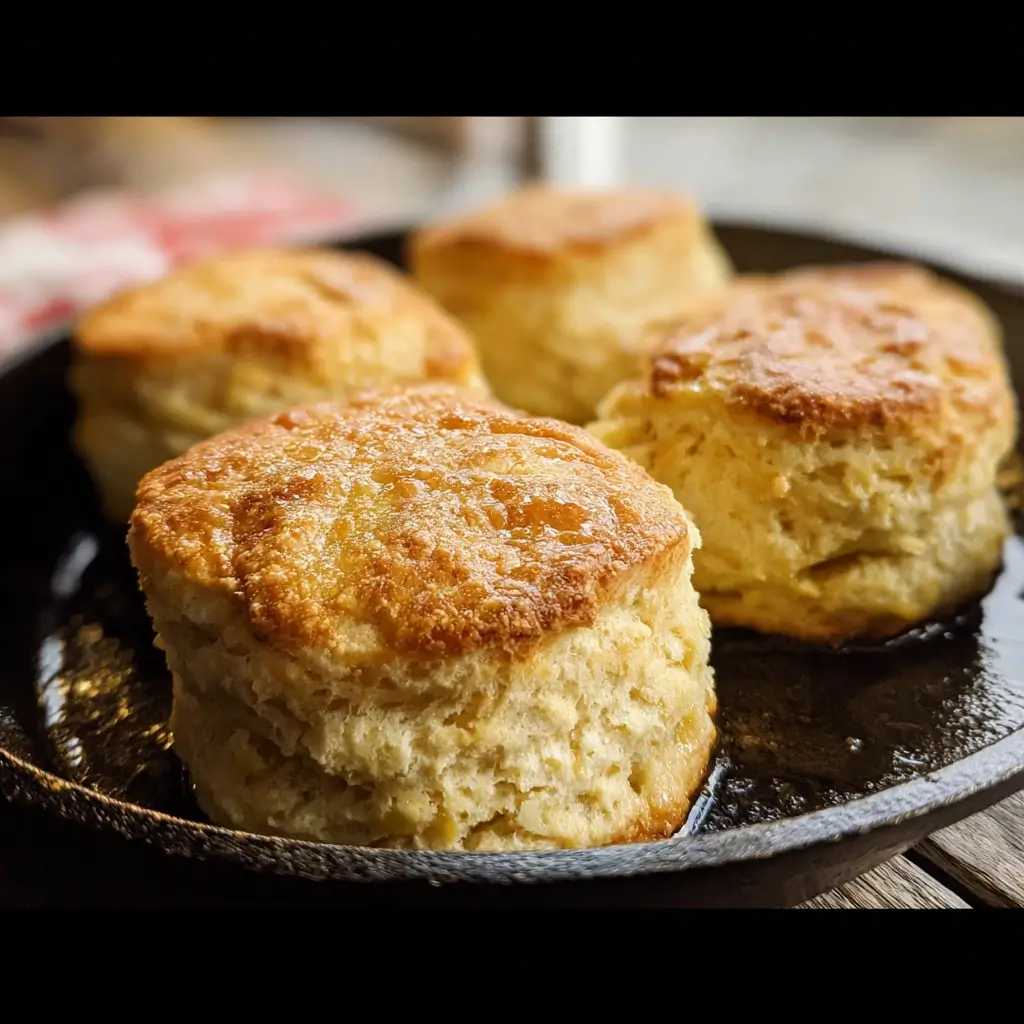
There’s a certain magic held within a warm, flaky biscuit, a culinary comfort that transcends a simple meal and becomes a memory. For me, that memory is of my grandmother’s kitchen, the air thick with the scent of melting butter and the soft, dusty perfume of flour. She never used a measuring cup, relying instead on the feel of the dough in her weathered hands. For years, I tried to replicate her legendary Old Fashioned Southern Biscuits, and for years, I was met with hockey pucks—hard, dense, and utterly disappointing. This recipe, however, is the one that finally unlocked her secret. It’s the culmination of countless trials, whispered advice from Southern matriarchs, and a deep understanding of the science behind the simplicity. When I pulled the first batch of these towering, golden-brown beauties from the oven, my family fell silent. The sound of a biscuit being gently pulled apart, revealing steamy, tender layers, was the only approval I needed. These aren’t just biscuits; they are a taste of tradition, a tangible piece of Southern hospitality, and the fluffiest, most buttery creation to ever grace our family table.
The Ultimate Old Fashioned Southern Biscuits Recipe
This recipe honors the classic tradition, focusing on simple ingredients and a specific technique to achieve those sought-after flaky layers and tender crumb. The key is cold ingredients and a gentle hand.
Ingredients
- 2 ½ cups (300g) All-Purpose Flour (preferably a soft winter wheat flour like White Lily), plus more for dusting
- 1 tablespoon Granulated Sugar
- 1 tablespoon Baking Powder (make sure it’s fresh)
- ½ teaspoon Baking Soda
- 1 teaspoon Fine Sea Salt
- ½ cup (1 stick or 113g) Unsalted Butter, frozen for at least 30 minutes
- 1 cup (240ml) Full-Fat Buttermilk, chilled
Instructions
- Prepare Your Station: Preheat your oven to 425°F (220°C). Line a baking sheet with parchment paper. Do not grease the pan, as this can cause the biscuit bottoms to fry and become too dark.
- Combine Dry Ingredients: In a large mixing bowl, whisk together the 2 ½ cups of flour, granulated sugar, baking powder, baking soda, and fine sea salt. Whisking thoroughly ensures the leavening agents are evenly distributed, which is critical for a uniform rise.
- Grate the Frozen Butter: Take your stick of frozen butter and use the large holes of a box grater to grate it directly into the flour mixture. This is a game-changing technique. Grating the butter creates small, uniform pieces that are easily coated in flour. This prevents the butter from melting and ensures it creates steam pockets in the oven, which results in ultra-flaky layers.
- Toss to Coat: Gently use your fingertips or a fork to toss the grated butter into the flour until every piece is coated. Work quickly to prevent the butter from warming up. The mixture should resemble coarse crumbs.
- Add the Buttermilk: Create a well in the center of your flour mixture. Pour in the chilled buttermilk all at once. Use a spatula or wooden spoon to mix the dough until it just comes together. It will be shaggy, sticky, and not perfectly smooth. This is exactly what you want. Do not overmix! Overmixing develops gluten, which leads to tough, chewy biscuits instead of tender, flaky ones.
- The Lamination Folds: Turn the shaggy dough out onto a lightly floured surface. Gently press the dough together into a rough rectangle. Now, perform the “lamination” fold to create layers. Fold the rectangle into thirds, like folding a letter. Turn the dough 90 degrees and gently pat it out into a rectangle again. Repeat this folding and turning process 3-4 more times. You will notice the dough becoming smoother with each fold. This process is the secret to tall, peel-apart biscuits.
- Shape the Biscuits: After the final fold, gently pat the dough out to a thickness of about ¾ to 1-inch. A thicker dough means a taller biscuit.
- Cut the Biscuits: Using a sharp 2.5-inch biscuit cutter, press straight down into the dough to cut out your biscuits. Do not twist the cutter. Twisting the cutter seals the edges of the biscuit, which severely inhibits its ability to rise. Place the cut biscuits onto your prepared baking sheet. For soft-sided biscuits that rise taller, place them so they are just touching each other. For biscuits with crispier sides, place them about 1 inch apart.
- Bake to Perfection: Gently press any leftover scraps of dough together (do not re-knead), pat down, and cut out the remaining biscuits. These “second-press” biscuits may not rise as high but will still be delicious. You can brush the tops of the biscuits with a little extra buttermilk or melted butter for a deeper golden-brown color, but this is optional.
- Bake: Place the baking sheet in the preheated 425°F oven and bake for 12-15 minutes, or until the tops are tall, beautifully golden brown, and sound hollow when tapped.
- Final Touch: As soon as the biscuits come out of the oven, brush the tops with a little more melted butter if desired. This adds flavor and a beautiful sheen. Serve immediately while warm.
Nutrition Facts
- Servings: 10-12 biscuits
- Calories per serving: Approximately 170-200 kcal (This is an estimate and can vary based on the exact ingredients used, such as the fat content of the buttermilk and the brand of flour.)
Preparation Time Breakdown
- Prep Time: 20 minutes
- Cook Time: 15 minutes
- Total Time: 35 minutes
The Secret to Perfect Biscuits: A Deep Dive into the Ingredients
The beauty of a Southern biscuit lies in its simplicity. With only a handful of ingredients, the quality and type of each one become paramount. Understanding the role each component plays is the first step toward mastering the art of biscuit making.
The Flour: The Foundation of Your Biscuit
The type of flour you use will have the most significant impact on the texture of your final product. Southern bakers have a long-held secret: soft winter wheat flour.
- White Lily All-Purpose Flour: This is the undisputed queen of biscuit flours. Milled from soft red winter wheat, it has a lower protein content (around 8-9%) than standard all-purpose flours. Less protein means less gluten development, which is the key to a tender, light, and fluffy biscuit rather than a chewy one. If you can find it, use it.
- Standard All-Purpose Flour: Don’t worry if you can’t find White Lily! A standard AP flour (like Gold Medal or King Arthur) will still produce a wonderful biscuit. The texture might be slightly sturdier, but by following the cold-ingredient and gentle-handling techniques, you will still achieve a fantastic result.
- Self-Rising Flour: Many traditional Southern recipes call for self-rising flour, which is simply all-purpose flour with baking powder and salt already mixed in. If you choose to use it, omit the baking powder and salt from this recipe.
The Fat: The Source of Flakiness and Flavor
Fat is what makes a biscuit rich and flaky. When cold fat is introduced to a hot oven, it melts and releases steam. This steam pushes apart the layers of dough, creating the airy pockets and flaky texture we all crave.
- Unsalted Butter: This recipe calls for unsalted butter for its unparalleled flavor. The milk solids in butter help the biscuits brown beautifully, and the taste is rich and classic. Using frozen, grated butter is the most effective way to ensure it stays in solid pieces within the dough.
- Lard: For the absolute flakiest biscuit possible, lard is the traditional choice. It has a higher melting point than butter, which means it creates even more impressive steam pockets and lift. However, it lacks the rich, buttery flavor. Some bakers use a 50/50 combination of butter and lard for the best of both worlds.
- Shortening: Vegetable shortening (like Crisco) also has a high melting point and will produce a very tender, soft biscuit. Like lard, it is neutral in flavor.
The Liquid: The Magic of Buttermilk
Buttermilk is not just for flavor; it’s a scientific powerhouse in biscuit making.
- Acidity and Tenderness: The acidity in buttermilk works in two ways. First, it helps to tenderize the gluten strands in the flour, contributing to a softer crumb. Second, it reacts with the baking soda, creating carbon dioxide gas that gives the biscuits an extra boost of leavening and lift.
- Flavor: It provides that classic, tangy flavor that is characteristic of an authentic Southern biscuit.
- DIY Buttermilk Substitute: If you don’t have buttermilk, you can make a quick substitute. For every 1 cup of regular milk (whole milk works best), stir in 1 tablespoon of lemon juice or white vinegar. Let it sit for 5-10 minutes until it slightly curdles. While it doesn’t have the same thickness or complexity as real buttermilk, it will provide the necessary acidity for the recipe.
How to Serve Your Southern Biscuits
Biscuits are one of the most versatile baked goods, equally at home at breakfast, dinner, or as a dessert. Here are some classic and creative ways to serve them:
- Classic Breakfast & Brunch Companions:
- Sausage Gravy: The quintessential Southern pairing. Split a warm biscuit and ladle generous amounts of creamy, peppery sausage gravy over the top.
- Butter and Jam: Simply slather a warm biscuit with high-quality salted butter and your favorite fruit preserves, jam, or apple butter.
- Honey or Sorghum: A drizzle of golden honey or dark, rich sorghum molasses is a simple and classic treat.
- Breakfast Sandwiches: Split a biscuit and fill it with a folded egg, a slice of cheese, and a sausage patty or slice of bacon.
- Fried Chicken: A “chicken biscuit” is a beloved Southern staple. Tuck a crispy piece of boneless fried chicken inside a biscuit, perhaps with a pickle and a drizzle of honey.
- Savory Lunch & Dinner Sides:
- With Soup or Stew: Serve alongside a hearty bowl of chili, beef stew, or chicken and dumplings for dipping.
- With a Pot Roast: Use the biscuits to sop up the delicious gravy from a slow-cooked pot roast.
- As a Topping: Use the biscuit dough as a topping for a chicken pot pie or a fruit cobbler.
- Sweet Treats and Desserts:
- Strawberry Shortcake: This is what biscuits were born for! Split a biscuit, spoon sweetened, macerated strawberries over the bottom half, top with a large dollop of fresh whipped cream, and place the biscuit top on.
- Peach Cobbler Style: Serve warm biscuits alongside a bowl of cinnamon-spiced cooked peaches and a scoop of vanilla ice cream.
Additional Tips for Biscuit Perfection
- Don’t Overwork the Dough: This is the most important rule. The moment you add the buttermilk, your goal is to mix and handle the dough as little as possible. Overworking develops gluten, and gluten is the enemy of a tender biscuit. A shaggy, slightly messy dough is a good sign.
- A Blazing Hot Oven is Crucial: A hot oven (425°F or even 450°F) is non-negotiable. You want the cold fat in the dough to hit that high heat immediately. This rapid temperature change creates the steam that forces the biscuits to rise high and fast. A cooler oven will cause the fat to melt slowly, resulting in flat, greasy biscuits.
- Place Biscuits Close Together for a Taller Rise: When you place biscuits on the baking sheet so their sides are touching, they “support” each other as they bake. This forces them to rise upwards instead of spreading outwards, resulting in taller, softer-sided biscuits. If you prefer crispier edges, place them about an inch apart.
- Check Your Baking Powder’s Freshness: Baking powder loses its potency over time. To test it, spoon about a half teaspoon into a small bowl and pour a few tablespoons of hot water over it. If it fizzes and bubbles vigorously, it’s fresh. If not, it’s time to buy a new can. Using old baking powder is a common cause of flat biscuits.
- Use a Sharp Cutter, Not a Glass: It might be tempting to use the rim of a drinking glass, but this can compress and seal the edges of the dough, just like twisting a cutter does. A sharp biscuit or cookie cutter cleanly slices through the layers you created, leaving them free to separate and rise to their full potential.
Frequently Asked Questions (FAQ)
Q1: Why are my biscuits always hard and flat?
This is the most common biscuit problem and almost always comes down to two things: ingredient temperature and overworking the dough. First, ensure your butter and buttermilk are ice-cold. Warm fat will melt into the flour instead of creating steam pockets for lift. Second, be incredibly gentle with the dough. From the moment the liquid hits the flour, mix it just until it comes together. The “lamination” folds should be gentle pats and folds, not vigorous kneading. Overworking develops gluten, which makes biscuits tough and dense.
Q2: Can I make these biscuits ahead of time?
Yes, absolutely! There are two great methods. Method 1 (Freezing the Dough): Cut out the biscuits, place them on a parchment-lined baking sheet, and freeze until solid. Then, transfer the frozen biscuit pucks to a freezer bag. You can bake them directly from frozen, adding about 3-5 minutes to the baking time. This is a fantastic way to have fresh biscuits on demand. Method 2 (Storing Baked Biscuits): Baked biscuits are best eaten fresh but can be stored in an airtight container at room temperature for up to 2 days. See the reheating tips below for the best way to revive them.
Q3: What is the absolute best flour for Southern biscuits?
If you ask any Southern baker, they will likely say White Lily brand all-purpose flour. It’s made from soft winter wheat, which is lower in protein than other national brands. This lower protein content creates less gluten, resulting in a supremely tender and light biscuit. However, if you cannot find it, a standard all-purpose flour will still work wonderfully with this recipe’s technique.
Q4: I don’t have buttermilk. Can I just use regular milk?
You can, but the result will be different. The biscuits will be less tender and won’t have the classic tangy flavor. The acidity in buttermilk is crucial for reacting with the baking soda for leavening and for tenderizing the dough. A much better option is to make a “clabbered milk” substitute: pour 1 tablespoon of white vinegar or lemon juice into a measuring cup, then add enough regular milk to reach the 1-cup line. Let it sit for 5-10 minutes. It will curdle slightly and will provide the necessary acidity to make your biscuits tender and tall.
Q5: My biscuits rose, but they didn’t get golden brown on top. What went wrong?
This is usually an issue of oven temperature or lack of a top wash. First, double-check your oven temperature with an oven thermometer; many ovens run hotter or colder than their dial indicates. A hot-enough oven is key for browning. Second, for a guaranteed deep golden-brown top, brush the unbaked biscuits with a little extra buttermilk or some melted butter just before they go into the oven. This adds fat and sugars to the surface, which caramelize and brown beautifully.
Old Fashioned Southern Biscuits Recipe
Ingredients
- 2 ½ cups (300g) All-Purpose Flour (preferably a soft winter wheat flour like White Lily), plus more for dusting
- 1 tablespoon Granulated Sugar
- 1 tablespoon Baking Powder (make sure it’s fresh)
- ½ teaspoon Baking Soda
- 1 teaspoon Fine Sea Salt
- ½ cup (1 stick or 113g) Unsalted Butter, frozen for at least 30 minutes
- 1 cup (240ml) Full-Fat Buttermilk, chilled
Instructions
- Prepare Your Station: Preheat your oven to 425°F (220°C). Line a baking sheet with parchment paper. Do not grease the pan, as this can cause the biscuit bottoms to fry and become too dark.
- Combine Dry Ingredients: In a large mixing bowl, whisk together the 2 ½ cups of flour, granulated sugar, baking powder, baking soda, and fine sea salt. Whisking thoroughly ensures the leavening agents are evenly distributed, which is critical for a uniform rise.
- Grate the Frozen Butter: Take your stick of frozen butter and use the large holes of a box grater to grate it directly into the flour mixture. This is a game-changing technique. Grating the butter creates small, uniform pieces that are easily coated in flour. This prevents the butter from melting and ensures it creates steam pockets in the oven, which results in ultra-flaky layers.
- Toss to Coat: Gently use your fingertips or a fork to toss the grated butter into the flour until every piece is coated. Work quickly to prevent the butter from warming up. The mixture should resemble coarse crumbs.
- Add the Buttermilk: Create a well in the center of your flour mixture. Pour in the chilled buttermilk all at once. Use a spatula or wooden spoon to mix the dough until it just comes together. It will be shaggy, sticky, and not perfectly smooth. This is exactly what you want. Do not overmix! Overmixing develops gluten, which leads to tough, chewy biscuits instead of tender, flaky ones.
- The Lamination Folds: Turn the shaggy dough out onto a lightly floured surface. Gently press the dough together into a rough rectangle. Now, perform the “lamination” fold to create layers. Fold the rectangle into thirds, like folding a letter. Turn the dough 90 degrees and gently pat it out into a rectangle again. Repeat this folding and turning process 3-4 more times. You will notice the dough becoming smoother with each fold. This process is the secret to tall, peel-apart biscuits.
- Shape the Biscuits: After the final fold, gently pat the dough out to a thickness of about ¾ to 1-inch. A thicker dough means a taller biscuit.
- Cut the Biscuits: Using a sharp 2.5-inch biscuit cutter, press straight down into the dough to cut out your biscuits. Do not twist the cutter. Twisting the cutter seals the edges of the biscuit, which severely inhibits its ability to rise. Place the cut biscuits onto your prepared baking sheet. For soft-sided biscuits that rise taller, place them so they are just touching each other. For biscuits with crispier sides, place them about 1 inch apart.
- Bake to Perfection: Gently press any leftover scraps of dough together (do not re-knead), pat down, and cut out the remaining biscuits. These “second-press” biscuits may not rise as high but will still be delicious. You can brush the tops of the biscuits with a little extra buttermilk or melted butter for a deeper golden-brown color, but this is optional.
- Bake: Place the baking sheet in the preheated 425°F oven and bake for 12-15 minutes, or until the tops are tall, beautifully golden brown, and sound hollow when tapped.
- Final Touch: As soon as the biscuits come out of the oven, brush the tops with a little more melted butter if desired. This adds flavor and a beautiful sheen. Serve immediately while warm.
Nutrition
- Serving Size: One Normal Portion
- Calories: 170-200 kcal